talk-data.com talk-data.com

Topic

Cyber Security

cybersecurity information_security data_security privacy

753

tagged

Activity Trend

297 peak/qtr
2020-Q1 2026-Q1

Activities

753 activities · Newest first

Snowflake: The Definitive Guide, 2nd Edition

Snowflake is reshaping data management by integrating AI, analytics, and enterprise workloads into a single cloud platform. Snowflake: The Definitive Guide is a comprehensive resource for data architects, engineers, and business professionals looking to harness Snowflake's evolving capabilities, including Cortex AI, Snowpark, and Polaris Catalog for Apache Iceberg. This updated edition provides real-world strategies and hands-on activities for optimizing performance, securing data, and building AI-driven applications. With hands-on SQL examples and best practices, this book helps readers process structured and unstructured data, implement scalable architectures, and integrate Snowflake's AI tools seamlessly. Whether you're setting up accounts, managing access controls, or leveraging generative AI, this guide equips you with the expertise to maximize Snowflake's potential. Implement AI-powered workloads with Snowflake Cortex Explore Snowsight and Streamlit for no-code development Ensure security with access control and data governance Optimize storage, queries, and computing costs Design scalable data architectures for analytics and machine learning

Building Data Products

As organizations grapple with fragmented data, siloed teams, and inconsistent pipelines, data products have emerged as a practical solution for delivering trusted, scalable, and reusable data assets. In Building Data Products, Jean-Georges Perrin provides a comprehensive, standards-driven playbook for designing, implementing, and scaling data products that fuel innovation and cross-functional collaboration—whether or not your organization adopts a full data mesh strategy. Drawing on extensive industry experience and practitioner interviews, Perrin shows readers how to build metadata-rich, governed data products aligned to business domains. Covering foundational concepts, real-world use cases, and emerging standards like Bitol ODPS and ODCS, this guide offers step-by-step implementation advice and practical code examples for key stages—ownership, observability, active metadata, compliance, and integration. Design data products for modular reuse, discoverability, and trust Implement standards-driven architectures with rich metadata and security Incorporate AI-driven automation, SBOMs, and data contracts Scale product-driven data strategies across teams and platforms Integrate data products into APIs, CI/CD pipelines, and DevOps practices

Elasticsearch Query Language the Definitive Guide

Streamline your workflow with ESQL enhance data analysis with real-time insights, and speed up aggregations and visualizations Key Features Apply ESQL efficiently in analytics, observability, and cybersecurity Optimize performance and scalability for high-demand environments Discover how to visualize and debug ESQL queries Purchase of the print or Kindle book includes a free PDF eBook Book Description Built to simplify high-scale data analytics in Elasticsearch, this practical guide will take you from foundational concepts to advanced applications across search, observability, and security. It will help you overcome common challenges such as efficiently querying large datasets, applying advanced analytics without deep prior knowledge, and resolving for a unique and consolidated query language. Written by senior experts at Elastic with extensive field experience, this book delivers actionable guidance rooted in solving today’s data challenges at scale. After introducing ESQL and its architecture, the chapters explore real-world applications across various domains, including analytics, raw log analysis, observability, and cybersecurity. Advanced topics such as scaling, optimization, and future developments are also covered to help you maximize your ESQL capabilities. By the end of this book, you’ll be able to leverage ESQL for comprehensive data management and analysis, optimizing your workflows and enhancing your productivity with Elasticsearch. What you will learn Gain a solid understanding of ESQL and its architecture Use ESQL for data analysis and performance monitoring Apply ESQL in cybersecurity for threat detection and incident response Find out how to perform advanced searches using ESQL Prepare for future ESQL developments Showcase ESQL in action through real-world, persona-driven use cases Who this book is for If you’re an Elasticsearch user, this book is essential for your growth. Whether you’re a data analyst looking to build analytics on top of Elasticsearch, an SRE monitoring the health of your IT system, or a cybersecurity analyst, this book will give you a complete understanding of how ESQL is built and used. Additionally, database administrators, business intelligence professionals, and operational intelligence professionals will find this book invaluable. Even with a beginner-level knowledge of Elasticsearch, you’ll be able to get started and make the most of this comprehensive guide.

Data Engineering for Multimodal AI

A shift is underway in how organizations approach data infrastructure for AI-driven transformation. As multimodal AI systems and applications become increasingly sophisticated and data hungry, data systems must evolve to meet these complex demands. Data Engineering for Multimodal AI is one of the first practical guides for data engineers, machine learning engineers, and MLOps specialists looking to rapidly master the skills needed to build robust, scalable data infrastructures for multimodal AI systems and applications. You'll follow the entire lifecycle of AI-driven data engineering, from conceptualizing data architectures to implementing data pipelines optimized for multimodal learning in both cloud native and on-premises environments. And each chapter includes step-by-step guides and best practices for implementing key concepts. Design and implement cloud native data architectures optimized for multimodal AI workloads Build efficient and scalable ETL processes for preparing diverse AI training data Implement real-time data processing pipelines for multimodal AI inference Develop and manage feature stores that support multiple data modalities Apply data governance and security practices specific to multimodal AI projects Optimize data storage and retrieval for various types of multimodal ML models Integrate data versioning and lineage tracking in multimodal AI workflows Implement data-quality frameworks to ensure reliable outcomes across data types Design data pipelines that support responsible AI practices in a multimodal context

Microsoft Power BI Quick Start Guide - Fourth Edition

Bring your data to life with the ultimate beginner's guide to Power BI, now featuring Microsoft Fabric, Copilot, and full-color visuals to make learning data modeling, storytelling, and dashboards easier and faster than ever Key Features Build data literacy and gain confidence using Power BI through real-world, beginner-friendly examples Learn to shape, clean, and model data using Power BI Desktop and Power Query, with zero experience required Build vibrant, accurate reports and dashboards with real-world modeling examples Book Description Updated with the latest innovations in Power BI, including integration with Microsoft Fabric for seamless data unification and Copilot for AI-powered guidance. This comprehensive guide empowers you to build compelling reports and dashboards from the ground up. Whether you're new to Power BI or stepping into a data role, this book provides a friendly, approachable introduction to business intelligence and data storytelling You'll start with the Power BI Desktop interface and its core functionality, then move into shaping and cleaning your data using the Power Query Editor. From designing intuitive data models to writing your first DAX formulas, you’ll develop practical skills that apply directly to real-world scenarios. he book emphasizes how to use visualizations and narrative techniques to turn numbers into meaningful insights The chapters focus on hands-on, real-world examples—like analyzing sales trends, tracking KPIs, and cleaning messy data. You'll learn to build and refresh reports, scale your Power BI setup, and enhance your solutions using Microsoft Fabric and Copilot. Fabric unifies analytics across your organization, while Copilot speeds up your workflow with AI-driven insights and report suggestions By the end of the book, you’ll have the confidence and experience to turn raw data into insightful, impactful dashboards What you will learn Understand why data literacy matters in decision-making and careers Connect to data using import, DirectQuery, and live connection modes Clean and transform data using Power Query Editor and dataflows Design reports with visuals that support clear data storytelling Apply row-level security to enforce access and data protection Manage and monitor Power BI cloud for scalability and teamwork Use AI tools like Copilot to speed up prep and generate insights Learn Microsoft Fabric basics to enable unified data experiences Who this book is for This book is ideal for anyone looking to build a solid foundation in Power BI, regardless of prior experience. Whether you're just starting out or stepping into a new role that involves data, you'll find clear, approachable guidance throughout. The step-by-step tutorials and real-world examples make it easy to follow along—even if it’s your first time working with business intelligence tools

Data Engineering with Azure Databricks

Master end-to-end data engineering on Azure Databricks. From data ingestion and Delta Lake to CI/CD and real-time streaming, build secure, scalable, and performant data solutions with Spark, Unity Catalog, and ML tools. Key Features Build scalable data pipelines using Apache Spark and Delta Lake Automate workflows and manage data governance with Unity Catalog Learn real-time processing and structured streaming with practical use cases Implement CI/CD, DevOps, and security for production-ready data solutions Explore Databricks-native ML, AutoML, and Generative AI integration Book Description "Data Engineering with Azure Databricks" is your essential guide to building scalable, secure, and high-performing data pipelines using the powerful Databricks platform on Azure. Designed for data engineers, architects, and developers, this book demystifies the complexities of Spark-based workloads, Delta Lake, Unity Catalog, and real-time data processing. Beginning with the foundational role of Azure Databricks in modern data engineering, you’ll explore how to set up robust environments, manage data ingestion with Auto Loader, optimize Spark performance, and orchestrate complex workflows using tools like Azure Data Factory and Airflow. The book offers deep dives into structured streaming, Delta Live Tables, and Delta Lake’s ACID features for data reliability and schema evolution. You’ll also learn how to manage security, compliance, and access controls using Unity Catalog, and gain insights into managing CI/CD pipelines with Azure DevOps and Terraform. With a special focus on machine learning and generative AI, the final chapters guide you in automating model workflows, leveraging MLflow, and fine-tuning large language models on Databricks. Whether you're building a modern data lakehouse or operationalizing analytics at scale, this book provides the tools and insights you need. What you will learn Set up a full-featured Azure Databricks environment Implement batch and streaming ingestion using Auto Loader Optimize Spark jobs with partitioning and caching Build real-time pipelines with structured streaming and DLT Manage data governance using Unity Catalog Orchestrate production workflows with jobs and ADF Apply CI/CD best practices with Azure DevOps and Git Secure data with RBAC, encryption, and compliance standards Use MLflow and Feature Store for ML pipelines Build generative AI applications in Databricks Who this book is for This book is for data engineers, solution architects, cloud professionals, and software engineers seeking to build robust and scalable data pipelines using Azure Databricks. Whether you're migrating legacy systems, implementing a modern lakehouse architecture, or optimizing data workflows for performance, this guide will help you leverage the full power of Databricks on Azure. A basic understanding of Python, Spark, and cloud infrastructure is recommended.

Generative AI on Kubernetes

Generative AI is revolutionizing industries, and Kubernetes has fast become the backbone for deploying and managing these resource-intensive workloads. This book serves as a practical, hands-on guide for MLOps engineers, software developers, Kubernetes administrators, and AI professionals ready to unlock AI innovation with the power of cloud native infrastructure. Authors Roland Huß and Daniele Zonca provide a clear road map for training, fine-tuning, deploying, and scaling GenAI models on Kubernetes, addressing challenges like resource optimization, automation, and security along the way. With actionable insights with real-world examples, readers will learn to tackle the opportunities and complexities of managing GenAI applications in production environments. Whether you're experimenting with large-scale language models or facing the nuances of AI deployment at scale, you'll uncover expertise you need to operationalize this exciting technology effectively. Learn to run GenAI models on Kubernetes for efficient scalability Get techniques to train and fine-tune LLMs within Kubernetes environments See how to deploy production-ready AI systems with automation and resource optimization Discover how to monitor and scale GenAI applications to handle real-world demand Uncover the best tools to operationalize your GenAI workloads Learn how to run agent-based and AI-driven applications

Google Cloud Certified Professional Data Engineer Certification Guide

A guide to pass the GCP Professional Data Engineer exam on your first attempt and upgrade your data engineering skills on GCP. Key Features Fully understand the certification exam content and exam objectives Consolidate your knowledge of all essential exam topics and key concepts Get realistic experience of answering exam-style questions Develop practical skills for everyday use Purchase of this book unlocks access to web-based exam prep resources including mock exams, flashcards, exam tips Book Description The GCP Professional Data Engineer certification validates the fundamental knowledge required to perform data engineering tasks and use GCP services to enhance data engineering processes and further your career in the data engineering/architecting field. This book is a best-in-class study guide that fully covers the GCP Professional Data Engineer exam objectives and helps you pass the exam first time. Complete with clear explanations, chapter review questions, realistic mock exams, and pragmatic solutions, this guide will help you master the core exam concepts and build the understanding you need to go into the exam with the skills and confidence to get the best result you can. With the help of relevant examples, you'll learn fundamental data engineering concepts such as data warehousing and data security. As you progress, you'll delve into the important domains of the exam, including data pipelining, data migration, and data processing. Unlike other study guides, this book contains logical reasoning behind the choice of correct answers based in scenarios and provide you with excellent tips regarding the optimal use of each service, and gives you everything you need to pass the exam and enhance your prospects in the data engineering field. What you will learn Create data solutions and pipelines in GCP Analyze and transform data into useful information Apply data engineering concepts to real scenarios Create secure, cost-effective, valuable GCP workloads Work in the GCP environment with industry best practices Who this book is for This book is for data engineers who want a reliable source for the key concepts and terms present in the most prestigious and highly-sought-after cloud-based data engineering certification. This book will help you improve your data engineering in GCP skills to give you a better chance at earning the GCP Professional Data Engineer Certification. You will already be familiar with the Google Cloud Platform, having either explored it (professionally or personally) for at least a year. You should also have some familiarity with basic data concepts (such as types of data and basic SQL knowledge).

Security and Privacy in 6G Communication Technology

Future-proof your knowledge and expertise in telecommunications with this essential guide, which provides a comprehensive analysis of the critical security and privacy challenges in the transition to 6G communication. The advancement from 5G to 6G communication represents a quantum leap in wireless technology, promising unprecedented speeds, ultra-low latency, and ubiquitous connectivity. As the industry embarks on this journey, it encounters a host of technical challenges, particularly in ensuring the security and privacy of data transmitted across these networks. The interconnected nature of 6G systems, combined with the proliferation of Internet of Things devices and the sheer volume of data exchanged, creates a fertile ground for cyber threats and privacy breaches. This book delves into these intricate technical challenges, offering a comprehensive analysis of the security and privacy implications of 6G communication. We explore the vulnerabilities inherent in 6G networks, ranging from potential weaknesses in network protocols to the risk of unauthorized access to sensitive data. Through detailed examination and real-world examples, we provide insights into cutting-edge security measures and privacy-preserving techniques tailored specifically to the unique characteristics of 6G systems. By addressing these challenges head-on, we aim to empower engineers, researchers, and policymakers with the knowledge and tools necessary to build resilient and secure 6G networks that safeguard user privacy and data integrity in an increasingly interconnected world. By dissecting the complexities of 6G architecture and protocols, the book equips readers with a nuanced understanding of the unique security and privacy considerations that must be addressed in the design and implementation of these transformative systems.

Oracle 23AI & ADBS in Action: Exploring New Features with Hands-On Case Studies

Unlock the power of Oracle Database 23AI and Autonomous Database Serverless (ADB-S) with this comprehensive guide to the latest innovations in performance, security, automation, and AI-driven optimization. As enterprises embrace intelligent and autonomous data platforms, understanding these capabilities is essential for data architects, developers, and DBAs. Explore cutting-edge features such as vector data types and AI-powered vector search, revolutionizing data retrieval in modern AI applications. Learn how schema privileges and the DB_DEVELOPER_ROLE simplify access control in multi-tenant environments. Dive into advanced auditing, SQL Firewall, and data integrity constraints to strengthen security and compliance. Discover AI-driven advancements like machine learning-based query execution, customer retention prediction, and AI-powered query tuning. Additional chapters cover innovations in JSON, XML, JSON-Relational Duality Views, new indexing techniques, SQL property graphs, materialized views, partitioning, lock-free transactions, JavaScript stored procedures, blockchain tables, and automated bigfile tablespace shrinking. What sets this book apart is its practical focus—each chapter includes real-world case studies and executable scripts, enabling professionals to implement these features effectively in enterprise environments. Whether you're optimizing performance or aligning IT with business goals, this guide is your key to building scalable, secure, and AI-powered solutions with Oracle 23AI and ADB-S. What You Will Learn Explore Oracle 23AI's latest features through real-world use cases Implement AI/ML-driven optimizations for smarter, autonomous database performance Gain hands-on experience with executable scripts and practical coding examples Strengthen security and compliance using advanced auditing, SQL Firewall, and blockchain tables Master high-performance techniques for query tuning, in-memory processing, and scalability Revolutionize data access with AI-powered vector search in modern AI workloads Simplify user access in multi-tenant environments using schema privileges and DB_DEVELOPER_ROLE Model and query complex data using JSON-Relational Duality Views and SQL property graphs Who this Book is For Database architects, data engineers, Oracle developers, and IT professionals seeking to leverage Oracle 23AI’s latest features for real-world applications

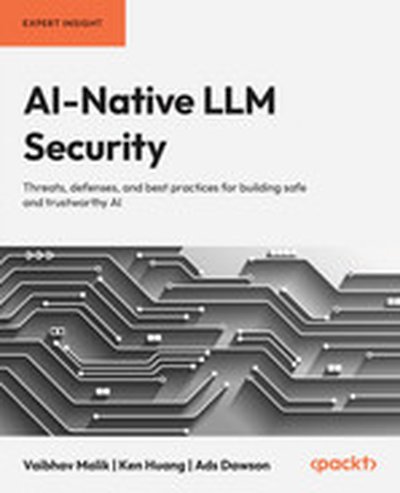
AI-Native LLM Security

"AI Native LLM Security" is your essential guide to understanding and securing large language models and AI systems. With a focus on implementing practical strategies and leveraging frameworks like OWASP Top 10, this book equips professionals to identify and mitigate risks effectively. By reading this, you'll gain the expertise to confidently manage LLM security challenges. What this Book will help me do Learn about adversarial AI attacks and methods to defend against them. Understand secure-by-design methodologies and their application to LLM systems. Gain insights on implementing MLSecOps practices for robust AI security. Navigate ethical considerations and legal aspects of AI security. Secure AI development life cycles with practical strategies and standards. Author(s) The authors, Vaibhav Malik, Ken Huang, and Adam Dawson, are experts in AI security with collective experience covering cybersecurity, AI development, and security frameworks. Their dedication to advancing trustworthy AI ensures that this book is both technically comprehensive and approachable. Who is it for? This book is perfect for cybersecurity experts, AI developers, and technology managers aiming to secure and manage AI systems. Readers should have a basic understanding of AI and security concepts. If you're a security architect, ML engineer, DevOps professional, or a leader overseeing AI initiatives, this book will help you address LLM security effectively for your field.

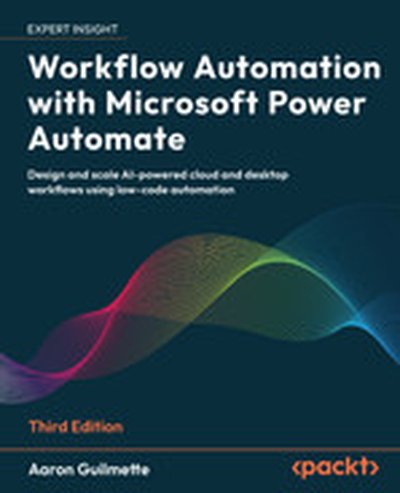
Workflow Automation with Microsoft Power Automate - Third Edition

This book serves as a comprehensive guide to mastering Microsoft Power Automate, offering step-by-step instructions for creating and managing low-code workflows. From beginner to advanced techniques, it covers cloud and RPA functionalities, enhanced by AI features like Co-pilot. You'll gain the skills to build, analyze, and optimize powerful automations tailored to your organization's needs. What this Book will help me do Understand and implement workflows using Power Automate's connectors and triggers for seamless integration. Utilize AI Builder and the Co-pilot feature to design intelligent workflows with generative AI capabilities. Master robotic process automation to bridge digital and legacy systems effectively. Learn to monitor and troubleshoot workflows while ensuring security and compliance in automation. Scale and govern enterprise-level workflows with best practices for maintainability. Author(s) Aaron Guilmette is a seasoned expert in the field of workflow automation with extensive experience in the Microsoft ecosystem. As the author of multiple books on Power Automate, Aaron combines technical depth with practical know-how. He brings a hands-on approach to guiding readers through advanced features, making automation accessible and effective. Who is it for? This book is ideal for power users, information workers, and citizen developers looking to integrate automation into their work. Whether you're new to automation or expanding your skills, this book provides actionable insights. Familiarity with the Microsoft 365 platform is recommended but not required, as the book covers foundational as well as advanced topics. It is perfect for anyone aiming to streamline workflows and drive efficiency in their projects or organization.

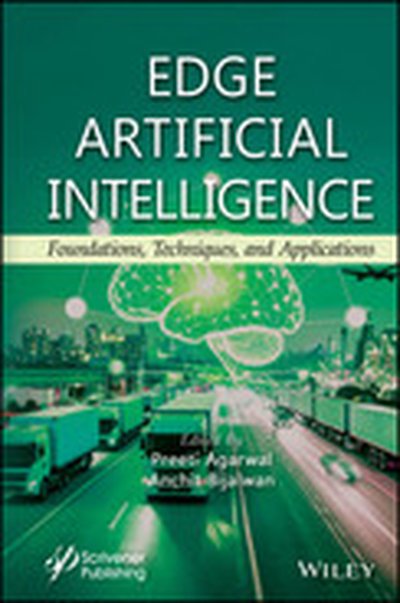
Edge Artificial Intelligence

Secure your expertise in the next wave of computing with this essential book, which provides a comprehensive guide to Edge AI, detailing its foundational concepts, deployment strategies, and real-world applications for revolutionizing performance and privacy across various industries. Edge AI has the potential to bring the computational power of AI algorithms closer to where data is generated, processed, and utilized. Traditionally, AI models are deployed in centralized cloud environments, leading to latency issues, bandwidth constraints, and privacy concerns. Edge AI addresses these limitations by enabling AI inference and decision-making directly on edge devices, such as smartphones, IoT sensors, and edge servers. Despite its challenges, edge AI presents numerous opportunities across various domains. From real-time health monitoring and predictive maintenance in industrial IoT to personalized recommendations in retail and immersive experiences in augmented reality, edge AI has the potential to revolutionize how we interact with technology. This book aims to provide a comprehensive exploration of edge AI, covering its foundational concepts, development frameworks, deployment strategies, security considerations, ethical implications, emerging trends, and real-world applications. This guide is essential for anyone pushing the boundaries to leverage edge computing for enhanced performance and efficiency. Readers will find this volume: Dives deep into the world of edge AI with a comprehensive exploration covering foundational concepts, development frameworks, deployment strategies, security considerations, ethical implications, governance frameworks, optimization techniques, and real-world applications; Offers practical guidance on implementing edge AI solutions effectively in various domains, including architecture design, development frameworks, deployment strategies, and optimization techniques; Explores concrete examples of edge AI applications across diverse domains such as healthcare, industrial IoT, smart cities, and autonomous systems, providing insights into how edge AI is revolutionizing industries and everyday life; Provides insights into emerging trends and technologies in the field of edge AI, including convergence with blockchain, augmented reality, virtual reality, autonomous systems, personalized experiences, and cybersecurity. Audience Researchers, AI experts, and industry professionals in the field of computer science, IT, and business management.

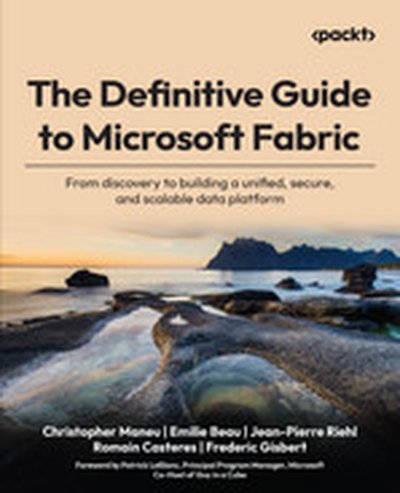
The Definitive Guide to Microsoft Fabric

Master Microsoft Fabric from basics to advanced architectures with expert guidance to unify, secure, and scale analytics on real-world data platforms Key Features Build a complete data analytics platform with Microsoft Fabric Apply proven architectures, governance, and security strategies Gain real-world insights from five seasoned data experts Purchase of the print or Kindle book includes a free PDF eBook Book Description Microsoft Fabric is reshaping how organizations manage, analyze, and act on data by unifying ingestion, storage, transformation, analytics, AI, and visualization in a single platform. The Definitive Guide to Microsoft Fabric takes you from your very first workspace to building a secure, scalable, and future-proof analytics environment. You’ll learn how to unify data in OneLake, design data meshes, transform and model data, implement real-time analytics, and integrate AI capabilities. The book also covers advanced topics, such as governance, security, cost optimization, and team collaboration using DevOps and DataOps principles. Drawing on the real-world expertise of five seasoned professionals who have built and advised on platforms for startups, SMEs, and Europe’s largest enterprises, this book blends strategic insight with practical guidance. By the end of this book, you’ll have gained the knowledge and skills to design, deploy, and operate a Microsoft Fabric platform that delivers sustainable business value. What you will learn Understand Microsoft Fabric architecture and concepts Unify data storage and data governance with OneLake Ingest and transform data using multiple Fabric tools Implement real-time analytics and event processing Design effective semantic models and reports Integrate AI and machine learning into data workflows Apply governance, security, and compliance controls Optimize performance and costs at scale Who this book is for This book is for data engineers, analytics engineers, architects, and data analysts moving into platform design roles. It’s also valuable for technical leaders seeking to unify analytics in their organizations. You’ll need only a basic grasp of databases, SQL, and Python.

Data Engineering for Beginners

A hands-on technical and industry roadmap for aspiring data engineers In Data Engineering for Beginners, big data expert Chisom Nwokwu delivers a beginner-friendly handbook for everyone interested in the fundamentals of data engineering. Whether you're interested in starting a rewarding, new career as a data analyst, data engineer, or data scientist, or seeking to expand your skillset in an existing engineering role, Nwokwu offers the technical and industry knowledge you need to succeed. The book explains: Database fundamentals, including relational and noSQL databases Data warehouses and data lakes Data pipelines, including info about batch and stream processing Data quality dimensions Data security principles, including data encryption Data governance principles and data framework Big data and distributed systems concepts Data engineering on the cloud Essential skills and tools for data engineering interviews and jobs Data Engineering for Beginners offers an easy-to-read roadmap on a seemingly complicated and intimidating subject. It addresses the topics most likely to cause a beginning data engineer to stumble, clearly explaining key concepts in an accessible way. You'll also find: A comprehensive glossary of data engineering terms Common and practical career paths in the data engineering industry An introduction to key cloud technologies and services you may encounter early in your data engineering career Perfect for practicing and aspiring data analysts, data scientists, and data engineers, Data Engineering for Beginners is an effective and reliable starting point for learning an in-demand skill. It's a powerful resource for everyone hoping to expand their data engineering Skillset and upskill in the big data era.

Artificial Intelligence Applications in Aeronautical and Aerospace Engineering

This book is a comprehensive guide for anyone in the aeronautical and aerospace fields who wants to understand and leverage the transformative power of artificial intelligence to enhance safety, optimize performance, and drive innovation. The field of aeronautical and aerospace engineering is on the brink of a transformative revolution driven by rapid advancements in artificial intelligence (AI). This book analyzes AI’s multifaceted impact on the industry, exploring AI’s potential to address complex challenges, optimize processes, and push technological boundaries with a focus on enhancing safety, security, innovation, and performance. By blending technical insights with practical applications, it provides readers with a roadmap for harnessing AI to solve complex challenges and improve efficiency in aeronautics. Ideal for those seeking a deeper understanding of AI’s role in aeronautical and aerospace engineering, this book offers real-world applications, case studies, and expert insights, making it a valuable resource for anyone aiming to stay at the forefront of this rapidly evolving field. Readers will find this book: Examines AI’s transformative role in aerospace and aeronautics, from enhancing safety to driving innovation and optimizing performance; Highlights real-time applications, addressing AI’s role in boosting operational efficiency and safety in the aerospace and aeronautical industries; Offers insights into emerging AI technologies shaping the future of aerospace and aeronautical systems; Features real-world case studies on AI applications in autonomous navigation, predictive maintenance of aircraft, and air traffic management. Audience Aeronautical and aerospace engineers, AI researchers, students, and industry professionals seeking to understand and apply AI solutions in areas like safety, security, and performance optimization.

SQL Server 2025 Unveiled: The AI-Ready Enterprise Database with Microsoft Fabric Integration

Unveil the data platform of the future with SQL Server 2025—guided by one of its key architects . With built-in AI for application development and advanced analytics powered by Microsoft Fabric, SQL Server 2025 empowers you to innovate—securely and confidently. This book shows you how. Author Bob Ward, Principal Architect for the Microsoft Azure Data team, shares exclusive insights drawn from over three decades at Microsoft. Having worked on every version of SQL Server since OS/2 1.1, Ward brings unmatched expertise and practical guidance to help you navigate this transformative release. Ward covers everything from setup and upgrades to advanced features in performance, high availability, and security. He also highlights what makes this the most developer-friendly release in a decade: support for JSON, RegEx, REST APIs, and event streaming. Most critically, Ward explores SQL Server 2025’s advanced, scalable AI integrations, showing you how to build AI-powered applications deeply integrated with the SQL engine—and elevate your analytics to the next level. But innovation doesn’t come at the cost of safety: this release is built on a foundation of enterprise-grade security, helping you adopt AI safely and responsibly. You control which models to use, how they interact with your data, and where they run—from ground to cloud, or integrated with Microsoft Fabric. With built-in features like Row-Level Security (RLS), Transparent Data Encryption (TDE), Dynamic Data Masking, and SQL Server Auditing, your data remains protected at every layer. The AI age is here. Make sure your SQL Server databases are ready—and built for secure, scalable innovation . What You Will Learn [if !supportLists] · [endif]Grasp the fundamentals of AI to leverage AI with your data, using the industry-proven security and scale of SQL Server [if !supportLists] · [endif]Utilize AI models of your choice, services, and frameworks to build new AI applications [if !supportLists] · [endif]Explore new developer features such as JSON, Regular Expressions, REST API, and Change Event Streaming [if !supportLists] · [endif]Discover SQL Server 2025's powerful new engine capabilities to increase application concurrency [if !supportLists] · [endif]Examine new high availability features to enhance uptime and diagnose complex HADR configurations [if !supportLists] · Use new query processing capabilities to extend the performance of your application [if !supportLists] · [endif]Connect SQL Server to Azure with Arc for advanced management and security capabilities [if !supportLists] · [endif]Secure and govern your data using Microsoft Entra [if !supportLists] · [endif]Achieve near-real-time analytics with the unified data platform Microsoft Fabric [if !supportLists] · [endif]Integrate AI capabilities with SQL Server for enterprise AI [if !supportLists] · [endif]Leverage new tools such as SQL Server Management Studio and Copilot experiences to assist your SQL Server journey Who This Book Is For The SQL Server community, including DBAs, architects, and developers eager to stay ahead with the latest advancements in SQL Server 2025, and those interested in the intersection of AI and data, particularly how artificial intelligence (AI) can be seamlessly integrated with SQL Server to unlock deeper insights and smarter solutions

Visualizing Generative AI

Generative AI has the potential to innovate and evolve business processes, but workers are still figuring out how to build with, optimize, and prompt GenAI tools to fit their needs. And of course, there are pitfalls to avoid, like security risks and hallucinations. Getting it right requires an intuitive understanding of the technology’s capabilities and limitations. This approachable guidebook helps learners of all levels navigate GenAI—and have fun while doing it. Loaded with insightful diagrams and illustrations, Visualizing Generative AI is the perfect entry point for curious IT professionals, business leaders who want to stay on top of the latest technologies, students exploring careers in cloud computing and AI, and anyone else interested in getting started with GenAI. You’ll traverse the generative AI landscape, exploring everything from how this technology works to the ways organizations are already leveraging it to great success. Understand how generative AI has evolved, with a focus on major breakthroughs Get acquainted with the available tools and platforms for GenAI workloads Examine real-world applications, such as chatbots and workflow automation Learn fundamentals that you can build upon as you continue your GenAI journey

Administering Microsoft Azure SQL Solutions: Hands-on Preparation and Practice for Exam DP-300

Ace the DP-300 Exam with this essential study companion, chock-full of insights and tips you cannot find online. This book will help you build a comprehensive understanding of Azure SQL systems and their role in supporting business solutions, and it will equip you with the mental models and technical knowledge needed to confidently answer exam questions. Structured to align with Microsoft’s published study guide, the book spans five major sections that correspond to the skills measured by the exam, covering topics vital to modern cloud operations and including HA/DR, security, compliance, performance, and scalability. [if !supportAnnotations]You’ll also learn about the ways cloud operations have changed the focus of operating database systems from task execution to platform configuration—and how to configure your data platforms to meet this new reality. [if !supportAnnotations] By the end of this book, you’ll be prepared to navigate exam scenarios with finesse, pass the exam with confidence, and advance in your career with a solid foundation of knowledge. What You Will Learn Maximize your ability to benefit from the online learning tools for Exam DP-300 Gain depth and context for Azure SQL technical solutions relevant to Exam DP-300 Boost your confidence in Azure SQL Database skills Extend your on-premises SQL Server skill set into the Azure SQL cloud Enhance your overall understanding of Azure SQL administration and operations Develop your Azure SQL skill set to increase your value as an employee or contractor Adopt a new mindset for cloud-based solutions versus on-premises solutions Who This Book Is For Anyone planning to take the DP-300: Administering Microsoft Azure SQL Solutions exam, and those who wish to understand Azure SQL and how to successfully migrate and manage SQL solutions using all Azure SQL Technologies

Mastering PostgreSQL Administration: Internals, Operations, Monitoring, and Oracle Migration Strategies

This book is your one-stop resource on PostgreSQL system architecture, installation, management, maintenance, and migration. It will help you address the critical needs driving successful database management today: reliability and availability, performance and scalability, security and compliance, cost-effectiveness and flexibility, disaster recovery, and real-time analytics—all in one volume. Each topic in the book is thoroughly explained by industry experts and includes step-by-step instructions for configuring the features, a discussion of common issues and their solutions, and an exploration of real-world scenarios and case studies that illustrate how concepts work in practice. You won't find the book's comprehensive coverage of advanced topics, including migration from Oracle to PostgreSQL, heterogeneous replication, and backup & recovery, in one place—online or anywhere else. What You Will Learn Install PostgreSQL using source code and yum installation Back up and recover Migrate from Oracle database to PostgreSQL using ora2pg utility Replicate from PostgreSQL to Oracle database and vice versa using Oracle GoldenGate Monitor using Grafana, PGAdmin, and command line tools Maintain with VACUUM, REINDEX, etc. Who This Book Is For Intermediate and advanced PostgreSQL users, including PostgreSQL administrators, architects, developers, analysts, disaster recovery system engineers, high availability engineers, and migration engineers