
talk-data.com talk-data.com

Topic

Snowflake

data_warehouse cloud analytics olap

550

tagged

Activity Trend

193 peak/qtr
2020-Q1 2026-Q1

Activities

550 activities · Newest first

Summary In this episode of the Data Engineering Podcast Serge Gershkovich, head of product at SQL DBM, talks about the socio-technical aspects of data modeling. Serge shares his background in data modeling and highlights its importance as a collaborative process between business stakeholders and data teams. He debunks common misconceptions that data modeling is optional or secondary, emphasizing its crucial role in ensuring alignment between business requirements and data structures. The conversation covers challenges in complex environments, the impact of technical decisions on data strategy, and the evolving role of AI in data management. Serge stresses the need for business stakeholders' involvement in data initiatives and a systematic approach to data modeling, warning against relying solely on technical expertise without considering business alignment.

Announcements Hello and welcome to the Data Engineering Podcast, the show about modern data managementData migrations are brutal. They drag on for months—sometimes years—burning through resources and crushing team morale. Datafold's AI-powered Migration Agent changes all that. Their unique combination of AI code translation and automated data validation has helped companies complete migrations up to 10 times faster than manual approaches. And they're so confident in their solution, they'll actually guarantee your timeline in writing. Ready to turn your year-long migration into weeks? Visit dataengineeringpodcast.com/datafold today for the details.Enterprises today face an enormous challenge: they’re investing billions into Snowflake and Databricks, but without strong foundations, those investments risk becoming fragmented, expensive, and hard to govern. And that’s especially evident in large, complex enterprise data environments. That’s why companies like DirecTV and Pfizer rely on SqlDBM. Data modeling may be one of the most traditional practices in IT, but it remains the backbone of enterprise data strategy. In today’s cloud era, that backbone needs a modern approach built natively for the cloud, with direct connections to the very platforms driving your business forward. Without strong modeling, data management becomes chaotic, analytics lose trust, and AI initiatives fail to scale. SqlDBM ensures enterprises don’t just move to the cloud—they maximize their ROI by creating governed, scalable, and business-aligned data environments. If global enterprises are using SqlDBM to tackle the biggest challenges in data management, analytics, and AI, isn’t it worth exploring what it can do for yours? Visit dataengineeringpodcast.com/sqldbm to learn more.Your host is Tobias Macey and today I'm interviewing Serge Gershkovich about how and why data modeling is a sociotechnical endeavorInterview IntroductionHow did you get involved in the area of data management?Can you start by describing the activities that you think of when someone says the term "data modeling"?What are the main groupings of incomplete or inaccurate definitions that you typically encounter in conversation on the topic?How do those conceptions of the problem lead to challenges and bottlenecks in execution?Data modeling is often associated with data warehouse design, but it also extends to source systems and unstructured/semi-structured assets. How does the inclusion of other data localities help in the overall success of a data/domain modeling effort?Another aspect of data modeling that often consumes a substantial amount of debate is which pattern to adhere to (star/snowflake, data vault, one big table, anchor modeling, etc.). What are some of the ways that you have found effective to remove that as a stumbling block when first developing an organizational domain representation?While the overall purpose of data modeling is to provide a digital representation of the business processes, there are inevitable technical decisions to be made. What are the most significant ways that the underlying technical systems can help or hinder the goals of building a digital twin of the business?What impact (positive and negative) are you seeing from the introduction of LLMs into the workflow of data modeling?How does tool use (e.g. MCP connection to warehouse/lakehouse) help when developing the transformation logic for achieving a given domain representation? What are the most interesting, innovative, or unexpected ways that you have seen organizations address the data modeling lifecycle?What are the most interesting, unexpected, or challenging lessons that you have learned while working with organizations implementing a data modeling effort?What are the overall trends in the ecosystem that you are monitoring related to data modeling practices?Contact Info LinkedInParting Question From your perspective, what is the biggest gap in the tooling or technology for data management today?Links sqlDBMSAPJoe ReisERD == Entity Relation DiagramMaster Data ManagementdbtData ContractsData Modeling With Snowflake book by Serge (affiliate link)Type 2 DimensionData VaultStar SchemaAnchor ModelingRalph KimballBill InmonSixth Normal FormMCP == Model Context ProtocolThe intro and outro music is from The Hug by The Freak Fandango Orchestra / CC BY-SA
Summary In this episode of the Data Engineering Podcast Andy Warfield talks about the innovative functionalities of S3 Tables and Vectors and their integration into modern data stacks. Andy shares his journey through the tech industry and his role at Amazon, where he collaborates to enhance storage capabilities, discussing the evolution of S3 from a simple storage solution to a sophisticated system supporting advanced data types like tables and vectors crucial for analytics and AI-driven applications. He explains the motivations behind introducing S3 Tables and Vectors, highlighting their role in simplifying data management and enhancing performance for complex workloads, and shares insights into the technical challenges and design considerations involved in developing these features. The conversation explores potential applications of S3 Tables and Vectors in fields like AI, genomics, and media, and discusses future directions for S3's development to further support data-driven innovation.

Announcements Hello and welcome to the Data Engineering Podcast, the show about modern data managementTired of data migrations that drag on for months or even years? What if I told you there's a way to cut that timeline by up to 6x while guaranteeing accuracy? Datafold's Migration Agent is the only AI-powered solution that doesn't just translate your code; it validates every single data point to ensure perfect parity between your old and new systems. Whether you're moving from Oracle to Snowflake, migrating stored procedures to dbt, or handling complex multi-system migrations, they deliver production-ready code with a guaranteed timeline and fixed price. Stop burning budget on endless consulting hours. Visit dataengineeringpodcast.com/datafold to book a demo and see how they're turning months-long migration nightmares into week-long success stories.Your host is Tobias Macey and today I'm interviewing Andy Warfield about S3 Tables and VectorsInterview IntroductionHow did you get involved in the area of data management?Can you describe what your goals are with the Tables and Vector features of S3?How did the experience of building S3 Tables inform your work on S3 Vectors?There are numerous implementations of vector storage and search. How do you view the role of S3 in the context of that ecosystem?The most directly analogous implementation that I'm aware of is the Lance table format. How would you compare the implementation and capabilities of Lance with what you are building with S3 Vectors?What opportunity do you see for being able to offer a protocol compatible implementation similar to the Iceberg compatibility that you provide with S3 Tables?Can you describe the technical implementation of the Vectors functionality in S3?What are the sources of inspiration that you looked to in designing the service?Can you describe some of the ways that S3 Vectors might be integrated into a typical AI application?What are the most interesting, innovative, or unexpected ways that you have seen S3 Tables/Vectors used?What are the most interesting, unexpected, or challenging lessons that you have learned while working on S3 Tables/Vectors?When is S3 the wrong choice for Iceberg or Vector implementations?What do you have planned for the future of S3 Tables and Vectors?Contact Info LinkedInParting Question From your perspective, what is the biggest gap in the tooling or technology for data management today?Closing Announcements Thank you for listening! Don't forget to check out our other shows. Podcast.init covers the Python language, its community, and the innovative ways it is being used. The AI Engineering Podcast is your guide to the fast-moving world of building AI systems.Visit the site to subscribe to the show, sign up for the mailing list, and read the show notes.If you've learned something or tried out a project from the show then tell us about it! Email [email protected] with your story.Links S3 TablesS3 VectorsS3 ExpressParquetIcebergVector IndexVector DatabasepgvectorEmbedding ModelRetrieval Augmented GenerationTwelveLabsAmazon BedrockIceberg REST CatalogLog-Structured Merge TreeS3 MetadataSentence TransformerSparkTrinoDaftThe intro and outro music is from The Hug by The Freak Fandango Orchestra / CC BY-SA
Jumpstart Snowflake: A Step-by-Step Guide to Modern Cloud Analytics

This book is your guide to the modern market of data analytics platforms and the benefits of using Snowflake, the data warehouse built for the cloud. As organizations increasingly rely on modern cloud data platforms, the core of any analytics framework—the data warehouse—is more important than ever. This updated 2nd edition ensures you are ready to make the most of the industry’s leading data warehouse. This book will onboard you to Snowflake and present best practices for deploying and using the Snowflake data warehouse. The book also covers modern analytics architecture, integration with leading analytics software such as Matillion ETL, Tableau, and Databricks, and migration scenarios for on-premises legacy data warehouses. This new edition includes expanded coverage of SnowPark for developing complex data applications, an introduction to managing large datasets with Apache Iceberg tables, and instructions for creating interactive data applications using Streamlit, ensuring readers are equipped with the latest advancements in Snowflake's capabilities. What You Will Learn Master key functionalities of Snowflake Set up security and access with cluster Bulk load data into Snowflake using the COPY command Migrate from a legacy data warehouse to Snowflake Integrate the Snowflake data platform with modern business intelligence (BI) and data integration tools Manage large datasets with Apache Iceberg Tables Implement continuous data loading with Snowpipe and Dynamic Tables Who This Book Is For Data professionals, business analysts, IT administrators, and existing or potential Snowflake users

Bonus: Mini-Deep Dive: Clustering at Scale – The Events Table Story. What does it take to support data at the scale of Monday.com? Dudu will share their architectural patterns and operational best practices using Snowflake at enterprise scale. Plus, a quick 10-minute breakout session on how they’ve clustered their massive Events table to improve performance and cost.

Summary In this episode of the Data Engineering Podcast Akshay Agrawal from Marimo discusses the innovative new Python notebook environment, which offers a reactive execution model, full Python integration, and built-in UI elements to enhance the interactive computing experience. He discusses the challenges of traditional Jupyter notebooks, such as hidden states and lack of interactivity, and how Marimo addresses these issues with features like reactive execution and Python-native file formats. Akshay also explores the broader landscape of programmatic notebooks, comparing Marimo to other tools like Jupyter, Streamlit, and Hex, highlighting its unique approach to creating data apps directly from notebooks and eliminating the need for separate app development. The conversation delves into the technical architecture of Marimo, its community-driven development, and future plans, including a commercial offering and enhanced AI integration, emphasizing Marimo's role in bridging the gap between data exploration and production-ready applications.

Announcements Hello and welcome to the Data Engineering Podcast, the show about modern data managementTired of data migrations that drag on for months or even years? What if I told you there's a way to cut that timeline by up to 6x while guaranteeing accuracy? Datafold's Migration Agent is the only AI-powered solution that doesn't just translate your code; it validates every single data point to ensure perfect parity between your old and new systems. Whether you're moving from Oracle to Snowflake, migrating stored procedures to dbt, or handling complex multi-system migrations, they deliver production-ready code with a guaranteed timeline and fixed price. Stop burning budget on endless consulting hours. Visit dataengineeringpodcast.com/datafold to book a demo and see how they're turning months-long migration nightmares into week-long success stories.Your host is Tobias Macey and today I'm interviewing Akshay Agrawal about Marimo, a reusable and reproducible Python notebook environmentInterview IntroductionHow did you get involved in the area of data management?Can you describe what Marimo is and the story behind it?What are the core problems and use cases that you are focused on addressing with Marimo?What are you explicitly not trying to solve for with Marimo?Programmatic notebooks have been around for decades now. Jupyter was largely responsible for making them popular outside of academia. How have the applications of notebooks changed in recent years?What are the limitations that have been most challenging to address in production contexts?Jupyter has long had support for multi-language notebooks/notebook kernels. What is your opinion on the utility of that feature as a core concern of the notebook system?Beyond notebooks, Streamlit and Hex have become quite popular for publishing the results of notebook-style analysis. How would you characterize the feature set of Marimo for those use cases?For a typical data team that is working across data pipelines, business analytics, ML/AI engineering, etc. How do you see Marimo applied within and across those contexts?One of the common difficulties with notebooks is that they are largely a single-player experience. They may connect into a shared compute cluster for scaling up execution (e.g. Ray, Dask, etc.). How does Marimo address the situation where a data platform team wants to offer notebooks as a service to reduce the friction to getting started with analyzing data in a warehouse/lakehouse context?How are you seeing teams integrate Marimo with orchestrators (e.g. Dagster, Airflow, Prefect)?What are some of the most interesting or complex engineering challenges that you have had to address while building and evolving Marimo?\What are the most interesting, innovative, or unexpected ways that you have seen Marimo used?What are the most interesting, unexpected, or challenging lessons that you have learned while working on Marimo?When is Marimo the wrong choice?What do you have planned for the future of Marimo?Contact Info LinkedInParting Question From your perspective, what is the biggest gap in the tooling or technology for data management today?Closing Announcements Thank you for listening! Don't forget to check out our other shows. Podcast.init covers the Python language, its community, and the innovative ways it is being used. The AI Engineering Podcast is your guide to the fast-moving world of building AI systems.Visit the site to subscribe to the show, sign up for the mailing list, and read the show notes.If you've learned something or tried out a project from the show then tell us about it! Email [email protected] with your story.Links MarimoJupyterIPythonStreamlitPodcast.init EpisodeVector EmbeddingsDimensionality ReductionKagglePytestPEP 723 script dependency metadataMatLabVisicalcMathematicaRMarkdownRShinyElixir LivebookDatabricks NotebooksPapermillPluto - Julia NotebookHexDirected Acyclic Graph (DAG)Sumble Kaggle founder Anthony Goldblum's startupRayDaskJupytextnbdevDuckDBPodcast EpisodeIcebergSupersetjupyter-marimo-proxyJupyterHubBinderNixAnyWidgetJupyter WidgetsMatplotlibAltairPlotlyDataFusionPolarsMotherDuckThe intro and outro music is from The Hug by The Freak Fandango Orchestra / CC BY-SA
Summary In this episode of the Data Engineering Podcast Dan Sotolongo from Snowflake talks about the complexities of incremental data processing in warehouse environments. Dan discusses the challenges of handling continuously evolving datasets and the importance of incremental data processing for optimized resource use and reduced latency. He explains how delayed view semantics can address these challenges by maintaining up-to-date results with minimal work, leveraging Snowflake's dynamic tables feature. The conversation also explores the broader landscape of data processing, comparing batch and streaming systems, and highlights the trade-offs between them. Dan emphasizes the need for a unified theoretical framework to discuss semantic guarantees in data pipelines and introduces the concept of delayed view semantics, touching on the limitations of current systems and the potential of dynamic tables to simplify complex data workflows.

Announcements Hello and welcome to the Data Engineering Podcast, the show about modern data managementData migrations are brutal. They drag on for months—sometimes years—burning through resources and crushing team morale. Datafold's AI-powered Migration Agent changes all that. Their unique combination of AI code translation and automated data validation has helped companies complete migrations up to 10 times faster than manual approaches. And they're so confident in their solution, they'll actually guarantee your timeline in writing. Ready to turn your year-long migration into weeks? Visit dataengineeringpodcast.com/datafold today for the details.Your host is Tobias Macey and today I'm interviewing Dan Sotolongo about the challenges of incremental data processing in warehouse environments and how delayed view semantics help to address the problemInterview IntroductionHow did you get involved in the area of data management?Can you start by defining the scope of the term "incremental data processing"?What are some of the common solutions that data engineers build when creating workflows to implement that pattern?What are some common difficulties that they encounter in the pursuit of incremental data?Can you describe what delayed view semantics are and the story behind it?What are the problems that DVS explicitly doesn't address?How does the approach that you have taken in Dynamic View Semantics compare to systems like Materialize, Feldera, etc.Can you describe the technical architecture of the implementation of Dynamic Tables?What are the elements of the problem that are as-yet unsolved?How has the implementation changed/evolved as you learned more about the solution space?What would be involved in implementing the delayed view semantics pattern in other dbms engines?For someone who wants to use DVS/Dyamic Tables for managing their incremental data loads, what does the workflow look like?What are the options for being able to apply tests/validation logic to a dynamic table while it is operating?What are the most interesting, innovative, or unexpected ways that you have seen Dynamic Tables used?What are the most interesting, unexpected, or challenging lessons that you have learned while working on Dynamic Tables/Delayed View Semantics?When are Dynamic Tables/DVS the wrong choice?What do you have planned for the future of Dynamic Tables?Contact Info LinkedInParting Question From your perspective, what is the biggest gap in the tooling or technology for data management today?Closing Announcements Thank you for listening! Don't forget to check out our other shows. Podcast.init covers the Python language, its community, and the innovative ways it is being used. The AI Engineering Podcast is your guide to the fast-moving world of building AI systems.Visit the site to subscribe to the show, sign up for the mailing list, and read the show notes.If you've learned something or tried out a project from the show then tell us about it! Email [email protected] with your story.Links Delayed View Semantics: Presentation SlidesSnowflakeNumPyIPythonJupyterFlinkSpark StreamingKafkaSnowflake Dynamic TablesAirflowDagsterStreaming WatermarksMaterializeFelderaACIDCAP Theorem)LinearizabilitySerializable ConsistencySIGMODMaterialized ViewsdbtData VaultApache IcebergDatabricks DeltaHudiDead Letter Queuepg_ivmProperty Based TestingIceberg V3 Row LineagePrometheusThe intro and outro music is from The Hug by The Freak Fandango Orchestra / CC BY-SA

There was a post on the data engineering subreddit recently that discussed how difficult it is to keep up with the data engineering world. Did you learn Hadoop, great we are on Snowflake, BigQuery and Databricks now. Just learned Airflow, well now we have Airflow 3.0. And the list goes on. But what doesn’t change, and what have been the lessons over the past decade. That’s what I’ll be covering in this talk. Real lessons and realities that come up time and time again whether you’re working for a start-up or a large enterprise.

Red Hat’s unified data and AI platform relies on Apache Airflow for orchestration, alongside Snowflake, Fivetran, and Atlan. The platform prioritizes building a dependable data foundation, recognizing that effective AI depends on quality data. Airflow was selected for its predictability, extensive connectivity, reliability, and scalability. The platform now supports business analytics, transitioning from ETL to ELT processes. This has resulted in a remarkable improvement in how we make data available for business decisions. The platform’s capabilities are being extended to power Digital Workers (AI agents) using large language models, encompassing model training, fine-tuning, and inference. Two Digital Workers are currently deployed, with more in development. This presentation will detail the rationale and background of this evolution, followed by an explanation of the architectural decisions made and the challenges encountered and resolved throughout the process of transforming into an AI-enabled data platform to power Red Hat’s business.

Enterprises want the flexibility to operate across multiple clouds, whether to optimize costs, improve resiliency, to avoid vendor lock-in, or for data sovereignty. But for developers, that flexibility usually comes at the cost of extra complexity and redundant code. The goal here is simple: write once, run anywhere, with minimum boilerplate. In Apache Airflow, we’ve already begun tackling this problem with abstractions like Common-SQL, which lets you write database queries once and run them on 20+ databases, from Snowflake to Postgres to SQLite to SAP HANA. Similarly, Common-IO standardizes cloud blob storage interactions across all public clouds. With Airflow 3.0, we are pushing this further by introducing a Common Message Bus provider, which is an abstraction, initially supporting Amazon SQS and expanding to Google PubSub and Apache Kafka soon after. We expect additional implementations such as Amazon Kinesis and Managed Kafka over time. This talk will dive into why these abstractions matter, how they reduce friction for developers while giving enterprises true multi-cloud optionality, and what’s next for Airflow’s evolving provider ecosystem.

Está no ar, o Data Hackers News !! Os assuntos mais quentes da semana, com as principais notícias da área de Dados, IA e Tecnologia, que você também encontra na nossa Newsletter semanal, agora no Podcast do Data Hackers !! Aperte o play e ouça agora, o Data Hackers News dessa semana ! Para saber tudo sobre o que está acontecendo na área de dados, se inscreva na Newsletter semanal: ⁠⁠⁠⁠⁠⁠⁠⁠⁠⁠⁠⁠⁠⁠⁠⁠⁠⁠⁠⁠⁠⁠⁠⁠⁠⁠⁠⁠⁠⁠⁠⁠https://www.datahackers.news/⁠⁠⁠⁠⁠⁠⁠⁠⁠⁠⁠⁠⁠⁠⁠⁠⁠⁠⁠⁠⁠⁠⁠⁠⁠⁠⁠⁠⁠⁠⁠⁠ Links mencionados: ⁠Breaking Data Hackers - com a Snowflake Conheça nossos comentaristas do Data Hackers News: ⁠⁠⁠⁠⁠⁠⁠⁠⁠⁠⁠⁠⁠⁠⁠⁠⁠⁠⁠⁠⁠⁠⁠⁠⁠⁠⁠⁠Monique Femme⁠⁠⁠⁠⁠⁠⁠⁠⁠⁠⁠⁠⁠⁠⁠⁠⁠⁠⁠⁠⁠⁠⁠⁠⁠⁠⁠⁠⁠ Paulo Vasconcellos Demais canais do Data Hackers: ⁠⁠⁠⁠⁠⁠⁠⁠⁠⁠⁠⁠⁠⁠⁠⁠⁠⁠⁠⁠⁠⁠⁠⁠⁠⁠⁠⁠⁠⁠⁠⁠Site⁠⁠⁠⁠⁠⁠⁠⁠⁠⁠⁠⁠⁠⁠⁠⁠⁠⁠⁠⁠⁠⁠⁠⁠⁠⁠⁠⁠⁠⁠⁠⁠ ⁠⁠⁠⁠⁠⁠⁠⁠⁠⁠⁠⁠⁠⁠⁠⁠⁠⁠⁠⁠⁠⁠⁠⁠⁠⁠⁠⁠⁠⁠⁠⁠Linkedin⁠⁠⁠⁠⁠⁠⁠⁠⁠⁠⁠⁠⁠⁠⁠⁠⁠⁠⁠⁠⁠⁠⁠⁠⁠⁠⁠⁠⁠⁠⁠⁠ ⁠⁠⁠⁠⁠⁠⁠⁠⁠⁠⁠⁠⁠⁠⁠⁠⁠⁠⁠⁠⁠⁠⁠⁠⁠⁠⁠⁠⁠⁠⁠⁠Instagram⁠⁠⁠⁠⁠⁠⁠⁠⁠⁠⁠⁠⁠⁠⁠⁠⁠⁠⁠⁠⁠⁠⁠⁠⁠⁠⁠⁠⁠⁠⁠⁠ ⁠⁠⁠⁠⁠⁠⁠⁠⁠⁠⁠⁠⁠⁠⁠⁠⁠⁠⁠⁠⁠⁠⁠⁠⁠⁠⁠⁠⁠⁠⁠⁠Tik Tok⁠⁠⁠⁠⁠⁠⁠⁠⁠⁠⁠⁠⁠⁠⁠⁠⁠⁠⁠⁠⁠⁠⁠⁠⁠⁠⁠⁠⁠⁠⁠⁠ ⁠⁠⁠⁠⁠⁠⁠⁠⁠⁠⁠⁠⁠⁠⁠⁠⁠⁠⁠⁠⁠⁠⁠⁠⁠⁠⁠⁠⁠⁠⁠⁠You Tube⁠⁠⁠⁠⁠⁠⁠⁠⁠⁠⁠⁠⁠⁠⁠⁠⁠⁠⁠⁠⁠⁠⁠⁠⁠⁠⁠⁠⁠⁠⁠

Está no ar, o Data Hackers News !! Os assuntos mais quentes da semana, com as principais notícias da área de Dados, IA e Tecnologia, que você também encontra na nossa Newsletter semanal, agora no Podcast do Data Hackers !! Aperte o play e ouça agora, o Data Hackers News dessa semana ! Para saber tudo sobre o que está acontecendo na área de dados, se inscreva na Newsletter semanal: ⁠⁠⁠⁠⁠⁠⁠⁠⁠⁠⁠⁠⁠⁠⁠⁠⁠⁠⁠⁠⁠⁠⁠⁠⁠⁠⁠⁠⁠⁠⁠⁠https://www.datahackers.news/⁠⁠⁠⁠⁠⁠⁠⁠⁠⁠⁠⁠⁠⁠⁠⁠⁠⁠⁠⁠⁠⁠⁠⁠⁠⁠⁠⁠⁠⁠⁠⁠ Conheça nossos comentaristas do Data Hackers News: ⁠⁠⁠⁠⁠⁠⁠⁠⁠⁠⁠⁠⁠⁠⁠⁠⁠⁠⁠⁠⁠⁠⁠⁠⁠⁠⁠⁠Monique Femme⁠⁠⁠⁠⁠⁠⁠⁠⁠⁠⁠⁠⁠⁠⁠⁠⁠⁠⁠⁠⁠⁠⁠⁠⁠⁠⁠⁠⁠ Links mencionados: Breaking Data Hackers - com a Snowflake Vagas no BeesDemais canais do Data Hackers: ⁠⁠⁠⁠⁠⁠⁠⁠⁠⁠⁠⁠⁠⁠⁠⁠⁠⁠⁠⁠⁠⁠⁠⁠⁠⁠⁠⁠⁠⁠⁠⁠Site⁠⁠⁠⁠⁠⁠⁠⁠⁠⁠⁠⁠⁠⁠⁠⁠⁠⁠⁠⁠⁠⁠⁠⁠⁠⁠⁠⁠⁠⁠⁠⁠ ⁠⁠⁠⁠⁠⁠⁠⁠⁠⁠⁠⁠⁠⁠⁠⁠⁠⁠⁠⁠⁠⁠⁠⁠⁠⁠⁠⁠⁠⁠⁠⁠Linkedin⁠⁠⁠⁠⁠⁠⁠⁠⁠⁠⁠⁠⁠⁠⁠⁠⁠⁠⁠⁠⁠⁠⁠⁠⁠⁠⁠⁠⁠⁠⁠⁠ ⁠⁠⁠⁠⁠⁠⁠⁠⁠⁠⁠⁠⁠⁠⁠⁠⁠⁠⁠⁠⁠⁠⁠⁠⁠⁠⁠⁠⁠⁠⁠⁠Instagram⁠⁠⁠⁠⁠⁠⁠⁠⁠⁠⁠⁠⁠⁠⁠⁠⁠⁠⁠⁠⁠⁠⁠⁠⁠⁠⁠⁠⁠⁠⁠⁠ ⁠⁠⁠⁠⁠⁠⁠⁠⁠⁠⁠⁠⁠⁠⁠⁠⁠⁠⁠⁠⁠⁠⁠⁠⁠⁠⁠⁠⁠⁠⁠⁠Tik Tok⁠⁠⁠⁠⁠⁠⁠⁠⁠⁠⁠⁠⁠⁠⁠⁠⁠⁠⁠⁠⁠⁠⁠⁠⁠⁠⁠⁠⁠⁠⁠⁠ ⁠⁠⁠⁠⁠⁠⁠⁠⁠⁠⁠⁠⁠⁠⁠⁠⁠⁠⁠⁠⁠⁠⁠⁠⁠⁠⁠⁠⁠⁠⁠⁠You Tube⁠⁠⁠⁠⁠⁠⁠⁠⁠⁠⁠⁠⁠⁠⁠⁠⁠⁠⁠⁠⁠⁠⁠⁠⁠⁠⁠⁠⁠⁠⁠

Since 2022, Gold Coast Health have been on a digital transformation journey. Their objective, to “liberate” clinicians and health staff from burdensome digital and administrative processes by combining data analytics, automation and workflow solutions. Hear about their journey from an on premise enterprise data warehouse to their Advanced Data Platform and their recent success using this platform to automate communications between tertiary and primary care.

Join the JPMorgan Chase Wealth Management RegTech team as they showcase their innovative use of Snowflake to integrate data, analytics and AI into a unified platform for all lines of defense, including controls, risk and compliance. Discover their plans to leverage LLM capabilities through Cortex AI to deliver cutting-edge risk and regulatory insights.

Learn best practices that enhance efficiency by 50%, strengthen compliance, mitigate risks and achieve substantial cost savings. Gain valuable insights into proactive risk management and staying ahead of industry trends and challenges. Don't miss this opportunity to explore the future of data-driven compliance and control.

Builders Keynote

The Snowflake AI Data Cloud provides engineers and data scientists with a platform that makes development fun by being able to focus on the code and not the infrastructure. But how? Join this keynote to take a deep dive into technical demos of Snowflake Cortex, Streamlit, Snowflake Native Apps and other AI features. During the keynote, you will hear from technical experts, including Snowflake customers, that will share best practices to help you design and implement your own AI apps and services.

In response to the growing demand for integrating new data into our data platform, the Data Engineering Team at Okta has developed a solution utilizing Snowpark for Python to automate construction of data pipelines. Discover how Okta's Zero Touch Platform creates end-to-end pipelines that ingest events arriving on S3 and transforms data in Snowflake using Streams and Tasks. The platform features integrated capabilities to detect schema changes in data streams, facilitating automatic evolution of Snowflake table schemas. Crafted with privacy in mind, it also allows for data classification through tags and systemically masking data using tag-based masking policies.

Open table formats empower companies to bring compute to their data while maintaining a single copy of data. At Capital One, we use Iceberg Tables to optimize ingestion and storage costs in Snowflake without compromising data integrity or performance. This enables us to expand how we leverage Snowflake's capabilities for diverse workloads. In this session, we'll share how Iceberg helps us democratize compute choices along with key learnings from migrating datasets from native Snowflake tables.

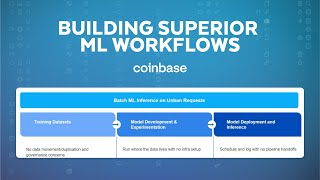
How Coinbase Developed an End-to-End ML Platform on Snowflake

Join this session to learn how Coinbase builds end-to-end ML workflows on top of Snowflake’s platform for optimal data security, governance and price performance. Using features such as Snowflake Feature Store and Snowflake Model Registry, Coinbase now automates batch and online inference on predictive ML models to quickly and accurately unban users who were initially incorrectly flagged as suspected fraud or bots, resulting in an improved user experience and increased revenue.

As compute warehouses become more commonly used, they become more cost efficient. At Pfizer, business domains at first had their own compute warehouses, and distinct functions (such as ETL, reporting, etc.) within each domain had their own dedicated warehouses. Pfizer has since switched to one set of common warehouses, one of each size and a larger value for MAX_CLUSTERS so that the warehouse handles many concurrent queries. Learn how Pfizer has seen cost savings of 30% without any performance degradation by using this approach.

Join Snowflake’s Head of AI Products for a tour of Snowflake’s enterprise-AI vision, recent innovations and roadmap. You’ll see how Snowflake Intelligence, automatic Semantic Model generation and specialized AI tools work together inside Snowflake’s secure platform, turning multimodal data into transformational impact for enterprise customers without infrastructure headaches. Walk away knowing how these integrated capabilities give business users, data analysts and engineers the tools, speed and governance required to deploy AI into production.

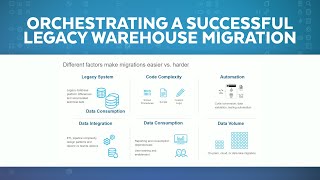
Legacy to Snowflake: How to Avoid Failing Your Data Warehouse Migration

Migrating a legacy data warehouse to Snowflake should be a predictable task. However, after participating in numerous projects, common failure patterns have emerged. In this session, we’ll explore typical pitfalls when moving to the Snowflake AI Data Cloud and offer recommendations for avoiding them. We’ll cover mistakes at every stage of the process, from technical details to end-user involvement and everything in between — code conversion (using SnowConvert!), data migration, deployment, optimization, testing and project management.