talk-data.com talk-data.com

Topic

SQL

Structured Query Language (SQL)

database_language data_manipulation data_definition programming_language

1751

tagged

Activity Trend

107 peak/qtr
2020-Q1 2026-Q1

Activities

1751 activities · Newest first

Oracle Database 10g: A Beginner's Guide

Provides beginning DBAs and developers with a solid foundation in the database administration and programming basics needed to embark on an Oracle career. The focus is on Oracle Database 10g, but you’ll get the fundamentals applicable to all Oracle database releases.

Sams Teach Yourself SQL™ in 10 Minutes, Third Edition

Sams Teach Yourself SQL in 10 Minutes has established itself as the gold standard for introductory SQL books, offering a fast-paced accessible tutorial to the major themes and techniques involved in applying the SQL language. Forta¿s examples are clear and his writing style is crisp and concise. As with earlier editions, this revision includes coverage of current versions of all major commercial SQL platforms. New this time around is coverage of MySQL, and PostgreSQL. All examples have been tested against each SQL platform, with incompatibilities or platform distinctives called out and explained.

XQuery: The XML Query Language

“An excellent, early look at the emerging XML Query standard. The chapters on surprises and gotchas alone are worth the price of admission!” — Ashok Malhotra, Architect, Microsoft “XQuery is the most important XML standard to emerge in recent years, and is a language with which anyone using XML on a regular basis should become acquainted. Michael Brundage's accessible introduction to XQuery provides enough information on all aspects of the standard, including its dark corners, to allow any XML developer to jump right in and start coding.” — Damien Fisher, Kernel Team Member, Soda Technologies Pty Ltd “This book does an excellent job of distilling the essentials of XQuery in an understandable, straightforward and easily digestable manner. This book has already become an indispensible part of my library and is a welcome addition to my XML repertoire.” — Dare Obasanjo, Program Manager, Microsoft Corporation “Simply put, the emerging XQuery standard adds enormous value to XML data and this book is your key to unlocking that value. Here in one stop you will find an accessible introduction to XQuery and a complete reference. Practitioners will particularly value the sections on XQuery idioms and surprises where Michael shares his tricks of the trade.” — Dave Van Buren, Project Manager, Jet Propulsion Laboratory “It’s both a stupendous reference on XQuery and a good read. Michael writes with verve, authority, and an eminently readable style. What a rare delight to discover all this, and in a technical book too! When the sequel comes along, sign me up.” — Howard Katz, Owner, Fatdog Software Inc., Editor, XQuery from the Experts (Addison-Wesley, 2003) From corporate IT departments to academic institutions, XML has become the language of choice for storing and transmitting data across diverse application domains. XQuery, an XML Query Language invented by the World Wide Web Consortium, offers a powerful, standardized way to query all of that XML-encapsulated information. With its ability to integrate XML and non-XML data, XQuery seems poised to do for XML what SQL has done for relational data. Written by the Technical Lead for XML query processing at Microsoft, is an invaluable resource for XQuery novices and experts alike. For those new to XQuery, this example-rich text serves as a tutorial that brings readers quickly up to speed on XQuery's data model, type system, and core language features. More experienced XML and database developers will find an excellent reference on the nuances of various expressions, as well as a guide to using XQuery to accomplish specific tasks. XQuery: The XML Query Language Drawing on his experiences using XQuery, Michael Brundage offers an objective, inside look at this emerging technology. His unique perspective translates into an accessible and authoritative guide for readers using XML for documents, Web services, or databases. Key coverage includes: Data model and type system Path navigation Iteration, construction, arithmetic, text processing, type operators and user-defined functions Information beyond the standard—such as a look at update languages, performance benchmarks, query optimization, XQuery style, and much, much more Hundreds of examples The future of XQuery The appendixes provide in-depth information on XQuery's type system, core expressions, built-in functions, regular expressions, and grammar. Meanwhile, the companion Web site offers downloadable source code for all of the examples in the book, the latest on the XQuery standard, answers to readers' questions, XQuery tips and strategies, and more. will show developers, programmers, and database administrators how a single line of this deep and powerful new language can accomplish the equivalent of hundreds of lines written in C, C#, Java, and other general-purpose programming languages. XQuery

XPath: Navigating XML with XPath 1.0 and 2.0 Kick Start

XPath is to XML as SQL is to databases: XML applications need XPath to locate specific data within an XML document for further processing with other XML applications such as XSLT, XQuery, XPointer, XLink and DOM level 3. With XPath, these applications offer developers a full toolkit for transforming, linking, and searching XML data. Developers need to understand XPath to fully exploit XML in their applications, and they have few resources beyond the W3C specification. XPath Kick Start will examine every aspect of XPath in detail, including its influence on and use with these other XML standards. With each technique illustrated with real-world examples, the book starts with coverage of the essentials of XPath, including nodes, expressions, functions and operators. The second half of the book details XPath in practice - from manipulating XML data to transforming, linking and querying XML documents.

Programming Oracle® Triggers and Stored Procedures, Third Edition

Complete tutorial for database developers! Thorough coverage of PL/SQL Practical "cookbook" techniques Effectively create and manage complex databases with Oracle! Systems and database expert Kevin Owens explores PL/SQL, Oracle's answer to the Structured Query Language (SQL), and teaches you what you need to know to build robust and complex databases for your business. Using easy-to-follow instructions and examples, this book presents techniques to take advantage of Oracle features such as triggers and stored procedures-features that allow your databases to incorporate business rules which are easy to manage and modify as the business evolves. Topics covered include: Viewing constraints in the data dictionary Complex rule enforcement PL/SQL program units and language features Data types and composite structure Error handling and exceptions Inter-process communications Declarative constraints, including primary key, unique, foreign key, check, and much more Programming Oracle Triggers and Stored Procedures, Third Edition, is an invaluable resource for database developers, designers, and project leaders looking to build and maintain truly intelligent, complex databases

SQL Tuning

A poorly performing database application not only costs users time, but also has an impact on other applications running on the same computer or the same network. SQL Tuning provides an essential next step for SQL developers and database administrators who want to extend their SQL tuning expertise and get the most from their database applications.There are two basic issues to focus on when tuning SQL: how to find and interpret the execution plan of an SQL statement and how to change SQL to get a specific alternate execution plan. SQL Tuning provides answers to these questions and addresses a third issue that's even more important: how to find the optimal execution plan for the query to use.Author Dan Tow outlines a timesaving method he's developed for finding the optimum execution plan--rapidly and systematically--regardless of the complexity of the SQL or the database platform being used. You'll learn how to understand and control SQL execution plans and how to diagram SQL queries to deduce the best execution plan for a query. Key chapters in the book include exercises to reinforce the concepts you've learned. SQL Tuning concludes by addressing special concerns and unique solutions to "unsolvable problems."Whether you are a programmer who develops SQL-based applications or a database administrator or other who troubleshoots poorly tuned applications, SQL Tuning will arm you with a reliable and deterministic method for tuning your SQL queries to gain optimal performance.

Transact-SQL Desk Reference

This is the SQL reference you'll reach for first, every time! If you're an SQL programmer, you can easily picture how useful a comprehensive, single-volume Transact-SQL command reference manual would be in streamlining your work. And if that book was rich in examples, was written with users of all levels of expertise in mind, and was even designed to fit comfortably on your desktop, you'd probably buy it right away, wouldn't you? Well, look no further— Transact-SQL Desk Reference, by noted programming instructor Deac Lancaster, is exactly the book you need. As it turns out, Transact-SQL Desk Reference is just the book Deac himself was looking for. The problem was, no such book existed, so he saved programmers everywhere a lot of trouble and he wrote it himself! The book answers the question, "How exactly do I write a statement to do a particular job?" by providing the full syntax of each command along with examples showing each command in action. Then, to assist you in making your code more portable, Transact-SQL Desk Reference shows where Transact-SQL diverges from the ANSI SQL standard. The commands are arranged by functional area and are well indexed and cross-referenced, making it as easy as possible to find what you're looking for-even if you don't know the command's name. Inside, you'll find: SQL commands grouped logically by purpose and function, plus an index so you can jump right to the command Definitions that give the full syntax of each command, along with examples of each command in use plus tips on maximizing portability Additional chapters covering RDBMS concepts, details of Transact-SQL, and advanced SELECT queries! This book is intended for programmers of all levels working with Microsoft SQL Server.

Guru's Guide to SQL Server Architecture and Internals, The

"I can pretty much guarantee that anyone who uses SQL Server on a regular basis (even those located in Redmond working on SQL Server) can learn something new from reading this book." --David Campbell, Product Unit Manager, Relational Server Team, Microsoft Corporation The latest book from the highly regarded and best-selling author Ken Henderson, is the consummate reference to Microsoft SQL Server. Picking up where documentation and white papers leave off, this book takes an all-inclusive approach to provide the most depth and breadth of coverage of any book on SQL Server architecture, internals, and tuning. The Guru's Guide to SQL Server Architecture and Internals Blending in-depth discussion with practical application, the guide begins with several chapters on the fundamental Windows technologies behind SQL Server, including processes and threads, memory management, Windows I/O, and networking. The focus then moves on to the architectural details of SQL Server and how to practically apply them. The entire SQL Server product is covered--not just the functionality that resides within the core executable or product features that have been in place for years. SQL Server has matured and broadened substantially with each release, and the author explores the "fringe" technologies that have yet to be covered elsewhere, including Notification Services, Full Text Search, SQLXML, replication, DTS, and a host of others. Throughout the book, the author uses WinDbg, Microsoft's free downloadable symbolic debugger, to look under the hood of SQL Server. Armed with new debugging and coding skills, readers will be ready to master SQL Server on their own. The accompanying CD-ROM is packed with additional material, including full source code for the book's 900+ examples, as well as three invaluable tools: DTSDIAG, the VBODSOLE Library, and DTS Package Guru. DTSDIAG allows developers and administrators to simultaneously collect Profiler traces, perform logs, blocking script output, system event logs, and SQLDIAG reports from a specified SQL Server. The VBODSOLE Library features more than twenty new COM-based functions for Transact-SQL, including T-SQL enhancements such as array-manipulation routines, financial functions, string-manipulation functions, and system functions. DTS Package Guru is a .NET-based package editor for SQL Server's Data Transformation Services that allows editing of any modifiable package and supports the automation of mass package changes. is the essential guide for database developers and admin- istrators alike, regardless of skill level. The Guru's Guide to SQL Server Architecture and Internals 0201700476B10012003

Effective XML: 50 Specific Ways to Improve Your XML

Praise for Effective XML “This is an excellent collection of XML best practices: essential reading for any developer using XML. This book will help you avoid common pitfalls and ensure your XML applications remain practical and interoperable for as long as possible.” — Edd Dumbill, Managing Editor, XML.com and Program Chair, XML Europe “A collection of useful advice about XML and related technologies. Well worth reading both before, during, and after XML application development.” — Sean McGrath, CTO, Propylon “A book on many best practices for XML that we have been eagerly waiting for.” — Akmal B. Chaudhri, Editor, IBM developerWorks “The fifty easy-to-read items cover many aspects of XML, ranging from how to use markup effectively to what schema language is best for what task. Sometimes controversial, but always relevant, Elliotte Rusty Harold’s book provides best practices for working with XML that every user and implementer of XML should be aware of.” — Michael Rys, Ph.D., Program Manager, SQL Server XML Technologies, Microsoft Corporation “ Effective XML is an excellent book with perfect timing. Finally, an XML book everyone needs to read! Effective XML is a fount of XML best practices and solid advice. Whether you read Effective XML cover to cover or randomly one section at a time, its clear writing and insightful recommendations enlighten, entertain, educate, and ultimately improve the effectiveness of even the most expert XML developer. I’ll tell you what I tell all my coworkers and customers: You need this book.” — Michael Brundage, Technical Lead, XML Query Processing, Microsoft WebData XML Team “This book provides great insight for all developers who write XML software, regardless of whether the software is a trivial application-specific XML processor or a fullblown W3C XML Schema Language validator. Mr. Harold covers everything from a very important high-level terminology discussion to details about parsed XML nodes. The well-researched comparisons of currently available XML-related software products, as well as the key criteria for selecting between XML technologies, exemplify the thoroughness of this book.” — Cliff Binstock, Author, The XML Schema Complete Reference If you want to become a more effective XML developer, you need this book. You will learn which tools to use when in order to write legible, extensible, maintainable and robust XML code. Page 36: How do you write DTDs that are independent of namespace prefixes? Page 82: What do parsers reliably report and what don't they? Page 130: Which schema language is the right one for your job? Page 178: Which API should you choose for maximum speed and minimum size? Page 257: What can you do to ensure fast, reliable access to DTDs and schemas without making your document less portable? Page 283: Is XML too verbose for your application? Elliotte Rusty Harold provides you with 50 practical rules of thumb based on real-world examples and best practices. His engaging writing style is easy to understand and illustrates how you can save development time while improving your XML code. Learn to write XML that is easy to edit, simple to process, and is fully interoperable with other applications and code. Understand how to design and document XML vocabularies so they are both descriptive and extensible. After reading this book, you'll be ready to choose the best tools and APIs for both large-scale and small-scale processing jobs. Elliotte provides you with essential information on building services such as verification, compression, authentication, caching, and content management. If you want to design, deploy, or build better systems that utilize XML—then buy this book and get going!

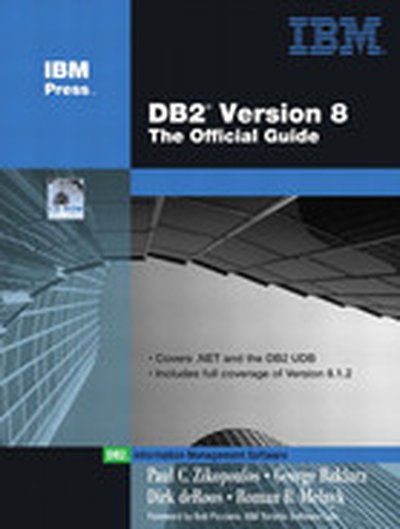
DB2® Version 8: The Official Guide

IBM DB2 Universal Database v8.1.2 will help you access any information, from any application, from anywhere in your organization, anytime—and do it all more easily and cost-effectively than you ever thought possible. Now, in DB2 Version 8: The Official Guide, a team of IBM DB2 experts shows experienced DB2 professionals exactly how to make the most of DB2 Version 8 in any environment—Linux®, UNIX®, or Windows®. The authors draw on extensive personal experience helping customers implement state-of-the-art DB2 solutions, and unparalleled access to the IBM DB2 development team. They offer detailed, never-before-published technical guidance for the key challenges you'll face in delivering high-performance DB2 databases, e-business infrastructure, and enterprise integration solutions. Coverage includes: Simplifying management with the Configuration Advisor, HealthCenter(, and Memory Visualizer Integrating the enterprise via Federated Web Services and the DB2 enhanced XML productivity tools Maximizing database scalability, availability, and robustness Using multidimensional data clustering and other integrated business intelligence tools Integrating with IBM WebSphere and Microsoft software development tools Leveraging key improvements in DB2 SQL functionality The accompanying CD-ROM contains a complete trial version of IBM® DB2® Universal Database Personal Edition Version 8.1, for Windows® Operating Environments, Evaluation Copy, plus the DB2 demonstration program for trying out the various SQL commands on your own machine. If you're an experienced DB2 professional who's ready to take DB2 Version 8 to the max, DB2 Version 8: The Official Guide is the book you've been searching for.

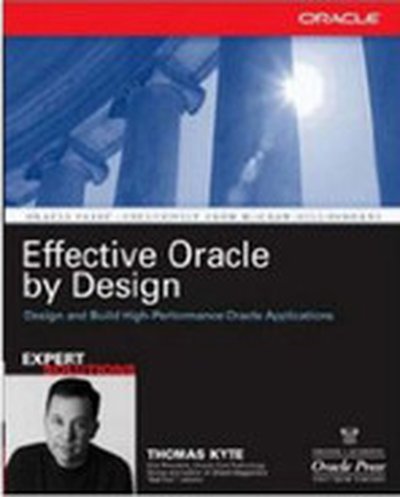
Effective Oracle by Design

Tom Kyte of Oracle Magazine’s “Ask Tom” column has written the definitive guide to designing and building high-performance, scalable Oracle applications. The book covers schema design, SQL and PL/SQL, tables and indexes, and much more. From the exclusive publisher of Oracle Press books, this is a must-have resource for all Oracle developers and DBAs.

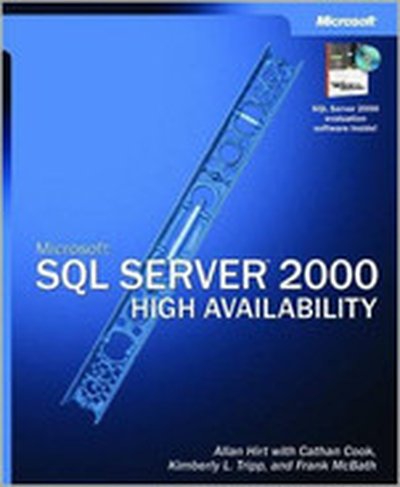
Microsoft® SQL Server™ 2000 High Availability

Ensuring 24/7 database availability is crucial to your company’s success. Discover the best ways to help keep your critical, Microsoft SQL Server 2000–based systems up and running—and secure—with this in-depth guide, straight from the source.

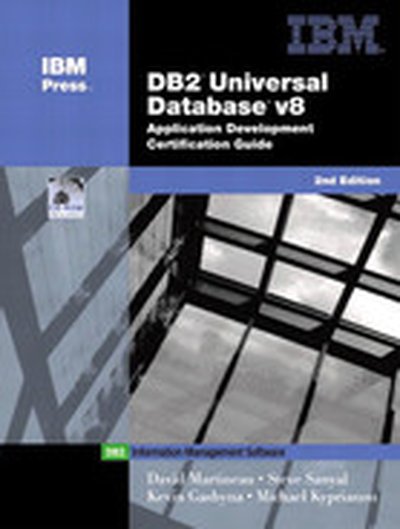
DB2® Universal Database™ v8 Application Development Certification Guide, 2nd Edition

You will find every skill and technique you need to build enterprise, Web, and eBusiness applications with DB2 UDB v8. This book is IBM's official guide to becoming an IBM Certified Application Developer for the DB2 Universal Database v8 Family. New to the second edition is the inclusion of the information that you will need to prepare for the Fundamentals exam, a prerequisite to the Application Development exam. This section covers information about the DB2 products, tools, connectivity, data objects, manipulation, control, security, and concurrency. The application development section has been revised and updated to reflect new powerful features of DB2. You can review the DB2 client-server environment, the role of SQL, and the basic structure of a DB2 application; compare the programming interfaces available for DB2 application development, choosing the ones most appropriate to each project; and, of course, prepare for the Application Development Exam. As a bonus, information that is not needed to become an IBM Certified Application Developer for the DB2 Universal Database v8 Family has been provided by the authors to show you how to take advantage of IBM's powerful Extenders for DB2. Using Extenders, you can build searchable indexes to quickly find elements within text, audio, image, or XML objects stored in DB2. Section 1 covers all the fundamentals of DB2 to get you started and to prepare you for the DB2 UDB v8 Family Fundamentals Exam (test 700) Section 2 covers every DB2 v8 programming interface and strategy and will help prepare you for the DB2 UDB v8 Family Application Development Exam (test 703) Section 3 contains bonus materials including information about the many Extenders that are available to create powerful indexes for text, audio, image, and XML documents The accompanying CD-ROM contains a complete trial version of DB2 UDB v8 Personal Edition along with the Application Development Client.

Oracle® DBA SQL Quick Reference

The Oracle SQL every DBA needs—fast and easy! Covers all the core day-to-day tasks DBAs are responsible for Quick access to SQL commands, operators, functions, data dictionary views, and more Includes dozens of easy-to-understand syntax diagrams The fast, practical Oracle SQL reference for every Oracle DBA! If you're a working Oracle DBA, here's the Oracle SQL reference you've been searching for—simple, straightforward, and incredibly easy to use! There's no faster way to discover the exact syntax you need...refresh your memory about that option you haven't used lately...find the name of that view you know exists...start using that new Oracle 9 i feature you haven't tried yet. Keep it by your desk, near your server...wherever you need fast, reliable answers right this minute! Covers Oracle SQL through Oracle9 i Release 2 Clear, well-organized tables of operators, functions, format models, privileges, and reserved words Complete command reference: syntax and options for every Oracle SQL command Standard "railroad" syntax diagrams make it easy to write correct syntax Handy listings of data dictionary views and dynamic performance tables

SQL Clearly Explained, 2nd Edition

This is the second edition of the popular practitioner's guide to SQL, the industry-standard database query language. Like most computer languages, SQL can be overwhelming when you first see it, but for years readers have relied on this book to clear the confusion and explain how SQL works and how to use it effectively. Packed with tips, tricks, and good information, SQL Clearly Explained, Second Edition teaches database users and programmers everything they need to know to get their job done including · formulating SQL queries, · understanding how queries are processed by the DBMS,· maximizing performance,· using SQL to enter, modify, or delete data,· creating and maintaining database structural elements, and· embedding SQL in applications.Features· Updated and expanded to include changes in the SQL standard (SQL:1999) as well as recently implemented aspects of SQL-92.· Includes CD with examples from the book as well as MySQL, a popular open-source DBMS, on which the examples are based.· Web enhanced with extra features available online at www.mkp.com. * Second edition of classic SQL handbook Updated to cover changes in the SQL language standard (SQL:1999) Includes CD with MySQL software

XML Data Management: Native XML and XML-Enabled Database Systems

"This is an excellent book that combines a practical and analytical look at the subject." —Leo Korman, Principal Software Engineer, KANA Software As organizations begin to employ XML within their information-management and exchange strategies, data management issues pertaining to storage, retrieval, querying, indexing, and manipulation increasingly arise. Moreover, new information-modeling challenges also appear. —with its contributions from experts at the forefront of the XML field—addresses these key issues and challenges, offering insights into the advantages and drawbacks of various XML solutions, best practices for modeling information with XML, and developing custom, in-house solutions. XML Data Management In this book, you will find discussions on the newest native XML databases, along with information on working with XML-enabled relational database systems. In addition, thoroughly examines benchmarks and analysis techniques for performance of XML databases. XML Data Management Topics covered include: The power of good grammar and style in modeling information to alleviate the need for redundant domain knowledge Tamino's XML storage, indexing, querying, and data access features The features and APIs of open source eXist Berkeley DB XML's ability to store XML documents natively IBM's DB2 Universal Database and its support for XML applications Xperanto's method of addressing information integration requirements Oracle's XMLType for managing document centric XML documents Microsoft SQL Server 2000's support for exporting and importing XML data A generic architecture for storing XML documents in a relational database X007, XMach-1, XMark, and other benchmarks for evaluating XML database performance Numerous case studies demonstrate real-world problems, industry-tested solutions, and creative applications of XML data management solutions. Written for both XML and relational database professionals, provides a promising new approach to data management, one that is sure to positively impact the way organizations manage and exchange information. XML Data Management 0201844524B01302003

Database Design for Mere Mortals™: A Hands-On Guide to Relational Database Design, Second Edition

“This book takes the somewhat daunting process of database design and breaks it into completely manageable and understandable components. Mike’s approach whilst simple is completely professional, and I can recommend this book to any novice database designer.” – Sandra Barker, Lecturer, University of South Australia, Australia “Databases are a critical infrastructure technology for information systems and today’s business. Mike Hernandez has written a literate explanation of database technology–a topic that is intricate and often obscure. If you design databases yourself, this book will educate you about pitfalls and show you what to do. If you purchase products that use a database, the book explains the technology so that you can understand what the vendor is doing and assess their products better.” – Michael Blaha, consultant and trainer, author of A Manager’s Guide to Database Technology “If you told me that Mike Hernandez could improve on the first edition of Database Design for Mere Mortals I wouldn’t have believed you, but he did! The second edition is packed with more real-world examples, detailed explanations, and even includes database-design tools on the CD-ROM! This is a must-read for anyone who is even remotely interested in relational database design, from the individual who is called upon occasionally to create a useful tool at work, to the seasoned professional who wants to brush up on the fundamentals. Simply put, if you want to do it right, read this book!” – Matt Greer, Process Control Development, The Dow Chemical Company “Mike’s approach to database design is totally common-sense based, yet he’s adhered to all the rules of good relational database design. I use Mike’s books in my starter database-design class, and I recommend his books to anyone who’s interested in learning how to design databases or how to write SQL queries.” – Michelle Poolet, President, MVDS, Inc. “Slapping together sophisticated applications with poorly designed data will hurt you just as much now as when Mike wrote his first edition, perhaps even more. Whether you’re just getting started developing with data or are a seasoned pro; whether you've read Mike’s previous book or this is your first; whether you're happier letting someone else design your data or you love doing it yourself–this is the book for you. Mike’s ability to explain these concepts in a way that’s not only clear, but fun, continues to amaze me.” –From the Foreword by Ken Getz, MCW Technologies, coauthor ASP.NET Developer's JumpStart “The first edition of Mike Hernandez’s book Database Design for Mere Mortals was one of the few books that survived the cut when I moved my office to smaller quarters. The second edition expands and improves on the original in so many ways. It is not only a good, clear read, but contains a remarkable quantity of clear, concise thinking on a very complex subject. It’s a must for anyone interested in the subject of database design.” – Malcolm C. Rubel, Performance Dynamics Associates “Mike’s excellent guide to relational database design deserves a second edition. His book is an essential tool for fledgling Microsoft Access and other desktop database developers, as well as for client/server pros. I recommend it highly to all my readers.” – Roger Jennings, author of Special Edition Using Access 2002 “There are no silver bullets! Database technology has advanced dramatically, the newest crop of database servers perform operations faster than anyone could have imagined six years ago, but none of these technological advances will help fix a bad database design, or capture data that you forgot to include! Database Design for Mere Mortals™, Second Edition, helps you design your database right in the first place!” – Matt Nunn, Product Manager, SQL Server, Microsoft Corporation “When my brother started his professional career as a developer, I gave him Mike’s book to help him understand database concepts and make real-world application of database technology. When I need a refresher on the finer points of database design, this is the book I pick up. I do not think that there is a better testimony to the value of a book than that it gets used. For this reason I have wholeheartedly recommended to my peers and students that they utilize this book in their day-to-day development tasks.” – Chris Kunicki, Senior Consultant, OfficeZealot.com “Mike has always had an incredible knack for taking the most complex topics, breaking them down, and explaining them so that anyone can ‘get it.’ He has honed and polished his first very, very good edition and made it even better. If you're just starting out building database applications, this book is a must-read cover to cover. Expert designers will find Mike’s approach fresh and enlightening and a source of great material for training others.” – John Viescas, President, Viescas Consulting, Inc., author of Running Microsoft Access 2000 and coauthor of SQL Queries for Mere Mortals “Whether you need to learn about relational database design in general, design a relational database, understand relational database terminology, or learn best practices for implementing a relational database, Database Design for Mere Mortals™, Second Edition, is an indispensable book that you’ll refer to often. With his many years of real-world experience designing relational databases, Michael shows you how to analyze and improve existing databases, implement keys, define table relationships and business rules, and create data views, resulting in data integrity, uniform access to data, and reduced data-entry errors.” – Paul Cornell, Site Editor, MSDN Office Developer Center Sound database design can save hours of development time and ensure functionality and reliability. is a straightforward, platform-independent tutorial on the basic principles of relational database design. It provides a commonsense design methodology for developing databases that work. Database Design for Mere Mortals™, Second Edition, Database design expert Michael J. Hernandez has expanded his best-selling first edition, maintaining its hands-on approach and accessibility while updating its coverage and including even more examples and illustrations. This edition features a CD-ROM that includes diagrams of sample databases, as well as design guidelines, documentation forms, and examples of the database design process. This book will give you the knowledge and tools you need to create efficient and effective relational databases.

MySQL Pocket Reference

If you use MySQL, you know why it's the world's most popular open source database: small, fast, and powerful, and so rich in features that no administrator or programmer can stay familiar with all of them. There are always some little-known commands and clauses that could help you become more efficient in your work if you could just keep them in mind. The problem is, you don't always have time to stop and thumb through an exhaustive reference when you're hard at work. If you need a quick reminder, the MySQL Pocket Reference can lead you straight to the answer you need to know to get the job done. Easy to take and use anywhere, this little book provides instant reminders on how to use important MySQL functions in conjunction with key parts of the LAMP open source infrastructure. A complete reference to the MySQL version of SQL, this pocket guide also serves as a convenient companion to our large, in-depth volume, Managing and Using MySQL. The book covers installation of MySQL and includes a description of SQL commands, data types, operators, and functions. In this small book, you get a handy reference to the enormous feature set of MySQL, the dominant database in the open source world. O'Reilly's Pocket References have become a favorite among programmers everywhere. By providing important details in a succinct, well-organized format, these pocket-sized books deliver just what you need to complete the task at hand. When you've reached a sticking point in your work and need to get to a solution quickly, the new MySQL Pocket Reference is the book you'll want to have.

TOAD® Handbook

TOAD Handbook is a guide for developing Oracle applications and administering Oracle databases with TOAD. Starting with installation and configuration, the book covers the TOAD SQL editors in depth, including dozens of helpful, undocumented features. Later chapters discuss reporting and exporting data and using several add-on tools designed to enhance TOAD development. Along the way, the authors provide critical insights into the workings of TOAD and how developers can use it to make the most of their applications. Includes a foreword by Jim McDaniel, the inventor of TOAD.