talk-data.com talk-data.com

Topic

SQL

Structured Query Language (SQL)

database_language data_manipulation data_definition programming_language

994

tagged

Activity Trend

107 peak/qtr
2020-Q1 2026-Q1

Activities

994 activities · Newest first

Snowflake: The Definitive Guide, 2nd Edition

Snowflake is reshaping data management by integrating AI, analytics, and enterprise workloads into a single cloud platform. Snowflake: The Definitive Guide is a comprehensive resource for data architects, engineers, and business professionals looking to harness Snowflake's evolving capabilities, including Cortex AI, Snowpark, and Polaris Catalog for Apache Iceberg. This updated edition provides real-world strategies and hands-on activities for optimizing performance, securing data, and building AI-driven applications. With hands-on SQL examples and best practices, this book helps readers process structured and unstructured data, implement scalable architectures, and integrate Snowflake's AI tools seamlessly. Whether you're setting up accounts, managing access controls, or leveraging generative AI, this guide equips you with the expertise to maximize Snowflake's potential. Implement AI-powered workloads with Snowflake Cortex Explore Snowsight and Streamlit for no-code development Ensure security with access control and data governance Optimize storage, queries, and computing costs Design scalable data architectures for analytics and machine learning

The Data Engineer's Guide to Microsoft Fabric

Modern data engineering is evolving; and with Microsoft Fabric, the entire data platform experience is being redefined. This essential book offers a fresh, hands-on approach to navigating this shift. Rather than being an introduction to features, this guide explains how Fabric's key components—Lakehouse, Warehouse, and Real-Time Intelligence—work under the hood and how to put them to use in realistic workflows. Written by Christian Henrik Reich, a data engineering expert with experience that extends from Databricks to Fabric, this book is a blend of foundational theory and practical implementation of lakehouse solutions in Fabric. You'll explore how engines like Apache Spark and Fabric Warehouse collaborate with Fabric's Real-Time Intelligence solution in an integrated platform, and how to build ETL/ELT pipelines that deliver on speed, accuracy, and scale. Ideal for both new and practicing data engineers, this is your entry point into the fabric of the modern data platform. Acquire a working knowledge of lakehouses, warehouses, and streaming in Fabric Build resilient data pipelines across real-time and batch workloads Apply Python, Spark SQL, T-SQL, and KQL within a unified platform Gain insight into architectural decisions that scale with data needs Learn actionable best practices for engineering clean, efficient, governed solutions

PostgreSQL: Up and Running, 4th Edition

Thinking of migrating to PostgreSQL? This concise introduction helps you understand and use this open source database system. Not only will you learn about the new enterprise class features in versions 16 to 18, but you'll also discover all that PostgreSQL has to offer—much more than a relational database system. As an open source product, it has hundreds of plug-ins, expanding the capability of PostgreSQL beyond all other database systems. With examples throughout, this book shows you how to perform tasks that are difficult or impossible in other databases. The revised fourth edition covers the latest features of Postgres, such as ISO-SQL constructs rarely found in other databases, foreign data wrapper (FDW) enhancements, JSON constructs, multirange data types, query parallelization, and replication. If you're an experienced PostgreSQL user, you'll pick up gems you may have missed before. Learn basic administration tasks such as role management, database creation, backup, and restore Use psql command-line utility and the pgAdmin graphical administration tool Explore PostgreSQL tables, constraints, and indexes Learn powerful SQL constructs not generally found in other databases Use several different languages to write database functions and stored procedures Tune your queries to run as fast as your hardware will allow Query external and variegated data sources with foreign data wrappers Learn how to use built-in replication to replicate data

Advanced SQL

SQL is no longer just a querying language for relational databases—it's a foundational tool for building scalable, modern data solutions across real-time analytics, machine learning workflows, and even generative AI applications. Advanced SQL shows data professionals how to move beyond conventional SELECT statements and tap into the full power of SQL as a programming interface for today's most advanced data platforms. Written by seasoned data experts Rui Pedro Machado, Hélder Russa, and Pedro Esmeriz, this practical guide explores the role of SQL in streaming architectures (like Apache Kafka and Flink), data lake ecosystems, cloud data warehouses, and ML pipelines. Geared toward data engineers, analysts, scientists, and analytics engineers, the book combines hands-on guidance with architectural best practices to help you extend your SQL skills into emerging workloads and real-world production systems. Use SQL to design and deploy modern, end-to-end data architectures Integrate SQL with data lakes, stream processing, and cloud platforms Apply SQL in feature engineering and ML model deployment Master pipe syntax and other advanced features for scalable, efficient queries Leverage SQL to build GenAI-ready data applications and pipelines

Head First SQL, 2nd Edition

What will you learn from this book? Do you have an abundance of data but don't know how to make sense of it? Do you want to gain useful insights from your data, but you're not sure where to begin? Mining data is a vital, well-paying skill, and SQL provides the most fundamental way to query and manage data. But learning SQL can be intimidating. This thoroughly revised book teaches you SQL fundamentals in a painless and enjoyable manner. With the Head First series' hands-on, conversational style, you'll quickly grasp SQL concepts, then move to intermediate topics, including stored procedures and cloud databases. You'll gain the knowledge, skills, and confidence necessary to get the most out of your data with SQL. Why does this book look so different? If you've read a Head First book, you know what to expect: a visually rich format designed for the way your brain works. If you haven't, you're in for a treat. With this book, you'll learn about SQL through a multisensory experience that engages your mind—rather than a text-heavy approach that puts you to sleep.

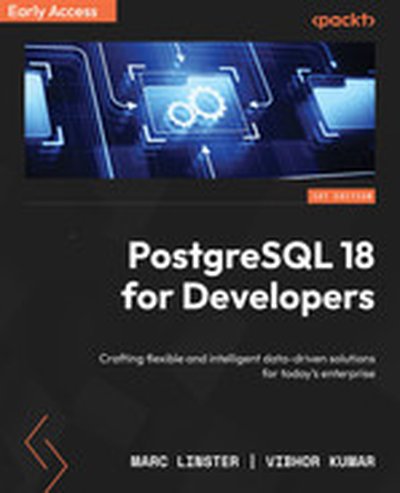
PostgreSQL 18 for Developers

Developing intelligent applications that integrate AI, analytics, and transactional capabilities using the latest release of the world's most popular open-source database Key Features Practical examples demonstrating how to use Postgres to develop intelligent applications Best practices for developers of intelligent data management applications Includes the latest PostgreSQL 18 features for AI, analytics, and transactions ures for AI, analytics, and transactions Book Description In today’s data-first world, businesses need applications that blend transactions, analytics, and AI to power real-time insights at scale. Mastering PostgreSQL 18 for AI-Powered Enterprise Apps is your essential guide to building intelligent, high-performance systems with the latest features of PostgreSQL 18. Through hands-on examples and expert guidance, you’ll learn to design architectures that unite OLTP and OLAP, embed AI directly into apps, and optimize for speed, scalability, and reliability. Discover how to apply cutting-edge PostgreSQL tools for real-time decisions, predictive analytics, and automation. Go beyond basics with advanced strategies trusted by industry leaders. Whether you’re building data-rich applications, internal analytics platforms, or AI-driven services, this book equips you with the patterns and insights to deliver enterprise-grade innovation. Ideal for developers, architects, and tech leads driving digital transformation, this book empowers you to lead the future of intelligent applications. Harness the power of PostgreSQL 18—and unlock the full potential of your data. What you will learn How to leverage PostgreSQL 18 for building intelligent data-driven applications for the modern enterprise Data management principles and best practices for managing transactions, analytics, and AI use cases How to utilize Postgres capabilities to address architectural challenges and attain optimal performance for each use case Methods for utilizing the latest Postgres innovation to create integrated data management applications Guidelines on when to use Postgres and when to opt for specialized data management solutions Who this book is for This book is intended for developers creating intelligent, data-driven applications for the modern enterprise. It features hands-on examples that demonstrate how to use PostgreSQL as the database for business applications that integrate transactions, analytics, and AI. We explore the fundamental architectural principles of data management and detail how developers utilize PostgreSQL 18's latest capabilities to build AI-enabled applications. The book assumes a working knowledge of SQL and does not address the needs of data analysts or those looking to master SQL.

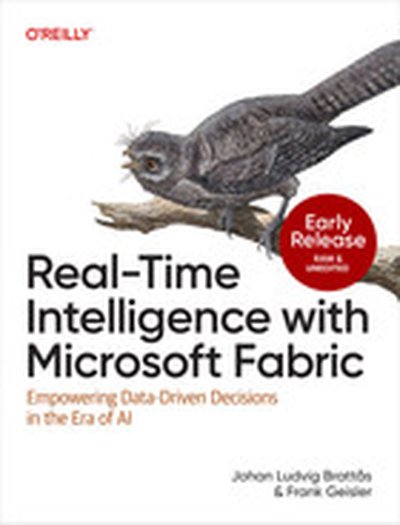
Real-Time Intelligence with Microsoft Fabric

In today's hyper-connected world, many organizations are overwhelmed by the volume of data generated every second. Making timely decisions using this information remains a challenge for many. Real-time intelligence has transformed from a luxury to a necessity for businesses striving to stay ahead in a rapidly evolving marketplace. Enter Microsoft Fabric's Real-Time Intelligence: a new tool that not only analyzes data but also acts upon the results. If you're ready to unlock the power of immediate insights, this comprehensive primer offers an exploration into the capabilities of Real-Time Intelligence with Microsoft Fabric. Authors Johan Ludvig Brattås and Frank Geisler explain AI-driven insights and how to use them to drive business success. Whether you're a seasoned professional or an enthusiast, this guide is the key to understanding an exciting new platform. You'll discover: The core concepts of Real-Time Intelligence within Microsoft Fabric Challenges that can be solved with Real-Time Intelligence, enhancing efficiency Techniques for using KQL queries, including SQL knowledge to optimize these queries Practical applications including data analytic solutions, event streams, and more How to automatically trigger actions based on data conditions

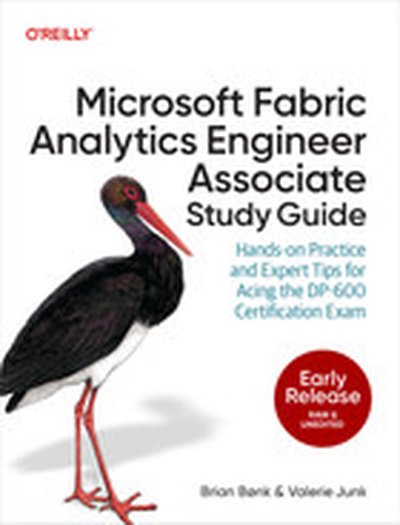
Microsoft Fabric Analytics Engineer Associate Study Guide

Data is the heartbeat of business. Microsoft's Fabric Analytics Engineer Associate (DP-600) certification proves you understand the tools and technologies to make use of it. This comprehensive guide covers everything you need to know to design and implement enterprise-grade analytics solutions—and ace your certification exam. Drawing on their extensive experience working with Microsoft Fabric and Power BI, Brian Bønk and Valerie Junk take you through preparing and transforming data, securing and managing analytics assets, and building and optimizing semantic models. You'll learn to work with data warehouses and lakehouses, ensuring data is structured and ready for analysis. You will also discover how to query and analyze data using SQL, KQL, and DAX, which are essential skills for anyone working with Fabric. Whether you're preparing for the exam or just looking to expand your Fabric expertise, this book gives you the foundation to succeed. Prepare and enrich data for analysis Work with, secure, and maintain analytics assets Implement and manage semantic models Utilize data warehouses and lakehouses Handle workspace access control and item-level access control Optimize enterprise-scale semantic models

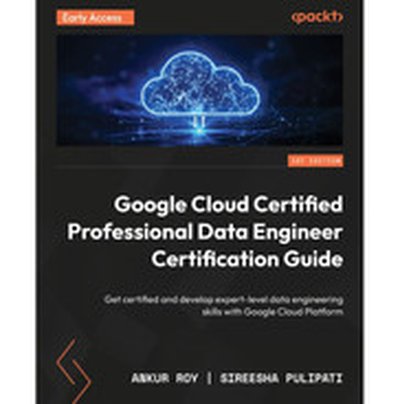
Google Cloud Certified Professional Data Engineer Certification Guide

A guide to pass the GCP Professional Data Engineer exam on your first attempt and upgrade your data engineering skills on GCP. Key Features Fully understand the certification exam content and exam objectives Consolidate your knowledge of all essential exam topics and key concepts Get realistic experience of answering exam-style questions Develop practical skills for everyday use Purchase of this book unlocks access to web-based exam prep resources including mock exams, flashcards, exam tips Book Description The GCP Professional Data Engineer certification validates the fundamental knowledge required to perform data engineering tasks and use GCP services to enhance data engineering processes and further your career in the data engineering/architecting field. This book is a best-in-class study guide that fully covers the GCP Professional Data Engineer exam objectives and helps you pass the exam first time. Complete with clear explanations, chapter review questions, realistic mock exams, and pragmatic solutions, this guide will help you master the core exam concepts and build the understanding you need to go into the exam with the skills and confidence to get the best result you can. With the help of relevant examples, you'll learn fundamental data engineering concepts such as data warehousing and data security. As you progress, you'll delve into the important domains of the exam, including data pipelining, data migration, and data processing. Unlike other study guides, this book contains logical reasoning behind the choice of correct answers based in scenarios and provide you with excellent tips regarding the optimal use of each service, and gives you everything you need to pass the exam and enhance your prospects in the data engineering field. What you will learn Create data solutions and pipelines in GCP Analyze and transform data into useful information Apply data engineering concepts to real scenarios Create secure, cost-effective, valuable GCP workloads Work in the GCP environment with industry best practices Who this book is for This book is for data engineers who want a reliable source for the key concepts and terms present in the most prestigious and highly-sought-after cloud-based data engineering certification. This book will help you improve your data engineering in GCP skills to give you a better chance at earning the GCP Professional Data Engineer Certification. You will already be familiar with the Google Cloud Platform, having either explored it (professionally or personally) for at least a year. You should also have some familiarity with basic data concepts (such as types of data and basic SQL knowledge).

Data Contracts in Practice

In 'Data Contracts in Practice', Ryan Collingwood provides a detailed guide to managing and formalizing data responsibilities within organizations. Through practical examples and real-world use cases, you'll learn how to systematically address data quality, governance, and integration challenges using data contracts. What this Book will help me do Learn to identify and formalize expectations in data interactions, improving clarity among teams. Master implementation techniques to ensure data consistency and quality across critical business processes. Understand how to effectively document and deploy data contracts to bolster data governance. Explore solutions for proactively addressing and managing data changes and requirements. Gain real-world skills through practical examples using technologies like Python, SQL, JSON, and YAML. Author(s) Ryan Collingwood is a seasoned expert with over 20 years of experience in product management, data analysis, and software development. His holistic techno-social approach, designed to address both technical and organizational challenges, brings a unique perspective to improving data processes. Ryan's writing is informed by his extensive hands-on experience and commitment to enabling robust data ecosystems. Who is it for? This book is ideal for data engineers, software developers, and business analysts working to enhance organizational data integration. Professionals with a familiarity of system design, JSON, and YAML will find it particularly beneficial. Enterprise architects and leadership roles looking to understand data contract implementation and their business impacts will also greatly benefit. Basic understanding of Python and SQL is recommended to maximize learning.

Oracle 23AI & ADBS in Action: Exploring New Features with Hands-On Case Studies

Unlock the power of Oracle Database 23AI and Autonomous Database Serverless (ADB-S) with this comprehensive guide to the latest innovations in performance, security, automation, and AI-driven optimization. As enterprises embrace intelligent and autonomous data platforms, understanding these capabilities is essential for data architects, developers, and DBAs. Explore cutting-edge features such as vector data types and AI-powered vector search, revolutionizing data retrieval in modern AI applications. Learn how schema privileges and the DB_DEVELOPER_ROLE simplify access control in multi-tenant environments. Dive into advanced auditing, SQL Firewall, and data integrity constraints to strengthen security and compliance. Discover AI-driven advancements like machine learning-based query execution, customer retention prediction, and AI-powered query tuning. Additional chapters cover innovations in JSON, XML, JSON-Relational Duality Views, new indexing techniques, SQL property graphs, materialized views, partitioning, lock-free transactions, JavaScript stored procedures, blockchain tables, and automated bigfile tablespace shrinking. What sets this book apart is its practical focus—each chapter includes real-world case studies and executable scripts, enabling professionals to implement these features effectively in enterprise environments. Whether you're optimizing performance or aligning IT with business goals, this guide is your key to building scalable, secure, and AI-powered solutions with Oracle 23AI and ADB-S. What You Will Learn Explore Oracle 23AI's latest features through real-world use cases Implement AI/ML-driven optimizations for smarter, autonomous database performance Gain hands-on experience with executable scripts and practical coding examples Strengthen security and compliance using advanced auditing, SQL Firewall, and blockchain tables Master high-performance techniques for query tuning, in-memory processing, and scalability Revolutionize data access with AI-powered vector search in modern AI workloads Simplify user access in multi-tenant environments using schema privileges and DB_DEVELOPER_ROLE Model and query complex data using JSON-Relational Duality Views and SQL property graphs Who this Book is For Database architects, data engineers, Oracle developers, and IT professionals seeking to leverage Oracle 23AI’s latest features for real-world applications

SAP ABAP 7.5 Optimization for HANA: AMDP, CDS and Native SQL for Peak Performance

In the evolving landscape of SAP development, performance is no longer just a nice-to-have—it's a necessity. With the power of SAP HANA and the enhancements introduced in ABAP 7.5, developers are now equipped to rethink how applications are built, executed, and optimized. This book is your guide to that transformation. We begin by understanding the core shift: moving data-intensive operations directly into the HANA database. When implemented correctly, this "code pushdown" philosophy dramatically reduces data transfer and processing overhead. AMDP (ABAP Managed Database Procedures), our in-database processing engine, enables us to write complex logic directly in SQLScript, harnessing HANA’s parallel processing capabilities. We focus on crafting efficient AMDP procedures by adopting set-based operations and minimizing unnecessary data movement. Next, we explore Core Data Services (CDS) Views, our go-to data modeling tool. CDS Views are not just simple database views; they act as semantic layers that define how our applications interact with data. We learn to create optimized CDS Views by leveraging associations, annotations, and table functions, enabling us to build reusable, high-performance data models. These views simplify complex queries, improve data consistency, and enhance application flexibility. We then turn to Native SQL, our direct line to the HANA database. While AMDP and CDS Views provide powerful abstractions, Native SQL offers ultimate control for specialized tasks. We embed Native SQL within AMDP procedures to access database-specific features and fine-tune performance for critical operations. Along the way, we apply best practices for writing efficient queries, with a strong focus on indexing, join strategies, and precise data filtering. Throughout this journey, we emphasize the importance of rigorous testing and proactive monitoring. Just like a race car undergoes extensive testing before hitting the track, our ABAP applications require careful validation to ensure accuracy and optimal performance. We explore techniques for unit testing AMDP procedures, validating CDS Views, and monitoring query performance. We also look at strategies for detecting and addressing potential bottlenecks before they affect end users. SAP ABAP 7.5 Optimization for HANA is not just about writing faster code—it’s about fundamentally rethinking how we develop applications. By embracing code pushdown, leveraging AMDP, CDS Views, and Native SQL, and implementing robust testing and monitoring strategies, we build ABAP applications that are not only faster, but also more scalable, maintainable, and adaptable to the ever-evolving demands of modern business. You Will: Learn how to implement the "code pushdown" philosophy, moving data-intensive operations directly into the HANA database to reduce data transfer and processing overhead Understand to create optimized CDS Views, leveraging associations, annotations, and table functions to build reusable, high-performance data models that simplify complex queries and improve data consistency. Explore how to write complex logic directly in SQLScript using AMDP, harnessing HANA's parallel processing capabilities, and using Native SQL for specialized tasks, accessing database-specific features to optimize performance. This Book is For: ABAP Developers, SAP Consultants and Architects and IT Managers and Technical Leads

The Data Flow Map: A Practical Guide to Clear and Creative Analytics in Any Data Environment

Unlock the secrets of practical data analysis with the Data Flow Map framework—a game-changing approach that transcends tools and platforms. This book isn’t just another programming manual; it’s a guide to thinking and communicating about data at a higher level. Whether you're working with spreadsheets, databases, or AI-driven models, you'll learn how to express your analytics in clear, common language that anyone can understand. In today’s data-rich world, clarity is the real challenge. Technical details often obscure insights that could drive real impact. The Data Flow Map framework simplifies complexity into three core motions: source, focus, and build. The first half of the book explores these concepts through illustrations and stories. The second half applies them to real-world datasets using tools like Excel, SQL, and Python, showing how the framework works across platforms and use cases. A vital resource for analysts at any level, this book offers a practical, tool-agnostic approach to data analysis. With hands-on examples and a universal mental model, you’ll gain the confidence to tackle any dataset, align your team, and deliver insights that matter. Whether you're a beginner or a seasoned pro, the Data Flow Map framework will transform how you approach data analytics. What You Will Learn Grasp essential elements applicable to every data analysis workflow Adapt quickly to any dataset, tool, or platform Master analytic thinking at a higher level Use analytics patterns to better understand the world Break complex analysis into manageable, repeatable steps Iterate faster to uncover deeper insights and better solutions Communicate findings clearly for better decision-making Who This Book Is For Aspiring data professionals and experienced analysts, from beginners to seasoned data engineers, focused on data collection, analysis, and decision making

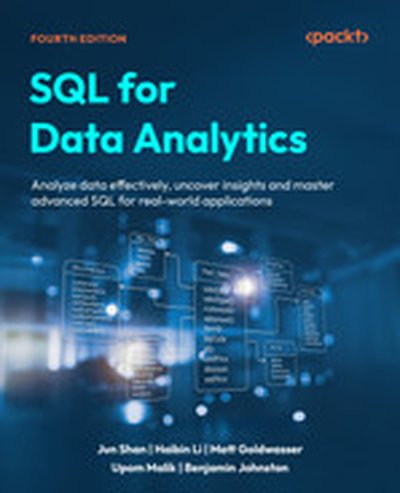
SQL for Data Analytics - Fourth Edition

Dive into the world of data analytics with 'SQL for Data Analytics'. This book takes you beyond simple query writing to teach you how to use SQL to analyze, interpret, and derive actionable insights from real-world data. By the end, you'll build technical skills that allow you to solve complex problems and demonstrate results using data. What this Book will help me do Understand how to create, manage, and utilize structured databases for analytics. Use advanced SQL techniques such as window functions and subqueries effectively. Analyze various types of data like geospatial, JSON, and time-series data in SQL. Apply statistical principles within the context of SQL for enhanced insights. Automate data workflows and presentations using SQL and Python integration. Author(s) The authors Jun Shan, Haibin Li, Matt Goldwasser, Upom Malik, and Benjamin Johnston bring together a wealth of knowledge in data analytics, database management, and applied statistics. Together, they aim to empower readers through clear explanations, practical examples, and a focus on real-world applicability. Who is it for? This book is aimed at data professionals and learners such as aspiring data analysts, backend developers, and anyone involved in data-driven decision-making processes. The ideal reader has a basic understanding of SQL and mathematics and is eager to extend their skills to tackle real-world data challenges effectively.

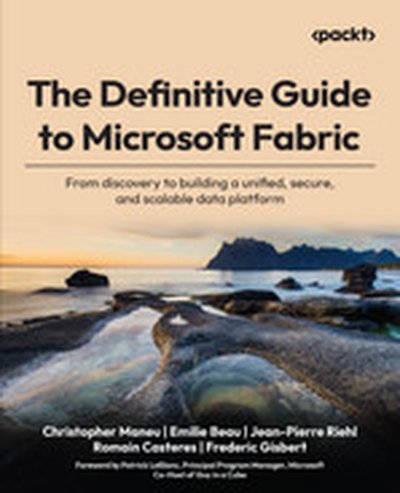
The Definitive Guide to Microsoft Fabric

Master Microsoft Fabric from basics to advanced architectures with expert guidance to unify, secure, and scale analytics on real-world data platforms Key Features Build a complete data analytics platform with Microsoft Fabric Apply proven architectures, governance, and security strategies Gain real-world insights from five seasoned data experts Purchase of the print or Kindle book includes a free PDF eBook Book Description Microsoft Fabric is reshaping how organizations manage, analyze, and act on data by unifying ingestion, storage, transformation, analytics, AI, and visualization in a single platform. The Definitive Guide to Microsoft Fabric takes you from your very first workspace to building a secure, scalable, and future-proof analytics environment. You’ll learn how to unify data in OneLake, design data meshes, transform and model data, implement real-time analytics, and integrate AI capabilities. The book also covers advanced topics, such as governance, security, cost optimization, and team collaboration using DevOps and DataOps principles. Drawing on the real-world expertise of five seasoned professionals who have built and advised on platforms for startups, SMEs, and Europe’s largest enterprises, this book blends strategic insight with practical guidance. By the end of this book, you’ll have gained the knowledge and skills to design, deploy, and operate a Microsoft Fabric platform that delivers sustainable business value. What you will learn Understand Microsoft Fabric architecture and concepts Unify data storage and data governance with OneLake Ingest and transform data using multiple Fabric tools Implement real-time analytics and event processing Design effective semantic models and reports Integrate AI and machine learning into data workflows Apply governance, security, and compliance controls Optimize performance and costs at scale Who this book is for This book is for data engineers, analytics engineers, architects, and data analysts moving into platform design roles. It’s also valuable for technical leaders seeking to unify analytics in their organizations. You’ll need only a basic grasp of databases, SQL, and Python.

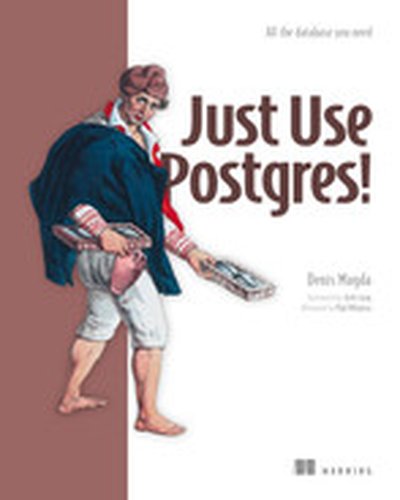
Just Use Postgres!

You probably don’t need a collection of specialty databases. Just use Postgres instead! Written for application developers and database pros, Just Use Postgres! shows you how to get the most out of the powerful Postgres database. In Just Use Postgres! you’ll learn how to: Use Postgres as an RDBMS for transactional workloads Develop generative AI, geospatial, and time-series applications Take advantage of modern SQL including window functions and CTEs Perform full-text search and process JSON documents Use Postgres as a message queue Optimize performance with various index types including B-trees, GIN, GiST, HNSW, and more Over the decades, PostgreSQL, aka Postgres, has grown into the most powerful general-purpose database and has become the de facto standard for developers worldwide. Just Use Postgres! takes a modern look at Postgres, exploring the database’s most up-to-date features for AI, time-series, full-text search, geospatial, and other application workloads. About the Technology You know that PostgreSQL is a fast, reliable, SQL compliant RDBMS. You may not know that it’s also great for geospatial systems, time series, full-text search, JSON documents, AI vector embeddings, and many other specialty database functions. For almost any data task you can imagine, you can use Postgres. About the Book Just Use Postgres! covers recipes for using Postgres in dozens of applications normally reserved for single-purpose databases. Written for busy application developers, each chapter explores a different use case illuminating the breadth and depth of Postgres’s capabilities. Along the way, you’ll also meet an incredible ecosystem of Postgres extensions like pgvector, PostGIS, pgmq, and TimescaleDB. You’ll be amazed at everything you can accomplish with Postgres! What's Inside Generative AI, geospatial, and time-series applications Modern SQL including window functions and CTEs Full-text search and JSON B-trees, GIN, GiST, HNSW, and more About the Reader For application developers, software engineers, and architects who know the basics of SQL. About the Author Denis Magda is a recognized Postgres expert and software engineer who worked on Java at Sun Microsystems and Oracle before focusing on databases and large-scale distributed systems. Quotes I was pleasantly surprised to learn many new things from this book. - From the Afterword by Vlad Mihalcea An excellent guide covering everything from basics to cutting-edge features. - Dave Cramer, PostgreSQL JDBC Maintainer Pleasant, easy to read with tonnes of great code. - Mike McQuillan, McQTech Ltd Well-organized and easy to search. - Edward Pollack, Microsoft Data Platform MVP The missing guide to understanding and using Postgres. - Mehboob Alam, POSTGRESNX, Inc.

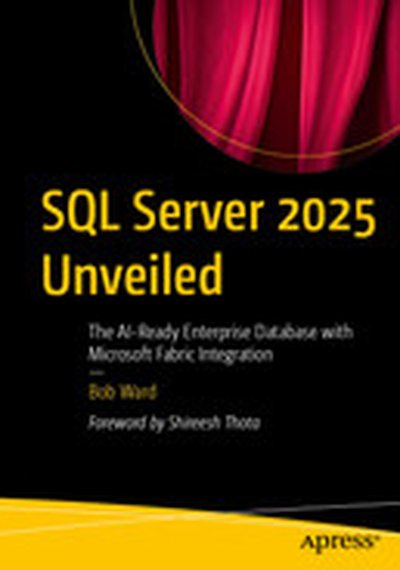
SQL Server 2025 Unveiled: The AI-Ready Enterprise Database with Microsoft Fabric Integration

Unveil the data platform of the future with SQL Server 2025—guided by one of its key architects . With built-in AI for application development and advanced analytics powered by Microsoft Fabric, SQL Server 2025 empowers you to innovate—securely and confidently. This book shows you how. Author Bob Ward, Principal Architect for the Microsoft Azure Data team, shares exclusive insights drawn from over three decades at Microsoft. Having worked on every version of SQL Server since OS/2 1.1, Ward brings unmatched expertise and practical guidance to help you navigate this transformative release. Ward covers everything from setup and upgrades to advanced features in performance, high availability, and security. He also highlights what makes this the most developer-friendly release in a decade: support for JSON, RegEx, REST APIs, and event streaming. Most critically, Ward explores SQL Server 2025’s advanced, scalable AI integrations, showing you how to build AI-powered applications deeply integrated with the SQL engine—and elevate your analytics to the next level. But innovation doesn’t come at the cost of safety: this release is built on a foundation of enterprise-grade security, helping you adopt AI safely and responsibly. You control which models to use, how they interact with your data, and where they run—from ground to cloud, or integrated with Microsoft Fabric. With built-in features like Row-Level Security (RLS), Transparent Data Encryption (TDE), Dynamic Data Masking, and SQL Server Auditing, your data remains protected at every layer. The AI age is here. Make sure your SQL Server databases are ready—and built for secure, scalable innovation . What You Will Learn [if !supportLists] · [endif]Grasp the fundamentals of AI to leverage AI with your data, using the industry-proven security and scale of SQL Server [if !supportLists] · [endif]Utilize AI models of your choice, services, and frameworks to build new AI applications [if !supportLists] · [endif]Explore new developer features such as JSON, Regular Expressions, REST API, and Change Event Streaming [if !supportLists] · [endif]Discover SQL Server 2025's powerful new engine capabilities to increase application concurrency [if !supportLists] · [endif]Examine new high availability features to enhance uptime and diagnose complex HADR configurations [if !supportLists] · Use new query processing capabilities to extend the performance of your application [if !supportLists] · [endif]Connect SQL Server to Azure with Arc for advanced management and security capabilities [if !supportLists] · [endif]Secure and govern your data using Microsoft Entra [if !supportLists] · [endif]Achieve near-real-time analytics with the unified data platform Microsoft Fabric [if !supportLists] · [endif]Integrate AI capabilities with SQL Server for enterprise AI [if !supportLists] · [endif]Leverage new tools such as SQL Server Management Studio and Copilot experiences to assist your SQL Server journey Who This Book Is For The SQL Server community, including DBAs, architects, and developers eager to stay ahead with the latest advancements in SQL Server 2025, and those interested in the intersection of AI and data, particularly how artificial intelligence (AI) can be seamlessly integrated with SQL Server to unlock deeper insights and smarter solutions

Administering Microsoft Azure SQL Solutions: Hands-on Preparation and Practice for Exam DP-300

Ace the DP-300 Exam with this essential study companion, chock-full of insights and tips you cannot find online. This book will help you build a comprehensive understanding of Azure SQL systems and their role in supporting business solutions, and it will equip you with the mental models and technical knowledge needed to confidently answer exam questions. Structured to align with Microsoft’s published study guide, the book spans five major sections that correspond to the skills measured by the exam, covering topics vital to modern cloud operations and including HA/DR, security, compliance, performance, and scalability. [if !supportAnnotations]You’ll also learn about the ways cloud operations have changed the focus of operating database systems from task execution to platform configuration—and how to configure your data platforms to meet this new reality. [if !supportAnnotations] By the end of this book, you’ll be prepared to navigate exam scenarios with finesse, pass the exam with confidence, and advance in your career with a solid foundation of knowledge. What You Will Learn Maximize your ability to benefit from the online learning tools for Exam DP-300 Gain depth and context for Azure SQL technical solutions relevant to Exam DP-300 Boost your confidence in Azure SQL Database skills Extend your on-premises SQL Server skill set into the Azure SQL cloud Enhance your overall understanding of Azure SQL administration and operations Develop your Azure SQL skill set to increase your value as an employee or contractor Adopt a new mindset for cloud-based solutions versus on-premises solutions Who This Book Is For Anyone planning to take the DP-300: Administering Microsoft Azure SQL Solutions exam, and those who wish to understand Azure SQL and how to successfully migrate and manage SQL solutions using all Azure SQL Technologies

Unlocking dbt: Design and Deploy Transformations in Your Cloud Data Warehouse

Master the art of data transformation with the second edition of this trusted guide to dbt. Building on the foundation of the first edition, this updated volume offers a deeper, more comprehensive exploration of dbt’s capabilities—whether you're new to the tool or looking to sharpen your skills. It dives into the latest features and techniques, equipping you with the tools to create scalable, maintainable, and production-ready data transformation pipelines. Unlocking dbt, Second Edition introduces key advancements, including the semantic layer, which allows you to define and manage metrics at scale, and dbt Mesh, empowering organizations to orchestrate decentralized data workflows with confidence. You’ll also explore more advanced testing capabilities, expanded CI/CD and deployment strategies, and enhancements in documentation—such as the newly introduced dbt Catalog. As in the first edition, you’ll learn how to harness dbt’s power to transform raw data into actionable insights, while incorporating software engineering best practices like code reusability, version control, and automated testing. From configuring projects with the dbt Platform or open source dbt to mastering advanced transformations using SQL and Jinja, this book provides everything you need to tackle real-world challenges effectively. What You Will Learn Understand dbt and its role in the modern data stack Set up projects using both the cloud-hosted dbt Platform and open source project Connect dbt projects to cloud data warehouses Build scalable models in SQL and Python Configure development, testing, and production environments Capture reusable logic with Jinja macros Incorporate version control with your data transformation code Seamlessly connect your projects using dbt Mesh Build and manage a semantic layer using dbt Deploy dbt using CI/CD best practices Who This Book Is For Current and aspiring data professionals, including architects, developers, analysts, engineers, data scientists, and consultants who are beginning the journey of using dbt as part of their data pipeline’s transformation layer. Readers should have a foundational knowledge of writing basic SQL statements, development best practices, and working with data in an analytical context such as a data warehouse.

Getting Started with the Graph Query Language (GQL)

Uncover the power of Graph Query Language (GQL) with 'Getting Started with the Graph Query Language'. This book is your comprehensive guide to mastering GQL, the cornerstone of managing and analyzing complex graph data. Dive into foundational concepts, explore advanced capabilities, and apply them using real-world examples. What this Book will help me do Understand and use GQL syntax effectively, including commands like MATCH, RETURN, INSERT, and DELETE. Master operations with graph patterns, variables, and functions to manipulate and query graph data. Apply advanced GQL techniques such as path matching modes, shortest paths, and transaction commands. Optimize graph database performance using indexing or caching strategies. Utilize GQL on a practical application, such as analyzing money transaction data for behavior and risk insights. Author(s) Ricky Sun, Jason Zhang, and Yuri Simione are seasoned experts in graph database technologies and standards. With years of professional experience and a collaborative spirit, they bring clarity and practice-oriented guidance to understanding GQL. Their passion for teaching and simplifying complex ideas shines through this well-crafted book. Who is it for? This book is ideal for graph database developers, database administrators, and data engineers looking to grasp GQL's fundamentals and advanced features. Beginners familiar with databases and programming fundamentals can follow along seamlessly. It also appeals to analysts and programmers seeking to enhance their graph data handling skills. Prior knowledge of graph theory concepts like nodes and edges is helpful but not mandatory, ensuring accessibility for learners of diverse levels.