talk-data.com talk-data.com

Topic

SQL

Structured Query Language (SQL)

database_language data_manipulation data_definition programming_language

1751

tagged

Activity Trend

107 peak/qtr
2020-Q1 2026-Q1

Activities

1751 activities · Newest first

PostgreSQL

PostgreSQL is the world¿s most advanced open-source database. PostgreSQL is the most comprehensive, in-depth, and easy-to-read guide to this award-winning database. This book starts with a thorough overview of SQL, a description of all PostgreSQL data types, and a complete explanation of PostgreSQL commands. If you are a developer or an administrator, you¿ll love the chapter that explores PostgreSQL performance. The authors explain how PostgreSQL stores data on disk (and in memory) and how to measure and influence the effectiveness of PostgreSQL¿s caching mechanisms. You¿ll also learn how PostgreSQL generates and evaluates execution plans. The authors explain all of the query operators that can appear in the results of an EXPLAIN command, describing the performance implications of each operator as well as the conditions which will cause PostgreSQL to use that operator. PostgreSQL is also a complete guide for the developer. Whether you¿re developing with C, C++, ODBC, Embedded SQL, Java, Tcl/Tk, Perl, Python or PHP, you¿ll find a comprehensive description of the PostgreSQL API for your language of choice. Easy to follow exercises will walk you through the development of working applications that fully demonstrate the features offered by each API. You will also find a chapter that describes the PL/pgSQL server-side procedural language, learning how to build triggers, functions, and stored-procedures. The authors have even included a chapter that walks you through the process of extending the PostgreSQL server with custom-written C functions and new data types. The accompanying web site, www.conjectrix.com, contains downloadable versions of all of the sample code and a wealth of PostgreSQL-related resources. The last section of PostgreSQL was written for the PostgreSQL administrator. You will learn how to install PostgreSQL on Windows, Linux, and Unix systems, from source code or from pre-compiled installers. The authors have described all of the PostgreSQL configuration options (compile-time, startup, and on-the-fly). The chapter on PostgreSQL security describes all of the authentication protocols that you can choose from and describes how to secure your database, both internally and externally. If you have to support a multi-national environment, you will find the chapter on internationalization and localization to be invaluable. You won¿t find a more complete guide to PostgreSQL anywhere. The authors have made PostgreSQL approachable by leading the reader from basic concepts to advanced features. Whether you¿re a database beginner or an advanced user, you will find this book a valuable addition to your library.
Oracle PL/SQL Language Pocket Reference, Second Edition

Like most PL/SQL programmers, you've found Oracle PL/SQL Programming to be a reference book you can't do without. Packed with examples and recommendations, it's a book that has helped everyone, from Oracle Forms developers to database administrators, make the most of PL/SQL. But you can't always carry it with you, and even at your desk there are times when you just need a reminder, a quick answer to a problem you're up against. For times like those, PL/SQL experts Stephen Feuerstein, Bill Pribyl, and Chip Dawes have written a new edition of Oracle PL/SQL Language Pocket Reference. Updated for Oracle9i, this little book is easy to take with you and use anywhere for quick problem solving. The second edition of the Oracle PL/SQL Language Pocket Reference boils down the most vital information from Oracle PL/SQL Programming into a convenient quick reference to PL/SQL basics. This compact book will be indispensable for new and seasoned Oracle database developers alike. It summarizes features available in Oracle9i and provides essential information on PL/SQL block structure, fundamental language elements, control statements, and use of procedures, functions, packages, triggers, Oracle objects, external procedures, and methods of calling Java classes from PL/SQL. O'Reilly's Pocket References have become a favorite among developers and database administrators everywhere. By providing a wealth of important details in a concise, well-organized format, these handy books deliver just what you need to complete the task at hand. When you've reached a sticking point in your work and need to get to a solution quickly, the new edition of Oracle PL/SQL Language Pocket Reference is the book you'll want to have.

Microsoft® SQL Server™ 2000 Unleashed, Second Edition

Microsoft SQL Server 2000 Unleashed, 2E offers a variety of topics for system and database administrators to help them learn new features of the product and to solve problems they face on a daily basis. It shows them how to build upon their working knowledge of the product and take their experience and knowledge to a higher level. This new edition of Microsoft SQL Server 2000 Unleashed covers the latest updates and service packs to SQL Server 2000, including full support for XML, notification services, and SQL Server CE.

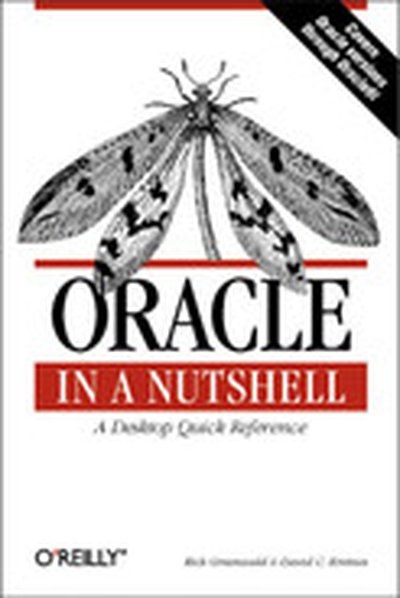
Oracle in a Nutshell

Introduced a quarter-century ago, the Oracle database remains the leading enterprise relational database management system (RDBMS) in the world. Oracle is a complex system, offering a myriad of products, languages, and tools. Frequent updates, releases, and editions complicate the ability of Oracle users to keep up with the huge amounts of frequently changing information about the database and its capabilities.The goal of Oracle in a Nutshell is to pull together the most essential information on Oracle architecture, syntax, and user interfaces. The content and format of this book, an admirable addition to O'Reilly's respected In-a-Nutshell line, combine to boil down vital Oracle commands, language constructs, parameters, and file formats in a succinct and highly accessible desktop reference. Oracle in a Nutshell covers the information that database administrators PL/SQL and Java developers, and system, network, and security administrators need as they manage Oracle databases and write code for these databases. It includes: Oracle Foundations--Overview of the Oracle architecture (memory structures and fundamental concepts), Oracle's various editions and packaging options, summary of the initialization file parameters and data dictionary views, and fundamentals of Oracle's concurrency scheme, security mechanisms (privileges, profiles, roles), and networking files (TNSNAMES.ORA, SQLNET.ORA, LISTENER.ORA, DAP.ORA, NAMES.ORA, CMAN.ORA) and options. Oracle Languages--Syntax summary for SQL language statements, SQL function calls PL/SQL language statements and characteristics, PL/SQL built-in package headers, and Java (JDBC and SQLJ) interfaces to the Oracle database. Oracle Tools--Commands provided with SQLPlus, SQLLoader, Import and Export, Oracle Recovery Manager (RMAN) and other backup/recovery methods, Oracle Enterprise Manager, and various performance tuning tools (Explain Plan, TKPROF, AUTOTRACE, UTLBSTAT, UTLESTAT, Statspack). Appendixes--Summary of Oracle datatypes, operators, expressions, conditions, numeric and date formats, and resources for additional reading.

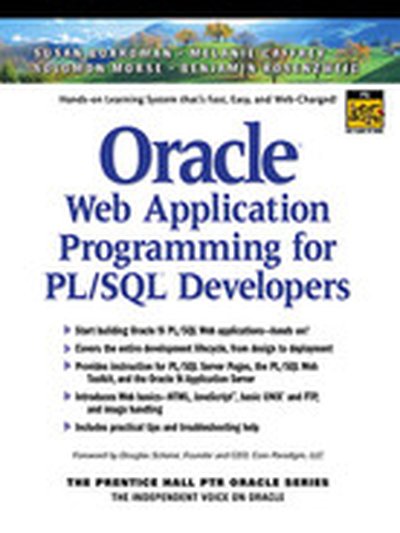
Oracle® Web Application Programming for PL/SQL® Developers

The hands-on, rapid-mastery guide to Oracle PL/SQL Web development. Start building Oracle 9i PL/SQL Web applications—hands on Covers the entire development lifecycle, from design to deployment Provides instruction for PL/SQL Server Pages, the PL/SQL Web Toolkit, and the Oracle 9i Application Server Introduces Web basics—HTML, JavaScript, basic UNIX and FTP, and image handling Reviews PL/SQL and SQL concepts Includes practical tips and troubleshooting help Leverage your SQL and PL/SQL experience to build powerful data-driven Web and e-business applications—starting right now! In this book, a team of Columbia University PL/SQL instructors cover the core pieces of what you need to know, from preliminary configuration to deployment of dynamic, data-driven applications. You'll find practical examples, hands-on exercises, and dozens of practical tips and solutions designed to save you time, effort, and frustration. One step at a time, discover how to: Configure Oracle's Internet Application Server Control Web applications and servers remotely Build Oracle Web applications with PL/SQL Create dynamic, data-driven pages Test, debug, troubleshoot, and deploy your applications Maintain and optimize running Web applications Whether you've been writing simple queries or complex PL/SQL code, this book takes your database development skills onto the Web—and into the future!

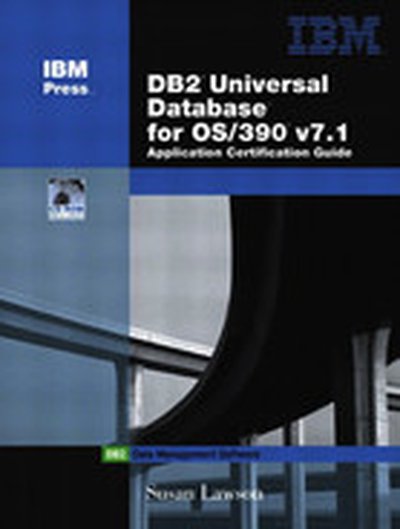
DB2® Universal Database™ for OS/390™ v7.1 Application Certification Guide

IBM's definitive DB2 UDB V7.1 application development reference and exam study guide for the OS/390 and z/OS platforms An official IBM self-study guide for the DB2 UDB V7.1 Family Application Development Exam (#514) Expert DB2 programming tips, techniques, and guidelines from application development experts Covers data structures, SQL, stored procedures, programming/language environments, debugging, tuning, and more CD-ROM contains complete DB2 application development sample exam The definitive, authoritative guide to DB2 OS/390 application development certification Covers data structures, SQL, stored procedures, programming/language environments, debugging, tuning, and much more Includes a full section on object-relational programming and other advanced techniques Sample test questions help you prepare for the IBM DB2 UDB V7.1 Family Application Development Exam (#514) About the CD The CD-ROM included with this book contains a complete DB2 UDB V7.1 Family Application Development Exam (#514) sample exam. IBM DB2 UDB Version 7.1 for OS/390 and z/OS delivers unparalleled performance, scalability, and reliability in today's enterprise business environments. Now, there's a complete, authoritative guide to developing applications with DB2 UDB V7.1 in both OS/390 and z/OS environments—and preparing for the IBM DB2 UDB V7.1 Family Application Development Exam (#514). This comprehensive day-to-day guide to DB2 UDB application development is also the only book that delivers the depth of knowledge professionals need to pass IBM's challenging application development exam for the OS/390 and z/OS platforms. IBM Gold Consultant Susan Lawson presents hundreds of useful tips, practical techniques, and expert guidelines for every facet of DB2 UDB application development and every stage of the development process for both OS/390 and z/OS platforms Coverage includes: Foundations for effective DB2 development, including an overview of the DB2 UDB product family and DB2 for OS/390 data structures SQL: basic concepts and coding techniques through advanced OLAP features, star schemas, and star joins Stored procedures, including the SQL procedure language and IBM's Stored Procedure Builder Best practices for application testing, debugging, and performance tuning The full range of DB2 development tools, including ODBC/CLI, Java(tm), COBOL, C, C++, REXX, CAF, CICS, and RRSAF Object-relational programming, including user-defined functions, user-defined data types, and triggers In-depth coverage of locking and concurrency Whether you're developing for DB2 UDB V7.1 in an OS/390 or z/OS environment, managing DB2 UDB V7.1 application development, preparing for DB2 UDB V7.1 Family Application Development, or all three, DB2 UDB for OS/390 Version 7.1 Application Certification Guide will be your single most valuable resource. IBM DB2 Series

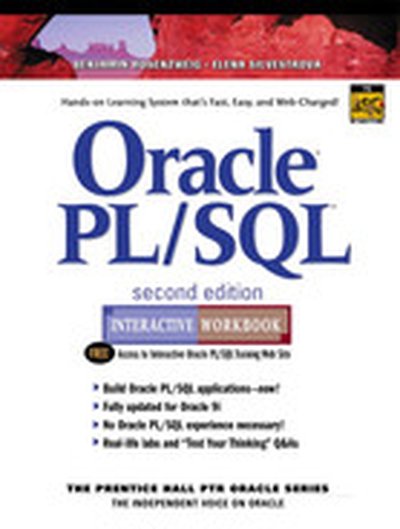
Oracle® PL/SQL® Interactive Workbook, Second Edition

Build Oracle PL/SQL applications—now. Fully updated for Oracle 9i No Oracle PL/SQL experience necessary. Real-life labs and "Test Your Thinking" Q&As Start developing applications with Oracle PL/SQL—fast. This integrated book-and-Web learning solution teaches all the Oracle PL/SQL skills you need, hands on, through real-world labs, exercises, projects, and a complete Web-based training site. Completely updated for Oracle 9i, it covers all the fundamentals—and a whole lot more. Master PL/SQL syntax, iterative and conditional control, scoping, anchored datatypes, cursors, triggers, security, tables, and packaging—plus powerful new techniques for working with exceptions, cursors, collections, and records. Your free Web-based training module includes a Virtual Study Lounge where you can interact with other learners, work on new projects, and get updates. Totally integrated with a FREE, state-of-the-art Oracle 9i learning Web site. Every Prentice Hall Oracle Interactive Workbook is fully integrated with its own exclusive Web site, giving you all this and more: "Test Your Thinking" project solutions and detailed explanations Additional self-review exercises with instant feedback and explanations An exclusive Virtual Study Lounge where you can interact with other students. Just the facts. No endless, boring discussions here. You'll learn hands on through practical exercises, self-review questions, and real-world answers. Exclusive "Test Your Thinking" projects guarantee you'll go beyond rote knowledge to really master the subject. It's an integrated learning system that's proven to work. Dozens of exercises cover the real-world tasks that matter most. Hundreds of self-review questions and answers make sure you understand.

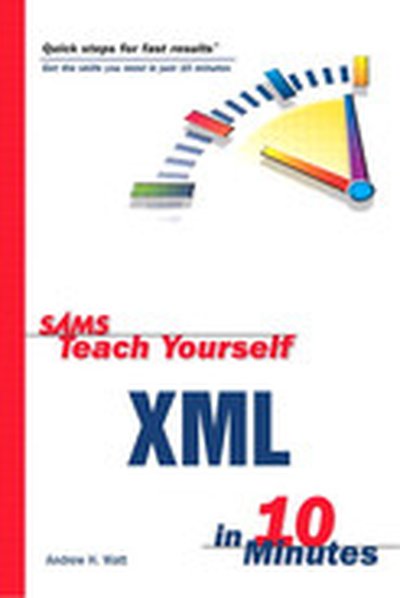
Sams Teach Yourself XML in 10 Minutes

XML is the de-facto standard for manipulating and sharing data among applications. It is supported by every major programming tool and language, including Java, Microsoft .NET, Oracle, SQL Server, etc. All professional developers and administrators - even those who don't intend to build XML applications - need a basic understanding of it just to read and maintain data they receive and process. Many of them don't have the time for a thick reference book or detailed tutorial. Sams Teach Yourself XML in 10 Minutes quickly covers the basics of XML and its family of related concepts, including basic syntax, DTDs, XML Schema, DOM, SAX, XSL, and XPath. Each topic is illustrated with an example to ensure readers' understanding.

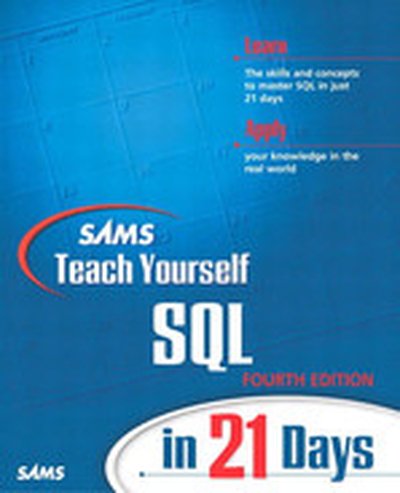
Sams Teach Yourself SQL in 21 Days, Fourth Edition

Sams Teach Yourself SQL in 21 Days, Fourth Edition provides a sold foundation in understanding the fundamentals of SQL (Structured Query Language). SQL is the query language used by relational databases such a Oracle, Microsoft Access, and Microsoft SQL Server. The new edition covers object-oriented programming with SQL, ODBC, JDBC, embedded SQL, accessing remote databases, and constructs. All new examples based on an open source database such as MySQL enhance this new edition by making the examples readily useable for readers.

Microsoft® SQL Server™ 2000 DBA Survival Guide, Second Edition

Microsoft SQL Server 2000 DBA Survival Guide is organized into several parts that comprise the various jobs and tasks the DBA performs. Each chapter is presented with the goal of providing knowledge and "know-how" to Database Administrators of a SQL Server database. The chapters also offer real-world insight and experience by passing on tips, tricks, and suggestions based on what the authors have learned the hard way. The book also takes time to provide checklists and examples for various SQL Server DBA tasks. The book also provides insight into the tasks that make-up a DBA's job including discussions of topics such as the creation of naming standards and conventions which are essential for efficient administration.

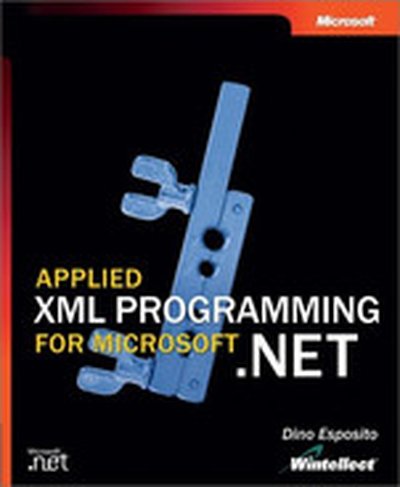
Applied XML Programming for Microsoft® .NET

Get the expert advice you need to succeed in building .NET-connected applications with XML! XML is everywhere in the Microsoft .NET Framework, from Remoting to Web services, and from data access to configuration. Learn about the extensive XML core classes in .NET and find out how to program against its parser in this in-depth guide—written by an expert programming author and consultant on cutting-edge technologies such as Microsoft ASP.NET and Microsoft ADO.NET. You'll find authoritative explanations of technologies such as schemas, transformations, and XPath, plus extensive discussion of data access issues such as synchronization and serialization, the DiffGram format, and the XML extensions in Microsoft SQL Server™ 2000. Along the way, you'll learn exactly how to get the best performance out of XML in the .NET world. You'll also get answers to common questions such as, "When should I use XML Web services instead of Remoting?".

Oracle SQL Plus Pocket Reference, 2nd Edition

SQLPlus is available at every Oracle site--from the largest data warehouse to the smallest single-user system--and it's a critical tool for virtually every Oracle user. Despite its wide use, few developers and DBAs know how powerful a tool SQLPlus can be. This pocket reference provides quick reference information that will help you use SQLPlus, Oracle's interactive query tool. It summarizes all of the SQLPlus syntax, including the syntax for the Oracle9i release. This book boils down the most vital information from Gennick's best-selling book, "Oracle SQL8Plus: The Definitive Guide", into an accessible summary and works as a vital companion to the larger book. It concisely describes interacting with SQLPlus, selecting data, formatting reports with SQLPlus, and tuning SQL queries. It also contains quick references to the SQLPlus commands and format elements. The new 2nd edition of our Oracle SQLPlus Pocket Reference includes many new features for Oracle9i (e.g., COALESCE function, searched CASE expressions, new table join syntax, partition operations, MERGE statement, and syntax changes in existing SQLPlus statements such as ACCEPT, DESRIBE, HELP, and SET) It also adds sections on basic SQL (a much-requested feature): INSERT, DELETE, UPDATE, SELECT, and transaction management. The pocket reference size is especially appropriate for this particular subject, since Oracle SQLPlus is used on every possible platform, it's particularly convenient to be able to carry a small book around from office computer to home computer to laptop.

Oracle PL/SQL Programming, Third Edition

Nearly a quarter-million PL/SQL programmers--novices and experienced developers alike--have found the first and second editions of Oracle PL/SQL Programming to be indispensable references to this powerful language. Packed with examples and recommendations, this book has helped everyone, from Oracle Forms developers to database administrators, make the most of PL/SQL. This new edition is a comprehensive update of the original book, covering all versions of PL/SQL through Oracle9i Release 2. It adds much-requested new chapters on how to create and run PL/SQL programs, call Java methods from within PL/SQL, and define and use database triggers. An extensive new chapter--designed especially for experienced PL/SQL developers--describes PL/SQL's runtime architecture and how to use knowledge of Oracle internals to get the best performance from PL/SQL. The book contains information about the latest Oracle9i PL/SQL features, including: Record-based DML: You can now use records in INSERT and DELETE statements. Table functions: These are functions that return a result set (in the form of a PL/SQL collection). Such functions existed in Oracle8i but they are now much expanded. New and improved datatypes: Oracle now offers dramatically improved support for timestamps, time zone management, and interval calculations. In addition, the XMLType datatype has now been implemented. Inheritance for object types: You can now define a hierarchy of object types (which were first introduced in Oracle8). Enhancements to PL/SQL collections. PL/SQL now supports multiple-level collections (nesting collections within collections), as well as associative arrays (previously called index-by tables), which allow you to index by PLS_INTEGER and VARCHAR2. Native compilation of PL/SQL code: PL/SQL source code can now optionally be compiled into native object code that is linked into Oracle. Part I, Programming in PL/SQL Part II, PL/SQL Program Structure Part III, PL/SQL Program Data Part IV, SQL in PL/SQL Part V, PL/SQL Application Construction Part VI, Advanced PL/SQL Topics The book is divided into six parts: Even if you've been a PL/SQL developer for years, you'll find an enormous amount of new and revised information in this third edition and on its companion web site. If you're new to PL/SQL, you'll find Oracle PL/SQL Programming an invaluable companion on the road to mastery.

Advanced SQL:1999

Advanced SQL:1999 - Understanding Object-Relational and Other Advanced Features is the practitioner's handbook to the standard's advanced features. It is not a re-presentation of the standard, but rather an authoritative, in-depth guide to its practical application. Like its companion, SQL:1999 - Understanding Relational Language Components, which explained the standard's basic features, this book will show you how to make your applications both effective and standard-compliant. This handy reference has a modular format so you can explore specific topics with ease. It is equally useful to those upgrading from earlier versions of SQL and those with no previous experience. Written by the standard's distinguished editor, Advanced SQL:1999 will complete your knowledge and support your skills like no other book can. Focuses entirely on the issues that matter to programmers who are connecting applications to databases. Details SQL:1999's object facilities, including structured user-defined types, typed tables, user-defined routines, and routine invocation. Examines facilities new to SQL, including those relating to on-line analytical processing (OLAP), management of external data (SQL/MED), and Java support. Covers the ongoing development of XML support. Includes appendices that cover the SQL:1999 annexes, a SQL:1999 example using UDTs, status codes, and useful information on the standardization process.

DB2 UDB's High-Function Business Intelligence in e-business

This IBM Redbooks publication deals with exploiting DB2 UDB’s materialized views (also known as ASTs/MQTs), statistics, analytic, and OLAP functions in e-business applications to achieve superior performance and scalability. This book is aimed at a target audience of DB2 UDB application developers, database administrators (DBAs), and independent software vendors (ISVs). We provide an overview of DB2 UDB’s materialized views implementation, as well as guidelines for creating and tuning them for optimal performance. We introduce key statistics, analytic, and OLAP functions, and describe their corresponding implementation in DB2 UDB with usage examples. Finally, we describe typical business level queries that can be answered using DB2 UDB’s statistics, analytic, and OLAP functions. These business queries are categorized by industry, and describe the steps involved in resolving the query, with sample SQL and visualization of results.

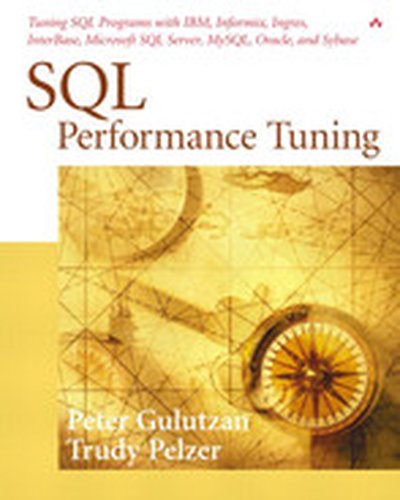
SQL Performance Tuning

is a handbook of practical solutions for busy database professionals charged with managing an organization's critically important data. Covering today's most popular and widely installed database environments, this book is an indispensable resource for managing and tuning SQL across multiple platforms. SQL Performance Tuning Packed with tips, techniques, and best practices, this hands-on guide covers SQL commands and queries over a wide range of conditions and environments. Every facet of the SQL environment is covered, from concurrency control to optimization—and every issue in between. The book includes an overview of each of the most widely used database management systems (DBMS) and provides tuning tips for common day-to-day situations. Topics covered include: General and specific tuning General sort considerations and options Joins and subqueries Columns and tables Indexes, including B-trees and bitmaps Constraints and stored procedures ODBC and JDBC Data changes and concurrency control (locking) Clients, servers, and middleware Whether you are a programmer, consultant, or user, you will find SQL Performance Tuning an indispensable guide to optimizing SQL performance across today's popular database environments. Throughout , ideas and techniques are tested on a variety of popular SQL environments, including IBM DB2, Informix, Ingres, InterBase, Microsoft SQL Server, MySQL, Oracle, and Sybase ASE. The book's practical examples are written in ANSI/ISO Standard SQL: 1999. SQL Performance Tuning

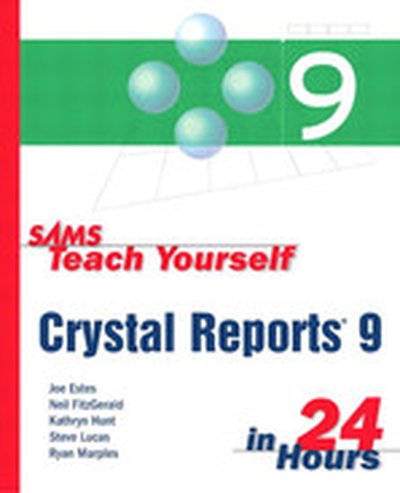
Sams Teach Yourself Crystal Reports® 9 in 24 Hours

Sams Teach Yourself Crystal Reports 9 in 24 Hours guides the reader through understanding data sources, to creating simple reports using the provided report wizards to custom reporting creation, modification and design techniques. Crystal Reports 9 includes unprecedented technological advances and user interface design improvements. Crystal Reports can access data from the most widely used databases and can integrate data from multiple databases within one report.

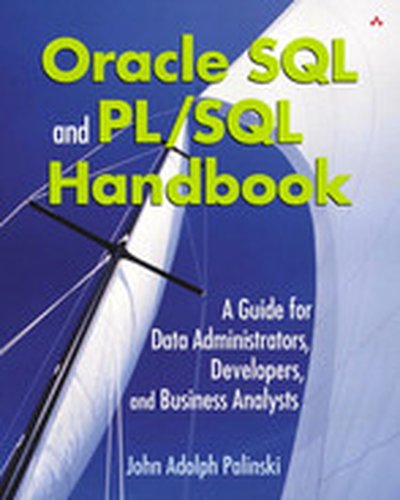
Oracle SQL and PL/SQL Handbook: A Guide for Data Administrators, Developers, and Business Analysts

Concise and practical, this indispensable volume brings the world’s most popular Relational Database Management System (RDBMS), its query language SQL, and its programming language PL/SQL into clear focus for today’s busy database professional or business analyst. Covering the most commonly used Oracle features, is ideal for the developer or business user challenged with implementing, maintaining, and retrieving mission-critical data within the Oracle database environment. Oracle SQL and PL/SQL Handbook Broadly designed as both a basic reference and how-to, this book offers extensive coverage of Oracle’s SQL language and database concepts, providing an excellent review for the Oracle certification exams. The initial chapters offer a complete introduction to the relational database environment, including a discussion of how to use the logical data model to understand the database. Oracle database objects are explored, along with uses of the Data Definition Language (DDL), the Data Control Language (DCL), and the Data Manipulation Language (DML). Later chapters offer complete coverage of the Select command used to retrieve information from the database. Also included are coverage of Oracle’s new analytic functions, a chapter on performance-tuning techniqes needed for complex SQL, and a detailed overview of Oracle’s PL/SQL language. In addition, many chapters provide practice questions designed to reinforce newly introduced concepts, as well as numerous examples of SQL techniques. The broad-based and comprehensive coverage also includes: Understanding the database using entity relationship diagrams and database schema diagrams Applying the Data Definition, Data Control, and Data Manipulation languages to create and maintain the database Using the SQL language to retrieve information from the database Creating special business information using Oracle’s new analytic functions Making your SQL perform better with common troubleshooting techniques Producing business information with business objects Using Java with PL/SQL Authoritative and practical, provides today’s administrator and business analyst alike with the most comprehensive sourcebook of solutions and techniques for improving their use of Oracle. Oracle SQL and PL/SQL Handbook 0201752948B07152002

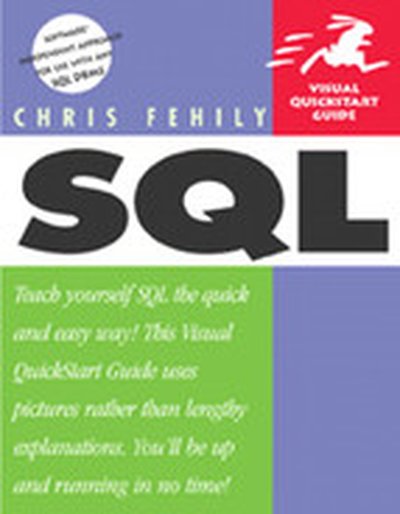
SQL: Visual QuickStart Guide

Database management. It may sound daunting, but it doesn't have to be, even if you've never programmed before. SQL: Visual QuickStart Guide isn't an exhaustive guide to SQL written for aspiring programming experts. It's simply an invaluable resource for those who want a fast, easy way to harness information living in complex databases. Because author Chris Fehily assumes no prior programming experience on your part (just a familiarity with your OS's file system), he spends the first few chapters laying out the basics, including clear explanations of the relational database model and SQL syntax. Then he jumps into step-by-step tasks designed to get you comfortable using SQL right away. You'll learn how to use SQL's most popular statements and commands to maintain, retrieve, and analyze database information, and to create and edit database objects. Each visually oriented task features the actual code and plenty of screenshots to keep you on track. Fehily takes a software-independent approach to teaching SQL, but includes tips for specific database software. You may not be a programming expert, but with SQL: VQS, who will be able to tell?

MySQL Reference Manual

MySQL is the most popular SQL database in the open source community and is used almost universally by web sites running on open source systems. As powerful and flexible as it is lightweight and efficient, MySQL packs a large feature set into a very small and fast engine that now runs on more than 500,000 servers. This renowned online manual that has supported MySQL administrators and database developers for years is now available in paperback format. This book is an exact reproduction of the MySQL Reference Manual from the MySQL development team's Web site, minus some non-technical appendices. This version covers MySQL 4.0. Many sophisticated topics appear in this comprehensive manual, ranging from the hitches you may run into when first installing MySQL to internals that will help you tune your queries. MySQL Reference Manual contains all the comprehensive reference material one would expect for building the product, running administrative utilities, and using various API as well as MySQL's rich version of SQL. In addition, you can turn a page and find such unexpected riches as: A thorough comparison of MySQL with SQL standards and other databases A discussion of privileges and suggested uses of privileges to enhance security Directions for replicating a database and for running several MySQL servers on a single system Directions for initializing a database from a flat file Guidelines for estimating the performance of different queries A far-reaching discussion of optimization, with reference to the implementation of MySQL Investigations of the differences between data types and the pros and cons of each type of number, string, or timestamp An extended inquiry into the effects of using delayed inserts A candid explanation of why various errors occur and how to recover from them Tips for weighted, full-text searches Detailed descriptions of the features, strengths, and weaknesses of available table formats A guide to adding new functions to MySQL No serious MySQL user should be without this book.