talk-data.com talk-data.com

Topic

Agile/Scrum

project_management software_development methodology

561

tagged

Activity Trend

163 peak/qtr
2020-Q1 2026-Q1

Activities

561 activities · Newest first

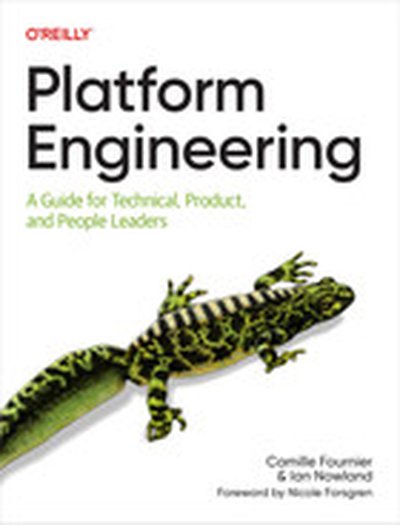
Platform Engineering

Until recently, infrastructure was the backbone of organizations operating software they developed in-house. But now that cloud vendors run the computers, companies can finally bring the benefits of agile custom-centricity to their own developers. Adding product management to infrastructure organizations is now all the rage. But how's that possible when infrastructure is still the operational layer of the company? This practical book guides engineers, managers, product managers, and leaders through the shifts that modern platform-led organizations require. You'll learn what platform engineering is—and isn't—and what benefits and value it brings to developers and teams. You'll understand what it means to approach a platform as a product and learn some of the most common technical and managerial barriers to success. With this book, you'll: Cultivate a platform-as-product, developer-centric mindset Learn what platform engineering teams are and are not Start the process of adopting platform engineering within your organization Discover what it takes to become a product manager for a platform team Understand the challenges that emerge when you scale platforms Automate processes and self-service infrastructure to speed development and improve developer experience Build out, hire, manage, and advocate for a platform team

Venkat Subramaniam is a programmer, author, speaker, and founder of Agile Developer, Inc. I've seen him speak several times, and was always blown away by his passion and technical depth. So, I was excited to have him on the podcast.

We chat about agile development in the real world, learning to do less, and much more. Venkat is extremely wise, and I very much enjoyed our discussion. Enjoy!

LinkedIn: https://www.linkedin.com/in/vsubramaniam

Twitter: https://x.com/venkat_s

In the rapidly evolving world of enterprise AI, traditional monolithic approaches are giving way to more agile and efficient architectures. This session will delve into how Multi-Agent Retrieval-Augmented Generation Systems (MARS) are transforming enterprise software development for AI applications. Learn about the core components of AI agents, the challenges of integrating LLMs with enterprise data, and how to build scalable, accurate, and high-performing AI applications

Join us for an insightful fireside chat with the Travis Perkins Plc data team, as we delve into the transformative power of data in the construction industry. Discover how we leverage data-driven insights to build a stronger, more agile, and customer-centric organisation. We'll explore how Travis Perkins is fostering a data-driven mindset across its diverse businesses, from the yard to the boardroom, and discuss the exciting opportunities and challenges of working with data in the ever-evolving construction landscape.

This presentation will be delivered alongside a customer we have worked with for over 2 years. Austin Price CDO at PPL and I will present. This presentation explores how building a solid data platform foundation acts as a force multiplier, significantly accelerating your ability to deliver results. We'll delve into the importance of an architect-led data platform program delivered in an agile methodology based on a Business-aligned architecture runway. The Force Multiplier Effect Discover how a well-designed data platform can amplify your team's efficiency and reduce delivery friction. Architect-led Program We'll discuss the crucial role of an architect in providing the architecture runway for the data platform strategy and ensuring alignment with business needs. Agile Delivery Embrace the power of agile methodologies to build your data platform iteratively but aligned to the roadmap, focusing on delivering high-value features quickly and at scale Product & Feature Approach Learn how to break down your data platform development into manageable products and features, enabling faster iteration and adaptation. By using this approach you can build a data platform that empowers your organization to: Deliver insights and applications faster Reduce development time and costs Increase agility and adaptability How to create the force multiplier effect.

In today’s episode, I’m going to perhaps work myself out of some consulting engagements, but hey, that’s ok! True consulting is about service—not PPT decks with strategies and tiers of people attached to rate cards. Specifically today, I decided to reframe a topic and approach it from the opposite/negative side. So, instead of telling you when the right time is to get UX design help for your enterprise SAAS analytics or AI product(s), today I’m going to tell you when you should NOT get help! 

Reframing this was really fun and made me think a lot as I recorded the episode. Some of these reasons aren’t necessarily representative of what I believe, but rather what I’ve heard from clients and prospects over 25 years—what they believe. For each of these, I’m also giving a counterargument, so hopefully, you get both sides of the coin. 

Finally, analytical thinkers, especially data product managers it seems, often want to quantify all forms of value they produce in hard monetary units—and so in this episode, I’m also going to talk about other forms of value that products can create that are worth paying for—and how mushy things like “feelings” might just come into play ;-)  Ready?

Highlights/ Skip to:

(1:52) Going for short, easy wins (4:29) When you think you have good design sense/taste  (7:09) The impending changes coming with GenAI (11:27) Concerns about "dumbing down" or oversimplifying technical analytics solutions that need to be powerful and flexible (15:36) Agile and process FTW? (18:59) UX design for and with platform products (21:14) The risk of involving designers who don’t understand data, analytics, AI, or your complex domain considerations  (30:09) Designing after the ML models have been trained—and it’s too late to go back  (34:59) Not tapping professional design help when your user base is small , and you have routine access and exposure to them   (40:01) Explaining the value of UX design investments to your stakeholders when you don’t 100% control the budget or decisions 

Quotes from Today’s Episode “It is true that most impactful design often creates more product and engineering work because humans are messy. While there sometimes are these magic, small GUI-type changes that have big impact downstream, the big picture value of UX can be lost if you’re simply assigning low-level GUI improvement tasks and hoping to see a big product win. It always comes back to the game you’re playing inside your team: are you working to produce UX and business outcomes or shipping outputs on time? ” (3:18) “If you’re building something that needs to generate revenue, there has to be a sense of trust and belief in the solution. We’ve all seen the challenges of this with LLMs. [when] you’re unable to get it to respond in a way that makes you feel confident that it understood the query to begin with. And then you start to have all these questions about, ‘Is the answer not in there,’ or ‘Am I not prompting it correctly?’ If you think that most of this is just an technical data science problem, then don’t bother to invest in UX design work… ” (9:52) “Design is about, at a minimum, making it useful and usable, if not delightful. In order to do that, we need to understand the people that are going to use it. What would an improvement to this person’s life look like? Simplifying and dumbing things down is not always the answer. There are tools and solutions that need to be complex, flexible, and/or provide a lot of power – especially in an enterprise context. Working with a designer who solely insists on simplifying everything at all costs regardless of your stated business outcome goals is a red flag—and a reason not to invest in UX design—at least with them!“ (12:28)“I think what an analytics product manager [or] an AI product manager needs to accept is there are other ways to measure the value of UX design’s contribution to your product and to your organization. Let’s say that you have a mission-critical internal data product, it’s used by the most senior executives in the organization, and you and your team made their day, or their month, or their quarter. You saved their job. You made them feel like a hero. What is the value  of giving them that experience and making them feel like those things… What is that worth when a key customer or colleague feels like you have their back with this solution you created? Ideas that spread, win, and if these people are spreading your idea, your product, or your solution… there’s a lot of value in that.” (43:33)

“Let’s think about value in non-financial terms. Terms like feelings. We buy insurance all the time. We’re spending money on something that most likely will have zero economic value this year because we’re actually trying not to have to file claims. Yet this industry does very well because the feeling of security matters. That feeling is worth something to a lot of people. The value of feeling secure is something greater than whatever the cost of the insurance plan. If your solution can build feelings of confidence and security, what is that worth? Does “hard to measure precisely” necessarily mean “low value?”  (47:26)

0:00

hi everyone Welcome to our event this event is brought to you by data dos club which is a community of people who love

0:06

data and we have weekly events and today one is one of such events and I guess we

0:12

are also a community of people who like to wake up early if you're from the states right Christopher or maybe not so

0:19

much because this is the time we usually have uh uh our events uh for our guests

0:27

and presenters from the states we usually do it in the evening of Berlin time but yes unfortunately it kind of

0:34

slipped my mind but anyways we have a lot of events you can check them in the

0:41

description like there's a link um I don't think there are a lot of them right now on that link but we will be

0:48

adding more and more I think we have like five or six uh interviews scheduled so um keep an eye on that do not forget

0:56

to subscribe to our YouTube channel this way you will get notified about all our future streams that will be as awesome

1:02

as the one today and of course very important do not forget to join our community where you can hang out with

1:09

other data enthusiasts during today's interview you can ask any question there's a pin Link in live chat so click

1:18

on that link ask your question and we will be covering these questions during the interview now I will stop sharing my

1:27

screen and uh there is there's a a message in uh and Christopher is from

1:34

you so we actually have this on YouTube but so they have not seen what you wrote

1:39

but there is a message from to anyone who's watching this right now from Christopher saying hello everyone can I

1:46

call you Chris or you okay I should go I should uh I should look on YouTube then okay yeah but anyways I'll you don't

1:53

need like you we'll need to focus on answering questions and I'll keep an eye

1:58

I'll be keeping an eye on all the question questions so um

2:04

yeah if you're ready we can start I'm ready yeah and you prefer Christopher

2:10

not Chris right Chris is fine Chris is fine it's a bit shorter um

2:18

okay so this week we'll talk about data Ops again maybe it's a tradition that we talk about data Ops every like once per

2:25

year but we actually skipped one year so because we did not have we haven't had

2:31

Chris for some time so today we have a very special guest Christopher Christopher is the co-founder CEO and

2:37

head chef or hat cook at data kitchen with 25 years of experience maybe this

2:43

is outdated uh cuz probably now you have more and maybe you stopped counting I

2:48

don't know but like with tons of years of experience in analytics and software engineering Christopher is known as the

2:55

co-author of the data Ops cookbook and data Ops Manifesto and it's not the

3:00

first time we have Christopher here on the podcast we interviewed him two years ago also about data Ops and this one

3:07

will be about data hops so we'll catch up and see what actually changed in in

3:13

these two years and yeah so welcome to the interview well thank you for having

3:19

me I'm I'm happy to be here and talking all things related to data Ops and why

3:24

why why bother with data Ops and happy to talk about the company or or what's changed

3:30

excited yeah so let's dive in so the questions for today's interview are prepared by Johanna berer as always

3:37

thanks Johanna for your help so before we start with our main topic for today

3:42

data Ops uh let's start with your ground can you tell us about your career Journey so far and also for those who

3:50

have not heard have not listened to the previous podcast maybe you can um talk

3:55

about yourself and also for those who did listen to the previous you can also maybe give a summary of what has changed

4:03

in the last two years so we'll do yeah so um my name is Chris so I guess I'm

4:09

a sort of an engineer so I spent about the first 15 years of my career in

4:15

software sort of working and building some AI systems some non- AI systems uh

4:21

at uh Us's NASA and MIT linol lab and then some startups and then um

4:30

Microsoft and then about 2005 I got I got the data bug uh I think you know my

4:35

kids were small and I thought oh this data thing was easy and I'd be able to go home uh for dinner at 5 and life

4:41

would be fine um because I was a big you started your own company right and uh it didn't work out that way

4:50

and um and what was interesting is is for me it the problem wasn't doing the

4:57

data like I we had smart people who did data science and data engineering the act of creating things it was like the

5:04

systems around the data that were hard um things it was really hard to not have

5:11

errors in production and I would sort of driving to work and I had a Blackberry at the time and I would not look at my

5:18

Blackberry all all morning I had this long drive to work and I'd sit in the parking lot and take a deep breath and

5:24

look at my Blackberry and go uh oh is there going to be any problems today and I'd be and if there wasn't I'd walk and

5:30

very happy um and if there was I'd have to like rce myself um and you know and

5:36

then the second problem is the team I worked for we just couldn't go fast enough the customers were super

5:42

demanding they didn't care they all they always thought things should be faster and we are always behind and so um how

5:50

do you you know how do you live in that world where things are breaking left and right you're terrified of making errors

5:57

um and then second you just can't go fast enough um and it's preh Hadoop era

6:02

right it's like before all this big data Tech yeah before this was we were using

6:08

uh SQL Server um and we actually you know we had smart people so we we we

6:14

built an engine in SQL Server that made SQL Server a column or

6:20

database so we built a column or database inside of SQL Server um so uh

6:26

in order to make certain things fast and and uh yeah it was it was really uh it's not

6:33

bad I mean the principles are the same right before Hadoop it's it's still a database there's still indexes there's

6:38

still queries um things like that we we uh at the time uh you would use olap

6:43

engines we didn't use those but you those reports you know are for models it's it's not that different um you know

6:50

we had a rack of servers instead of the cloud um so yeah and I think so what what I

6:57

took from that was uh it's just hard to run a team of people to do do data and analytics and it's not

7:05

really I I took it from a manager perspective I started to read Deming and

7:11

think about the work that we do as a factory you know and in a factory that produces insight and not automobiles um

7:18

and so how do you run that factory so it produces things that are good of good

7:24

quality and then second since I had come from software I've been very influenced

7:29

by by the devops movement how you automate deployment how you run in an agile way how you

7:35

produce um how you how you change things quickly and how you innovate and so

7:41

those two things of like running you know running a really good solid production line that has very low errors

7:47

um and then second changing that production line at at very very often they're kind of opposite right um and so

7:55

how do you how do you as a manager how do you technically approach that and

8:00

then um 10 years ago when we started data kitchen um we've always been a profitable company and so we started off

8:07

uh with some customers we started building some software and realized that we couldn't work any other way and that

8:13

the way we work wasn't understood by a lot of people so we had to write a book and a Manifesto to kind of share our our

8:21

methods and then so yeah we've been in so we've been in business now about a little over 10

8:28

years oh that's cool and uh like what

8:33

uh so let's talk about dat offs and you mentioned devops and how you were inspired by that and by the way like do

8:41

you remember roughly when devops as I think started to appear like when did people start calling these principles

8:49

and like tools around them as de yeah so agile Manifesto well first of all the I

8:57

mean I had a boss in 1990 at Nasa who had this idea build a

9:03

little test a little learn a lot right that was his Mantra and then which made

9:09

made a lot of sense um and so and then the sort of agile software Manifesto

9:14

came out which is very similar in 2001 and then um the sort of first real

9:22

devops was a guy at Twitter started to do automat automated deployment you know

9:27

push a button and that was like 200 Nish and so the first I think devops

9:33

Meetup was around then so it's it's it's been 15 years I guess 6 like I was

9:39

trying to so I started my career in 2010 so I my first job was a Java

9:44

developer and like I remember for some things like we would just uh SFTP to the

9:52

machine and then put the jar archive there and then like keep our fingers crossed that it doesn't break uh uh like

10:00

it was not really the I wouldn't call it this way right you were deploying you

10:06

had a Dey process I put it yeah

10:11

right was that so that was documented too it was like put the jar on production cross your

10:17

fingers I think there was uh like a page on uh some internal Viki uh yeah that

10:25

describes like with passwords and don't like what you should do yeah that was and and I think what's interesting is

10:33

why that changed right and and we laugh at it now but that was why didn't you

10:38

invest in automating deployment or a whole bunch of automated regression

10:44

tests right that would run because I think in software now that would be rare

10:49

that people wouldn't use C CD they wouldn't have some automated tests you know functional

10:56

regression tests that would be the

There’s been a lot of pressure to add AI to almost every digital tool and service recently, and two years into the AI hype cycle, we’re seeing two types of problems. The first is organizations that haven’t done much yet with AI because they don’t know where to start. The second is organizations that rushed into AI and failed because they didn’t know what they were doing. Both are symptoms of the same problem: not having an AI strategy and not understanding how to tactically implement AI. There’s a lot to consider around choosing the right project and putting processes and skilled talent in place, not to mention worrying about costs and return on investment. Tathagat Varma is the Global TechOps Leader at Walmart Global Tech. Tathagat is responsible for leading strategic business initiatives, enterprise agile transformation, technical learning and enablement, strategic technical initiatives, startup ecosystem engagement, and internal events across Walmart Global Tech. He also provides support to horizontal technical and internal innovation programs in the company. Starting as a Computer Scientist with DRDO, and with an overall experience of 27 years, Tathagat has played significant technical and leadership roles in establishing and growing organizations like NerdWallet, ChinaSoft International, McAfee, Huawei, Network General, NetScout System, [24]7 Innovations Labs and Yahoo!, and played key engineering roles at Siemens and Philips. In the episode, Richie and Tathagat explore failures in AI adoption, the role of leadership in AI adoption, AI strategy and business objective alignment, investment and timeline for AI projects, identifying starter AI projects, skills for AI success, building a culture of AI adoption, the potential of AI and much more.  Links Mentioned in the Show: Walmart Global TechConnect with Tathagat[Course] Data Governance ConceptsRelated Episode: How Walmart Leverages Data & AI with Swati Kirti, Sr Director of Data Science at WalmartRewatch sessions from RADAR: AI Edition New to DataCamp? Learn on the go using the DataCamp mobile app Empower your business with world-class data and AI skills with DataCamp for business

Learn how Trellix scales security operations with Amazon Bedrock, AWS EMR | AWS Events

Dive into this AWS session with Rick Sears, General Manager of Amazon Athena, EMR, and Lake Formation at AWS, and Martin Holste, CTO Cloud and AI at Trellix. Explore how Trellix uses Amazon Bedrock and AWS EMR to revolutionize security operations. Learn how generative AI and comprehensive data strategies enhance threat detection and automate security processes, driving a new era of efficiency and protection. Discover practical AI applications and real-world examples, and get ready to accelerate your AI journey with AWS.

Speakers: Martin Holste, CTO Cloud and AI, Trellix Rick Sears, General Manager of Amazon Athena, EMR, and Lake Formation, Amazon Web Services

Learn more: https://go.aws/3x2mha0 Learn more about AWS events: https://go.aws/3kss9CP

Subscribe: More AWS videos: http://bit.ly/2O3zS75 More AWS events videos: http://bit.ly/316g9t4

ABOUT AWS Amazon Web Services (AWS) hosts events, both online and in-person, bringing the cloud computing community together to connect, collaborate, and learn from AWS experts. AWS is the world’s most comprehensive and broadly adopted cloud platform, offering over 200 fully featured services from data centers globally. Millions of customers—including the fastest-growing startups, largest enterprises, and leading government agencies—are using AWS to lower costs, become more agile, and innovate faster.

AWSEvents #awsaidataconference #awsgenai

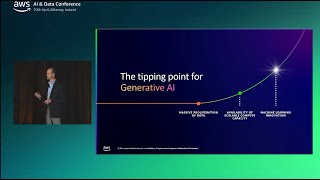
Building an end to end data strategy for analytics and generative AI | AWS Events

In this session, Rick Sears, General Manager of Amazon Athena, EMR, and Lake Formation at AWS, explores how generative AI is revolutionizing businesses and the critical role data plays in this transformation. He discusses the evolution of AI models and the importance of a comprehensive data management strategy encompassing availability, quality, and protection of data.

Mark Greville, Vice President of Architecture at Workhuman, shares insights from Workhuman's journey in building a robust cloud-based data strategy, emphasizing the significance of storytelling, demonstrating value, and gaining executive support.

Kamal Sampathkumar, Senior Manager of Data Architecture at Workhuman, delves into the technical aspects, detailing the architecture of Workhuman's data platform and showcasing solutions like Data API and self-service reporting that deliver substantial value to customers.

Learn more at: https://go.aws/3x2mha0

Learn more about AWS events: https://go.aws/3kss9CP

Subscribe: More AWS videos: http://bit.ly/2O3zS75 More AWS events videos: http://bit.ly/316g9t4

ABOUT AWS Amazon Web Services (AWS) hosts events, both online and in-person, bringing the cloud computing community together to connect, collaborate, and learn from AWS experts. AWS is the world’s most comprehensive and broadly adopted cloud platform, offering over 200 fully featured services from data centers globally. Millions of customers—including the fastest-growing startups, largest enterprises, and leading government agencies—are using AWS to lower costs, become more agile, and innovate faster.

AWSEvents #awsaianddataconference #generativeaiconference #genaiconference #genaievent #AWSgenerativeai #AWSgenai

Dive into the winning playbook of the 2023 World Series Champions Texas Rangers, and discover how they leverage Apache Airflow to streamline their data pipelines. In this session, we’ll explore how real-world data pipelines enable agile decision-making and drive competitive advantage in the high-stakes world of professional baseball, all by using Airflow as an orchestration platform. Whether you’re a seasoned data engineer or just starting out, this session promises actionable strategies to elevate your data orchestration game to championship levels.

Ben Shneiderman is a leading figure in the field of human-computer interaction (HCI). Having founded one of the oldest HCI research centers in the country at the University of Maryland in 1983, Shneiderman has been intently studying the design of computer technology and its use by humans. Currently, Ben is a Distinguished University Professor in the Department of Computer Science at the University of Maryland and is working on a new book on human-centered artificial intelligence.

I’m so excited to welcome this expert from the field of UX and design to today’s episode of Experiencing Data! Ben and I talked a lot about the complex intersection of human-centered design and AI systems.

In our chat, we covered:

Ben's career studying human-computer interaction and computer science. (0:30) 'Building a culture of safety': Creating and designing ‘safe, reliable and trustworthy’ AI systems. (3:55) 'Like zoning boards': Why Ben thinks we need independent oversight of privately created AI. (12:56) 'There’s no such thing as an autonomous device': Designing human control into AI systems. (18:16) A/B testing, usability testing and controlled experiments: The power of research in designing good user experiences. (21:08) Designing ‘comprehensible, predictable, and controllable’ user interfaces for explainable AI systems and why [explainable] XAI matters. (30:34) Ben's upcoming book on human-centered AI. (35:55)

Resources and Links: People-Centered Internet: https://peoplecentered.net/ Designing the User Interface (one of Ben’s earlier books): https://www.amazon.com/Designing-User-Interface-Human-Computer-Interaction/dp/013438038X Bridging the Gap Between Ethics and Practice: https://doi.org/10.1145/3419764 Partnership on AI: https://www.partnershiponai.org/ AI incident database: https://www.partnershiponai.org/aiincidentdatabase/ University of Maryland Human-Computer Interaction Lab: https://hcil.umd.edu/ ACM Conference on Intelligent User Interfaces: https://iui.acm.org/2021/hcai_tutorial.html Human-Computer Interaction Lab, University of Maryland, Annual Symposium: https://hcil.umd.edu/tutorial-human-centered-ai/ Ben on Twitter: https://twitter.com/benbendc

Quotes from Today’s Episode The world of AI has certainly grown and blossomed — it’s the hot topic everywhere you go. It’s the hot topic among businesses around the world — governments are launching agencies to monitor AI and are also making regulatory moves and rules. … People want explainable AI; they want responsible AI; they want safe, reliable, and trustworthy AI. They want a lot of things, but they’re not always sure how to get them. The world of human-computer interaction has a long history of giving people what they want, and what they need. That blending seems like a natural way for AI to grow and to accommodate the needs of real people who have real problems. And not only the methods for studying the users, but the rules, the principles, the guidelines for making it happen. So, that’s where the action is. Of course, what we really want from AI is to make our world a better place, and that’s a tall order, but we start by talking about the things that matter — the human values: human rights, access to justice, and the dignity of every person. We want to support individual goals, a person’s sense of self-efficacy — they can do what they need to in the world, their creativity, their responsibility, and their social connections; they want to reach out to people. So, those are the sort of high aspirational goals that become the hard work of figuring out how to build it. And that’s where we want to go. - Ben (2:05)  

The software engineering teams creating AI systems have got real work to do. They need the right kind of workflows, engineering patterns, and Agile development methods that will work for AI. The AI world is different because it’s not just programming, but it also involves the use of data that’s used for training. The key distinction is that the data that drives the AI has to be the appropriate data, it has to be unbiased, it has to be fair, it has to be appropriate to the task at hand. And many people and many companies are coming to grips with how to manage that. This has become controversial, let’s say, in issues like granting parole, or mortgages, or hiring people. There was a controversy that Amazon ran into when its hiring algorithm favored men rather than women. There’s been bias in facial recognition algorithms, which were less accurate with people of color. That’s led to some real problems in the real world. And that’s where we have to make sure we do a much better job and the tools of human-computer interaction are very effective in building these better systems in testing and evaluating. - Ben (6:10)

Every company will tell you, “We do a really good job in checking out our AI systems.” That’s great. We want every company to do a really good job. But we also want independent oversight of somebody who’s outside the company — someone who knows the field, who’s looked at systems at other companies, and who can bring ideas and bring understanding of the dangers as well. These systems operate in an adversarial environment — there are malicious actors out there who are causing trouble. You need to understand what the dangers and threats are to the use of your system. You need to understand where the biases come from, what dangers are there, and where the software has failed in other places. You may know what happens in your company, but you can benefit by learning what happens outside your company, and that’s where independent oversight from accounting companies, from governmental regulators, and from other independent groups is so valuable. - Ben (15:04)

There’s no such thing as an autonomous device. Someone owns it; somebody’s responsible for it; someone starts it; someone stops it; someone fixes it; someone notices when it’s performing poorly. … Responsibility is a pretty key factor here. So, if there’s something going on, if a manager is deciding to use some AI system, what they need is a control panel, let them know: what’s happening? What’s it doing? What’s going wrong and what’s going right? That kind of supervisory autonomy is what I talk about, not full machine autonomy that’s hidden away and you never see it because that’s just head-in-the-sand thinking. What you want to do is expose the operation of a system, and where possible, give the stakeholders who are responsible for performance the right kind of control panel and the right kind of data. … Feedback is the breakfast of champions. And companies know that. They want to be able to measure the success stories, and they want to know their failures, so they can reduce them. The continuous improvement mantra is alive and well. We do want to keep tracking what’s going on and make sure it gets better. Every quarter. - Ben (19:41)

Google has had some issues regarding hiring in the AI research area, and so has Facebook with elections and the way that algorithms tend to become echo chambers. These companies — and this is not through heavy research — probably have the heaviest investment of user experience professionals within data science organizations. They have UX, ML-UX people, UX for AI people, they’re at the cutting edge. I see a lot more generalist designers in most other companies. Most of them are rather unfamiliar with any of this or what the ramifications are on the design work that they’re doing. But even these largest companies that have, probably, the biggest penetration into the most number of people out there are getting some of this really important stuff wrong. - Brian (26:36)

Explainability is a competitive advantage for an AI system. People will gravitate towards systems that they understand, that they feel in control of, that are predictable. So, the big discussion about explainable AI focuses on what’s usually called post-hoc explanations, and the Shapley, and LIME, and other methods are usually tied to the post-hoc approach.That is, you use an AI model, you get a result and you say, “What happened?” Why was I denied a parole, or a mortgage, or a job? At that point, you want to get an explanation. Now, that idea is appealing, but I’m afraid I haven’t seen too many success stories of that working. … I’ve been diving through this for years now, and I’ve been looking for examples of good user interfaces of post-hoc explanations. It took me a long time till I found one. The culture of AI model-building would be much bolstered by an infusion of thinking about what the user interface will be for these explanations. And even the DARPA’s XAI—Explainable AI—project, which has 11 projects within it—has not really grappled with this in a good way about designing what it’s going to look like. Show it to me. … There is another way. And the strategy is basically prevention. Let’s prevent the user from getting confused and so they don’t have to request an explanation. We walk them along, let the user walk through the step—this is like Amazon checkout process, seven-step process—and you know what’s happened in each step, you can go back, you can explore, you can change things in each part of it. It’s also what TurboTax does so well, in really complicated situations, and walks you through it. … You want to have a comprehensible, predictable, and controllable user interface that makes sense as you walk through each step. - Ben (31:13)

The Data Product Management In Action podcast, brought to you by Soda and executive producer Scott Hirleman, is a platform for data product management practitioners to share insights and experiences. In Season 01, Episode 003, host Michael Toland (Product Management Coach and Consultant with Pathfinder Product) talks to Panos Lazaridis (Senior Data Product Manager at The Economist). They delve into the importance of understanding organizational and user needs, data maturity and user experience, and the roles within a data product management team. About our host Michael Toland: Michael is a Product Management Coach and Consultant with Pathfinder Product, a Test Double Operation. Since 2016, Michael has worked on large-scale system modernizations and migration initiatives at Verizon. Outside his professional career, Michael serves as the Treasurer for the New Leaders Council, mentors with Venture for America, sings with the Columbus Symphony, and writes satire for his blog Dignified Product. He is excited to discuss data product management with the podcast audience. Connect with Michael on LinkedIn.

About our guest Panos Lazaridis: Panos is an agile and resilient product manager specializing in data products and platforms. He loves talking about data strategy, AI, and sustainability. Panos holds BSc, MSc, MBA, CSPO, and Prince2 qualifications. Connect with Panos on LinkedIn. All views and opinions expressed are those of the individuals and do not necessarily reflect their employers or anyone else. Join the conversation on LinkedIn.  

AWS re:Inforce 2024 - Not another chatbot: How Trellix virtual analyst automatically scales TDR328-S

It can seem like every security company these days is using AI, but many are actually creating more work for security operations by requiring more typing with a chatbot and more reading by analysts to understand what’s occurring. In this lightning talk, learn about Trellix’s different approach—Its virtual analyst makes decisions and has opinions. Explore how it uses AI powered by Amazon Bedrock to decide if findings are among the few that a human should look at. Also, learn how security teams can help ensure every important finding is being evaluated with an in-depth look at how AI makes decisions with the right data. This presentation is brought to you by Trellix, an AWS Partner.

Learn more about AWS re:Inforce at https://go.aws/reinforce.

Subscribe: More AWS videos: http://bit.ly/2O3zS75 More AWS events videos: http://bit.ly/316g9t4

ABOUT AWS Amazon Web Services (AWS) hosts events, both online and in-person, bringing the cloud computing community together to connect, collaborate, and learn from AWS experts.

AWS is the world's most comprehensive and broadly adopted cloud platform, offering over 200 fully featured services from data centers globally. Millions of customers—including the fastest-growing startups, largest enterprises, and leading government agencies—are using AWS to lower costs, become more agile, and innovate faster.

reInforce2024 #CloudSecurity #AWS #AmazonWebServices #CloudComputing

AWS re:Inforce 2024 - Navigating privacy and compliance while securing gen AI applications (GAI201)

Do you have questions about privacy and compliance when it comes to using or building generative AI applications? Join this session for a deep dive on privacy and compliance challenges and considerations that you should be aware of as you embark on your generative AI journey. Gain insights into different generative AI use cases, and learn about what is happening around the world with regard to AI regulation and standards and the impact that they may have on your applications.

Learn more about AWS re:Inforce at https://go.aws/reinforce.

Subscribe: More AWS videos: http://bit.ly/2O3zS75 More AWS events videos: http://bit.ly/316g9t4

ABOUT AWS Amazon Web Services (AWS) hosts events, both online and in-person, bringing the cloud computing community together to connect, collaborate, and learn from AWS experts.

AWS is the world's most comprehensive and broadly adopted cloud platform, offering over 200 fully featured services from data centers globally. Millions of customers—including the fastest-growing startups, largest enterprises, and leading government agencies—are using AWS to lower costs, become more agile, and innovate faster.

reInforce2024 #CloudSecurity #AWS #AmazonWebServices #CloudComputing

AWS re:Inforce 2024 - Safeguarding sensitive data used in generative AI with RAG (DAP223)

As an increasing number of organizations leverage internal data for optimizing outputs in generative AI through Retrieval Augmented Generation (RAG), concerns about potential internal data leaks have grown. This talk delves into strategies for securely transmitting and storing the internal data used in RAG. Additionally, explore methods for identifying sensitive data and learn about best practices for subsequent measures to address these concerns.

Learn more about AWS re:Inforce at https://go.aws/reinforce.

Subscribe: More AWS videos: http://bit.ly/2O3zS75 More AWS events videos: http://bit.ly/316g9t4

ABOUT AWS Amazon Web Services (AWS) hosts events, both online and in-person, bringing the cloud computing community together to connect, collaborate, and learn from AWS experts.

AWS is the world's most comprehensive and broadly adopted cloud platform, offering over 200 fully featured services from data centers globally. Millions of customers—including the fastest-growing startups, largest enterprises, and leading government agencies—are using AWS to lower costs, become more agile, and innovate faster.

reInforce2024 #CloudSecurity #AWS #AmazonWebServices #CloudComputing

AWS re:Inforce 2024 - Capital One’s approach for secure and resilient applications (DAP302)

Join this session to learn about Capital One’s strategic AWS Secrets Manager implementation that has helped ensure unified security across environments. Discover the key principles that can guide consistent use, with real-world examples to showcase the benefits and challenges faced. Gain insights into achieving reliability and resilience in financial services applications on AWS, including methods for maintaining system functionality amidst failures and scaling operations safely. Find out how you can implement chaos engineering and site reliability engineering using multi-Region services such as Amazon Route 53, AWS Auto Scaling, and Amazon DynamoDB.

Learn more about AWS re:Inforce at https://go.aws/reinforce.

Subscribe: More AWS videos: http://bit.ly/2O3zS75 More AWS events videos: http://bit.ly/316g9t4

ABOUT AWS Amazon Web Services (AWS) hosts events, both online and in-person, bringing the cloud computing community together to connect, collaborate, and learn from AWS experts.

AWS is the world's most comprehensive and broadly adopted cloud platform, offering over 200 fully featured services from data centers globally. Millions of customers—including the fastest-growing startups, largest enterprises, and leading government agencies—are using AWS to lower costs, become more agile, and innovate faster.

reInforce2024 #CloudSecurity #AWS #AmazonWebServices #CloudComputing

AWS re:Inforce 2024 - Protect your generative AI applications against jailbreaks (GAI321)

Many companies are excited to build products using generative AI, but these large language models require protections against jailbreaking to help ensure safe, ethical use. This lightning talk covers best practices for protecting your generative AI application against threats that could make models behave undesirably. Explore approaches to mitigate risks from the start, helping you build responsibly.

Learn more about AWS re:Inforce at https://go.aws/reinforce.

Subscribe: More AWS videos: http://bit.ly/2O3zS75 More AWS events videos: http://bit.ly/316g9t4

ABOUT AWS Amazon Web Services (AWS) hosts events, both online and in-person, bringing the cloud computing community together to connect, collaborate, and learn from AWS experts.

AWS is the world's most comprehensive and broadly adopted cloud platform, offering over 200 fully featured services from data centers globally. Millions of customers—including the fastest-growing startups, largest enterprises, and leading government agencies—are using AWS to lower costs, become more agile, and innovate faster.

reInforce2024 #CloudSecurity #AWS #AmazonWebServices #CloudComputing

AWS re:Inforce 2024 - Mitigate OWASP Top 10 for LLM risks with a Zero Trust approach (GAI323)

Generative AI–based applications have the most business impact when they have access to critical business data and are empowered to take actions on behalf of the user. However, these integrations raise important security questions outlined in the OWASP Top 10 for LLM vulnerabilities and NIST Adversarial Machine Learning frameworks. This lightning talk introduces high-level architectural patterns to effectively mitigate key OWASP Top 10 for LLM vulnerabilities through Zero Trust principles. Leave this talk with best practices for building generative AI applications accessing sensitive business data using Agents for Amazon Bedrock.

Learn more about AWS re:Inforce at https://go.aws/reinforce.

Subscribe: More AWS videos: http://bit.ly/2O3zS75 More AWS events videos: http://bit.ly/316g9t4

ABOUT AWS Amazon Web Services (AWS) hosts events, both online and in-person, bringing the cloud computing community together to connect, collaborate, and learn from AWS experts.

AWS is the world's most comprehensive and broadly adopted cloud platform, offering over 200 fully featured services from data centers globally. Millions of customers—including the fastest-growing startups, largest enterprises, and leading government agencies—are using AWS to lower costs, become more agile, and innovate faster.

reInforce2024 #CloudSecurity #AWS #AmazonWebServices #CloudComputing

AWS re:Inforce 2024 - Building a secure end-to-end generative AI application in the cloud (NIS321)

The security and privacy of data during the training, fine-tuning, and inferencing phases of generative AI are paramount. This lightning talk introduces a reference architecture designed to use the security of AWS PrivateLink with generative AI applications. Explore the importance of protecting proprietary data in applications that leverage both AWS native LLMs and ISV-supplied external data stores. Learn about the secure movement and usage of data, particularly for RAG processes, across various data sources like Amazon S3, vector databases, and Snowflake. Learn how this reference architecture not only meets today’s security demands but also sets the stage for the future of secure generative AI development.

Learn more about AWS re:Inforce at https://go.aws/reinforce.

Subscribe: More AWS videos: http://bit.ly/2O3zS75 More AWS events videos: http://bit.ly/316g9t4

ABOUT AWS Amazon Web Services (AWS) hosts events, both online and in-person, bringing the cloud computing community together to connect, collaborate, and learn from AWS experts.

AWS is the world's most comprehensive and broadly adopted cloud platform, offering over 200 fully featured services from data centers globally. Millions of customers—including the fastest-growing startups, largest enterprises, and leading government agencies—are using AWS to lower costs, become more agile, and innovate faster.

reInforce2024 #CloudSecurity #AWS #AmazonWebServices #CloudComputing