talk-data.com talk-data.com

Topic

Agile/Scrum

project_management software_development methodology

561

tagged

Activity Trend

163 peak/qtr
2020-Q1 2026-Q1

Activities

561 activities · Newest first

CMDB Systems

CMDB Systems: Making Change Work in the Age of Cloud and Agile shows you how an integrated database across all areas of an organization’s information system can help make organizations more efficient reduce challenges during change management and reduce total cost of ownership (TCO). In addition, this valuable reference provides guidelines that will enable you to avoid the pitfalls that cause CMDB projects to fail and actually shorten the time required to achieve an implementation of a CMDB. Drawing upon extensive experience and using illustrative real world examples, Rick Sturm, Dennis Drogseth and Dan Twing discuss: Unique insights from extensive industry exposure, research and consulting on the evolution of CMDB/CMS technology and ongoing dialog with the vendor community in terms of current and future CMDB/CMS design and plans Proven and structured best practices for CMDB deployments Clear and documented insights into the impacts of cloud computing and other advances on CMDB/CMS futures Discover unique insights from industry experts who consult on the evolution of CMDB/CMS technology and will show you the steps needed to successfully plan, design and implement CMDB Covers related use-cases from retail, manufacturing and financial verticals from real-world CMDB deployments Provides structured best practices for CMDB deployments Discusses how CMDB adoption can lower total cost of ownership, increase efficiency and optimize the IT enterprise

Data Science at the Command Line

This hands-on guide demonstrates how the flexibility of the command line can help you become a more efficient and productive data scientist. You’ll learn how to combine small, yet powerful, command-line tools to quickly obtain, scrub, explore, and model your data. To get you started—whether you’re on Windows, OS X, or Linux—author Jeroen Janssens introduces the Data Science Toolbox, an easy-to-install virtual environment packed with over 80 command-line tools. Discover why the command line is an agile, scalable, and extensible technology. Even if you’re already comfortable processing data with, say, Python or R, you’ll greatly improve your data science workflow by also leveraging the power of the command line. Obtain data from websites, APIs, databases, and spreadsheets Perform scrub operations on plain text, CSV, HTML/XML, and JSON Explore data, compute descriptive statistics, and create visualizations Manage your data science workflow using Drake Create reusable tools from one-liners and existing Python or R code Parallelize and distribute data-intensive pipelines using GNU Parallel Model data with dimensionality reduction, clustering, regression, and classification algorithms

Analytics and Big Data: The Davenport Collection (6 Items)

The Analytics and Big Data collection offers a “greatest hits” digital compilation of ideas from world-renowned thought leader Thomas Davenport, who helped popularize the terms analytics and big data in the workplace. An agile and prolific thinker, Davenport has written or coauthored more than a dozen bestselling books. Several of these titles are offered together for the first time in this curated digital bundle, including: Big Data at Work, Competing on Analytics, Analytics at Work, and Keeping Up with the Quants. The collection also includes Davenport’s popular Harvard Business Review articles, “Data Scientist: The Sexiest Job of the 21st Century” (2012) and “Analytics 3.0” (2013). Combined, these works cover all the bases on analytics and big data: what each term means; the ramifications of each from a technical, consumer, and management perspective; and where each can have the biggest impact on your business. Whether you’re an executive, a manager, or a student wanting to learn more, Analytics and Big Data is the most comprehensive collection you’ll find on the ever-growing phenomenon of digital data and analysis—and how you can make this rising business trend work for you. Named one of the ten “Masters of the New Economy” by CIO magazine, Thomas Davenport has helped hundreds of companies revitalize their management practices. He combines his interests in research, teaching, and business management as the President’s Distinguished Professor of Information Technology & Management at Babson College. Davenport has also taught at Harvard Business School, the University of Chicago, Dartmouth’s Tuck School of Business, and the University of Texas at Austin and has directed research centers at Accenture, McKinsey & Company, Ernst & Young, and CSC. He is also an independent Senior Advisor to Deloitte Analytics.

IBM PureApplication System Best Practices

This IBM® Redbooks® publication describes IBM PureApplication™ System preferred practices that are based on IBM client and Business Partner experience. It explains how PureApplication System enables industries to consolidate workloads, increase efficiency, automate routine processes, reduce costs, and become more agile to respond to continually changing business needs. This book is particularly useful to solution specialists, system or software architects, and the IT teams who implement PureApplication System cloud services.

Successful Business Intelligence, Second Edition, 2nd Edition

Revised to cover new advances in business intelligence—big data, cloud, mobile, and more—this fully updated bestseller reveals the latest techniques to exploit BI for the highest ROI. “Cindi has created, with her typical attention to details that matter, a contemporary forward-looking guide that organizations could use to evaluate existing or create a foundation for evolving business intelligence / analytics programs. The book touches on strategy, value, people, process, and technology, all of which must be considered for program success. Among other topics, the data, data warehousing, and ROI comments were spot on. The ‘technobabble’ chapter was brilliant!” — Bill Frank, Business Intelligence and Data Warehousing Program Manager, Johnson & Johnson “If you want to be an analytical competitor, you’ve got to go well beyond business intelligence technology. Cindi Howson has wrapped up the needed advice on technology, organization, strategy, and even culture in a neat package. It’s required reading for quantitatively oriented strategists and the technologists who support them.” — Thomas H. Davenport, President’s Distinguished Professor, Babson College and co-author, Competing on Analytics “Cindi has created an exceptional, authoritative description of the end-to-end business intelligence ecosystem. This is a great read for those who are just trying to better understand the business intelligence space, as well as for the seasoned BI practitioner.” — Sully McConnell, Vice President, Business Intelligence and Information Management, Time Warner Cable “Cindi’s book succinctly yet completely lays out what it takes to deliver BI successfully. IT and business leaders will benefit from Cindi’s deep BI experience, which she shares through helpful, real-world definitions, frameworks, examples, and stories. This is a must-read for companies engaged in – or considering – BI.” — Barbara Wixom, PhD, Principal Research Scientist, MIT Sloan Center for Information Systems Research Expanded to cover the latest advances in business intelligence such as big data, cloud, mobile, visual data discovery, and in-memory computing, this fully updated bestseller by BI guru Cindi Howson provides cutting-edge techniques to exploit BI for maximum value. Successful Business Intelligence: Unlock the Value of BI & Big Data, Second Edition describes best practices for an effective BI strategy. Find out how to: Garner executive support to foster an analytic culture Align the BI strategy with business goals Develop an analytic ecosystem to exploit data warehousing, analytic appliances, and Hadoop for the right BI workload Continuously improve the quality, breadth, and timeliness of data Find the relevance of BI for everyone in the company Use agile development processes to deliver BI capabilities and improvements at the pace of business change Select the right BI tools to meet user and business needs Measure success in multiple ways Embrace innovation, promote successes and applications, and invest in training Monitor your evolution and maturity across various factors for impact Exclusive industry survey data and real-world case studies from Medtronic, Macy’s, 1-800 CONTACTS, The Dow Chemical Company, Netflix, Constant Contact, and other companies show successful BI initiatives in action. From Moneyball to Nate Silver, BI and big data have permeated our cultural, political, and economic landscape. This timely, up-to-date guide reveals how to plan and deploy an agile, state-of-the-art BI solution that links insight to action and delivers a sustained competitive advantage.

Agile Data Science

Mining big data requires a deep investment in people and time. How can you be sure you’re building the right models? With this hands-on book, you’ll learn a flexible toolset and methodology for building effective analytics applications with Hadoop. Using lightweight tools such as Python, Apache Pig, and the D3.js library, your team will create an agile environment for exploring data, starting with an example application to mine your own email inboxes. You’ll learn an iterative approach that enables you to quickly change the kind of analysis you’re doing, depending on what the data is telling you. All example code in this book is available as working Heroku apps. Create analytics applications by using the agile big data development methodology Build value from your data in a series of agile sprints, using the data-value stack Gain insight by using several data structures to extract multiple features from a single dataset Visualize data with charts, and expose different aspects through interactive reports Use historical data to predict the future, and translate predictions into action Get feedback from users after each sprint to keep your project on track

Oracle E-Business Suite 12 Tuning Tips & Techniques

Master Oracle E-Business Suite 12 Performance Tuning and Optimization Deliver on the promise of lower TCO and achieve operational excellence by implementing a comprehensive enterprise application management process. Oracle E-Business Suite 12 Tuning Tips & Techniques offers detailed coverage of the versatile tools, features, and services available for managing application reliability, availability, performance, optimization, and governance. Best practices for maintaining overall application health and supporting evolving priorities, technologies, and systems are also included in this Oracle Press guide. Get a comprehensive technical and functional overview of Oracle E-Business Suite 12 Plan, develop, and implement a management lifecycle strategy Execute an effective reliability management solution Monitor and maintain availability Improve application speed and performance Optimize Oracle E-Business Suite for short-term flexibility and long-term strategic goals Implement strong application governance processes Measure the success and performance of your management plan Maintain an agile, future-ready Oracle E-Business Suite platform

Implementing the IBM SAN Volume Controller and FlashSystem 820

In today's 24 x 7 world, there is likely not a business on this planet, IBM® Smarter Planet® or not, that finds that their storage requirements are growing too fast and demand is starting to outpace supply. Not only this, but in this cost-conscious environment of today, the costs of managing this growth are likely to be eating into the IT budget. One way to make better use of existing storage without adding more complexity to the infrastructure is the IBM System Storage® SAN Volume Controller (SVC). For many years now this has helped business become more flexible, agile, and introduced an extremely efficient storage environment. SAN Volume Controller is designed to deliver the benefits of storage virtualization in environments from large enterprises to small businesses and midmarket companies. Virtualizing storage with SAN Volume Controller helps make new and existing storage more effective. SAN Volume Controller includes many functions that are traditionally deployed separately in disk systems. By including these in a virtualization system, SAN Volume Controller standardizes functions across virtualized storage for greater flexibility and potentially lower costs. Now, with IBM FlashSystem™ storage, SAN Volume Controller is enabled to extend its reach and benefit all virtualized storage. For example, IBM Easy Tier® optimizes use of flash storage. And IBM Real-time Compression™ enhances efficiency even further by enabling the storage of up to five times as much active primary data in the same physical disk space. In this IBM Redbooks® publication, we show how to integrate the IBM FlashSystem 820 to provide storage to the SAN Volume Controller, and show how they are designed to operate seamlessly together, reducing management effort. In this book, which is aimed at pre- and post-sales support, storage administrators, and people that want to get an overview of this new and exciting technology, we show the steps required to implement the IBM FlashSystem 820 in an existing SAN Volume Controller environment. We also highlight some of the new features in SAN Volume Controller that increase performance. If you are not already familiar with the SAN Volume Controller, it is beneficial to read the following IBM Redbooks publications: - Implementing the IBM System Storage SAN Volume Controller V6.3, SG24-7933 - Implementing the IBM Storwize V7000 V6.3, SG24-7938 - Real-time Compression in SAN Volume Controller and Storwize V7000, REDP-4859 - IBM SAN Volume Controller and IBM FlashSystem 820: Best Practices and Performance Capabilities, REDP-5027 - IBM FlashSystem 710 and IBM FlashSystem 810, TIPS1002 - IBM FlashSystem 720 and IBM FlashSystem 820, TIPS1003 - Flash or SSD: Why and When to Use IBM FlashSystem, REDP-5020

Agile SAP: Introducing flexibility, transparency and speed to SAP implementations

Invaluable practical advice Many SAP projects use waterfall methodologies, but these often run into budgeting and scheduling problems. In this unique book, Sean Robson presents ways of improving SAP implementations and offers practical advice on the most effective way to see a project through from beginning to end. Basing his strategies on the twelve principles of the Agile Manifesto, and drawing on his vast experience, he particularly focuses on the use of Scrum and Kanban and their suitability for certain types of projects, enabling you to select the most appropriate method for the task in hand. Apply it to your projects As you read this book, you will understand how to: " Bring your SAP projects in on time and within budget Build more flexibility and transparency in to your implementations, enabling you to adapt more quickly to your clients' needs Realize cost savings as you analyze your expenditure, reduce waste and increase efficiencies in the delivery cycle Increase customer loyalty as you adopt 'best practice' in order to maintain consistently high standards Work more effectively as you increase collaboration within the company and reduce the stress that so often accompanies large-scale projects Improve clarity of requirements and eliminate unnecessary paperwork.

Microsoft® SQL Server® 2012 Analysis Services: The BISM Tabular Model

Build agile and responsive Business Intelligence solutions Analyze tabular data using the BI Semantic Model (BISM) in Microsoft SQL Server 2012 Analysis Services—and discover a simpler method for creating corporate-level BI solutions. Led by three BI experts, you’ll learn how to build, deploy, and query a BISM tabular model with step-by-step guides, examples, and best practices. This hands-on book shows you how the tabular model’s in-memory database enables you to perform rapid analytics—whether you’re a professional BI developer new to Analysis Services or familiar with its multidimensional model. Discover how to: Determine when a tabular or multidimensional model is right for your project Build a tabular model using SQL Server Data Tools in Microsoft Visual Studio 2010 Integrate data from multiple sources into a single, coherent view of company information Use the Data Analysis eXpressions (DAX) language to create calculated columns, measures, and queries Choose a data modeling technique that meets your organization’s performance and usability requirements Optimize your data model for better performance with xVelocity storage engine Manage complex data relationships, such as multicolumn, banding, and many-to-many Implement security by establishing administrative and data user roles

Web Analytics Action Hero: Using Analysis to Gain Insight and Optimize Your Business

Companies need more than just web analysts and data-savvy marketers to be successful–they need action heroes! While most of us never battle evil scientists or defuse nuclear warheads, successful web analysts benefit from the same attributes that fictional action heroes embody. As a web analyst, your main goal is to improve your organization’s online performance. You can become an “action hero” by translating analysis insights into action that generates significant returns for your company. How you approach analysis is critical to your overall success. In this book, web analytics expert Brent Dykes addresses the unique challenges facing analysts and online marketers working within small and large companies, teaching you how to move beyond reporting and toward analysis to drive action and change. Taking a principle-based rather than a tool-specific approach, Brent introduces you to the Action Hero Framework that breaks down the analysis process into three key stages: Prioritize (what to analyze), Analyze (how to analyze), and Mobilize (how to drive action). And he reinforces these topics with real-world examples and practical tips from seasoned analysts at leading companies. Defines the type of environment in which action heroes thrive–not just survive–as well as how to defeat the villains of web analytics that stand in the way Arms web professionals with a strategic framework for executing online analysis, as well as an arsenal of analysis techniques Reveals how companies need to be both data-driven and action-agile to drive business value from web analytics For more action hero resources and information, check out the book’s companion site at www.Analyticshero.com. "The ideas in this book will take you days (or even weeks) to work your way through, and they fly in the face of the emotional approach to marketing. The question is: would you rather have your competition lead the way with data and science when it comes to reaching your market, or are you going to go first? That's how it is with action heroes--no guts, no glory." - Seth Godin Author We Are All Weird "Don't let the jaunty, breezy style of this book throw you off. Brent successfully - and entertainingly - packs years of experience into these pages along with case studies and insightful help on getting the most out of web analytics, adding value to your company and boosting your career trajectory." - Jim Sterne Founder of eMetrics Marketing Optimization Summit, author of "Social Media Metrics" and Chairman of the Digital Analytics Association

Agile Analytics: A Value-Driven Approach to Business Intelligence and Data Warehousing

Using Agile methods, you can bring far greater innovation, value, and quality to any data warehouse, business intelligence, or analytics project. However, conventional Agile methodologies must be carefully adapted to address the unique characteristics of DW/BI projects. In , Agile pioneer Ken Collier shows how to do just that. Agile Analytics Collier introduces platform-agnostic Agile solutions for integrating infrastructures consisting of diverse operational, legacy, and specialty systems that mix commercial and custom code. Using working examples, he shows how to manage analytics development teams with widely diverse skill sets; support enormous and fast-growing data volumes; and more. Collier's techniques offer equal value whether your projects involve "back-end" data management, "front-end" business analysis, or both. Part I focuses on Agile project management techniques and delivery team coordination, introducing core practices that shape the way your agile DW/BI project community works together towards success Part II presents technical methods for enabling continuous delivery of business value at production-quality levels, including evolving superior designs; test-driven DW development; version control; and project automation Collier brings together proven solutions you can apply right now--whether you're an IT decision-maker, data warehouse professional, DBA, business intelligence specialist, or database developer. With his help, you can mitigate project risk, improve business alignment, achieve better results--and have fun along the way.

Oracle Fusion Middleware 11g Architecture and Management

Master All Aspects of Oracle Fusion Middleware Management Govern a unified platform for agile, intelligent business applications using the detailed information contained in this Oracle Press book. Oracle Fusion Middleware 11g Architecture and Management explains the entire suite of Oracle Fusion Middleware components and lays out core use cases, best practices, and step-by-step administrative instructions. Discover how to provision servers and clusters, configure Web services, manage portals, and optimize the performance of the full stack of Oracle Fusion Middleware components. Monitoring, diagnosing, and security are also covered in this definitive resource. Understand key architectural concepts behind Oracle Fusion Middleware 11 g Create and deploy Oracle WebLogic Server domains and clusters Set up and manage applications built using Oracle Application Development Framework Maximize the value of your Oracle SOA Suite environments Manage portals and Enterprise 2.0 services from Oracle WebCenter Secure deployments with Oracle Platform Security Services and Oracle Identity Management Understand Oracle Exalogic and Oracle Virtual Assembly Builder

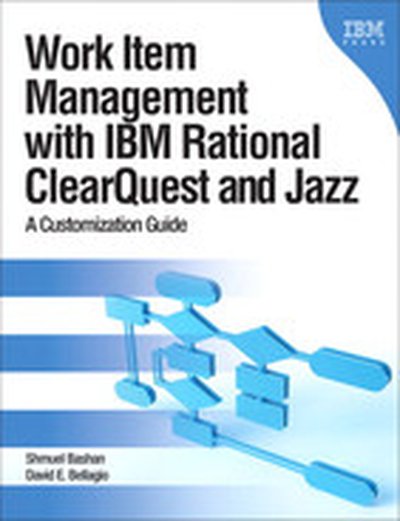
Work Item Management with IBM Rational ClearQuest and Jazz: A Customization Guide

&> The Complete Guide to Managing Work Items and Workflow with IBM Rational ClearQuest 7, IBM Rational Team Concert, and Jazz Work items are the lifeblood of software and hardware development. They tell development teams exactly who is doing what, which issues are resolved, which remain unresolved, and which products are impacted. In large team-based projects, however, managing work items can be difficult. Now, two IBM Rational experts show how to simplify and improve every aspect of work item management with IBM Rational ClearQuest and the powerful and collaborative Jazz-based products: IBM Rational Team Concert (RTC) and IBM Rational Quality Manager. Drawing on extensive experience with IBM customers, the authors tightly link theory with proven best practices, offering implementation guidance, detailed examples, and complete schemas. They present innovative solutions, introduce advanced customization techniques, and walk step-by-step through every phase of workflow development, from requirements through maintenance. They conclude with a full chapter of sample applications and solutions, ranging from Collaborative Application Lifecycle Management to SLAs. Coverage includes Understanding work items and their elements Using work items for changes, tasks, activities, test plans, test cases, risks, builds, and promotion Implementing best practices for work item application planning, analysis, design, development, testing, deployment, and maintenance Describing workflows, including advanced dynamic workflows Incorporating roles in work items and using them to meet business needs Using ClearQuest packages and custom integrations, and making the most of Jazz platform integration technology Getting the most of out the CQ-ALM schema Implementing effective quality and performance metrics, SLAs, and governance Improving test management with IBM Rational Quality Manager work items Creating effective workflows for Scrum and other Agile projects will be an indispensable resource for all change management administrators, systems analysts, designers, project managers, and quality engineers who are already using IBM Rational ClearQuest, Rational Team Concert, or Rational Quality Manager; and for all IT professionals who want to understand enterprise-class work item and workflow management. Work Item Management with IBM Rational ClearQuest and Jazz

IBM FileNet P8 Platform and Architecture

IBM® FileNet® Platform is a next-generation, unified enterprise foundation for the integrated IBM FileNet P8 products. It combines the enterprise content management with comprehensive business process management and compliance capabilities. IBM FileNet P8 addresses the most demanding compliance, content, and process management needs for your entire organization. It is a key element in creating an agile, adaptable enterprise content management (ECM) environment necessary to support a dynamic organization that must respond quickly to change. In this IBM Redbooks® publication, we provide an overview of IBM FileNet P8 and describe the core component architecture. We also introduce major expansion products that extend IBM FileNet P8 functionality in the areas of content ingestion, content accessing through connectors and federation, the application framework, and discovery and compliance. In this book, we discuss the anatomy of an ECM infrastructure, content event processing, content life cycle, and business processes. This book gives IT architects, IT specialists, and IT Technical Sales a solid understanding of IBM FileNet P8 Platform, its architecture, its functions and extensibility, and its unlimited capabilities.

Data Warehousing Fundamentals for IT Professionals

Cutting-edge content and guidance from a data warehousing expert—now expanded to reflect field trends Data warehousing has revolutionized the way businesses in a wide variety of industries perform analysis and make strategic decisions. Since the first edition of Data Warehousing Fundamentals, numerous enterprises have implemented data warehouse systems and reaped enormous benefits. Many more are in the process of doing so. Now, this new, revised edition covers the essential fundamentals of data warehousing and business intelligence as well as significant recent trends in the field. The author provides an enhanced, comprehensive overview of data warehousing together with in-depth explanations of critical issues in planning, design, deployment, and ongoing maintenance. IT professionals eager to get into the field will gain a clear understanding of techniques for data extraction from source systems, data cleansing, data transformations, data warehouse architecture and infrastructure, and the various methods for information delivery. This practical Second Edition highlights the areas of data warehousing and business intelligence where high-impact technological progress has been made. Discussions on developments include data marts, real-time information delivery, data visualization, requirements gathering methods, multi-tier architecture, OLAP applications, Web clickstream analysis, data warehouse appliances, and data mining techniques. The book also contains review questions and exercises for each chapter, appropriate for self-study or classroom work, industry examples of real-world situations, and several appendices with valuable information. Specifically written for professionals responsible for designing, implementing, or maintaining data warehousing systems, Data Warehousing Fundamentals presents agile, thorough, and systematic development principles for the IT professional and anyone working or researching in information management.

SOA Patterns with BizTalk Server 2009

In "SOA Patterns with BizTalk Server 2009", author Richard Seroter offers a meticulous guide to applying service-oriented architecture (SOA) principles to BizTalk Server solutions. This book will help you enhance the reusability and flexibility of your BizTalk implementations while leveraging Windows Communication Foundation (WCF) features to build modern, robust solutions. What this Book will help me do Gain practical knowledge of applying SOA principles to BizTalk Server 2009 Learn how to efficiently create and consume WCF services in BizTalk solutions Understand advanced features such as the WCF SQL Server Adapter and ESB Guidance Master effective methods for designing loosely coupled orchestrations Discover strategies for maintaining, versioning, and enhancing BizTalk solutions Author(s) Richard Seroter is a highly experienced integration architect with hands-on expertise in BizTalk Server and related technologies. With years of practical experience designing scalable enterprise solutions, Richard is passionate about sharing knowledge through comprehensive resources. His approachable writing style ensures clarity and accessibility for developers and architects alike. Who is it for? This book is ideal for BizTalk professionals such as architects and developers who already have a foundational understanding of the platform. It caters to individuals looking to enhance their skills in building scalable and service-oriented solutions using BizTalk Server 2009. If you're focused on creating agile, reusable, and robust BizTalk applications, this book is an essential resource for you.

NHibernate in Action

In the classic style of Manning's "In Action" series, NHibernate in Action introduces .NET developers to the NHibernate Object/Relational Mapping tool. As NHibernate is a port of Hibernate from Java to .NET, the book is based on Manning's bestselling Hibernate in Action. NHibernate in Action begins by describing how to implement persistence in a layered .NET application. The book then quickly springs into action by introducing NHibernate through a classic "Hello World" example. It explains how to configure NHibernate to specify the mapping information between business objects and database tables, and then explores the internal architecture of NHibernate. A complete example application is progressively built with Agile methodologies in mind, which shows readers all kinds of entity and relationship mappings and how to perform CRUD operations. The book also covers advanced techniques like caching, concurrency access, and isolation levels. The Hibernate Query Language (HQL) and criteria query APIs are thoroughly detailed with optimization tips. The last chapters of this book discuss various development scenarios, how to implement the layers of an NHibernate application (covering Windows and Web development), and which tools are available for these tasks. They also provide some solutions for data-binding objects to .NET GUI controls, integrating services, and interacting with components using DataSets. Finally, they explain how to build a complex application involving advanced session management and distributed transactions. About the Technology About the Book NHibernate in Action begins by describing how to implement persistence in a layered .NET application. The book then quickly springs into action by introducing NHibernate through a classic "Hello World" example. It explains how to configure NHibernate to specify the mapping information between business objects and database tables, and then explores the internal architecture of NHibernate. A complete example application is progressively built with Agile methodologies in mind, which shows readers all kinds of entity and relationship mappings and how to perform CRUD operations. The book also covers advanced techniques like caching, concurrency access, and isolation levels. The Hibernate Query Language (HQL) and criteria query APIs are thoroughly detailed with optimization tips. The last chapters of this book discuss various development scenarios, how to implement the layers of an NHibernate application (covering Windows and Web development), and which tools are available for these tasks. They also provide some solutions for data-binding objects to .NET GUI controls, integrating services, and interacting with components using DataSets. Finally, they explain how to build a complex application involving advanced session management and distributed transactions. What's Inside Object/Relational Mapping for .NET NHibernate configuration, mapping, and query APIs Development processes for the domain model and data-binding Advanced session management and distributed transactions Using NHibernate in real-world projects About the Reader About the Author Pierre Henri Kuaté is one of the main developers on the NHibernate project team, author of the NHibernate.Mapping.Attributes library, and a major contributor to the NHibernate forum. He's responsible for managing the NHibernate documentation, website, and forum on the Hibernate.org site. He started using NHibernate more than two years ago in commercial development. Tobin Harris has worked with NHibernate since it was in early Beta. His passion is tools and practices that help build quality software at high speeds. As an independent consultant and entrepreneur, Tobin works with companies across the globe in various sectors including banking, personal finance, healthcare, software components and new media. In 2001, Tobin was the founder of the Open Source SqlBuddy project. Subsequently he has worked in partnership with Frost Innovation on Gaia Ajax Widgets, an Open Source Ajax suite for .NET. Tobin obtained his degree in Software Engineering at Leeds Metropolitan University, and continues to work and live in Leeds, UK. Christian Bauer is a member of the Hibernate developer team and a trainer, consultant, and product manager for Hibernate, EJB 3.0, and JBoss Seam at JBoss. He is the lead author of Hibernate in Action and Java Persistence with Hibernate. Gavin King is a lead developer at JBoss, the creator of Hibernate, and a member of the EJB 3.0 (JSR 220) expert group. He also leads the Web Beans JSR 299, a standardization effort involving Hibernate concepts, JSF, and EJB 3.0. Quotes A much needed book for novices and experts. - Mark Monster, Rubicon Finally, a great book covering NHibernate. - Paul Wilson, McKesson A must-have for NHibernate developers. - Ayende Rahien, NHibernate Committer Accelerates your learning curve for ORM in .NET. - Doug Warren, Java Web Services

Successful Business Intelligence: Secrets to Making BI a Killer App

Praise for Successful Business Intelligence "If you want to be an analytical competitor, you've got to go well beyond business intelligence technology. Cindi Howson has wrapped up the needed advice on technology, organization, strategy, and even culture in a neat package. It's required reading for quantitatively oriented strategists and the technologists who support them." --Thomas H. Davenport, President's Distinguished Professor, Babson College and co-author, Competing on Analytics "When used strategically, business intelligence can help companies transform their organization to be more agile, more competitive, and more profitable. Successful Business Intelligence offers valuable guidance for companies looking to embark upon their first BI project as well as those hoping to maximize their current deployments." --John Schwarz, CEO, Business Objects "A thoughtful, clearly written, and carefully researched examination of all facets of business intelligence that your organization needs to know to run its business more intelligently and exploit information to its fullest extent." --Wayne Eckerson, Director, TDWI Research "Using real-world examples, Cindi Howson shows you how to use business intelligence to improve the performance, and the quality, of your company." --Bill Baker, Distinguished Engineer & GM, Business Intelligence Applications, Microsoft Corporation "This book outlines the key steps to make BI an integral part of your company's culture and demonstrates how your company can use BI as a competitive differentiator." --Robert VanHees, CFO, Corporate Express "Given the trend to expand the business analytics user base, organizations are faced with a number of challenges that affect the success rate of these projects. This insightful book provides practical advice on improving that success rate." --Dan Vesset, Vice President, Business Analytics Solution Research, IDC

DB2® 9 for Linux®, UNIX®, and Windows®: DBA Guide, Reference, and Exam Prep, Sixth Edition

DB2 ® 9 builds on the world's number one enterprise database to simplify the delivery of information as a service, accelerate development, and dramatically improve operational efficiency, security, and resiliency. Now, this new edition offers complete, start-to-finish coverage of DB2 9 administration and development for Linux ®, UNIX ®, and Windows ® platforms, as well as authoritative preparation for the latest IBM DB2 certification exam. Written for both DBAs and developers, this definitive reference and self-study guide covers all aspects of deploying and managing DB2 9, including DB2 database design and development; day-to-day administration and backup; deployment of networked, Internet-centered, and SOA-based applications; migration; and much more. You'll also find an unparalleled collection of expert tips for optimizing performance, availability, and value. Coverage includes: Important security and resiliency enhancements, including advanced access control; fine-grained, label-based security; and the new security administrator role Breakthrough pureXML ™ features that make it easier to succeed with service-oriented architecture Operational improvements that enhance DBA efficiency--including self-tuning memory allocation, automated storage management, and storage optimization Table-partitioning features that improve scalability and manageability Powerful improvements for more agile and rapid development, including the new Eclipse-based Developer Workbench and simple SQL or XQuery access to all data Whatever your role in working with DB2 or preparing for certification, is the one book you can't afford to be without. DB2 9 for Linux, UNIX, and Windows, Sixth Edition Download Complete DB2 V9 Trial Version Visit ibm.com/db2/9/download.html to download a complete trial version of DB2, which enables you to try out dozens of the most powerful features of DB2 for yourself: everything from pureXML support to automated administration and optimization. Straight from IBM, the ultimate guide to running DB2 9 and preparing for the latest IBM DB2 certification exam! Covers powerful DB2 9 enhancements ranging from automated management to improved compression Covers the full spectrum of DBA responsibilities, including server management, data placement, XML concepts, activity analysis, high availability, and security Presents expert tips and best practices from the DB2 customer support organization