
talk-data.com talk-data.com

Topic

AI/ML

Artificial Intelligence/Machine Learning

data_science algorithms predictive_analytics

9014

tagged

Activity Trend

1532 peak/qtr
2020-Q1 2026-Q1

Activities

9014 activities · Newest first

Nora Szentivanyi and Michael Hanson discuss key takeaways from the latest Global Inflation monitor and the impact of tariffs on inflation in the US and the rest of the world. After a broad-based upside surprise in January, core inflation has shown a similar widespread moderation. The US CPI data show limited impact from tariffs through March, but we look for core inflation to jump to a 6%ar this quarter and next. At the same time, inflationary impulses in the rest of the world appear tilted to the downside; a pullback in US front-loading demand along with a decoupling of US-China trade should put downward pressure on goods prices as excess supply is redirected elsewhere. Absent a meaningful retaliation, we see core inflation outside the US moderating to 2.5-3%ar over 2H25.

This podcast was recorded on April 30, 2025.

This communication is provided for information purposes only.  Institutional clients can view the related reports at

https://www.jpmm.com/research/content/GPS-4966015-0

https://www.jpmm.com/research/content/GPS-4956489-0

https://www.jpmm.com/research/content/GPS-4960640-0

for more information; please visit www.jpmm.com/research/disclosures  for important disclosures.

© 2025 JPMorgan Chase & Co. All rights reserved. This material or any portion hereof may not be reprinted, sold or redistributed without the written consent of J.P. Morgan. It is strictly prohibited to use or share without prior written consent from J.P. Morgan any research material received from J.P. Morgan or an authorized third-party (“J.P. Morgan Data”) in any third-party artificial intelligence (“AI”) systems or models when such J.P. Morgan Data is accessible by a third-party. It is permissible to use J.P. Morgan Data for internal business purposes only in an AI system or model that protects the confidentiality of J.P. Morgan Data so as to prevent any and all access to or use of such J.P. Morgan Data by any third-party.
Está no ar, o Data Hackers News !! Os assuntos mais quentes da semana, com as principais notícias da área de Dados, IA e Tecnologia, que você também encontra na nossa Newsletter semanal, agora no Podcast do Data Hackers !! Aperte o play e ouça agora, o Data Hackers News dessa semana ! Para saber tudo sobre o que está acontecendo na área de dados, se inscreva na Newsletter semanal: ⁠⁠⁠⁠⁠⁠⁠⁠⁠⁠⁠⁠⁠⁠⁠⁠⁠⁠⁠⁠⁠⁠⁠⁠⁠⁠⁠⁠⁠⁠⁠⁠https://www.datahackers.news/⁠⁠⁠⁠⁠⁠⁠⁠⁠⁠⁠⁠⁠⁠⁠⁠⁠⁠⁠⁠⁠⁠⁠⁠⁠⁠⁠⁠⁠⁠⁠⁠ Conheça nossos comentaristas do Data Hackers News: ⁠⁠⁠⁠⁠⁠⁠⁠⁠⁠⁠⁠⁠⁠⁠⁠⁠⁠⁠⁠⁠⁠⁠⁠⁠⁠⁠⁠Monique Femme⁠⁠⁠⁠⁠⁠⁠⁠⁠⁠⁠⁠⁠⁠⁠⁠⁠⁠⁠⁠⁠⁠⁠⁠⁠⁠⁠⁠⁠ Paulo Vasconcellos Demais canais do Data Hackers: ⁠⁠⁠⁠⁠⁠⁠⁠⁠⁠⁠⁠⁠⁠⁠⁠⁠⁠⁠⁠⁠⁠⁠⁠⁠⁠⁠⁠⁠⁠⁠⁠Site⁠⁠⁠⁠⁠⁠⁠⁠⁠⁠⁠⁠⁠⁠⁠⁠⁠⁠⁠⁠⁠⁠⁠⁠⁠⁠⁠⁠⁠⁠⁠⁠ ⁠⁠⁠⁠⁠⁠⁠⁠⁠⁠⁠⁠⁠⁠⁠⁠⁠⁠⁠⁠⁠⁠⁠⁠⁠⁠⁠⁠⁠⁠⁠⁠Linkedin⁠⁠⁠⁠⁠⁠⁠⁠⁠⁠⁠⁠⁠⁠⁠⁠⁠⁠⁠⁠⁠⁠⁠⁠⁠⁠⁠⁠⁠⁠⁠⁠ ⁠⁠⁠⁠⁠⁠⁠⁠⁠⁠⁠⁠⁠⁠⁠⁠⁠⁠⁠⁠⁠⁠⁠⁠⁠⁠⁠⁠⁠⁠⁠⁠Instagram⁠⁠⁠⁠⁠⁠⁠⁠⁠⁠⁠⁠⁠⁠⁠⁠⁠⁠⁠⁠⁠⁠⁠⁠⁠⁠⁠⁠⁠⁠⁠⁠ ⁠⁠⁠⁠⁠⁠⁠⁠⁠⁠⁠⁠⁠⁠⁠⁠⁠⁠⁠⁠⁠⁠⁠⁠⁠⁠⁠⁠⁠⁠⁠⁠Tik Tok⁠⁠⁠⁠⁠⁠⁠⁠⁠⁠⁠⁠⁠⁠⁠⁠⁠⁠⁠⁠⁠⁠⁠⁠⁠⁠⁠⁠⁠⁠⁠⁠ ⁠⁠⁠⁠⁠⁠⁠⁠⁠⁠⁠⁠⁠⁠⁠⁠⁠⁠⁠⁠⁠⁠⁠⁠⁠⁠⁠⁠⁠⁠⁠⁠You Tube⁠⁠⁠⁠⁠⁠⁠⁠⁠⁠⁠⁠⁠⁠⁠⁠⁠⁠⁠⁠⁠⁠⁠⁠⁠⁠⁠⁠⁠⁠⁠

Send us a text 👤 About the Guest Dr. Ruchir Puri is IBM Fellow and Chief Scientist at IBM Research. He’s a master inventor with 70+ patents and decades of leadership in scalable AI, chip innovation, and open-source contributions. From Watson to watsonx, he’s been shaping the AI landscape for decades — and he’s not slowing down. Inside This Episode In Part 2, Ruchir unpacks the macro forces shaping AI — from Jensen Huang’s bold prediction to IBM’s leadership in open-model ecosystems and the emerging blueprint for AGI (Artificial General Intelligence). It’s a mix of sharp insight, grounded realism, and future-forward thinking.

⏱️ Chapters & Timing 00:12 – Jensen Huang's Prediction Ruchir’s take on NVIDIA’s CEO and whether the 2029 AGI forecast holds water.04:15 – The Open-Model Ecosystem Why IBM is betting on openness — and what that means for enterprise AI.07:21 – Why IBM Granite? A breakdown of Granite’s strengths, flexibility, and why it’s built to scale responsibly.09:58 – Model Indemnification The legal side of LLMs. Ruchir explains how IBM handles risk and accountability.11:32 – AI Implementation Challenges Beyond the hype: What really gets in the way of successful AI deployment?14:20 – AI in Politics A frank look at how AI is already reshaping elections, media, and power dynamics.15:35 – AI Chipsets From GPUs to custom silicon, Ruchir highlights what’s next in the AI compute race.18:37 – AGI = IQ, EQ, RQ Artificial General Intelligence, demystified. Why intellect alone isn’t enough — and how reasoning and empathy fit in.24:15 – The Human Brain’s Efficiency What AI can learn from 20 watts of organic genius.💬 Key Ideas You can’t have AGI without reasoning. That’s the ‘RQ’ — and it’s the missing piece.

The future isn’t one model to rule them all. It’s an ecosystem — modular, open, and responsible.

IBM’s commitment to indemnification isn’t just legal — it’s about trust in enterprise AI.

🔥 Why You Should Listen This episode goes beyond buzzwords. If you're serious about what’s coming next in AI — how we’ll build it, govern it, and live with it — Ruchir offers a rare combination of technical clarity and visionary leadership. 🎧 Subscribe for More Don't miss upcoming episodes that help you lead with clarity in the AI era — the Making Data Simple way. Want to be featured as a guest on Making Data Simple? Reach out to us at [email protected] and tell us why you should be next. The Making Data Simple Podcast is hosted by Al Martin, WW VP Technical Sales, IBM, where we explore trending technologies, business innovation, and leadership ... while keeping it simple & fun.

Summary In this episode, Mukund Sankar discusses the development of his AI reflection system, Reflection OS, which aims to provide emotional clarity and productivity support. He shares his personal struggles with time management and emotional burnout, leading to the creation of a tool that acts as a compassionate mirror for self-reflection. The conversation explores the technology behind the app, its purpose in building emotional habits, and future plans for community engagement and beta testing. Blog: https://medium.com/data-science-collective/i-built-an-ai-app-that-reflects-my-feelings-not-just-my-output-2a40c275243d Website: https://mukundansankar.substack.com/

podcast_episode
by Veeren M Chauhan (University of Nottingham) , Christopher M. Clark (Current Biology) , Sean M. Maguire (Current Biology) , Jennifer K. Pirri (Current Biology) , Mark J. Alkema (Current Biology)

In this episode, we explore a real-world predator–prey arms race: how Caenorhabditis elegans uses its anterior touch response to escape predacious fungi. Species like Drechslerella doedycoides use constricting hyphal rings to trap nematodes in soil. But thanks to mechanosensory neurons and fast reflexes, C. elegans larvae can sense the noose and back out — if they’re fast enough.

We dive into:

The mechanics of fungal ring traps and the escape window before closure How C. elegans suppresses head movement and reverses direction to evade capture Why touch-insensitive and tyramine signalling mutants get caught more often How coordination of motor programmes evolved under selective pressure from fungal predators

📖 Based on the research article: “The C. elegans Touch Response Facilitates Escape from Predacious Fungi” Sean M. Maguire, Christopher M. Clark, Jennifer K. Pirri, Mark J. Alkema. Published in Current Biology (2011). 🔗 https://doi.org/10.1016/j.cub.2011.06.063

🎧 Subscribe to the WoRM Podcast for more whole-organism insights at the edge of neuroethology, evolution, and behaviour.

This podcast is generated with artificial intelligence and curated by Veeren. If you’d like your publication featured on the show, please get in touch.

📩 More info: 🔗 ⁠www.veerenchauhan.com⁠ 📧 [email protected]

🎯 I analyzed 2,893 data analyst job postings so you don’t have to, and here’s what I found: You might be wasting your time learning the wrong skills. Find out how to pivot your career the data-driven way and stay ahead of the game. 💌 Join 10k+ aspiring data analysts & get my tips in your inbox weekly 👉 https://www.datacareerjumpstart.com/newsletter 🆘 Feeling stuck in your data journey? Come to my next free "How to Land Your First Data Job" training 👉 https://www.datacareerjumpstart.com/training 👩‍💻 Want to land a data job in less than 90 days? 👉 https://www.datacareerjumpstart.com/daa 👔 Ace The Interview with Confidence 👉 https://www.datacareerjumpstart.com/interviewsimulator ⌚ TIMESTAMPS 02:28 - FindADataJob.com. 04:04 - Most In-demand skills in 2025. 06:22 - Live Data at DataAnalystSkills.com 🔗 CONNECT WITH AVERY 🎥 YouTube Channel: https://www.youtube.com/@averysmith 🤝 LinkedIn: https://www.linkedin.com/in/averyjsmith/ 📸 Instagram: https://instagram.com/datacareerjumpstart 🎵 TikTok: https://www.tiktok.com/@verydata 💻 Website: https://www.datacareerjumpstart.com/ Mentioned in this episode: Join the last cohort of 2025! The LAST cohort of The Data Analytics Accelerator for 2025 kicks off on Monday, December 8th and enrollment is officially open!

To celebrate the end of the year, we’re running a special End-of-Year Sale, where you’ll get: ✅ A discount on your enrollment 🎁 6 bonus gifts, including job listings, interview prep, AI tools + more

If your goal is to land a data job in 2026, this is your chance to get ahead of the competition and start strong.

👉 Join the December Cohort & Claim Your Bonuses: https://DataCareerJumpstart.com/daa https://www.datacareerjumpstart.com/daa

Sarah McKenna joins me to chat about all things web scraping. We discuss its applications, the evolution of alternative data, and AI's impact on the industry. We also discuss privacy concerns, the challenges of bot blocking, and the importance of data quality. Sarah shares ideas on how to get started with web scraping and the ethical considerations surrounding copyright and data collection.

podcast_episode
by Val Kroll , Julie Hoyer , Tim Wilson (Analytics Power Hour - Columbus (OH) , Moe Kiss (Canva) , Michael Helbling (Search Discovery)
LLM

We finally did it: devoted an entire episode to AI. And, of course, by devoting an episode entirely to AI, we mean we just had GPT-4o generate a script for the entire show, and we just each read our parts. It's pretty impressive how the result still sounds so natural and human and spontaneous. It picked up on Tim's tendency to get hot and bothered, on Moe's proclivity for dancing right up to the edge of oversharing specific work scenarios, on Michael's knack for bringing in personality tests, on Val's patience in getting the whole discussion to get back on track, and on Julie being a real (or artificial, as the case may be?) Gem. Even though it includes the word "proclivity," this show overview was entirely generated without the assistance of AI. And yet, it's got a whopper of a hallucination: the episode wasn't scripted at all! For complete show notes, including links to items mentioned in this episode and a transcript of the show, visit the show page.

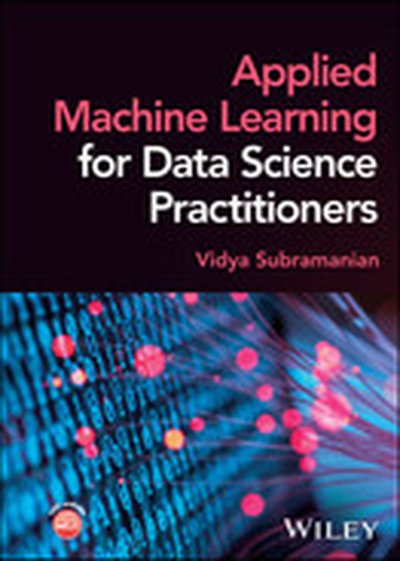
Applied Machine Learning for Data Science Practitioners

A single-volume reference on data science techniques for evaluating and solving business problems using Applied Machine Learning (ML). Applied Machine Learning for Data Science Practitioners offers a practical, step-by-step guide to building end-to-end ML solutions for real-world business challenges, empowering data science practitioners to make informed decisions and select the right techniques for any use case. Unlike many data science books that focus on popular algorithms and coding, this book takes a holistic approach. It equips you with the knowledge to evaluate a range of techniques and algorithms. The book balances theoretical concepts with practical examples to illustrate key concepts, derive insights, and demonstrate applications. In addition to code snippets and reviewing output, the book provides guidance on interpreting results. This book is an essential resource if you are looking to elevate your understanding of ML and your technical capabilities, combining theoretical and practical coding examples. A basic understanding of using data to solve business problems, high school-level math and statistics, and basic Python coding skills are assumed. Written by a recognized data science expert, Applied Machine Learning for Data Science Practitioners covers essential topics, including: Data Science Fundamentals that provide you with an overview of core concepts, laying the foundation for understanding ML. Data Preparation covers the process of framing ML problems and preparing data and features for modeling. ML Problem Solving introduces you to a range of ML algorithms, including Regression, Classification, Ranking, Clustering, Patterns, Time Series, and Anomaly Detection. Model Optimization explores frameworks, decision trees, and ensemble methods to enhance performance and guide the selection of the most effective model. ML Ethics addresses ethical considerations, including fairness, accountability, transparency, and ethics. Model Deployment and Monitoring focuses on production deployment, performance monitoring, and adapting to model drift.

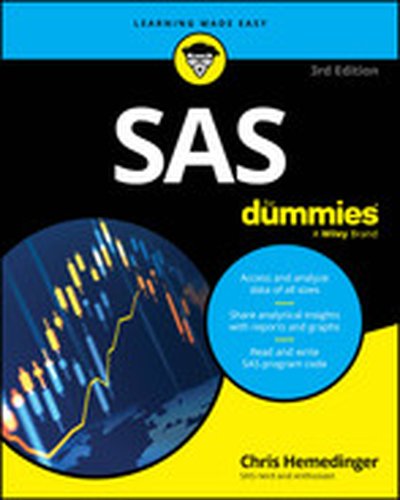
SAS For Dummies, 3rd Edition

Become data-savvy with the widely used data and AI software Data and analytics are essential for any business, giving insight into what's working, what can be improved, and what else needs to be done. SAS software helps you make sure you're doing data right, with a host of data management, reporting, and analysis tools. SAS For Dummies teaches you the essentials, helping you navigate this statistical software and turn information into value. In this book, learn how to gather data, create reports, and analyze results. You'll also discover how SAS machine learning and AI can help deliver decisions based on data. Even if you're brand new to data and analytics, this easy-to-follow guide will turn you into an SAS power user. Become familiar with the most popular SAS applications, including SAS 9 and SAS Viya Connect to data, organize your information, and adopt sound data security practices Get a primer on working with data sets, variables, and statistical analysis Explore and analyze data through SAS programming and rich application interfaces Create and share graphs interactive visualizations to deliver insights This is the perfect Dummies guide for new SAS users looking to improve their skills—in any industry and for any organization size.

Data-driven turnarounds are transforming how struggling businesses find their path back to profitability. When companies falter, the key to recovery can often lies in understanding which 20% of customers and products generate 80% of profits. But how do you quickly identify these critical assets when time is running out? What metrics should you prioritize when cash flow is tight? For data professionals, the challenge extends beyond analysis to implementation—balancing the need for automation of routine tasks while reskilling employees for higher-value work. The intersection of empathy and analytics becomes crucial as teams navigate the emotional journey of organizational change while making tough decisions based on hard numbers. Bill Canady is CEO at Arrowhead Engineered Products and a global business executive with over 30 years of experience across a range of industries. Bill is known for aligning with stakeholders to establish clear, growth-oriented strategies, as well as leading global public, private, and private equity-owned companies by building strong leadership teams and fostering deep relationships. As the former CEO of OTC Industrial Technologies, he oversaw $1 billion in annual sales. Under his leadership, OTC achieved over 43% revenue growth and a 78% increase in earnings. Throughout his career, Bill has guided organizations through complex challenges in regulatory, investor, and media landscapes. Drawing on his extensive experience, he developed the Profitable Growth Operating System (PGOS) to help business leaders worldwide drive sustainable, profitable growth. In the episode, Richie and Bill explore the journey from panic to profit in failing companies, the 100-day turnaround process, leveraging data for decision-making, the Pareto principle in business, automation's role in efficiency, and the importance of empathy and continuous learning in leadership, and much more. Links Mentioned in the Show: Bill’s new book: From Panic to ProfitThe 80/20 CEO by Bill CanadyConnect with BillBill’s websiteSkill Track: AI LeadershipRelated Episode: Leadership in the AI Era with Dana Maor, Senior Partner at McKinsey & CompanySign up to attend RADAR: Skills Edition New to DataCamp? Learn on the go using the DataCamp mobile appEmpower your business with world-class data and AI skills with DataCamp for business

Summary In this episode of the Data Engineering Podcast Derek Collison, creator of NATS and CEO of Synadia, talks about the evolution and capabilities of NATS as a multi-paradigm connectivity layer for distributed applications. Derek discusses the challenges and solutions in building distributed systems, and highlights the unique features of NATS that differentiate it from other messaging systems. He delves into the architectural decisions behind NATS, including its ability to handle high-speed global microservices, support for edge computing, and integration with Jetstream for data persistence, and explores the role of NATS in modern data management and its use cases in industries like manufacturing and connected vehicles.

Announcements Hello and welcome to the Data Engineering Podcast, the show about modern data managementData migrations are brutal. They drag on for months—sometimes years—burning through resources and crushing team morale. Datafold's AI-powered Migration Agent changes all that. Their unique combination of AI code translation and automated data validation has helped companies complete migrations up to 10 times faster than manual approaches. And they're so confident in their solution, they'll actually guarantee your timeline in writing. Ready to turn your year-long migration into weeks? Visit dataengineeringpodcast.com/datafold today for the details.Your host is Tobias Macey and today I'm interviewing Derek Collison about NATS, a multi-paradigm connectivity layer for distributed applications.Interview IntroductionHow did you get involved in the area of data management?Can you describe what NATS is and the story behind it?How have your experiences in past roles (cloud foundry, TIBCO messaging systems) informed the core principles of NATS?What other sources of inspiration have you drawn on in the design and evolution of NATS? (e.g. Kafka, RabbitMQ, etc.)There are several patterns and abstractions that NATS can support, many of which overlap with other well-regarded technologies. When designing a system or service, what are the heuristics that should be used to determine whether NATS should act as a replacement or addition to those capabilities? (e.g. considerations of scale, speed, ecosystem compatibility, etc.)There is often a divide in the technologies and architecture used between operational/user-facing applications and data systems. How does the unification of multiple messaging patterns in NATS shift the ways that teams think about the relationship between these use cases?How does the shared communication layer of NATS with multiple protocol and pattern adaptaters reduce the need to replicate data and logic across application and data layers?Can you describe how the core NATS system is architected?How have the design and goals of NATS evolved since you first started working on it?In the time since you first began writing NATS (~2012) there have been several evolutionary stages in both application and data implementation patterns. How have those shifts influenced the direction of the NATS project and its ecosystem?For teams who have an existing architecture, what are some of the patterns for adoption of NATS that allow them to augment or migrate their capabilities?What are some of the ecosystem investments that you and your team have made to ease the adoption and integration of NATS?What are the most interesting, innovative, or unexpected ways that you have seen NATS used?What are the most interesting, unexpected, or challenging lessons that you have learned while working on NATS?When is NATS the wrong choice?What do you have planned for the future of NATS?Contact Info GitHubLinkedInParting Question From your perspective, what is the biggest gap in the tooling or technology for data management today?Closing Announcements Thank you for listening! Don't forget to check out our other shows. Podcast.init covers the Python language, its community, and the innovative ways it is being used. The AI Engineering Podcast is your guide to the fast-moving world of building AI systems.Visit the site to subscribe to the show, sign up for the mailing list, and read the show notes.If you've learned something or tried out a project from the show then tell us about it! Email [email protected] with your story.Links NATSNATS JetStreamSynadiaCloud FoundryTIBCOApplied Physics Lab - Johns Hopkins UniversityCray SupercomputerRVCM Certified MessagingTIBCO ZMSIBM MQJMS == Java Message ServiceRabbitMQMongoDBNodeJSRedisAMQP == Advanced Message Queueing ProtocolPub/Sub PatternCircuit Breaker PatternZero MQAkamaiFastlyCDN == Content Delivery NetworkAt Most OnceAt Least OnceExactly OnceAWS KinesisMemcachedSQSSegmentRudderstackPodcast EpisodeDLQ == Dead Letter QueueMQTT == Message Queueing Telemetry TransportNATS Kafka Bridge10BaseT NetworkWeb AssemblyRedPandaPodcast EpisodePulsar FunctionsmTLSAuthZ (Authorization)AuthN (Authentication)NATS Auth CalloutsOPA == Open Policy AgentRAG == Retrieval Augmented GenerationAI Engineering Podcast EpisodeHome AssistantPodcast.init EpisodeTailscaleOllamaCDC == Change Data CapturegRPCThe intro and outro music is from The Hug by The Freak Fandango Orchestra / CC BY-SA

The hard data continue to highlight strength but it increasingly looks like we are reaching peak front-loading. The survey data are falling faster and point to a material deceleration. Whether this turns to recession will depend on the degree to which the US backpedals its war on trade. Beyond any near-term outcome, the risk is that the dismantling of the global trading order will do permanent damage.

Speakers:

Bruce Kasman

Joseph Lupton

This podcast was recorded on 25 April 2025.

This communication is provided for information purposes only. Institutional clients please visit www.jpmm.com/research/disclosures for important disclosures. © 2025 JPMorgan Chase & Co. All rights reserved. This material or any portion hereof may not be reprinted, sold or redistributed without the written consent of J.P. Morgan. It is strictly prohibited to use or share without prior written consent from J.P. Morgan any research material received from J.P. Morgan or an authorized third-party (“J.P. Morgan Data”) in any third-party artificial intelligence (“AI”) systems or models when such J.P. Morgan Data is accessible by a third-party. It is permissible to use J.P. Morgan Data for internal business purposes only in an AI system or model that protects the confidentiality of J.P. Morgan Data so as to prevent any and all access to or use of such J.P. Morgan Data by any third-party.

Neste episódio, batemos um papo sobre os impactos da inteligência artificial na cibersegurança: os riscos e oportunidades que a IA Generativa traz para o setor, a realidade por trás das promessas de soluções inteligentes, e as competências que vão ser indispensáveis para quem quer construir uma carreira sólida nessa área nos próximos anos. Recebemos Claudionor Coelho, referência global em AI e Cybersecurity, com passagem pelo World Economic Forum e atuação em posições executivas dentro e fora do Brasil. Claudionor trouxe uma visão prática e estratégica sobre como a IA está moldando o presente e o futuro da segurança da informação — e se realmente podemos confiar nela como aliada. Lembrando que você pode encontrar todos os podcasts da comunidade Data Hackers no Spotify, iTunes, Google Podcast, Castbox e muitas outras plataformas. Falamos no episódio: Claudionor Coelho —  Chief AI Officer at Zscaler | GenAI Leader and Strategic Executive, Investor | XooglerNossa Bancada — Data Hackers: Monique Femme  — Head of Community Management na Data HackersPaulo Vasconcellos — Co-founder da Data Hackers e Principal Data Scientist na Hotmart Referências: