talk-data.com talk-data.com

Topic

AI/ML

Artificial Intelligence/Machine Learning

data_science algorithms predictive_analytics

9014

tagged

Activity Trend

1532 peak/qtr
2020-Q1 2026-Q1

Activities

9014 activities · Newest first

Send us a text "Ready to dive deep into the future of intelligent systems? Meet Peter Voss, Founder and CEO of Aigo.ai, who coined the term 'Artificial General Intelligence' and is pioneering hyper-personalized chatbots WITH a brain. Join us as we explore his revolutionary ideas and why Aigo.ai is leading the charge in AI innovation."

AIInnovation #PeterVoss #FutureOfAI #HyperPersonalization #BeyondChatGPT #TechPodcast #ArtificialIntelligence #MachineLearning #PersonalizedTech

01:56 Meet Peter Voss08:23 Passion for Intelligent Systems12:54 Why only Aigo16:31 ChatGPT? A Different View22:03 A Use Case by Example30:53 What is Included, What is Not34:08 Who are your Clients36:10 The Engagement38:57 The Business Case41:59 AI that Reasons44:26 The Definition of AGI46:51 For FunLinkedIn: linkedin.com/in/vosspeter Twitter: @peterevoss Website: aigo.ai/

Want to be featured as a guest on Making Data Simple? Reach out to us at [email protected] and tell us why you should be next. The Making Data Simple Podcast is hosted by Al Martin, WW VP Technical Sales, IBM, where we explore trending technologies, business innovation, and leadership ... while keeping it simple & fun.

Today, I’m talking to Andy Sutton, GM of Data and AI at Endeavour Group, Australia's largest liquor and hospitality company. In this episode, Andy—who is also a member of the Data Product Leadership Community (DPLC)—shares his journey from traditional, functional analytics to a product-led approach that drives their mission to leverage data and personalization to build the “Spotify for wines.” This shift has greatly transformed how Endeavour’s digital and data teams work together, and Andy explains how their advanced analytics work has paid off in terms of the company’s value and profitability.

You’ll learn about the often overlooked importance of relationships in a data-driven world, and how Andy sees the importance of understanding how users do their job in the wild (with and without your product(s) in hand). Earlier this year, Andy also gave the DPLC community a deeper look at how they brew data products at EDG, and that recording is available to our members in the archive.

We covered:

What it was like at EDG before Andy started adopting a producty approach to data products and how things have now changed (1:52) The moment that caused Andy to change how his team was building analytics solutions (3:42) The amount of financial value that Andy's increased with his scaling team as a result of their data product work (5:19) How Andy and Endeavour use personalization to help build “the Spotify of wine” (9:15) What the team under Andy required in order to make the transition to being product-led (10:27) The successes seen by Endeavour through the digital and data teams’ working relationship (14:04) What data product management looks like for Andy’s team (18:45) How Andy and his team find solutions to  bridging the adoption gap (20:53) The importance of exposure time to end users for the adoption of a data product (23:43) How talking to the pub staff at EDG’s bars and restaurants helps his team build better data products (27:04) What Andy loves about working for Endeavour Group (32:25) What Andy would change if he could rewind back to 2022 and do it all over (34:55) Final thoughts (38:25)

Quotes from Today’s Episode

“I think the biggest thing is the value we unlock in terms of incremental dollars, right? I’ve not worked in analytics team before where we’ve been able to deliver a measurable value…. So, we’re actually—in theory—we’re becoming a profit center for the organization, not just a cost center. And so, there’s kind of one key metric. The second one, we do measure the voice of the team and how engaged our team are, and that’s on an upward trend since we moved to the new operating model, too. We also measure [a type of] “voice of partner” score [and] get something like a 4.1 out of 5 on that scale. Those are probably the three biggest ones: we’re putting value in, and we’re delivering products, I guess, our internal team wants to use, and we are building an enthused team at the same time.” - Andy Sutton (16:18) “ You can put an [unfinished] product in front of an end customer, and they will give you quality feedback that you can then iterate on quickly. You can do that with an internal team, but you’ll lose credibility. Internal teams hold their analytics colleagues to a higher standard than the external customers. We’re trying to change how people do their roles. People feel very passionate about the roles they do, and how they do them, and what they bring to that role. We’re trying to build some of that into products. It requires probably more design consideration than I’d anticipated, and we’re still bringing in more designers to help us move closer to the start line.’” - Andy Sutton (19:25) “ [Customer research] is becoming critical in terms of the products we’re building. You’re building a product, a set of products, or a process for an operations team. In our context, an operations team can mean a team of people who run a pub. It’s not just about convincing me, my product managers, or my data scientists that you need research; we want to take some of the resources out of running that bar for a period of time because we want to spend time with [the pub staff] watching, understanding, and researching. We’ve learned some of these things along the way… we’ve earned the trust, we’ve earned that seat at the table, and so we can have those conversations. It’s not trivial to get people to say, ‘I’ll give you a day-long workshop, or give you my team off of running a restaurant and a bar for the day so that they can spend time with you, and so you can understand our processes.’” -  Andy Sutton (24:42) “ I think what is very particular to pubs is the importance of the interaction between the customer and the person serving the customer. [Pubs] are about the connections between the staff and the customer, and you don’t get any of that if you’re just looking at things from a pure data perspective… You don’t see the [relationships between pub staff and customer] in the [data], so how do you capture some of that in your product? It’s about understanding the context of the data, not just the data itself.” - Andy Sutton (28:15) “Every winery, every wine grower, every wine has got a story. These conversations [and relationships] are almost natural in our business. Our CEO started work on the shop floor in one of our stores 30 years ago. That kind of relationship stuff percolates through the organization. Having these conversations around the customer and internal stakeholders in the context of data feels a lot easier because storytelling and relationships are the way we get things done. An analytics team may get frustrated with people who can’t understand data, but it’s [the analytics team’s job] to help bridge that gap.” - Andy Sutton (32:34)

Links Referenced

LinkedIn: https://www.linkedin.com/in/andysutton/  Endeavour Group: https://www.endeavourgroup.com.au/    Data Product Leadership Community https://designingforanalytics.com/community

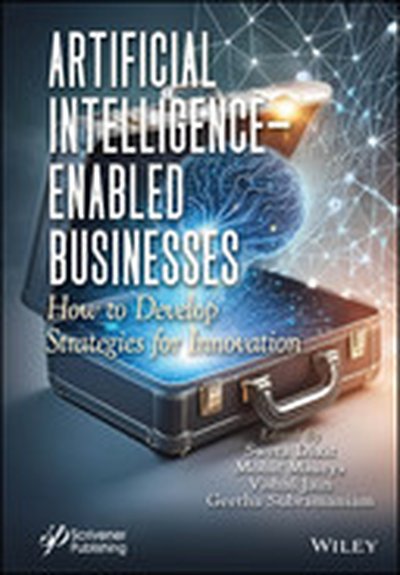
Artificial Intelligence-Enabled Businesses

This book has a multidimensional perspective on AI solutions for business innovation and real-life case studies to achieve competitive advantage and drive growth in the evolving digital landscape. Artificial Intelligence-Enabled Businesses demonstrates how AI is a catalyst for change in business functional areas. Though still in the experimental phase, AI is instrumental in redefining the workforce, predicting consumer behavior, solving real-life marketing dynamics and modifications, recommending products and content, foreseeing demand, analyzing costs, strategizing, managing big data, enabling collaboration of cross-entities, and sparking new ethical, social and regulatory implications for business. Thus, AI can effectively guide the future of financial services, trading, mobile banking, last-mile delivery, logistics, and supply chain with a solution-oriented focus on discrete business problems. Furthermore, it is expected to educate leaders to act in an ever more accurate, complex, and sophisticated business environment with the combination of human and machine intelligence. The book offers effective, efficient, and strategically competent suggestions for handling new challenges and responsibilities and is aimed at leaders who wish to be more innovative. It covers the early stages of AI adoption by organizations across their functional areas and provides insightful guidance for practitioners in the suitable and timely adoption of AI. This book will greatly help to scale up AI by leveraging interdisciplinary collaboration with cross-functional, skill-diverse teams and result in a competitive advantage. Audience This book is for marketing professionals, organizational leaders, and researchers to leverage AI and new technologies across various business functions. It also fits the needs of academics, students, and trainers, providing insights, case studies, and practical strategies for driving growth in the rapidly evolving digital landscape.

This episode features an engaging discussion between Raja Iqbal, Founder and CEO of Data Science Dojo, and Amr Awadallah, Founder and CEO of Vectara, the trusted GenAI Platform for All Builders.

In this episode, Raja Iqbal sits down with Amr, a successful entrepreneur and a leader in the tech world, to talk about how technology is shaping our lives and work. They discuss how businesses can adapt to the rapid changes brought by new tools, the challenges faced by different industries, and how technology can improve our lives.Amr shares fascinating insights about how AI can help in healthcare and education, making them more accessible, especially in developing countries. He also talks about the skills our kids will need to thrive in the future and how technology is changing everything—from how we work to how we learn.This is a must-watch for anyone curious about how technology changes the world and what it means for the future!

AWS re:Invent 2024 - Customer Keynote Rocket Company

In this keynote, the Rocket Companies CTO highlights how Amazon Web Services (AWS) generative AI, specifically through Amazon Bedrock, is revolutionizing the homeownership process by solving critical industry challenges. By harnessing a massive dataset of over 10 petabytes and developing cutting-edge AI tools like Rocket Assist, the company has automated time-consuming administrative tasks.

This innovation has freed up approximately 800,000 employee hours annually, allowing team members to concentrate on more meaningful client interactions. Through its strategic partnership with AWS, Rocket Companies has democratized AI innovation, empowering employees across the organization to develop custom AI applications and significantly enhance overall productivity.

Learn more about AWS events: https://go.aws/events

Subscribe: More AWS videos: http://bit.ly/2O3zS75 More AWS events videos: http://bit.ly/316g9t4

ABOUT AWS Amazon Web Services (AWS) hosts events, both online and in-person, bringing the cloud computing community together to connect, collaborate, and learn from AWS experts. AWS is the world’s most comprehensive and broadly adopted cloud platform, offering over 200 fully featured services from data centers globally. Millions of customers—including the fastest-growing startups, largest enterprises, and leading government agencies—are using AWS to lower costs, become more agile, and innovate faster.

reInvent2024 #AWSreInvent2024 #AWSEvents

AWS AI and Data Conference Ireland 2024 | AWS Events

The AWS AI and Data Conference 2024 delivered practical insights on Generative AI, Machine Learning, and Data Analytics. Attendees learned how organizations are using these technologies to scale operations and meet customer needs. AWS experts and customers shared real-world applications across industries. The event covered the latest trends and best practices, including hands-on experience with AWS tools like Amazon Bedrock for AI development. Keynote speakers included Eddie Wilson (CEO, Ryanair), Martin Holste (CTO for Cloud and AI, Trellix), Rick Sears (GM, Amazon Athena, EMR, and Lake Formation, AWS), and Barry Morris (GM, Purpose Built Databases, AWS). Whether new to AI or seasoned professionals, participants gained actionable knowledge to drive innovation in their organizations.

Sign up now for the AWS AI an Data Conference 2025 and stay at the forefront of AI and data innovation: https://go.aws/4gNtNa6

Learn more about AWS events: https://go.aws/events

Subscribe: More AWS videos: http://bit.ly/2O3zS75 More AWS events videos: http://bit.ly/316g9t4

ABOUT AWS Amazon Web Services (AWS) hosts events, both online and in-person, bringing the cloud computing community together to connect, collaborate, and learn from AWS experts. AWS is the world’s most comprehensive and broadly adopted cloud platform, offering over 200 fully featured services from data centers globally. Millions of customers—including the fastest-growing startups, largest enterprises, and leading government agencies—are using AWS to lower costs, become more agile, and innovate faster.

AWSEvents #AWSAI #AWSDataConf #GenerativeAI #CloudInnovation #AmazonBedrock #AIforBusiness #DataDriven #MachineLearning #AWSEvents #TechInnovation

As we look back at 2024, we're highlighting some of our favourite episodes of the year, and with 100 of them to choose from, it wasn't easy! The four guests we'll be recapping with are: Lea Pica - A celebrity in the data storytelling and visualisation space. Richie and Lea cover the full picture of data presentation, how to understand your audience, how to leverage hollywood storytelling and more. Out December 19.Alex Banks - Founder of Sunday Signal. Adel and Alex cover Alex’s journey into AI and what led him to create Sunday Signal, the potential of AI, prompt engineering at its most basic level, chain of thought prompting, the future of LLMs and more. Out December 23.Don Chamberlin - The renowned co-inventor of SQL. Richie and Don explore the early development of SQL, how it became standardized, the future of SQL through NoSQL and SQL++ and more. Out December 26.Tom Tunguz - general Partner at Theory Ventures, a $235m VC firm. Richie and Tom explore trends in generative AI, cloud+local hybrid workflows, data security, the future of business intelligence and data analytics, AI in the corporate sector and more. Out December 30. Since the launch of ChatGPT, one of the trending terms outside of ChatGPT itself has been prompt engineering. This act of carefully crafting your instructions is treated as alchemy by some and science by others. So what makes an effective prompt? Alex Banks has been building and scaling AI products since 2021. He writes Sunday Signal, a newsletter offering a blend of AI advancements and broader thought-provoking insights. His expertise extends to social media platforms on X/Twitter and LinkedIn, where he educates a diverse audience on leveraging AI to enhance productivity and transform daily life. In the episode, Alex and Adel cover Alex’s journey into AI and what led him to create Sunday Signal, the potential of AI, prompt engineering at its most basic level, strategies for better prompting, chain of thought prompting, prompt engineering as a skill and career path, building your own AI tools rather than using consumer AI products, AI literacy, the future of LLMs and much more.  Links Mentioned in the Show: [Alex’s Free Course on DataCamp] Understanding Prompt EngineeringSunday SignalPrinciples by Ray Dalio: Life and WorkRelated Episode: [DataFramed AI Series #1] ChatGPT and the OpenAI Developer EcosystemRewatch sessions from RADAR: The Analytics Edition New to DataCamp? Learn on the go using the DataCamp mobile appEmpower your business with world-class data and AI skills with DataCamp for business

Summary In this episode of the Data Engineering Podcast Lior Barak shares his insights on developing a three-year strategic vision for data management. He discusses the importance of having a strategic plan for data, highlighting the need for data teams to focus on impact rather than just enablement. He introduces the concept of a "data vision board" and explains how it can help organizations outline their strategic vision by considering three key forces: regulation, stakeholders, and organizational goals. Lior emphasizes the importance of balancing short-term pressures with long-term strategic goals, quantifying the cost of data issues to prioritize effectively, and maintaining the strategic vision as a living document through regular reviews. He encourages data teams to shift from being enablers to impact creators and provides practical advice on implementing a data vision board, setting clear KPIs, and embracing a product mindset to create tangible business impacts through strategic data management.

Announcements Hello and welcome to the Data Engineering Podcast, the show about modern data managementIt’s 2024, why are we still doing data migrations by hand? Teams spend months—sometimes years—manually converting queries and validating data, burning resources and crushing morale. Datafold's AI-powered Migration Agent brings migrations into the modern era. Their unique combination of AI code translation and automated data validation has helped companies complete migrations up to 10 times faster than manual approaches. And they're so confident in their solution, they'll actually guarantee your timeline in writing. Ready to turn your year-long migration into weeks? Visit dataengineeringpodcast.com/datafold today to learn how Datafold can automate your migration and ensure source to target parity. Your host is Tobias Macey and today I'm interviewing Lior Barak about how to develop your three year strategic vision for dataInterview IntroductionHow did you get involved in the area of data management?Can you start by giving an outline of the types of problems that occur as a result of not developing a strategic plan for an organization's data systems?What is the format that you recommend for capturing that strategic vision?What are the types of decisions and details that you believe should be included in a vision statement?Why is a 3 year horizon beneficial? What does that scale of time encourage/discourage in the debate and decision-making process?Who are the personas that should be included in the process of developing this strategy document?Can you walk us through the steps and processes involved in developing the data vision board for an organization?What are the time-frames or milestones that should lead to revisiting and revising the strategic objectives?What are the most interesting, innovative, or unexpected ways that you have seen a data vision strategy used?What are the most interesting, unexpected, or challenging lessons that you have learned while working on data strategy development?When is a data vision board the wrong choice?What are some additional resources or practices that you recommend teams invest in as a supplement to this strategic vision exercise?Contact Info LinkedInSubstackParting Question From your perspective, what is the biggest gap in the tooling or technology for data management today?Closing Announcements Thank you for listening! Don't forget to check out our other shows. Podcast.init covers the Python language, its community, and the innovative ways it is being used. The AI Engineering Podcast is your guide to the fast-moving world of building AI systems.Visit the site to subscribe to the show, sign up for the mailing list, and read the show notes.If you've learned something or tried out a project from the show then tell us about it! Email [email protected] with your story.Links Vision Board OverviewEpisode 397: Defining A Strategy For Your Data ProductsMinto Pyramid PrincipleKPI == Key Performance IndicatorOKR == Objectives and Key ResultsPhil Jackson: Eleven Rings (affiliate link)The intro and outro music is from The Hug by The Freak Fandango Orchestra / CC BY-SA

AWS re:Invent 2024 - Revolutionizing supply chain: Jabil's journey with Amazon Q Business (AIM253)

Discover how Jabil, a global manufacturing solutions provider, is harnessing the power of generative AI with Amazon Q Business to transform its supply chain operations. This session explores Jabil's rollout of innovative applications, enhancing factory operations and delivering customer insights across the Jabil supply chain. Gain insights into Jabil's strategies for measuring success, including their goal to use generative AI in new revenue streams. Join us to see how Amazon Q Business and AWS services are helping Jabil build an AI-driven supply chain solution, improving decision-making, efficiency, and market intelligence globally.

Learn more: AWS re:Invent: https://go.aws/reinvent. More AWS events: https://go.aws/3kss9CP

Subscribe: More AWS videos: http://bit.ly/2O3zS75 More AWS events videos: http://bit.ly/316g9t4

About AWS: Amazon Web Services (AWS) hosts events, both online and in-person, bringing the cloud computing community together to connect, collaborate, and learn from AWS experts. AWS is the world's most comprehensive and broadly adopted cloud platform, offering over 200 fully featured services from data centers globally. Millions of customers—including the fastest-growing startups, largest enterprises, and leading government agencies—are using AWS to lower costs, become more agile, and innovate faster.

AWSreInvent #AWSreInvent2024

Welcome to Data Unchained, hosted by Molly Presley! In this episode, recorded live at the SC24 Supercomputing Conference in Atlanta, Georgia, we dive into the fascinating world of distributed data, AI innovations, and sustainable computing with Chris Sullivan, Director of Research & Academic Computing at Oregon State University. Chris shares groundbreaking insights on, harnessing AI for climate change research, plankton monitoring using 8K cameras, solving infrastructure challenges with Tier 0 technologies for faster and more efficient data processing, leveraging sustainable HPC solutions to reduce energy consumption and environmental impact.

ai #datainnovation #dataprivacy #highperformancecomputing #dataprotection #technology #datasecurity #supercomputing #data #podcast #research #science #scientist #ocean #camera #AI #Supercomputing #HPC #DataScience #Sustainability #DistributedData #ClimateResearch #AIInnovation #HighPerformanceComputing #SC24 #Hammerspace #TechPodcast #DataUnchained

Cyberpunk by jiglr | https://soundcloud.com/jiglrmusic Music promoted by https://www.free-stock-music.com Creative Commons Attribution 3.0 Unported License https://creativecommons.org/licenses/by/3.0/deed.en_US Hosted on Acast. See acast.com/privacy for more information.

Key Takeaways: 1. Why Plotly is a Game-Changer Unlike Matplotlib or Seaborn, Plotly offers interactive and dynamic visualizations that are perfect for storytelling.Unlock powerful features that go beyond basic bar charts or scatter plots.2. 9 Hidden Plotly Tricks: Custom Pairwise Correlation Matrix: Add annotations and custom color scales for deeper insights.Dynamic Data Highlighting: Like Excel, conditional formatting but on steroids.Density Contours: Visualize class distribution and clustering with ease.Faceted Histograms: Compare subgroups in a single view.Threshold Lines: Emphasize decision boundaries effectively.Custom Annotations: Turn visuals into storytelling tools.3D Scatter Plots: Explore invisible relationships in 3D.Animated Visualizations: Reveal dynamic patterns over time.Interactive Tooltips: Make charts engaging and informative.3. Real-world Applications Business intelligence, scientific research, and education examples.Techniques aren’t just about aesthetics—they’re about actionable insights.4. Bonus Resources Complete code examples are in the links below: Medium Members: https://medium.com/towards-artificial-intelligence/9-hidden-plotly-tricks-every-data-scientist-needs-to-know-eb7f2181df56Non-Medium Members can read for Free here: https://mukundansankar.substack.com/p/9-hidden-plotly-tricks-every-dataDatasets from the UCI Machine Learning Repository for hands-on practice.https://archive.ics.uci.edu/datasetsTwitter: @sankarmukund475

Em clima de final de ano vem aí um novo episódio do Staff+ podcast para você!

Nessa conversa, Paulo Vasconcellos, Flávio Clésio e Marlesson Santana, falam sobre os pontos altos e baixos que rolaram em 2024 no mundo de IA, dados e tecnologia no Brasil e no mundo.

Além disso, eles aproveitaram para colocar seus chapéus de videntes e trazer as previsões para o que acontecerá no próximo ano.

Lembrando que você pode encontrar todos os podcasts da comunidade Data Hackers no Spotify, iTunes, Google Podcast, Castbox e muitas outras plataformas.

Ouça agora o episódio !

As we look back at 2024, we're highlighting some of our favourite episodes of the year, and with 100 of them to choose from, it wasn't easy! The four guests we'll be recapping with are: Lea Pica - A celebrity in the data storytelling and visualisation space. Richie and Lea cover the full picture of data presentation, how to understand your audience, how to leverage hollywood storytelling and more. Out December 19.Alex Banks - Founder of Sunday Signal. Adel and Alex cover Alex’s journey into AI and what led him to create Sunday Signal, the potential of AI, prompt engineering at its most basic level, chain of thought prompting, the future of LLMs and more. Out December 23.Don Chamberlin - The renowned co-inventor of SQL. Richie and Don explore the early development of SQL, how it became standardized, the future of SQL through NoSQL and SQL++ and more. Out December 26.Tom Tunguz - general Partner at Theory Ventures, a $235m VC firm. Richie and Tom explore trends in generative AI, cloud+local hybrid workflows, data security, the future of business intelligence and data analytics, AI in the corporate sector and more. Out December 30. Your data project doesn't end once you have results. In order to have impact, you need to communicate those results to others. Presentations filled with endless tables and technical jargon can easily become tedious, leading your audience to lose interest or misunderstand your point. Data storytelling provides a solution to this: by creating a narrative around your results you can increase engagement and understanding from your audience. This is an art, and there are so many factors that contribute to visualizing data and creating a compelling story, it can be overwhelming. However, with the right approach, creating data stories can become second nature. In this special episode of DataFramed, we join forces with the Present Beyond Measure podcast to glean the best data presentation practices from one of the leading voices in the space. Lea Pica host of the Founder and Host of the Present Beyond Measure podcast and is a seasoned digital analytics practitioner, social media marketer and blogger with over 11 years of experience building search marketing and digital analytics practices for companies like Scholastic, Victoria’s Secret and Prudential. Present Beyond Measure’s mission is to bring their teachings to the digital marketing and web analytics communities, and empower anyone responsible for presenting data to an audience. In the full episode, Richie and Lea cover the full picture of data presentation, how to understand your audience, leverage hollywood storytelling, data storyboarding and visualization, the use of imagery in presentations, cognitive load management, the use of throughlines in presentations, how to improve your speaking and engagement skills, data visualization techniques in business setting and much more.  Links Mentioned in the Show: Present Beyond MeasureLea’s BookConnect with Lea on LinkedinHollywood Storytelling[Course] Data Storytelling Concepts New to DataCamp? Learn on the go using thea href="https://www.datacamp.com/mobile" rel="noopener...

In this episode, host Jason Foster is joined by Susie Moan, Chief Data Officer at Currys and member of Cynozure's Advisory Board. They explore some of the highlights of Susie's accomplished career in data and AI, highlighting the significance of data value in a commercial business context.   

The conversation also covers how Currys successfully balances growth with cost-saving initiatives, and emphasises the importances of aligning AI initiatives with an organisation's overarching business strategy. 

*****  

Cynozure is a leading data, analytics and AI company that helps organisations to reach their data potential. It works with clients on data and AI strategy, data management, data architecture and engineering, analytics and AI, data culture and literacy, and data leadership. The company was named one of The Sunday Times' fastest-growing private companies in both 2022 and 2023, and recognised as The Best Place to Work in Data by DataIQ in 2023 and 2024. 

Snowflake Recipes: A Problem-Solution Approach to Implementing Modern Data Pipelines

Explore Snowflake’s core concepts and unique features that differentiates it from industry competitors, such as, Azure Synapse and Google BigQuery. This book provides recipes for architecting and developing modern data pipelines on the Snowflake data platform by employing progressive techniques, agile practices, and repeatable strategies. You’ll walk through step-by-step instructions on ready-to-use recipes covering a wide range of the latest development topics. Then build scalable development pipelines and solve specific scenarios common to all modern data platforms, such as, data masking, object tagging, data monetization, and security best practices. Throughout the book you’ll work with code samples for Amazon Web Services, Microsoft Azure, and Google Cloud Platform. There’s also a chapter devoted to solving machine learning problems with Snowflake. Authors Dillon Dayton and John Eipe are both Snowflake SnowPro Core certified, specializing in data and digital services, and understand the challenges of finding the right solution to complex problems. The recipes in this book are based on real world use cases and examples designed to help you provide quality, performant, and secured data to solve business initiatives. What You’ll Learn Handle structured and un- structured data in Snowflake. Apply best practices and different options for data transformation. Understand data application development. Implement data sharing, data governance and security. Who This book Is For Data engineers, scientists and analysts moving into Snowflake, looking to build data apps. This book expects basic knowledge in Cloud (AWS or Azure or GCP), SQL and Python

AI is transforming industries, but it’s also raising complex questions about data protection and privacy. EDPB Opinion 28/204 provides guidance specifically for GDPR practitioners dealing with AI.

00:00 Introduction to AI and GDPR 00:33 Understanding Anonymity in AI Models 01:53 Framework for Determining Anonymity 03:30 Practical Steps for GDPR Compliance 06:16 Exploring Legitimate Interests 07:19 The Three-Step Test for Legitimate Interests 10:18 Navigating Legitimate Interests 10:34 Understanding the Balancing Test 11:17 Risks and Rights in AI Data Processing 14:59 Mitigating Measures for Data Protection 17:16 Web Scraping and Data Protection 18:24 Consequences of Unlawful Data Processing 20:13 Key Takeaways for GDPR Practitioners

Supported by Our Partner DX⁠ → DX is an engineering intelligence platform designed by leading researchers — In today’s episode of The Pragmatic Engineer, I’m joined by Sean Goedecke, Staff Software Engineer at GitHub. Sean is widely known for his viral blog post, “How I ship projects at big tech companies.” In our conversation, he shares how to successfully deliver projects in large tech companies.

Drawing from his experiences at GitHub and Zendesk, Sean reflects on key lessons learned, and we discuss the following topics:  • Why shipping cannot exclude keeping management happy • How to work on stuff the company actually values • Why you should take on extra responsibility to get projects done • Why technical skills are still more important than soft skills • Soft skills you should learn: including learning the “management lingo” • First-hand remote work learnings: advantages, disadvantages, and how to thrive in this setup • … and much more! — Timestamps (00:00) Intro (01:50) An explanation of shipping (05:35) Reasons management may choose to ship something customers don’t love (09:20) A humbling learning from Sean’s time at Zendesk (13:27) The importance of learning which rules need to be broken for good business outcomes (15:28) Common obstacles to shipping (18:13) DRI: Directly responsible individual (23:06) The value of strong technical skills and why moving fast is imperative (28:44) How to leverage your technical skills the right way (32:16) Advice on earning the trust of leadership (36:10) A time Gergely shipped a product for a political reason  (38:30) What GenAI helps software engineers do more easily  (41:08) Sean’s thoughts on GenAI making engineers more ambitious  (43:20) The difficulty of building AI tools (46:10) Advantages of working remotely and strategies for making it work (52:34) Who is best suited to remote work (54:48) How the pandemic provided a remote work trial for Sean (56:45) Rapid fire round — The Pragmatic Engineer deepdives relevant for this episode: • Software Engineers Leading Projects ⁠https://newsletter.pragmaticengineer.com/p/engineers-leading-projects⁠ • Shipping to production ⁠https://newsletter.pragmaticengineer.com/p/shipping-to-production⁠ • Paying down tech debt ⁠https://newsletter.pragmaticengineer.com/p/paying-down-tech-debt⁠ — See the transcript and other references from the episode at ⁠⁠https://newsletter.pragmaticengineer.com/podcast⁠⁠ — Production and marketing by ⁠⁠⁠⁠⁠⁠⁠⁠https://penname.co/⁠⁠⁠⁠⁠⁠⁠⁠. For inquiries about sponsoring the podcast, email [email protected].

Get full access to The Pragmatic Engineer at newsletter.pragmaticengineer.com/subscribe

Está no ar o Data Hackers News !! Os assuntos mais quentes da semana, com as principais notícias da área de Dados, IA e Tecnologia, que você também encontra na nossa Newsletter semanal, agora no Podcast do Data Hackers !!

Aperte o play e ouça agora, o Data Hackers News dessa semana !

Para saber tudo sobre o que está acontecendo na área de dados, se inscreva na Newsletter semanal:

⁠⁠⁠⁠⁠⁠⁠⁠⁠⁠⁠⁠⁠⁠⁠⁠⁠⁠⁠⁠⁠⁠⁠⁠⁠⁠⁠⁠⁠⁠⁠⁠https://www.datahackers.news/⁠⁠⁠⁠⁠⁠⁠⁠⁠⁠⁠⁠⁠⁠⁠⁠⁠⁠⁠⁠⁠⁠⁠⁠⁠⁠⁠⁠⁠⁠⁠⁠

Conheça nossos comentaristas do Data Hackers News:

⁠⁠⁠⁠⁠⁠⁠⁠⁠⁠⁠⁠⁠⁠⁠⁠⁠⁠⁠⁠⁠⁠⁠⁠⁠⁠⁠⁠Monique Femme⁠⁠⁠⁠⁠⁠⁠⁠⁠⁠⁠⁠⁠⁠⁠⁠⁠⁠⁠⁠⁠⁠⁠⁠⁠⁠⁠⁠⁠

Paulo Vasconcellos

Gabriel Lages

⁠Matérias/assuntos comentados:

Cofundador da OpenAI, afirma a que forma com a IA é criada está prestes a mudar;

Meta não quer que OpenAI vire empresa com fins lucrativos e apela ao governo dos EUA;

Palestra Ilya Sutskever

Demais canais do Data Hackers:

⁠⁠⁠⁠⁠⁠⁠⁠⁠⁠⁠⁠⁠⁠⁠⁠⁠⁠⁠⁠⁠⁠⁠⁠⁠⁠⁠⁠⁠⁠⁠⁠Site⁠⁠⁠⁠⁠⁠⁠⁠⁠⁠⁠⁠⁠⁠⁠⁠⁠⁠⁠⁠⁠⁠⁠⁠⁠⁠⁠⁠⁠⁠⁠⁠

⁠⁠⁠⁠⁠⁠⁠⁠⁠⁠⁠⁠⁠⁠⁠⁠⁠⁠⁠⁠⁠⁠⁠⁠⁠⁠⁠⁠⁠⁠⁠⁠Linkedin⁠⁠⁠⁠⁠⁠⁠⁠⁠⁠⁠⁠⁠⁠⁠⁠⁠⁠⁠⁠⁠⁠⁠⁠⁠⁠⁠⁠⁠⁠⁠⁠

⁠⁠⁠⁠⁠⁠⁠⁠⁠⁠⁠⁠⁠⁠⁠⁠⁠⁠⁠⁠⁠⁠⁠⁠⁠⁠⁠⁠⁠⁠⁠⁠Instagram⁠⁠⁠⁠⁠⁠⁠⁠⁠⁠⁠⁠⁠⁠⁠⁠⁠⁠⁠⁠⁠⁠⁠⁠⁠⁠⁠⁠⁠⁠⁠⁠

⁠⁠⁠⁠⁠⁠⁠⁠⁠⁠⁠⁠⁠⁠⁠⁠⁠⁠⁠⁠⁠⁠⁠⁠⁠⁠⁠⁠⁠⁠⁠⁠Tik Tok⁠⁠⁠⁠⁠⁠⁠⁠⁠⁠⁠⁠⁠⁠⁠⁠⁠⁠⁠⁠⁠⁠⁠⁠⁠⁠⁠⁠⁠⁠⁠⁠

⁠⁠⁠⁠⁠⁠⁠⁠⁠⁠⁠⁠⁠⁠⁠⁠⁠⁠⁠⁠⁠⁠⁠⁠⁠⁠⁠⁠⁠⁠⁠⁠You Tube⁠⁠⁠⁠⁠⁠⁠⁠⁠⁠⁠⁠⁠⁠⁠⁠⁠⁠⁠⁠⁠⁠⁠⁠⁠⁠⁠⁠⁠⁠⁠

Send us a text Richmond Alake, Developer Advocate at MongoDB, is an AI/ML practitioner with an academic background in computer vision, robotics, and machine learning.  If databases that scale for AI are your thing, this one is for you. 02:05 Meet Rich Alake 03:57 A Developer Advocate at MongoDB 05:57 Passions and Fate! 08:52 AI Hype 13:14 Oh No.  AGI Again… 17:30 What Makes and AI Database? 20:42 Use Cases 25:41 RAG Best Practices 27:40 The Role of Database 30:05 Why is MongoDB Better At? 32:43 What's Next 36:13 Advice on Contious Learning 38:44 Where to Find Rich? Linkedin: linkedin.com/in/richmondalake Website: https://www.mongodb.com/

Register For MongoDB: https://mdb.link/register_make_data_simple AI Agents Article: https://mdb.link/ai_agents_making_data_simple Best Repo for AI Developers: https://mdb.link/ai_developer_resource  Richmond's LinkedIn: https://www.linkedin.com/in/richmondalake/ Want to be featured as a guest on Making Data Simple? Reach out to us at [email protected] and tell us why you should be next. The Making Data Simple Podcast is hosted by Al Martin, WW VP Technical Sales, IBM, where we explore trending technologies, business innovation, and leadership ... while keeping it simple & fun.

Essential Data Analytics, Data Science, and AI: A Practical Guide for a Data-Driven World

In today’s world, understanding data analytics, data science, and artificial intelligence is not just an advantage but a necessity. This book is your thorough guide to learning these innovative fields, designed to make the learning practical and engaging. The book starts by introducing data analytics, data science, and artificial intelligence. It illustrates real-world applications, and, it addresses the ethical considerations tied to AI. It also explores ways to gain data for practice and real-world scenarios, including the concept of synthetic data. Next, it uncovers Extract, Transform, Load (ETL) processes and explains how to implement them using Python. Further, it covers artificial intelligence and the pivotal role played by machine learning models. It explains feature engineering, the distinction between algorithms and models, and how to harness their power to make predictions. Moving forward, it discusses how to assess machine learning models after their creation, with insights into various evaluation techniques. It emphasizes the crucial aspects of model deployment, including the pros and cons of on-device versus cloud-based solutions. It concludes with real-world examples and encourages embracing AI while dispelling fears, and fostering an appreciation for the transformative potential of these technologies. Whether you’re a beginner or an experienced professional, this book offers valuable insights that will expand your horizons in the world of data and AI. What you will learn: What are Synthetic data and Telemetry data How to analyze data using programming languages like Python and Tableau. What is feature engineering What are the practical Implications of Artificial Intelligence Who this book is for: Data analysts, scientists, and engineers seeking to enhance their skills, explore advanced concepts, and stay up-to-date with ethics. Business leaders and decision-makers across industries are interested in understanding the transformative potential and ethical implications of data analytics and AI in their organizations.