At Fivetran, we are seeing many organizations adopt the Modern Data Stack to suit the breadth of their data needs. However, as incoming data sources begin to scale, it can be hard to manage and maintain the environment, with more time spent repairing and reengineering old data pipelines than building new ones. This talk will introduce a number of new Airflow Providers, including the airflow-provider-fivetran, and discuss some of the benefits and considerations we are seeing data engineers, data analysts, and data scientist experience in doing so.
talk-data.com
Topic
Airflow
Apache Airflow
682
tagged
Activity Trend
Top Events
Last year, we were able to share why we have selected Airflow to be our next generation workflow system. This year, we will dive into the journey of migrating over 3000+ workflows and 45000+ tasks to Airflow. We will discuss the infrastructure additions to support such loads, the partitioning and prioritization of different workflow tiers defined in house, the migration tooling we built to get users to onboard, the translation layers between our old DSLs and the new, our internal k8s executor to leverage Pinterest’s kubernetes fleet, and more. We want to share the challenges both technically and usability wise to get such large migrations over the course of a year, and how we overcame it to successfully migrate 100% of the workflows to our inhouse workflow platform branded Spinner.
Machine Learning models can add value and insight to many projects, but they can be challenging to put into production due to problems like lack of reproducibility, difficulty maintaining integrations, and sneaky data quality issues. Kedro, a framework for creating reproducible, maintainable, and modular data science code, and Great Expectations, a framework for data validations, are two great open-source Python tools that can address some of these problems. Both integrate seamlessly with Airflow for flexible and powerful ML pipeline orchestration. In this talk we’ll discuss how you can leverage existing Airflow provider packages to integrate these tools to create sustainable, production-ready ML models.
Cloudflare’s network keeps growing, and that growth doesn’t just come from building new data centers in new cities. We’re also upgrading the capacity of existing data centers by adding newer generations of servers — a process that makes our network safer, faster, and more reliable for our users. In this talk, I’ll share how we’re leveraging Apache Airflow to build our own Provision-as-a-Service (PraaS) platform and cut by 90% the amount of time our team spent on mundane operational tasks.
At Snowflake you can imagine we do a lot of data pipelines and tables curating metrics metrics for all parts of the business. These are the lifeline of Snowflake’s business decisions. We also have a lot of source systems that display and make these metrics accessible to end users. So what happens when your data model does not match your system? For example your bookings numbers in salesforce do not match your data model that curates bookings metrics. At snowflake we continued to run into this problem over and over again. Having this problem we set out to build an infrastructure that would allow users to effortlessly sync the results of their data pipelines with any downstream / upstream system. Allowing us to have a central source of truth in our warehouse. This infrastructure was built on snowflake using airflow and allows a user to begin syncing data with a few details such as model and system to update. In this presentation we will show you how using airflow and snowflake we are able to use our data pipelines as the source of truth for all systems involved in the business. With this infrastructure we are able to use snowflake models as a central source of truth for all applications used throughout the company. This ensures that any number synced in this way seen by two users is always the same.
As part of my role at Google, maintaining samples for Cloud Composer, hosted managed Airflow, is crucial. It’s not feasible for me to try out every sample every day to check that it’s working. So, how do I do it? Automation! While I won’t let the robots touch everything, they let me know when it’s time to pay attention. Here’s how: Step 0: An update for the operators is released Step 1: A GitHub bot called Renovate Bot opens up a PR to a special requirements file to make this update Step 2: Cloud build runs unit tests to make sure none of my DAGs immediately break Step 3: PR is approved and merged to main Step 4: Cloud Build updates my dev environment Step 5: I look at my DAGs in dev to make sure all is well. If there is a problem, I need to resolve it manually and revert my requirements file. Step 6: I manually update my prod PyPI packages I’ll discuss what automation tools I choose to use and why, and the places where I intentionally leave manual steps to ensure proper oversight.
In this talk we’ll see some real world examples from Firebolt customers demonstrating how Airflow is used to orchestrate operational data analytics applications with large data volumes, while keeping query latency low.
Reproducibility is the fundamental principle of a scientific research. This also applies to the computational workflows that are used to process research data. Common Workflow Language (CWL) is a highly formalized way to describe pipelines that was developed to achieve reproducibility and portability of computational analysis. However, there were only few workflow execution platforms that could run CWL pipelines. Here, we present CWL-Airflow – an extension for Airflow to execute CWL pipelines. CWL-Airflow serves as a processing engine for Scientific Data Analysis Platform (SciDAP) – a data analysis platform that makes complex computational workflows both user-friendly and reproducible. In our presentation we are going to explain why we see Airflow as the perfect backend for running scientific workflows, what problems we encountered in extending Airflow to run CWL pipelines and how we solved them. We will also discuss what are the pros and cons of limiting our platform to CWL pipelines and potential applications of CWL-Airflow outside the realm of biology.
Airflow has a lot of moving parts, and it can be a little overwhelming as a new user - as I was not too long ago. Join me as we go though Airflow’s architecture at a high level, explore how DAGs work and run, and look at some of the good, the bad, and the unexpected things lurking inside.
In this talk, I’ll describe how you can leverage 3 open-source standards - workflow management with Airflow, EL with Airbyte, transformation with DBT - to build your next modern data stack. I’ll explain how to configure your Airflow DAG to trigger Airbyte’s data replication jobs and DBT’s transformation one with a concrete use case.
Airflow 2.0 was a big milestone for the Airflow community. However, companies and enterprises are still facing difficulties in upgrading to 2.0. In this talk, I would like to focus and highlight the ideal upgrade path and talk about upgrade_check CLI tool separation of providers registering connections types important 2.0 Airflow configs DB Migration deprecated feature around Airflow Plugins
The two most common user questions at Pinterest are: 1) why is my workflow running so long? 2) why did my workflow fail - is it my issue, or a platform issue? As with any big data organization, the workflow platform is just the orchestrator but the “real” work is done on another layer, managed by another platform. There can be plenty of these, and the challenges of figuring out the root cause of an issue can be mundane and time consuming. At Pinterest, we set out to provide additional tooling in our Airflow webserver to make it a quicker inspection process and provide smart tips such as increased runtime analysis, bottleneck identifying, rca, and an easy way for backfilling. We explore deeper the tooling provided to reduce the admin load, and empower our users.
Participation in this workshop requires previous registration and has limited capacity. Get your ticket at https://ti.to/airflowsummit/2021-contributor By attending this workshop, you will learn how you can become a contributor to the Apache Airflow project. You will learn how to setup a development environment, how to pick your first issue, how to communicate effectively within the community and how to make your first PR - experienced committers of Apache Airflow project will give you step-by-step instructions and will guide you in the process. When you finish the workshop you will be equipped with everything that is needed to make further contributions to the Apache Airflow project. Prerequisites: You need to have Python experience . Previous experience in Airflow is nice-to-have. The session is geared towards Mac and Linux users. If you are a Windows user, it is best if you install Windows Subsystem for Linux (WSL). In preparation for the class, please make sure you have set up the following prerequisites: make a fork of the https://github.com/apache/airflow clone the forked repository locally follow the Breeze prerequisites: https://github.com/apache/airflow/blob/master/BREEZE.rst#prerequisites run ./breeze --python 3.6 create a virtualenv as described in https://github.com/apache/airflow/blob/master/LOCAL_VIRTUALENV.rst part of preparing the virtualenv is initializing it with ./breeze initialize-local-virtualenv
Engineering teams leverage the factory coding pattern to write easy-to-read and repeatable code. In this talk, we’ll outline how data engineering teams can do the same with Airflow by separating DAG declarations from business logic, abstracting task declarations from task dependencies, and creating a code architecture that is simple to understand for new team members. This approach will set analytics teams up for success as team and Airflow DAG sizes grow exponentially.
Rachael, a new Airflow contributor, and Leah, an experienced Airflow contributor, share the story of Rachael’s first contribution, highlighting the importance of contributions from new users and the positive impact that non-code contributions have in an open source community.
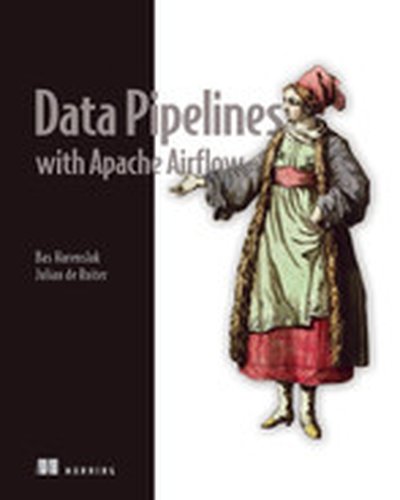
A successful pipeline moves data efficiently, minimizing pauses and blockages between tasks, keeping every process along the way operational. Apache Airflow provides a single customizable environment for building and managing data pipelines, eliminating the need for a hodgepodge collection of tools, snowflake code, and homegrown processes. Using real-world scenarios and examples, Data Pipelines with Apache Airflow teaches you how to simplify and automate data pipelines, reduce operational overhead, and smoothly integrate all the technologies in your stack. About the Technology Data pipelines manage the flow of data from initial collection through consolidation, cleaning, analysis, visualization, and more. Apache Airflow provides a single platform you can use to design, implement, monitor, and maintain your pipelines. Its easy-to-use UI, plug-and-play options, and flexible Python scripting make Airflow perfect for any data management task. About the Book Data Pipelines with Apache Airflow teaches you how to build and maintain effective data pipelines. You’ll explore the most common usage patterns, including aggregating multiple data sources, connecting to and from data lakes, and cloud deployment. Part reference and part tutorial, this practical guide covers every aspect of the directed acyclic graphs (DAGs) that power Airflow, and how to customize them for your pipeline’s needs. What's Inside Build, test, and deploy Airflow pipelines as DAGs Automate moving and transforming data Analyze historical datasets using backfilling Develop custom components Set up Airflow in production environments About the Reader For DevOps, data engineers, machine learning engineers, and sysadmins with intermediate Python skills. About the Authors Bas Harenslak and Julian de Ruiter are data engineers with extensive experience using Airflow to develop pipelines for major companies. Bas is also an Airflow committer. Quotes An Airflow bible. Useful for all kinds of users, from novice to expert. - Rambabu Posa, Sai Aashika Consultancy An easy-to-follow exploration of the benefits of orchestrating your data pipeline jobs with Airflow. - Daniel Lamblin, Coupang The one reference you need to create, author, schedule, and monitor workflows with Apache Airflow. Clear recommendation. - Thorsten Weber, bbv Software Services AG By far the best resource for Airflow. - Jonathan Wood, LexisNexis
Summary The Data industry is changing rapidly, and one of the most active areas of growth is automation of data workflows. Taking cues from the DevOps movement of the past decade data professionals are orienting around the concept of DataOps. More than just a collection of tools, there are a number of organizational and conceptual changes that a proper DataOps approach depends on. In this episode Kevin Stumpf, CTO of Tecton, Maxime Beauchemin, CEO of Preset, and Lior Gavish, CTO of Monte Carlo, discuss the grand vision and present realities of DataOps. They explain how to think about your data systems in a holistic and maintainable fashion, the security challenges that threaten to derail your efforts, and the power of using metadata as the foundation of everything that you do. If you are wondering how to get control of your data platforms and bring all of your stakeholders onto the same page then this conversation is for you.
Announcements
Hello and welcome to the Data Engineering Podcast, the show about modern data management When you’re ready to build your next pipeline, or want to test out the projects you hear about on the show, you’ll need somewhere to deploy it, so check out our friends at Linode. With their managed Kubernetes platform it’s now even easier to deploy and scale your workflows, or try out the latest Helm charts from tools like Pulsar and Pachyderm. With simple pricing, fast networking, object storage, and worldwide data centers, you’ve got everything you need to run a bulletproof data platform. Go to dataengineeringpodcast.com/linode today and get a $100 credit to try out a Kubernetes cluster of your own. And don’t forget to thank them for their continued support of this show! Modern Data teams are dealing with a lot of complexity in their data pipelines and analytical code. Monitoring data quality, tracing incidents, and testing changes can be daunting and often takes hours to days. Datafold helps Data teams gain visibility and confidence in the quality of their analytical data through data profiling, column-level lineage and intelligent anomaly detection. Datafold also helps automate regression testing of ETL code with its Data Diff feature that instantly shows how a change in ETL or BI code affects the produced data, both on a statistical level and down to individual rows and values. Datafold integrates with all major data warehouses as well as frameworks such as Airflow & dbt and seamlessly plugs into CI workflows. Go to dataengineeringpodcast.com/datafold today to start a 30-day trial of Datafold. Once you sign up and create an alert in Datafold for your company data, they will send you a cool water flask. RudderStack’s smart customer data pipeline is warehouse-first. It builds your customer data warehouse and your identity graph on your data warehouse, with support for Snowflake, Google BigQuery, Amazon Redshift, and more. Their SDKs and plugins make event streaming easy, and their integrations with cloud applications like Salesforce and ZenDesk help you go beyond event streaming. With RudderStack you can use all of your customer data to answer more difficult questions and then send those insights to your whole customer data stack. Sign up free at dataengineeringpodcast.com/rudder today. Your host is Tobias Macey and today I’m interviewing Max Beauchemin, Lior Gavish, and Kevin Stumpf about the real world challenges of embracing DataOps practices and systems, and how to keep things secure as you scale
Interview
Introduction How did you get involved in the area of data management? Before we get started, can you each give your definition of what "DataOps" means to you?
How does this differ from "business as usual" in the data industry? What are some of the things that DataOps isn’t (despite what marketers might say)?
What are the biggest difficulties that you have faced in going from concept to production with a workflow or system intended to power self-serve access to other membe
Summary The reason for collecting, cleaning, and organizing data is to make it usable by the organization. One of the most common and widely used methods of access is through a business intelligence dashboard. Superset is an open source option that has been gaining popularity due to its flexibility and extensible feature set. In this episode Maxime Beauchemin discusses how data engineers can use Superset to provide self service access to data and deliver analytics. He digs into how it integrates with your data stack, how you can extend it to fit your use case, and why open source systems are a good choice for your business intelligence. If you haven’t already tried out Superset then this conversation is well worth your time. Give it a listen and then take it for a test drive today.
Announcements
Hello and welcome to the Data Engineering Podcast, the show about modern data management When you’re ready to build your next pipeline, or want to test out the projects you hear about on the show, you’ll need somewhere to deploy it, so check out our friends at Linode. With their managed Kubernetes platform it’s now even easier to deploy and scale your workflows, or try out the latest Helm charts from tools like Pulsar and Pachyderm. With simple pricing, fast networking, object storage, and worldwide data centers, you’ve got everything you need to run a bulletproof data platform. Go to dataengineeringpodcast.com/linode today and get a $100 credit to try out a Kubernetes cluster of your own. And don’t forget to thank them for their continued support of this show! Modern Data teams are dealing with a lot of complexity in their data pipelines and analytical code. Monitoring data quality, tracing incidents, and testing changes can be daunting and often takes hours to days. Datafold helps Data teams gain visibility and confidence in the quality of their analytical data through data profiling, column-level lineage and intelligent anomaly detection. Datafold also helps automate regression testing of ETL code with its Data Diff feature that instantly shows how a change in ETL or BI code affects the produced data, both on a statistical level and down to individual rows and values. Datafold integrates with all major data warehouses as well as frameworks such as Airflow & dbt and seamlessly plugs into CI workflows. Go to dataengineeringpodcast.com/datafold today to start a 30-day trial of Datafold. Once you sign up and create an alert in Datafold for your company data, they will send you a cool water flask. RudderStack’s smart customer data pipeline is warehouse-first. It builds your customer data warehouse and your identity graph on your data warehouse, with support for Snowflake, Google BigQuery, Amazon Redshift, and more. Their SDKs and plugins make event streaming easy, and their integrations with cloud applications like Salesforce and ZenDesk help you go beyond event streaming. With RudderStack you can use all of your customer data to answer more difficult questions and then send those insights to your whole customer data stack. Sign up free at dataengineeringpodcast.com/rudder today. Your host is Tobias Macey and today I’m interviewing Max Beauchemin about Superset, an open source platform for data exploration, dashboards, and business intelligence
Interview
Introduction How did you get involved in the area of data management? Can you start by describing what Superset is? Superset is becoming part of the reference architecture for a modern data stack. What are the factors that have contributed to its popularity over other tools such as Redash, Metabase, Looker, etc.? Where do dashboarding and exploration tools like Superset fit in the responsibilities and workflow of a data engineer? What are some of the challenges that Superset faces in being performant when working with large data sources?
Which data sources have you found to be the most challenging to work with?
What are some anti-patterns that users of Superset mig
Summary Most of the time when you think about a data pipeline or ETL job what comes to mind is a purely mechanistic progression of functions that move data from point A to point B. Sometimes, however, one of those transformations is actually a full-fledged machine learning project in its own right. In this episode Tal Galfsky explains how he and the team at Cherre tackled the problem of messy data for Addresses by building a natural language processing and entity resolution system that is served as an API to the rest of their pipelines. He discusses the myriad ways that addresses are incomplete, poorly formed, and just plain wrong, why it was a big enough pain point to invest in building an industrial strength solution for it, and how it actually works under the hood. After listening to this you’ll look at your data pipelines in a new light and start to wonder how you can bring more advanced strategies into the cleaning and transformation process.
Announcements
Hello and welcome to the Data Engineering Podcast, the show about modern data management When you’re ready to build your next pipeline, or want to test out the projects you hear about on the show, you’ll need somewhere to deploy it, so check out our friends at Linode. With their managed Kubernetes platform it’s now even easier to deploy and scale your workflows, or try out the latest Helm charts from tools like Pulsar and Pachyderm. With simple pricing, fast networking, object storage, and worldwide data centers, you’ve got everything you need to run a bulletproof data platform. Go to dataengineeringpodcast.com/linode today and get a $100 credit to try out a Kubernetes cluster of your own. And don’t forget to thank them for their continued support of this show! Modern Data teams are dealing with a lot of complexity in their data pipelines and analytical code. Monitoring data quality, tracing incidents, and testing changes can be daunting and often takes hours to days. Datafold helps Data teams gain visibility and confidence in the quality of their analytical data through data profiling, column-level lineage and intelligent anomaly detection. Datafold also helps automate regression testing of ETL code with its Data Diff feature that instantly shows how a change in ETL or BI code affects the produced data, both on a statistical level and down to individual rows and values. Datafold integrates with all major data warehouses as well as frameworks such as Airflow & dbt and seamlessly plugs into CI workflows. Go to dataengineeringpodcast.com/datafold today to start a 30-day trial of Datafold. Once you sign up and create an alert in Datafold for your company data, they will send you a cool water flask. RudderStack’s smart customer data pipeline is warehouse-first. It builds your customer data warehouse and your identity graph on your data warehouse, with support for Snowflake, Google BigQuery, Amazon Redshift, and more. Their SDKs and plugins make event streaming easy, and their integrations with cloud applications like Salesforce and ZenDesk help you go beyond event streaming. With RudderStack you can use all of your customer data to answer more difficult questions and then send those insights to your whole customer data stack. Sign up free at dataengineeringpodcast.com/rudder today. Your host is Tobias Macey and today I’m interviewing Tal Galfsky about how Cherre is bringing order to the messy problem of physical addresses and entity resolution in their data pipelines.
Interview
Introduction How did you get involved in the area of data management? Started as physicist and evolved into Data Science Can you start by giving a brief recap of what Cherre is and the types of data that you deal with? Cherre is a company that connects data We’re not a data vendor, in that we don’t sell data, primarily We help companies connect and make sense of their data The real estate market is historically closed, gut let, behind on tech What are the biggest challenges that you deal with in your role when working with real estate data? Lack of a standard domain model in real estate. Ontology. What is a property? Each data source, thinks about properties in a very different way. Therefore, yielding similar, but completely different data. QUALITY (Even if the dataset are talking about the same thing, there are different levels of accuracy, freshness). HIREARCHY. When is one source better than another What are the teams and systems that rely on address information? Any company that needs to clean or organize (make sense) their data, need to identify, people, companies, and properties. Our clients use Address resolution in multiple ways. Via the UI or via an API. Our service is both external and internal so what I build has to be good enough for the demanding needs of our data science team, robust enough for our engineers, and simple enough that non-expert clients can use it. Can you give an example for the problems involved in entity resolution Known entity example. Empire state buidling. To resolve addresses in a way that makes sense for the client you need to capture the real world entities. Lots, buildings, units.
Identify the type of the object (lot, building, unit) Tag the object with all the relevant addresses Relations to other objects (lot, building, unit)
What are some examples of the kinds of edge cases or messiness that you encounter in addresses? First class is string problems. Second class component problems. third class is geocoding. I understand that you have developed a service for normalizing addresses and performing entity resolution to provide canonical references for downstream analyses. Can you give an overview of what is involved? What is the need for the service. The main requirement here is connecting an address to lot, building, unit with latitude and longitude coordinates
How were you satisfying this requirement previously? Before we built our model and dedicated service we had a basic prototype for pipeline only to handle NYC addresses. What were the motivations for designing and implementing this as a service? Need to expand nationwide and to deal with client queries in real time. What are some of the other data sources that you rely on to be able to perform this normalization and resolution? Lot data, building data, unit data, Footprints and address points datasets. What challenges do you face in managing these other sources of information? Accuracy, hirearchy, standardization, unified solution, persistant ids and primary keys
Digging into the specifics of your solution, can you talk through the full lifecycle of a request to resolve an address and the various manipulations that are performed on it? String cleaning, Parse and tokenize, standardize, Match What are some of the other pieces of information in your system that you would like to see addressed in a similar fashion? Our named entity solution with connection to knowledge graph and owner unmasking. What are some of the most interesting, unexpected, or challenging lessons that you learned while building this address resolution system? Scaling nyc geocode example. The NYC model was exploding a subset of the options for messing up an address. Flexibility. Dependencies. Client exposure. Now that you have this system running in production, if you were to start over today what would you do differently? a lot but at this point the module boundaries and client interface are defined in such way that we are able to make changes or completely replace any given part of it without breaking anything client facing What are some of the other projects that you are excited to work on going forward? Named entity resolution and Knowledge Graph
Contact Info
Parting Question
From your perspective, what is the biggest gap in the tooling or technology for data management today? BigQuery is huge asset and in particular UDFs but they don’t support API calls or python script
Closing Announcements
Thank you for listening! Don’t forget to check out our other show, Podcast.init to learn about the Python language, its community, and the innovative ways it is being used. Visit the site to subscribe to the show, sign up for the mailing list, and read the show notes. If you’ve learned something or tried out a project from the show then tell us about it! Email [email protected]) with your story. To help other people find the show please leave a review on iTunes and tell your friends and co-workers Join the community in the new Zulip chat workspace at dataengineeringpodcast.com/chat
Links
Cherre
Podcast Episode
Photonics Knowledge Graph Entity Resolution BigQuery NLP == Natural Language Processing dbt
Podcast Episode
Airflow
Podcast.init Episode
Datadog
Podcast Episode
The intro and outro music is from The Hug by The Freak Fandango Orchestra / CC BY-SA
Support Data Engineering Podcast

Summary "Business as usual" is changing, with more companies investing in data as a first class concern. As a result, the data team is growing and introducing more specialized roles. In this episode Josh Benamram, CEO and co-founder of Databand, describes the motivations for these emerging roles, how these positions affect the team dynamics, and the types of visibility that they need into the data platform to do their jobs effectively. He also talks about how his experience working with these teams informs his work at Databand. If you are wondering how to apply your talents and interests to working with data then this episode is a must listen.
Announcements
Hello and welcome to the Data Engineering Podcast, the show about modern data management When you’re ready to build your next pipeline, or want to test out the projects you hear about on the show, you’ll need somewhere to deploy it, so check out our friends at Linode. With their managed Kubernetes platform it’s now even easier to deploy and scale your workflows, or try out the latest Helm charts from tools like Pulsar and Pachyderm. With simple pricing, fast networking, object storage, and worldwide data centers, you’ve got everything you need to run a bulletproof data platform. Go to dataengineeringpodcast.com/linode today and get a $100 credit to try out a Kubernetes cluster of your own. And don’t forget to thank them for their continued support of this show! Modern Data teams are dealing with a lot of complexity in their data pipelines and analytical code. Monitoring data quality, tracing incidents, and testing changes can be daunting and often takes hours to days. Datafold helps Data teams gain visibility and confidence in the quality of their analytical data through data profiling, column-level lineage and intelligent anomaly detection. Datafold also helps automate regression testing of ETL code with its Data Diff feature that instantly shows how a change in ETL or BI code affects the produced data, both on a statistical level and down to individual rows and values. Datafold integrates with all major data warehouses as well as frameworks such as Airflow & dbt and seamlessly plugs into CI workflows. Go to dataengineeringpodcast.com/datafold today to start a 30-day trial of Datafold. Once you sign up and create an alert in Datafold for your company data, they will send you a cool water flask. RudderStack’s smart customer data pipeline is warehouse-first. It builds your customer data warehouse and your identity graph on your data warehouse, with support for Snowflake, Google BigQuery, Amazon Redshift, and more. Their SDKs and plugins make event streaming easy, and their integrations with cloud applications like Salesforce and ZenDesk help you go beyond event streaming. With RudderStack you can use all of your customer data to answer more difficult questions and then send those insights to your whole customer data stack. Sign up free at dataengineeringpodcast.com/rudder today. Your host is Tobias Macey and today I’m interviewing Josh Benamram about the continued evolution of roles and responsibilities in data teams and their varied requirements for visibility into the data stack
Interview
Introduction How did you get involved in the area of data management? Can you start by discussing the set of roles that you see in a majority of data teams? What new roles do you see emerging, and what are the motivating factors?
Which of the more established positions are fracturing or merging to create these new responsibilities?
What are the contexts in which you are seeing these role definitions used? (e.g. small teams, large orgs, etc.) How do the increased granularity/specialization of responsibilities across data teams change the ways that data and platform architects need to think about technology investment?
What are the organizational impacts of these new types of data work?
How do these shifts in role definition change the ways that the individuals in th