talk-data.com talk-data.com

Topic

Analytics

data_analysis insights metrics

4552

tagged

Activity Trend

398 peak/qtr
2020-Q1 2026-Q1

Activities

4552 activities · Newest first

Comment l’IA transforme-t-elle l’intelligence d’entreprise ? Découvrez comment agir dès aujourd’hui lors de notre démo session à Big Data & IA Paris.

Au programme:

- Comment passer d’analytics fragmentés à une approche basée sur la confiance, la sécurité et centrée sur l’utilisateur ?

- Les dernières avancées de Strategy Mosaic, la première couche sémantique ouverte, construite par l’IA et pour l’IA.

- Industrialise la gouvernance de vos outils de BI et d’IA sur l’ensemble de vos données.

There is an impossible choice most organizations face. Companies building modern AI face a brutal, binary-feeling decision: either ship a privacy-first model that “kinda low key sucks,” or ship a high-performing model that likely exposes sensitive personal data. Luckily, there's a third option, and that's what I will share with you in this episode! Check out Tonic Textual here: 👉 https://www.tonic.ai/products/textual 💌 Join 10k+ aspiring data analysts & get my tips in your inbox weekly 👉 https://www.datacareerjumpstart.com/newsletter 🆘 Feeling stuck in your data journey? Come to my next free "How to Land Your First Data Job" training 👉 https://www.datacareerjumpstart.com/training 👩‍💻 Want to land a data job in less than 90 days? 👉 https://www.datacareerjumpstart.com/daa 👔 Ace The Interview with Confidence 👉 https://www.datacareerjumpstart.com/interviewsimulator ⌚ TIMESTAMPS 00:00 - Introduction: The Ethical Dilemma in AI Development 01:21 - The "A Very Smith Health Solutions" LEAKED Zoom debate! 02:45 - Sensitive Data Discovery and Synthesis 03:41 - Redacting and Synthesizing Data with Tonic Textual 04:30 - Applications and Benefits 🔗 CONNECT WITH AVERY 🎥 YouTube Channel: https://www.youtube.com/@averysmith 🤝 LinkedIn: https://www.linkedin.com/in/averyjsmith/ 📸 Instagram: https://instagram.com/datacareerjumpstart 🎵 TikTok: https://www.tiktok.com/@verydata 💻 Website: https://www.datacareerjumpstart.com/ Mentioned in this episode: Join the last cohort of 2025! The LAST cohort of The Data Analytics Accelerator for 2025 kicks off on Monday, December 8th and enrollment is officially open!

To celebrate the end of the year, we’re running a special End-of-Year Sale, where you’ll get: ✅ A discount on your enrollment 🎁 6 bonus gifts, including job listings, interview prep, AI tools + more

If your goal is to land a data job in 2026, this is your chance to get ahead of the competition and start strong.

👉 Join the December Cohort & Claim Your Bonuses: https://DataCareerJumpstart.com/daa https://www.datacareerjumpstart.com/daa

FFT, a global leader in innovative manufacturing systems, has developed a solution to the persistent challenge of bridging IT and OT data. In just six months, FFT launched the FFT DataBridge, which resides on shopfloor edge devices and seamlessly integrates production data into the Snowflake AI Data Cloud. This solution unlocks critical shopfloor analytics, AI-based forecasting, and predictive maintenance. By leveraging the power of Snowflake, FFT is helping manufacturing companies transform their operations and is continuing their journey by building a suite of IT/OT-centric applications for the Snowflake Marketplace.

Connecting machines and structuring industrial data has long been one of the toughest challenges in smart manufacturing. Before unlocking the power of AI, large language models, or advanced analytics, companies must first solve the foundational task of harmonizing and organizing their data—without this, bad data only leads to bad AI.

This session covers the journey from building a Unified Namespace as the data foundation to scaling predictive use cases such as maintenance, quality optimization, and process improvements. Using customer stories from discrete and process manufacturing, we will show howDXC &Snowflake enables enterprises to connect IoT data at scale, establish a harmonized taxonomy across global operations, and drive measurable business outcomes.

By unifying diverse industrial IoT and enterprise data into a governed data layer, the Unified Namespace enables creation of an operational digital twin—a live, authoritative representation of manufacturing systems and assets that fuels scalable AI use cases like predictive maintenance, autonomous control, and AI-driven shop floor assistance. Attendees will learn howDXCs &Snowflake’s IoTbest-practicespower OT/IT convergence, continuous digital twin evolution, and AI-driven operational excellence.

Découvrez comment GLS suit, analyse et optimise plus d’1 million de colis chaque jour grâce à une Modern Data Stack performante et une BI pensée pour l’efficacité.

Vous verrez concrètement comment transformer des flux complexes en décisions claires et rapides, au service de la performance opérationnelle.

Repartez avec des insights concrets sur :

- Les outils et méthodes pour fiabiliser vos données en temps réel

- Les bonnes pratiques de data visualisation pour piloter à grande échelle

- L’impact business d’une gouvernance data efficace

Une session inspirante et à ne pas manquer si vous voulez booster votre pilotage grâce à la data.

Toucan est la solution d’Embedded Analytics qui simplifie l’accès à la donnée et aide les entreprises à prendre de meilleures décisions grâce à des dashboards clairs, rapides à déployer et accessibles à tous.

GLS, acteur majeur du transport de colis en Europe, s’appuie sur la data pour garantir chaque jour fiabilité, performance et qualité de service à ses millions de clients.

RSG Group – the global fitness powerhouse behind Gold’s Gym, McFIT, and JOHN REED – modernized its fragmented, manual data infrastructure into a scalable, low-maintenance analytics platform using Snowflake, Fivetran, and Coalesce. With a lean team and growing data needs across 900+ studios in 30 countries, the company replaced brittle pipelines and slow onboarding with automated ingestion, governed transformations, and self-service analytics. In this session, Head of Data & Business Intelligence Christopher Rüge will share how RSG Group reduced data integration time from 80 hours to 30 minutes, established end-to-end lineage and GDPR compliance with Coalesce, enabled data-driven decisions, and a strong foundation for AI use cases like personalization, churn prediction, and operational insights.

Bayer is redefining how business questions get answered—fast, smart, and at scale. Together with ThoughtSpot, this session will share how Bayer uses ThoughtSpot on Snowflake to move beyond static dashboards and transition towards agentic analytics. With natural language querying, real-time insights, and AI-powered recommendations, Bayer enables users globally to make informed, data-driven decisions. You’ll hear how Bayer rolled out ThoughtSpot across multiple teams, trained diverse user personas, and optimized for both performance and Snowflake credit consumption.

Découvrez comment Qlik Cloud révolutionne la manière dont les utilisateurs trouvent, comprennent et exploitent leurs données en toute confiance. De l’analyse intuitive de Qlik Cloud Analytics à la gouvernance complète des pipelines de données avec Qlik Talend Cloud, explorez une plateforme unifiée pour producteurs et consommateurs de données. Plongez dans l’univers du Data Products Catalog, du Trust Score et de l’IA générative avec Qlik Answers. Une session inspirante pour voir vos données s’animer, de la source à l’action. Ne manquez pas cette immersion dans l’avenir des données !

A Journey Through a Geospatial Data Pipeline: From Raw Coordinates to Actionable Insights

Every dataset has a story — and when it comes to geospatial data, it’s a story deeply rooted in space and scale. But working with geospatial information is often a hidden challenge: massive file sizes, strange formats, projections, and pipelines that don't scale easily.

In this talk, we'll follow the life of a real-world geospatial dataset, from its raw collection in the field to its transformation into meaningful insights. Along the way, we’ll uncover the key steps of building a robust, scalable open-source geospatial pipeline.

Drawing on years of experience at Camptocamp, we’ll explore:

  • How raw spatial data is ingested and cleaned
  • How vector and raster data are efficiently stored and indexed (PostGIS, Cloud Optimized GeoTIFFs, Zarr)
  • How modern tools like Dask, GeoServer, and STAC (SpatioTemporal Asset Catalogs) help process and serve geospatial data
  • How to design pipelines that handle both "small data" (local shapefiles) and "big data" (terabytes of satellite imagery)
  • Common pitfalls and how to avoid them when moving from prototypes to production

This journey will show how the open-source ecosystem has matured to make geospatial big data accessible — and how spatial thinking can enrich almost any data project, whether you are building dashboards, doing analytics, or setting the stage for machine learning later on.

Selecting a suitable and high performing target group for CRM initiatives—such as newsletters and coupons—often involves time-consuming, manual coordination across multiple teams. In this session, we will demonstrate how we leveraged the combined strengths of Snowpark, Streamlit, and dbt to build a self-service application that allows CRM managers to define target groups independently—without relying on analytics resources. 

Our solution delivers real-time feedback based on user input, dramatically reducing turnaround times and simplifying the targeting workflow. We will explore how Snowpark acts as a seamless bridge between Streamlit and Snowflake, enabling efficient, in-database processing. Meanwhile, dbt ensures data consistency and reusability through standardized data products. 

Join us to discover how this integrated approach accelerates decision-making, ensures data governance, and unlocks scalable, self-service capabilities for your CRM teams.

PyPI in the face: running jokes that PyPI download stats can play on you

We all love to tell stories with data and we all love to listen to them. Wouldn't it be great if we could also draw actionable insights from these nice stories?

As scikit-learn maintainers, we would love to use PyPI download stats and other proxy metrics (website analytics, github repository statistics, etc ...) to help inform some of our decisions like: - how do we increase user awareness of best practices (please use Pipeline and cross-validation)? - how do we advertise our recent improvements (use HistGradientBoosting rather than GradientBoosting, TunedThresholdClassifier, PCA and a few other models can run on GPU) ? - do users care more about new features from recent releases or consolidation of what already exists? - how long should we support older versions of Python, numpy or scipy ?

In this talk we will highlight a number of lessons learned while trying to understand the complex reality behind these seemingly simple metrics.

Telling nice stories is not always hard, trying to grasp the reality behind these metrics is often tricky.

talk
by Dr. Rui Li (NYU Tandon School of Engineering)

In this talk, Dr. Rui 'Ray' Li presents groundbreaking work on multi-agent AI systems for Educational AI. Educational AI refers to the application of AI to improve teaching, learning, and educational management. It includes personalized learning systems that adapt to individual student needs, intelligent tutoring systems that provide real-time feedback, automated grading tools, and predictive analytics that help educators identify learning gaps. By leveraging NLP, ML, and data-driven insights, educational AI supports more engaging learning experiences, reduces administrative burdens, and enables equitable access to knowledge across diverse student populations. In this talk, we are discussing the most recent development of using AI agent in classroom learning such as assisting student group projects.

State of Parquet 2025: Structure, Optimizations, and Recent Innovations

If you worked with large amounts of tabular data, chances are you have dealt with Parquet files. Apache Parquet is an open source, column-oriented data file format designed for efficient storage and retrieval. It employs high performance compression and encoding schemes to handle complex data at scale and is supported in many programming language and analytics tools. This talk will give a technical overview of Parquet format file structure, explain how the data is represented and stored in Parquet and why and how some of the possible configuration options might better match your specific use case.

We will also highlight some recent developments the and discussions in the Parquet community including Hugging Face's proposed content defined chunking - an approach that reduces required storage space by ten percent on realistic training datasets. We will also examine the geometry and geography types added to the Parquet specification in 2025, which enable efficient storage of spatial data and have catalyzed Parquet's growing adoption within the geospatial community.

From spreadsheets to strategy: what does data look like from the CEO's chair? For this episode, we sat down with Anna Lee, CEO of Flybuys and former CFO/COO of THE ICONIC, to get her view on data-led leadership and what great looks like in data and analytics. Discover how Anna's journey from finance to the corner office has shaped her approach to leveraging evidence for strategic decision-making. From productive curiosity, to informed pragmatism, and how data teams can build trust with leadership, this is a candid conversation about analytics from the top down. Whether you're embedded in a squad or building the next big data platform, this one's for anyone who's ever wondered what it takes to truly influence the C-suite! This episode's Measurement Bite from show sponsor Recast is an overview of the fundamental problem of causal inference from Michael Kaminsky! For complete show notes, including links to items mentioned in this episode and a transcript of the show, visit the show page.

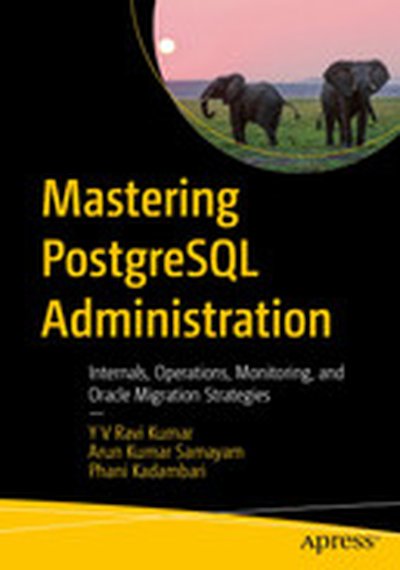
Mastering PostgreSQL Administration: Internals, Operations, Monitoring, and Oracle Migration Strategies

This book is your one-stop resource on PostgreSQL system architecture, installation, management, maintenance, and migration. It will help you address the critical needs driving successful database management today: reliability and availability, performance and scalability, security and compliance, cost-effectiveness and flexibility, disaster recovery, and real-time analytics—all in one volume. Each topic in the book is thoroughly explained by industry experts and includes step-by-step instructions for configuring the features, a discussion of common issues and their solutions, and an exploration of real-world scenarios and case studies that illustrate how concepts work in practice. You won't find the book's comprehensive coverage of advanced topics, including migration from Oracle to PostgreSQL, heterogeneous replication, and backup & recovery, in one place—online or anywhere else. What You Will Learn Install PostgreSQL using source code and yum installation Back up and recover Migrate from Oracle database to PostgreSQL using ora2pg utility Replicate from PostgreSQL to Oracle database and vice versa using Oracle GoldenGate Monitor using Grafana, PGAdmin, and command line tools Maintain with VACUUM, REINDEX, etc. Who This Book Is For Intermediate and advanced PostgreSQL users, including PostgreSQL administrators, architects, developers, analysts, disaster recovery system engineers, high availability engineers, and migration engineers

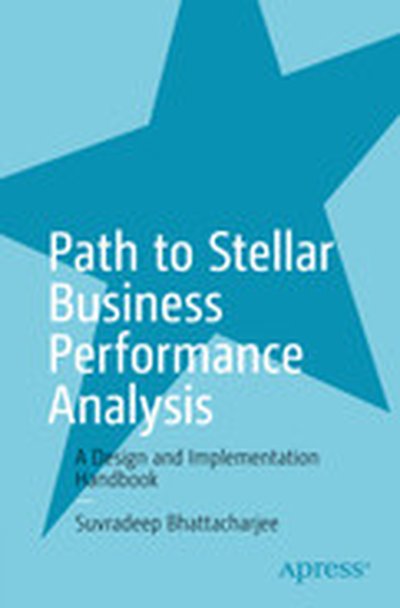
Path to Stellar Business Performance Analysis : A Design and Implementation Handbook

Business performance analysis is central to any business, as it helps to make or mend products, services, and processes. This book provides several blueprints for setting up business performance analytics (BPA) shops, from process layout for performance measures to tracking the underlying metrics of them using website tools such as Google Analytics and Looker Studio. Delivering satisfying user experiences in the context of overarching business objectives is key to delivering elevated business performance. This book transcends the topic of tracking user behaviors in websites from generic to specific KPI scenario-based tracking using Google Analytics/Google Tag Manager. Business Performance Analysis stands out by helping you create fit-for-purpose and coherent performance analysis blueprints by integrating performance measure creation and website analytics of BPA together. What You Will Learn Design a Business Performance Analysis function Analyze performance metrics with website analytics tools Identify business performance metrics for common product scenarios Who This Book is For Senior leaders, product managers, product owners, UX and web analytics professionals

Mastercard Chief Economist Michelle Meyer joins the Inside Economics team to debate the health of the American consumer and the economy’s prospects. The team pushes hard on Michelle’s sanguine perspective, but she holds her ground—and then some. Listen in if you want a preview of the strength of holiday sales and what will power that growth. Guest: Michelle Meyer – Chief Economist, Mastercard (https://www.mastercardservices.com/en/overview/leadership/michelle-meyer) Explore the risks and realities shaping the economy in our new webinar, now streaming for free. U.S. Economic Outlook: Under Unprecedented Uncertainty Watch here: https://events.moodys.com/mc68453-wbn-2025-mau25777-us-macro-outlook-precipice-recession?mkt_tok=OT… Hosts: Mark Zandi – Chief Economist, Moody’s Analytics, Cris deRitis – Deputy Chief Economist, Moody’s Analytics, and Marisa DiNatale – Senior Director - Head of Global Forecasting, Moody’s Analytics Follow Mark Zandi on 'X' and BlueSky @MarkZandi, Cris deRitis on LinkedIn, and Marisa DiNatale on LinkedIn

Questions or Comments, please email us at [email protected]. We would love to hear from you.    To stay informed and follow the insights of Moody's Analytics economists, visit Economic View.

Hosted by Simplecast, an AdsWizz company. See pcm.adswizz.com for information about our collection and use of personal data for advertising.