Behavioral science is revolutionizing how businesses connect with customers and influence decisions. By understanding the psychological principles that drive human behavior, companies can create more effective marketing strategies and product experiences. But how can you apply these insights in your data-driven work? What simple changes could dramatically improve how your audience responds to your messaging? The difference between abstract and concrete language can quadruple memorability, and timing your communications around 'fresh start' moments can increase receptivity by over 50%. Whether you're designing user experiences or communicating insights, understanding these hidden patterns of human behavior could be your competitive advantage. Richard Shotton is the founder of Astroten, a consultancy that applies behavioral science to marketing, helping brands of all sizes solve business challenges with insights from psychology. As a keynote speaker, he is known for exploring consumer psychology, the impact of behavioral experiments, and how biases shape decision-making. He began his career in media planning over 20 years ago, working on accounts such as Coca-Cola, Lexus, Halifax, Peugeot, and comparethemarket. He has since held senior roles including Head of Insight at ZenithOptimedia and Head of Behavioral Science at Manning Gottlieb, while also conducting experiments featured in publications such as Marketing Week, The Drum, Campaign, Admap, and Mediatel. Richard is the author of two acclaimed books: The Choice Factory (2018), which was named Best Sales & Marketing Book at the 2019 Business Book Awards and voted #1 in the BBH World Cup of Advertising Books; and The Illusion of Choice (2023), which highlights the most important psychological biases business leaders can harness for competitive advantage. In the episode, the two Richards explore the power of behavioral science in marketing, the impact of visual language, the role of social proof, the importance of simplicity in communication, how biases influence decision-making, the fresh start effect, the ethical considerations of using behavioral insights, and much more. Links Mentioned in the Show: Richard’s Book—Hacking the Human Mind: The behavioral science secrets behind 17 of the world's best brandsAstrotenBlog: To create strong memories, use concrete languageConnect with RichardCourse: Marketing Analytics for BusinessRelated Episode: Career Skills for Data Professionals with Wes Kao, Co-Founder of MavenRewatch RADAR AI New to DataCamp? Learn on the go using the DataCamp mobile appEmpower your business with world-class data and AI skills with DataCamp for business
 talk-data.com
Topic
Analytics
4552
tagged
Activity Trend
Top Events
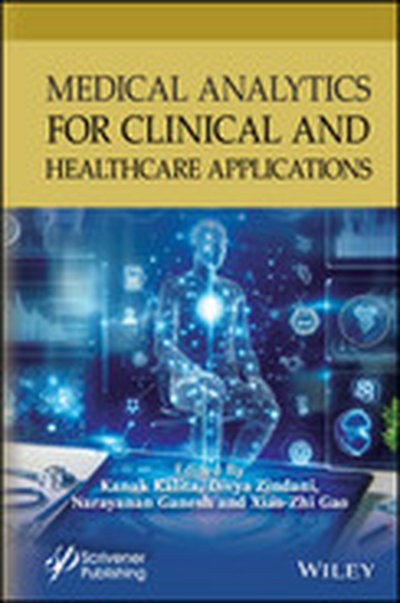
The book is essential for anyone exploring the forefront of healthcare innovation, as it offers a thorough exploration of transformative data-driven methodologies that can significantly enhance patient outcomes and clinical efficiency in today’s evolving medical landscape. In today’s rapidly advancing healthcare landscape, the integration of medical analytics has become essential for improving patient outcomes, clinical efficiency, and decision-making. Medical Analytics for Clinical and Healthcare Applications provides a comprehensive examination of how data-driven methodologies are revolutionizing the medical field. This book offers a deep dive into innovative techniques, real-world applications, and emerging trends in medical analytics, showcasing how these advancements are transforming disease detection, diagnosis, treatment planning, and healthcare management. Spanning sixteen chapters across five subsections, this edited volume covers a wide array of topics—from foundational principles of medical data analysis to cutting-edge applications in predictive healthcare and medical data security. Readers will encounter state-of-the-art methodologies, including machine learning models, predictive analytics, and deep learning techniques applied to various healthcare challenges such as mental health disorders, cancer detection, and hospital mortality predictions. Medical Analytics for Clinical and Healthcare Applications equips readers with the knowledge to harness the power of medical analytics and its potential to shape the future of healthcare. Through its interdisciplinary approach and expert insights, this volume is poised to serve as a valuable resource for advancing healthcare technologies and improving the overall quality of care. Readers will find the volume: Explores the latest medical analytics techniques applied across clinical settings, from diagnosis to treatment optimization; Features real-world case studies and tools for implementing data-driven solutions in healthcare; Bridges the gap between healthcare professionals, data scientists, and engineers for collaborative innovation in medical technologies; Provides foresight into emerging trends and technologies shaping the future of healthcare analytics. Audience Healthcare professionals, clinical researchers, medical data scientists, biomedical engineers, IT professionals, academics, and policymakers focused on the intersection of medicine and data analytics.
Think you need a fancy degree to start a career in data? Think again. In this episode of Data Career School, Amlan Mohanty breaks down exactly how you can launch a successful data career and land your first job in data analytics, data science, or business intelligence without a traditional degree. Discover how to build in-demand skills, create a portfolio that gets noticed, and land your first data job using practical, actionable strategies. Whether you’re self-taught, switching careers, or just curious about the data field, this episode gives you the perfect roadmap to break into a data career.
At PyData Berlin, community members and industry voices highlighted how AI and data tooling are evolving across knowledge graphs, MLOps, small-model fine-tuning, explainability, and developer advocacy.
- Igor Kvachenok (Leuphana University / ProKube) combined knowledge graphs with LLMs for structured data extraction in the polymer industry, and noted how MLOps is shifting toward LLM-focused workflows.
- Selim Nowicki (Distill Labs) introduced a platform that uses knowledge distillation to fine-tune smaller models efficiently, making model specialization faster and more accessible.
- Gülsah Durmaz (Architect & Developer) shared her transition from architecture to coding, creating Python tools for design automation and volunteering with PyData through PyLadies.
- Yashasvi Misra (Pure Storage) spoke on explainable AI, stressing accountability and compliance, and shared her perspective as both a data engineer and active Python community organizer.
- Mehdi Ouazza (MotherDuck) reflected on developer advocacy through video, workshops, and branding, showing how creative communication boosts adoption of open-source tools like DuckDB.
Igor Kvachenok Master’s student in Data Science at Leuphana University of Lüneburg, writing a thesis on LLM-enhanced data extraction for the polymer industry. Builds RDF knowledge graphs from semi-structured documents and works at ProKube on MLOps platforms powered by Kubeflow and Kubernetes.
Connect: https://www.linkedin.com/in/igor-kvachenok/
Selim Nowicki Founder of Distill Labs, a startup making small-model fine-tuning simple and fast with knowledge distillation. Previously led data teams at Berlin startups like Delivery Hero, Trade Republic, and Tier Mobility. Sees parallels between today’s ML tooling and dbt’s impact on analytics.
Connect: https://www.linkedin.com/in/selim-nowicki/
Gülsah Durmaz Architect turned developer, creating Python-based tools for architectural design automation with Rhino and Grasshopper. Active in PyLadies and a volunteer at PyData Berlin, she values the community for networking and learning, and aims to bring ML into architecture workflows.
Connect: https://www.linkedin.com/in/gulsah-durmaz/
Yashasvi (Yashi) Misra Data Engineer at Pure Storage, community organizer with PyLadies India, PyCon India, and Women Techmakers. Advocates for inclusive spaces in tech and speaks on explainable AI, bridging her day-to-day in data engineering with her passion for ethical ML.
Connect: https://www.linkedin.com/in/misrayashasvi/
Mehdi Ouazza Developer Advocate at MotherDuck, formerly a data engineer, now focused on building community and education around DuckDB. Runs popular YouTube channels ("mehdio DataTV" and "MotherDuck") and delivered a hands-on workshop at PyData Berlin. Blends technical clarity with creative storytelling.
Connect: https://www.linkedin.com/in/mehd-io/
Ken Jee has spent a decade in sports analytics, working at the intersection of data science and athlete performance. Now, he's building The Exponential Athlete, a podcast dedicated to exploring what makes athletes reach their highest potential. In this show, Ken shares: His 10-year journey in sports analytics and the lessons data can, and can't teach us about performance. How his background in data science set him up to successfully launch The Exponential Athlete. The limits of analytics — why diagnosis is easy, but decision-making is complex. How mental visualization (seeing success before it happens) plays a crucial role in athletic and personal excellence. The intersection of training philosophy, psychology, and data in shaping elite performers. Whether you're passionate about sports, data science, entrepreneurship, or personal growth, this episode offers practical insights you can apply immediately. 🤝 Follow Ken on LinkedIn! Register for free to be part of the next live session: https://bit.ly/3XB3A8b Follow us on Socials: LinkedIn YouTube Instagram (Mavens of Data) Instagram (Maven Analytics) TikTok Facebook Medium X/Twitter
As enterprises scale their deployment of Generative AI (Gen AI), a central constraint has come into focus: the primary limitation is no longer model capability, but data infrastructure. Existing platforms, optimized for human interpretation and batch-oriented analytics, are misaligned with the operational realities of autonomous agents that consume, reason over, and act upon data continuously at machine scale.
In this talk, Zhamak Dehghani — originator of the Data Mesh and a leading advocate for decentralized data architectures — presents a framework for data infrastructure designed explicitly for the AI-native era. She identifies the foundational capabilities required by Gen AI applications: embedded semantics, runtime computational policy enforcement, agent-centric, context-driven discovery.
The session contrasts the architectural demands of AI with the limitations of today’s fragmented, pipeline-driven systems—systems that rely heavily on human intervention and customized orchestration. Dehghani introduces autonomous data products as the next evolution: self-contained, self-governing services that continuously sense and respond to their environment. She offers an architectural deep dive and showcases their power with real-world use cases.
Attendees will learn the architecture of “Data 3.0”, and how to both use GenAI to transform to this new architecture, and how this new architecture serves GenAI agents at scale.
Maximize the value of your SAP investments by harnessing the power of Data and AI on Azure. In this session, you’ll learn proven strategies to leverage SAP landscapes, unify data across SAP and non-SAP systems, and unlock advanced analytics with Azure’s Agentic AI capabilities. We’ll showcase industry-ready accelerators that accelerate transformation, enable governed data access, and turn insights into action to fuel innovation, agility, and measurable business outcomes.
This presentation provides an overview of how NVIDIA RAPIDS accelerates data science and data engineering workflows end-to-end. Key topics include leveraging RAPIDS for machine learning, large-scale graph analytics, real-time inference, hyperparameter optimization, and ETL processes. Case studies demonstrate significant performance improvements and cost savings across various industries using RAPIDS for Apache Spark, XGBoost, cuML, and other GPU-accelerated tools. The talk emphasizes the impact of accelerated computing on modern enterprise applications, including LLMs, recommenders, and complex data processing pipelines.
While 95% of enterprise AI pilots fail to deliver business value, Secoda's customers are seeing a different reality: with 76% of AI usage focused on core business intelligence workflows rather than isolated experiments.
Join Etai Mizrahi, Co-Founder & CEO of Secoda, as he shares how companies like Dialpad achieved company-wide AI adoption by moving 200+ employees from traditional dashboards to natural language analytics. Learn how Secoda's multi-agent AI architecture transforms data governance from manual overhead into automated workflows, and learn practical strategies for scaling AI beyond pilots to become essential infrastructure that delivers measurable ROI.
Today’s shifting security dynamics call for data-driven insights that pre-empt dangers and guide swift, informed choices.
In this joint session led by commercial and public defence experts, we’ll unpack how cutting-edge AI solutions and flexible data platforms illuminate operations across land, sea, air, and cyber.
Join us to hear how these methods can be applied in any fast-paced setting to amplify adaptability, strengthen safeguards, and outpace new challenges.
Powered by: Women in Data®
DfE are providing schools and local authorities with world-leading MI and intelligent reporting to take early action and help pupils thrive. With a national view of data, and through collaboration, system integration, smart analytics and responsible AI, we make it easier to spot issues, understand context and drive down absence.
Powered by: Women in Data®
With the pace of change of AI being experienced across the industry and the constant bombardment of contradictory advice it is easy to become overwhelmed and not know where to start.
The promise of LLMs have been undermined by vendor and journalistic hype and an inability to rely on quantitative answers being accurate. Afterall, what good would a colleague be (artificial or not) if you already need to know the answer to validate any question that you ask of them?
The promise of neuro-symbolic AI that combines two well established technologies (semantic knowledge graphs with machine learning) enable you to get more accurate LLM powered analytics and most importantly faster time to greater data value.
In this practical, engaging and fun talk, Ben will equip you with the principles and fundamentals that never change but often go under-utilised, as well as discussing and demonstrating the latest techniques, platforms and tools so that you can get started with confidence.
Ben will show that far from taking months, data products can take minutes or hours to prepare, publish and start gaining value from, all in a sustainable and maintainable manner.
For nearly 200 years, Dun & Bradstreet has supported clients in achieving growth through the transformative power of data and analytics. As the world has rapidly evolved, so have we—serving more industries in more places than ever. We combine global data with local expertise to provide deep insights, intelligent tools, and tailored solutions. From navigating economic challenges to capitalising on new opportunities, we help businesses make smarter decisions and unlock value throughout every phase of the business lifecycle.
Powered by Women in Data®
75% of GenAI projects fail to scale—not because the models lack sophistication, but because they’re built on fragmented data. If your systems don’t know who they're talking about, how can your AI deliver reliable insights?
This talk unveils how real-time Entity Resolution (ER) is becoming the silent engine behind trusted, AI-ready data architecture. We will discuss how organizations across financial services, public safety, and digital platforms are embedding ER into modern data stacks—delivering identity clarity, regulatory confidence, and faster outcomes without the drag of legacy MDM.
You’ll learn:
- Why ER is foundational for AI trust, governance, and analytics
- Patterns for embedding ER into streaming and event-driven architectures
- How ecosystem partners and data platforms are amplifying ER value
- How to build trust at the entity level—without slowing down innovation
Whether you’re modernizing architecture, launching AI programs, or tightening compliance, this session will equip you to embed trust from the ground up.
What does it really mean to be a data-driven organisation? In this session, Hazal Muhtar, Senior Director of Analytics at Wise, will share real-life examples of how customer data fuels product innovation, marketing and growth at one of the world’s leading fintech companies.
Hazal will explore how data is driving change across industries and reshaping the way businesses operate. She’ll also discuss the importance of data democratization—how winning teams across an organisation access to insights can spark innovation, accelerate decision-making and build a culture where data is a shared language.
Join this session to discover how Wise embraces data at scale, and leave with practical takeaways on how customer data can become your most powerful asset in unlocking transformation and growth.
Arch Capital Group, a $34 billion S&P 500 specialty insurance leader managing $21.5 billion in gross premiums across 60+ global offices, faced a critical challenge: ensuring data quality and consistency across their complex risk assessment operations. With 25+ predictive models supporting AI-driven underwriting for specialty lines—the industry's most complex and unusual risks—incomplete or inaccurate data inputs threatened the accuracy of critical business decisions spanning property & casualty, reinsurance, and mortgage insurance operations.
In this session, Sam from Arch Capital shares how the organization partnered with DQLabs to transform their data trust framework, implementing automated quality checks across their global data ecosystem. Learn how this transformation enabled Arch to maintain their disciplined underwriting approach while scaling operations, improve regulatory compliance across multiple jurisdictions, and enhance their ability to respond rapidly to emerging risks while supporting the data accuracy essential for their leadership position in specialty insurance markets.
Everyone’s talking about GenAI. But at Big Data London, you want more than hype.
In this session, Simon Devine (Founder of Hopton Analytics) shares how the East of England Co-op embedded GenBI – Pyramid’s generative AI tool – into their business intelligence platform to improve how decisions are made across the organisation.
This wasn’t a flashy experiment. It was a carefully planned rollout of AI-generated explanations, natural language querying, and explainable analytics – designed to support busy operational teams, reduce report backlogs, and drive smarter decisions at scale.
Simon will take you behind the scenes of the project: how it was planned, what hurdles had to be overcome, and the governance structures that helped it succeed. You'll hear honest reflections on what worked, what didn’t, and what they’d do differently.
Whether you’re a data leader looking for real-world use cases, a BI owner exploring GenAI adoption, or a transformation lead trying to unlock value from your reporting stack – this session will give you practical insight, not just theory.
Come for the lived experience. Leave with ideas you can actually use.