talk-data.com talk-data.com

Topic

Analytics

data_analysis insights metrics

4552

tagged

Activity Trend

398 peak/qtr
2020-Q1 2026-Q1

Activities

4552 activities · Newest first

Business Intelligence with Microsoft® Office PerformancePoint™ Server 2007

Deliver BI Solutions with Microsoft Office PerformancePoint Server 2007 Maximize the powerful BI tools available in PerformancePoint 2007 with help from this practical guide. You will learn how to collect and store data, monitor progress, analyze performance, distribute dynamic reports, and create maintainable projects and forecasts. Business Intelligence with Microsoft Office PerformancePoint Server 2007 provides full details on creating scorecards and dashboards, performing advanced analysis on data, and setting up business plans. You will also learn how to integrate PerformancePoint with ProClarity, Excel 2007, and SQL Server Reporting Services. Configure, deploy, and secure all the PerformancePoint components Create KPIs, scorecards, reports, and dashboards with the Dashboard Designer Create business models with the Planning Business Modeler and create budgets and forecasts with Excel 2007 Enable advanced data analysis with PerformancePoint Server and ProClarity tools Take advantage of the enhanced analytic capabilities of Excel 2007 Use SQL Server Reporting Services for analytics Align performance with organizational objectives

Successful Business Intelligence: Secrets to Making BI a Killer App

Praise for Successful Business Intelligence "If you want to be an analytical competitor, you've got to go well beyond business intelligence technology. Cindi Howson has wrapped up the needed advice on technology, organization, strategy, and even culture in a neat package. It's required reading for quantitatively oriented strategists and the technologists who support them." --Thomas H. Davenport, President's Distinguished Professor, Babson College and co-author, Competing on Analytics "When used strategically, business intelligence can help companies transform their organization to be more agile, more competitive, and more profitable. Successful Business Intelligence offers valuable guidance for companies looking to embark upon their first BI project as well as those hoping to maximize their current deployments." --John Schwarz, CEO, Business Objects "A thoughtful, clearly written, and carefully researched examination of all facets of business intelligence that your organization needs to know to run its business more intelligently and exploit information to its fullest extent." --Wayne Eckerson, Director, TDWI Research "Using real-world examples, Cindi Howson shows you how to use business intelligence to improve the performance, and the quality, of your company." --Bill Baker, Distinguished Engineer & GM, Business Intelligence Applications, Microsoft Corporation "This book outlines the key steps to make BI an integral part of your company's culture and demonstrates how your company can use BI as a competitive differentiator." --Robert VanHees, CFO, Corporate Express "Given the trend to expand the business analytics user base, organizations are faced with a number of challenges that affect the success rate of these projects. This insightful book provides practical advice on improving that success rate." --Dan Vesset, Vice President, Business Analytics Solution Research, IDC

Tapping into Unstructured Data: Integrating Unstructured Data and Textual Analytics into Business Intelligence

“The authors, the best minds on the topic, are breaking new ground. They show how every organization can realize the benefits of a system that can search and present complex ideas or data from what has been a mostly untapped source of raw data.” --Randy Chalfant, CTO, Sun Microsystems The Definitive Guide to Unstructured Data Management and Analysis--From the World’s Leading Information Management Expert A wealth of invaluable information exists in unstructured textual form, but organizations have found it difficult or impossible to access and utilize it. This is changing rapidly: new approaches finally make it possible to glean useful knowledge from virtually any collection of unstructured data. William H. Inmon--the father of data warehousing--and Anthony Nesavich introduce the next data revolution: unstructured data management. Inmon and Nesavich cover all you need to know to make unstructured data work for your organization. You’ll learn how to bring it into your existing structured data environment, leverage existing analytical infrastructure, and implement textual analytic processing technologies to solve new problems and uncover new opportunities. Inmon and Nesavich introduce breakthrough techniques covered in no other book--including the powerful role of textual integration, new ways to integrate textual data into data warehouses, and new SQL techniques for reading and analyzing text. They also present five chapter-length, real-world case studies--demonstrating unstructured data at work in medical research, insurance, chemical manufacturing, contracting, and beyond. This book will be indispensable to every business and technical professional trying to make sense of a large body of unstructured text: managers, database designers, data modelers, DBAs, researchers, and end users alike. Coverage includes What unstructured data is, and how it differs from structured data First generation technology for handling unstructured data, from search engines to ECM--and its limitations Integrating text so it can be analyzed with a common, colloquial vocabulary: integration engines, ontologies, glossaries, and taxonomies Processing semistructured data: uncovering patterns, words, identifiers, and conflicts Novel processing opportunities that arise when text is freed from context Architecture and unstructured data: Data Warehousing 2.0 Building unstructured relational databases and linking them to structured data Visualizations and Self-Organizing Maps (SOMs), including Compudigm and Raptor solutions Capturing knowledge from spreadsheet data and email Implementing and managing metadata: data models, data quality, and more William H. Inmon is founder, president, and CTO of Inmon Data Systems. He is the father of the data warehouse concept, the corporate information factory, and the government information factory. Inmon has written 47 books on data warehouse, database, and information technology management; as well as more than 750 articles for trade journals such as Data Management Review, Byte, Datamation, and ComputerWorld. His b-eye-network.com newsletter currently reaches 55,000 people. Anthony Nesavich worked at Inmon Data Systems, where he developed multiple reports that successfully query unstructured data. Preface xvii 1 Unstructured Textual Data in the Organization 1 2 The Environments of Structured Data and Unstructured Data 15 3 First Generation Textual Analytics 33 4 Integrating Unstructured Text into the Structured Environment 47 5 Semistructured Data 73 6 Architecture and Textual Analytics 83 7 The Unstructured Database 95 8 Analyzing a Combination of Unstructured Data and Structured Data 113 9 Analyzing Text Through Visualization 127 10 Spreadsheets and Email 135 11 Metadata in Unstructured Data 147 12 A Methodology for Textual Analytics 163 13 Merging Unstructured Databases into the Data Warehouse 175 14 Using SQL to Analyze Text 185 15 Case Study--Textual Analytics in Medical Research 195 16 Case Study--A Database for Harmful Chemicals 203 17 Case Study--Managing Contracts Through an Unstructured Database 209 18 Case Study--Creating a Corporate Taxonomy (Glossary) 215 19 Case Study--Insurance Claims 219 Glossary 227 Index 233

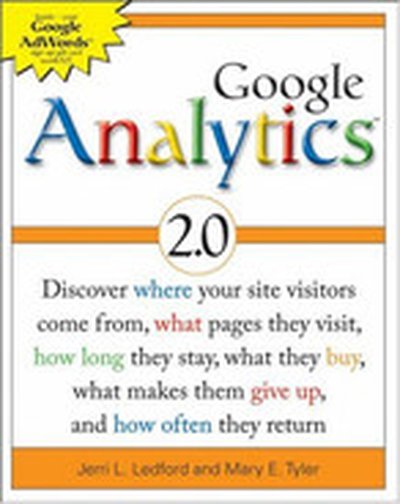
Google Analytics

Web analytics is the process of measuring your web site, analyzing the data, and making changes based on the analysis. Many businesses are just starting to learn how they can increase the performance of their web site by using web analytics. For many people, their first exposure to web analytics is Google Analytics, a free tool available to everyone. Although analysis is vital to web analytics, you can't do analysis without good data. Configuring Google Analytics correctly is the key to collecting good data. This Short Cut provides a thorough description of how the Google Analytics system works, information about many different types of implementations, and ways to avoid common pitfalls. It also shares some best practices to get your setup correct the first time.

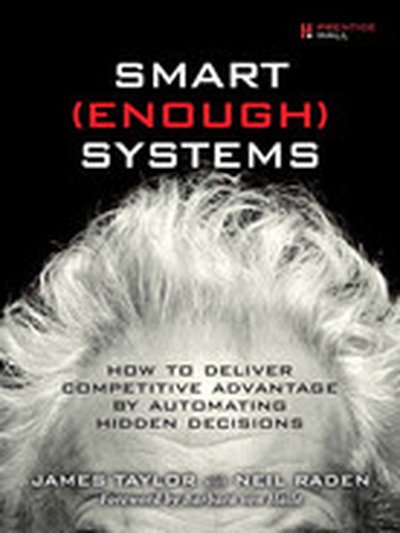
Smart (Enough) Systems: How to Deliver Competitive Advantage by Automating the Decisions Hidden in Your Business

“Automated decisions systems are probably already being used in your industry, and they will undoubtedly grow in importance. If your business needs to make quick, accurate decisions on an industrialized scale, you need to read this book.” Thomas H. Davenport, Professor, Babson College, Author of Competing on Analytics The computer-based systems most organizations rely on to support their businesses are not very smart. Many of the business decisions these companies make tend to be hidden in systems that make poor decisions, or don’t make them at all. Further, most systems struggle to keep up with the pace of change. The answer is not to implement newer, “intelligent” systems. The fact is that much of today’s existing technology has the potential to be “smart enough” to make a big difference to an organization’s business. This book tells you how. Although the business context and underlying principles are explained in a nontechnical manner, the book also contains how-to guidance for more technical readers. The book’s companion site, www.smartenoughsystems.com, has additional information and references for practitioners as well as news and updates. Additional Praise for Smart (Enough) Systems “James Taylor and Neil Raden are on to something important in this book–the tremendous value of improving the large number of routine decisions that are made in organizations every day.” Dr. Hugh J. Watson, Chair of Business Administration, University of Georgia “This is a very important book. It lays out the agenda for business technology in the new century–nothing less than how to reorganize every aspect of how a company treats its customers.” David Raab, President, ClientXClient “This book is an important contribution to business productivity because it covers the opportunity from both the business executive’s and technologist’s perspective. This should be on every operational executive’s and every CIO’s list of essential reading.” John Parkinson, Former CTO, Capgemini, North American Region “This book shows how to use proven technology to make business processes smarter. It clearly makes the case that organizations need to optimize their operational decisions. It is a must-have reference for process professionals throughout your organization.” Jim Sinur, Chief Strategy Officer, Global 360, Inc.

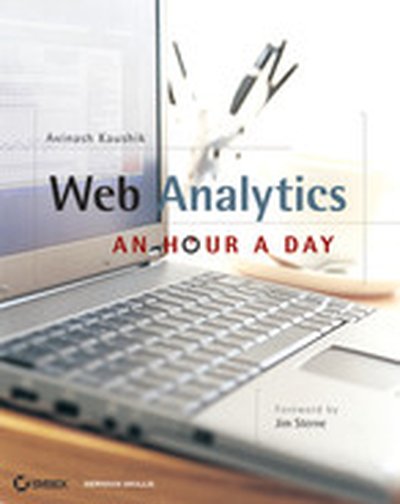
Web Analytics

Written by an in-the-trenches practitioner, this step-by-step guide shows you how to implement a successful Web analytics strategy. Web analytics expert Avinash Kaushik, in his thought-provoking style, debunks leading myths and leads you on a path to gaining actionable insights from your analytics efforts. Discover how to move beyond clickstream analysis, why qualitative data should be your focus, and more insights and techniques that will help you develop a customer-centric mindset without sacrificing your company’s bottom line. Note: CD-ROM/DVD and other supplementary materials are not included as part of eBook file.

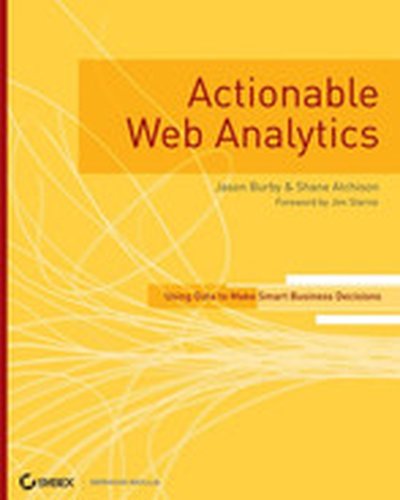
Actionable Web Analytics: Using Data To Make Smart Business Decisions

Knowing everything you can about each click to your Web site can help you make strategic decisions regarding your business. This book is about the why, not just the how, of web analytics and the rules for developing a "culture of analysis" inside your organization. Why you should collect various types of data. Why you need a strategy. Why it must remain flexible. Why your data must generate meaningful action. The authors answer these critical questions—and many more—using their decade of experience in Web analytics.

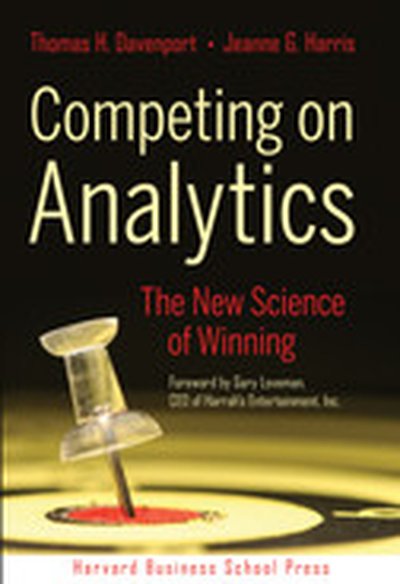
Competing on Analytics: The New Science of Winning

You have more information at hand about your business environment than ever before. But are you using it to “out-think” your rivals? If not, you may be missing out on a potent competitive tool. In Competing on Analytics: The New Science of Winning, Thomas H. Davenport and Jeanne G. Harris argue that the frontier for using data to make decisions has shifted dramatically. Certain high-performing enterprises are now building their competitive strategies around data-driven insights that in turn generate impressive business results. Their secret weapon? Analytics: sophisticated quantitative and statistical analysis and predictive modeling. Exemplars of analytics are using new tools to identify their most profitable customers and offer them the right price, to accelerate product innovation, to optimize supply chains, and to identify the true drivers of financial performance. A wealth of examples—from organizations as diverse as Amazon, Barclay’s, Capital One, Harrah’s, Procter & Gamble, Wachovia, and the Boston Red Sox—illuminate how to leverage the power of analytics.

Leveraging DB2 Data Warehouse Edition for Business Intelligence

In this IBM Redbooks publication we describe and discuss DB2 Data Warehouse Edition (DWE) Version 9.1, a comprehensive platform offering with functionality to build a business intelligence infrastructure for analytics and Web-based applications, and best practices for deployment. DB2 DWE integrates core components for data warehouse construction and administration, data mining, OLAP, and InLine Analytics and reporting. It extends the DB2 data warehouse with design-side tooling and runtime infrastructure for OLAP, data mining, InLine Analytics, and intra-warehouse data movement and transformation, on a common platform based on DB2 and WebSphere. The platform pillars are based on the technology of DB2, Rational Data Architect (for physical data modeling only), the SQL Warehousing Tool, Intelligent Miner, DB2 Cube Views, and Alphablox. DWE includes an Eclipse-based design environment, DWE Design Studio, that integrates the DWE products (with the exception of Alphablox and Query Patroller) with a common framework and user interface. The new SQL Warehousing Tool enables visual design of intra-warehouse, table-to-table data flows and control flows using generated SQL. DB2 Alphablox is the tool for developing custom applications with embedded analytics-based visual components. DWE enables faster time-to-value for enterprise analytics, while limiting the number of vendors, tools, skill sets and licenses required.

Data Preparation for Analytics Using SAS

Written for anyone involved in the data preparation process for analytics, Gerhard Svolba's Data Preparation for Analytics Using SAS offers practical advice in the form of SAS coding tips and tricks, and provides the reader with a conceptual background on data structures and considerations from a business point of view. The tasks addressed include viewing analytic data preparation in the context of its business environment, identifying the specifics of predictive modeling for data mart creation, understanding the concepts and considerations of data preparation for time series analysis, using various SAS procedures and SAS Enterprise Miner for scoring, creating meaningful derived variables for all data mart types, using powerful SAS macros to make changes among the various data mart structures, and more!

Google Hacks, 3rd Edition

Everyone knows that Google lets you search billions of web pages. But few people realize that Google also gives you hundreds of cool ways to organize and play with information. Since we released the last edition of this bestselling book, Google has added many new features and services to its expanding universe: Google Earth, Google Talk, Google Maps, Google Blog Search, Video Search, Music Search, Google Base, Google Reader, and Google Desktop among them. We've found ways to get these new services to do even more. The expanded third edition of Google Hacks is a brand-new and infinitely more useful book for this powerful search engine. You'll not only find dozens of hacks for the new Google services, but plenty of updated tips, tricks and scripts for hacking the old ones. Now you can make a Google Earth movie, visualize your web site traffic with Google Analytics, post pictures to your blog with Picasa, or access Gmail in your favorite email client. Industrial strength and real-world tested, this new collection enables you to mine a ton of information within Google's reach. And have a lot of fun while doing it: Search Google over IM with a Google Talk bot Build a customized Google Map and add it to your own web site Cover your searching tracks and take back your browsing privacy Turn any Google query into an RSS feed that you can monitor in Google Reader or the newsreader of your choice Keep tabs on blogs in new, useful ways Turn Gmail into an external hard drive for Windows, Mac, or Linux Beef up your web pages with search, ads, news feeds, and more Program Google with the Google API and language of your choice For those of you concerned about Google as an emerging Big Brother, this new edition also offers advice and concrete tips for protecting your privacy. Get into the world of Google and bend it to your will!

SQL Server 2005 Distilled

Need to get your arms around Microsoft SQL Server 2005 fast, without getting buried in the details? Need to make fundamental decisions about deploying, using, or administering Microsoft’s latest enterprise database? Need to understand what’s new in SQL Server 2005, and how it fits with your existing IT and business infrastructure? SQL Server 2005 Distilled delivers the answers you need–quickly, clearly, and objectively. Former SQL Server team member Eric L. Brown offers realistic insight into every significant aspect of SQL Server 2005: its new features, architecture, administrative tools, security model, data management capabilities, development environment, and much more. Brown draws on his extensive experience consulting with enterprise users, outlining realistic usage scenarios that leverage SQL Server 2005’s strengths and minimize its limitations. Coverage includes Architectural overview: how SQL Server 2005’s features work together and what it means to you Security management, policies, and permissions: gaining tighter control over your data SQL Server Management Studio: Microsoft’s new, unified tool suite for authoring, management, and operations Availability enhancements: online restoration, improved replication, shorter maintenance/recovery windows, and more Scalability improvements, including a practical explanation of SQL Server 2005’s complex table partitioning feature Data access enhancements, from ADO.NET 2.0 to XML SQL Server 2005’s built-in .NET CLR: how to use it, when to use it, and when to stay with T-SQL Business Intelligence Development Studio: leveraging major improvements in reporting and analytics Visual Studio integration: improving efficiency throughout the coding and debugging process Simple code examples demonstrating SQL Server 2005’s most significant new features

Baseball Hacks

Baseball Hacks isn't your typical baseball book--it's a book about how to watch, research, and understand baseball. It's an instruction manual for the free baseball databases. It's a cookbook for baseball research. Every part of this book is designed to teach baseball fans how to do something. In short, it's a how-to book--one that will increase your enjoyment and knowledge of the game. So much of the way baseball is played today hinges upon interpreting statistical data. Players are acquired based on their performance in statistical categories that ownership deems most important. Managers make in-game decisions based not on instincts, but on probability - how a particular batter might fare against left-handedpitching, for instance. The goal of this unique book is to show fans all the baseball-related stuff that they can do for free (or close to free). Just as open source projects have made great software freely available, collaborative projects such as Retrosheet and Baseball DataBank have made great data freely available. You can use these data sources to research your favorite players, win your fantasy league, or appreciate the game of baseball even more than you do now. Baseball Hacks shows how easy it is to get data, process it, and use it to truly understand baseball. The book lists a number of sources for current and historical baseball data, and explains how to load it into a database for analysis. It then introduces several powerful statistical tools for understanding data and forecasting results. For the uninitiated baseball fan, author Joseph Adler walks readers through the core statistical categories for hitters (batting average, on-base percentage, etc.), pitchers (earned run average, strikeout-to-walk ratio, etc.), and fielders (putouts, errors, etc.). He then extrapolates upon these numbers to examine more advanced data groups like career averages, team stats, season-by-season comparisons, and more. Whether you're a mathematician, scientist, or season-ticket holder to your favorite team, Baseball Hacks is sure to have something for you. Advance praise for Baseball Hacks: " Baseball Hacks is the best book ever written for understanding and practicing baseball analytics. A must-read for baseball professionals and enthusiasts alike." -- Ari Kaplan, database consultant to the Montreal Expos, San Diego Padres, and Baltimore Orioles "The game was born in the 19th century, but the passion for its analysis continues to grow into the 21st. In Baseball Hacks, Joe Adler not only demonstrates thatthe latest data-mining technologies have useful application to the study of baseball statistics, he also teaches the reader how to do the analysis himself, arming the dedicated baseball fan with tools to take his understanding of the game to a higher level." -- Mark E. Johnson, Ph.D., Founder, SportMetrika, Inc. and Baseball Analyst for the 2004 St. Louis Cardinals

Siebel 7.8 with IBM DB2 UDB V8.2 Handbook

This IBM Redbooks publication delivers details about DB2 UDB V8.2 on Siebel 7.8. It outlines the partnership between Siebel Systems and IBM and the benefits of using DB2 UDB to support the Siebel Enterprise. The most commonly used components of the Siebel Enterprise and the DB2 UDB architecture are described. We provide the planning considerations for running DB2 UDB in Siebel environment. The step-by-step installation and configuration details are followed. We then describe information on methods to populate and maintain data in Siebel tables including data archival techniques and information on ensuring data integrity and data quality. The database administration, monitoring, and tuning tools provided by DB2 UDB and operating systems are discussed and the tool usage provided. The book also provides in-depth discussion on high availability and disaster recovery options and setup procedure for a Siebel/DB2 UDB environment. Finally, the book provides information about the components of Siebel Analytics and where these components fit in the overall scheme with Siebel Enterprise.

Big Data is Dead: Long Live Hot Data 🔥

Over the last decade, Big Data was everywhere. Let's set the record straight on what is and isn't Big Data. We have been consumed by a conversation about data volumes when we should focus more on the immediate task at hand: Simplifying our work.

Some of us may have Big Data, but our quest to derive insights from it is measured in small slices of work that fit on your laptop or in your hand. Easy data is here— let's make the most of it.

📓 Resources Big Data is Dead: https://motherduck.com/blog/big-data-is-dead/ Small Data Manifesto: https://motherduck.com/blog/small-data-manifesto/ Small Data SF: https://www.smalldatasf.com/

➡️ Follow Us LinkedIn: https://linkedin.com/company/motherduck X/Twitter : https://twitter.com/motherduck Blog: https://motherduck.com/blog/


Explore the "Small Data" movement, a counter-narrative to the prevailing big data conference hype. This talk challenges the assumption that data scale is the most important feature of every workload, defining big data as any dataset too large for a single machine. We'll unpack why this distinction is crucial for modern data engineering and analytics, setting the stage for a new perspective on data architecture.

Delve into the history of big data systems, starting with the non-linear hardware costs that plagued early data practitioners. Discover how Google's foundational papers on GFS, MapReduce, and Bigtable led to the creation of Hadoop, fundamentally changing how we scale data processing. We'll break down the "big data tax"—the inherent latency and system complexity overhead required for distributed systems to function, a critical concept for anyone evaluating data platforms.

Learn about the architectural cornerstone of the modern cloud data warehouse: the separation of storage and compute. This design, popularized by systems like Snowflake and Google BigQuery, allows storage to scale almost infinitely while compute resources are provisioned on-demand. Understand how this model paved the way for massive data lakes but also introduced new complexities and cost considerations that are often overlooked.

We examine the cracks appearing in the big data paradigm, especially for OLAP workloads. While systems like Snowflake are still dominant, the rise of powerful alternatives like DuckDB signals a shift. We reveal the hidden costs of big data analytics, exemplified by a petabyte-scale query costing nearly $6,000, and argue that for most use cases, it's too expensive to run computations over massive datasets.

The key to efficient data processing isn't your total data size, but the size of your "hot data" or working set. This talk argues that the revenge of the single node is here, as modern hardware can often handle the actual data queried without the overhead of the big data tax. This is a crucial optimization technique for reducing cost and improving performance in any data warehouse.

Discover the core principles for designing systems in a post-big data world. We'll show that since only 1 in 500 users run true big data queries, prioritizing simplicity over premature scaling is key. For low latency, process data close to the user with tools like DuckDB and SQLite. This local-first approach offers a compelling alternative to cloud-centric models, enabling faster, more cost-effective, and innovative data architectures.