We kick off the evening in style with a warm welcome and lots of great insights from our very special guest AWS Chief Evangelist Jeff Barr on how AI is redefining the boundaries of software development and inspiring new possibilities in engineering.
 talk-data.com
Topic
AWS
Amazon Web Services (AWS)
cloud
cloud provider
infrastructure
services
837
tagged
Activity Trend
190
peak/qtr
2020-Q1
2026-Q2
Top Events
AWS re:Invent 2024
341
Data Engineering Podcast
56
O'Reilly Data Engineering Books
54
SaaS Scaled - Interviews about SaaS Startups, Analytics, & Operations
35
Databricks DATA + AI Summit 2023
32
Data + AI Summit 2025
31
O'Reilly Data Science Books
15
Airflow Summit 2025
11
Airflow Summit 2023
7
DataFramed
7
Airflow Summit 2024
6
DATA MINER Big Data Europe Conference 2020
6
Discover how Scania’s Smart Factory Lab uses Snowflake to scale AI for laser welding quality control. In this session, it is shown how ultrasonic scan data is transformed into AI-driven insights that detect weld flaws faster and more accurately. Learn how Snowpark Container Services and ML pipelines enable seamless model training, deployment, and monitoring to boost fast development and scalability.
In this customer-led session you'll learn how RS Group, a global omni-channel provider of products and services for industrial customers, rebuilt its data platform on AWS and Snowflake to enable governed, self-service data access. Their new hub-and-spoke model with departmental "Labs" helps teams deliver value fast. Hear how they accelerated ingestion, embedded governance with classification tags, RBAC, and masking policies, as well as some candid lessons on their org design and tech choices.
Every organisation is reimagining how data and AI can drive faster, smarter decisions — but success depends on more than technology. It takes alignment between strategy, architecture, and culture.
Join Evoke’s Chief Analytics Officer, Mark Stern, together with Snowflake and AWS, as they share how Evoke built a unified, intelligent foundation that connects data, analytics, and AI to accelerate business outcomes. This session is a candid look at what it really takes to modernise at scale — from navigating change and simplifying legacy environments to enabling trusted, AI powered workflows across the enterprise.
Why attend: Walk away with practical lessons on balancing collaboration, governance, and innovation — and how to build a data and AI foundation your teams can grow with, together.
AI agents are a new class of software applications that use AI models to reason, plan, act, learn, and adapt in pursuit of user-defined goals with limited human oversight. Building AI agents that can reliably perform complex tasks has become increasingly accessible thanks to open source frameworks like Strands Agents. However, moving from a promising proof-of-concept to a production-ready agent that can scale to thousands of users presents significant challenges.
Through hands-on demos, we'll build a system from scratch and progressively deploy it to production using the comprehensive enterprise-grade services provided by AgentCore. You'll learn to implement key production capabilities, including secure session isolation, persistent memory, identity management, and real-time observability. The learnings can be applied to any framework and model, hosted on Amazon Bedrock or elsewhere.
What happens when you treat AI like a coding partner? In this talk, I’ll share how I used AI tools to build the London Improv Calendar - a fully serverless application on AWS (Lambda, DynamoDB, API Gateway, and more). This isn’t theory; it’s a practical, in-the-trenches account of working with AI as a solo engineer. We’ll cover what worked well, what fell flat, and where AI truly accelerated development. If you’re curious about pairing AI with serverless, or just want some real-world lessons you can apply to your own projects, this session is for you.
Découvrez comment SMCP (Sandro, Maje, Claudie Pierlot, Fursac) exploite la puissance de Snowflake et AWS pour accélérer sa stratégie Data et soutenir ses opérations Retail à l'international.
Au cours de cette session, SMCP partagera comment le groupe utilise le Snowflake AI Data Cloud pour gagner en agilité, optimiser la prise de décision et créer de la valeur pour l'ensemble de l'entreprise.
by
Monique Femme
(PUCRS)
,
Bruno Fuzetti Penso
(Grupo Boticário)
,
Paulo Vasconcellos
,
Thayana Borba
(Grupo Boticário)
,
João Alves De Oliveira Neto
(Grupo Boticário)
Você já pensou em como a Inteligência Artificial generativa está transformando o jeito que grandes empresas criam produtos digitais? Neste episódio, conversamos com o time do Grupo Boticário para entender como a companhia está unindo tecnologia e inovação para transformar o futuro da beleza. Exploramos como a GenAI vem impulsionando o desenvolvimento de produtos digitais e potencializando o trabalho de analistas, times de produto e engenharia com ferramentas. Falamos sobre os bastidores da Semana de IA GB, os aprendizados que ela trouxe para o negócio e como a GenAI está ajudando os times a ganharem eficiência e profundidade nas análises. Se você quer entender como uma das maiores empresas de beleza do país está moldando sua cultura de produto e engenharia para o futuro, esse episódio é para você! Lembrando que você pode encontrar todos os podcasts da comunidade Data Hackers no Spotify, iTunes, Google Podcast, Castbox e muitas outras plataformas. Convidados: Bruno Fuzetti Penso - Gerente Sênior de Plataforma Thayana Borba - Gerente Sênior de Produtos Digitais João Alves De Oliveira Neto - Gerente Sênior Produtos de Dados Nossa Bancada Data Hackers: Paulo Vasconcellos — Co-founder da Data Hackers e Principal Data Scientist na Hotmart. Monique Femme — Head of Community Management na Data Hackers Canais do Grupo Boticário: LinkedIn do GB Página de vagas do GB Instagram do GB Referências: Plataforma de Desenvolvimento (Alquimia) https://github.com/customer-stories/grupoboticario https://medium.com/gbtech/plataforma-do-desenvolvimento-grupo-botic%C3%A1rio-61b1aaddbc9b https://medium.com/gbtech/opentelemetry-na-nova-plataforma-de-integra%C3%A7%C3%A3o-350e744b6a5f https://aws.amazon.com/pt/solutions/case-studies/grupo-boticario-summit/
nAIxt = plateforme de dév. et d'orchestration d'Agents IA d'ILLUIN, pour concevoir, déployer et surveiller des Agents IA, du POC à la Prod.
nAIxt est la plateforme de développement et d'orchestration d'Agents IA d'ILLUIN Technology : un environnement unifié pour concevoir, déployer et surveiller des Agents IA, du POC à la production, nativement intégré à AWS. En 20min Aurèle Dalibot et Bastien Sivera aborderont les sujets suivants :
- Création d’un Agent IA en quelques minutes, du design à l’exécution
- Orchestration multi-agents : planifier, collaborer, se répartir les tâches
- Intégration native de nAIxt à votre environnement AWS pour créer des agents intelligents longue durée, en capitalisant sur vos données et services actuels en toute sécurité
- AWS Bedrock pour sélectionner / combiner les modèles d'IA adaptés aux cas d’usage
Pourquoi venir ?
Pour découvrir un outil de conception et d'orchestration d'IA Agentique qui permet d'automatiser vos processus métiers, d'accélérer votre time-to-market tout en garantissant la sécurité, la scalabilité, l'observabilité et le pilotage des systèmes agentiques.
At Personio, we've transformed hackathons from few days coding events into a systematic innovation engine that has delivered many production applications serving thousand of users. I'll share our journey from 48-hour prototypes to enterprise-grade solutions, all built on Snowflake's modern data platform.
Pour celles et ceux qui n'ont peu ou pas d'experience avec le cloud, ça peut paraître un peu effrayant de se lancer. Cette session va vous montrer les premières étapes à suivre vers son premier succès. A partir de là, on verra comment adopter au fur et à mesure des composants natifs du Cloud pour déveloper plus vite, adopter des bonnes pratiques, et optimiser les coûts
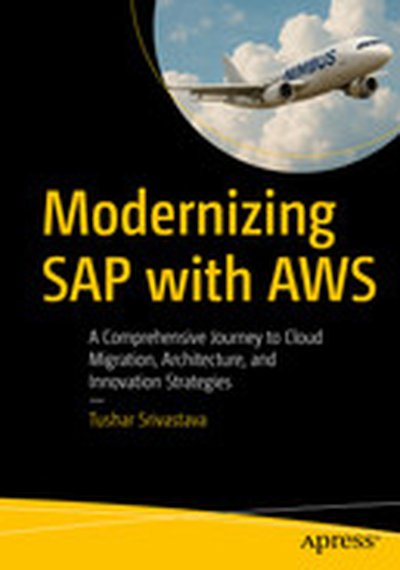
Follow the cloud journey of a fictional company Nimbus Airlines and the process it goes through to modernize its SAP systems. This book provides a detailed guide for those looking to transition their SAP systems to the cloud using Amazon Web Services (AWS). Through the lens of various characters, the book is structured in three parts — starting with an introduction to SAP and AWS fundamentals, followed by technical architecture insights, and concluding with migration strategies and case studies, the book covers technical aspects of modernizing SAP with AWS. You’ll review the partnership between SAP and AWS, highlighted by their long-standing collaboration and shared innovations. Then design an AWS architecture tailored for SAP workloads, including high availability, disaster recovery, and operations automation. The book concludes with a tour of the migration process, offering various strategies, tools, and frameworks reinforced with real-world customer case studies that showcase successful SAP migrations to AWS. Modernizing SAP with AWS equips business leaders and technical architects with the knowledge to leverage AWS for their SAP systems, ensuring a smooth transition and unlocking new opportunities for innovation. What You Will Learn Understand the fundamentals of AWS and its key components, including computing, storage, networking, and microservices, for SAP systems. Explore the technical partnership between SAP and AWS, learning how their collaboration drives innovation and delivers business value. Design an optimized AWS architecture for SAP workloads, focusing on high availability, disaster recovery, and operations automation. Discover innovative ways to enhance and extend SAP functionality using AWS tools for better system performance and automation. Who This Book Is For SAP professionals and consultants interested in learning how AWS can enhance SAP performance, security, and automation. Cloud engineers and developers involved in SAP migration projects, looking for best practices and real-world case studies for successful implementation. Enterprise architects seeking to design optimized, scalable, and secure SAP infrastructure on AWS. CIOs, CTOs, and IT managers aiming to modernize SAP systems and unlock innovation through cloud technology.
Buckle up for a bold ride into the future of performance intelligence. In this session, Keyloop - one of the world’s top digital innovators in automotive retail shares how it’s putting data in the driver’s seat to revolutionise decision-making.
Powered by ThoughtSpot and AWS first-party technologies, get an inside look at VEGA, their next-gen AI-powered performance intelligence platform. No dashboards. No bottlenecks. Just real-time, actionable insights that surface hidden issues, suggest smarter actions, and boost performance, profit, and customer experience.
If you're ready to see what happens when AI meets speed, scale, and simplicity, this is your green light.
Join Richard as he shares how Runna transformed its data capabilities by harnessing the power of Snowflake and AWS. This session will explore the key challenges the team faced, how they overcame them, and the practical steps they took to build a scalable, future-ready data platform. Richard will walk through what’s been achieved so far, the lessons learned along the way, and how Runna is now able to unlock complex business insights faster and more efficiently than ever before. You'll also get a sneak peek into what’s next as they continue to evolve their data strategy to support rapid growth and innovation.
The scale-up company Solynta focuses on hybrid potato breeding, which helps achieve improvements in yield, disease resistance, and climate adaptation. Scientific innovation is part of our core business. Plant selections are highly data-driven, involving, for example, drone observations and genetic data. Minimal time-to-production for new ideas is essential, which is facilitated by our custom AWS devops platform. This platform focusses on automation and accessible data storage.
In this talk, we introduce how computer vision (YOLO and SAM modelling) enables monitoring traits of plants in the field, and how we operate these models. This further entails: • Our experience from training and evaluating models on drone images • Trade-offs selecting AWS services, Terraform modules and Python packages for automation and robustness • Our team setup that allows IT specialists and biologists to work together effectively
The talk will provide practical insights for both data scientists and DevOps engineers. The main takeaways are that object detection and segmentation from drone maps, at scale, are achievable for a small team. Furthermore, with the right approach, you can standardise a DevOps platform to let operations and developers work together.
The entertainment industry is sitting on a huge natural resource: decades of creativity and craftsmanship from talented professionals. Koobrik is an advanced language model designed by, and for, the creative industries. As a Warner Brothers’ accelerator company, the model is already utilised by HBO, A24, DC Comics and many more, to harness ethical artificial intelligence.
Join Koobriks’ CEO and Founder, Orlando Wood, as he shares insights into:
- Building an ethical AI model for the entertainment industry
- The unique challenges of creative data as an asset class
- The AWS and Databricks tech stack powering Koobrik
- Real-world applications, from comic books to screenplays
The relationship between AI assistants and data professionals is evolving rapidly, creating both opportunities and challenges. These tools can supercharge workflows by generating SQL, assisting with exploratory analysis, and connecting directly to databases—but they're far from perfect. How do you maintain the right balance between leveraging AI capabilities and preserving your fundamental skills? As data teams face mounting pressure to deliver AI-ready data and demonstrate business value, what strategies can ensure your work remains trustworthy? With issues ranging from biased algorithms to poor data quality potentially leading to serious risks, how can organizations implement responsible AI practices while still capitalizing on the positive applications of this technology? Christina Stathopoulos is an international data specialist who regularly serves as an executive advisor, consultant, educator, and public speaker. With expertise in analytics, data strategy, and data visualization, she has built a distinguished career in technology, including roles at Fortune 500 companies. Most recently, she spent over five years at Google and Waze, leading data strategy and driving cross-team projects. Her professional journey has spanned both the United States and Spain, where she has combined her passion for data, technology, and education to make data more accessible and impactful for all. Christina also plays a unique role as a “data translator,” helping to bridge the gap between business and technical teams to unlock the full value of data assets. She is the founder of Dare to Data, a consultancy created to formalize and structure her work with some of the world’s leading companies, supporting and empowering them in their data and AI journeys. Current and past clients include IBM, PepsiCo, PUMA, Shell, Whirlpool, Nitto, and Amazon Web Services.
In the episode, Richie and Christina explore the role of AI agents in data analysis, the evolving workflow with AI assistance, the importance of maintaining foundational skills, the integration of AI in data strategy, the significance of trustworthy AI, and much more.
Links Mentioned in the Show: Dare to DataJulius AIConnect with ChristinaCourse - Introduction to SQL with AIRelated Episode: The Data to AI Journey with Gerrit Kazmaier, VP & GM of Data Analytics at Google CloudRewatch RADAR AI
New to DataCamp? Learn on the go using the DataCamp mobile app Empower your business with world-class data and AI skills with DataCamp for business
Summary In this episode of the AI Engineering Podcast Mark Brooker, VP and Distinguished Engineer at AWS, talks about how agentic workflows are transforming database usage and infrastructure design. He discusses the evolving role of data in AI systems, from traditional models to more modern approaches like vectors, RAG, and relational databases. Mark explains why agents require serverless, elastic, and operationally simple databases, and how AWS solutions like Aurora and DSQL address these needs with features such as rapid provisioning, automated patching, geodistribution, and spiky usage. The conversation covers topics including tool calling, improved model capabilities, state in agents versus stateless LLM calls, and the role of Lambda and AgentCore for long-running, session-isolated agents. Mark also touches on the shift from local MCP tools to secure, remote endpoints, the rise of object storage as a durable backplane, and the need for better identity and authorization models. The episode highlights real-world patterns like agent-driven SQL fuzzing and plan analysis, while identifying gaps in simplifying data access, hardening ops for autonomous systems, and evolving serverless database ergonomics to keep pace with agentic development.
Announcements Hello and welcome to the Data Engineering Podcast, the show about modern data managementData teams everywhere face the same problem: they're forcing ML models, streaming data, and real-time processing through orchestration tools built for simple ETL. The result? Inflexible infrastructure that can't adapt to different workloads. That's why Cash App and Cisco rely on Prefect. Cash App's fraud detection team got what they needed - flexible compute options, isolated environments for custom packages, and seamless data exchange between workflows. Each model runs on the right infrastructure, whether that's high-memory machines or distributed compute. Orchestration is the foundation that determines whether your data team ships or struggles. ETL, ML model training, AI Engineering, Streaming - Prefect runs it all from ingestion to activation in one platform. Whoop and 1Password also trust Prefect for their data operations. If these industry leaders use Prefect for critical workflows, see what it can do for you at dataengineeringpodcast.com/prefect.Data migrations are brutal. They drag on for months—sometimes years—burning through resources and crushing team morale. Datafold's AI-powered Migration Agent changes all that. Their unique combination of AI code translation and automated data validation has helped companies complete migrations up to 10 times faster than manual approaches. And they're so confident in their solution, they'll actually guarantee your timeline in writing. Ready to turn your year-long migration into weeks? Visit dataengineeringpodcast.com/datafold today for the details.Your host is Tobias Macey and today I'm interviewing Marc Brooker about the impact of agentic workflows on database usage patterns and how they change the architectural requirements for databasesInterview IntroductionHow did you get involved in the area of data management?Can you describe what the role of the database is in agentic workflows?There are numerous types of databases, with relational being the most prevalent. How does the type and purpose of an agent inform the type of database that should be used?Anecdotally I have heard about how agentic workloads have become the predominant "customers" of services like Neon and Fly.io. How would you characterize the different patterns of scale for agentic AI applications? (e.g. proliferation of agents, monolithic agents, multi-agent, etc.)What are some of the most significant impacts on workload and access patterns for data storage and retrieval that agents introduce?What are the categorical differences in that behavior as compared to programmatic/automated systems?You have spent a substantial amount of time on Lambda at AWS. Given that LLMs are effectively stateless, how does the added ephemerality of serverless functions impact design and performance considerations around having to "re-hydrate" context when interacting with agents?What are the most interesting, innovative, or unexpected ways that you have seen serverless and database systems used for agentic workloads?What are the most interesting, unexpected, or challenging lessons that you have learned while working on technologies that are supporting agentic applications?Contact Info BlogLinkedInParting Question From your perspective, what is the biggest gap in the tooling or technology for data management today?Closing Announcements Thank you for listening! Don't forget to check out our other shows. Podcast.init covers the Python language, its community, and the innovative ways it is being used. The AI Engineering Podcast is your guide to the fast-moving world of building AI systems.Visit the site to subscribe to the show, sign up for the mailing list, and read the show notes.If you've learned something or tried out a project from the show then tell us about it! Email [email protected] with your story.Links AWS Aurora DSQLAWS LambdaThree Tier ArchitectureVector DatabaseGraph DatabaseRelational DatabaseVector EmbeddingRAG == Retrieval Augmented GenerationAI Engineering Podcast EpisodeGraphRAGAI Engineering Podcast EpisodeLLM Tool CallingMCP == Model Context ProtocolA2A == Agent 2 Agent ProtocolAWS Bedrock AgentCoreStrandsLangChainKiroThe intro and outro music is from The Hug by The Freak Fandango Orchestra / CC BY-SA
Strategies for transforming teams and processes to be AI-ready and scale GenAI-enabled DevOps.