talk-data.com talk-data.com

Topic

BigQuery

Google BigQuery

data_warehouse analytics google_cloud olap

315

tagged

Activity Trend

17 peak/qtr
2020-Q1 2026-Q1

Activities

315 activities · Newest first

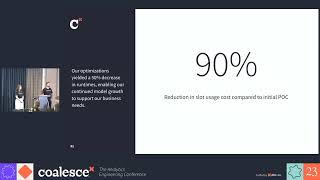
Scaling dbt and BigQuery to infinity and beyond - Coalesce 2023

Bluecore works with the largest retail brands around the world to engage shoppers and keep them coming back. In this talk, you’ll learn how the team at Bluecore went about creating, scaling, and maturing an analytics data warehouse in BigQuery to orchestrate 10,000+ models every 30 minutes without bankrupting the company.

Speakers: Adam Whitaker, Analytics Lead, bluecore; Nicole Dallar-Malburg, Analytics Engineer, Bluecore

Register for Coalecse at https://coalesce.getdbt.com/

Low-Code AI

Take a data-first and use-case-driven approach with Low-Code AI to understand machine learning and deep learning concepts. This hands-on guide presents three problem-focused ways to learn no-code ML using AutoML, low-code using BigQuery ML, and custom code using scikit-learn and Keras. In each case, you'll learn key ML concepts by using real-world datasets with realistic problems. Business and data analysts get a project-based introduction to ML/AI using a detailed, data-driven approach: loading and analyzing data; feeding data into an ML model; building, training, and testing; and deploying the model into production. Authors Michael Abel and Gwendolyn Stripling show you how to build machine learning models for retail, healthcare, financial services, energy, and telecommunications. You'll learn how to: Distinguish between structured and unstructured data and the challenges they present Visualize and analyze data Preprocess data for input into a machine learning model Differentiate between the regression and classification supervised learning models Compare different ML model types and architectures, from no code to low code to custom training Design, implement, and tune ML models Export data to a GitHub repository for data management and governance

Vector and Raster Data Unification Through H3 | M. Colic | Tech Lead Public Sector UK&I | Databricks

Milos Colic, Tech Lead Public Sector UK&I at Databricks, demonstrates how raster and vector geospatial data can be standardised into a unified domain.

This unification facilitates an easy plugin/plugout capability for all raster and vector layers. Databricks used these principles to design an easy, scalable and extensible Flood Risk for Physical Assets solution using H3 as a unification grid.

To learn more about H3 check out: https://docs.carto.com/data-and-analysis/analytics-toolbox-for-bigquery/sql-reference/h3

FinOps Examples using Google Cloud BigQuery by Aliz.ai - Zoltán Guth & Gergely Schmidt, Aliz.ai

This talk was recorded at Crunch Conference 2022. Zoltán and Gergely from Aliz.ai company spoke about FinOps examples using Google Cloud BigQuery.

"In this talk we will talk about the basics of FinOps concept and going to make an introduction to it through real life examples using BigQuery."

The event was organized by Crafthub.

You can watch the rest of the conference talks on our channel.

If you are interested in more speakers, tickets and details of the conference, check out our website: https://crunchconf.com/ If you are interested in more events from our company: https://crafthub.events/

Summary

All software systems are in a constant state of evolution. This makes it impossible to select a truly future-proof technology stack for your data platform, making an eventual migration inevitable. In this episode Gleb Mezhanskiy and Rob Goretsky share their experiences leading various data platform migrations, and the hard-won lessons that they learned so that you don't have to.

Announcements

Hello and welcome to the Data Engineering Podcast, the show about modern data management Introducing RudderStack Profiles. RudderStack Profiles takes the SaaS guesswork and SQL grunt work out of building complete customer profiles so you can quickly ship actionable, enriched data to every downstream team. You specify the customer traits, then Profiles runs the joins and computations for you to create complete customer profiles. Get all of the details and try the new product today at dataengineeringpodcast.com/rudderstack Modern data teams are using Hex to 10x their data impact. Hex combines a notebook style UI with an interactive report builder. This allows data teams to both dive deep to find insights and then share their work in an easy-to-read format to the whole org. In Hex you can use SQL, Python, R, and no-code visualization together to explore, transform, and model data. Hex also has AI built directly into the workflow to help you generate, edit, explain and document your code. The best data teams in the world such as the ones at Notion, AngelList, and Anthropic use Hex for ad hoc investigations, creating machine learning models, and building operational dashboards for the rest of their company. Hex makes it easy for data analysts and data scientists to collaborate together and produce work that has an impact. Make your data team unstoppable with Hex. Sign up today at dataengineeringpodcast.com/hex to get a 30-day free trial for your team! Your host is Tobias Macey and today I'm interviewing Gleb Mezhanskiy and Rob Goretsky about when and how to think about migrating your data stack

Interview

Introduction How did you get involved in the area of data management? A migration can be anything from a minor task to a major undertaking. Can you start by describing what constitutes a migration for the purposes of this conversation? Is it possible to completely avoid having to invest in a migration? What are the signals that point to the need for a migration?

What are some of the sources of cost that need to be accounted for when considering a migration? (both in terms of doing one, and the costs of not doing one) What are some signals that a migration is not the right solution for a perceived problem?

Once the decision has been made that a migration is necessary, what are the questions that the team should be asking to determine the technologies to move to and the sequencing of execution? What are the preceding tasks that should be completed before starting the migration to ensure there is no breakage downstream of the changing component(s)? What are some of the ways that a migration effort might fail? What are the major pitfalls that teams need to be aware of as they work through a data platform migration? What are the opportunities for automation during the migration process? What are the most interesting, innovative, or unexpected ways that you have seen teams approach a platform migration? What are the most interesting, unexpected, or challenging lessons that you have learned while working on data platform migrations? What are some ways that the technologies and patterns that we use can be evolved to reduce the cost/impact/need for migraitons?

Contact Info

Gleb

LinkedIn @glebmm on Twitter

Rob

LinkedIn RobGoretsky on GitHub

Parting Question

From your perspective, what is the biggest gap in the tooling or technology for data management today?

Closing Announcements

Thank you for listening! Don't forget to check out our other shows. Podcast.init covers the Python language, its community, and the innovative ways it is being used. The Machine Learning Podcast helps you go from idea to production with machine learning. Visit the site to subscribe to the show, sign up for the mailing list, and read the show notes. If you've learned something or tried out a project from the show then tell us about it! Email [email protected]) with your story. To help other people find the show please leave a review on Apple Podcasts and tell your friends and co-workers

Links

Datafold

Podcast Episode

Informatica Airflow Snowflake

Podcast Episode

Redshift Eventbrite Teradata BigQuery Trino EMR == Elastic Map-Reduce Shadow IT

Podcast Episode

Mode Analytics Looker Sunk Cost Fallacy data-diff

Podcast Episode

SQLGlot Dagster dbt

The intro and outro music is from The Hug by The Freak Fandango Orchestra / CC BY-SA Sponsored By: Hex: Hex Tech Logo

Hex is a collaborative workspace for data science and analytics. A single place for teams to explore, transform, and visualize data into beautiful interactive reports. Use SQL, Python, R, no-code and AI to find and share insights across your organization. Empower everyone in an organization to make an impact with data. Sign up today at [dataengineeringpodcast.com/hex](https://www.dataengineeringpodcast.com/hex} and get 30 days free!Rudderstack: Rudderstack

Introducing RudderStack Profiles. RudderStack Profiles takes the SaaS guesswork and SQL grunt work out of building complete customer profiles so you can quickly ship actionable, enriched data to every downstream team. You specify the customer traits, then Profiles runs the joins and computations for you to create complete customer profiles. Get all of the details and try the new product today at dataengineeringpodcast.com/rudderstackSupport Data Engineering Podcast

With millions of orders per day, Gojek needs a data processing solution that can handle a high volume of data. Airflow is a scalable tool that can handle large volumes of data and complex workflows, making it an ideal solution for Gojek’s needs. With Airflow, we can create automated data pipelines to extract data from various sources, transform it, and load it into dashboards such as Tableau for analysis and visualization. This eliminates the need for manual data transfers and reduces the risk of errors. Airflow also can be integrated with other systems such as Google BigQuery. This allows us to easily connect to different data sources and transform the data before loading it into the dashboards. Therefore we can create seamless data pipelines. Using Airflow will also reduce query volume in Google BigQuery, resulting in lower cost of overall data infrastructure.

Summary

A significant portion of the time spent by data engineering teams is on managing the workflows and operations of their pipelines. DataOps has arisen as a parallel set of practices to that of DevOps teams as a means of reducing wasted effort. Agile Data Engine is a platform designed to handle the infrastructure side of the DataOps equation, as well as providing the insights that you need to manage the human side of the workflow. In this episode Tevje Olin explains how the platform is implemented, the features that it provides to reduce the amount of effort required to keep your pipelines running, and how you can start using it in your own team.

Announcements

Hello and welcome to the Data Engineering Podcast, the show about modern data management RudderStack helps you build a customer data platform on your warehouse or data lake. Instead of trapping data in a black box, they enable you to easily collect customer data from the entire stack and build an identity graph on your warehouse, giving you full visibility and control. Their SDKs make event streaming from any app or website easy, and their extensive library of integrations enable you to automatically send data to hundreds of downstream tools. Sign up free at dataengineeringpodcast.com/rudderstack Your host is Tobias Macey and today I'm interviewing Tevje Olin about Agile Data Engine, a platform that combines data modeling, transformations, continuous delivery and workload orchestration to help you manage your data products and the whole lifecycle of your warehouse

Interview

Introduction How did you get involved in the area of data management? Can you describe what Agile Data Engine is and the story behind it? What are some of the tools and architectures that an organization might be able to replace with Agile Data Engine?

How does the unified experience of Agile Data Engine change the way that teams think about the lifecycle of their data? What are some of the types of experiments that are enabled by reduced operational overhead?

What does CI/CD look like for a data warehouse?

How is it different from CI/CD for software applications?

Can you describe how Agile Data Engine is architected?

How have the design and goals of the system changed since you first started working on it? What are the components that you needed to develop in-house to enable your platform goals?

What are the changes in the broader data ecosystem that have had the most influence on your product goals and customer adoption? Can you describe the workflow for a team that is using Agile Data Engine to power their business analytics?

What are some of the insights that you generate to help your customers understand how to improve their processes or identify new opportunities?

In your "about" page it mentions the unique approaches that you take for warehouse automation. How do your practices differ from the rest of the industry? How have changes in the adoption/implementation of ML and AI impacted the ways that your customers exercise your platform? What are the most interesting, innovative, or unexpected ways that you have seen the Agile Data Engine platform used? What are the most interesting, unexpected, or challenging lessons that you have learned while working on Agile Data Engine? When is Agile Data Engine the wrong choice? What do you have planned for the future of Agile Data Engine?

Guest Contact Info

LinkedIn

Parting Question

From your perspective, what is the biggest gap in the tooling or technology for data management today?

About Agile Data Engine

Agile Data Engine unlocks the potential of your data to drive business value - in a rapidly changing world. Agile Data Engine is a DataOps Management platform for designing, deploying, operating and managing data products, and managing the whole lifecycle of a data warehouse. It combines data modeling, transformations, continuous delivery and workload orchestration into the same platform.

Links

Agile Data Engine Bill Inmon Ralph Kimball Snowflake Redshift BigQuery Azure Synapse Airflow

The intro and outro music is from The Hug by The Freak Fandango Orchestra / CC BY-SA Sponsored By: Rudderstack: Rudderstack

RudderStack provides all your customer data pipelines in one platform. You can collect, transform, and route data across your entire stack with its event streaming, ETL, and reverse ETL pipelines.

RudderStack’s warehouse-first approach means it does not store sensitive information, and it allows you to leverage your existing data warehouse/data lake infrastructure to build a single source of truth for every team.

RudderStack also supports real-time use cases. You can Implement RudderStack SDKs once, then automatically send events to your warehouse and 150+ business tools, and you’ll never have to worry about API changes again.

Visit dataengineeringpodcast.com/rudderstack to sign up for free today, and snag a free T-Shirt just for being a Data Engineering Podcast listener.Support Data Engineering Podcast

Summary

All of the advancements in our technology is based around the principles of abstraction. These are valuable until they break down, which is an inevitable occurrence. In this episode the host Tobias Macey shares his reflections on recent experiences where the abstractions leaked and some observances on how to deal with that situation in a data platform architecture.

Announcements

Hello and welcome to the Data Engineering Podcast, the show about modern data management RudderStack helps you build a customer data platform on your warehouse or data lake. Instead of trapping data in a black box, they enable you to easily collect customer data from the entire stack and build an identity graph on your warehouse, giving you full visibility and control. Their SDKs make event streaming from any app or website easy, and their extensive library of integrations enable you to automatically send data to hundreds of downstream tools. Sign up free at dataengineeringpodcast.com/rudderstack Your host is Tobias Macey and today I'm sharing some thoughts and observances about abstractions and impedance mismatches from my experience building a data lakehouse with an ELT workflow

Interview

Introduction impact of community tech debt

hive metastore new work being done but not widely adopted

tensions between automation and correctness data type mapping

integer types complex types naming things (keys/column names from APIs to databases)

disaggregated databases - pros and cons

flexibility and cost control not as much tooling invested vs. Snowflake/BigQuery/Redshift

data modeling

dimensional modeling vs. answering today's questions

What are the most interesting, unexpected, or challenging lessons that you have learned while working on your data platform? When is ELT the wrong choice? What do you have planned for the future of your data platform?

Contact Info

LinkedIn

Parting Question

From your perspective, what is the biggest gap in the tooling or technology for data management today?

Closing Announcements

Thank you for listening! Don't forget to check out our other shows. Podcast.init covers the Python language, its community, and the innovative ways it is being used. The Machine Learning Podcast helps you go from idea to production with machine learning. Visit the site to subscribe to the show, sign up for the mailing list, and read the show notes. If you've learned something or tried out a project from the show then tell us about it! Email [email protected]) with your story. To help other people find the show please leave a review on Apple Podcasts and tell your friends and co-workers

Links

dbt Airbyte

Podcast Episode

Dagster

Podcast Episode

Trino

Podcast Episode

ELT Data Lakehouse Snowflake BigQuery Redshift Technical Debt Hive Metastore AWS Glue

The intro and outro music is from The Hug by The Freak Fandango Orchestra / CC BY-SA Sponsored By: Rudderstack: Rudderstack

RudderStack provides all your customer data pipelines in one platform. You can collect, transform, and route data across your entire stack with its event streaming, ETL, and reverse ETL pipelines.

RudderStack’s warehouse-first approach means it does not store sensitive information, and it allows you to leverage your existing data warehouse/data lake infrastructure to build a single source of truth for every team.

RudderStack also supports real-time use cases. You can Implement RudderStack SDKs once, then automatically send events to your warehouse and 150+ business tools, and you’ll never have to worry about API changes again.

Visit dataengineeringpodcast.com/rudderstack to sign up for free today, and snag a free T-Shirt just for being a Data Engineering Podcast listener.Support Data Engineering Podcast

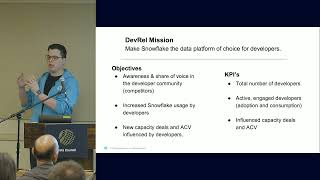
The Story of DevRel at Snowflake - How We Got Here | Snowflake

ABOUT THE TALK: In this talk, Felipe Hoffa and Daniel Myers present an honest take of their wildly different approaches to Developer Relations and how both have been critical in building Snowflake's world-class developer community and ecosystem from the ground up. Learn how they define DevRel KPIs & metrics and daily challenges they face and lessons learned along the way. You might even get inspired to become a Developer Advocate after understanding the different ways to engage with the Snowflake community and what's next for Snowflake Developer Relations.

ABOUT THE SPEAKERS: Felipe Hoffa is the Data Cloud Advocate at Snowflake. Previously he worked at Google, as a Developer Advocate on Data Analytics for BigQuery, after joining as a Software Engineer. He moved from Chile to San Francisco in 2011. His goal is to inspire developers and data scientists around the world to analyze and understand their data in ways they never could before.

Daniel Myers is in Developer Relations and previously held roles at different companies, including Google, Cisco, and Fujitsu. In addition, he led and founded multiple startups.

ABOUT DATA COUNCIL: Data Council (https://www.datacouncil.ai/) is a community and conference series that provides data professionals with the learning and networking opportunities they need to grow their careers.

Make sure to subscribe to our channel for the most up-to-date talks from technical professionals on data related topics including data infrastructure, data engineering, ML systems, analytics and AI from top startups and tech companies.

FOLLOW DATA COUNCIL: Twitter: https://twitter.com/DataCouncilAI LinkedIn: https://www.linkedin.com/company/datacouncil-ai/

Cubing and Metrics in SQL, Oh My!

ABOUT THE TALK Apache Calcite has extended SQL to support metrics (which we call ‘measures’), filter context, and analytic expressions. With these concepts you can define data models (which we call Analytic Views) that contain metrics, use them in queries, and define new metrics in queries.

This talk, hosted by the original developer of Apache Calcite describes the SQL syntax extensions for metrics, and how to use them for cross-dimensional calculations such as period-over-period, percent-of-total, non-additive and semi-additive measures. It details how we got around fundamental limitations in SQL semantics, and approaches for optimizing queries that use metrics.

ABOUT THE SPEAKER Julian Hyde is the original developer of Apache Calcite, an open source framework for building data management systems, and Morel, a functional query language. Previously he created Mondrian, an analytics engine, and SQLstream, an engine for continuous queries. He is a staff engineer at Google, where he works on Looker and BigQuery.

ABOUT DATA COUNCIL: Data Council (https://www.datacouncil.ai/) is a community and conference series that provides data professionals with the learning and networking opportunities they need to grow their careers.

Make sure to subscribe to our channel for the most up-to-date talks from technical professionals on data related topics including data infrastructure, data engineering, ML systems, analytics and AI from top startups and tech companies.

FOLLOW DATA COUNCIL: Twitter: https://twitter.com/DataCouncilAI LinkedIn: https://www.linkedin.com/company/datacouncil-ai/

Big Data is Dead | MotherDuck

This talk will make the case that the era of Big Data is over. Now we can stop worrying about data size and focus on how we’re going to use it to make better decisions.

The data behind the graphs shown in this talk come from Jordan Tigani having analyzed query logs, deal post-mortems, benchmark results (published and unpublished), customer support tickets, customer conversations, service logs, and published blog posts, plus a bit of intuition.

ABOUT THE SPEAKER: Jordan Tigani is co-founder and chief duck-herder at MotherDuck, a startup building a serverless analytics platform based on DuckDB. He helped create Google BigQuery, wrote two books on it, and led first the engineering team then the product team through its first $1B or so in revenue.

👉 Sign up for our “No BS” Newsletter to get the latest technical data & AI content: https://datacouncil.ai/newsletter

ABOUT DATA COUNCIL: Data Council (https://www.datacouncil.ai/) is a community and conference series that provides data professionals with the learning and networking opportunities they need to grow their careers.

Make sure to subscribe to our channel for the most up-to-date talks from technical professionals on data related topics including data infrastructure, data engineering, ML systems, analytics and AI from top startups and tech companies.

FOLLOW DATA COUNCIL: Twitter: https://twitter.com/DataCouncilAI LinkedIn: https://www.linkedin.com/company/datacouncil-ai/

The name WALD-stack stems from the four technologies it is composed of, i.e. a cloud-computing Warehouse like Snowflake or Google BigQuery, the open-source data integration engine Airbyte, the open-source full-stack BI platform Lightdash, and the open-source data transformation tool DBT.

Using a Formula 1 Grand Prix dataset, I will give an overview of how these four tools complement each other perfectly for analytics tasks in an ELT approach. You will learn the specific uses of each tool as well as their particular features. My talk is based on a full tutorial, which you can find under waldstack.org.

Summary

Business intelligence has gone through many generational shifts, but each generation has largely maintained the same workflow. Data analysts create reports that are used by the business to understand and direct the business, but the process is very labor and time intensive. The team at Omni have taken a new approach by automatically building models based on the queries that are executed. In this episode Chris Merrick shares how they manage integration and automation around the modeling layer and how it improves the organizational experience of business intelligence.

Announcements

Hello and welcome to the Data Engineering Podcast, the show about modern data management Truly leveraging and benefiting from streaming data is hard - the data stack is costly, difficult to use and still has limitations. Materialize breaks down those barriers with a true cloud-native streaming database - not simply a database that connects to streaming systems. With a PostgreSQL-compatible interface, you can now work with real-time data using ANSI SQL including the ability to perform multi-way complex joins, which support stream-to-stream, stream-to-table, table-to-table, and more, all in standard SQL. Go to dataengineeringpodcast.com/materialize today and sign up for early access to get started. If you like what you see and want to help make it better, they're hiring across all functions! Your host is Tobias Macey and today I'm interviewing Chris Merrick about the Omni Analytics platform and how they are adding automatic data modeling to your business intelligence

Interview

Introduction How did you get involved in the area of data management? Can you describe what Omni Analytics is and the story behind it?

What are the core goals that you are trying to achieve with building Omni?

Business intelligence has gone through many evolutions. What are the unique capabilities that Omni Analytics offers over other players in the market?

What are the technical and organizational anti-patterns that typically grow up around BI systems?

What are the elements that contribute to BI being such a difficult product to use effectively in an organization?

Can you describe how you have implemented the Omni platform?

How have the design/scope/goals of the product changed since you first started working on it?

What does the workflow for a team using Omni look like?

What are some of the developments in the broader ecosystem that have made your work possible?

What are some of the positive and negative inspirations that you have drawn from the experience that you and your team-mates have gained in previous businesses?

What are the most interesting, innovative, or unexpected ways that you have seen Omni used?

What are the most interesting, unexpected, or challenging lessons that you have learned while working on Omni?

When is Omni the wrong choice?

What do you have planned for the future of Omni?

Contact Info

LinkedIn @cmerrick on Twitter

Parting Question

From your perspective, what is the biggest gap in the tooling or technology for data management today?

Closing Announcements

Thank you for listening! Don't forget to check out our other shows. Podcast.init covers the Python language, its community, and the innovative ways it is being used. The Machine Learning Podcast helps you go from idea to production with machine learning. Visit the site to subscribe to the show, sign up for the mailing list, and read the show notes. If you've learned something or tried out a project from the show then tell us about it! Email [email protected]) with your story. To help other people find the show please leave a review on Apple Podcasts and tell your friends and co-workers

Links

Omni Analytics Stitch RJ Metrics Looker

Podcast Episode

Singer dbt

Podcast Episode

Teradata Fivetran Apache Arrow

Podcast Episode

DuckDB

Podcast Episode

BigQuery Snowflake

Podcast Episode

The intro and outro music is from The Hug by The Freak Fandango Orchestra / CC BY-SA Sponsored By: Materialize: Materialize
Looking for the simplest way to get the freshest data possible to your teams? Because let's face it: if real-time were easy, everyone would be using it. Look no further than Materialize, the streaming database you already know how to use.

Materialize’s PostgreSQL-compatible interface lets users leverage the tools they already use, with unsurpassed simplicity enabled by full ANSI SQL support. Delivered as a single platform with the separation of storage and compute, strict-serializability, active replication, horizontal scalability and workload isolation — Materialize is now the fastest way to build products with streaming data, drastically reducing the time, expertise, cost and maintenance traditionally associated with implementation of real-time features.

Sign up now for early access to Materialize and get started with the power of streaming data with the same simplicity and low implementation cost as batch cloud data warehouses.

Go to materialize.comSupport Data Engineering Podcast

Today I’m chatting with Bruno Aziza, Head of Data & Analytics at Google Cloud. Bruno leads a team of outbound product managers in charge of BigQuery, Dataproc, Dataflow and Looker and we dive deep on what Bruno looks for in terms of skills for these leaders. Bruno describes the three patterns of operational alignment he’s observed in data product management, as well as why he feels ownership and customer obsession are two of the most important qualities a good product manager can have. Bruno and I also dive into how to effectively abstract the core problem you’re solving, as well as how to determine whether a problem might be solved in a better way. 

Highlights / Skip to:

Bruno introduces himself and explains how he created his “CarCast” podcast (00:45) Bruno describes his role at Google, the product managers he leads, and the specific Google Cloud products in his portfolio (02:36) What Bruno feels are the most important attributes to look for in a good data product manager (03:59) Bruno details how a good product manager focuses on not only the core problem, but how the problem is currently solved and whether or not that’s acceptable (07:20) What effective abstracting the problem looks like in Bruno’s view and why he positions product management as a way to help users move forward in their career (12:38) Why Bruno sees extracting value from data as the number one pain point for data teams and their respective companies (17:55) Bruno gives his definition of a data product (21:42) The three patterns Bruno has observed of operational alignment when it comes to data product management (27:57) Bruno explains the best practices he’s seen for cross-team goal setting and problem-framing (35:30)

Quotes from Today’s Episode  

“What’s happening in the industry is really interesting. For people that are running data teams today and listening to us, the makeup of their teams is starting to look more like what we do [in] product management.” — Bruno Aziza (04:29)

“The problem is the problem, so focus on the problem, decompose the problem, look at the frictions that are acceptable, look at the frictions that are not acceptable, and look at how by assembling a solution, you can make it most seamless for the individual to go out and get the job done.” – Bruno Aziza (11:28)

“As a product manager, yes, we’re in the business of software, but in fact, I think you’re in the career management business. Your job is to make sure that whatever your customer’s job is that you’re making it so much easier that they, in fact, get so much more done, and by doing so they will get promoted, get the next job.” – Bruno Aziza (15:41)

“I think that is the task of any technology company, of any product manager that’s helping these technology companies: don’t be building a product that’s looking for a problem. Just start with the problem back and solution from that. Just make sure you understand the problem very well.” (19:52)

“If you’re a data product manager today, you look at your data estate and you ask yourself, ‘What am I building to save money? When am I building to make money?’ If you can do both, that’s absolutely awesome. And so, the data product is an asset that has been built repeatedly by a team and generates value out of data.” – Bruno Aziza (23:12)

“[Machine learning is] hard because multiple teams have to work together, right? You got your business analyst over here, you’ve got your data scientists over there, they’re not even the same team. And so, sometimes you’re struggling with just the human aspect of it.” (30:30)

“As a data leader, an IT leader, you got to think about those soft ways to accomplish the stuff that’s binary, that’s the hard [stuff], right? I always joke, the hard stuff is the soft stuff for people like us because we think about data, we think about logic, we think, ‘Okay if it makes sense, it will be implemented.’ For most of us, getting stuff done is through people. And people are emotional, how can you express the feeling of achieving that goal in emotional value?” – Bruno Aziza (37:36)

Links As referenced by Bruno, “Good Product Manager/Bad Product Manager”: https://a16z.com/2012/06/15/good-product-managerbad-product-manager/ LinkedIn: https://www.linkedin.com/in/brunoaziza/ Bruno’s Medium Article on Competing Against Luck by Clayton M. Christensen: https://brunoaziza.medium.com/competing-against-luck-3daeee1c45d4 The Data CarCast on YouTube:  https://www.youtube.com/playlist?list=PLRXGFo1urN648lrm8NOKXfrCHzvIHeYyw

Summary The problems that are easiest to fix are the ones that you prevent from happening in the first place. Sifflet is a platform that brings your entire data stack into focus to improve the reliability of your data assets and empower collaboration across your teams. In this episode CEO and founder Salma Bakouk shares her views on the causes and impacts of "data entropy" and how you can tame it before it leads to failures.

Announcements

Hello and welcome to the Data Engineering Podcast, the show about modern data management When you’re ready to build your next pipeline, or want to test out the projects you hear about on the show, you’ll need somewhere to deploy it, so check out our friends at Linode. With their new managed database service you can launch a production ready MySQL, Postgres, or MongoDB cluster in minutes, with automated backups, 40 Gbps connections from your application hosts, and high throughput SSDs. Go to dataengineeringpodcast.com/linode today and get a $100 credit to launch a database, create a Kubernetes cluster, or take advantage of all of their other services. And don’t forget to thank them for their continued support of this show! Modern data teams are dealing with a lot of complexity in their data pipelines and analytical code. Monitoring data quality, tracing incidents, and testing changes can be daunting and often takes hours to days or even weeks. By the time errors have made their way into production, it’s often too late and damage is done. Datafold built automated regression testing to help data and analytics engineers deal with data quality in their pull requests. Datafold shows how a change in SQL code affects your data, both on a statistical level and down to individual rows and values before it gets merged to production. No more shipping and praying, you can now know exactly what will change in your database! Datafold integrates with all major data warehouses as well as frameworks such as Airflow & dbt and seamlessly plugs into CI workflows. Visit dataengineeringpodcast.com/datafold today to book a demo with Datafold. RudderStack helps you build a customer data platform on your warehouse or data lake. Instead of trapping data in a black box, they enable you to easily collect customer data from the entire stack and build an identity graph on your warehouse, giving you full visibility and control. Their SDKs make event streaming from any app or website easy, and their extensive library of integrations enable you to automatically send data to hundreds of downstream tools. Sign up free at dataengineeringpodcast.com/rudder Data teams are increasingly under pressure to deliver. According to a recent survey by Ascend.io, 95% in fact reported being at or over capacity. With 72% of data experts reporting demands on their team going up faster than they can hire, it’s no surprise they are increasingly turning to automation. In fact, while only 3.5% report having current investments in automation, 85% of data teams plan on investing in automation in the next 12 months. 85%!!! That’s where our friends at Ascend.io come in. The Ascend Data Automation Cloud provides a unified platform for data ingestion, transformation, orchestration, and observability. Ascend users love its declarative pipelines, powerful SDK, elegant UI, and extensible plug-in architecture, as well as its support for Python, SQL, Scala, and Java. Ascend automates workloads on Snowflake, Databricks, BigQuery, and open source Spark, and can be deployed in AWS, Azure, or GCP. Go to dataengineeringpodcast.com/ascend and sign up for a free trial. If you’re a data engineering podcast listener, you get credits worth $5,000 when you become a customer. Your host is Tobias Macey and today I’m interviewing Salma Bakouk about achieving data reliability and reducing entropy within your data stack with sifflet

Interview

Introduction How did you get involved in the area of data management? Can you describe what Sifflet is and the st

Summary CreditKarma builds data products that help consumers take advantage of their credit and financial capabilities. To make that possible they need a reliable data platform that empowers all of the organization’s stakeholders. In this episode Vishnu Venkataraman shares the journey that he and his team have taken to build and evolve their systems and improve the product offerings that they are able to support.

Announcements

Hello and welcome to the Data Engineering Podcast, the show about modern data management When you’re ready to build your next pipeline, or want to test out the projects you hear about on the show, you’ll need somewhere to deploy it, so check out our friends at Linode. With their new managed database service you can launch a production ready MySQL, Postgres, or MongoDB cluster in minutes, with automated backups, 40 Gbps connections from your application hosts, and high throughput SSDs. Go to dataengineeringpodcast.com/linode today and get a $100 credit to launch a database, create a Kubernetes cluster, or take advantage of all of their other services. And don’t forget to thank them for their continued support of this show! Modern data teams are dealing with a lot of complexity in their data pipelines and analytical code. Monitoring data quality, tracing incidents, and testing changes can be daunting and often takes hours to days or even weeks. By the time errors have made their way into production, it’s often too late and damage is done. Datafold built automated regression testing to help data and analytics engineers deal with data quality in their pull requests. Datafold shows how a change in SQL code affects your data, both on a statistical level and down to individual rows and values before it gets merged to production. No more shipping and praying, you can now know exactly what will change in your database! Datafold integrates with all major data warehouses as well as frameworks such as Airflow & dbt and seamlessly plugs into CI workflows. Visit dataengineeringpodcast.com/datafold today to book a demo with Datafold. RudderStack helps you build a customer data platform on your warehouse or data lake. Instead of trapping data in a black box, they enable you to easily collect customer data from the entire stack and build an identity graph on your warehouse, giving you full visibility and control. Their SDKs make event streaming from any app or website easy, and their extensive library of integrations enable you to automatically send data to hundreds of downstream tools. Sign up free at dataengineeringpodcast.com/rudder Data teams are increasingly under pressure to deliver. According to a recent survey by Ascend.io, 95% in fact reported being at or over capacity. With 72% of data experts reporting demands on their team going up faster than they can hire, it’s no surprise they are increasingly turning to automation. In fact, while only 3.5% report having current investments in automation, 85% of data teams plan on investing in automation in the next 12 months. 85%!!! That’s where our friends at Ascend.io come in. The Ascend Data Automation Cloud provides a unified platform for data ingestion, transformation, orchestration, and observability. Ascend users love its declarative pipelines, powerful SDK, elegant UI, and extensible plug-in architecture, as well as its support for Python, SQL, Scala, and Java. Ascend automates workloads on Snowflake, Databricks, BigQuery, and open source Spark, and can be deployed in AWS, Azure, or GCP. Go to dataengineeringpodcast.com/ascend and sign up for a free trial. If you’re a data engineering podcast listener, you get credits worth $5,000 when you become a customer. Your host is Tobias Macey and today I’m interviewing Vishnu Venkataraman about building the data platform at CreditKarma and the forces that shaped the design

Interview

Introduction How did you get involved in the area of data management? Can you describe what CreditKarma is and the role

Summary Despite the best efforts of data engineers, data is as messy as the real world. Entity resolution and fuzzy matching are powerful utilities for cleaning up data from disconnected sources, but it has typically required custom development and training machine learning models. Sonal Goyal created and open-sourced Zingg as a generalized tool for data mastering and entity resolution to reduce the effort involved in adopting those practices. In this episode she shares the story behind the project, the details of how it is implemented, and how you can use it for your own data projects.

Announcements

Hello and welcome to the Data Engineering Podcast, the show about modern data management When you’re ready to build your next pipeline, or want to test out the projects you hear about on the show, you’ll need somewhere to deploy it, so check out our friends at Linode. With their new managed database service you can launch a production ready MySQL, Postgres, or MongoDB cluster in minutes, with automated backups, 40 Gbps connections from your application hosts, and high throughput SSDs. Go to dataengineeringpodcast.com/linode today and get a $100 credit to launch a database, create a Kubernetes cluster, or take advantage of all of their other services. And don’t forget to thank them for their continued support of this show! RudderStack helps you build a customer data platform on your warehouse or data lake. Instead of trapping data in a black box, they enable you to easily collect customer data from the entire stack and build an identity graph on your warehouse, giving you full visibility and control. Their SDKs make event streaming from any app or website easy, and their extensive library of integrations enable you to automatically send data to hundreds of downstream tools. Sign up free at dataengineeringpodcast.com/rudder Modern data teams are dealing with a lot of complexity in their data pipelines and analytical code. Monitoring data quality, tracing incidents, and testing changes can be daunting and often takes hours to days or even weeks. By the time errors have made their way into production, it’s often too late and damage is done. Datafold built automated regression testing to help data and analytics engineers deal with data quality in their pull requests. Datafold shows how a change in SQL code affects your data, both on a statistical level and down to individual rows and values before it gets merged to production. No more shipping and praying, you can now know exactly what will change in your database! Datafold integrates with all major data warehouses as well as frameworks such as Airflow & dbt and seamlessly plugs into CI workflows. Visit dataengineeringpodcast.com/datafold today to book a demo with Datafold. Data teams are increasingly under pressure to deliver. According to a recent survey by Ascend.io, 95% in fact reported being at or over capacity. With 72% of data experts reporting demands on their team going up faster than they can hire, it’s no surprise they are increasingly turning to automation. In fact, while only 3.5% report having current investments in automation, 85% of data teams plan on investing in automation in the next 12 months. 85%!!! That’s where our friends at Ascend.io come in. The Ascend Data Automation Cloud provides a unified platform for data ingestion, transformation, orchestration, and observability. Ascend users love its declarative pipelines, powerful SDK, elegant UI, and extensible plug-in architecture, as well as its support for Python, SQL, Scala, and Java. Ascend automates workloads on Snowflake, Databricks, BigQuery, and open source Spark, and can be deployed in AWS, Azure, or GCP. Go to dataengineeringpodcast.com/ascend and sign up for a free trial. If you’re a data engineering podcast listener, you get credits worth $5,000 when you become a customer. Your host is Tobias Macey and today I’m interviewing Sonal Goyal about Zingg, an open source entity resolution frame

Summary One of the most impactful technologies for data analytics in recent years has been dbt. It’s hard to have a conversation about data engineering or analysis without mentioning it. Despite its widespread adoption there are still rough edges in its workflow that cause friction for data analysts. To help simplify the adoption and management of dbt projects Nandam Karthik helped create Optimus. In this episode he shares his experiences working with organizations to adopt analytics engineering patterns and the ways that Optimus and dbt were combined to let data analysts deliver insights without the roadblocks of complex pipeline management.

Announcements

Hello and welcome to the Data Engineering Podcast, the show about modern data management When you’re ready to build your next pipeline, or want to test out the projects you hear about on the show, you’ll need somewhere to deploy it, so check out our friends at Linode. With their new managed database service you can launch a production ready MySQL, Postgres, or MongoDB cluster in minutes, with automated backups, 40 Gbps connections from your application hosts, and high throughput SSDs. Go to dataengineeringpodcast.com/linode today and get a $100 credit to launch a database, create a Kubernetes cluster, or take advantage of all of their other services. And don’t forget to thank them for their continued support of this show! Modern data teams are dealing with a lot of complexity in their data pipelines and analytical code. Monitoring data quality, tracing incidents, and testing changes can be daunting and often takes hours to days or even weeks. By the time errors have made their way into production, it’s often too late and damage is done. Datafold built automated regression testing to help data and analytics engineers deal with data quality in their pull requests. Datafold shows how a change in SQL code affects your data, both on a statistical level and down to individual rows and values before it gets merged to production. No more shipping and praying, you can now know exactly what will change in your database! Datafold integrates with all major data warehouses as well as frameworks such as Airflow & dbt and seamlessly plugs into CI workflows. Visit dataengineeringpodcast.com/datafold today to book a demo with Datafold. RudderStack helps you build a customer data platform on your warehouse or data lake. Instead of trapping data in a black box, they enable you to easily collect customer data from the entire stack and build an identity graph on your warehouse, giving you full visibility and control. Their SDKs make event streaming from any app or website easy, and their extensive library of integrations enable you to automatically send data to hundreds of downstream tools. Sign up free at dataengineeringpodcast.com/rudder Data teams are increasingly under pressure to deliver. According to a recent survey by Ascend.io, 95% in fact reported being at or over capacity. With 72% of data experts reporting demands on their team going up faster than they can hire, it’s no surprise they are increasingly turning to automation. In fact, while only 3.5% report having current investments in automation, 85% of data teams plan on investing in automation in the next 12 months. 85%!!! That’s where our friends at Ascend.io come in. The Ascend Data Automation Cloud provides a unified platform for data ingestion, transformation, orchestration, and observability. Ascend users love its declarative pipelines, powerful SDK, elegant UI, and extensible plug-in architecture, as well as its support for Python, SQL, Scala, and Java. Ascend automates workloads on Snowflake, Databricks, BigQuery, and open source Spark, and can be deployed in AWS, Azure, or GCP. Go to dataengineeringpodcast.com/ascend and sign up for a free trial. If you’re a data engineering podcast listener, you get credits worth $5,000 when you become a customer. Your host is Tobias Macey and today I’m interviewing Nand

From Excel to IDE and beyond: The origins and future of the data developer

Data teams aren't only working in Excel and Tableau anymore. We're working in GitHub, VSCode, BigQuery, and our command line. We have the modern data pipeline and we're developing a lot more like engineers...but our development workflows are anything but modern. Why don't we get developer previews? Or the ability to test our changes to anything downstream of dbt? Why do our tools not talk to each other? We believe that analytics engineers deserve better and we want to show you what "better data development" could look like in the modern data pipeline (we promise, it's really nice).

Check the slides here: https://docs.google.com/presentation/d/1NtAOknFDmJiIQD6cSTbhmfZ-6ZFhKKH3GKcEZ3AL5eg/edit?usp=sharing

Coalesce 2023 is coming! Register for free at https://coalesce.getdbt.com/.