Last year, ‘From Oops to Ops’ showed how AI-powered failure analysis could help diagnose why Airflow tasks fail. But do we really need large, expensive cloud-based AI models to answer simple diagnostic questions? Relying on external AI APIs introduces privacy risks, unpredictable costs, and latency, often without clear benefits for this use case. With the rise of distilled, open-source models, self-hosted failure analysis is now a practical alternative. This talk will explore how to deploy an AI service on infrastructure you control, compare cost, speed, and accuracy between OpenAI’s API and self-hosted models, and showcase a live demo of AI-powered task failure diagnosis using DeepSeek and Llama—running without external dependencies to keep data private and costs predictable.
 talk-data.com
Topic
Cloud Computing
4055
tagged
Activity Trend
Top Events
This session explores how GitHub uses Apache Airflow for efficient data engineering. We will share nearly 9 years of experiences, including lessons learnt, mistakes made, and the ways we reduced our on-call and engineering burden. We’ll demonstrate how we keep data flowing smoothly while continuously evolving Airflow and other components of our data platform, ensuring safety and reliability. The session will touch on how we migrate Airflow between cloud without user impact. We’ll also cover how we cut down the time from idea to running a DAG in production, despite our Airflow repo being among the top 15 by number of PRs within GitHub. We’ll dive into specific techniques such as testing connections and operators, relying on dag-sync, providing short-lived development environments to let developers test their DAG runs, and creating reusable patterns for DAGs. By the end of this session, you will gain practical insights and actionable strategies to improve your own data engineering processes.
Operating within the stringent regulatory landscape of Corporate Banking, Deutsche Bank relies heavily on robust data orchestration. This session explores how Deutsche Bank’s Corporate Bank leverages Apache Airflow across diverse environments, including both on-premises infrastructure and cloud platforms. Discover their approach to managing critical data & analytics workflows, encompassing areas like regulatory reporting, data integration and complex data processing pipelines. Gain insights into the architectural patterns and operational best practices employed to ensure compliance, security, and scalability when running Airflow at scale in a highly regulated, hybrid setting.
Apache Airflow 3 is a new state-of-the-art version of Airflow. For many users who plan to adopt Airflow 3 it’s important to understand how Airflow 3 behaves from performance perspective compared to Airflow 2. This presentation is going to present performance results for various Airflow 3 configurations and provides potential Airflow 3 adopters good understanding of its performance. The reference Airflow 3 configuration will be using Kubernetes cluster as a compute layer, PostgreSQL as Airflow Database and would be performed on Google Cloud Platform. Performance tests will be performed using community version of performance tests framework and there might be references to Cloud Composer (managed service for Apache Airflow). The tests will be done in production-grade configurations that might be good references for Airflow community users. Users will be provided with comparison of Airflow 3 and Airflow 2 from performance standpoint Users also will learn how to optimize Airflow scheduler performance by understanding DAG file processing, task scheduling and configuring Scheduler to run tens of thousands of DAGs/tasks in Airflow 3
This session details practical strategies for introducing Apache Airflow in strict, compliance-heavy organizations. Learn how on-premise deployment and hybrid tooling can help modernize legacy workflows when public cloud solutions and container technologies are restricted. Discover how cross-platform engineering teams can collaborate securely using CI/CD bridges, and what it takes to meet rigorous security and governance standards. Key lessons address navigating resistance to change, achieving production sign-off, and avoiding common compliance pitfalls, relevant to anyone automating in public sector settings.
The journey from ML model development to production deployment and monitoring is often complex and fragmented. How can teams overcome the chaos of disparate tools and processes? This session dives into how Apache Airflow serves as a unifying force in MLOps. We’ll begin with a look at the broader MLOps trends observed by Google within the Airflow community, highlighting how Airflow is evolving to meet these challenges and showcasing diverse MLOps use cases – both current and future. Then, Priceline will present a deep-dive case study on their MLOps transformation. Learn how they leveraged Cloud Composer, Google Cloud’s managed Apache Airflow service, to orchestrate their entire ML pipeline end-to-end: ETL, data preprocessing, model building & training, Dockerization, Google Artifact Registry integration, deployment, model serving, and evaluation. Discover how using Cloud Composer on GCP enabled them to build a scalable, reliable, adaptable, and maintainable MLOps practice, moving decisively from chaos to coordination. Cloud Composer (Airflow) has served as a major backbone in transforming the whole ML experience in Priceline. Join us to learn how to harness Airflow, particularly within a managed environment like Cloud Composer, for robust MLOps workflows, drawing lessons from both industry trends and a concrete, successful implementation.
Airflow powers thousands of data and ML pipelines—but in the enterprise, these pipelines often need to interact with business-critical systems like ERPs, CRMs, and core banking platforms. In this demo-driven session we will connect Airflow with Control-M from BMC and showcase how Airflow can participate in end-to-end workflows that span not just data platforms but also transactional business applications. Session highlights Trigger Airflow DAGs based on business events (e.g., invoice approvals, trade settlements) Feed Airflow pipeline outputs into ERP systems (e.g., SAP) or CRMs (e.g., Salesforce) Orchestrate multi-platform workflows from cloud to mainframe with SLA enforcement, dependency management, and centralized control. Provide unified monitoring and auditing across data and application layers
Airflow powers thousands of data and ML pipelines—but in the enterprise, these pipelines often need to interact with business-critical systems like ERPs, CRMs, and core banking platforms. In this demo-driven session we will connect Airflow with Control-M from BMC and showcase how Airflow can participate in end-to-end workflows that span not just data platforms but also transactional business applications. Session highlights Trigger Airflow DAGs based on business events (e.g., invoice approvals, trade settlements) Feed Airflow pipeline outputs into ERP systems (e.g., SAP) or CRMs (e.g., Salesforce) Orchestrate multi-platform workflows from cloud to mainframe with SLA enforcement, dependency management, and centralized control. Provide unified monitoring and auditing across data and application layers
In today’s data-driven world, scalable ML infrastructure is mission-critical. As ML workloads grow, orchestration tools like Apache Airflow become essential for managing pipelines, training, deployment, and observability. In this talk, I’ll share lessons from building distributed ML systems across cloud platforms, including GPU-based training and AI-powered healthcare. We’ll cover patterns for scaling Airflow DAGs, integrating telemetry and auto-healing, and aligning cross-functional teams. Whether you’re launching your first pipeline or managing ML at scale, you’ll gain practical strategies to make Airflow the backbone of your ML infrastructure.
Pawel Hajdan (former Tech Lead, Google Cloud Platform) will shed light on the counter-intuitive incentives that lead to unnecessary complexity, fragile systems, and communication breakdowns - and how we can improve.
Many SRE teams still rely on manual intervention for incident handling; automation can improve response times and reduce toil. We will cover: Setting up comprehensive observability: Cloud Logging, Cloud Monitoring, and OpenTelemetry; Incident automation strategies: Runbooks, Auto-Healing, and ChatOps; Lessons from AWS CloudWatch and Azure Monitor applied to GCP; Case study: Reducing MTTR (Mean Time to Resolution) through automated detection and remediation
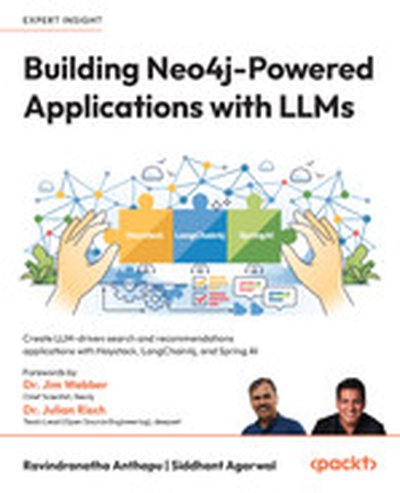
Dive into building applications that combine the power of Large Language Models (LLMs) with Neo4j knowledge graphs, Haystack, and Spring AI to deliver intelligent, data-driven recommendations and search outcomes. This book provides actionable insights and techniques to create scalable, robust solutions by leveraging the best-in-class frameworks and a real-world project-oriented approach. What this Book will help me do Understand how to use Neo4j to build knowledge graphs integrated with LLMs for enhanced data insights. Develop skills in creating intelligent search functionalities by combining Haystack and vector-based graph techniques. Learn to design and implement recommendation systems using LangChain4j and Spring AI frameworks. Acquire the ability to optimize graph data architectures for LLM-driven applications. Gain proficiency in deploying and managing applications on platforms like Google Cloud for scalability. Author(s) Ravindranatha Anthapu, a Principal Consultant at Neo4j, and Siddhant Agarwal, a Google Developer Expert in Generative AI, bring together their vast experience to offer practical implementations and cutting-edge techniques in this book. Their combined expertise in Neo4j, graph technology, and real-world AI applications makes them authoritative voices in the field. Who is it for? Designed for database developers and data scientists, this book caters to professionals aiming to leverage the transformational capabilities of knowledge graphs alongside LLMs. Readers should have a working knowledge of Python and Java as well as familiarity with Neo4j and the Cypher query language. If you're looking to enhance search or recommendation functionalities through state-of-the-art AI integrations, this book is for you.
Supported by Our Partners • Statsig — The unified platform for flags, analytics, experiments, and more. • Graphite — The AI developer productivity platform. • Augment Code — AI coding assistant that pro engineering teams love — GitHub recently turned 17 years old—but how did it start, how has it evolved, and what does the future look like as AI reshapes developer workflows? In this episode of The Pragmatic Engineer, I’m joined by Thomas Dohmke, CEO of GitHub. Thomas has been a GitHub user for 16 years and an employee for 7. We talk about GitHub’s early architecture, its remote-first operating model, and how the company is navigating AI—from Copilot to agents. We also discuss why GitHub hires junior engineers, how the company handled product-market fit early on, and why being a beloved tool can make shipping harder at times. Other topics we discuss include: • How GitHub’s architecture evolved beyond its original Rails monolith • How GitHub runs as a remote-first company—and why they rarely use email • GitHub’s rigorous approach to security • Why GitHub hires junior engineers • GitHub’s acquisition by Microsoft • The launch of Copilot and how it’s reshaping software development • Why GitHub sees AI agents as tools, not a replacement for engineers • And much more! — Timestamps (00:00) Intro (02:25) GitHub’s modern tech stack (08:11) From cloud-first to hybrid: How GitHub handles infrastructure (13:08) How GitHub’s remote-first culture shapes its operations (18:00) Former and current internal tools including Haystack (21:12) GitHub’s approach to security (24:30) The current size of GitHub, including security and engineering teams (25:03) GitHub’s intern program, and why they are hiring junior engineers (28:27) Why AI isn’t a replacement for junior engineers (34:40) A mini-history of GitHub (39:10) Why GitHub hit product market fit so quickly (43:44) The invention of pull requests (44:50) How GitHub enables offline work (46:21) How monetization has changed at GitHub since the acquisition (48:00) 2014 desktop application releases (52:10) The Microsoft acquisition (1:01:57) Behind the scenes of GitHub’s quiet period (1:06:42) The release of Copilot and its impact (1:14:14) Why GitHub decided to open-source Copilot extensions (1:20:01) AI agents and the myth of disappearing engineering jobs (1:26:36) Closing — The Pragmatic Engineer deepdives relevant for this episode: • AI Engineering in the real world • The AI Engineering stack • How Linux is built with Greg Kroah-Hartman • Stacked Diffs (and why you should know about them) • 50 Years of Microsoft and developer tools — See the transcript and other references from the episode at https://newsletter.pragmaticengineer.com/podcast — Production and marketing by https://penname.co/. For inquiries about sponsoring the podcast, email [email protected].
Get full access to The Pragmatic Engineer at newsletter.pragmaticengineer.com/subscribe
Introducing Raden, the world’s first AI Data Engineer brought to you by Revefi and powered by MIP.
Today’s cloud data platforms are complex, costly, and often chaotic. Broken pipelines, hidden inefficiencies, and manual firefighting dominate most data teams’ time. In this session, we’ll explore how Revefi’s metadata-first observability platform, powered by Raden, transforms how enterprises detect, resolve, and prevent data issues with zero disruption and instant value. From automatically creating over 665,000+ data monitors, to cutting warehouse costs by 50% in just four weeks, Raden helps teams regain trust, control, and ROI fast.
The Snowflake AI Data Cloud provides engineers and data scientists with a platform that makes development fun by being able to focus on the code and not the infrastructure. But how? Join this keynote to take a deep dive into technical demos of Snowflake Cortex, Streamlit, Snowflake Native Apps and other AI features. During the keynote, you will hear from technical experts, including Snowflake customers, that will share best practices to help you design and implement your own AI apps and services.
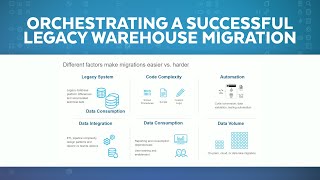
Migrating a legacy data warehouse to Snowflake should be a predictable task. However, after participating in numerous projects, common failure patterns have emerged. In this session, we’ll explore typical pitfalls when moving to the Snowflake AI Data Cloud and offer recommendations for avoiding them. We’ll cover mistakes at every stage of the process, from technical details to end-user involvement and everything in between — code conversion (using SnowConvert!), data migration, deployment, optimization, testing and project management.

Hear from Snowflake CEO, Sridhar Ramaswamy, as he discusses the impact AI has had across every organization and how the Snowflake AI Data Cloud is helping to accelerate enterprise AI. Then, in a CEO fireside conversation, Sridhar together with NVIDIA Founder and CEO, Jensen Huang, will discuss what the future holds in this new AI era. Finally, Snowflake CMO, Denise Persson, will be joined by industry leaders to discuss their organizations' data initiatives and the successes and challenges of driving impact with data and AI.

Industry-leading companies leverage the Snowflake AI Data Cloud to transform their businesses through AI innovation. Join Snowflake CEO Sridhar Ramaswamy, Co-Founder and President of Product Benoit Dageville, and EVP of Product Christian Kleinerman as they unveil the latest innovations in Snowflake’s unified platform that make it easy to break down silos, develop and distribute modern apps, and securely empower everyone with AI. You’ll see live demos from Snowflake’s engineering and product teams, and hear from some of the best-known global organizations on how they are shaping industries with the Snowflake AI Data Cloud.
Join us for a networking reception on the Exhibit Showcase where you can engage with your peers, Gartner experts, and exhibitors while enjoying delicious food and beverages. Evaluate industry offerings that can move your business forward. Alcoholic and non-alcoholic drinks will be served along with snacks and canapes during the reception. Please click here to see the full menu.
If you have provided any specific dietary requirements during registration, please visit the dietary table and speak to the venue staff should you have any questions. Responsible Host: Gartner manages functions and events with a view to the responsible consumption of alcohol and the avoidance of alcohol-related harm. Gartner has and always will remain mindful of ensuring the wellbeing of attendees.