talk-data.com talk-data.com

Topic

Cloud Computing

infrastructure saas iaas

96

tagged

Activity Trend

471 peak/qtr
2020-Q1 2026-Q1

Activities

Showing filtered results

Filtering by: O'Reilly Data Science Books ×
Microsoft Power BI Quick Start Guide - Fourth Edition

Bring your data to life with the ultimate beginner's guide to Power BI, now featuring Microsoft Fabric, Copilot, and full-color visuals to make learning data modeling, storytelling, and dashboards easier and faster than ever Key Features Build data literacy and gain confidence using Power BI through real-world, beginner-friendly examples Learn to shape, clean, and model data using Power BI Desktop and Power Query, with zero experience required Build vibrant, accurate reports and dashboards with real-world modeling examples Book Description Updated with the latest innovations in Power BI, including integration with Microsoft Fabric for seamless data unification and Copilot for AI-powered guidance. This comprehensive guide empowers you to build compelling reports and dashboards from the ground up. Whether you're new to Power BI or stepping into a data role, this book provides a friendly, approachable introduction to business intelligence and data storytelling You'll start with the Power BI Desktop interface and its core functionality, then move into shaping and cleaning your data using the Power Query Editor. From designing intuitive data models to writing your first DAX formulas, you’ll develop practical skills that apply directly to real-world scenarios. he book emphasizes how to use visualizations and narrative techniques to turn numbers into meaningful insights The chapters focus on hands-on, real-world examples—like analyzing sales trends, tracking KPIs, and cleaning messy data. You'll learn to build and refresh reports, scale your Power BI setup, and enhance your solutions using Microsoft Fabric and Copilot. Fabric unifies analytics across your organization, while Copilot speeds up your workflow with AI-driven insights and report suggestions By the end of the book, you’ll have the confidence and experience to turn raw data into insightful, impactful dashboards What you will learn Understand why data literacy matters in decision-making and careers Connect to data using import, DirectQuery, and live connection modes Clean and transform data using Power Query Editor and dataflows Design reports with visuals that support clear data storytelling Apply row-level security to enforce access and data protection Manage and monitor Power BI cloud for scalability and teamwork Use AI tools like Copilot to speed up prep and generate insights Learn Microsoft Fabric basics to enable unified data experiences Who this book is for This book is ideal for anyone looking to build a solid foundation in Power BI, regardless of prior experience. Whether you're just starting out or stepping into a new role that involves data, you'll find clear, approachable guidance throughout. The step-by-step tutorials and real-world examples make it easy to follow along—even if it’s your first time working with business intelligence tools
Bioinformatics with Python Cookbook - Fourth Edition

Bioinformatics with Python Cookbook provides a practical, hands-on approach to solving computational biology challenges with Python, enabling readers to analyze sequencing data, leverage AI for bioinformatics applications, and design robust computational pipelines. What this Book will help me do Perform comprehensive sequence analysis using Python libraries for refined data interpretation. Configure and run bioinformatics workflows on cloud environments for scalable solutions. Apply advanced data science practices to analyze and visualize bioinformatics data. Explore the integration of AI tools in processing multimodal biological datasets. Understand and utilize bioinformatics databases for research and development. Author(s) Shane Brubaker is an experienced computational biologist and software developer with a strong background in bioinformatics and Python programming. With years of experience in data analysis and software engineering, Shane has authored numerous solutions for real-world bioinformatics issues. He brings a practical, example-driven teaching approach, aimed at empowering readers to apply techniques effectively in their work. Who is it for? This book is suitable for bioinformatics professionals, data scientists, and software engineers with moderate experience seeking to expand their computational biology knowledge. Readers should have basic understanding of biology, programming, and cloud tools. By engaging with this book, learners can advance their skills in Python and bioinformatics to address complex biological data challenges effectively.

Workflow Automation with Microsoft Power Automate - Third Edition

This book serves as a comprehensive guide to mastering Microsoft Power Automate, offering step-by-step instructions for creating and managing low-code workflows. From beginner to advanced techniques, it covers cloud and RPA functionalities, enhanced by AI features like Co-pilot. You'll gain the skills to build, analyze, and optimize powerful automations tailored to your organization's needs. What this Book will help me do Understand and implement workflows using Power Automate's connectors and triggers for seamless integration. Utilize AI Builder and the Co-pilot feature to design intelligent workflows with generative AI capabilities. Master robotic process automation to bridge digital and legacy systems effectively. Learn to monitor and troubleshoot workflows while ensuring security and compliance in automation. Scale and govern enterprise-level workflows with best practices for maintainability. Author(s) Aaron Guilmette is a seasoned expert in the field of workflow automation with extensive experience in the Microsoft ecosystem. As the author of multiple books on Power Automate, Aaron combines technical depth with practical know-how. He brings a hands-on approach to guiding readers through advanced features, making automation accessible and effective. Who is it for? This book is ideal for power users, information workers, and citizen developers looking to integrate automation into their work. Whether you're new to automation or expanding your skills, this book provides actionable insights. Familiarity with the Microsoft 365 platform is recommended but not required, as the book covers foundational as well as advanced topics. It is perfect for anyone aiming to streamline workflows and drive efficiency in their projects or organization.

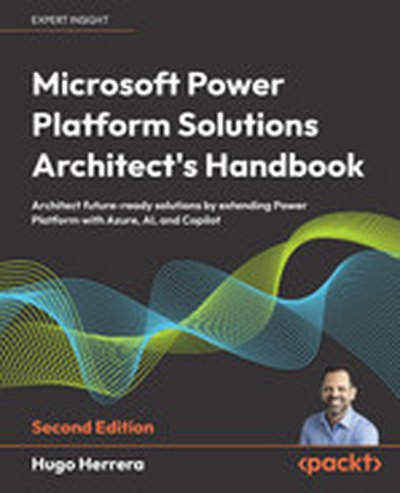
Microsoft Power Platform Solutions Architect's Handbook - Second Edition

Dive into 'Microsoft Power Platform Solution Architect's Handbook' to master the art of designing and delivering enterprise-grade solutions using Microsoft's cutting-edge Power Platform. Through a mix of practical examples and hands-on tutorials, this book equips you to harness tools like AI, Copilot, and DevOps for building innovative, scalable applications tailored to enterprise needs. What this Book will help me do Acquire the knowledge to effectively utilize AI tools such as Power Platform Copilot and ChatGPT to enhance application intelligence. Understand and apply enterprise-grade solution architecture principles for scalable and secure application development. Gain expertise in integrating heterogenous systems with Power Platform Pipes and third-party APIs. Develop proficiency in creating and maintaining reusable Dataverse data models. Learn to establish and manage a Center of Excellence to govern and scale Power Platform solutions. Author(s) Hugo Herrera is an experienced solution architect specializing in the Microsoft Power Platform with a deep focus on integrating AI and cloud-native strategies. With years of hands-on experience in enterprise software development and architectural design, Hugo brings real-world insights into his writing, emphasizing practical application of advanced concepts. His approach is clear, structured, and aimed at empowering readers to excel. Who is it for? This book is tailored for IT professionals like solution architects, enterprise architects, and technical consultants who are looking to elevate their capabilities in Power Platform development. It is also suitable for individuals with an intermediate understanding of Power Platform seeking to spearhead enterprise-level digital transformation projects. Ideal readers are those ready to deepen their integration, data modeling, and AI usage skills within the Microsoft ecosystem, particularly for enterprise applications.

Getting Started with Taipy

Share your machine learning models, create chatbots, as well as build and deploy insightful dashboards speedily using Taipy with this hands-on book featuring real-world application examples from multiple industries Free with your book: DRM-free PDF version + access to Packt's next-gen Reader Key Features Create visually compelling, interactive data applications with Taipy Bring predictive models to end users and create data pipelines to compare scenarios with what-if analyses Go beyond prototypes to build and deploy production-ready applications using the cloud provider of your choice Purchase of the print or Kindle book includes a free PDF eBook in full color Book Description While data analysts, data scientists, and BI experts have the tools to analyze data, build models, and create compelling visuals, they often struggle to translate these insights into practical, user-friendly applications that help end users answer real-world questions, such as identifying revenue trends, predicting inventory needs, or detecting fraud, without wading through complex code. This book is a comprehensive guide to overcoming this challenge. This book teaches you how to use Taipy, a powerful open-source Python library, to build intuitive, production-ready data apps quickly and efficiently. Instead of creating prototypes that nobody uses, you'll learn how to build faster applications that process large amounts of data for multiple users and deliver measurable business impact. Taipy does the heavy lifting to enable your users to visualize their KPIs, interact with charts and maps, and compare scenarios for better decision-making. You’ll learn to use Taipy to build apps that make your data accessible and actionable in production environments like the cloud or Docker. By the end of this book, you won’t just understand Taipy, you'll be able to transform your data skills into impactful solutions that address real-world needs and deliver valuable insights. Email sign-up and proof of purchase required What you will learn Explore Taipy, its use cases, and how it's different from other projects Discover how to create visually appealing interactive apps, display KPIs, charts, and maps Understand how to compare scenarios to make better decisions Connect Taipy applications to several data sources and services Develop apps for diverse use cases, including chatbots, dashboards, ML apps, and maps Deploy Taipy applications on different types of servers and services Master advanced concepts for simplifying and accelerating your development workflow Who this book is for If you’re a data analyst, data scientist, or BI analyst looking to build production-ready data apps entirely in Python, this book is for you. If your scripts and models sit idle because non-technical stakeholders can’t use them, this book shows you how to turn them into full applications fast with Taipy, so your work delivers real business value. It’s also valuable for developers and engineers who want to streamline their data workflows and build UIs in pure Python.

Hands-On APIs for AI and Data Science

Are you ready to grow your skills in AI and data science? A great place to start is learning to build and use APIs in real-world data and AI projects. API skills have become essential for AI and data science success, because they are used in a variety of ways in these fields. With this practical book, data scientists and software developers will gain hands-on experience developing and using APIs with the Python programming language and popular frameworks like FastAPI and StreamLit. As you complete the chapters in the book, you'll be creating portfolio projects that teach you how to: Design APIs that data scientists and AIs love Develop APIs using Python and FastAPI Deploy APIs using multiple cloud providers Create data science projects such as visualizations and models using APIs as a data source Access APIs using generative AI and LLMs

Essential Data Analytics, Data Science, and AI: A Practical Guide for a Data-Driven World

In today’s world, understanding data analytics, data science, and artificial intelligence is not just an advantage but a necessity. This book is your thorough guide to learning these innovative fields, designed to make the learning practical and engaging. The book starts by introducing data analytics, data science, and artificial intelligence. It illustrates real-world applications, and, it addresses the ethical considerations tied to AI. It also explores ways to gain data for practice and real-world scenarios, including the concept of synthetic data. Next, it uncovers Extract, Transform, Load (ETL) processes and explains how to implement them using Python. Further, it covers artificial intelligence and the pivotal role played by machine learning models. It explains feature engineering, the distinction between algorithms and models, and how to harness their power to make predictions. Moving forward, it discusses how to assess machine learning models after their creation, with insights into various evaluation techniques. It emphasizes the crucial aspects of model deployment, including the pros and cons of on-device versus cloud-based solutions. It concludes with real-world examples and encourages embracing AI while dispelling fears, and fostering an appreciation for the transformative potential of these technologies. Whether you’re a beginner or an experienced professional, this book offers valuable insights that will expand your horizons in the world of data and AI. What you will learn: What are Synthetic data and Telemetry data How to analyze data using programming languages like Python and Tableau. What is feature engineering What are the practical Implications of Artificial Intelligence Who this book is for: Data analysts, scientists, and engineers seeking to enhance their skills, explore advanced concepts, and stay up-to-date with ethics. Business leaders and decision-makers across industries are interested in understanding the transformative potential and ethical implications of data analytics and AI in their organizations.

Hands-On Prescriptive Analytics

Business decisions in any context—operational, tactical, or strategic—can have considerable consequences. Whether the outcome is positive and rewarding or negative and damaging to the business, its employees, and stakeholders is unknown when action is approved. These decisions are usually made under the proverbial cloud of uncertainty. With this practical guide, data analysts, data scientists, and business analysts will learn why and how maximizing positive consequences and minimizing negative ones requires three forms of rich information: Descriptive analytics explores the results from an action—what has already happened. Predictive analytics focuses on what could happen. The third, prescriptive analytics, informs us what should happen in the future. While all three are important for decision-makers, the primary focus of this book is on the third: prescriptive analytics. Author Walter R. Paczkowski, Ph.D. shows you: The distinction among descriptive, predictive, and prescriptive analytics How predictive analytics produces a menu of action options How prescriptive analytics narrows the menu of action options The forms of prescriptive analytics: eight prescriptive methods Two broad classes of these methods: non-stochastic and stochastic How to develop prescriptive analyses for action recommendations Ways to use an appropriate tool-set in Python

Computational Intelligence in Sustainable Computing and Optimization

Computational Intelligence in Sustainable Computing and Optimization: Trends and Applications focuses on developing and evolving advanced computational intelligence algorithms for the analysis of data involved in applications, such as agriculture, biomedical systems, bioinformatics, business intelligence, economics, disaster management, e-learning, education management, financial management, and environmental policies. The book presents research in sustainable computing and optimization, combining methods from engineering, mathematics, artificial intelligence, and computer science to optimize environmental resources Computational intelligence in the field of sustainable computing combines computer science and engineering in applications ranging from Internet of Things (IoT), information security systems, smart storage, cloud computing, intelligent transport management, cognitive and bio-inspired computing, and management science. In addition, data intelligence techniques play a critical role in sustainable computing. Recent advances in data management, data modeling, data analysis, and artificial intelligence are finding applications in energy networks and thus making our environment more sustainable. Presents computational, intelligence–based data analysis for sustainable computing applications such as pattern recognition, biomedical imaging, sustainable cities, sustainable transport, sustainable agriculture, and sustainable financial management Develops research in sustainable computing and optimization, combining methods from engineering, mathematics, and computer science to optimize environmental resources Includes three foundational chapters dedicated to providing an overview of computational intelligence and optimization techniques and their applications for sustainable computing

Polars Cookbook

Dive into the world of data analysis with the Polars Cookbook. This book, ideal for data professionals, covers practical recipes to manipulate, transform, and analyze data using the Python Polars library. You'll learn both the fundamentals and advanced techniques to build efficient and scalable data workflows. What this Book will help me do Master the basics of Python Polars including installation and setup. Perform complex data manipulation like pivoting, grouping, and joining. Handle large-scale time series data for accurate analysis. Understand data integration with libraries like pandas and numpy. Optimize workflows for both on-premise and cloud environments. Author(s) Yuki Kakegawa is an experienced data analytics consultant who has collaborated with companies such as Microsoft and Stanford Health Care. His passion for data led him to create this detailed guide on Polars. His expertise ensures you gain real-world, actionable insights from every chapter. Who is it for? This book is perfect for data analysts, engineers, and scientists eager to enhance their efficiency with Python Polars. If you are familiar with Python and tools like pandas but are new to Polars, this book will upskill you. Whether handling big data or optimizing code for performance, the Polars Cookbook has the guidance you need to succeed.

DuckDB in Action

Dive into DuckDB and start processing gigabytes of data with ease—all with no data warehouse. DuckDB is a cutting-edge SQL database that makes it incredibly easy to analyze big data sets right from your laptop. In DuckDB in Action you’ll learn everything you need to know to get the most out of this awesome tool, keep your data secure on prem, and save you hundreds on your cloud bill. From data ingestion to advanced data pipelines, you’ll learn everything you need to get the most out of DuckDB—all through hands-on examples. Open up DuckDB in Action and learn how to: Read and process data from CSV, JSON and Parquet sources both locally and remote Write analytical SQL queries, including aggregations, common table expressions, window functions, special types of joins, and pivot tables Use DuckDB from Python, both with SQL and its "Relational"-API, interacting with databases but also data frames Prepare, ingest and query large datasets Build cloud data pipelines Extend DuckDB with custom functionality Pragmatic and comprehensive, DuckDB in Action introduces the DuckDB database and shows you how to use it to solve common data workflow problems. You won’t need to read through pages of documentation—you’ll learn as you work. Get to grips with DuckDB's unique SQL dialect, learning to seamlessly load, prepare, and analyze data using SQL queries. Extend DuckDB with both Python and built-in tools such as MotherDuck, and gain practical insights into building robust and automated data pipelines. About the Technology DuckDB makes data analytics fast and fun! You don’t need to set up a Spark or run a cloud data warehouse just to process a few hundred gigabytes of data. DuckDB is easily embeddable in any data analytics application, runs on a laptop, and processes data from almost any source, including JSON, CSV, Parquet, SQLite and Postgres. About the Book DuckDB in Action guides you example-by-example from setup, through your first SQL query, to advanced topics like building data pipelines and embedding DuckDB as a local data store for a Streamlit web app. You’ll explore DuckDB’s handy SQL extensions, get to grips with aggregation, analysis, and data without persistence, and use Python to customize DuckDB. A hands-on project accompanies each new topic, so you can see DuckDB in action. What's Inside Prepare, ingest and query large datasets Build cloud data pipelines Extend DuckDB with custom functionality Fast-paced SQL recap: From simple queries to advanced analytics About the Reader For data pros comfortable with Python and CLI tools. About the Authors Mark Needham is a blogger and video creator at @‌LearnDataWithMark. Michael Hunger leads product innovation for the Neo4j graph database. Michael Simons is a Java Champion, author, and Engineer at Neo4j. Quotes I use DuckDB every day, and I still learned a lot about how DuckDB makes things that are hard in most databases easy! - Jordan Tigani, Founder, MotherDuck An excellent resource! Unlocks possibilities for storing, processing, analyzing, and summarizing data at the edge using DuckDB. - Pramod Sadalage, Director, Thoughtworks Clear and accessible. A comprehensive resource for harnessing the power of DuckDB for both novices and experienced professionals. - Qiusheng Wu, Associate Professor, University of Tennessee Excellent! The book all we ducklings have been waiting for! - Gunnar Morling, Decodable

Tableau Certified Data Analyst Certification Guide

The 'Tableau Certified Data Analyst Certification Guide' is your essential roadmap to mastering Tableau and excelling in the Tableau Data Analyst certification exam. From fundamentals to advanced techniques, you'll solidify your Tableau skills with clear explanations, practical exercises, and realistic mock exams. After reading, you'll be ready to take the next step in your data analytics career. What this Book will help me do Gain the ability to connect, clean, and transform data effectively using Tableau. Master Tableau's diverse calculation types for data analysis, ranging from basic to advanced. Develop skills to create visually impactful dashboards and data stories. Learn to publish and manage insights on Tableau Cloud for broader collaboration. Acquire the necessary competencies to confidently pass the Tableau Data Analyst certification exam. Author(s) Authors Harry Cooney and Daisy Jones bring a wealth of Tableau and data analytics experience. Harry is a certified Tableau expert with years of teaching and consulting, while Daisy applies her data analysis expertise across industries. Together, they combine practical insights and a supportive approach to guide you through Tableau mastery and certification. Who is it for? This book is ideal for aspiring and practicing data analysts eager to master Tableau. Beginners will appreciate the accessible approach to foundational concepts, while experienced users can deepen their expertise. If you're preparing for the Tableau Certified Data Analyst exam or looking to enhance your visual analytics capabilities, this book is for you.

Predictive Analytics for the Modern Enterprise

The surging predictive analytics market is expected to grow from $10.5 billion today to $28 billion by 2026. With the rise in automation across industries, the increase in data-driven decision-making, and the proliferation of IoT devices, predictive analytics has become an operational necessity in today's forward-thinking companies. If you're a data professional, you need to be aligned with your company's business activities more than ever before. This practical book provides the background, tools, and best practices necessary to help you design, implement, and operationalize predictive analytics on-premises or in the cloud. Explore ways that predictive analytics can provide direct input back to your business Understand mathematical tools commonly used in predictive analytics Learn the development frameworks used in predictive analytics applications Appreciate the role of predictive analytics in the machine learning process Examine industry implementations of predictive analytics Build, train, and retrain predictive models using Python and TensorFlow

Mastering Microsoft Fabric: SAASification of Analytics

Learn and explore the capabilities of Microsoft Fabric, the latest evolution in cloud analytics suites. This book will help you understand how users can leverage Microsoft Office equivalent experience for performing data management and advanced analytics activity. The book starts with an overview of the analytics evolution from on premises to cloud infrastructure as a service (IaaS), platform as a service (PaaS), and now software as a service (SaaS version) and provides an introduction to Microsoft Fabric. You will learn how to provision Microsoft Fabric in your tenant along with the key capabilities of SaaS analytics products and the advantage of using Fabric in the enterprise analytics platform. OneLake and Lakehouse for data engineering is discussed as well as OneLake for data science. Author Ghosh teaches you about data warehouse offerings inside Microsoft Fabric and the new data integration experience which brings Azure Data Factory and Power Query Editor of Power BI together in a single platform. Also demonstrated is Real-Time Analytics in Fabric, including capabilities such as Kusto query and database. You will understand how the new event stream feature integrates with OneLake and other computations. You also will know how to configure the real-time alert capability in a zero code manner and go through the Power BI experience in the Fabric workspace. Fabric pricing and its licensing is also covered. After reading this book, you will understand the capabilities of Microsoft Fabric and its Integration with current and upcoming Azure OpenAI capabilities. What You Will Learn Build OneLake for all data like OneDrive for Microsoft Office Leverage shortcuts for cross-cloud data virtualization in Azure and AWS Understand upcoming OpenAI integration Discover new event streaming and Kusto query inside Fabric real-time analytics Utilize seamless tooling for machine learning and data science Who This Book Is For Citizen users and experts in the data engineering and data science fields, along with chief AI officers

Hands-On Entity Resolution

Entity resolution is a key analytic technique that enables you to identify multiple data records that refer to the same real-world entity. With this hands-on guide, product managers, data analysts, and data scientists will learn how to add value to data by cleansing, analyzing, and resolving datasets using open source Python libraries and cloud APIs. Author Michael Shearer shows you how to scale up your data matching processes and improve the accuracy of your reconciliations. You'll be able to remove duplicate entries within a single source and join disparate data sources together when common keys aren't available. Using real-world data examples, this book helps you gain practical understanding to accelerate the delivery of real business value. With entity resolution, you'll build rich and comprehensive data assets that reveal relationships for marketing and risk management purposes, key to harnessing the full potential of ML and AI. This book covers: Challenges in deduplicating and joining datasets Extracting, cleansing, and preparing datasets for matching Text matching algorithms to identify equivalent entities Techniques for deduplicating and joining datasets at scale Matching datasets containing persons and organizations Evaluating data matches Optimizing and tuning data matching algorithms Entity resolution using cloud APIs Matching using privacy-enhancing technologies

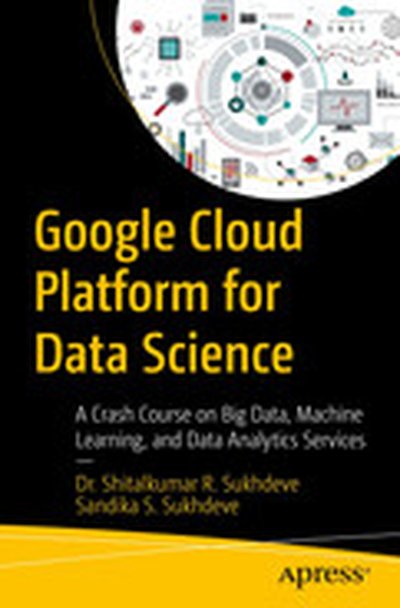
Google Cloud Platform for Data Science: A Crash Course on Big Data, Machine Learning, and Data Analytics Services

This book is your practical and comprehensive guide to learning Google Cloud Platform (GCP) for data science, using only the free tier services offered by the platform. Data science and machine learning are increasingly becoming critical to businesses of all sizes, and the cloud provides a powerful platform for these applications. GCP offers a range of data science services that can be used to store, process, and analyze large datasets, and train and deploy machine learning models. The book is organized into seven chapters covering various topics such as GCP account setup, Google Colaboratory, Big Data and Machine Learning, Data Visualization and Business Intelligence, Data Processing and Transformation, Data Analytics and Storage, and Advanced Topics. Each chapter provides step-by-step instructions and examples illustrating how to use GCP services for data science and big data projects. Readers will learn how to set up a Google Colaboratory account and run Jupyternotebooks, access GCP services and data from Colaboratory, use BigQuery for data analytics, and deploy machine learning models using Vertex AI. The book also covers how to visualize data using Looker Data Studio, run data processing pipelines using Google Cloud Dataflow and Dataprep, and store data using Google Cloud Storage and SQL. What You Will Learn Set up a GCP account and project Explore BigQuery and its use cases, including machine learning Understand Google Cloud AI Platform and its capabilities Use Vertex AI for training and deploying machine learning models Explore Google Cloud Dataproc and its use cases for big data processing Create and share data visualizations and reports with Looker Data Studio Explore Google Cloud Dataflow and its use cases for batch and stream data processing Run data processing pipelines on Cloud Dataflow Explore Google Cloud Storageand its use cases for data storage Get an introduction to Google Cloud SQL and its use cases for relational databases Get an introduction to Google Cloud Pub/Sub and its use cases for real-time data streaming Who This Book Is For Data scientists, machine learning engineers, and analysts who want to learn how to use Google Cloud Platform (GCP) for their data science and big data projects

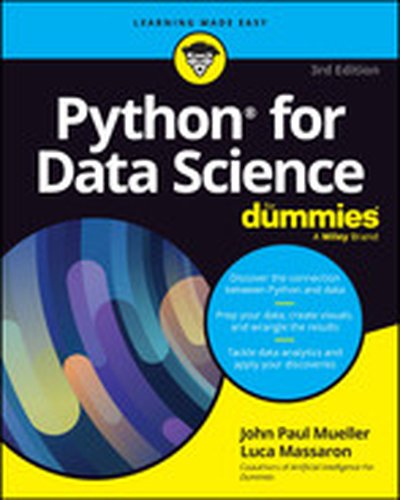
Python for Data Science For Dummies, 3rd Edition

Let Python do the heavy lifting for you as you analyze large datasets Python for Data Science For Dummies lets you get your hands dirty with data using one of the top programming languages. This beginner’s guide takes you step by step through getting started, performing data analysis, understanding datasets and example code, working with Google Colab, sampling data, and beyond. Coding your data analysis tasks will make your life easier, make you more in-demand as an employee, and open the door to valuable knowledge and insights. This new edition is updated for the latest version of Python and includes current, relevant data examples. Get a firm background in the basics of Python coding for data analysis Learn about data science careers you can pursue with Python coding skills Integrate data analysis with multimedia and graphics Manage and organize data with cloud-based relational databases Python careers are on the rise. Grab this user-friendly Dummies guide and gain the programming skills you need to become a data pro.

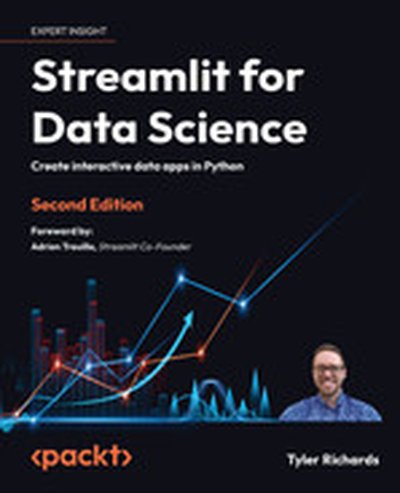
Streamlit for Data Science - Second Edition

Streamlit for Data Science is your complete guide to mastering the creation of powerful, interactive data-driven applications using Python and Streamlit. With this comprehensive resource, you'll learn everything from foundational Streamlit skills to advanced techniques like integrating machine learning models and deploying apps to cloud platforms, enabling you to significantly enhance your data science toolkit. What this Book will help me do Master building interactive applications using Streamlit, including techniques for user interfaces and integrations. Develop visually appealing and functional data visualizations using Python libraries in Streamlit. Learn to integrate Streamlit applications with machine learning frameworks and tools like Hugging Face and OpenAI. Understand and apply best practices to deploy Streamlit apps to cloud platforms such as Streamlit Community Cloud and Heroku. Improve practical Python skills through implementing end-to-end data applications and prototyping data workflows. Author(s) Tyler Richards, the author of Streamlit for Data Science, is a senior data scientist with in-depth practical experience in building data-driven applications. With a passion for Python and data visualization, Tyler leverages his knowledge to help data professionals craft effective and compelling tools. His teaching approach combines clarity, hands-on exercises, and practical relevance. Who is it for? This book is written for data scientists, engineers, and enthusiasts who use Python and want to create dynamic data-driven applications. With a focus on those who have some familiarity with Python and libraries like Pandas or NumPy, it assists readers in building on their knowledge by offering tailored guidance. Perfect for those looking to prototype data projects or enhance their programming toolkit.

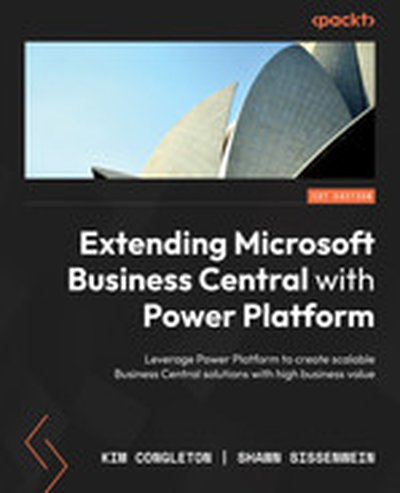
Extending Microsoft Business Central with Power Platform

Unlock the full potential of Microsoft Business Central by integrating it with the Power Platform through this practical and hands-on guide. With step-by-step tutorials, you'll learn how to combine the capabilities of tools like Power Apps, Power Automate, and Dataverse to build scalable and efficient business solutions. By the end of the book, you'll be equipped to streamline business processes and add significant value. What this Book will help me do Effectively deploy Power Platform functionalities for Microsoft Business Central projects. Seamlessly connect Business Central with cloud and on-premises services. Leverage Dataverse and virtual tables to enhance data modeling and accessibility. Build custom applications using Power Apps and automate workflows with Power Automate. Generate advanced visual reports with Power BI directly integrated with Business Central. Author(s) Kim Congleton and Shawn Sissenwein are industry professionals with extensive experience in ERP systems and Microsoft technologies. With a deep knowledge of Business Central and the Power Platform, they bring practical insights into maximizing business value through technological advancements. Their teaching approach focuses on hands-on learning, real-world application, and empowering readers with actionable skills. Who is it for? This book is ideal for Business Central users, consultants, and solution architects aiming to enhance Business Central's capabilities through the Power Platform. If you're familiar with Business Central's basics and seek to optimize and extend its functionality without requiring extensive programming knowledge, then this guide is tailored for you.

Scaling Python with Dask

Modern systems contain multi-core CPUs and GPUs that have the potential for parallel computing. But many scientific Python tools were not designed to leverage this parallelism. With this short but thorough resource, data scientists and Python programmers will learn how the Dask open source library for parallel computing provides APIs that make it easy to parallelize PyData libraries including NumPy, pandas, and scikit-learn. Authors Holden Karau and Mika Kimmins show you how to use Dask computations in local systems and then scale to the cloud for heavier workloads. This practical book explains why Dask is popular among industry experts and academics and is used by organizations that include Walmart, Capital One, Harvard Medical School, and NASA. With this book, you'll learn: What Dask is, where you can use it, and how it compares with other tools How to use Dask for batch data parallel processing Key distributed system concepts for working with Dask Methods for using Dask with higher-level APIs and building blocks How to work with integrated libraries such as scikit-learn, pandas, and PyTorch How to use Dask with GPUs