talk-data.com talk-data.com

Topic

data-science-tasks

849

tagged

Activity Trend

1 peak/qtr
2020-Q1 2026-Q1

Activities

849 activities · Newest first

Advances in Longitudinal Survey Methodology

Advances in Longitudinal Survey Methodology Explore an up-to-date overview of best practices in the implementation of longitudinal surveys from leading experts in the field of survey methodology Advances in Longitudinal Survey Methodology delivers a thorough review of the most current knowledge in the implementation of longitudinal surveys. The book provides a comprehensive overview of the many advances that have been made in the field of longitudinal survey methodology over the past fifteen years, as well as extending the topic coverage of the earlier volume, “Methodology of Longitudinal Surveys”, published in 2009. This new edited volume covers subjects like dependent interviewing, interviewer effects, panel conditioning, rotation group bias, measurement of cognition, and weighting. New chapters discussing the recent shift to mixed-mode data collection and obtaining respondents’ consent to data linkage add to the book’s relevance to students and social scientists seeking to understand modern challenges facing data collectors today. Readers will also benefit from the inclusion of: A thorough introduction to refreshment sampling for longitudinal surveys, including consideration of principles, sampling frame, sample design, questionnaire design, and frequency An exploration of the collection of biomarker data in longitudinal surveys, including detailed measurements of ill health, biological pathways, and genetics in longitudinal studies An examination of innovations in participant engagement and tracking in longitudinal surveys, including current practices and new evidence on internet and social media for participant engagement. An invaluable source for post-graduate students, professors, and researchers in the field of survey methodology, Advances in Longitudinal Survey Methodology will also earn a place in the libraries of anyone who regularly works with or conducts longitudinal surveys and requires a one-stop reference for the latest developments and findings in the field.
Data Science for Supply Chain Forecasting

Using data science in order to solve a problem requires a scientific mindset more than coding skills. Data Science for Supply Chain Forecasting, Second Edition contends that a true scientific method which includes experimentation, observation, and constant questioning must be applied to supply chains to achieve excellence in demand forecasting. This second edition adds more than 45 percent extra content with four new chapters including an introduction to neural networks and the forecast value added framework. Part I focuses on statistical "traditional" models, Part II, on machine learning, and the all-new Part III discusses demand forecasting process management. The various chapters focus on both forecast models and new concepts such as metrics, underfitting, overfitting, outliers, feature optimization, and external demand drivers. The book is replete with do-it-yourself sections with implementations provided in Python (and Excel for the statistical models) to show the readers how to apply these models themselves. This hands-on book, covering the entire range of forecasting—from the basics all the way to leading-edge models—will benefit supply chain practitioners, forecasters, and analysts looking to go the extra mile with demand forecasting. Events around the book Link to a De Gruyter Online Event in which the author Nicolas Vandeput together with Stefan de Kok, supply chain innovator and CEO of Wahupa; Spyros Makridakis, professor at the University of Nicosia and director of the Institute For the Future (IFF); and Edouard Thieuleux, founder of AbcSupplyChain, discuss the general issues and challenges of demand forecasting and provide insights into best practices (process, models) and discussing how data science and machine learning impact those forecasts. The event will be moderated by Michael Gilliland, marketing manager for SAS forecasting software: https://youtu.be/1rXjXcabW2s

Tableau Prep Cookbook

Tableau Prep Cookbook is your practical guide to mastering Tableau Prep Builder for data preparation. Through real-world examples, you will learn techniques to clean, combine, and transform your data, enabling you to create robust pipelines for analytics and insights. Gain hands-on experience with concepts like data cleaning, advanced calculations, and preparing data for Business Intelligence tools. What this Book will help me do Master cleaning and combining data sources for analysis using Tableau Prep. Learn to create and deploy workflows for data preparation within your organization. Develop proficiency in building robust datasets for BI and analytics applications. Apply advanced techniques like scripting and custom calculations in Tableau Prep. Get hands-on experience by working through realistic, practical data scenarios. Author(s) None Kleine is an experienced data analytics professional with a passion for empowering organizations through robust data pipelines. Drawing from years of experience in BI tools and data preparation, None presents Tableau Prep Cookbook with a clear, actionable approach to learning. Their expertise ensures that readers gain practical skills to use Tableau Prep effectively. Who is it for? This book is perfect for data analysts, business intelligence professionals, and Tableau users looking to add Tableau Prep to their skills. If you're starting with beginner knowledge in data preparation or are looking to enhance your ability to manage data workflows, this book is designed for you. Gain the skills you need to prepare data effectively using Tableau Prep and elevate your analytics capabilities.

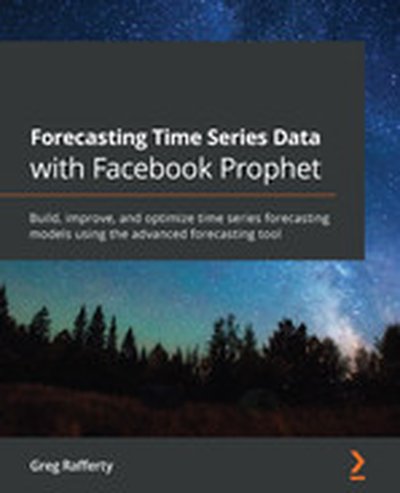
Forecasting Time Series Data with Facebook Prophet

Delve into the art of time series forecasting with the comprehensive power of Facebook Prophet. This tool enables users to develop precise forecasting models with simplicity and effectiveness. Through this book, you'll explore Prophet's core functionality and advanced configurations, equipping yourself with the knowledge to proficiently model and predict data trends. What this Book will help me do Build intuitive and effective forecasting models using Facebook Prophet. Understand the role and implementation of seasonality and holiday effects in time series data. Identify and address outliers and special data events effectively. Optimize forecasts using advanced techniques like hyperparameter tuning and additional regressors. Evaluate and deploy forecasting models in production settings for practical applications. Author(s) Greg Rafferty is a seasoned data science professional with extensive experience in time series forecasting. Having worked on diverse forecasting projects, Greg brings a unique perspective that integrates practicality and depth. His approachable writing style makes complex topics accessible and actionable. Who is it for? This book is tailored for data scientists, analysts, and developers seeking to enhance their forecasting capabilities using Python. If you have a grounding in Python and a basic understanding of forecasting principles, you will find this book a valuable resource to sharpen your expertise and achieve new forecasting precision.

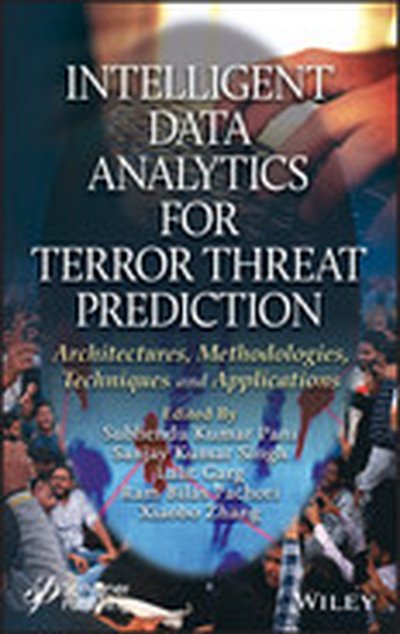
Intelligent Data Analytics for Terror Threat Prediction

Intelligent data analytics for terror threat prediction is an emerging field of research at the intersection of information science and computer science, bringing with it a new era of tremendous opportunities and challenges due to plenty of easily available criminal data for further analysis. This book provides innovative insights that will help obtain interventions to undertake emerging dynamic scenarios of criminal activities. Furthermore, it presents emerging issues, challenges and management strategies in public safety and crime control development across various domains. The book will play a vital role in improvising human life to a great extent. Researchers and practitioners working in the fields of data mining, machine learning and artificial intelligence will greatly benefit from this book, which will be a good addition to the state-of-the-art approaches collected for intelligent data analytics. It will also be very beneficial for those who are new to the field and need to quickly become acquainted with the best performing methods. With this book they will be able to compare different approaches and carry forward their research in the most important areas of this field, which has a direct impact on the betterment of human life by maintaining the security of our society. No other book is currently on the market which provides such a good collection of state-of-the-art methods for intelligent data analytics-based models for terror threat prediction, as intelligent data analytics is a newly emerging field and research in data mining and machine learning is still in the early stage of development.

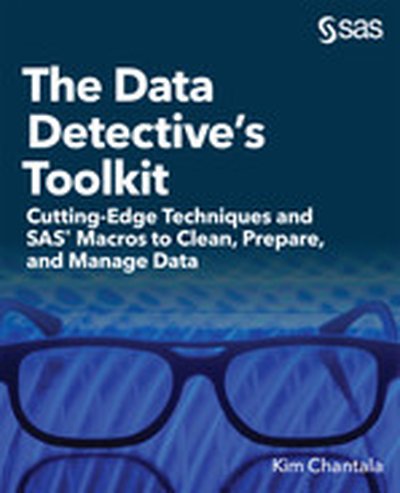
The Data Detective's Toolkit

Reduce the cost and time of cleaning, managing, and preparing research data while also improving data quality! Have you ever wished there was an easy way to reduce your workload and improve the quality of your data? The Data Detective’s Toolkit: Cutting-Edge Techniques and SAS Macros to Clean, Prepare, and Manage Data will help you automate many of the labor-intensive tasks needed to turn raw data into high-quality, analysis-ready data. You will find the right tools and techniques in this book to reduce the amount of time needed to clean, edit, validate, and document your data. These tools include SAS macros as well as ingenious ways of using SAS procedures and functions. The innovative logic built into the book’s macro programs enables you to monitor the quality of your data using information from the formats and labels created for the variables in your data set. The book explains how to harmonize data sets that need to be combined and automate data cleaning tasks to detect errors in data including out-of-range values, inconsistent flow through skip paths, missing data, no variation in values for a variable, and duplicates. By the end of this book, you will be able to automatically produce codebooks, crosswalks, and data catalogs.

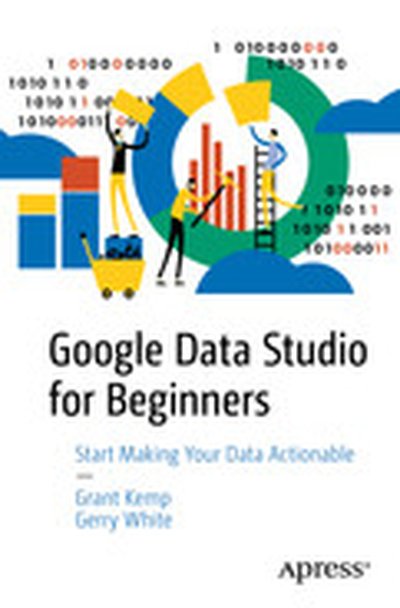
Google Data Studio for Beginners: Start Making Your Data Actionable

Google Data Studio is becoming a go-to tool in the analytics community. All business roles across the industry benefit from foundational knowledge of this now-essential technology, and Google Data Studio for Beginners is here to provide it. Release your locked-up data and turn it into beautiful, actionable, and shareable reports that can be consumed by experts and novices alike. Authors Grant Kemp and Gerry White begin by walking you through the basics, such how to create simple dashboards and interactive visualizations. As you progress through Google Data Studio for Beginners, you will build up the knowledge necessary to blend multiple data sources and create comprehensive marketing dashboards. Some intermediate features such as calculated fields, cleaning up data, and data blending to build powerhouse reports are featured as well. Presenting your data in client-ready, digestible forms is a key factor that many find to be a roadblock, and this book will help strengthen this essential skill in your organization. Centralizing the power from sources such as Google Analytics, online surveys, and a multitude of other popular data management tools puts you as a business leader and analyzer ahead of the rest. Your team as a whole will benefit from Google Data Studio for Beginners, because by using these tools, teams can collaboratively work on data to build their understanding and turn their data into action. Data Studio is quickly solidifying itself as the industry standard, and you don’t want to miss this essential guide for excelling in it. What You Will Learn Combine various data sources to create great looking and actionable visualizations Reuse and modify other dashboards that have been created by industry pros Use intermediate features such as calculated fields and data blending to build powerhouse reports Who This Book Is For Users looking to learn Google Analytics, SEO professionals, digital marketers, and other business professionals who want to mine their data into an actionable dashboard.

Information Theory Meets Power Laws

Discover new theoretical connections between stochastic phenomena and the structure of natural language with this powerful volume! Information Theory Meets Power Laws: Stochastic Processes and Language Models presents readers with a novel subtype of a probabilistic approach to language, which is based on statistical laws of texts and their analysis by means of information theory. The distinguished author insightfully and rigorously examines the linguistic and mathematical subject matter while eschewing needlessly abstract and superfluous constructions. The book begins with a less formal treatment of its subjects in the first chapter, introducing its concepts to readers without mathematical training and allowing those unfamiliar with linguistics to learn the book’s motivations. Despite its inherent complexity, Information Theory Meets Power Laws: Stochastic Processes and Language Models is a surprisingly approachable treatment of idealized mathematical models of human language. The author succeeds in developing some of the theory underlying fundamental stochastic and semantic phenomena, like strong nonergodicity, in a way that has not previously been seriously attempted. In doing so, he covers topics including: Zipf’s and Herdan’s laws for natural language Power laws for information, repetitions, and correlations Markov, finite-state,and Santa Fe processes Bayesian and frequentist interpretations of probability Ergodic decomposition, Kolmogorov complexity, and universal coding Theorems about facts and words Information measures for fields Rényi entropies, recurrence times, and subword complexity Asymptotically mean stationary processes Written primarily for mathematics graduate students and professionals interested in information theory or discrete stochastic processes, Information Theory Meets Power Laws: Stochastic Processes and Language Models also belongs on the bookshelves of doctoral students and researchers in artificial intelligence, computational and quantitative linguistics as well as physics of complex systems.

Applied Regression Modeling, 3rd Edition

Master the fundamentals of regression without learning calculus with this one-stop resource The newly and thoroughly revised 3rd Edition of Applied Regression Modeling delivers a concise but comprehensive treatment of the application of statistical regression analysis for those with little or no background in calculus. Accomplished instructor and author Dr. Iain Pardoe has reworked many of the more challenging topics, included learning outcomes and additional end-of-chapter exercises, and added coverage of several brand-new topics including multiple linear regression using matrices. The methods described in the text are clearly illustrated with multi-format datasets available on the book's supplementary website. In addition to a fulsome explanation of foundational regression techniques, the book introduces modeling extensions that illustrate advanced regression strategies, including model building, logistic regression, Poisson regression, discrete choice models, multilevel models, Bayesian modeling, and time series forecasting. Illustrations, graphs, and computer software output appear throughout the book to assist readers in understanding and retaining the more complex content. Applied Regression Modeling covers a wide variety of topics, like: Simple linear regression models, including the least squares criterion, how to evaluate model fit, and estimation/prediction Multiple linear regression, including testing regression parameters, checking model assumptions graphically, and testing model assumptions numerically Regression model building, including predictor and response variable transformations, qualitative predictors, and regression pitfalls Three fully described case studies, including one each on home prices, vehicle fuel efficiency, and pharmaceutical patches Perfect for students of any undergraduate statistics course in which regression analysis is a main focus, Applied Regression Modeling also belongs on the bookshelves of non-statistics graduate students, including MBAs, and for students of vocational, professional, and applied courses like data science and machine learning.

Statistical Topics and Stochastic Models for Dependent Data with Applications
  This book is a collective volume authored by leading scientists in the field of stochastic modelling, associated statistical topics and corresponding applications. The main classes of stochastic processes for dependent data investigated throughout this book are Markov, semi-Markov, autoregressive and piecewise deterministic Markov models. The material is divided into three parts corresponding to: (i) Markov and semi-Markov processes, (ii) autoregressive processes and (iii) techniques based on divergence measures and entropies. A special attention is payed to applications in reliability, survival analysis and related fields.
Essential Statistics for Non-STEM Data Analysts

Essential Statistics for Non-STEM Data Analysts is your comprehensive guide to mastering the statistical concepts needed for data science. By working through real-world datasets and Python-based examples, you'll learn how to interpret data and build insightful analyses. This book demystifies statistics, making it accessible to anyone aiming to become proficient in data analysis. What this Book will help me do Learn how to preprocess, clean, and prepare data for analysis using Python. Master the foundations of statistical methods such as hypothesis testing and probability theory. Develop skills to interpret and explain statistical results in the context of data science. Understand how statistical concepts apply to machine learning tasks like classification and regression. Build confidence in statistical principles to tackle interviews and enhance your career prospects. Author(s) None Li is an experienced data scientist and educator with a strong focus on making abstract statistical concepts intuitive and applicable. With a background in designing data science curriculums, None has a passion for teaching statistics to individuals from diverse and often non-mathematical backgrounds. Through clear explanations and practical examples, None aims to empower everyone to excel in data analysis and machine learning. Who is it for? This book caters specifically to data analysts, data science enthusiasts, and developers eager to enhance their statistical knowledge. It's crafted for readers transitioning into data science who may lack a strong mathematical or statistics background. If you have a basic grasp of Python programming and a keen interest in understanding how to work effectively with data, this book is a perfect fit. Beginners and students aiming to familiarize themselves with statistical foundations for data-oriented careers will greatly benefit from this resource.

Discrete Networked Dynamic Systems

Discrete Networked Dynamic Systems: Analysis and Performance provides a high-level treatment of a general class of linear discrete-time dynamic systems interconnected over an information network, exchanging relative state measurements or output measurements. It presents a systematic analysis of the material and provides an account to the math development in a unified way. The topics in this book are structured along four dimensions: Agent, Environment, Interaction, and Organization, while keeping global (system-centered) and local (agent-centered) viewpoints. The focus is on the wide-sense consensus problem in discrete networked dynamic systems. The authors rely heavily on algebraic graph theory and topology to derive their results. It is known that graphs play an important role in the analysis of interactions between multiagent/distributed systems. Graph-theoretic analysis provides insight into how topological interactions play a role in achieving coordination among agents. Numerous types of graphs exist in the literature, depending on the edge set of G. A simple graph has no self-loop or edges. Complete graphs are simple graphs with an edge connecting any pair of vertices. The vertex set in a bipartite graph can be partitioned into disjoint non-empty vertex sets, whereby there is an edge connecting every vertex in one set to every vertex in the other set. Random graphs have fixed vertex sets, but the edge set exhibits stochastic behavior modeled by probability functions. Much of the studies in coordination control are based on deterministic/fixed graphs, switching graphs, and random graphs. This book addresses advanced analytical tools for characterization control, estimation and design of networked dynamic systems over fixed, probabilistic and time-varying graphs Provides coherent results on adopting a set-theoretic framework for critically examining problems of the analysis, performance and design of discrete distributed systems over graphs Deals with both homogeneous and heterogeneous systems to guarantee the generality of design results

Stochastic Dynamics of Economic Cycles

This book includes discussions related to solutions of such tasks as: probabilistic description of the investment function; recovering the income function from GDP estimates; development of models for the economic cycles; selecting the time interval of pseudo-stationarity of cycles; estimating characteristics/parameters of cycle models; analysis of accuracy of model factors. All of the above constitute the general principles of a theory explaining the phenomenon of economic cycles and provide mathematical tools for their quantitative description. The introduced theory is applicable to macroeconomic analyses as well as econometric estimations of economic cycles.

Creating Good Data: A Guide to Dataset Structure and Data Representation

Create good data from the start, rather than fixing it after it is collected. By following the guidelines in this book, you will be able to conduct more effective analyses and produce timely presentations of research data. Data analysts are often presented with datasets for exploration and study that are poorly designed, leading to difficulties in interpretation and to delays in producing meaningful results. Much data analytics training focuses on how to clean and transform datasets before serious analyses can even be started. Inappropriate or confusing representations, unit of measurement choices, coding errors, missing values, outliers, etc., can be avoided by using good dataset design and by understanding how data types determine the kinds of analyses which can be performed. This book discusses the principles and best practices of dataset creation, and covers basic data types and their related appropriate statistics and visualizations. A key focus of the book is why certain data types are chosen for representing concepts and measurements, in contrast to the typical discussions of how to analyze a specific data type once it has been selected. What You Will Learn Be aware of the principles of creating and collecting data Know the basic data types and representations Select data types, anticipating analysis goals Understand dataset structures and practices for analyzing and sharing Be guided by examples and use cases (good and bad) Use cleaning tools and methods to create good data Who This Book Is For Researchers who design studies and collect data and subsequently conduct and report the results of their analyses can use the best practices in this book to produce better descriptions and interpretations of their work. In addition, data analysts who explore and explain data of other researchers will be able to create better datasets.

Tableau Prep: Up & Running

For self-service data preparation, Tableau Prep is relatively easy to use—as long as you know how to clean and organize your datasets. Carl Allchin, from The Information Lab in London, gets you up to speed on Tableau Prep through a series of practical lessons that include methods for preparing, cleaning, automating, organizing, and outputting your datasets. Based on Allchin’s popular blog, Preppin’ Data, this practical guide takes you step-by-step through Tableau Prep’s fundamentals. Self-service data preparation reduces the time it takes to complete data projects and improves the quality of your analyses. Discover how Tableau Prep helps you access your data and turn it into valuable information. Know what to look for when you prepare data Learn which Tableau Prep functions to use when working with data fields Analyze the shape and profile of your dataset Output data for analysis and learn how Tableau Prep automates your workflow Learn how to clean your dataset using Tableau Prep functions Explore ways to use Tableau Prep techniques in real-world scenarios Make your data available to others by managing and documenting the output

Statistical Thinking, 3rd Edition

Apply statistics in business to achieve performance improvement Statistical Thinking: Improving Business Performance, 3rd Edition helps managers understand the role of statistics in implementing business improvements. It guides professionals who are learning statistics in order to improve performance in business and industry. It also helps graduate and undergraduate students understand the strategic value of data and statistics in arriving at real business solutions. Instruction in the book is based on principles of effective learning, established by educational and behavioral research. The authors cover both practical examples and underlying theory, both the big picture and necessary details. Readers gain a conceptual understanding and the ability to perform actionable analyses. They are introduced to data skills to improve business processes, including collecting the appropriate data, identifying existing data limitations, and analyzing data graphically. The authors also provide an in-depth look at JMP software, including its purpose, capabilities, and techniques for use. Updates to this edition include: A new chapter on data, assessing data pedigree (quality), and acquisition tools Discussion of the relationship between statistical thinking and data science Explanation of the proper role and interpretation of p-values (understanding of the dangers of “p-hacking”) Differentiation between practical and statistical significance Introduction of the emerging discipline of statistical engineering Explanation of the proper role of subject matter theory in order to identify causal relationships A holistic framework for variation that includes outliers, in addition to systematic and random variation Revised chapters based on significant teaching experience Content enhancements based on student input This book helps readers understand the role of statistics in business before they embark on learning statistical techniques.

SPSS Statistics For Dummies, 4th Edition

The fun and friendly guide to mastering IBM’s Statistical Package for the Social Sciences Written by an author team with a combined 55 years of experience using SPSS, this updated guide takes the guesswork out of the subject and helps you get the most out of using the leader in predictive analysis. Covering the latest release and updates to SPSS 27.0, and including more than 150 pages of basic statistical theory, it helps you understand the mechanics behind the calculations, perform predictive analysis, produce informative graphs, and more. You’ll even dabble in programming as you expand SPSS functionality to suit your specific needs. Master the fundamental mechanics of SPSS Learn how to get data into and out of the program Graph and analyze your data more accurately and efficiently Program SPSS with Command Syntax Get ready to start handling data like a pro—with step-by-step instruction and expert advice!