talk-data.com talk-data.com

Topic

data-science

2252

tagged

Activity Trend

1 peak/qtr
2020-Q1 2026-Q1

Activities

2252 activities · Newest first

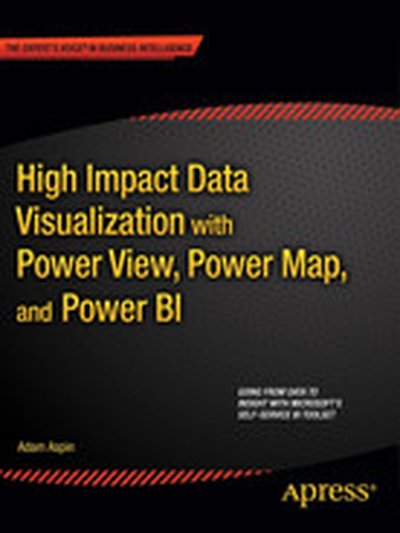
High Impact Data Visualization with Power View, Power Map, and Power BI

High Impact Data Visualization with Power View, Power Map, and Power BI helps you take business intelligence delivery to a new level that is interactive, engaging, even fun, all while driving commercial success through sound decision-making. Learn to harness the power of Microsoft’s flagship, self-service business intelligence suite to deliver compelling and interactive insight with remarkable ease. Learn the essential techniques needed to enhance the look and feel of reports and dashboards so that you can seize your audience’s attention and provide them with clear and accurate information. Also learn to integrate data from a variety of sources and create coherent data models displaying clear metrics and attributes. Power View is Microsoft's ground-breaking tool for ad-hoc data visualization and analysis. It's designed to produce elegant and visually arresting output. It's also built to enhance user experience through polished interactivity. Power Map is a similarly powerful mechanism for analyzing data across geographic and political units. Power Query lets you load, shape and streamline data from multiple sources. PowerPivot can extend and develop data into a dynamic model. Power BI allows you to share your findings with colleagues, and present your insights to clients. High Impact Data Visualization with Power View, Power Map, and Power BI helps you master this suite of powerful tools from Microsoft. You'll learn to identify data sources, and to save time by preparing your underlying data correctly. You'll also learn to deliver your powerful visualizations and analyses through the cloud to PCs, tablets and smartphones. Simple techniques take raw data and convert it into information. Slicing and dicing metrics delivers interactive insight. Visually arresting output grabs and focuses attention on key indicators.
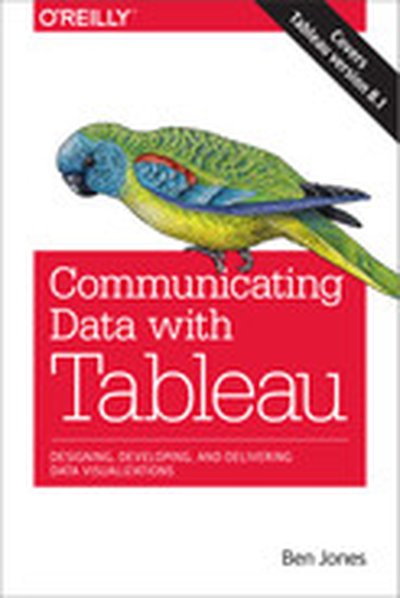
Communicating Data with Tableau

Go beyond spreadsheets and tables and design a data presentation that really makes an impact. This practical guide shows you how to use Tableau Software to convert raw data into compelling data visualizations that provide insight or allow viewers to explore the data for themselves. Ideal for analysts, engineers, marketers, journalists, and researchers, this book describes the principles of communicating data and takes you on an in-depth tour of common visualization methods. You’ll learn how to craft articulate and creative data visualizations with Tableau Desktop 8.1 and Tableau Public 8.1. Present comparisons of how much and how many Use blended data sources to create ratios and rates Create charts to depict proportions and percentages Visualize measures of mean, median, and mode Lean how to deal with variation and uncertainty Communicate multiple quantities in the same view Show how quantities and events change over time Use maps to communicate positional data Build dashboards to combine several visualizations

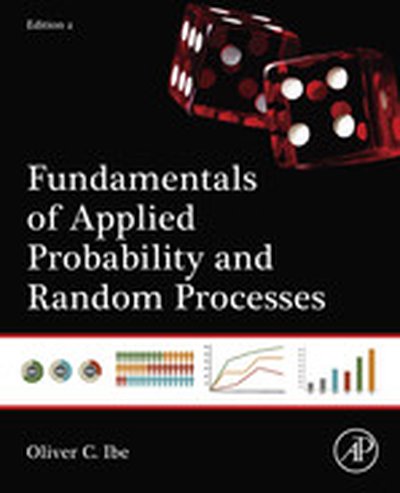
Fundamentals of Applied Probability and Random Processes, 2nd Edition

The long-awaited revision of Fundamentals of Applied Probability and Random Processes expands on the central components that made the first edition a classic. The title is based on the premise that engineers use probability as a modeling tool, and that probability can be applied to the solution of engineering problems. Engineers and students studying probability and random processes also need to analyze data, and thus need some knowledge of statistics. This book is designed to provide students with a thorough grounding in probability and stochastic processes, demonstrate their applicability to real-world problems, and introduce the basics of statistics. The book's clear writing style and homework problems make it ideal for the classroom or for self-study. Demonstrates concepts with more than 100 illustrations, including 2 dozen new drawings Expands readers’ understanding of disruptive statistics in a new chapter (chapter 8) Provides new chapter on Introduction to Random Processes with 14 new illustrations and tables explaining key concepts. Includes two chapters devoted to the two branches of statistics, namely descriptive statistics (chapter 8) and inferential (or inductive) statistics (chapter 9).

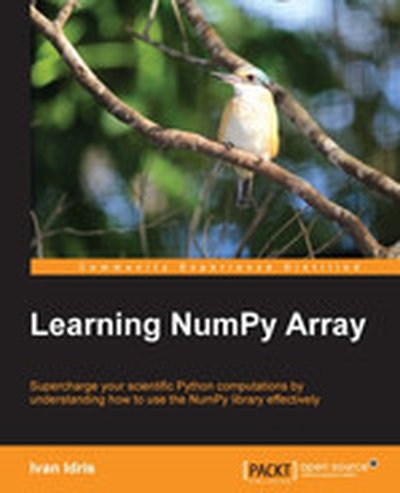
Learning NumPy Array

This book, 'Learning NumPy Array,' is the ultimate guide to mastering the fundamental library for numerical computing in Python: NumPy. Through concise explanations and practical examples, you will learn how to create and manipulate arrays, perform complex computations, and leverage NumPy's capabilities to streamline data analysis workflows. What this Book will help me do Install and set up NumPy in your Python environment for numerical computing. Create and manipulate multidimensional arrays to handle and process large data sets. Perform complex mathematical and statistical computations with NumPy's built-in methods. Explore time series analysis and signal processing techniques using NumPy. Optimize and improve the performance of Python code leveraging NumPy's efficient operations. Author(s) Ivan Idris is a seasoned programmer and data scientist with a great passion for Python and numerical computing. With years of experience working on data analysis projects, he has solidified his expertise in Python's scientific libraries, including NumPy. Ivan creates practical, reader-friendly guides that not only teach the technical how-to's but also inspire confidence in solving real-world problems. Who is it for? This book is ideal for Python programmers taking their first steps into the world of numerical computing or data analysis. Beginners looking to understand the basics of handling large numerical datasets in Python will find this resource highly enlightening. Developers and scientists wanting to streamline their calculations using efficient techniques will gain valuable insights. If working with Python in a data-driven environment interests you, this book is for you.

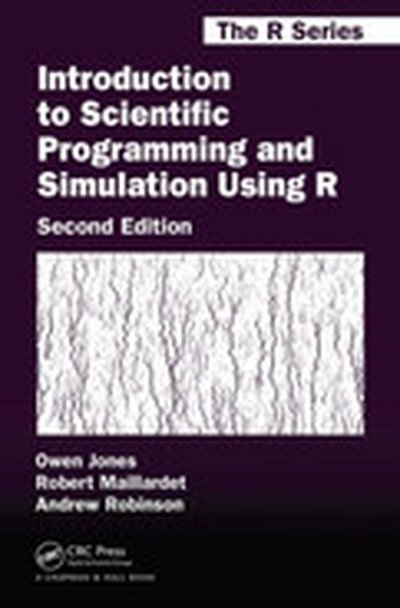
Introduction to Scientific Programming and Simulation Using R, Second Edition, 2nd Edition

Learn How to Program Stochastic Models Highly recommended, the best-selling first edition of Introduction to Scientific Programming and Simulation Using R was lauded as an excellent, easy-to-read introduction with extensive examples and exercises. This second edition continues to introduce scientific programming and stochastic modelling in a clear, practical, and thorough way. Readers learn programming by experimenting with the provided R code and data. The book’s four parts teach: Core knowledge of R and programming concepts How to think about mathematics from a numerical point of view, including the application of these concepts to root finding, numerical integration, and optimisation Essentials of probability, random variables, and expectation required to understand simulation Stochastic modelling and simulation, including random number generation and Monte Carlo integration In a new chapter on systems of ordinary differential equations (ODEs), the authors cover the Euler, midpoint, and fourth-order Runge-Kutta (RK4) schemes for solving systems of first-order ODEs. They compare the numerical efficiency of the different schemes experimentally and show how to improve the RK4 scheme by using an adaptive step size. Another new chapter focuses on both discrete- and continuous-time Markov chains. It describes transition and rate matrices, classification of states, limiting behaviour, Kolmogorov forward and backward equations, finite absorbing chains, and expected hitting times. It also presents methods for simulating discrete- and continuous-time chains as well as techniques for defining the state space, including lumping states and supplementary variables. Building readers’ statistical intuition, Introduction to Scientific Programming and Simulation Using R, Second Edition shows how to turn algorithms into code. It is designed for those who want to make tools, not just use them. The code and data are available for download from CRAN.

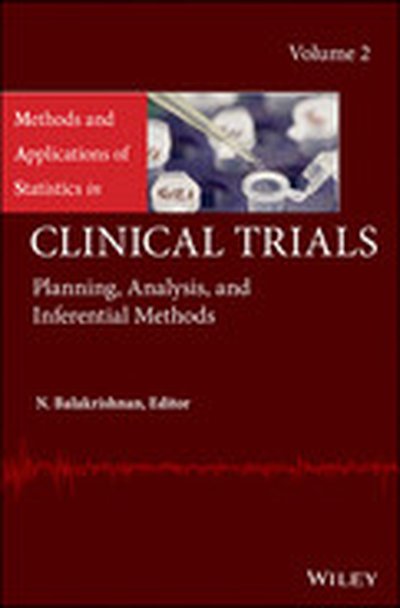
Methods and Applications of Statistics in Clinical Trials, Volume 2: Planning, Analysis, and Inferential Methods

Methods and Applications of Statistics in Clinical Trials, Volume 2: Planning, Analysis, and Inferential Methods includes updates of established literature from the Wiley Encyclopedia of Clinical Trials as well as original material based on the latest developments in clinical trials. Prepared by a leading expert, the second volume includes numerous contributions from current prominent experts in the field of medical research. In addition, the volume features: Multiple new articles exploring emerging topics, such as evaluation methods with threshold, empirical likelihood methods, nonparametric ROC analysis, over- and under-dispersed models, and multi-armed bandit problems Up-to-date research on the Cox proportional hazard model, frailty models, trial reports, intrarater reliability, conditional power, and the kappa index Key qualitative issues including cost-effectiveness analysis, publication bias, and regulatory issues, which are crucial to the planning and data management of clinical trials

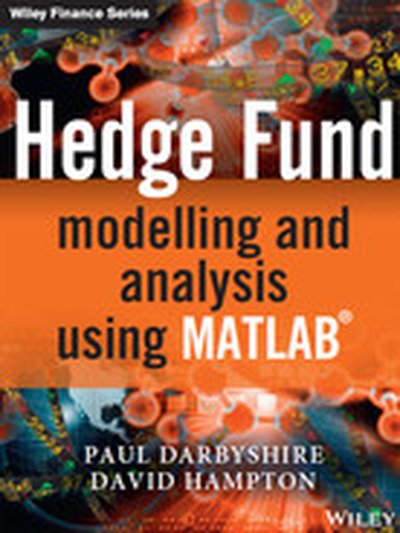
Hedge Fund Modelling and Analysis using MATLAB

The second book in Darbyshire and Hampton's Hedge Fund Modelling and Analysis series, Hedge Fund Modelling and Analysis Using MATLAB® takes advantage of the huge library of built-in functions and suite of financial and analytic packages available to MATLAB®. This allows for a more detailed analysis of some of the more computationally intensive and advanced topics, such as hedge fund classification, performance measurement and mean-variance optimisation. Darbyshire and Hampton's first book in the series, Hedge Fund Modelling and Analysis Using Excel & and VBA, is seen as a valuable supplementary text to this book. Starting with an overview of the hedge fund industry the book then looks at a variety of commercially available hedge fund data sources. After covering key statistical techniques and methods, the book discusses mean-variance optimisation, hedge fund classification and performance with an emphasis on risk-adjusted return metrics. Finally, common hedge fund market risk management techniques, such as traditional Value-at-Risk methods, modified extensions and expected shortfall are covered. The book's dedicated website, www.darbyshirehampton.com provides free downloads of all the data and MATLAB® source code, as well as other useful resources. Hedge Fund Modelling and Analysis Using MATLAB® serves as a definitive introductory guide to hedge fund modelling and analysis and will provide investors, industry practitioners and students alike with a useful range of tools and techniques for analysing and estimating alpha and beta sources of return, performing manager ranking and market risk management.

Introduction to Imprecise Probabilities

In recent years, the theory has become widely accepted and has been further developed, but a detailed introduction is needed in order to make the material available and accessible to a wide audience. This will be the first book providing such an introduction, covering core theory and recent developments which can be applied to many application areas. All authors of individual chapters are leading researchers on the specific topics, assuring high quality and up-to-date contents. An Introduction to Imprecise Probabilities provides a comprehensive introduction to imprecise probabilities, including theory and applications reflecting the current state if the art. Each chapter is written by experts on the respective topics, including: Sets of desirable gambles; Coherent lower (conditional) previsions; Special cases and links to literature; Decision making; Graphical models; Classification; Reliability and risk assessment; Statistical inference; Structural judgments; Aspects of implementation (including elicitation and computation); Models in finance; Game-theoretic probability; Stochastic processes (including Markov chains); Engineering applications. Essential reading for researchers in academia, research institutes and other organizations, as well as practitioners engaged in areas such as risk analysis and engineering.

SAS Macro Programming Made Easy, Third Edition, 3rd Edition

This book provides beginners with a thorough foundation in SAS macro programming.

The macro facility is a popular part of SAS. Macro programming is a required skill for many SAS programming jobs, and the SAS Advanced Programming Certification Exam tests macro processing concepts. Whether you're looking to become certified, land a job, or increase your skills, you'll benefit from SAS Macro Programming Made Easy, Third Edition.

By following Michele Burlew's examples and step-by-step instructions, you'll be able to rapidly perform repetitive programming tasks, to pass information between programming steps more easily, and to make your programming easier to read.

Updated for SAS 9.4, this book teaches you the elements of the macro facility (macro variables, macro programs, macro language), how to write a macro program, techniques for macro programming, tips on using the macro facility, how the macro facility fits into SAS, and about the interfaces between the macro facility and other components of SAS.

Beginning macro programmers will learn to write SAS macro programs quickly and efficiently. More experienced programmers will find this book useful to refresh their conceptual knowledge and expand on their macro programming skills. Ultimately, any user interested in automating their programs—including analysts, programmers, and report writers—will find Michele Burlew's book an excellent tutorial.

This book is part of the SAS Press program.

Nonlinear Parameter Optimization Using R Tools

Nonlinear Parameter Optimization Using R John C. Nash, Telfer School of Management, University of Ottawa, Canada A systematic and comprehensive treatment of optimization software using R In recent decades, optimization techniques have been streamlined by computational and artificial intelligence methods to analyze more variables, especially under non-linear, multivariable conditions, more quickly than ever before. Optimization is an important tool for decision science and for the analysis of physical systems used in engineering. Nonlinear Parameter Optimization with R explores the principal tools available in R for function minimization, optimization, and nonlinear parameter determination and features numerous examples throughout. Nonlinear Parameter Optimization with R: Provides a comprehensive treatment of optimization techniques Examines optimization problems that arise in statistics and how to solve them using R Enables researchers and practitioners to solve parameter determination problems Presents traditional methods as well as recent developments in R Is supported by an accompanying website featuring R code, examples and datasets Researchers and practitioners who have to solve parameter determination problems who are users of R but are novices in the field optimization or function minimization will benefit from this book. It will also be useful for scientists building and estimating nonlinear models in various fields such as hydrology, sports forecasting, ecology, chemical engineering, pharmaco-kinetics, agriculture, economics and statistics.

Statistical Applications for Environmental Analysis and Risk Assessment

Statistical Applications for Environmental Analysis and Risk Assessment guides readers through real-world situations and the best statistical methods used to determine the nature and extent of the problem, evaluate the potential human health and ecological risks, and design and implement remedial systems as necessary. Featuring numerous worked examples using actual data and "ready-made" software scripts, Statistical Applications for Environmental Analysis and Risk Assessment also includes: Descriptions of basic statistical concepts and principles in an informal style that does not presume prior familiarity with the subject Detailed illustrations of statistical applications in the environmental and related water resources fields using real-world data in the contexts that would typically be encountered by practitioners Software scripts using the high-powered statistical software system, R, and supplemented by USEPA's ProUCL and USDOE's VSP software packages, which are all freely available Coverage of frequent data sample issues such as non-detects, outliers, skewness, sustained and cyclical trend that habitually plague environmental data samples Clear demonstrations of the crucial, but often overlooked, role of statistics in environmental sampling design and subsequent exposure risk assessment.

Microsoft SQL Server 2014 Business Intelligence Development Beginner's Guide

Microsoft SQL Server 2014 Business Intelligence Development Beginner's Guide introduces you to Microsoft's BI tools and systems. You'll gain hands-on experience building solutions that handle data warehousing, reporting, and predictive analytics. With step-by-step tutorials, you'll be equipped to transform data into actionable insights. What this Book will help me do Understand and implement multidimensional data models using SSAS and MDX. Write and use DAX queries and leverage SSAS tabular models effectively. Improve and maintain data integrity using MDS and DQS tools. Design and develop polished, insightful dashboards and reports using PerformancePoint, Power View, and SSRS. Explore advanced data analysis features, such as Power Query, Power Map, and basic data mining techniques. Author(s) Abolfazl Radgoudarzi and Reza Rad are experienced practitioners and educators in the field of business intelligence. They specialize in SQL Server BI technologies and have extensive careers helping organizations harness data for decision-making. Their approach combines clear explanations with practical examples, ensuring readers can effectively apply what they learn. Who is it for? This book is ideal for database developers, system analysts, and IT professionals looking to build strong foundations in Microsoft SQL Server's BI technologies. Beginners in business intelligence or data management will find the topics accessible. Intermediate practitioners will expand their ability to build complete BI solutions. It's designed for anyone eager to develop skills in data modeling, analysis, and visualization.

Robust Response Surfaces, Regression, and Positive Data Analyses

Although widely used in science and technology for experimental data generating, modeling, and optimization, the response surface methodology (RSM) has many limitations. Showing how robust response surface methodology (RRSM) can overcome these limitations, Robust Response Surfaces, Regression, and Positive Data Analyses presents RRS designs, along with the relevant regression and positive data analysis techniques. It explains how to use RRSM in experimental designs and regression analysis. The book addresses problems of RRS designs, such as rotatability, slope-rotatability, weak rotatability, and optimality. It describes methods for estimating model parameters as well as positive data analysis techniques. The author illustrates the concepts and methods with real examples of lifetime responses, resistivity, replicated measures, and more. The range of topics and applications gives the book broad appeal both to theoreticians and practicing professionals. The book helps quality engineers, scientists in any area, medical practitioners, demographers, economists, and statisticians understand the theory and applications of RRSM. It can also be used in a second course on the design of experiments.

Computational Intelligence in Business Analytics: Concepts, Methods, and Tools for Big Data Applications

Use computational intelligence to drive more value from business analytics, overcome real-world uncertainties and complexities, and make better decisions. Drawing on his pioneering experience as an instructor and researcher, Dr. Les Sztandera thoroughly illuminates today's key computational intelligence tools, knowledge, and strategies for analysis, exploration, and knowledge generation. Sztandera demystifies artificial neural networks, genetic algorithms, and fuzzy systems, and guides you through using them to model, discover, and interpret new patterns that can't be found through statistical methods alone. Packed with relevant case studies and examples, this guide demonstrates: Customer segmentation for direct marketing Customer profiling for relationship management Efficient mailing campaigns Customer retention Identification of cross-selling opportunities Credit score analysis Detection of fraudulent behavior and transactions Hedge fund strategies, and more Szandera shows how computational intelligence can inform the design and integration of services, architecture, brand identity, and product portfolio across the entire enterprise. He also shows how to complement computational intelligence with visualization, explorative interfaces and advanced reporting, thereby empowering business users and enterprise stakeholders to take full advantage of it. For analytics professionals, managers, and students.

Analytics in a Big Data World: The Essential Guide to Data Science and its Applications

The guide to targeting and leveraging business opportunities using big data & analytics By leveraging big data & analytics, businesses create the potential to better understand, manage, and strategically exploiting the complex dynamics of customer behavior. Analytics in a Big Data World reveals how to tap into the powerful tool of data analytics to create a strategic advantage and identify new business opportunities. Designed to be an accessible resource, this essential book does not include exhaustive coverage of all analytical techniques, instead focusing on analytics techniques that really provide added value in business environments. The book draws on author Bart Baesens' expertise on the topics of big data, analytics and its applications in e.g. credit risk, marketing, and fraud to provide a clear roadmap for organizations that want to use data analytics to their advantage, but need a good starting point. Baesens has conducted extensive research on big data, analytics, customer relationship management, web analytics, fraud detection, and credit risk management, and uses this experience to bring clarity to a complex topic. Includes numerous case studies on risk management, fraud detection, customer relationship management, and web analytics Offers the results of research and the author's personal experience in banking, retail, and government Contains an overview of the visionary ideas and current developments on the strategic use of analytics for business Covers the topic of data analytics in easy-to-understand terms without an undo emphasis on mathematics and the minutiae of statistical analysis For organizations looking to enhance their capabilities via data analytics, this resource is the go-to reference for leveraging data to enhance business capabilities.

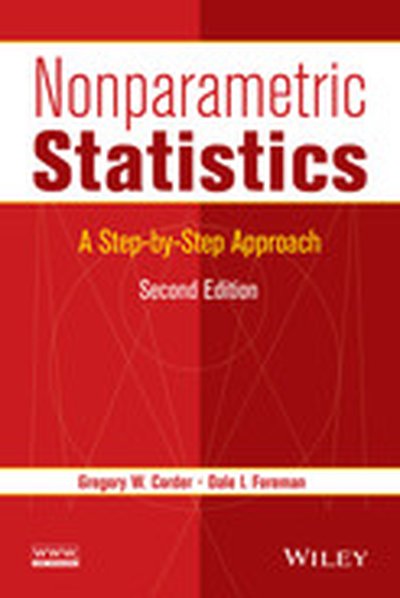
Nonparametric Statistics: A Step-by-Step Approach, 2nd Edition

"...a very useful resource for courses in nonparametric statistics in which the emphasis is on applications rather than on theory. It also deserves a place in libraries of all institutions where introductory statistics courses are taught." -CHOICE This Second Edition presents a practical and understandable approach that enhances and expands the statistical toolset for readers. This book includes: New coverage of the sign test and the Kolmogorov-Smirnov two-sample test in an effort to offer a logical and natural progression to statistical power SPSS (Version 21) software and updated screen captures to demonstrate how to perform and recognize the steps in the various procedures Data sets and odd-numbered solutions provided in an appendix, and tables of critical values Supplementary material to aid in reader comprehension, which includes: narrated videos and screen animations with step-by-step instructions on how to follow the tests using SPSS; online decision trees to help users determine the needed type of statistical test; and additional solutions not found within the book.

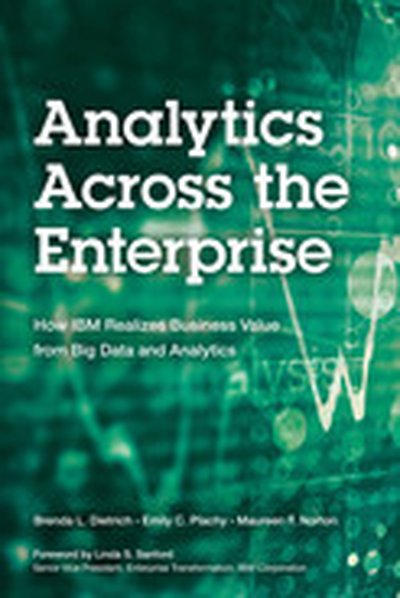
Analytics Across the Enterprise: How IBM Realizes Business Value from Big Data and Analytics

How to Transform Your Organization with Analytics: Insider Lessons from IBM’s Pioneering Experience Analytics is not just a technology: It is a better way to do business. Using analytics, you can systematically inform human judgment with data-driven insight. This doesn’t just improve decision-making: It also enables greater innovation and creativity in support of strategy. Your transformation won’t happen overnight; however, it is absolutely achievable, and the rewards are immense. This book demystifies your analytics journey by showing you how IBM has successfully leveraged analytics across the enterprise, worldwide. Three of IBM’s pioneering analytics practitioners share invaluable real-world perspectives on what does and doesn’t work and how you can start or accelerate your own transformation. This book provides an essential framework for becoming a smarter enterprise and shows through 31 case studies how IBM has derived value from analytics throughout its business. Coverage Includes Creating a smarter workforce through big data and analytics More effectively optimizing supply chain processes Systematically improving financial forecasting Managing financial risk, increasing operational efficiency, and creating business value Reaching more B2B or B2C customers and deepening their engagement Optimizing manufacturing and product management processes Deploying your sales organization to increase revenue and effectiveness Achieving new levels of excellence in services delivery and reducing risk Transforming IT to enable wider use of analytics “Measuring the immeasurable” and filling gaps in imperfect data Whatever your industry or role, whether a current or future leader, analytics can make you smarter and more competitive. Analytics Across the Enterprise shows how IBM did it--and how you can, too. Learn more about IBM Analytics

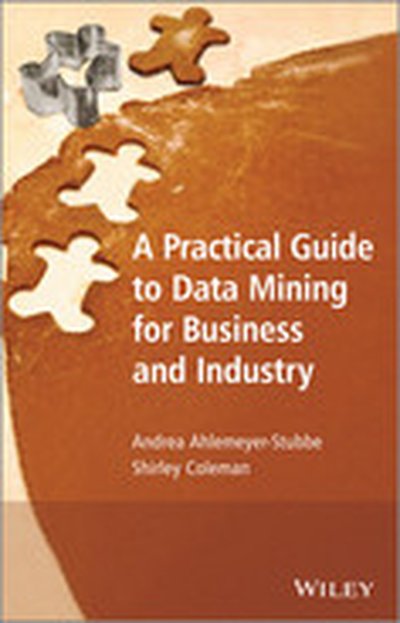
A Practical Guide to Data Mining for Business and Industry

Data mining is well on its way to becoming a recognized discipline in the overlapping areas of IT, statistics, machine learning, and AI. Practical Data Mining for Business presents a user-friendly approach to data mining methods, covering the typical uses to which it is applied. The methodology is complemented by case studies to create a versatile reference book, allowing readers to look for specific methods as well as for specific applications. The book is formatted to allow statisticians, computer scientists, and economists to cross-reference from a particular application or method to sectors of interest.

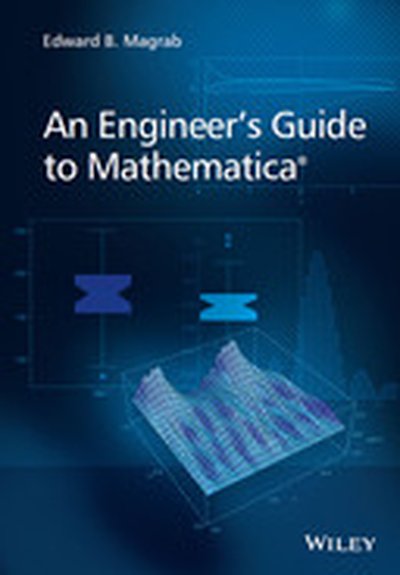
An Engineer's Guide to Mathematica

Free Mathematica 10 Update Included! Now available from www.wiley.com/go/magrab Updated material includes: - Creating regions and volumes of arbitrary shape and determining their properties: arc length, area, centroid, and area moment of inertia - Performing integrations, solving equations, and determining the maximum and minimum values over regions of arbitrary shape - Solving numerically a class of linear second order partial differential equations in regions of arbitrary shape using finite elements An Engineer's Guide to Mathematica enables the reader to attain the skills to create Mathematica 9 programs that solve a wide range of engineering problems and that display the results with annotated graphics. This book can be used to learn Mathematica, as a companion to engineering texts, and also as a reference for obtaining numerical and symbolic solutions to a wide range of engineering topics. The material is presented in an engineering context and the creation of interactive graphics is emphasized. The first part of the book introduces Mathematica's syntax and commands useful in solving engineering problems. Tables are used extensively to illustrate families of commands and the effects that different options have on their output. From these tables, one can easily determine which options will satisfy one's current needs. The order of the material is introduced so that the engineering applicability of the examples increases as one progresses through the chapters. The second part of the book obtains solutions to representative classes of problems in a wide range of engineering specialties. Here, the majority of the solutions are presented as interactive graphics so that the results can be explored parametrically. Key features: Material is based on Mathematica 9 Presents over 85 examples on a wide range of engineering topics, including vibrations, controls, fluids, heat transfer, structures, statistics, engineering mathematics, and optimization Each chapter contains a summary table of the Mathematica commands used for ease of reference Includes a table of applications summarizing all of the engineering examples presented. Accompanied by a website containing Mathematica notebooks of all the numbered examples An Engineer's Guide to Mathematica is a must-have reference for practitioners, and graduate and undergraduate students who want to learn how to solve engineering problems with Mathematica.

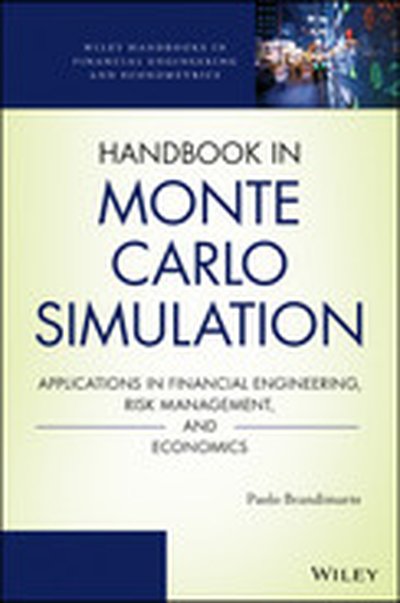
Handbook in Monte Carlo Simulation: Applications in Financial Engineering, Risk Management, and Economics

An accessible treatment of Monte Carlo methods, techniques, and applications in the field of finance and economics Providing readers with an in-depth and comprehensive guide, the Handbook in Monte Carlo Simulation: Applications in Financial Engineering, Risk Management, and Economics presents a timely account of the applicationsof Monte Carlo methods in financial engineering and economics. Written by an international leading expert in thefield, the handbook illustrates the challenges confronting present-day financial practitioners and provides various applicationsof Monte Carlo techniques to answer these issues. The book is organized into five parts: introduction andmotivation; input analysis, modeling, and estimation; random variate and sample path generation; output analysisand variance reduction; and applications ranging from option pricing and risk management to optimization. The Handbook in Monte Carlo Simulation features: An introductory section for basic material on stochastic modeling and estimation aimed at readers who may need a summary or review of the essentials Carefully crafted examples in order to spot potential pitfalls and drawbacks of each approach An accessible treatment of advanced topics such as low-discrepancy sequences, stochastic optimization, dynamic programming, risk measures, and Markov chain Monte Carlo methods Numerous pieces of R code used to illustrate fundamental ideas in concrete terms and encourage experimentation The Handbook in Monte Carlo Simulation: Applications in Financial Engineering, Risk Management, and Economics is a complete reference for practitioners in the fields of finance, business, applied statistics, econometrics, and engineering, as well as a supplement for MBA and graduate-level courses on Monte Carlo methods and simulation.