Gives you a quick, convenient overview of new functionality, enhanced features, and new products that you might use in SAS 9.3.
 talk-data.com
Topic
2252
tagged
Gives you a quick, convenient overview of new functionality, enhanced features, and new products that you might use in SAS 9.3.
Published in 1991, the first edition of Forecasting and Management of Technology was one of the leading handful of books to deal with the topic of forecasting of technology and technology management as this discipline was emerging. The new, revised edition of this book will build on this knowledge in the context of business organizations that now place a greater emphasis on technology to stay on the cutting edge of development. The scope of this edition has broadened to include management of technology content that is relevant to now to executives in organizations while updating and strengthening the technology forecasting and analysis content that the first edition is reputed for. Updated by the original author team, plus new author Scott Cunningham, the book takes into account what the authors see as the innovations to technology management in the last 17 years: the Internet; the greater focus on group decision-making including process management and mechanism design; and desktop software that has transformed the analytical capabilities of technology managers. Included in this book will be 5 case studies from various industries that show how technology management is applied in the real world.
New and experienced SAS users who want to prepare for the Base Programming for SAS 9 exam will find the SAS Certification Prep Guide: Base Programming for SAS 9 to be an invaluable, convenient, and comprehensive resource that covers all of the objectives tested on the exam. Major topics include importing and exporting raw data files, creating and modifying SAS data sets, and identifying and correcting data syntax and programming logic errors. You will also become familiar with the enhancements and new functionality that are available in SAS 9.
Each chapter includes a quiz on the chapter's contents. This guide provides you with a solid study resource as well as a go-to reference for your library.
Prepares you to take the Advanced Programming for SAS 9 exam. Major topics include SQL processing with SAS, the SAS macro language, advanced SAS programming techniques, and optimizing SAS programs. You will also become familiar with the enhancements and new functionality that are available in SAS 9.
A valuable guide to a successful career as a statistician A Career in Statistics: Beyond the Numbers prepares readers for careers in statistics by emphasizing essential concepts and practices beyond the technical tools provided in standard courses and texts. This insider's guide from internationally recognized applied statisticians helps readers decide whether a career in statistics is right for them, provides hands-on guidance on how to prepare for such a career, and shows how to succeed on the job. The book provides non-technical guidance for a successful career. The authors' extensive industrial experience is supplemented by insights from contributing authors from government and academia, Carol Joyce Blumberg, Leonard M. Gaines, Lynne B. Hare, William Q. Meeker, and Josef Schmee. Following an introductory chapter that provides an overview of the field, the authors discuss the various dimensions of a career in applied statistics in three succinct parts: The Work of a Statistician describes the day-to-day activities of applied statisticians in business and industry, official government, and various other application areas, highlighting the work environment and major on-the-job challenges Preparing for a Successful Career in Statistics describes the personal traits that characterize successful statisticians, the education that they need to acquire, and approaches for securing the right job Building a Successful Career as a Statistician offers practical guidance for addressing key challenges that statisticians face on the job, such as project initiation and execution, effective communication, publicizing successes, ethical considerations, and gathering good data; alternative career paths are also described The book concludes with an in-depth examination of careers for statisticians in academia as well as tips to help them stay on top of their field throughout their careers. Each chapter includes thought-provoking discussion questions and a Major Takeaways section that outlines key concepts. Real-world examples illustrate key points, and an FTP site provides additional information on selected topics. A Career in Statistics is an invaluable guide for individuals who are considering or have decided on a career in statistics as well as for statisticians already on the job who want to accelerate their path to success. It also serves as a suitable book for courses on statistical consulting, statistical practice, and statistics in the workplace at the undergraduate and graduate levels.
A valuable reference for those involved in the field of ambulatory patient care, Improving Quality in Outpatient Services offers time-tested instruction on how to create a world-class outpatient program. It supplies a high-level overview of current opportunities, national quality programs, and challenges—outlining the policies, procedures, and plans required for success. Stimulating readers with a wealth of practical applications, stories, and examples, the book details the governance, medical staff, and quality structures required to create, implement, and maintain a safe and efficient outpatient program. It introduces powerful techniques for infection control, medication management, risk prevention, and the elimination of medication errors. It also: Lists mandatory policies and procedures Contains practice drills to prepare you for real-world scenarios Explains how to create a report card to measure quality at all levels Includes a sample curriculum that outlines the courseware required by OSHA and other licensing and regulatory agencies The authors address documentation and human resources factors and supply an abundance of information and resources in the appendices, including how and where to apply for certification, medical record review tools, policy and procedure checklists, and a state-by-state listing of resources available for outpatient and ambulatory programs. Explaining how to involve patients in the decision making process, the text details a proven system for evaluating quality at all levels of your organization.
With many real-world examples, this book shows how to apply the powerful methods of smoothing splines in practice. It covers basic smoothing spline models as well as more advanced models, such as spline smoothing with correlated random errors. It also presents methods for model selection and inference. The author makes the advanced smoothing spline methodology based on reproducing kernel Hilbert space (RKHS) accessible to practitioners and students by keeping theory to a minimum. R is used throughout to implement the methods, with code available for download on the book's web page.
This book serves as an accessible and comprehensive introduction to GNU Octave, a high-level programming environment widely used for numerical computing. It guides readers through essential concepts and core functionalities, from basic vector and matrix operations to more advanced topics like creating customized toolboxes and integrating with C code. With practical examples and exercises, this guide enables users to harness Octave effectively for diverse scientific applications. What this Book will help me do Understand and utilize GNU Octave's syntax and core concepts. Perform data analysis operations on vectors and matrices efficiently. Write and debug Octave scripts to automate computational tasks. Create and implement customized functions and an Octave toolbox. Optimize and integrate Octave code with external libraries for more challenging computations. Author(s) Jesper Schmidt Hansen is an experienced educator and practitioner in numerical methods and computational tools. With a strong background in applying software to solve real-world scientific problems, Hansen brings practical insights to this guide. His clear teaching style ensures concepts are accessible and applicable, making complex topics approachable for beginners. Who is it for? This book is ideal for students, engineers, scientists, and professionals interested in learning GNU Octave for scientific computing. Beginners with basic mathematics knowledge will find the content approachable, while programmers seeking an alternative tool for numerical tasks can benefit too. Anyone eager to handle data processing with Octave will find this a helpful resource.
Data Mining: Concepts and Techniques provides the concepts and techniques in processing gathered data or information, which will be used in various applications. Specifically, it explains data mining and the tools used in discovering knowledge from the collected data. This book is referred as the knowledge discovery from data (KDD). It focuses on the feasibility, usefulness, effectiveness, and scalability of techniques of large data sets. After describing data mining, this edition explains the methods of knowing, preprocessing, processing, and warehousing data. It then presents information about data warehouses, online analytical processing (OLAP), and data cube technology. Then, the methods involved in mining frequent patterns, associations, and correlations for large data sets are described. The book details the methods for data classification and introduces the concepts and methods for data clustering. The remaining chapters discuss the outlier detection and the trends, applications, and research frontiers in data mining. This book is intended for Computer Science students, application developers, business professionals, and researchers who seek information on data mining. Presents dozens of algorithms and implementation examples, all in pseudo-code and suitable for use in real-world, large-scale data mining projects Addresses advanced topics such as mining object-relational databases, spatial databases, multimedia databases, time-series databases, text databases, the World Wide Web, and applications in several fields Provides a comprehensive, practical look at the concepts and techniques you need to get the most out of your data
Using Microsoft Visio 2010 is a customized, media-rich learning experience designed to help new users master Microsoft Visio 2010 quickly, and get the most out of it, fast! It starts with a concise, friendly, straight-to-the-point guide to Microsoft Visio 2010. This exceptional book is fully integrated with an unprecedented collection of online learning resources: online video, screencasts, podcasts, and additional web content, all designed to reinforce key concepts and help users achieve real mastery. The book and online content work together to teach everything mainstream Microsoft Visio 2010 users need to know. This practical, approachable coverage guides readers through all facets of working with Visio 2010, and adds coverage on new features and capabilities including: Visio's brand-new Ribbon interface, Live Preview, Auto size, align and adjust, Containers, status bar navigation tools, and data graphics legends. The 2010 edition also includes coverage on Visio services, processes management tools, new diagram types, and much more. Practical, approachable coverage that completely flattens the Microsoft Visio 2010 learning curve Tightly integrated with online video, screencast tutorials, podcasts, and more: the total learning experience for new Microsoft Visio 2010 users Companion website offers supplemental media including video, screencast tutorials, podcasts, and much more
This handbook examines the dichotomy between the structure of products and their subgraphs. It also features the design of efficient algorithms that recognize products and their subgraphs and explores the relationship between graph parameters of the product and factors.
MATLAB® in bioscience and biotechnology presents an introductory Matlab course oriented towards various collaborative areas of biotechnology and bioscience. It concentrates on Matlab fundamentals and gives examples of its application to a wide range of current bioengineering problems in computational biology, molecular biology, bio-kinetics, biomedicine, bioinformatics, and biotechnology. In the last decade Matlab has been presented to students as the first computer program they learn. Consequently, many non-programmer students, engineers and scientists have come to regard it as user-friendly and highly convenient in solving their specific problems. Numerous books are available on programming in Matlab for engineers in general, irrespective of their specialization, or for those specializing in some specific area, but none have been designed especially for such a wide, interdisciplinary, and topical area as bioengineering. Thus, in this book, Matlab is presented with examples and applications to various school-level and advanced bioengineering problems - from growing populations of microorganisms and population dynamics, reaction kinetics and reagent concentrations, predator-prey models, mass-transfer and flow problems, to sequence analysis and sequence statistics. This is the first book intended as a manual introducing biologists and other biotechnology engineers to work with Matlab It is suitable for beginners and inexperienced users; however, applications of Matlab to advanced problems such as the Monte Carlo method, curve fitting, and reliable machine diagnostics make the book relevant to university teachers as well The book is different in that it assumes a modest mathematical background for the reader and introduces the mathematical or technical concepts with a somewhat traditional approach; Matlab is then used as a tool for subsequent computer solution
The proliferation of online access to social science statistical and numeric data sources, such as the U.S. Census Bureau’s American Fact Finder, has lead to an increased interest in supporting these sources in academic libraries. Many large libraries have been able to devote staff to data services for years, and recently smaller academic libraries have recognized the need to provide numeric data services and support. This guidebook serves as a primer to developing and supporting social science statistical and numerical data sources in the academic library. It provides strategies for the establishment of data services and offers short descriptions of the essential sources of free and commercial social science statistical and numeric data. Finally, it discusses the future of numeric data services, including the integration of statistics and data into library instruction and the use of Web 2.0 tools to visualize data. Written for a general reference audience with little knowledge of data services and sources who would like to incorporate support into their general reference practice Combines information on establishing data services with an introduction to available statistical and numeric data sources Provides insight into the integration of statistics and data into library instruction and the social science research process
The area of biologically inspired computing, or biological computation, involves the development of new, biologically based techniques for solving difficult computational problems. A unified overview of computer science ideas inspired by biology, Biological Computation presents the most fundamental and significant concepts in this area. In the book, students discover that bacteria communicate, that DNA can be used for performing computations, how evolution solves optimization problems, that the way ants organize their nests can be applied to solve clustering problems, and what the human immune system can teach us about protecting computer networks. The authors discuss more biological examples such as these, along with the computational techniques developed from these scenarios. The text focuses on cellular automata, evolutionary computation, neural networks, and molecular computation. Each chapter explores the biological background, describes the computational techniques, gives examples of applications, discusses possible variants of the techniques, and includes exercises and solutions. The authors use the examples and exercises to illustrate key ideas and techniques. Clearly conveying the essence of the major computational approaches in the field, this book brings students to the point where they can either produce a working implementation of the techniques or effectively use one of the many available implementations. Moreover, the techniques discussed reflect fundamental principles that can be applied beyond bio-inspired computing. Supplementary material is available on Dr. Unger's website.
Presents inference and simulation of stochastic process in the field of model calibration for financial times series modelled by continuous time processes and numerical option pricing. Introduces the bases of probability theory and goes on to explain how to model financial times series with continuous models, how to calibrate them from discrete data and further covers option pricing with one or more underlying assets based on these models. Analysis and implementation of models goes beyond the standard Black and Scholes framework and includes Markov switching models, Lévy models and other models with jumps (e.g. the telegraph process); Topics other than option pricing include: volatility and covariation estimation, change point analysis, asymptotic expansion and classification of financial time series from a statistical viewpoint. The book features problems with solutions and examples. All the examples and R code are available as an additional R package, therefore all the examples can be reproduced.
Discover how to create compelling, interactive dashboards efficiently using SAP BusinessObjects Dashboards 4.0 (formerly Xcelsius). In this comprehensive cookbook, learn step-by-step recipes that guide you through practical tasks leveraging the tool's advanced features like dynamic visibility and live data connections. What this Book will help me do Master the use of Dashboard Design's spreadsheet and data-driven components to efficiently create professional dashboards. Learn various data visualization techniques to present data clearly and effectively within your dashboards. Implement dynamic interactivity and control logic using features like Dynamic Visibility to enhance dashboard usability. Understand how to connect dashboards to live data sources for up-to-date and real-time business insights. Explore and utilize additional Dashboard Design features and add-ons to customize and extend the capabilities of your dashboards. Author(s) The author(s) of this book are seasoned professionals in SAP BusinessObjects Dashboards and enterprise dashboard design. With years of experience in teaching and applying these tools in practical settings, they aim to demystify complex dashboarding concepts and empower professionals to build impactful visualizations. Who is it for? This book is targeted at developers and business professionals who wish to sharpen their skills in dashboard creation using SAP BusinessObjects Dashboards 4.0. Readers should have a basic understanding of dashboards and some experience with Excel to benefit from this content. It's ideal for those new to SAP Dashboard Design seeking a comprehensive and practical guide.
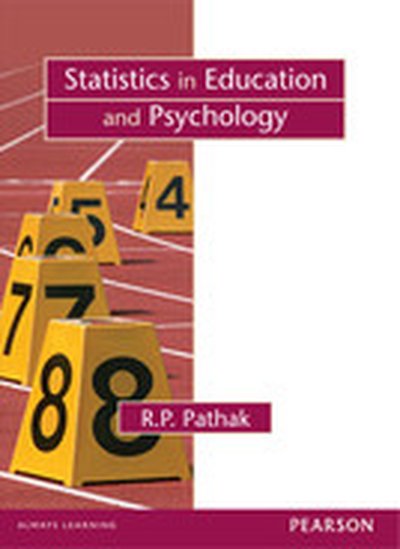
Statistics in Education and Psychology aims to develop a coherent, logical and comprehensive outlook towards statistics. The subject involves a wide range of observations, measurements, tools, techniques and data analysis. This book covers diverse topics like measures of central tendency, measures of variability, the correlation method, normal probability curve (NPC), significance of difference of means, analysis of variance, non-parametric chi-square, standard score and T-score.
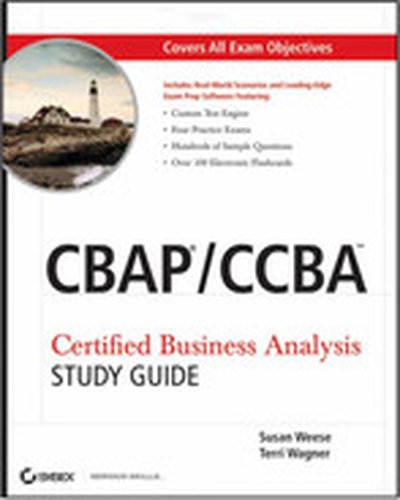
A must-have resource for anyone preparing for the version 2.0 of the CBAP exam As organizations look to streamline their production models, the need for qualified and certified business analysts is growing. The Certified Business Analyst Professional (CBAP) certification is the only certification for this growing field and this study guide is an essential step towards preparation for the CBAP exam. With this resource, you ll benefit from coverage of both the CBAP as well as the CCBA (Certification in Competency in Business Analysis) exam. Each chapter covers the Business Analysis standards and best practices and includes a list of exam topics covered, followed by in-depth discusses of those objectives. Real-world, hands-on scenarios help take the learning process a step further. Covers Version 2 of the Business Analyst Body of Knowledge (BABOK) Offers invaluable preparation for both the CBAP and CCBA exams Includes a list of exam topics and presents detailed discussions of each objective Features real-world scenarios, best practices, key terms, and a wide range of helpful topics that will prepare you for taking the exams Shares practice exam questions, topic summaries, and exam tips and tricks, all aimed at providing a solid foundation for achieving exam success This valuable study guide provides you with the preparation you need to confidently take the CBAP and CCBA exams.
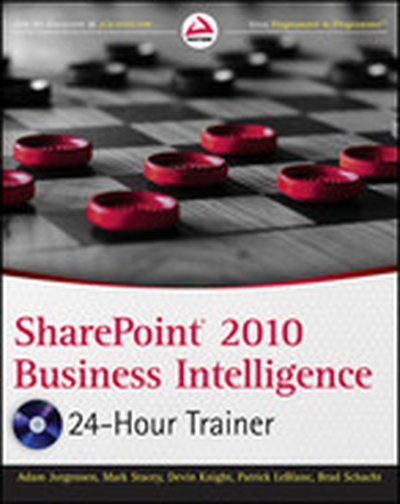
This unique book-and-video package introduces SharePoint® 2010 Business Intelligence Learn to build and deliver SharePoint BI applications Written by a team of leading SharePoint and Business Intelligence (BI) experts, this unique book-and-video package shows you how to successfully build and deliver BI applications using SharePoint 2010. Assuming no previous SharePoint experience, the authors deliver a clear explanation of what SharePoint will do for your BI and information management capabilities. Each lesson in the book is reinforced with a helpful tutorial on the video and cover topics such as interactive reporting with Excel, document sharing for collaborative reporting, and controlling data sources. As you learn best practices for configuring and securing SharePoint 2010 BI applications and planning and implementing your SharePoint BI project plan, you'll be well on your way to gaining a solid foundation of understanding and working with SharePoint 2010 and BI. Provides an invaluable training book-and-video package that takes you through building and delivering BI applications using SharePoint 2010 Features an accompanying video tutorial for each lesson covered in the book, along with a "Try It" section at the end of each lesson Covers interactive reporting with excel Covers Power Pivot advanced analytics Details report and document sharing for collaborative reportingShows how to use SharePoint lists and libraries for data sources repositories in your BI projects Explains how to control data sources, reports and business intelligence content with permissions and workflow approvals. With this unique book-and-video combo, you'll be well on your way to successfully building and delivering BI applications using SharePoint 2010.
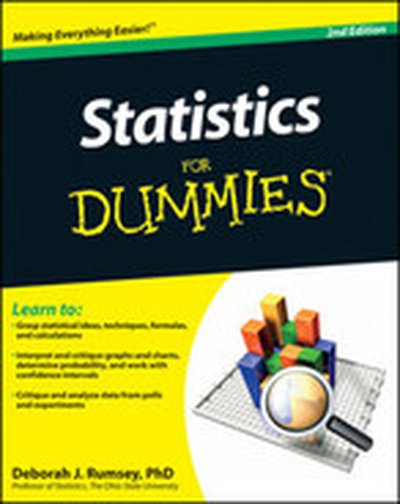
The fun and easy way to get down to business with statistics Stymied by statistics? No fear ? this friendly guide offers clear, practical explanations of statistical ideas, techniques, formulas, and calculations, with lots of examples that show you how these concepts apply to your everyday life. Statistics For Dummies shows you how to interpret and critique graphs and charts, determine the odds with probability, guesstimate with confidence using confidence intervals, set up and carry out a hypothesis test, compute statistical formulas, and more. Tracks to a typical first semester statistics course Updated examples resonate with today's students Explanations mirror teaching methods and classroom protocol Packed with practical advice and real-world problems, Statistics For Dummies gives you everything you need to analyze and interpret data for improved classroom or on-the-job performance.