talk-data.com talk-data.com

Topic

data

5765

tagged

Activity Trend

3 peak/qtr
2020-Q1 2026-Q1

Activities

5765 activities · Newest first

Database Design and Relational Theory

What makes this book different from others on database design? Many resources on design practice do little to explain the underlying theory, and books on design theory are aimed primarily at theoreticians. In this book, renowned expert Chris Date bridges the gap by introducing design theory in ways practitioners can understand—drawing on lessons learned over four decades of experience to demonstrate why proper database design is so critical in the first place. Every chapter includes a set of exercises that show how to apply the theoretical ideas in practice, provide additional information, or ask you to prove some simple theoretical result. If you’re a database professional familiar with the relational model, and have more than a passing interest in database design, this book is for you. Questions this book answers include: Why is Heath’s Theorem so important? What is The Principle of Orthogonal Design? What makes some JDs reducible and others irreducible? Why does dependency preservation matter? Should data redundancy always be avoided? Can it be? Databases often stay in production for decades, and careful design is critical for avoiding subtle errors and processing problems over time. If they’re badly designed, the negative impacts can be incredibly widespread. This gentle introduction shows you how to use important theoretical results to create good database designs.
Implementing the IBM System Storage SAN Volume Controller V6.3

This IBM® Redbooks® publication is a detailed technical guide to the IBM System Storage® SAN Volume Controller (SVC) Version 6.3.0. SAN Volume Controller is a virtualization appliance solution, which maps virtualized volumes that are visible to hosts and applications, to physical volumes on storage devices. Each server within the storage area network (SAN) has its own set of virtual storage addresses that are mapped to physical addresses. If the physical addresses change, the server continues running using the same virtual addresses that it had before. Therefore, volumes or storage can be added or moved while the server is still running. The IBM virtualization technology improves the management of information at the "block" level in a network, thus enabling applications and servers to share storage devices on a network. This book is intended for readers who need to implement the SVC at a 6.3.0 release level with a minimum of effort.

Introduction to Linear Regression Analysis, 5th Edition

Praise for the Fourth Edition "As with previous editions, the authors have produced a leading textbook on regression." —Journal of the American Statistical Association A comprehensive and up-to-date introduction to the fundamentals of regression analysis Introduction to Linear Regression Analysis, Fifth Edition continues to present both the conventional and less common uses of linear regression in today's cutting-edge scientific research. The authors blend both theory and application to equip readers with an understanding of the basic principles needed to apply regression model-building techniques in various fields of study, including engineering, management, and the health sciences. Following a general introduction to regression modeling, including typical applications, a host of technical tools are outlined such as basic inference procedures, introductory aspects of model adequacy checking, and polynomial regression models and their variations. The book then discusses how transformations and weighted least squares can be used to resolve problems of model inadequacy and also how to deal with influential observations. The Fifth Edition features numerous newly added topics, including: A chapter on regression analysis of time series data that presents the Durbin-Watson test and other techniques for detecting autocorrelation as well as parameter estimation in time series regression models Regression models with random effects in addition to a discussion on subsampling and the importance of the mixed model Tests on individual regression coefficients and subsets of coefficients Examples of current uses of simple linear regression models and the use of multiple regression models for understanding patient satisfaction data. In addition to Minitab, SAS, and S-PLUS, the authors have incorporated JMP and the freely available R software to illustrate the discussed techniques and procedures in this new edition. Numerous exercises have been added throughout, allowing readers to test their understanding of the material, and a related FTP site features the presented data sets, extensive problem solutions, software hints, and PowerPoint slides to facilitate instructional use of the book. Introduction to Linear Regression Analysis, Fifth Edition is an excellent book for statistics and engineering courses on regression at the upper-undergraduate and graduate levels. The book also serves as a valuable, robust resource for professionals in the fields of engineering, life and biological sciences, and the social sciences.

Microsoft® SQL Server® 2012 High-Performance T-SQL Using Window Functions

Apply powerful window functions in T-SQL—and increase the performance and speed of your queries Optimize your queries—and obtain simple and elegant solutions to a variety of problems—using window functions in Transact-SQL. Led by T-SQL expert Itzik Ben-Gan, you’ll learn how to apply calculations against sets of rows in a flexible, clear, and efficient manner. Ideal whether you’re a database administrator or developer, this practical guide demonstrates ways to use more than a dozen T-SQL querying solutions to address common business tasks. Discover how to: Go beyond traditional query approaches to express set calculations more efficiently Delve into ordered set functions such as rank, distribution, and offset Implement hypothetical set and inverse distribution functions in standard SQL Use strategies for improving sequencing, paging, filtering, and pivoting Increase query speed using partitioning, ordering, and coverage indexing Apply new optimization iterators such as Window Spool Handle common issues such as running totals, intervals, medians, and gaps

Performance Evaluation of Industrial Systems, 2nd Edition

Discussing fundamental modeling tools, queuing theory, and discrete event simulation for evaluating production systems, this book presents a development environment for discrete event simulation in a language easy enough to use but flexible enough to facilitate modeling complex systems. Incorporating the use of discrete simulation to statistically analyze a system and render the most efficient time sequences, designs, upgrades, and operations, this new edition develops new visualization graphics for DEEDS software, includes improvements in the optimization of the simulation algorithms, and adds a chapter on queuing models.

Stochastic Modeling and Analysis of Telecoms Networks

This book addresses the stochastic modeling of telecommunication networks, introducing the main mathematical tools for that purpose, such as Markov processes, real and spatial point processes and stochastic recursions, and presenting a wide list of results on stability, performances and comparison of systems. The authors propose a comprehensive mathematical construction of the foundations of stochastic network theory: Markov chains, continuous time Markov chains are extensively studied using an original martingale-based approach. A complete presentation of stochastic recursions from an ergodic theoretical perspective is also provided, as well as spatial point processes. Using these basic tools, stability criteria, performance measures and comparison principles are obtained for a wide class of models, from the canonical M/M/1 and G/G/1 queues to more sophisticated systems, including the current "hot topics" of spatial radio networking, OFDMA and real-time networks. Contents 1. Introduction. Part 1: Discrete-time Modeling 2. Stochastic Recursive Sequences. 3. Markov Chains. 4. Stationary Queues. 5. The M/GI/1 Queue. Part 2: Continuous-time Modeling 6. Poisson Process. 7. Markov Process. 8. Systems with Delay. 9. Loss Systems. Part 3: Spatial Modeling 10. Spatial Point Processes.

BizTalk Server 2010 Cookbook

Dive into the intricacies of BizTalk Server 2010 with this comprehensive cookbook. By learning from over 50 detailed recipes, you'll enhance both your technical skills in BizTalk implementation and guiding principles for setting up durable, efficient environments. Written by expert Steef-Jan Wiggers, this book provides practical models to create robust orchestration and messaging solutions. What this Book will help me do Learning to deploy robust and high-performing BizTalk environments with optimal settings. Enhancing orchestration designs using well-defined BizTalk patterns for scalability. Utilizing best practices for BizTalk artifact instrumentation and error handling. Strengthening knowledge of BizTalk messaging security and SOA pattern application. Expanding BizTalk solutions to integrate with modern cloud-based technologies. Author(s) Steef-Jan Wiggers is a recognized expert and Microsoft MVP in BizTalk Server. With extensive experience as both a developer and an administrator, Steef-Jan brings a wealth of practical knowledge to this book. His approach to teaching BizTalk is grounded in real-world applications, focusing on equipping professionals with actionable insights and clear guidance. Who is it for? This book is ideal for BizTalk developers and administrators who have foundational knowledge of BizTalk Server, SOA, and enterprise application integration concepts. Whether advancing professional ambitions, honing skills, or tackling specific BizTalk challenges, readers can rely on this book to deliver essential knowledge and actionable techniques.

Threadsafe Considerations for CICS

Beginning with IBM® CICS® Version 2, applications can run on TCBs apart from the QR TCB, which has positive implications for improving system throughput and for implementing new technologies inside of CICS. Examples of implementing new technologies include using the IBM MVS™ Java virtual machine (JVM) inside CICS and enabling listener tasks written for other platforms to be imported to run under CICS. The newest release, CICS Transaction Server for z/OS® (CICS TS) V4.2, includes scalability enhancements so that you can perform more work more quickly in a single CICS system. The advantage of this enhancement is that you can increase vertical scaling and decrease the need to scale horizontally, reducing the number of regions that are required to run the production business applications. The scalability enhancements in CICS TS V4.2 fall into two broad areas, which are increased usage of open transaction environment (OTE) and of 64-bit storage. This IBM Redbooks® publication is a comprehensive guide to threadsafe concepts and implementation for IBM CICS. This book explains how systems programmers, applications developers, and architects can implement threadsafe applications in an environment. It describes the real-world experiences of users, and our own experiences, of migrating applications to be threadsafe. This book also highlights the two most critical aspects of threadsafe applications: system performance and integrity.

Advanced Web Metrics with Google Analytics, 3rd Edition

Get the latest information about using the #1 web analytics tool from this fully updated guide Google Analytics is the free tool used by millions of web site owners to assess the effectiveness of their efforts. Its revised interface and new features will offer even more ways to increase the value of your web site, and this book will teach you how to use each one to best advantage. Featuring new content based on reader and client requests, the book helps you implement new methods and concepts, track social and mobile visitors, use the new multichannel funnel reporting features, understand which filters to use, and much more. Gets you up and running with all the new tools in the revamped Google Analytics, and includes content requested by readers and users especially for new GA users Covers social media analytics features, advanced segmentation displays, multi-dashboard configurations, and using Top 20 reports Provides a detailed best-practices implementation guide covering advanced topics, such as how to set up GA to track dynamic web pages, banners, outgoing links, and contact forms Includes case studies and demonstrates how to optimize pay-per-click accounts, integrate AdSense, work with new reports and reporting tools, use ad version testing, and more Make your web site a more effective business tool with the detailed information and advice about Google Analytics in Advanced Web Metrics with Google Analytics, 3nd Edition.

Event History Analysis with R

With an emphasis on social science applications, Event History Analysis with R presents an introduction to survival and event history analysis using real-life examples. Keeping mathematical details to a minimum, the book covers key topics, including both discrete and continuous time data, parametric proportional hazards, and accelerated failure times. Features Introduces parametric proportional hazards models with baseline distributions like the Weibull, Gompertz, Lognormal, and Piecewise constant hazard distributions, in addition to traditional Cox regression Presents mathematical details as well as technical material in an appendix Includes real examples with applications in demography, econometrics, and epidemiology Provides a dedicated R package, eha, containing special treatments, including making cuts in the Lexis diagram, creating communal covariates, and creating period statistics A much-needed primer, Event History Analysis with R is a didactically excellent resource for students and practitioners of applied event history and survival analysis.

Introducing Microsoft® SQL Server® 2012

Introducing Microsoft® SQL Server® 2012 explores the exciting enhancements and new capabilities engineered into SQL Server, ranging from improvements in operation to those in reporting and management. This book is for anyone who has an interest in SQL Server 2012 and wants to understand its capabilities, including database administrators, application developers, and technical decision makers.

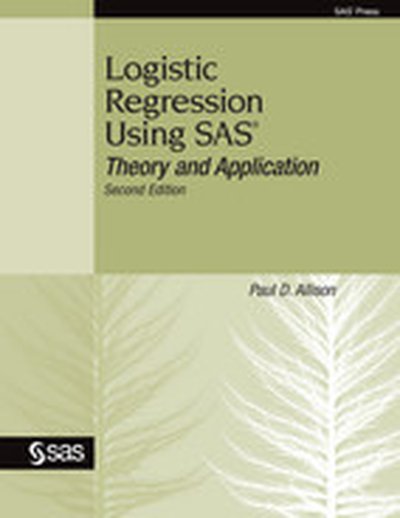
Logistic Regression Using SAS, 2nd Edition

If you are a researcher or student with experience in multiple linear regression and want to learn about logistic regression, Paul Allison's Logistic Regression Using SAS: Theory and Application, Second Edition, is for you! Informal and nontechnical, this book both explains the theory behind logistic regression, and looks at all the practical details involved in its implementation using SAS. Several real-world examples are included in full detail. This book also explains the differences and similarities among the many generalizations of the logistic regression model. The following topics are covered: binary logistic regression, logit analysis of contingency tables, multinomial logit analysis, ordered logit analysis, discrete-choice analysis, and Poisson regression. Other highlights include discussions on how to use the GENMOD procedure to do loglinear analysis and GEE estimation for longitudinal binary data. Only basic knowledge of the SAS DATA step is assumed. The second edition describes many new features of PROC LOGISTIC, including conditional logistic regression, exact logistic regression, generalized logit models, ROC curves, the ODDSRATIO statement (for analyzing interactions), and the EFFECTPLOT statement (for graphing nonlinear effects). Also new is coverage of PROC SURVEYLOGISTIC (for complex samples), PROC GLIMMIX (for generalized linear mixed models), PROC QLIM (for selection models and heterogeneous logit models), and PROC MDC (for advanced discrete choice models).

This book is part of the SAS Press program.

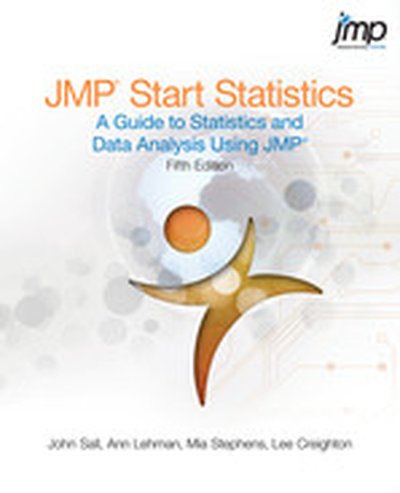
JMP Start Statistics, 5th Edition

Updated for JMP 10, the book provides hands-on tutorials with just the right amount of conceptual and motivational material to illustrate how to use the intuitive interface for data analysis in JMP. Features concept-specific tutorials, examples, brief reviews of concepts, step-by-step illustrations, and exercises.

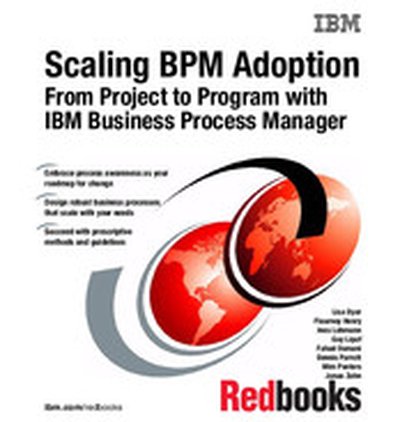
Scaling BPM Adoption: From Project to Program with IBM Business Process Manager

Your first Business Process Management (BPM) project is a crucial first step on your BPM journey. It is important to begin this journey with a philosophy of change that allows you to avoid common pitfalls that lead to failed BPM projects, and ultimately, poor BPM adoption. This IBM® Redbooks® publication describes the methodology and best practices that lead to a successful project and how to use that success to scale to enterprise-wide BPM adoption. This updated edition contains a new chapter on planning a BPM project. The intended audience for this book includes all people who participate in the discovery, planning, delivery, deployment, and continuous improvement activities for a business process. These roles include process owners, process participants, subject matter experts (SMEs) from the operational business, and technologists responsible for delivery, including BPM analysts, BPM solution architects, BPM administrators, and BPM developers.

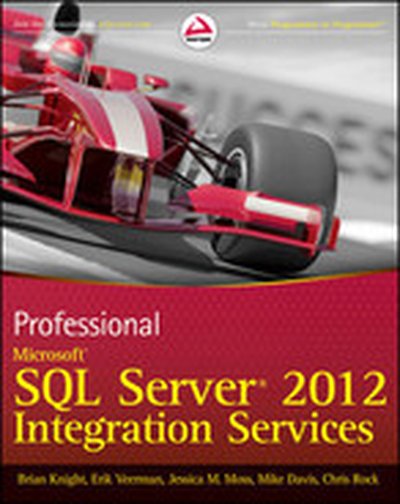
Professional Microsoft SQL Server 2012 Integration Services

An in-depth look at the radical changes to the newest release of SISS Microsoft SQL Server 2012 Integration Services (SISS) builds on the revolutionary database product suite first introduced in 2005. With this crucial resource, you will explore how this newest release serves as a powerful tool for performing extraction, transformation, and load operations (ETL). A team of SQL Server experts deciphers this complex topic and provides detailed coverage of the new features of the 2012 product release. In addition to technical updates and additions, the authors present you with a new set of SISS best practices, based on years of real-world experience that have transpired since the previous edition was published. Details the newest features of the 2012 SISS product release, which is the most significant release since 2005 Addresses the keys to a successful ETL solution, such as using the right enterprise ETL tool and employing the right ETL architecture in order to meet the system requirements Includes additional case studies and tutorial examples to illustrate advanced concepts and techniques Professional Microsoft SQL Server 2012 Integration Services is a valuable resource that meets the demands and high expectations of experienced SSIS professionals.

Designing Great Data Products

In the past few years, we’ve seen many data products based on predictive modeling. These products range from weather forecasting to recommendation engines like Amazon's. Prediction technology can be interesting and mathematically elegant, but we need to take the next step: going from recommendations to products that can produce optimal strategies for meeting concrete business objectives. We already know how to build these products: they've been in use for the past decade or so, but they're not as common as they should be. This report shows how to take the next step: to go from simple predictions and recommendations to a new generation of data products with the potential to revolutionize entire industries.

High Performance MySQL, 3rd Edition

How can you bring out MySQL’s full power? With High Performance MySQL, you’ll learn advanced techniques for everything from designing schemas, indexes, and queries to tuning your MySQL server, operating system, and hardware to their fullest potential. This guide also teaches you safe and practical ways to scale applications through replication, load balancing, high availability, and failover. Updated to reflect recent advances in MySQL and InnoDB performance, features, and tools, this third edition not only offers specific examples of how MySQL works, it also teaches you why this system works as it does, with illustrative stories and case studies that demonstrate MySQL’s principles in action. With this book, you’ll learn how to think in MySQL. Learn the effects of new features in MySQL 5.5, including stored procedures, partitioned databases, triggers, and views Implement improvements in replication, high availability, and clustering Achieve high performance when running MySQL in the cloud Optimize advanced querying features, such as full-text searches Take advantage of modern multi-core CPUs and solid-state disks Explore backup and recovery strategies—including new tools for hot online backups

Oracle Database 11g Release 2 Performance Tuning Tips & Techniques

Implement Proven Database Optimization Solutions Systematically identify and eliminate database performance problems with help from Oracle Certified Master Richard Niemiec. Filled with real-world case studies and best practices, Oracle Database 11g Release 2 Performance Tuning Tips & Techniques details the latest monitoring, troubleshooting, and optimization methods. Find out how to find and fix bottlenecks, configure storage devices, execute effective queries, and develop bug-free SQL and PL/SQL code. Testing, reporting, and security enhancements are also covered in this Oracle Press guide. Properly index and partition Oracle Database 11 g Release 2 Work with Oracle Exadata and Oracle Exalogic Elastic Cloud Efficiently manage disk drives, RAID arrays, and memory Tune queries with Oracle SQL hints and the TRACE utility Troubleshoot databases using V$ views and X$ tables Distribute workload using Oracle Real Application Testing Generate reports using Oracle's Statspack and Automatic Workload Repository tools Use sar, vmstat, and iostat to monitor system statistics “This is a timely update of Rich’s classic book on Oracle Database performance tuning to cover hot new topics like Oracle Database 11g Release 2 and Oracle Exadata. This is a must-have for DBAs moving to these new products.” --Andrew Mendelsohn, Senior Vice President, Oracle Database Server Technologies

Quantifying the User Experience

Quantifying the User Experience: Practical Statistics for User Research offers a practical guide for using statistics to solve quantitative problems in user research. Many designers and researchers view usability and design as qualitative activities, which do not require attention to formulas and numbers. However, usability practitioners and user researchers are increasingly expected to quantify the benefits of their efforts. The impact of good and bad designs can be quantified in terms of conversions, completion rates, completion times, perceived satisfaction, recommendations, and sales. The book discusses ways to quantify user research; summarize data and compute margins of error; determine appropriate samples sizes; standardize usability questionnaires; and settle controversies in measurement and statistics. Each chapter concludes with a list of key points and references. Most chapters also include a set of problems and answers that enable readers to test their understanding of the material. This book is a valuable resource for those engaged in measuring the behavior and attitudes of people during their interaction with interfaces. Provides practical guidance on solving usability testing problems with statistics for any project, including those using Six Sigma practices Show practitioners which test to use, why they work, best practices in application, along with easy-to-use excel formulas and web-calculators for analyzing data Recommends ways for practitioners to communicate results to stakeholders in plain English Resources and tools available at the authors’ site: http://www.measuringu.com/

IBM DB2 9.7 Advanced Application Developer Cookbook

"IBM DB2 9.7 Advanced Application Developer Cookbook" is your guide to mastering advanced techniques for database application development with IBM DB2. This practical book provides over 70 hands-on recipes that cover everything from performance tuning to utilizing the latest DB2 features. By diving into these solutions, you will be able to design secure, robust, and cutting-edge DB2 applications. What this Book will help me do Implement and leverage new features of DB2 9.7 for enhanced application development. Apply performance tuning techniques to improve the efficiency of your database applications. Design secure DB2 applications while understanding advanced security configurations. Migrate Oracle database objects to DB2, enabling Oracle application support on DB2. Utilize advanced DB2 capabilities such as pureXML efficiently for Web 2.0 and SOA integrations. Author(s) The author is a seasoned database professional with extensive experience in IBM DB2 development and administration. Having worked on numerous high-profile DB2 applications, their expertise spans the full application lifecycle, from design to optimization. They present complex technical concepts in a clear and approachable way, ensuring that readers can easily grasp and apply advanced database techniques. Who is it for? This book is ideal for professional IBM DB2 developers who wish to deepen their expertise in advanced application development. It's suited for individuals with a foundational understanding of DB2 who aim to leverage its powerful features for building robust and optimized applications. If you are tasked with migrating Oracle applications to DB2 or enhancing DB2's performance for high-demand systems, this guide is for you.