talk-data.com talk-data.com

Topic

data

5765

tagged

Activity Trend

3 peak/qtr
2020-Q1 2026-Q1

Activities

5765 activities · Newest first

Advanced Web Metrics with Google Analytics™, Second Edition

Valuable tips and tricks for using the latest version of Google Analytics Packed with insider tips and tricks, this how-to guide is fully revised to cover the latest version of Google Analytics and shows you how to implement proven Web analytics methods and concepts. This second edition of the bestselling Advanced Web Metrics with Google Analytics is the perfect book for marketers, vendors, consultants, and Webmasters who want to learn the installation, configuration, tracking techniques, and best practices of Google Analytics. Google Analytics is a free tool that measures Web site effectiveness and helps users better understand how web site performance; this book is a detailed usage guide written by one of the software's original creators Explains what filters keep data accurate, how to measure Flash usage and tag for e-mail marketing, and what visitor segmentation provides the most useful feedback Examines principles and practices of Web analytics, then shows how to use GA's reports and how to track dynamic Web pages, banners, outgoing links, and contact forms Discusses advanced setups for configuring goals and filters, how to integrate GA with third-party systems, and how to leverage the new API Advanced Web Metrics with Google Analytics, Second Edition is valuable for both novice and experienced users of Google Analytics.

Microsoft® Access® Small Business Solutions: State-of-the-Art Database Models for Sales, Marketing, Customer Management, and More Key Business Activities

Database models developed by a team of leading Microsoft Access MVPs provide read-to-use solutions for sales, marketing, customer management and other key business activities for most small businesses As the most popular relational database in the world, Microsoft Access is widely used by small business owners. This book responds to the growing need for resources that help business managers and end users design and build effective Access database solutions for specific business functions. Written by a team of Microsoft Access MVPs, this guide shows you how to design databases for the essential activities of most small businesses, including marketing and sales, customer management, inventory management, quality control, budgeting, financial tracking and analysis, and more The accompanying CD-ROM contains ready-to-load databases that can quickly be customized, saving you countless hours of development effort Features a step-by-step interview process to help tailor the database structure to specific business scenarios With this valuable guide and CD-ROM, you'll be on your way to implementing database solutions in no time.

Microsoft® Business Intelligence For Dummies®

Learn to create an effective business strategy using Microsoft's BI stack Microsoft Business Intelligence tools are among the most widely used applications for gathering, providing access to, and analyzing data to enable the enterprise to make sound business decisions. The tools include SharePoint Server, the Office Suite, PerformancePoint Server, and SQL Server, among others. With so much jargon and so many technologies involved, Microsoft Business Intelligence For Dummies provides a much-needed step-by-step explanation of what's involved and how to use this powerful package to improve your business. Microsoft Business Intelligence encompasses a broad collection of tools designed to help business owners and managers direct the enterprise effectively This guide provides an overview of SharePoint, PerformancePoint, the SQL Server suite, Microsoft Office, and the BI development technologies Explains how the various technologies work together to solve functional problems Translates the buzzwords and shows you how to create your business strategy Examines related technologies including data warehousing, data marts, Online Analytical Processing (OLAP), data mining, reporting, dashboards, and Key Performance Indicators (KPIs) Simplifies this complex package to get you up and running quickly Microsoft Business Intelligence For Dummies demystifies these essential tools for enterprise managers, business analysts, and others who need to get up to speed.

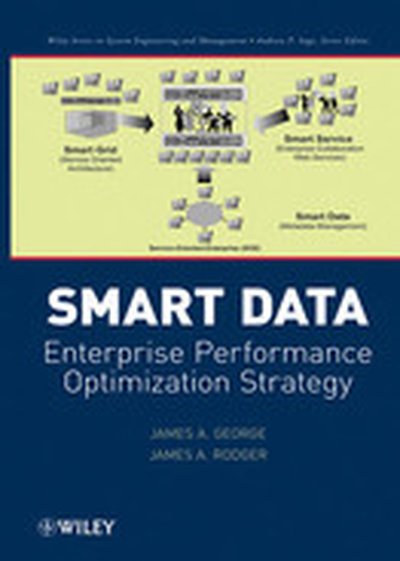
Smart Data: Enterprise Performance Optimization Strategy

The authors advocate attention to smart data strategy as an organizing element of enterprise performance optimization. They believe that "smart data" as a corporate priority could revolutionize government or commercial enterprise performance much like "six sigma" or "total quality" as organizing paradigms have done in the past. This revolution has not yet taken place because data historically resides in the province of the information resources organization. Solutions that render data smart are articulated in "technoid" terms versus the language of the board room. While books such as Adaptive Information by Pollock and Hodgson ably describe the current state of the art, their necessarily technical tone is not conducive to corporate or agency wide qualitative change.

SAS Functions by Example, Second Edition, 2nd Edition

Fully updated for SAS 9.2, Ron Cody's SAS Functions by Example, Second Edition, is a must-have reference for anyone who programs in Base SAS. With the addition of functions new to SAS 9.2, this comprehensive reference manual now includes more than 200 functions, including new character, date and time, distance, probability, sort, and special functions. This new edition also contains more examples for existing functions and more details concerning optional arguments.

Like the first edition, the new edition also includes a list of SAS programs, an alphabetic list of all the functions in the book, and a comprehensive index of functions and tasks. Beginning and experienced SAS users will benefit from this useful reference guide to SAS functions.

This book is part of the SAS Press program.

Temporal Data Mining

From basic data mining concepts to state-of-the-art advances, this book covers the theory of the subject as well as its application in a variety of fields. It discusses the incorporation of temporality in databases as well as temporal data representation, similarity computation, data classification, clustering, pattern discovery, and prediction.

Oracle Coherence 3.5

If you're aiming to build high-performance applications that can scale seamlessly to accommodate hundreds or thousands of users, Oracle Coherence 3.5 may be just the tool you need. This book serves as a comprehensive guide to utilizing Oracle's Coherence data grid technology, emphasizing how to design and develop robust, scalable, and responsive applications. What this Book will help me do Design effective domain objects optimized for Oracle Coherence to enhance scalability and performance. Implement distributed caching to efficiently manage data across your application's architecture. Leverage real-time event processing with Coherence to provide up-to-date information to users. Integrate Coherence with other persistence solutions like JDBC and Hibernate for versatile, robust data management. Utilize parallel processing capabilities within the Coherence grid to achieve superior application performance. Author(s) Aleksandar Seovic, the author of this book, has substantial experience in developing enterprise-scale applications and a deep expertise in utilizing Oracle Coherence. They are dedicated to writing technical material that is both approachable and comprehensive for developers and architects. Their industry insights ensure that this book addresses real-world challenges effectively. Who is it for? This book is ideal for architects and developers designing Internet and enterprise applications requiring high scalability and responsiveness. Readers should have a solid understanding of Java and familiarity with Domain-Driven Design (DDD) principles. If you aim to optimize application performance through technologies like Oracle Coherence, you'll find valuable insights here.

The Power of Appreciative Inquiry, 2nd Edition

The Power of Appreciative Inquiry describes the internationally embraced approach to organizational change that dramatically improves performance by engaging people to study, discuss, and build upon what's working – strengths – rather than trying to fix what's not. Diana Whitney and Amanda Trosten-Bloom, pioneers in the development and practice of Appreciative Inquiry (AI), provide a menu of eight results-oriented applications, along with case examples from a wide range of organizations to illustrate Appreciative Inquiry in action. A how-to book, this is the most authoritative and accessible guide to the newest ideas and practices in the field of Appreciative Inquiry since its inception in 1985. The second edition includes new examples, tools, and tips for using AI to create an enduring capacity for positive change, along with a totally new chapter on award-winning community applications of Appreciative Inquiry.

Sales and Market Forecasting for Entrepreneurs

This book, written by a 30-year veteran in planning, market research, and running a business, shows you how to educate your guesses with real world common sense, to make practical business forecasts, and to use them to manage your business better. While it goes through some of the more sophisticated techniques as well, its focus is on what people really use. The book includes cases, stories, examples, and real experience.

Numbers Rule Your World: The Hidden Influence of Probabilities and Statistics on Everything You Do

WHAT ARE THE ODDS YOU'LL WIN THE LOTTERY? How long will your kids wait in line at Disney World? Who decides that “standardized tests” are fair? Why do highway engineers build slow-moving ramps? What does it mean, statistically, to be an “Average Joe”? NUMBERS RULE YOUR WORLD In the popular tradition of eye-opening bestsellers like Freakonomics, The Tipping Point, and Super Crunchers, this fascinating book from renowned statistician and blogger Kaiser Fung takes you inside the hidden world of facts and figures that affect you every day, in every way. These are the statistics that rule your life, your job, your commute, your vacation, your food, your health, your money, and your success. This is how engineers calculate your quality of living, how corporations determine your needs, and how politicians estimate your opinions. These are the numbers you never think about-even though they play a crucial role in every single aspect of your life. What you learn may surprise you, amuse you, or even enrage you. But there's one thing you won't be able to deny: Numbers Rule Your World… "An easy read with a big benefit." —Fareed Zakaria, CNN "For those who have anxiety about how organization data-mining is impacting their world, Kaiser Fung pulls back the curtain to reveal the good and the bad of predictive analytics." —Ian Ayres,Yale professor and author of Super Crunchers: Why Thinking By Numbers is the New Way to Be Smart "A book that engages us with stories that a journalist would write, the compelling stories behind the stories as illuminated by the numbers, and the dynamics that the numbers reveal." —John Sall, Executive Vice President, SAS Institute "Little did I suspect, when I picked up Kaiser Fung's book, that I would become so entranced by it - an illuminating and accessible exploration of the power of statistical analysis for those of us who have no prior training in a field that he explores so ably." —Peter Clarke, author of Keynes: The Rise, Fall, and Return of the 20th Century's Most Influential Economist "A tremendous book. . . . If you want to understand how to use statistics, how to think with numbers and yet to do this without getting lost in equations, if you've been looking for the book to unlock the door to logical thinking about problems, well, you will be pleased to know that you are holding that book in your hands." —Daniel Finkelstein, Executive Editor, The Times of London "I thoroughly enjoyed this accessible book and enthusiastically recommend it to anyone looking to understand and appreciate the role of statistics and data analysis in solving problems and in creating a better world." —Michael Sherman, Texas A&M University, American Statistician

Common Statistical Methods for Clinical Research with SAS Examples, Third Edition, 3rd Edition

Glenn Walker and Jack Shostak's Common Statistical Methods for Clinical Research with SAS Examples, Third Edition, is a thoroughly updated edition of the popular introductory statistics book for clinical researchers. This new edition has been extensively updated to include the use of ODS graphics in numerous examples as well as a new emphasis on PROC MIXED. Straightforward and easy to use as either a text or a reference, the book is full of practical examples from clinical research to illustrate both statistical and SAS methodology. Each example is worked out completely, step by step, from the raw data.

Common Statistical Methods for Clinical Research with SAS Examples, Third Edition, is an applications book with minimal theory. Each section begins with an overview helpful to nonstatisticians and then drills down into details that will be valuable to statistical analysts and programmers. Further details, as well as bonus information and a guide to further reading, are presented in the extensive appendices. This text is a one-source guide for statisticians that documents the use of the tests used most often in clinical research, with assumptions, details, and some tricks--all in one place.

This book is part of the SAS Press program.

Analytics at Work

Most companies have massive amounts of data at their disposal, yet fail to utilize it in any meaningful way. But a powerful new business tool - analytics - is enabling many firms to aggressively leverage their data in key business decisions and processes, with impressive results. In their previous book, Competing on Analytics, Thomas Davenport and Jeanne Harris showed how pioneering firms were building their entire strategies around their analytical capabilities. Rather than "going with the gut" when pricing products, maintaining inventory, or hiring talent, managers in these firms use data, analysis, and systematic reasoning to make decisions that improve efficiency, risk-management, and profits. Now, in Analytics at Work, Davenport, Harris, and coauthor Robert Morison reveal how any manager can effectively deploy analytics in day-to-day operations—one business decision at a time. They show how many types of analytical tools, from statistical analysis to qualitative measures like systematic behavior coding, can improve decisions about everything from what new product offering might interest customers to whether marketing dollars are being most effectively deployed. Based on all-new research and illustrated with examples from companies including Humana, Best Buy, Progressive Insurance, and Hotels.com, this implementation-focused guide outlines the five-step DELTA model for deploying and succeeding with analytical initiatives. You'll learn how to: · Use data more effectively and glean valuable analytical insights · Manage and coordinate data, people, and technology at an enterprise level · Understand and support what analytical leaders do · Evaluate and choose realistic targets for analytical activity · Recruit, hire, and manage analysts Combining the science of quantitative analysis with the art of sound reasoning, Analytics at Work provides a road map and tools for unleashing the potential buried in your company's data.

The Critical Assessment of Research

This book examines the following factors: sponsorship of research, control of the dissemination of research, effects of dominant research paradigms, financial interests of authors, publishers, and editors, role of new technologies (for example, Web 2.0). It is widely accepted among researchers and educators that the peer review process, the reputation of the publisher and examination of the author's credentials are the gold standards for assessing the quality of research and information. However, the traditional gold standards are not sufficient, and the effective evaluation of information requires the consideration of additional factors. Controversies about positive evaluations of new medications that appear in peer-reviewed journals, the financial reports on Enron prior to the revelations that led to its collapse, and obstacles to the publication of research that does not conform to dominant paradigms are just a few examples that indicate the need for a more sophisticated and nuanced approach to evaluating information. Each of the factors is discussed in a factual manner, supported by many examples that illustrate not only the nature of the issues but also their complexity. Practical suggestions for the evaluation of information are an integral part of the text. Highlights frequently overlooked criteria for evaluating research Challenges the assumption that the gold standards for evaluation are sufficient Examines the role of new technologies in evaluating and disseminating research

Oracle Database 11g PL/SQL Programming Workbook

Ramp Up Your PL/SQL Programming Skills Master PL/SQL through the hands-on exercises, extensive examples, and real-world projects inside this Oracle Press guide. Filled with best practices, Oracle Database 11g PL/SQL Programming Workbook covers all the latest features and enhancements of the language. Mastery checks at the end of each chapter reinforce the material covered, and sample code from the book is available for download. Even experienced Oracle professionals will benefit from this practical resource. Understand the Oracle development architecture and the mechanics of connections Work with data types, structures, blocks, cursors, and PL/SQL semantics Write, deploy, and use functions, procedures, and packages Manage transactions and more Use dynamic SQL statements in real-world applications Support online transaction processing and data warehousing applications with external tables Find syntax samples and best practices to solve problems Write, deploy, and use object types For a complete list of Oracle Press titles, visit www.OraclePressBooks.com

Practical Financial Optimization: A Library of GAMS Models

In Practical Financial Optimization: A Library of GAMS Models, the authors provide a diverse set of models for portfolio optimization, based on the General Algebraic Modelling System. 'GAMS' consists of a language which allows a high-level, algebraic representation of mathematical models and a set of solvers – numerical algorithms – to solve them. The system was developed in response to the need for powerful and flexible front-end tools to manage large, real-life models. The work begins with an overview of the structure of the GAMS language, and discusses issues relating to the management of data in GAMS models. The authors provide models for mean-variance portfolio optimization which address the question of trading off the portfolio expected return against its risk. Fixed income portfolio optimization models perform standard calculations and allow the user to bootstrap a yield curve from bond prices. Dedication models allow for standard portfolio dedication with borrowing and re-investment decisions, and are extended to deal with maximisation of horizon return and to incorporate various practical considerations on the portfolio tradeability. Immunization models provide for the factor immunization of portfolios of treasury and corporate bonds. The scenario-based portfolio optimization problem is addressed with mean absolute deviation models, tracking models, regret models, conditional VaR models, expected utility maximization models and put/call efficient frontier models. The authors employ stochastic programming for dynamic portfolio optimization, developing stochastic dedication models as stochastic extensions of the fixed income models discussed in chapter 4. Two-stage and multi-stage stochastic programs extend the scenario models analysed in Chapter 5 to allow dynamic rebalancing of portfolios as time evolves and new information becomes known. Models for structuring index funds and hedging interest rate risk on international portfolios are also provided. The final chapter provides a set of 'case studies': models for large-scale applications of portfolio optimization, which can be used as the basis for the development of business support systems to suit any special requirements, including models for the management of participating insurance policies and personal asset allocation. The title will be a valuable guide for quantitative developers and analysts, portfolio and asset managers, investment strategists and advanced students of finance.

Private Security and the Investigative Process, 3rd Edition

Detailing best practices and trade secrets for private sector security investigations, Private Security and the Investigative Process, Third Edition provides complete coverage of the investigative process. Fully updated, this edition covers emerging technology, revised legal and practical considerations for conducting interviews, and new information on case evaluation. Written by a recognized expert in security, criminal justice, ethics, and the law-with over three decades of experience-the updated edition of this popular text covers concepts and techniques that can be applied to a variety of investigations including fraud, insurance, private, and criminal. It details the collection and preservation of evidence, the handling of witnesses, surveillance techniques, background investigations, and report writing. This new edition includes: More than 80 new or updated forms, checklists, charts, and illustrations Updated proprietary information from Pinkerton, Wackenhut, and other leading security companies Increased emphasis on software and technological support products A closer examination of periodical literature and government publications Authoritative, yet accessible, this book is an important reference for private investigators and security professionals. Complete with numerous forms, checklists, and web exercises, it provides the tools and understanding required to conduct investigations that are professional, ethical, and effective.

Random Data: Analysis and Measurement Procedures, Fourth Edition

A timely update of the classic book on the theory and application of random data analysis First published in 1971, Random Data served as an authoritative book on the analysis of experimental physical data for engineering and scientific applications. This Fourth Edition features coverage of new developments in random data management and analysis procedures that are applicable to a broad range of applied fields, from the aerospace and automotive industries to oceanographic and biomedical research. This new edition continues to maintain a balance of classic theory and novel techniques. The authors expand on the treatment of random data analysis theory, including derivations of key relationships in probability and random process theory. The book remains unique in its practical treatment of nonstationary data analysis and nonlinear system analysis, presenting the latest techniques on modern data acquisition, storage, conversion, and qualification of random data prior to its digital analysis. The Fourth Edition also includes: A new chapter on frequency domain techniques to model and identify nonlinear systems from measured input/output random data New material on the analysis of multiple-input/single-output linear models The latest recommended methods for data acquisition and processing of random data Important mathematical formulas to design experiments and evaluate results of random data analysis and measurement procedures Answers to the problem in each chapter Comprehensive and self-contained, Random Data, Fourth Edition is an indispensible book for courses on random data analysis theory and applications at the upper-undergraduate and graduate level. It is also an insightful reference for engineers and scientists who use statistical methods to investigate and solve problems with dynamic data.

The Kimball Group Reader: Relentlessly Practical Tools for Data Warehousing and Business Intelligence

An unparalleled collection of recommended guidelines for data warehousing and business intelligence pioneered by Ralph Kimball and his team of colleagues from the Kimball Group. Recognized and respected throughout the world as the most influential leaders in the data warehousing industry, Ralph Kimball and the Kimball Group have written articles covering more than 250 topics that define the field of data warehousing. For the first time, the Kimball Group's incomparable advice, design tips, and best practices have been gathered in this remarkable collection of articles, which spans a decade of data warehousing innovation. Each group of articles is introduced with original commentaries that explain their role in the overall lifecycle methodology developed by the Kimball Group. These practical, hands-on articles are fully updated to reflect current practices and terminology and cover the complete lifecycle—including project planning, requirements gathering, dimensional modeling, ETL, and business intelligence and analytics. This easily referenced collection is nothing less than vital if you are involved with data warehousing or business intelligence in any capacity.

SQL For Dummies®, 7th Edition

Learn SQL the fun and easy way – no programming experience needed! SQL For Dummies, 7th Edition, shows programmers and web developers how to use SQL to build relational databases and get valuable information from them. This book covers the core features of the SQL language. Topics covered include how to use SQL to structure a DBMS and implement a database design; secure a database; and retrieve information from a database. This edition will be revised to reflect the new enhancements of SQL/XML:2008. The latest update of the perennial bestselling SQL For Dummies, which has sold more than 210,000 units in six editions. SQL is the most popular database language in the world Covers creating, accessing, manipulating, maintaining, and storing information in relational database management systems (DBMS) such as Access, Oracle, SQL Server, and MySQL. Includes new content on using SQL with XML to power data-driven web sites and using SQL with Access 2010 Whether you're daunted by database development or a system admin star, SQL For Dummies, 7th Dummies will have you working your web site in no time at all.

How to Evaluate the Job You’ve Been Offered

This Element is an excerpt from Rebound: A Proven Plan for Starting Over After Job Loss (ISBN: 9780137021147) by Martha I. Finney. Available in print and digital formats. Now that they’ve offered a job, should you take it? Analyze prospective employers rationally and make decisions you won’t regret! Setting aside money for just a moment, so much more goes into deciding whether a potential employer is right for you. You need to know whether the company is a good fit, a reasonably logical choice on your professional progression--not just an invitation to be unemployed again....