talk-data.com talk-data.com

Topic

data

5765

tagged

Activity Trend

3 peak/qtr
2020-Q1 2026-Q1

Activities

5765 activities · Newest first

R Programming for Bioinformatics

Due to its data handling and modeling capabilities as well as its flexibility, R is becoming the most widely used software in bioinformatics. R Programming for Bioinformatics explores the programming skills needed to use this software tool for the solution of bioinformatics and computational biology problems. Drawing on the author’s first-hand experiences as an expert in R, the book begins with coverage on the general properties of the R language, several unique programming aspects of R, and object-oriented programming in R. It presents methods for data input and output as well as database interactions. The author also examines different facets of string handling and manipulations, discusses the interfacing of R with other languages, and describes how to write software packages. He concludes with a discussion on the debugging and profiling of R code. With numerous examples and exercises, this practical guide focuses on developing R programming skills in order to tackle problems encountered in bioinformatics and computational biology.

IBM InfoSphere DataStage Data Flow and Job Design

IBM Information Server is a revolutionary new software platform that helps organizations derive more value from the complex heterogeneous information spread across their systems. It enables organizations to integrate disparate data and deliver trusted information wherever and whenever needed, in line and in context, to specific people, applications, and processes. IBM InfoSphere™ DataStage® is a critical component of the IBM Information Server, and the parallel framework of IBM InfoSphere DataStage is also the foundation for IBM InfoSphere QualityStage and IBM InfoSphere Information Analyzer components. This IBM® Redbooks® publication develops usage scenarios that describe the implementation of IBM InfoSphere DataStage flow and job design with special emphasis on the new features such as the distributed transaction stage (DTS) in Version 8.0.1, slowly changing dimensions stage ( Version 8.0.1), complex flat file stage (Version 8.0.1), and access to mainframe data.

Microsoft SQL Server 2008 Reporting Services, 3rd Edition

The Definitive Guide to Microsoft SQL Server 2008 Reporting Services Create and deliver data-rich reports across the enterprise using this complete server-based reporting solution. Written by a member of the original Reporting Services development team, Microsoft SQL Server 2008 Reporting Services covers the entire report-building and distribution process, including data extraction, integration with desktop and Web applications, and end-user access. The book explains how to maximize all of the powerful features, including the new Tablix data format, as well as enhanced performance, scalability, and visualization capabilities. Install, configure, and customize SQL Server 2008 Reporting Services Create SELECT queries to extract data Generate reports from the Report Wizard and from scratch Add charts, images, and gauges Build reusable report templates Use the new Tablix data format to create reports with any structure Export reports to Word, Excel, PDF, HTML, XML, and other formats Enable end-user access to reports via the Report Server and its Report Manager web interface

Mind Mapping For a Business Advantage

Today's information environment demands that we all save time, improve efficiency, and be more creative in our thinking. Mind Mapping is an essential business tool you can add to your intellectual armory. This Infoline will introduce you to the concept of Mind Mapping. You will learn how to read and create Mind Maps, use Mind Maps for common business and training processes, and increase your creativity and effectiveness by using Mind Maps. Trainers can more specifically use Mind Maps to outline prospective courses or programs, illustrate a business case for new projects or funding, organize training program content, l generate ideas during meetings and training sessions, andl draw connections between business needs and developmental efforts.

The Little SAS® Book: A Primer, Fourth Edition

Now in its fourth edition, The Little SAS Book is a classic, helping many people learn SAS programming. Authors Lora Delwiche and Susan Slaughter's friendly, easy-to-read writing style gently introduces readers to the most commonly used features of the SAS language. Topics include basic SAS concepts such as the DATA and PROC steps, inputting data, modifying and combining data sets, summarizing data, producing reports, and debugging SAS programs. Each topic is presented in a self-contained two-page layout complete with examples and graphics. This clear and concise format enables new users to get up and running quickly, while the examples allow readers to type in the program and see it work! New topics in the fourth edition include ODS Graphics for statistical procedures, PROC SGPLOT for graphics, creating new variables in PROC REPORT with a COMPUTE block, WHERE= data set option, SORTSEQ=LINGUISTIC option in PROC SORT, and more functions, including ANYALPHA, CAT, PROPCASE, and YRDIF.

Time Series Analysis: Forecasting and Control, Fourth Edition

A modernized new edition of one of the most trusted books on time series analysis. Since publication of the first edition in 1970, Time Series Analysis has served as one of the most influential and prominent works on the subject. This new edition maintains its balanced presentation of the tools for modeling and analyzing time series and also introduces the latest developments that have occurred n the field over the past decade through applications from areas such as business, finance, and engineering. The Fourth Edition provides a clearly written exploration of the key methods for building, classifying, testing, and analyzing stochastic models for time series as well as their use in five important areas of application: forecasting; determining the transfer function of a system; modeling the effects of intervention events; developing multivariate dynamic models; and designing simple control schemes. Along with these classical uses, modern topics are introduced through the book's new features, which include: A new chapter on multivariate time series analysis, including a discussion of the challenge that arise with their modeling and an outline of the necessary analytical tools New coverage of forecasting in the design of feedback and feedforward control schemes A new chapter on nonlinear and long memory models, which explores additional models for application such as heteroscedastic time series, nonlinear time series models, and models for long memory processes Coverage of structural component models for the modeling, forecasting, and seasonal adjustment of time series A review of the maximum likelihood estimation for ARMA models with missing values Numerous illustrations and detailed appendices supplement the book,while extensive references and discussion questions at the end of each chapter facilitate an in-depth understanding of both time-tested and modern concepts. With its focus on practical, rather than heavily mathematical, techniques, time Series Analysis, Fourth Edition is the upper-undergraduate and graduate levels. this book is also an invaluable reference for applied statisticians, engineers, and financial analysts.

XSLT, 2nd Edition

After years of anticipation and delay, the W3C finally released the XSLT 2.0 standard in January 2007. The revised edition of this classic book offers practical, real-world examples that demonstrate how you can apply XSLT stylesheets to XML data using either the new specification, or the older XSLT 1.0 standard. XSLT is a critical language for converting XML documents into other formats, such as HTML code or a PDF file. With XSLT, you get a thorough understanding of XSLT and XPath and their relationship to other web standards, along with recommendations for a honed toolkit in an open platform-neutral, standards-based environment. This book: Covers the XSLT basics, including simple stylesheets and methods for setting up transformation engines Walks you through the many parts of XSLT, particularly XSLT's template-based approach to transformations Applies both XSLT 1.0 and 2.0 solutions to the same problems, helping you decide which version of XSLT is more appropriate for your project Includes profuse examples that complement both the tutorial and the reference material The new edition of XSLT has been updated thoroughly to explain XSLT 2.0's many dependencies, notably XML Schema and XPath 2.0. Want to find out how the 2.0 specification improves on the old? This book will explain.

A Developer’s Guide to Data Modeling for SQL Server: Covering SQL Server 2005 and 2008

“ explains the concepts and practice of data modeling with a clarity that makes the technology accessible to anyone building databases and data-driven applications. A Developer’s Guide to Data Modeling for SQL Server “Eric Johnson and Joshua Jones combine a deep understanding of the science of data modeling with the art that comes with years of experience. If you’re new to data modeling, or find the need to brush up on its concepts, this book is for you.” — Peter Varhol, Executive Editor, Redmond Magazine Model SQL Server Databases That Work Better, Do More, and Evolve More Smoothly Effective data modeling is essential to ensuring that your databases will perform well, scale well, and evolve to meet changing requirements. However, if you’re modeling databases to run on Microsoft SQL Server 2008 or 2005, theoretical or platform-agnostic data modeling knowledge isn’t enough: models that don’t reflect SQL Server’s unique real-world strengths and weaknesses often lead to disastrous performance. is a practical, SQL Server-specific guide to data modeling for every developer, architect, and administrator. This book offers you invaluable start-to-finish guidance for designing new databases, redesigning existing SQL Server data models, and migrating databases from other platforms. A Developer’s Guide to Data Modeling for SQL Server You’ll begin with a concise, practical overview of the core data modeling techniques. Next, you’ll walk through requirements gathering and discover how to convert requirements into effective SQL Server logical models. Finally, you’ll systematically transform those logical models into physical models that make the most of SQL Server’s extended functionality. All of this book’s many examples are available for download from a companion Web site. This book enables you to Understand your data model’s physical elements, from storage to referential integrity Provide programmability via stored procedures, user-defined functions, triggers, and .NET CLR integration Normalize data models, one step at a time Gather and interpret requirements more effectively Learn an effective methodology for creating logical models Overcome modeling problems related to entities, attribute, data types, storage overhead, performance, and relationships Create physical models—from establishing naming guidelines through implementing business rules and constraints Use SQL Server’s unique indexing capabilities, and overcome their limitations Create abstraction layers that enhance security, extensibility, and flexibility

The Definitive Guide to Terracotta: Cluster the JVM™ for Spring, Hibernate, and POJO Scalability

Get the definitive guide on all the fundamentals of Terracotta as well as user secrets, recipes, and prepackaged frameworks. Written by Terracotta's chief technology officer Ari Zilka and his team, The Definitive Guide to Terracotta: Cluster the JVM for Spring, Hibernate and POJO Scalability covers the following: High Availability (HA) nth degree scaling and clustering for traditional J2EE and Java EE 5 applications (using Seam or other application) as well as Spring-based enterprise applications Everyday Terracotta using its prepackaged frameworks and integration recipes, including configuration and customization for your application tuning, no matter the scale Power user secrets available, including config modules, customized advanced performance tuning, SDLC, Maven, and more

Troubleshooting Oracle Performance

What do you do when your database application isn't running fast enough? You troubleshoot, of course. Finding the slow part of an application is often the easy part of the battle. It's finding a solution that's difficult. Troubleshooting Oracle Performance helps by providing a systematic approach to addressing the underlying causes of poor database application performance. Written for developers by an application developer who has learned by doing Gives a systematic approach to solving database application performance problems Helps you plan for performance as you would for any other application requirement What you'll learn See how to treat and plan for performance as a basic application requirement Identify performance problems using a systematic and repeatable approach Configure your query optimizer to meet your application performance goals Optimize table accesses, joins, and physical table layout Read and recognize inefficient SQL execution plans Reduce inefficiencies from too much procedural code Who this book is for For application developers and database administrators involved in troubleshooting performance problems of Oracle-based applications.

SQL for Microsoft Access, 2nd Edition

SQL for Microsoft Access (2nd Edition) provides a guide to getting the most out of Microsoft Access through the use of Structured Query Language. Step-by-step examples demonstrate how to use SQL script to create tables, add records to tables, and retrieve and manage records. Readers will also learn about calculated fields, Access projects, and the integration of SQL script in VBA and ASP code. Explore the relational database structure and the basics of SQL. Understand how table joins, unions, and subqueries are used to retrieve records from multiple tables simultaneously. Learn how to filter records and group data. Discover how to create parameter queries that prompt users for data. Test your knowledge and comprehension with the end-of-chapter quizzes and projects.

High Performance MySQL, 2nd Edition

High Performance MySQL is the definitive guide to building fast, reliable systems with MySQL. Written by noted experts with years of real-world experience building very large systems, this book covers every aspect of MySQL performance in detail, and focuses on robustness, security, and data integrity. High Performance MySQL teaches you advanced techniques in depth so you can bring out MySQL's full power. Learn how to design schemas, indexes, queries and advanced MySQL features for maximum performance, and get detailed guidance for tuning your MySQL server, operating system, and hardware to their fullest potential. You'll also learn practical, safe, high-performance ways to scale your applications with replication, load balancing, high availability, and failover. This second edition is completely revised and greatly expanded, with deeper coverage in all areas. Major additions include: Emphasis throughout on both performance and reliability Thorough coverage of storage engines, including in-depth tuning and optimizations for the InnoDB storage engine Effects of new features in MySQL 5.0 and 5.1, including stored procedures, partitioned databases, triggers, and views A detailed discussion on how to build very large, highly scalable systems with MySQL New options for backups and replication Optimization of advanced querying features, such as full-text searches Four new appendices The book also includes chapters on benchmarking, profiling, backups, security, and tools and techniques to help you measure, monitor, and manage your MySQL installations.

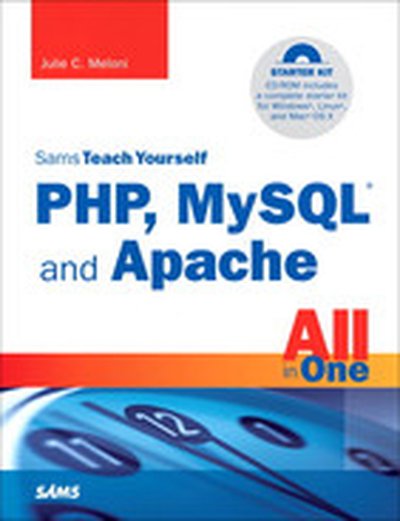
Sams Teach Yourself PHP, MySQL and Apache All in One, Fourth Edition

Sams Teach Yourself PHP, MySQL® and Apache All in One Fourth Edition Julie C. Meloni Starter Kit CD-ROM includes a complete starter kit for Windows®, Linux®, and Mac® OS X In just a short time, you can learn how to use PHP, MySQL, and Apache together to create dynamic, interactive websites and applications using the three leading open-source web development technologies. Using a straightforward, step-by-step approach, each lesson in this book builds on the previous ones, enabling you to learn the essentials of PHP scripting, MySQL databases, and the Apache web server from the ground up. Regardless of whether you run Linux, Windows, or Mac OS X, the enclosed CD includes a complete starter kit that lets you install all the software you need to set up a stable environment for learning, testing, and production. Learn how to… Install, configure, and set up the PHP scripting language, the MySQL database system, and the Apache Web server Get these technologies to work together to create a dynamic, database-backed website Interact with MySQL using PHP Work with forms and files Create a web-based discussion forum or mailing list Add a storefront and shopping cart to your site Optimize your MySQL databases Fine-tune the Apache server’s performance Restrict access to your applications Set up a secure web server Julie C. Meloni is the technical director for i2i Interactive, a multimedia company located in Los Altos, California. She has been developing web-based applications since the early days of the web, and is the author of several books and articles on web-based programming languages and database topics, including Sams Teach Yourself MySQL in 24 Hours. CD-ROM Includes A complete PHP, MySQL, and Apache starter kit for Windows®, Linux®, or Mac® OS X. Category: Web Development Covers: PHP 5.2, MySQL 5, Apache 2.2 User Level: Beginning

Blown to Bits: Your Life, Liberty, and Happiness After the Digital Explosion, First Edition

“If you want to understand the future before it happens, you’ll love this book. If you want to change the future before it happens to you, this book is required reading.” – Reed Hundt, former Chairman of the Federal Communications Commission “There is no simpler or clearer statement of the radical change that digital technologies will bring, nor any book that better prepares one for thinking about the next steps.” – Lawrence Lessig, Stanford Law School and Author of Code and Other Laws of Cyberspace “ Blown to Bits will blow you away. In highly accessible and always fun prose, it explores all the nooks and crannies of the digital universe, exploring not only how this exploding space works but also what it means.” – Debora Spar, President of Barnard College, Author of Ruling the Waves and The Baby Business “This is a wonderful book–probably the best since Hal Varian and Carl Schultz wrote Digital Rules. The authors are engineers, not economists. The result is a long, friendly talk with the genie, out of the lamp, and willing to help you avoid making the traditional mistake with that all-important third wish.” – David Warsh, Author of Knowledge and the Wealth of Nations “ Blown to Bits is one of the clearest expositions I’ve seen of the social and political issues arising from the Internet. Its remarkably clear explanations of how the Net actually works lets the hot air out of some seemingly endless debates. You’ve made explaining this stuff look easy. Congratulations!” – David Weinberger, Coauthor of The Cluetrain Manifesto and Author of Everything Is Miscellaneous: The Power of the New Digital Disorder. “ Blown to Bits is a timely, important, and very readable take on how information is produced and consumed today, and more important, on the approaching sea change in the way that we as a society deal with the consequences.” – Craig Silverstein, Director of Technology, Google, Inc. “This book gives an overview of the kinds of issues confronting society as we become increasingly dependent on the Internet and the World Wide Web. Every informed citizen should read this book and then form their own opinion on these and related issues. And after reading this book you will rethink how (and even whether) you use the Web to form your opinions…” – James S. Miller, Senior Director for Technology Policy and Strategy, Microsoft Corporation “Most writing about the digital world comes from techies writing about technical matter for other techies or from pundits whose turn of phrase greatly exceeds their technical knowledge. In Blown to Bits, experts in computer science address authoritatively the practical issues in which we all have keen interest.” – Howard Gardner, Hobbs Professor of Cognition and Education, Harvard Graduate School of Education, Author of Multiple Intelligences and Changing Minds “Regardless of your experience with computers, Blown to Bits provides a uniquely entertaining and informative perspective from the computing industry’s greatest minds. A fascinating, insightful and entertaining book that helps you understand computers and their impact on the world in a whole new way. This is a rare book that explains the impact of the digital explosion in a way that everyone can understand and, at the same time, challenges experts to think in new ways.” – Anne Margulies, Assistant Secretary for Information Technology and Chief Information Officer of the Commonwealth of Massachusetts “ Blown to Bits is fun and fundamental. What a pleasure to see real teachers offering such excellent framework for students in a digital age to explore and understand their digital environment, code and law, starting with the insight of Claude Shannon. I look forward to you teaching in an open online school.” – Professor Charles Nesson, Harvard Law School, Founder, Berkman Center for Internet and Society “To many of us, computers and the Internet are magic. We make stuff, send stuff, receive stuff, and buy stuff. It’s all pointing, clicking, copying, and pasting. But it’s all mysterious. This book explains in clear and comprehensive terms how all this gear on my desk works and why we should pay close attention to these revolutionary changes in our lives. It’s a brilliant and necessary work for consumers, citizens, and students of all ages.” – Siva Vaidhyanathan, cultural historian and media scholar at the University of Virginia and author of Copyrights and Copywrongs: The Rise of Intellectual Property and How it Threatens Creativity “The world has turned into the proverbial elephant and we the blind men. The old and the young among us risk being controlled by, rather than in control of, events and technologies. Blown to Bits is a remarkable and essential Rosetta Stone for beginning to figure out how all of the pieces of the new world we have just begun to enter–law, technology, culture, information–are going to fit together. Will life explode with new possibilities, or contract under pressure of new horrors? The precipice is both exhilarating and frightening. Hal Abelson, Ken Ledeen, and Harry Lewis, together, have ably managed to describe the elephant. Readers of this compact book describing the beginning stages of a vast human adventure will be one jump ahead, for they will have a framework on which to hang new pieces that will continue to appear with remarkable speed. To say that this is a ‘must read’ sounds trite, but, this time, it’s absolutely true.” – Harvey Silverglate, criminal defense and civil liberties lawyer and writer Every day, billions of photographs, news stories, songs, X-rays, TV shows, phone calls, and emails are being scattered around the world as sequences of zeroes and ones: bits. We can’t escape this explosion of digital information and few of us want to–the benefits are too seductive. The technology has enabled unprecedented innovation, collaboration, entertainment, and democratic participation. But the same engineering marvels are shattering centuries-old assumptions about privacy, identity, free expression, and personal control as more and more details of our lives are captured as digital data. Can you control who sees all that personal information about you? Can email be truly confidential, when nothing seems to be private? Shouldn’t the Internet be censored the way radio and TV are? Is it really a federal crime to download music? When you use Google or Yahoo! to search for something, how do they decide which sites to show you? Do you still have free speech in the digital world? Do you have a voice in shaping government or corporate policies about any of this? Blown to Bits offers provocative answers to these questions and tells intriguing real-life stories. This book is a wake-up call to the human consequences of the digital explosion. Preface xiii Chapter 1: Digital Explosion: Why Is It Happening, and What Is at Stake? 1 Chapter 2: Naked in the Sunlight: Privacy Lost, Privacy Abandoned 19 Chapter 3: Ghosts in the Machine: Secrets and Surprises of Electronic Documents 73 Chapter 4: Needles in the Haystack: Google and Other Brokers in the Bits Bazaar 109 Chapter 5: Secret Bits: How Codes Became Unbreakable 161 Chapter 6: Balance Toppled: Who Owns the Bits? 195 Chapter 7: You Can’t Say That on the Internet: Guarding the Frontiers of Digital Expression 229 Chapter 8: Bits in the Air: Old Metaphors, New Technologies, and Free Speech 259 Conclusion: After the Explosion 295 Appendix: The Internet as System and Spirit 301 Endnotes 317 Index 347

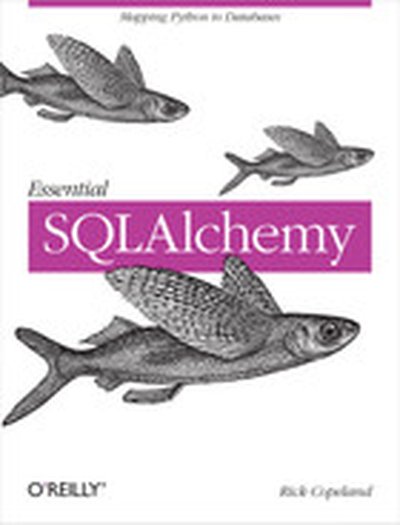
Essential SQLAlchemy

Essential SQLAlchemy introduces a high-level open-source code library that makes it easier for Python programmers to access relational databases such as Oracle, DB2, MySQL, PostgreSQL, and SQLite. SQLAlchemy has become increasingly popular since its release, but it still lacks good offline documentation. This practical book fills the gap, and because a developer wrote it, you get an objective look at SQLAlchemy's tools rather than an advocate's description of all the "cool" features. SQLAlchemy includes both a database server-independent SQL expression language and an object-relational mapper (ORM) that lets you map "plain old Python objects" (POPOs) to database tables without substantially changing your existing Python code. Essential SQLAlchemy demonstrates how to use the library to create a simple database application, walks you through simple queries, and explains how to use SQLAlchemy to connect to multiple databases simultaneously with the same Metadata. You also learn how to: Create custom types to be used in your schema, and when it's useful to use custom rather than built-in types Run queries, updates, and deletes with SQLAlchemy's SQL expression language Build an object mapper with SQLAlchemy, and understand the differences between this and active record patterns used in other ORMs Create objects, save them to a session, and flush them to the database Use SQLAlchemy to model object oriented inheritance Provide a declarative, active record pattern for use with SQLAlchemy using the Elixir extension Use the SQLSoup extension to provide an automatic metadata and object model based on database reflection In addition, you'll learn how and when to use other extensions to SQLAlchemy, including AssociationProxy, OrderingList, and more. Essential SQLAlchemy is the much-needed guide for every Python developer using this code library. Instead of a feature-by-feature documentation, this book takes an "essentials" approach that gives you exactly what you need to become productive with SQLAlchemy right away.

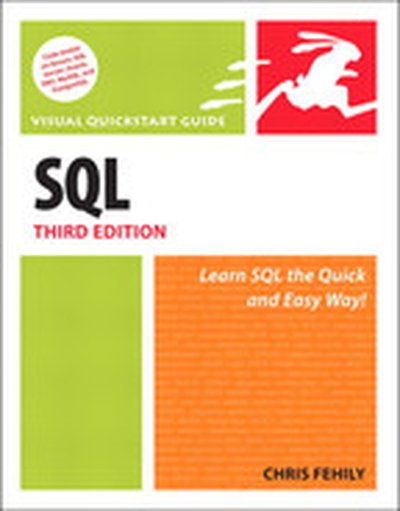
SQL: Visual QuickStart Guide, Third Edition

SQL is a standard interactive and programming language for querying and modifying data and managing databases. This task-based tutorial and reference guide takes the mystery out learning and applying SQL. After going over the relational database model and SQL syntax in the first few chapters, veteran author Chris Fehily immediately launches into the tasks that will get readers comfortable with SQL. In addition to covering all the SQL basics, this thoroughly updated reference contains a wealth of in-depth SQL knowledge and serves as an excellent reference for more experienced users.

Crystal Reports® 2008 For Dummies®

A report is only useful if those who receive it understand what it means. Knowing how to use Crystal Reports gives you the edge in producing reports from your database that really are crystal clear. Crystal Reports 2008 For Dummies is a quick and easy guide to get you going with the latest version of this bestselling report-writing software. In fact, it’s so popular that previous editions have made it a bestseller too. Crystal Reports 2008 For Dummies gives you just what you should know to produce the reports you’ll need most often, including how to: Pull specific information from your database, sort and group it, and find the details you need Use dynamic or cascading prompts Troubleshoot and print reports and save time with templates View reports on your LAN Write formulas to retrieve specific information Create and update OLAP reports Format reports, control page breaks, and even add graphics or Flash files Enhance your reports with charts and maps Use Crystal Reports in the enterprise There’s also a companion Web site with sample reports from the book and links to sites with more related information. With Crystal Reports 2008 For Dummies by your side, you’ll soon be able to create reports from simple to spectacular, whenever the need arises.

IBM Cognos 8 Business Intelligence: The Official Guide

The Only Authorized Guide to IBM Cognos 8 Business Intelligence Develop, deploy, and maintain a complete BI solution across your enterprise. IBM Cognos 8 Business Intelligence: The Official Guide shows you how to take full advantage of the robust service-oriented architecture and simplified role-based user interfaces. Learn how to create, share, and analyze data-rich reports that lead to increased productivity and better business decisions. Featuring real-world insight and expert tips, this is a must-have guide for IBM Cognos 8 Business Intelligence users of all levels, from administrators to end users. Measure and monitor performance using dashboards and scorecards Assign user roles and privileges Provide complete and consistent access to a broad range of data sources via Cognos Connection Use Cognos 8 Go! to extend BI to Office applications, mobile devices, and search engines Enable business users to create reports with Query Studio Develop new insights by exploring data in multiple dimensions and perspectives with Analysis Studio Build Dimensional Reports with Report Studio Use Event Studio to identify and deliver mission-critical information Create, modify, organize, and publish a model from Cognos Framework Manager Implement sound security measures Take advantage of the management tools in Cognos Administration to ensure maximum reliability and availability