talk-data.com talk-data.com

Topic

data

5765

tagged

Activity Trend

3 peak/qtr
2020-Q1 2026-Q1

Activities

5765 activities · Newest first

Say It With Charts: The Executive’s Guide to Visual Communication, 4th Edition

Step-by-step guide to creating compelling, memorable presentations A chart that once took ten hours to prepare can now be produced by anyone with ten minutes and a computer keyboard. What hasn't changed, however, are the basics behind creating a powerful visual - what to say, why to say it, and how to say it for the most impact. In Say It With Charts, Fourth Edition --the latest, cutting-edge edition of his best-selling presentation guide -- Gene Zelazny reveals time-tested tips for preparing effective presentations. Then, this presentation guru shows you how to combine those tips with today's hottest technologies for sharper, stronger visuals. Look to this comprehensive presentation encyclopedia for information on: * How to prepare different types of charts -- pie, bar, column, line, or dot -- and when to use each * Lettering size, color choice, appropriate chart types, and more * Techniques for producing dramatic eVisuals using animation, scanned images, sound, video, and links to pertinent websites
Sams Teach Yourself Transact-SQL in 21 Days, Second Edition

Sams Teach Yourself Transact-SQL in 21 Days, 2E will teach programmers how to develop Transact-SQL queries. There will be a focus on providing methods for improving productivity without a reducing performance. Specifically, the reader will:Learn Transact-SQL syntax Learn how to add, delete, and modifying data using Transact-SQL Understand coding standards Review variations from ANSI-standard SQL Be presented with basic server operations. Recognize performance issues with queries. This book will also include:Constructs such as CUBE, ROLLUP, CASE, and JOIN. Techniques to solve complex problems How the server uses indexes Methods to write (correctly) stored procedures and triggers. Templates of procedures and triggers (reference) Advanced Topics such as: Outer and self joins Temporary tables Sub-queries.

The Data Model Resource Book, Vol. 2: A Library of Data Models for Specific Industries

A quick and reliable way to build proven databases for core business functions Industry experts raved about The Data Model Resource Book when it was first published in March 1997 because it provided a simple, cost-effective way to design databases for core business functions. Len Silverston has now revised and updated the hugely successful First Edition, while adding a companion volume to take care of more specific requirements of different businesses. Each volume is accompanied by a CD-ROM, which is sold separately. Each CD-ROM provides powerful design templates discussed in the books in a ready-to-use electronic format, allowing companies and individuals to develop the databases they need at a fraction of the cost and a third of the time it would take to build them from scratch. With each business function boasting its own directory, this CD-ROM provides a variety of data models for specific implementations in such areas as financial services, insurance, retail, healthcare, universities, and telecom.

Understanding IBM eServer pSeries Performance and Sizing

This IBM Redbooks publication is an update to the successful first edition of Understanding IBM RS/6000 Performance and Sizing, SG24-4810 that was published in 1997. It gives a broad overview of IBM RS/6000 and IBM eServer pSeries performance and sizing. Contained in this book is a close-up, performance related view of the different hardware architectures IBM offers in its RS/6000 and eServer pSeries systems, including system, processor, memory, storage, and network architectures. One chapter is dedicated to general sizing rules for a number of environments such as database sizing, IBM HTTP server sizing, Net.Commerce sizing, and Lotus Domino sizing. The reader will also find a description of the industry benchmarks that are performed on IBM systems as well as an overview of AIX performance tools. This book is intended to be a handbook for anyone who wants to gain a deeper understanding of IBM RS/6000 and IBM eServer pSeries architectures from a performance perspective.

Designing SQL Server 2000 Databases

The Microsoft .NET initiative is the future of e-commerce - making it possible for organisations to build a secure, reliable e-commerce infrastructure. This is the first book to outline the capabilities of SQL Server 2000, one of the key components of .NET. SQL Server 2000 introduces powerful new data mining functionality designed specifically to capture and process customer profiles and to predict future buying patterns on e-commerce sites. Designing SQL Server 2000 Databases addresses the needs of IT professionals migrating from the popular SQL 7 databases to the new SQL 2000, as well as those who are starting from scratch. Covers all key features of SQL Server 2000 including; XML support, enhanced data-mining capabilities and integration with Windows 2000 While there are many books available on SQL 7 - this is the first to be announced for SQL 2000 Free ongoing customer support and information upgrades

Corporate Information Factory

The "father of data warehousing" incorporates the latest technologies into his blueprint for integrated decision support systems Today's corporate IT and data warehouse managers are required to make a small army of technologies work together to ensure fast and accurate information for business managers. Bill Inmon created the to solve the needs of these managers. Since the First Edition, the design of the factory has grown and changed dramatically. This Second Edition, revised and expanded by 40% with five new chapters, incorporates these changes. This step-by-step guide will enable readers to connect their legacy systems with the data warehouse and deal with a host of new and changing technologies, including Web access mechanisms, e-commerce systems, ERP (Enterprise Resource Planning) systems. The book also looks closely at exploration and data mining servers for analyzing customer behavior and departmental data marts for finance, sales, and marketing. Corporate Information Factory

Learning XML

The arrival of support for XML--the Extensible Markup Language--in browsers and authoring tools has followed a long period of intense hype. Major databases, authoring tools (including Microsoft's Office 2000), and browsers are committed to XML support. Many content creators and programmers for the Web and other media are left wondering, "What can XML and its associated standards really do for me?" Getting the most from XML requires being able to tag and transform XML documents so they can be processed by web browsers, databases, mobile phones, printers, XML processors, voice response systems, and LDAP directories, just to name a few targets. In Learning XML, the author explains XML and its capabilities succinctly and professionally, with references to real-life projects and other cogent examples. Learning XML shows the purpose of XML markup itself, the CSS and XSL styling languages, and the XLink and XPointer specifications for creating rich link structures. The basic advantages of XML over HTML are that XML lets a web designer define tags that are meaningful for the particular documents or database output to be used, and that it enforces an unambiguous structure that supports error-checking. XML supports enhanced styling and linking standards (allowing, for instance, simultaneous linking to the same document in multiple languages) and a range of new applications. For writers producing XML documents, this book demystifies files and the process of creating them with the appropriate structure and format. Designers will learn what parts of XML are most helpful to their team and will get started on creating Document Type Definitions. For programmers, the book makes syntax and structures clear It also discusses the stylesheets needed for viewing documents in the next generation of browsers, databases, and other devices.

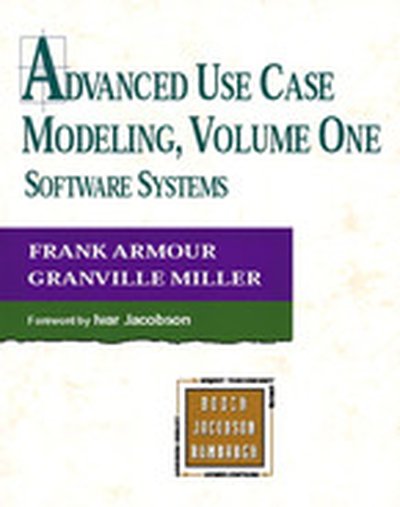
Advanced Use Case Modeling: Software Systems

"This book isn't just another introduction to use cases. The authors have used their wealth of experience to produce an excellent and insightful collection of detailed examples, explanations, and advice on how to work with use cases." –Maria Ericsson The toughest challenge in building a software system that meets the needs of your audience lies in clearly understanding the problems that the system must solve. Advanced Use Case Modeling presents a framework for discovering, identifying, and modeling the problem that the software system will ultimately solve. Software developers often employ use cases to specify what should be performed by the system they're constructing. Although use case-driven analysis, design, and testing of software systems has become increasingly popular, little has been written on the role of use cases in the complete software cycle. This book fills that need by describing how to create use case models for complex software development projects, using practical examples to explain conceptual information. The authors extend the work of software visionary Ivar Jacobson, using the Unified Modeling Language (UML) as the notation to describe the book's models. Aimed primarily at software professionals, Advanced Use Case Modeling also includes information that relates use case technique to business processes. This book presents a process for creating and maintaining use case models in a framework that can be fully customized for your organization. The authors, pioneers in the application of use cases in software development, bring their extensive experience to cover topics such as: A process model for applying a use case model How to keep your use case modeling effort on track Tips and pitfalls in use case modeling How to organize your use case model for large-system development Similarities between Advanced Use Case Modeling and the Rational Unified Process framework Effect of use cases on user interface design Guidelines for quality use case modeling

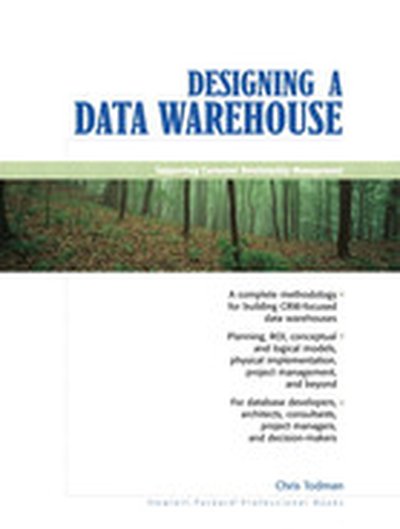
Designing a Data Warehouse: Supporting Customer Relationship Management

The complete guide to building tomorrow's CRM-focused data warehouses. A complete methodology for building CRM-focused data warehouses Planning, ROI, conceptual and logical models, physical implementation, project management, and beyond For database developers, architects, consultants, project managers, and decision-makers Today's next-generation data warehouses are being built with a clear goal: to maximize the power of Customer Relationship Management. To make CRM-focused data warehousing work, you need new techniques, and new methodologies. In this book, Dr. Chris Todman—one of the world's leading data warehouse consultants—delivers the first start-to-finish methodology for defining, designing, and implementing CRM-focused data warehouses. Todman covers all this, and more: Critical design challenges unique to CRM-focused data warehousing A new look at data warehouse conceptual models, logical models, and physical implementation The crucial implications of time in data warehouse modeling and querying Project management: deliverables, assumptions, risks, and team-building—including a full breakdown of work Estimating the ROI of CRM-focused data warehouses up front Choosing software for loading, extraction, transformation, querying, data mining, campaign management, personalization, and metadata DW futures: temporal databases, OLAP SQL extensions, active decision support, integrating external and unstructured data, search agents, and more If you want to leverage the full power of your CRM system, you need a data warehouse designed for the purpose. One book shows you exactly how to build one: Designing Data Warehouses by Dr. Chris Todman.

Oracle Net8 Configuration and Troubleshooting

Net8 is the fundamental Oracle technology that allows Oracle services and clients to communicate with each other over a network. Net8 is most often used to connect client software to Oracle database servers. It may also be used to connect database servers to one another, allowing communication between distributed databases. This practical guide provides the information that readers, especially database administrators, need to know in order to install configure, tune, and troubleshoot Net8. It discusses how Oracle's network architecture, products, and name resolution methods work, and it provides the details of client and server configuration using a variety of Oracle protocols and networking products, including: The Oracle Internet Directory (OID), Oracle's implementation of the standard Lightweight Directory Access Protocol (LDAP). This directory can be used to maintain a central repository of net service names that can be referenced by all clients. Oracle Names, a networking component used mainly in earlier versions of Oracle, that allows net service names to be defined centrally. Multi-Threaded Server (MTS), an environment in which the client connections share access to a pool of shared server processes. Oracle Connection Manager, a Net8 component that acts much like a router and provides protocol conversion, connection concentration, and access control. The book also describes the utilities Oracle provides to help manage a Net8 environment; these include the Listener Control Utility (lsnrctl), the Oracle Names Control Utility (namesctl), the Oracle Connection Manager Control Utility (cmctl), tnsping, and Net8 Assistant. In addition, it provides a variety of networking troubleshooting techniques and commonly encountered Net8 configuration problems, and provides complete syntax for all networking files and commands.

SQL in a Nutshell

SQL (Structured Query Language) is a standardized query language for requesting information from a database. Historically, SQL has been the choice for database management systems running on minicomputers and mainframes. Increasingly, however, SQL is being adapted to PC database systems because it supports distributed databases--databases that are spread out over several computer systems, so that several users on a local-area network can access the same database simultaneously. Although there are different dialects of SQL, it is the closest thing to a standard query language that currently exists. SQL in a Nutshell is a practical and useful command reference to the latest release of the Structured Query Language (SQL99), helping readers learn how their favorite database product supports any standard SQL command. This book presents each of the SQL commands and describes its use in both commercial (Microsoft SQL Server 2000 and Oracle 8 i) and open source (MySQL, PostgreSQL 7.0) implementations. Each command reference includes the command syntax (by vendor, if the syntax differs across implementations), a description, and informative examples that illustrate important concepts and uses. SQL in a Nutshell is more than a convenient reference guide for experienced SQL programmers, analysts, and database administrators. It's also a great learning resource for novice and auxiliary SQL users such as system administrators, users of packaged client/server products, and consultants who need to be familiar with the various SQL dialects across many platforms.

Database Nation

Fifty years ago, in 1984, George Orwell imagined a future in which privacy was demolished by a totalitarian state that used spies, video surveillance, historical revisionism, and control over the media to maintain its power. Those who worry about personal privacy and identity--especially in this day of technologies that encroach upon these rights--still use Orwell's "Big Brother" language to discuss privacy issues. But the reality is that the age of a monolithic Big Brother is over. And yet the threats are perhaps even more likely to destroy the rights we've assumed were ours. Database Nation: The Death of Privacy in the 21st Century shows how, in these early years of the 21st century, advances in technology endanger our privacy in ways never before imagined. Direct marketers and retailers track our every purchase; surveillance cameras observe our movements; mobile phones will soon report our location to those who want to track us; government eavesdroppers listen in on private communications; misused medical records turn our bodies and our histories against us; and linked databases assemble detailed consumer profiles used to predict and influence our behavior. Privacy--the most basic of our civil rights--is in grave peril. Simson Garfinkel--journalist, entrepreneur, and international authority on computer security--has devoted his career to testing new technologies and warning about their implications. This newly revised update of the popular hardcover edition of Database Nation is his compelling account of how invasive technologies will affect our lives in the coming years. It's a timely, far-reaching, entertaining, and thought-provoking look at the serious threats to privacy facing us today. The book poses a disturbing question: how can we protect our basic rights to privacy, identity, and autonomy when technology is making invasion and control easier than ever before? Garfinkel's captivating blend of journalism, storytelling, and futurism is a call to arms. It will frighten, entertain, and ultimately convince us that we must take action now to protect our privacy and identity before it's too late.

SAP Hardware Solutions: Servers, Storage, and Networks for mySAP.com

Introduction to designing robust, rock-solid SAP hardware infrastructures! Maximize scalability, availability, and value Hardware sizing: review of techniques with examples All you need to know for designing hardware solutions for mySAP.com: Maximizing performance, availability, and value! This is the first SAP book to provide a comprehensive overview of the hardware solutions needed for your mySAP.com implementation! You'll find practical, business-oriented recommendations for maximizing performance, availability, and value, covering every relevant hardware component-servers, storage, front-ends, LAN and WAN infrastructure, backup solutions, even printers. Authored by two of HP's senior consultants specializing in enterprise SAP infrastructure design, SAP Hardware Solutions addresses all this, and more: Review of sizing techniques for servers, storage, LANs, and wide area bandwidth: practical examples and scenarios High availability: zero-down-time backup, remote database mirroring, clustering and other failover solutions, towards fault-tolerance, and more "Best practice" storage design techniques: optimizing database disk layouts, considering SANs, and a unique approach to disk system design for performance Translating business requirements into practical, cost-effective hardware solutions Leveraging the cost and management benefits of server consolidation You'll even find never-before-published guidance on architecting networks for SAP—covering everything from IP address structures to high-availability cabling infrastructures. With SAP Hardware Solutions, your most business-critical application can be designed to deliver every ounce of reliability and performance you've paid for. You can't afford anything less!

Inside XML

The XML explosion hardly needs any introduction-it's everywhere and there just seems to be no end to what can be done with XML. While writing to the W3C standards, and keeping up with the pace for corporate implementation, you, the programmer or web developer, will need a comprehensive guide to get you started and show you what XML and its related technologies can do. A thorough guide is imperative to success because you will need to know and understand the full scope of XML from day one in order to work with it successfully. With your time constraints and impossible project schedules, you need a comprehensive guide that fulfills your needs in one complete book. Inside XML is an anchor book that covers both the Microsoft and non-Microsoft approach to XML programming. It covers in detail the hot aspects of XML; such as, DTD's vs. XML Schemas, CSS, XSL, XSLT, Xlinks, Xpointers, XHTML, RDF, CDF, parsing XML in Perl and Java, and much more.

Mastering Data Modeling: A User-Driven Approach

Data modeling is one of the most critical phases in the database application development process, but also the phase most likely to fail. A master data modeler must come into any organization, understand its data requirements, and skillfully model the data for applications that most effectively serve organizational needs. is a complete guide to becoming a successful data modeler. Featuring a requirements-driven approach, this book clearly explains fundamental concepts, introduces a user-oriented data modeling notation, and describes a rigorous, step-by-step process for collecting, modeling, and documenting the kinds of data that users need. Mastering Data Modeling Assuming no prior knowledge, sets forth several fundamental problems of data modeling, such as reconciling the software developer's demand for rigor with the users' equally valid need to speak their own (sometimes vague) natural language. In addition, it describes the good habits that help you respond to these fundamental problems. With these good habits in mind, the book describes the Logical Data Structure (LDS) notation and the process of controlled evolution by which you can create low-cost, user-approved data models that resist premature obsolescence. Also included is an encyclopedic analysis of all data shapes that you will encounter. Most notably, the book describes The Flow, a loosely scripted process by which you and the users gradually but continuously improve an LDS until it faithfully represents the information needs. Essential implementation and technology issues are also covered. Mastering Data Modeling You will learn about such vital topics as: The fundamental problems of data modeling The good habits that help a data modeler be effective and economical LDS notation, which encourages these good habits How to read an LDS aloud--in declarative English sentences How to write a well-formed (syntactically correct) LDS How to get users to name the parts of an LDS with words from their own business vocabulary How to visualize data for an LDS A catalog of LDS shapes that recur throughout all data models The Flow--the template for your conversations with users How to document an LDS for users, data modelers, and technologists How to map an LDS to a relational schema How LDS differs from other notations and why "Story interludes" appear throughout the book, illustrating real-world successes of the LDS notation and controlled evolution process. Numerous exercises help you master critical skills. In addition, two detailed, annotated sample conversations with users show you the process of controlled evolution in action.

XML Development with Java™ 2

XML Development with Java 2 provides the information and techniques a Java developer will need to integrate XML into Java-based applications. This book presents a fast-paced introduction to XML and moves quickly into the areas where XML has the biggest impact on Java Development. The book covers crucial topics such as the XML Documet Object Model (DOM), Using Java and XSL to transform and format XML data, Integrating XML into JavaBeans and EJB development, and using XML with Java Servlets. The authors also cover the impact XML has on Java database access and the way XML works with the Swing classes.

Building Oracle XML Applications

This rich and detailed look at the many Oracle tools that support XML development shows Java and PL/SQL developers how to combine the power of XML and XSLT with the speed, functionality, and reliability of the Oracle database. The nearly 800 pages of entertaining text, helpful and time-saving hints, and extensive examples can be put to use immediately to build custom XML applications. Includes a CD-ROM with JDeveloper 3.1, an integrated development environment for Java developers.

Designing a Total Data Solution

A company's global competitiveness depends on the utilization and maintenance of information. Current data handling practices - storing, updating, and accessing data - can be either a problem or a significant strategic advantage. Designing a Total Data Storage Solution gives readers the information they need to compare technologies and determine which is best suited to their enterprise. This book defines and explains the components that make up total cost of ownership along with the impact of integrating current changes in technology. It provides everything an IT manager needs in order to develop an efficient and cost-effective data storage plan.

Oracle SQL: the Essential Reference

SQL (Structured Query Language) is the heart of a relational database management system. It's the language used to query the database, to create new tables in the database, to update and delete database fields, and to set privileges in the database. Oracle SQL: The Essential Reference is for everyone who needs to access an Oracle database using SQL--developers, DBAs, designers, and managers. SQL is based on research dating back to the late 1960s, but its first commercial release was in the RDBMS announced by the fledgling Oracle Corporation in 1979. Since that time, every other database vendor has adopted SQL, and ANSI and the ISO have made it a standard. Although vendors diverge in their extensions to SQL, the core language is standard across vendor boundaries. Despite SQL's long history and relative simplicity, few developers and database administrators are truly masters of SQL. The constant stream of vendor enhancements, the hard-won experience in tuning SQL for best performance, and the requirements of particular operational environments mean that there is always more to learn about SQL. Oracle SQL: The Essential Reference delivers all the information needed to keep ahead of the learning curve on standard SQL and Oracle's extensions to it. This single, concise reference volume will hold its own against a stack of Oracle manuals and even yield insights and examples not available in those manuals. There are chapters on basic SQL elements (naming requirements, column types, pseudo-types, data conversion rules, operators); Data Definition Language (DDL) and Data Manipulation Language (DML); common language elements (constraints, storage clause, predicates); SQL functions; PL/SQL (including procedures, functions, and packages); SQL*Plus, and Oracle SQL optimization and tuning. The book covers Oracle 8 i, release 8.1.6.

XSL companion, The

A concise, comprehensive and accessible guide to the scope, strengths and limitations of the XSL (eXtensible Stylesheet Language) family of stylesheet standards for XML, this book explains the practical ways in which XSL can be utilized for formatting and manipulating information held in the hugely popular XML data format. The huge expansion in usage of XML created the need for a powerful standard for formatting and transforming XML documents - the XSL standard, which developed into the family of three specific standards exaimned in detail in this book. XSL enables the further expansion of XML technology into new domains of content management, audience targeted presentation and distributed document processing. If you are a current or potential XML user looking for just one reference to get you up to speed on styling and manipulating your XML documents with clarity, comprehensive coverage and precision, then this book will be your essential and constant companion. This book covers in detail the family of three separate stylesheet which make up XSL: •Xpath locates specific information within XML Documents •XSLT transforms XML documents into other data formats •XSL embeds formatting information in XML documents Together these form a powerful array of tools that allow you to control and optimize the formatting of your XML documents, and thus deliver content and information in a dynamic and flexible way. 0201674874B04062001