talk-data.com talk-data.com

Topic

data

5765

tagged

Activity Trend

3 peak/qtr
2020-Q1 2026-Q2

Activities

5765 activities · Newest first

Inside XSLT

Inside XSLT is designed to be a companion guide to Inside XML. This example oriented book covers XML to HTML, XML to Music, XML with Java, style sheet creation and usage, nodes and attributes, sorting data, creating Xpath expressions, using Xpath and XSLT functions, namespaces, names templates, name variables, designing style sheets and using XSLT processor API's, the 56 XSL formatting objects, the XSLT DTD, and much much more.

MySQL Building User Interfaces

MySQL: Designing User Interfaces starts by introducing the functionality of GTK+ and how to migrate from Microsoft's Visual Basic. It then introduces MySQL as a simple, fast, reliable database for corporate applications. The book then flows into the how-to of combining GTK+ and MySQL through the coverage of the C API for MySQL because it is the "backend" to a GTK+ application. It then expands its coverage and teaches about heterogeneous network and deployment issues, as well as migration from existing systems to MySQL.

Practical SQL Handbook, The: Using SQL Variants, Fourth Edition

This latest edition of the best-selling implementation guide to the Structured Query Language teaches SQL fundamentals while providing practical solutions for critical business applications. now includes expanded platform SQL coverage and extensive real-world examples based on feedback from actual SQL users. The Practical SQL Handbook, Fourth Edition begins with a step-by-step introduction to SQL basics and examines the issues involved in designing SQL-based database applications. It fully explores SQL’s most popular implementations from industry leaders, Oracle, Microsoft, Sybase, and Informix. The Practical SQL Handbook Highlights include: Detailed coverage of SQL commands for creating databases, tables, and indexes, and for adding, changing, and deleting data Using the SELECT command to retrieve specific data Handling NULL values (missing information) in a relational database Joining tables, including self joins and outer joins (ANSI and WHERE-clause syntax) Working with nested queries (subqueries) to get data from multiple tables Creating views (virtual tables) to provide customized access to data Using SQL functions A bonus CD-ROM contains a time-limited, full-feature version of the Sybase® Adaptive Server Anywhere™ software as well as the sample database, scripts, and examples included in the book. is the most complete reference available for day-to-day SQL implementations. The Practical SQL Handbook 0201703092B05222001

Programming Web Services with XML-RPC

Have you ever needed to share processing between two or more computers running programs written in different languages on different operating systems? Or have you ever wanted to publish information on the Web so that programs other than browsers could work with it? XML-RPC, a system for remote procedure calls built on XML and the ubiquitous HTTP protocol, is the solution you've been looking for. Programming Web Services with XML-RPC introduces the simple but powerful capabilities of XML-RPC, which lets you connect programs running on different computers with a minimum of fuss, by wrapping procedure calls in XML and establishing simple pathways for calling functions. With XML-RPC, Java programs can talk to Perl scripts, which can talk to Python programs, ASP applications, and so on. You can provide access to procedure calls without having to worry about the system on the other end, so it's easy to create services that are available on the Web.XML-RPC isn't the only solution for web services; the Simple Object Access Protocol (SOAP) is another much-hyped protocol for implementing web services. While XML-RPC provides fewer capabilities than SOAP, it also has far fewer interoperability problems and its capabilities and limitations are much better understood. XML-RPC is also stable, with over 30 implementations on a wide variety of platforms, so you can start doing real work with it immediately. Programming Web Services with XML-RPC covers the details of five XML-RPC implementations, so you can get started developing distributed applications in Java, Perl, Python, ASP, or PHP. The chapters on these implementations contain code examples that you can use as the basis for your own work. This book also provides in-depth coverage of the XML-RPC specification, which is helpful for low-level debugging of XML-RPC clients and servers. And if you want to build your own XML-RPC implementation for another environment, the detailed explanations in this book will serve as a foundation for that work.

Berkeley DB

Small, special-purpose computing devices and high-end core Internet servers need fast, reliable database management. Berkeley DB is an embedded database that provides high-performance, scalable, transaction-protected and recoverable data management services to applications. Extremely portable, this library runs under almost all UNIX and Windows variants, as well as a number of embedded, real-time operating systems. Berkeley DB is the ultimate resource for the world's most widely deployed embedded database engine. This book will aid software architects and engineers, product managers, and systems and network administrators without the overhead imposed by other database products. Designed by programmers for programmers, this classic library style toolkit provides a broad base of functionality to application writers. This book will help you to make intelligent choices about when and how to use Berkeley DB to meet your needs. You can visit the Sleepycat website to get the latest errata for this book. NOTE: The first printing of this book contained an error in the table of contents that caused the page numbers to be off. This will be corrected in the second printing. If you have an earlier edition, you can download a pdf of the correct table of contents that you can print out and use with your book. If you have any questions, please feel free to contact the editor of this book at [email protected].

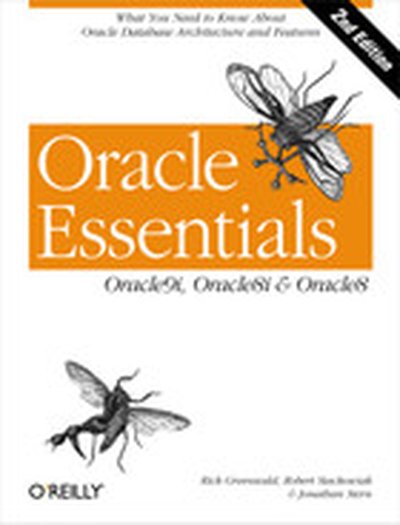
Oracle Essentials: Oracle9i, Oracle8i and Oracle8, Second Edition

The second edition of O'Reilly's bestselling Oracle Essentials has been updated to include the latest Oracle release, Oracle9 i. Oracle Essentials distills an enormous amount of information about Oracle's myriad technologies and releases into a compact, easy-to-read volume filled with focused text, illustrations, and helpful hints. Oracle9 i promises to be an even more significant upgrade than Oracle8 i, offering such major features as Real Application Clusters, flashback queries, Oracle personalization, clickstream intelligence, and Oracle Database Cache and Web Cache; it also promises significant improvements in Oracle's business intelligence, XML integration, high availability, and management capabilities. The book includes overviews of these features, as well as the new Oracle9 I Application Server (Oracle9 iAS) and Oracle9 i Portal. The book contains chapters on: Oracle products, options, and overall architecture for Oracle9 i and other recent releases Installing and running Oracle: creating databases, configuring Net8 (known as Oracle Net in Oracle9 i), starting up and shutting down Oracle Oracle data structures, datatypes, and ways of extending datatypes Managing Oracle: security, the Oracle Enterprise Manager, fragmentation and reorganization, and backup and recovery Oracle networking, monitoring, and tuning Multi-user concurrency, online transaction processing (OLTP), and high availability Hardware architectures (e.g., SMP, MPP, NUMA) and their impact on Oracle Data warehousing and distributed databases Oracle9 i, Oracle8 i, and the Web, including the latest Java, web, and XML technologies, interMedia, Oracle9 i Application Server, and Oracle9 i Portal For new Oracle users, DBAs, developers, and managers, Oracle Essentials is an all-in-one introduction to the full range of Oracle features and technologies, including the just-released Oracle9 i features. But even if you already have a library full of Oracle documentation, this compact book is the one you'll turn to, again and again, as your one-stop, truly essential reference.

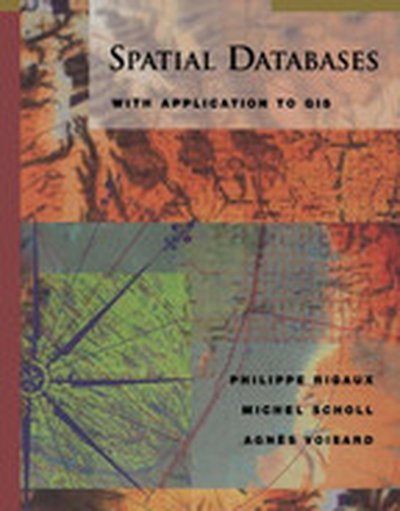
Spatial Databases

Spatial Databases is the first unified, in-depth treatment of special techniques for dealing with spatial data, particularly in the field of geographic information systems (GIS). This book surveys various techniques, such as spatial data models, algorithms, and indexing methods, developed to address specific features of spatial data that are not adequately handled by mainstream DBMS technology. The book also reviews commercial solutions to geographic data handling: ArcInfo, ArcView, and Smallworld GISs; and two extensions to the relational model, PostgreSQL and Oracle Spatial. The authors examine these underlying GIS technologies, assess their strengths and weaknesses, and consider specific uses for which each product is best suited. * Examines the strengths of various query languages and approaches to query processing. * Explains the use of computational geometry in spatial databases GISs, providing necessary background and an in-depth look at key algorithms. * Covers spatial access methods, including the R-tree and several space-driven structures, and is filled with dozens of helpful illustrations.

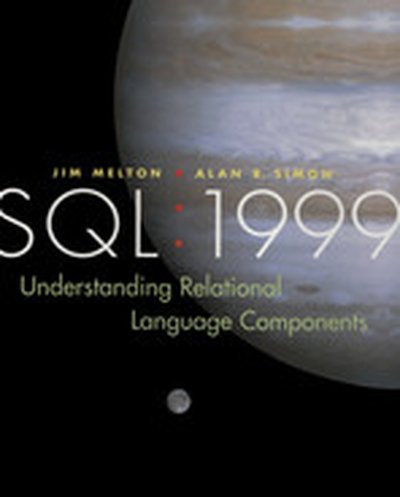
SQL: 1999

SQL: 1999 is the best way to make the leap from SQL-92 to SQL:1999, but it is much more than just a simple bridge between the two. The latest from celebrated SQL experts Jim Melton and Alan Simon, SQL:1999 is a comprehensive, eminently practical account of SQL's latest incarnation and a potent distillation of the details required to put it to work. Written to accommodate both novice and experienced SQL users, SQL:1999 focuses on the language's capabilities, from the basic to the advanced, and the ways that real applications take advantage of them. Throughout, the authors illustrate features and techniques with clear and often entertaining references to their own custom database. Gives authoritative coverage from an expert team that includes the editor of the SQL-92 and SQL:1999 standards. Provides a general introduction to SQL that helps you understand its constituent parts, history, and place in the realm of computer languages. Explains SQL:1999's more sophisticated features, including advanced value expressions, predicates, advanced SQL query expressions, and support for active databases. Explores key issues for programmers linking applications to SQL databases. Provides guidance on troubleshooting, internationalization, and changes anticipated in the next version of SQL. Contains appendices devoted to database design, a complete SQL:1999 example, the standardization process, and more.

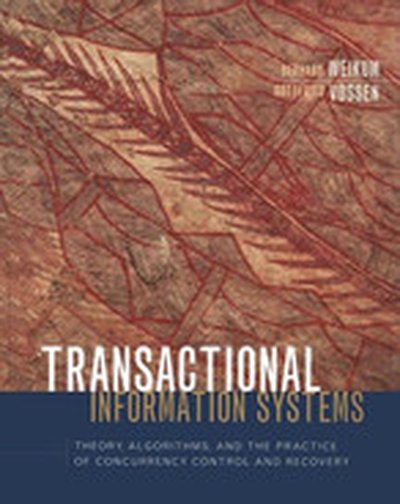
Transactional Information Systems

Transactional Information Systems is the long-awaited, comprehensive work from leading scientists in the transaction processing field. Weikum and Vossen begin with a broad look at the role of transactional technology in today's economic and scientific endeavors, then delve into critical issues faced by all practitioners, presenting today's most effective techniques for controlling concurrent access by multiple clients, recovering from system failures, and coordinating distributed transactions.The authors emphasize formal models that are easily applied across fields, that promise to remain valid as current technologies evolve, and that lend themselves to generalization and extension in the development of new classes of network-centric, functionally rich applications. This book's purpose and achievement is the presentation of the foundations of transactional systems as well as the practical aspects of the field what will help you meet today's challenges. Provides the most advanced coverage of the topic available anywhere--along with the database background required for you to make full use of this material. Explores transaction processing both generically as a broadly applicable set of information technology practices and specifically as a group of techniques for meeting the goals of your enterprise. Contains information essential to developers of Web-based e-Commerce functionality--and a wide range of more "traditional" applications. Details the algorithms underlying core transaction processing functionality.

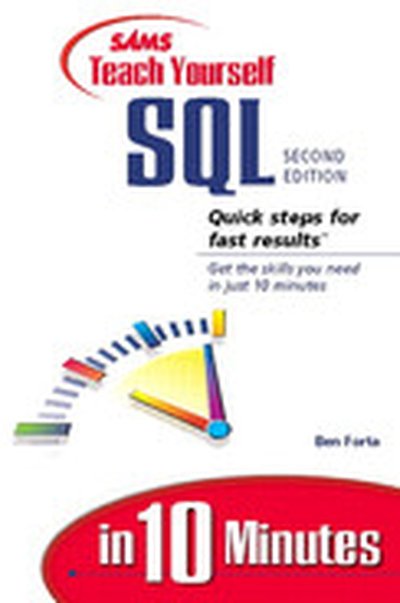
Sams Teach Yourself SQL in 10 Minutes, Second Edition

Sams Teach Yourself SQL in 10 Minutes, 2E is a tutorial-based book, organized into a series of easy-to-follow, 10-minute lessons. These well targeted lessons teach you in 10 minutes what some books take several hours or days to teach. Instead of dwelling of database theory and relational design, this book takes a very hands-on approach to solving the needs of the majority of SQL users who simply need to interact with data. The reader of this book will learn how to: Retrieve and sort data Filter data using comparisons and wildcards Use the aggregate functions to analyze data Perform insert, update, and delete operations Join relational tables using inner, outer, and self joins Combine queries using unions Use views Create and use stored procedures, triggers, and other advanced database features

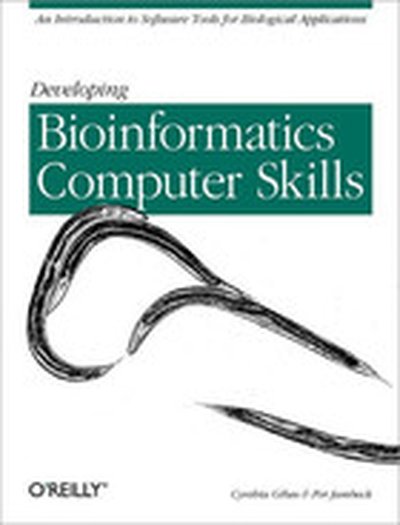
Developing Bioinformatics Computer Skills

Bioinformatics--the application of computational and analytical methods to biological problems--is a rapidly evolving scientific discipline. Genome sequencing projects are producing vast amounts of biological data for many different organisms, and, increasingly, storing these data in public databases. Such biological databases are growing exponentially, along with the biological literature. It's impossible for even the most zealous researcher to stay on top of necessary information in the field without the aid of computer-based tools. Bioinformatics is all about building these tools. Developing Bioinformatics Computer Skills is for scientists and students who are learning computational approaches to biology for the first time, as well as for experienced biology researchers who are just starting to use computers to handle their data. The book covers the Unix file system, building tools and databases for bioinformatics, computational approaches to biological problems, an introduction to Perl for bioinformatics, data mining, and data visualization. Written in a clear, engaging style, Developing Bioinformatics Computer Skills will help biologists develop a structured approach to biological data as well as the tools they'll need to analyze the data.

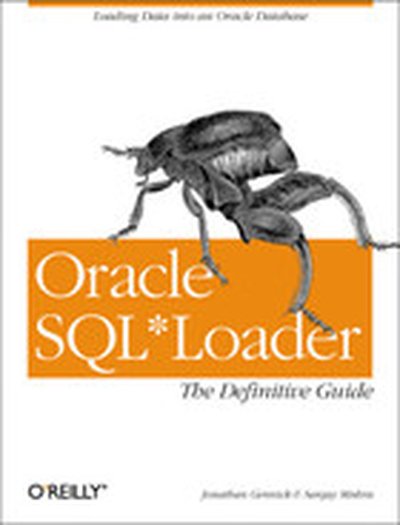
Oracle SQL*Loader: The Definitive Guide

SQL Loader is a ubiquitous tool in the Oracle world. It has been shipped with Oracle since at least Version 6 and continues to be supported and enhanced with each new version of Oracle, including Oracle8 and Oracle8Loader is to load data from flat files into an Oracle database. It's optimized for loading large volumes of data, and is flexible enough to handle virtually any input format.Almost every Oracle user has to use SQL i. The job of SQL Loader at one time or another, and DBAs are frequently called upon to load data for the users in their organization. Despite SQLLoader's wide availability and usage, few DBAs and developers know how to get the most out of it. Oracle SQL has everything you need to know to put SQLLoader to its best use: an introduction to SQL Loader: The Definitive Guide Loader, a reference to all of its syntax options, and most importantly, step-by-step instructions for all the SQLLoader tasks you'd want to perform--and maybe some you didn't realize you COULD perform.You'll learn how to construct the necessary control files and load from different types of files containing different types of data (e.g., fixed-width data, delimited data, and data of various datatypes). You'll also learn how to validate data, load it selectively, transform it as it is loaded, and recover after failure. This book explains how to optimize SQL Loader performance by adjusting the transaction size and using the new direct path option. It also covers the newest SQLLoader features--the loading of large object (LOB) columns and the new object types (nested tables, varying arrays, and object tables). Oracle SQL is an indispensable resource for anyone who is new to SQLLoader; a task-oriented learning tool for those who are already using it; and a quick reference for every user. If you want to take best advantage of an essential Oracle tool, you need this book. Loader: The Definitive Guide

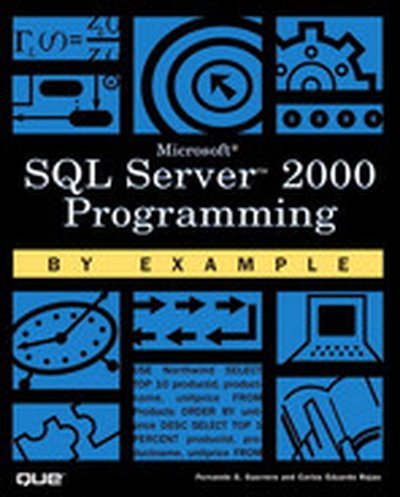
Microsoft® SQL Server™ 2000 Programming by Example

SQL Server 2000 Programming by Example provides clear and concise examples of basic programming techniques used in SQL Server 2000 primarily using Transact-SQL. Even if you're a complete novice to SQL Server 2000 programming, you will benefit by reading through the book's logical process. SQL Server 2000 is introduced and explored, database structure is designed and built, and finally a variety of programming techniques are studied and reviewed. If you are already familiar with SQL Server 2000 programming, you may use the book as a quick reference guide that provides plenty of pertinent examples.

Fiber Saver (2029) Implementation Guide

IBM offers a Dense Wavelength Division Multiplexing (DWDM) solution with the IBM Fiber Saver (2029). The IBM 2029 provides data transport capabilities for data center applications such as: -Data center backup and recovery -DASD mirroring -Tape vaulting and remote printing -Geographically Dispersed Parallel Sysplex (GDPS) -LAN interconnectivity -Channel extension -Peer-to-Peer Remote Copy (PPRC) -Storage Area Network (SAN) This IBM Redbooks publication is for technical professionals who are interested in a metropolitan area network (MAN) solution for their data center, using DWDM technology. This document gives a broad understanding of the IBM 2029 architecture and application, and provides information to help plan, implement, configure, and manage an IBM 2029 network. It also contains a discussion on how to design/create a solution to migrate from an IBM 9729 to an IBM 2029. A walkthrough of the commissioning and provisioning process, as well as practical examples for problem determination, are also included.

XML Pocket Reference, Second Edition

XML, the Extensible Markup Language, is the next-generation markup language for the Web. It provides a more structured (and therefore more powerful) medium than HTML, allowing you to define new document types and stylesheets as needed. Although the generic tags of HTML are sufficient for everyday text, XML gives you a way to add rich, well-defined markup to electronic documents. The XML Pocket Reference is both a handy introduction to XML terminology and syntax, and a quick reference to XML instructions, attributes, entities, and datatypes. Although XML itself is complex, its basic concepts are simple. This small book combines a perfect tutorial for learning the basics of XML with a reference to the XML and XSL specifications. The new edition introduces information on XSLT (Extensible Stylesheet Language Transformations) and Xpath.

Oracle PL/SQL Best Practices

In this book, Steven Feuerstein, widely recognized as one of the world's experts on the Oracle PL/SQL language, distills his many years of programming, writing, and teaching about PL/SQL into a set of PL/SQL language "best practices"--rules for writing code that is readable, maintainable, and efficient. Too often, developers focus on simply writing programs that run without errors--and ignore the impact of poorly written code upon both system performance and their ability (and their colleagues' ability) to maintain that code over time. Oracle PL/SQL Best Practices is a concise, easy-to-use reference to Feuerstein's recommendations for excellent PL/SQL coding. It answers the kinds of questions PL/SQL developers most frequently ask about their code: The book contains 120 best practices, divided by topic area. It's full of advice on the program development process, coding style, writing SQL in PL/SQL, data structures, control structures, exception handling, program and package construction, and built-in packages. It also contains a handy, pull-out quick reference card. As a helpful supplement to the text, code examples demonstrating each of the best practices are available on the O'Reilly web site. How should I format my code? What naming conventions, if any, should I use? How can I write my packages so they can be more easily maintained? What is the most efficient way to query information from the database? How can I get all the developers on my team to handle errors the same way? Oracle PL/SQL Best Practices is intended as a companion to O'Reilly's larger Oracle PL/SQL books. It's a compact, readable reference that you'll turn to again and again--a book that no serious developer can afford to be without.

Oracle and Open Source

Oracle & Open Source is the first book to tie together the commercial world of Oracle and the free-wheeling world of open source software. As this book reveals, these two worlds are not as far apart as they may seem. Today, there are many excellent and freely available software tools that Oracle developers and database administrators can use, at no cost, to improve their own coding productivity and their system's performance. Moreover, many of the finest Oracle developers are now making their source code freely available so their peers can build upon this code base. Oracle Corporation is even porting its RDBMS to Linux and starting to incorporate a growing number of open source tools in the company's own software. Oracle & Open Source describes close to 100 open source tools you can use for Oracle development and database administration, from large and widely known open source systems (like Linux, Perl, Apache, TCL/Tk and Python) to more Oracle-specific tools (like Orasoft, Orac, OracleTool, and OraSnap). You'll learn how to obtain the software and how to adapt it to best advantage. The book abounds with code examples, download and installation instructions, and helpful usage hints. Not only does it tell you how to find and use existing open source code; Oracle & Open Source gives you the details and the motivation to build your own open source contributions and release them to the Oracle community. You'll learn all about tools like the Oracle Call Interface (OCI) and Perl-DBI (Database Interface), which provide the glue allowing new open source tools to link into commercial Oracle software. With Oracle & Open Source as a guide, you'll discover an enormous number of highly effective open source tools, while getting involved with the thriving community of open source development.

The Data Model Resource Book, Volume 1

A quick and reliable way to build proven databases for core business functions Industry experts raved about The Data Model Resource Book when it was first published in March 1997 because it provided a simple, cost-effective way to design databases for core business functions. Len Silverston has now revised and updated the hugely successful 1st Edition, while adding a companion volume to take care of more specific requirements of different businesses. This updated volume provides a common set of data models for specific core functions shared by most businesses like human resources management, accounting, and project management. These models are standardized and are easily replicated by developers looking for ways to make corporate database development more efficient and cost effective. This guide is the perfect complement to The Data Model Resource CD-ROM, which is sold separately and provides the powerful design templates discussed in the book in a ready-to-use electronic format. A free demonstration CD-ROM is available with each copy of the print book to allow you to try before you buy the full CD-ROM.

XML and Java™ from scratch

With the help of XML and Java from scratch, you will build a Web site and application for ChaseWeb Furniture-a fictitious catalog furniture company. All of the information on products, prices, vendors, and so on, is rendered in XML. You'll learn how to display products on the company Web site, take orders, produce a paper catalog, and communicate with the external databases of vendors using XML. The from scratch format is designed to teach novice programmers the hows and whys of programming in the context of creating a functioning application.