This title shows how to build applications that take advantage of the powerful data-analysis services in Microsoft® SQL Server® 2000. You’ll discover why these services make it easier to analyze huge amounts of data quickly.
 talk-data.com
Topic
5765
tagged
This title shows how to build applications that take advantage of the powerful data-analysis services in Microsoft® SQL Server® 2000. You’ll discover why these services make it easier to analyze huge amounts of data quickly.
Parallel processing is becoming increasingly important to database computing. Databases often grow to enormous sizes and are accessed by huge numbers of users. This growth strains the ability of single-processor and single-computer systems to handle the load. More and more, organizations are turning to parallel processing technologies to give them the performance, scalability, and reliability they need. Anyone managing a large database, a database with a large number of concurrent users, or a database with high availability requirements--such as a heavily trafficked e-commerce site--needs to know how to get the most out of Oracle's parallel processing technologies. Oracle Parallel Processing is the first book to describe the full range of parallel processing capabilities in the Oracle environment, including those new to Oracle8 i. It covers: What is parallel processing--features, benefits, and pitfalls. Who needs it and who doesn't? What features does Oracle provide, and what are their requirements and overhead implications? The book answers these questions and presents the various parallel architectures (SMP, or Symmetric Multiprocessing; MPP, or Massively Parallel Processing; clustered systems; and NUMA, or Non Uniform Memory Access). Oracle parallel execution--Oracle supports a variety of parallel execution features in the database. The book covers the use, administration, and tuning of these features: parallel query, parallel data loading, parallel DML (Data Manipulation Language), parallel object creation (through DDL, or Data Definition Language), and parallel replication propagation. Oracle Parallel Server--Oracle also provides the OPS option, which work to be spread over both multiple CPUs and multiple nodes. This book covers OPS architecture, requirements, administration, tuning, storage management, recovery, and application failover issues. Oracle Parallel Processing also contains several case studies showing how to use Oracle's parallel features in a variety of real-world situations.
Sams Teach Yourself XML in 24 Hours teaches you the fundamental concepts of XML using practical, hands-on examples. Rather than dwelling on dry theory, the book is filled with clear, real-world examples of how the technology can be used today. Coverage includes displaying XML files in HTML files, parsing HTML files into corresponding hierarchical tree structure, embedding XML code into an HTML file, using Extensible Style Sheets (XSL), performing queries in XSL, and building an online store.
The complete, easy-to-understand guide to IT—now and in the future! Computers, networks, and pervasive computing Hardware, operating systems, and software How networks work: LANs, WANs, and the Internet E-business, the Web, and security The guide for ANYONE who needs to understand the key technologies driving today's economy and high tech industries! You can't afford not to understand the information revolution that's sweeping the world-but who's got time for all the acronyms and hype most technology books give you? The Essential Guide to Computing demystifies the digital society we live in with an intelligent, thorough, and up-to-date explanation of computer, networking, and Internet technologies. It's perfect for smart professionals who want to get up to speed, but don't have computer science or engineering degrees! You'll find up-to-the-minute coverage on all of today's hottest technologies including: The evolution of computing: from the room-sized "monoliths" of the 1950s to today's global Internet Preview of the next revolution: "pervasive computing" Computer hardware: microprocessors, memory, storage, I/O, displays, and architecture Windows, Macintosh, UNIX/Linux, DOS, NetWare, Palm: what operating systems do, and how they compare Programming languages: from machine language to advanced object-oriented technologies Key software applications: databases, spreadsheets, word processing, voice recognition, and beyond Microsoft and the software industry: where they stand, where they're headed How networks work: LANs, WANs, packet switching, hardware, media, and more The Internet, e-commerce, and security Enterprise applications: data warehousing, Web-centered development, and groupware Whether you're a consumer, investor, marketer, or executive, this is your start-to-finish briefing on the information technologies that have changed the world-and the coming technologies that will transform it yet again!
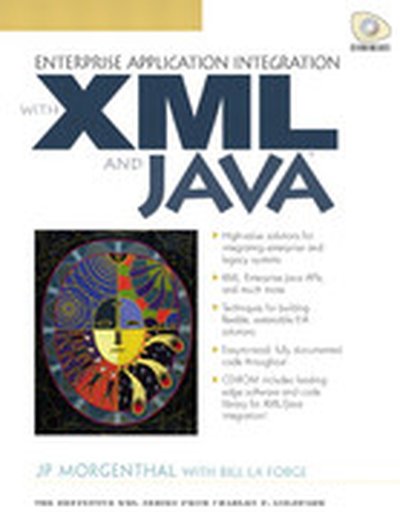
High-value solutions for integrating enterprise and legacy systems XML, Enterprise JavaAPIs, and much more Techniques for building flexible, extensible EIA solutions Easy-to-read, fully-documented code throughout CD-ROM includes leading-edge software and code library for XML/Java integration! "XML is the amazing new web standard for universal data interchange. With this book and XML you can integrate your applications without converting the code!" —Charles F. Goldfarb Integrate your enterprise with XML and Java! Enterprise Application Integration (EAI) links diverse applications, platforms, and operating systems so they work as one-and deliver powerful business results seamlessly. Platform-independent Java is one powerful tool for building EAI applications, and XML adds the missing link: robust mechanisms to exchange data with non-Java applications. Now there's a complete, step-by-step guide to using Java and XML together to deliver enterprise integration solutions that work! Enterprise Application Integration With XML and Java covers all this, and more: Demonstrating why XML is such a powerful EAI infrastructure solution Identifying your key requirements for sharing and exchanging data Building robust, high-performance Java applications for parsing and processing XML documents Moving data between Java and non-Java applications Integrating XML with relational databases Serializing Java objects into XML, and asynchronous messaging with XML Providing convenient references to XML 1.0 grammar and the W3C Document Object Model Whether you're a technical manager planning for enterprise application integration, or a Java developer tasked with delivering it, Enterprise Application Integration With XML and Java delivers the in-depth solutions and real-world expertise you need. CD-ROM INCLUDED The CD-ROM contains extensive source code from the book, plus a remarkable library of leading-edge software and trialware, including: Bluestone Visual-XML desktop XML development environment; IBM XML4J Java-based parser; and Push-technologies SpiritWAVE2 implementation of the Java Messaging Service!
The Extensible Markup Language (XML) has been anointed as the universal duct tape for all software integration problems despite XML's relatively humble origins in the world of document management systems. presents a software engineering-focused view of XML and investigates how XML can be used as a component integration technology much like COM or CORBA. Written for software developers and technical managers, this book demonstrates how XML can be used as the glue between independently developed software components (or in the marketecture terminology Essential XML du jour, how XML can act as the backplane for B2B e-commerce applications). Authors Don Box, Aaron Skonnard, and John Lam cover the key issues, technologies, and techniques involved in using XML as the adhesive between disparate software components and environments. They explain the fundamental abstractions and concepts that permeate all XML technologies, primarily those documented in the XML Information Set (Infoset). XML-based approaches to metadata, declarative, and procedural programming through transformation and programmatic interfaces are covered. Don Box, co-author of the Simple Object Access Protocol (SOAP) specification, provides readers with insight into this emerging XML messaging technology for bridging COM, CORBA, EJB, and the Web. Readers acquire a better understanding of XML's inner workings and come to see how its platform, language, and vendor independence--along with its accessibility--make it an extraordinarily effective solution for software interoperation. 0201709147B04062001
This new release of Communications Server for AIX includes many new features and functions that make CS/AIX a more important player in bridging the e-business gap between the Internet and critical legacy data applications. Support for secure TN3270 communications with SSL and load balancing with SLP are critical in insuring secure and consistent communications with the host. Support for high performance routing, branch network configurations, and channel attachment are significant in that they allow placement of Communications Server anywhere it benefits performance most in the customer's IP or SNA network.
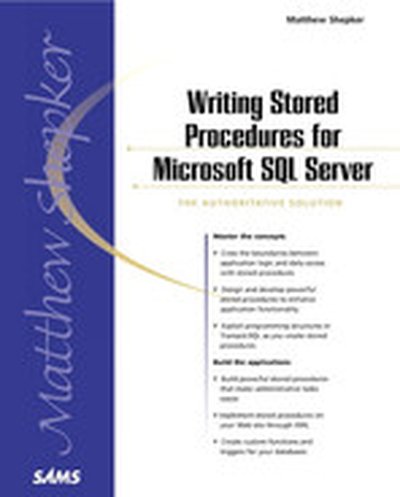
Writing Stored Procedures for Microsoft SQL Server focuses on teaching you not only how to build effective stored procedures, but also how to optimize and streamline them for long term use. Get an understanding of how SQL Server interprets stored procedures verses direct access via SQL queries. This is followed by detailed instructions on creating and maintaining a repository of stored procedures. Once you know how stored procedures are created and built, you are taught how to determine which logic within an application makes sense to be put into this scheme. Additionally, you're provided with guidance on making stored procedures that are portable across applications.
Breakthrough techniques for building XML applications — fast! Includes a detailed Python tutorial Learn about DOM and SAX application development with Python Exclusive coverage of the new Pyxie XML processing library CD-ROM includes Python and Pyxie distributions for Windows NT and Linux—plus powerful utilities and lots of working code "XML processing is the newest required skill for webmasters and application developers. The Python language and Sean McGrath's book make it fun to learn and easy to do." — Charles F. Goldfarb When it comes to XML processing, Python is in a league of its own. If you're doing XML development without Python, you're wasting time! Python offers outstanding productivity — especially in the areas that matter most to XML developers, such as XML parsing, DOM/SAX implementations, string processing, and Internet APIs. And now there's Pyxie — the new open source library that makes Python XML processing even easier and more powerful. In XML Processing with Python, top XML developer Sean McGrath delivers the hands-on explanations and examples you need to get results with Python and Pyxie fast — even if you've never used them before! Install Python and the Pyxie XML package Learn the fundamentals of Python: control structures, classes, nested lists, dictionaries, and regular rexpresions Process XML with regular expression-driven, event-driven, and tree-driven techniques Understand Python's support for DOM and SAX APIs Explore the power of Python/XML through worked examples of GUI development, database integration, and an XML query-by-example implementation. Elegant, easy, powerful and fun, Python helps you build world-class XML applications in less time than you ever imagined. If you know XML, one book has all the techniques, code, and tools you'll need to process it: XML Processing with Python. CD-ROM INCLUDED The accompanying CD-ROM contains everything you need to develop XML applications with Python — including complete Python distributions for Windows and Linux the Pyxie open-source libraries powerful utility programs an extensive library of sample source code tested on both Windows NT and Linux
XML has been the biggest buzzword on the Internet community for the past year. But how do you cut through all the hype and actually put it to work? Java revolutionized the programming world by providing a platform-independent programming language. XML takes the revolution a step further with a platform-independent language for interchanging data. Java and XML share many features that are ideal for building web-based enterprise applications, such as platform-independence, extensibility, reusability, and global language (Unicode) support, and both are based on industry standards. Together Java and XML allow enterprises to simplify and lower costs of information sharing and data exchange. Java and XML shows how to put the two together, building real-world applications in which both the code and the data are truly portable. This book covers: The basics of XML Using standard Java APIs to parse XML Designing new document types using DTDs and Schemas Writing programs that generate XML data Transforming XML into different forms using XSL transformations (XSL/T) XML-RPC Using a web publishing framework like Apache-Cocoon This is the first book to cover the most recent versions of the DOM specification (DOM 2), the SAX API (SAX 2) and Sun's Java API for XML.
However excellent they are, most computer books are inherently passive--readers simply take in text without having any opportunity to react to it. The Oracle PL/SQL Developer's Workbook is a different kind of animal! It's designed to engage you actively, to get you solving programming problems immediately, and to help you apply what you've learned about PL/SQL--and in the process deepen your knowledge of the language. By tackling the exercises in this workbook, you'll find yourself moving more rapidly along the learning curve to join the growing ranks of PL/SQL experts. The Oracle PL/SQL Developer's Workbook is a companion to Steven Feuerstein's bestselling Oracle PL/SQL Programming and his other PL/SQL books from O'Reilly. It contains a carefully constructed set of problems and solutions that will test your language skills and help you become a better developer--both with PL/SQL and with other languages. Exercises are provided at three levels: beginner, intermediate, and expert. The workbook exercises cover all the major features of PL/SQL, including those new to Oracle8i (e.g., Java and web features, autonomous transactions, and bulk binds).You'll find chapters on: Basic language elements--variables, naming, loops, conditional and sequential control, exception handling, and records. Data structures--index-by tables, nested tables, variables arrays (VARRAYs), and object technology. Database interaction--cursors, DML and transaction management, cursor variables, and native dynamic SQL Program construction--procedures, functions, blocks, packages, database triggers, and calling PL/SQL functions in SQL. Built-in functionality--the character, date, conversion, numeric, and miscellaneous functions, and the DBMS_SQL, DBMS_PIPE, DBMS_OUTPUT, UTL_FILE, and DBMS_JOB built-in packages. Miscellaneous topics--using Java with PL/SQL, external programs, PL/SQL web development, tuning PL/SQL, and PL/SQL for DBAs.
This pocket reference provides quick reference information that will help you use SQLPlus, Oracle's interactive query tool. It summarizes all of the SQLPlus syntax, including the syntax for new Oracle8 i release 8.1.6 features. SQLPlus is available at every Oracle site--from the largest data warehouse to the smallest single-user system--and it's a critical tool for virtually every Oracle user. Despite its wide use, few developers and DBAs know how powerful a tool SQLPlus can be. This book boils down the most vital information from Gennick's best-selling book, Oracle SQLPlus: The Definitive Guide, into an accessible summary. It concisely describes interacting with SQLPlus, selecting data, formatting reports with SQLPlus, and tuning SQL queries. It also contains quick references to the SQLPlus commands and format elements. This book is an indispensable companion to O'Reilly bestselling book, Oracle SQLPlus: The Definitive Guide, but it does not replace it; the larger book is truly the definitive guide, suitable for readers at all levels of expertise. The definitive guide describes the many tasks that SQLPlus can perform, and provides a tutorial on many SQLPlus topics. But this quick reference is an excellent, portable resource for readers who want a pocket-sized summary of SQLPlus capabilities and a reminder of how to issue specific commands and formatting options for SQLPlus. Table of Contents: Interacting with SQLPlus Selecting Data Formatting Reports Tuning SQL SQLPlus Format Elements SQLPlus Command Reference
Written by college instructors, Sams Teach Yourself SQL in 24 Hours quickly teaches beginning- to intermediate-level SQL users how to create, store, access and manipulate data using a proven step-by-step format that teaches SQL by example. This book contains a thorough explanation of database concepts, SQL procedures, and low-level programming, enabling readers to gain an understanding of the whys as well as the hows behind SQL. This book presents complete code listings and output, followed with analysis that explains exactly what the listings are doing. These practical code examples can be incorporated easily by the reader into other projects. Coverage includes SQL, as well as SQL in an enterprise setting and on the Web and Intranet. Authors Ryan Stephens and Ronald Plew are President and Vice President of Perpetual Technologies, Inc., where their duties include Oracle database administration and consulting and Oracle, SQL, and UNIX training. They have both been teaching at the collegiate level for over three years as adjunct professors at Indiana University-Purdue University in Indianapolis. Both are Oracle Certified Professionals, having specialized in Oracle and UNIX for more than 10 years each.
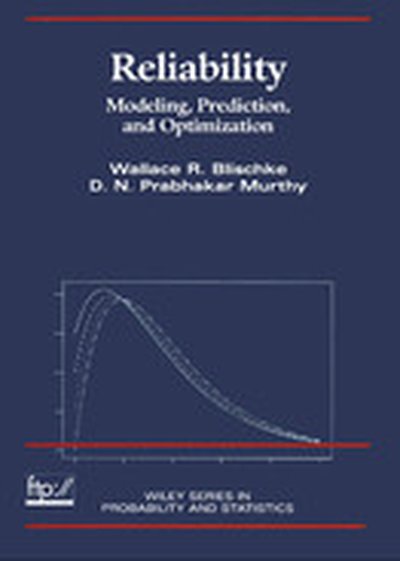
Bringing together business and engineering to reliability analysis With manufactured products exploding in numbers and complexity, reliability studies play an increasingly critical role throughout a product's entire life cycle-from design to post-sale support. Reliability: Modeling, Prediction, and Optimization presents a remarkably broad framework for the analysis of the technical and commercial aspects of product reliability, integrating concepts and methodologies from such diverse areas as engineering, materials science, statistics, probability, operations research, and management. Written in plain language by two highly respected experts in the field, this practical work provides engineers, operations managers, and applied statisticians with both qualitative and quantitative tools for solving a variety of complex, real-world reliability problems. A wealth of examples and case studies accompanies: Comprehensive coverage of assessment, prediction, and improvement at each stage of a product's life cycle Clear explanations of modeling and analysis for hardware ranging from a single part to whole systems Thorough coverage of test design and statistical analysis of reliability data A special chapter on software reliability Coverage of effective management of reliability, product support, testing, pricing, and related topics Lists of sources for technical information, data, and computer programs Hundreds of graphs, charts, and tables, as well as over 500 references PowerPoint slides are available from the Wiley editorial department.
Since its introduction over a decade ago, the Microsoft SQL Server query language, Transact-SQL, has become increasingly popular and more powerful. The current version sports such advanced features as OLE Automation support, cross-platform querying facilities, and full-text search management. This book is the consummate guide to Microsoft Transact-SQL. From data type nuances to complex statistical computations to the bevy of undocumented features in the language, imparts the knowledge you need to become a virtuoso of the language as quickly as possible. The Guru's Guide to Transact-SQL In this book, you will find the information, explanations, and advice you need to master Transact-SQL and develop the best possible Transact-SQL code. Some 600 code examples not only illustrate important concepts and best practices, but also provide working Transact-SQL code that can be incorporated into your own real-world DBMS applications. Your journey begins with an introduction explaining language fundamentals such as database and table creation, inserting and updating data, queries, joins, data presentation, and managing transactions. Moving on to more advanced topics, the journey continues with in-depth coverage of: Transact-SQL performance tuning using tools such as Query Analyzer and Performance Monitor Nuances of the various T-SQL data types Complex statistical calculations such as medians, modes, and sliding aggregates Run, sequence, and series identification and interrogation Advanced Data Definition Language (DDL) and Data Management Language (DML) techniques Stored procedure and trigger best practices and coding methods Transaction management Optimal cursor use and caveats to look out for Full-text search Hierarchies and arrays Administrative Transact-SQL OLE Automation More than 100 undocumented commands and language features, including numerous unpublished DBCC command verbs, trace flags, stored procedures, and functions Comprehensive, written in understandable terms, and full of practical information and examples, is an indispensable reference for anyone working with this database development language. The accompanying CD-ROM includes the complete set of code examples found in the book as well as a SQL programming environment that will speed the development of your own top-notch Transact-SQL code. The Guru's Guide to Transact-SQL

This brochure discusses the origins of NSA.
The Network File System (NFS) protocol that enables remote access to files is now a key element of any LAN. It is also currently and increasingly used as a key technology with the Web and wide area networks. Written for programmers creating NFS-based applications, network engineers creating new implementations of NFS, and network managers, NFS Illustrated promotes a thorough understanding of that protocol through extensive diagrams and real protocol traces that show NFS in action. Covering NFS versions 2 and 3, the book also looks into WebNFS and the new NFS version 4, with Internet support. Detailed and authoritative, the book not only examines NFS in depth, but also describes the protocols that underlie and support it, including External Data Representation (XDR), Remote Procedure Call (RPC), the NFS MOUNT protocol, and the NFS Lock Manager protocol. It discusses several NFS variants and compares NFS to a number of alternative file systems. You will find a detailed discussion on the NFS filesystem model and a procedure-by-procedure description of NFS versions 2 and 3, illustrated through the use of snoop traces that capture and display protocol packets from the network. In addition, the book addresses real-world implementation issues faced by those building an NFS client or server, factors that affect NFS performance, and critical performance benchmarks. Specific topics of interest include: NFS version 4, highlighting performance improvements, security features, and cross-platform interoperability for Internet operation RPC authentication and security Differences between NFS versions 2 and 3 Implementation issues for clients and servers Read-ahead and write-behind Caching policies The Lock Manager protocol Automounting NFS variants, including Spritely NFS, NQNFS, Trusted NFS, and NASD NFS NFS competitors: RFS, AFS, DCE/DFS, and CIFS The PCNFS protocol for implementing NFS on PC operating systems SPEC SFS benchmarks, WebNFS, and firewalls Comprehensive and current, NFS Illustrated is an essential resource for network professionals who want to use this widespread and evolving technology to its fullest.

In MySQL, Paul DuBois provides you with a comprehensive guide to one of the most popular relational database systems. As an important contributor to the online documentation for MySQL, Paul uses his day-to-day experience answering questions users post on the MySQL mailing list to pinpoint the problems most users and administrators encounter. The principal MySQL developer, Monty Widenius, along with a network of his fellow developers, reviewed the manuscript, providing Paul with the kind of insight no one else could supply. Instead of merely giving you a general overview of MySQL, Paul teaches you how to make the most of its capabilities. Through two sample databases that run throughout the book, he gives you solutions to problems you'll likely face. He helps you integrate MySQL efficiently with third-party tools, such as PHP and Perl, enabling you to generate dynamic Web pages through database queries. He also teaches you to write programs that access MySQL databases.
XML Unleashed is a complete and comprehensive reference for sophisticated Web developers that covers every possible use of XML, from creating Web documents to building sophisticated Web applications. It covers all aspects of XML technology, from DTDs, XSL, and X Pointers to manipulating XML with Java and JavaScript. See hundreds of professional programming techniques as well as code for more than 15 real-world XML applications involving e-commerce, database access, Web management, real estate, and healthcare. This book also includes reference material on SMIL, the XML-based language for Web multimedia.
Professional Development with Visio 2000 empowers you to create your own Visio solutions quickly and easily. Using client-proven methods, and the success of his training seminars worldwide, Visio insider David Edson provides you with an understanding of the Visio development platform, and guides you through the use of Visual Basic for Applications (VBA), enabling you to create your own Visio solutions. You will benefit from David's expert knowledge of topics including understanding Visio solutions, working with SmartShapes, customizing ShapeSheets, Visio VBA automation, Generating Visio Drawings with ActiveX Automation, and much more.