This IBM® Redbooks® publication provides an introduction and overview of the latest products in the IBM FlashSystem® 5000 Family, including their hardware and software features.
 talk-data.com
Topic
5765
tagged
This IBM® Redbooks® publication provides an introduction and overview of the latest products in the IBM FlashSystem® 5000 Family, including their hardware and software features.
Businesses are using IBM® Power Systems servers and Linux to consolidate multiple SAP workloads onto fewer systems, increasing infrastructure utilization; reliability, availability, and serviceability (RAS); and scalability, and reducing cost. This IBM Redpaper Redbooks publication describes key hardware and software components of an SAP solution stack. Furthermore, this book addresses non-functional items like RAS, security, and issue handling. Practical help for planning, implementation, configuration, installation, and monitoring of a solution stack are provided. This publication addresses topics for sellers, IT architects, IT specialists, and anyone who wants to implement and manage SAP workloads on IBM Power Systems servers. Moreover, this guide provides documentation to transfer how-to skills to the technical teams, and it provides solution guidance to the sales team. This publication complements documentation that is available at IBM Knowledge Center, and it aligns with educational materials that are provided by IBM Systems.
This IBM® Redbooks® publication describes how to implement and manage a hyperconverged private cloud solution by using theoretical knowledge, hands-on exercises, and documenting the findings by way of sample scenarios. This book also is a guide about how to implement and manage a high-performance enterprise infrastructure and private cloud platform for big data, artificial intelligence, and transactional and analytics workloads on IBM Power Systems. This book use available documentation, hardware, and software resources to meet the following goals: Document the web-scale architecture that demonstrates the simple and agile nature of public clouds. Showcase the hyperconverged infrastructure to help cloud native applications mine cognitive analytics workloads. Conduct and document implementation case studies. Document guidelines to help provide an optimal system configuration, implementation, and management. This publication addresses topics for developers, IT architects, IT specialists, sellers, and anyone that wants to implement and manage a high-performance enterprise infrastructure and private cloud platform on IBM Power Systems. This book also provides documentation to transfer the how-to-skills to the technical teams, and solution guidance to the sales team. This book compliments any documentation that is available in IBM Knowledge Center, and aligns with the educational materials that are provided by the IBM Systems Software Education (SSE).
Explore powerful SAS analytics and the Internet of Things! The world that we live in is more connected than ever before. The Internet of Things (IoT) consists of mechanical and electronic devices connected to one another and to software through the internet. Businesses can use the IoT to quickly make intelligent decisions based on massive amounts of data gathered in real time from these connected devices. IoT increases productivity, lowers operating costs, and provides insights into how businesses can serve existing markets and expand into new ones. Intelligence at the Edge: Using SAS with the Internet of Things is for anyone who wants to learn more about the rapidly changing field of IoT. Current practitioners explain how to apply SAS software and analytics to derive business value from the Internet of Things. The cornerstone of this endeavor is SAS Event Stream Processing, which enables you to process and analyze continuously flowing events in real time. With step-by-step guidance and real-world scenarios, you will learn how to apply analytics to streaming data. Each chapter explores a different aspect of IoT, including the analytics life cycle, monitoring, deployment, geofencing, machine learning, artificial intelligence, condition-based maintenance, computer vision, and edge devices.
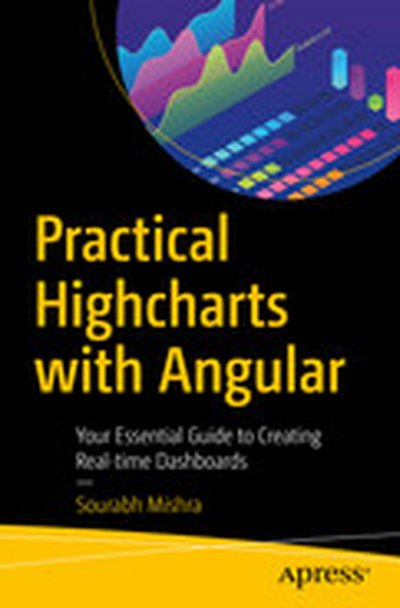
Learn to create stunning animated and interactive charts using Highcharts and Angular. Use and build on your existing knowledge of HTML, CSS, and JavaScript to develop impressive dashboards that will work in all modern browsers. You will learn how to use Highcharts, call backend services for data, and easily construct real-time data dashboards. You'll also learn how you can club your code with jQuery and Angular. This book provides the best solutions for real-time challenges and covers a wide range of charts including line, area, maps, plot, different types of pie chart, Gauge, heat map, Histogram, stacked bar, scatter plot and 3d charts. After reading this book, you'll be able to export your charts in different formats for project-based learning. Highcharts is one the most useful products worldwide for develop charting on the web, and Angular is well known for speed. Using Highcharts with Angular, developers can build fast, interactive dashboards. Get up to speed using this book today. What You’ll Learn How to develop interactive, animated dashboards How you can implement Highcharts using Angular How to develop a real-time application with the use of WebAPI, Angular, and Highcharts How to create interactive styling themes and colors for a dashboard Who This Book Is For This book is aimed at developers, dev leads, software architects, students or enthusiasts who are already familiar with HTML, CSS, and JavaScript.
The 'Pandas 1.x Cookbook' offers a recipe-based guide for mastering the powerful Python library, pandas. You will gain practical knowledge for handling and manipulating data efficiently, from the fundamentals to advanced techniques. The book is an essential resource for exploring and analyzing datasets with pandas. What this Book will help me do Understand and apply data exploration techniques in pandas. Use pandas to manipulate, aggregate, and clean datasets to extract meaningful insights. Combine pandas with Matplotlib and Seaborn to create effective visualizations. Perform time series analysis and transform datasets for machine learning. Implement workflows for handling large-scale data that exceeds your computer's memory. Author(s) Matthew Harrison and Theodore Petrou are highly experienced educators and practitioners in data science and Python programming. With their extensive expertise in using pandas, they provide insights through practical exercises and approachable narratives. Their aim is to make complex concepts accessible to learners of varying skill levels. Who is it for? This book is ideal for Python programmers, analysts, and data scientists seeking to expand their data handling and analysis capabilities. It caters to both beginners who are new to pandas and those looking to deepen their understanding of its advanced features. If your goal is to explore, clean, and analyze complex datasets efficiently, this book is tailored for you.
The 'PostgreSQL 12 High Availability Cookbook' is a comprehensive guide to setting up and maintaining highly available PostgreSQL clusters. This book provides practical recipes for designing a resilient database system that can handle outages and recover quickly without downtime. What this Book will help me do Learn how to configure replication tools to protect PostgreSQL data effectively. Understand and implement hardware strategies for ensuring optimal database performance. Master the techniques for reducing contention with connections using pooling strategies. Gain insights into using monitoring tools like Nagios and Grafana for PostgreSQL cluster management. Develop a robust strategy for version upgrades, backups, and failover. Author(s) Shaun Thomas is a seasoned database specialist with extensive experience managing PostgreSQL systems. As a PostgreSQL contributor and advocate, he brings a depth of practical knowledge to database reliability and automation. Shaun's engaging and clear writing style ensures that readers can apply the discussed techniques with confidence. Who is it for? This book is ideal for database administrators, IT professionals, and developers who maintain PostgreSQL systems and want to improve uptime or reliability. Familiarity with basic PostgreSQL concepts is recommended, but no specific knowledge of version 12 features is required. Readers aiming to build advanced high availability solutions will find this book invaluable. It's perfect for those aspiring to ensure their database systems are both resilient and adaptive.
Access real-world documentation and examples for the Spark platform for building large-scale, enterprise-grade machine learning applications. The past decade has seen an astonishing series of advances in machine learning. These breakthroughs are disrupting our everyday life and making an impact across every industry. Next-Generation Machine Learning with Spark provides a gentle introduction to Spark and Spark MLlib and advances to more powerful, third-party machine learning algorithms and libraries beyond what is available in the standard Spark MLlib library. By the end of this book, you will be able to apply your knowledge to real-world use cases through dozens of practical examples and insightful explanations. What You Will Learn Be introduced to machine learning, Spark, and Spark MLlib 2.4.x Achieve lightning-fast gradient boosting on Spark with the XGBoost4J-Spark and LightGBM libraries Detect anomalies with the Isolation Forest algorithm for Spark Use the Spark NLP and Stanford CoreNLP libraries that support multiple languages Optimize your ML workload with the Alluxio in-memory data accelerator for Spark Use GraphX and GraphFrames for Graph Analysis Perform image recognition using convolutional neural networks Utilize the Keras framework and distributed deep learning libraries with Spark Who This Book Is For Data scientists and machine learning engineers who want to take their knowledge to the next level and use Spark and more powerful, next-generation algorithms and libraries beyond what is available in the standard Spark MLlib library; also serves as a primer for aspiring data scientists and engineers who need an introduction to machine learning, Spark, and Spark MLlib.
Analyze company data quickly and easily using Microsoft’s powerful data tools. Learn to build scalable and robust data models, clean and combine different data sources effectively, and create compelling and professional visuals. Beginning Power BI is a hands-on, activity-based guide that takes you through the process of analyzing your data using the tools that that encompass the core of Microsoft’s self-service BI offering. Starting with Power Query, you will learn how to get data from a variety of sources, and see just how easy it is to clean and shape the data prior to importing it into a data model. Using Power BI tabular and the Data Analysis Expressions (DAX), you will learn to create robust scalable data models which will serve as the foundation of your data analysis. From there you will enter the world of compelling interactive visualizations to analyze and gain insight into your data. You will wrap up your Power BI journey by learning how to package and share your reports and dashboards with your colleagues. Author Dan Clark takes you through each topic using step-by-step activities and plenty of screen shots to help familiarize you with the tools. This third edition covers the new and evolving features in the Power BI platform and new chapters on data flows and composite models. This book is your hands-on guide to quick, reliable, and valuable data insight. What You Will Learn Simplify data discovery, association, and cleansing Build solid analytical data models Create robust interactive data presentations Combine analytical and geographic data in map-based visualizations Publish and share dashboards and reports Who This Book Is For Business analysts, database administrators, developers, and other professionals looking to better understand and communicate with data
This document is intended to facilitate the deployment of the Multicloud Solution for Business Continuity and Storage as service by using IBM Spectrum Virtualize for Public Cloud on Amazon Web Services (AWS). To complete the tasks it describes, you must understand IBM FlashSystem 9100, IBM Spectrum Virtualize for Public Cloud, IBM Spectrum Connect, VMware vRealize Orchestrator, and vRealize Automation and AWS Cloud. The information in this document is distributed on an "as is" basis without any warranty that is either expressed or implied. Support assistance for the use of this material is limited to situations where IBM Storwize or IBM FlashSystem storage devices are supported and entitled and where the issues are specific to a blueprint implementation.
SAP on Azure Implementation Guide is your essential companion for transitioning your SAP infrastructure to Microsoft Azure. The book takes a practical and detailed approach, providing step-by-step guidance to help you leverage Azure for migrating, scaling, and transforming your SAP solutions effectively. What this Book will help me do Understand and implement different SAP to Azure migration strategies, such as lift-and-shift and database transformations. Learn to ensure high availability and scalability for your SAP systems using Azure's capabilities. Gain insight into securing SAP workloads on Azure for compliance and safety. Achieve operational excellence by leveraging cloud-native features of Azure for SAP. Acquire the skills to optimize SAP infrastructure on Azure for enhanced business value. Author(s) Nick Morgan and Bartosz Jarkowski are experienced consultants with extensive knowledge of SAP systems and cloud implementations. With backgrounds in designing and deploying SAP on cloud platforms, they have a thorough understanding of transitioning business-critical applications to modern infrastructures. They bring a wealth of practical experience to this comprehensive guide. Who is it for? This book is ideal for SAP architects and IT professionals who are looking to migrate their SAP infrastructures to Azure. Whether you are moderately familiar with SAP or an experienced architect evaluating advanced migration strategies, you'll find the information in this guide precise and actionable to help you achieve your objectives.
The IBM® TS7700 features a functional enhancement that allows for the TS7700 to act as an object store for transparent cloud tiering with IBM DS8000® (DS8K) and DFSMShsm (HSM). This function can be used to move datasets directly from DS8000 to TS7700. This IBM Redpaper™ publication describes the client value, and how DFSMShsm, DS8000, and TS7700 are set up to enable and use the function.
This document is intended to facilitate the approach of achieving the Cyber Resiliency solution for IBM® Spectrum Virtualize for Public Cloud. This solution is designed to protect the data on IBM Spectrum™ Virtualize storage in a hybrid multicloud environment by deploying cloud backup to Amazon S3 using the function Transparent Cloud Tiering .
This IBM Redpaper highlights the RAS and security features on the hardware, hypervisor, Linux, and SAP application levels. It highlights what is transparent, what needs enablement, and also the known prerequisites for the use of these features.
Write powerful queries using as much of the feature-rich Oracle SQL language as possible, progressing beyond the simple queries of basic SQL as standardized in SQL-92. Both standard SQL and Oracle’s own extensions to the language have progressed far over the decades in terms of how much you can work with your data in a single, albeit sometimes complex, SQL statement. If you already know the basics of SQL, this book provides many examples of how to write even more advanced SQL to huge benefit in your applications, such as: Pivoting rows to columns and columns to rows Recursion in SQL with MODEL and WITH clauses Answering Top-N questions Forecasting with linear regressions Row pattern matching to group or distribute rows Using MATCH_RECOGNIZE as a row processing engineThe process of starting from simpler statements in SQL, and gradually working those statements stepwise into more complexstatements that deliver powerful results, is covered in each example. By trying out the recipes and examples for yourself, you will put together the building blocks into powerful SQL statements that will make your application run circles around your competitors. What You Will Learn Take full advantage of advanced and modern features in Oracle SQL Recognize when modern SQL constructs can help create better applications Improve SQL query building skills through stepwise refinement Apply set-based thinking to process more data in fewer queries Make cross-row calculations with analytic functions Search for patterns across multiple rows using row pattern matching Break complex calculations into smaller steps with subquery factoring Who This Book Is For Oracle Database developers who already knowsome SQL, but rarely use features of the language beyond the SQL-92 standard. And it is for developers who would like to apply the more modern features of Oracle SQL, but don’t know where to start. The book also is for those who want to write increasingly complex queries in a stepwise and understandable manner. Experienced developers will use the book to develop more efficient queries using the advanced features of the Oracle SQL language.
Don't fly blind. See how the power of experiments works for you. When it comes to improving customer experiences, trying out new business models, or developing new products, even the most experienced managers often get it wrong. They discover that intuition, experience, and big data alone don't work. What does? Running disciplined business experiments. And what if companies roll out new products or introduce new customer experiences without running these experiments? They fly blind. That's what Harvard Business School professor Stefan Thomke shows in this rigorously researched and eye-opening book. It guides you through best practices in business experimentation, illustrates how these practices work at leading companies, and answers some fundamental questions: What makes a good experiment? How do you test in online and brick-and-mortar businesses? In B2B and B2C? How do you build an experimentation culture? Also, best practice means running many experiments. Indeed, some hugely successful companies, such as Amazon, Booking.com, and Microsoft, run tens of thousands of controlled experiments annually, engaging millions of users. Thomke shows us how these and many other organizations prove that experimentation provides significant competitive advantage. How can managers create this capability at their own companies? Essential is developing an experimentation organization that prizes the science of testing and puts the discipline of experimentation at the center of its innovation process. While it once took companies years to develop the tools for such large-scale experiments, advances in technology have put these tools at the fingertips of almost any business professional. By combining the power of software and the rigor of controlled experiments, today's managers can make better decisions, create magical customer experiences, and generate big financial returns. Experimentation Works is your guidebook to a truly new way of thinking and innovating.
If enabled, logging captures almost every system process, event, or message in your software or hardware. But once you have all that data, what do you do with it? This report shows you how to use log analytics—the process of gathering, correlating, and analyzing that information—to drive critical business insights and outcomes. Drawing on real-world use cases, Matt Gillespie outlines the opportunities for log analytics and the challenges you may face—along with approaches for meeting them. Data architects and IT and infrastructure leads will learn the mechanics of log analytics and key architectural considerations for data storage. The report also offers nine key guideposts that will help you plan and design your own solutions to obtain the full value from your log data. Learn the current state of log analytics and common challenges See how log analytics is helping organizations achieve better business outcomes in areas such as cybersecurity, IT operations, and industrial automation Explore tools for log analytics, including Splunk, the Elastic stack, and Sumo Logic Understand the role storage plays in ensuring successful outcomes
VersaStack, an IBM® and Cisco integrated infrastructure solution, combines computing, networking, and storage into a single integrated system. It combines the Cisco Unified Computing System (Cisco UCS) Integrated Infrastructure with IBM Spectrum Virtualize™, which includes IBM FlashSystem® storage offerings, for quick deployment and rapid time to value for the implementation of modern infrastructures. This IBM Redbooks® publication covers the preferred practices for implementing a VersaStack Solution with IBM FlashSystem 5030, Cisco UCS Mini, Hyper-V 2016, and Microsoft SQL Server. Cisco UCS Mini is optimized for branch and remote offices, point-of-sale locations, and smaller IT environments. It is the ideal solution for customers who need fewer servers but still want the comprehensive management capabilities provided by Cisco UCS Manager. The IBM FlashSystem 5030 delivers efficient, entry-level configurations that are designed to meet the needs of small and midsize businesses. Designed to provide organizations with the ability to consolidate and share data at an affordable price, the IBM FlashSystem 5030 offers advanced software capabilities such as clustering, IBM Easy Tier®, replication and snapshots that are found in more expensive systems. This book is intended for pre-sales and post-sales technical support professionals and storage administrators who are tasked with deploying a VersaStack solution with Hyper-V 2016 and Microsoft SQL Server.
The IBM HyperSwap® high availability (HA) function allows business continuity in a hardware failure, power failure, connectivity failure, or disasters, such as fire or flooding. It is available on the IBM SAN Volume Controller and IBM FlashSystem products. This IBM Redbooks publication covers the preferred practices for implementing Cisco VersaStack with IBM HyperSwap. The following are some of the topics covered in this book: Cisco Application Centric Infrastructure to showcase Cisco's ACI with Nexus 9Ks Cisco Fabric Interconnects and Unified Computing System (UCS) management capabilities Cisco Multilayer Director Switch (MDS) to showcase fabric channel connectivity Overall IBM HyperSwap solution architecture Differences between HyperSwap and Metro Mirroring, Volume Mirroring, and Stretch Cluster Multisite IBM SAN Volume Controller (SVC) deployment to showcase HyperSwap configuration and capabilities This book is intended for pre-sales and post-sales technical support professionals and storage administrators who are tasked with deploying a VersaStack solution with IBM HyperSwap.
Design and write simple and efficient T-SQL code in SQL Server 2019 and beyond. Writing T-SQL that pulls back correct results can be challenging. This book provides the help you need in writing T-SQL that performs fast and is easy to maintain. You also will learn how to implement version control, testing, and deployment strategies. Hands-on examples show modern T-SQL practices and provide straightforward explanations. Attention is given to selecting the right data types and objects when designing T-SQL solutions. Author Elizabeth Noble teaches you how to improve your T-SQL performance through good design practices that benefit programmers and ultimately the users of the applications. You will know the common pitfalls of writing T-SQL and how to avoid those pitfalls going forward. What You Will Learn Choose correct data types and database objects when designing T-SQL Write T-SQL that searches data efficiently and uses hardware effectively Implement source control and testing methods to streamline the deployment process Design T-SQL that can be enhanced or modified with less effort Plan for long-term data management and storage Who This Book Is For Database developers who want to improve the efficiency of their applications, and developers who want to solve complex query and data problems more easily by writing T-SQL that performs well, brings back correct results, and is easy for other developers to understand and maintain