When you are using IBM® FlashCore Modules with IBM FlashSystem® 9200 and 9100, for most use cases the best practice is to use Data Reduction Pools with fully allocated volumes. This sheet guides you through the process to create these volumes.
 talk-data.com
Topic
5765
tagged
When you are using IBM® FlashCore Modules with IBM FlashSystem® 9200 and 9100, for most use cases the best practice is to use Data Reduction Pools with fully allocated volumes. This sheet guides you through the process to create these volumes.
This IBM® Redpaper publication helps you design and implement a 4-site replication solution for IBM DS8000® environments. IBM Copy Services Manager is used to orchestrate the data replication and failover and failback mechanisms between the different sites. The IBM DS8000 Copy Services functions are the foundation of this 4-site replication solution. The four sites consist of two pairs of sites. Within each pair, the two sites are at metro distance, while the pairs connect at long distance over asynchronous links. The solution is based on a Multi-Target PPRC topology that consists of a Metro Mirror replication to the secondary site in the local region and a Global Mirror replication to the third site in the remote region. The fourth site is set up as a cascaded Global Copy, which is an asynchronous copy.
This IBM® Redbooks® publication helps you with the planning, installation, and configuration of the new IBM Spectrum® Archive v1.3.0.6 for the IBM TS4500, IBM TS3500, IBM TS4300, and IBM TS3310 tape libraries. IBM Spectrum Archive EE enables the use of the LTFS for the policy management of tape as a storage tier in an IBM Spectrum Scale based environment. It helps encourage the use of tape as a critical tier in the storage environment. This is the eighth edition of IBM Spectrum Archive Installation and Configuration Guide. IBM Spectrum Archive EE can run any application that is designed for disk files on a physical tape media. IBM Spectrum Archive EE supports the IBM Linear Tape-Open (LTO) Ultrium 8, 7, 6, and 5 tape drives in IBM TS3310, TS3500, TS4300, and TS4500 tape libraries. In addition, IBM TS1160, TS1155, TS1150, and TS1140 tape drives are supported in TS3500 and TS4500 tape library configurations. IBM Spectrum Archive EE can play a major role in reducing the cost of storage for data that does not need the access performance of primary disk. The use of IBM Spectrum Archive EE to replace disks with physical tape in tier 2 and tier 3 storage can improve data access over other storage solutions because it improves efficiency and streamlines management for files on tape. IBM Spectrum Archive EE simplifies the use of tape by making it transparent to the user and manageable by the administrator under a single infrastructure. This publication is intended for anyone who wants to understand more about IBM Spectrum Archive EE planning and implementation. This book is suitable for IBM clients, IBM Business Partners, IBM specialist sales representatives, and technical specialists.
This paper is intended as an architecture and configuration guide to set up the IBM® System Storage® for the SAP HANA tailored data center integration (SAP HANA TDI) within a storage area network (SAN) environment. SAP HANA TDI allows the SAP customer to attach external storage to the SAP HANA server. The paper also describes the setup and configuration of SAP Landscape Management for SAP HANA systems on IBM infrastructure components: IBM Power Systems™ and IBM Storage based on IBM Spectrum™ Virtualize. This document is written for IT technical specialists and architects with advanced skill levels on SUSE Linux Enterprise Server (SLES) or Red Hat Enterprise Linux (RHEL) and IBM System Storage. This document provides the necessary information to select, verify, and connect IBM System Storage to the SAP HANA server through a Fibre Channel-based SAN. The recommendations in this Blueprint apply to single-node and scale-out configurations, and Intel and IBM Power based SAP HANA systems.
The world's most successful banks run on IBM®, and increasingly IBM LinuxONE. Temenos, the global leader in banking software, has worked alongside IBM for many years on banking deployments of all sizes. This book marks an important milestone in that partnership. Temenos on IBM LinuxONE Best Practices Guide shows financial organizations how they can combine the power and flexibility of the Temenos solution with the IBM platform that is purpose built for the digital revolution.
Harness the power of MATLAB for deep-learning challenges. This book provides an introduction to deep learning and using MATLAB's deep-learning toolboxes. You’ll see how these toolboxes provide the complete set of functions needed to implement all aspects of deep learning. Along the way, you'll learn to model complex systems, including the stock market, natural language, and angles-only orbit determination. You’ll cover dynamics and control, and integrate deep-learning algorithms and approaches using MATLAB. You'll also apply deep learning to aircraft navigation using images. Finally, you'll carry out classification of ballet pirouettes using an inertial measurement unit to experiment with MATLAB's hardware capabilities. What You Will Learn Explore deep learning using MATLAB and compare it to algorithms Write a deep learning function in MATLAB and train it with examples Use MATLAB toolboxes related to deep learning Implement tokamak disruption prediction Who This Book Is For Engineers, data scientists, and students wanting a book rich in examples on deep learning using MATLAB.
Data science unifies statistics, data analysis and machine learning to achieve a better understanding of the masses of data which are produced today, and to improve prediction. Special kinds of data (symbolic, network, complex, compositional) are increasingly frequent in data science. These data require specific methodologies, but there is a lack of reference work in this field. Advances in Data Science fills this gap. It presents a collection of up-to-date contributions by eminent scholars following two international workshops held in Beijing and Paris. The 10 chapters are organized into four parts: Symbolic Data, Complex Data, Network Data and Clustering. They include fundamental contributions, as well as applications to several domains, including business and the social sciences.
Learn how to easily transform your data into engaging, interactive visual reports! Data is no longer the sole domain of tech professionals and scientists. Whether in our personal, business, or community lives, data is rapidly increasing in both importance and sheer volume. The ability to visualize all kinds of data is now within reach for anyone with a computer and an internet connection. Google Data Studio, quickly becoming the most popular free tool in data visualization, offers users a flexible, powerful way to transform private and public data into interactive knowledge that can be easily shared and understood. Hands On With Google Data Studio teaches you how to visualize your data today and produce professional quality results quickly and easily. No previous experience is required to get started right away—all you need is this guide, a Gmail account, and a little curiosity to access and visualize data just like large businesses and organizations. Clear, step-by-step instructions help you identify business trends, turn budget data into a report, assess how your websites or business listings are performing, analyze public data, and much more. Practical examples and expert tips are found throughout the text to help you fully understand and apply your new knowledge to a wide array of real-world scenarios. This engaging, reader-friendly guide will enable you to: Use Google Data Studio to access various types of data, from your own personal data to public sources Build your first data set, navigate the Data Studio interface, customize reports, and share your work Learn the fundamentals of data visualization, personal data accessibility, and open data API's Harness the power of publicly accessible data services including Google’s recently released Data Set Search Add banners, logos, custom graphics, and color palettes Hands On With Google Data Studio: A Data Citizens Survival Guide is a must-have resource for anyone starting their data visualization journey, from individuals, consultants, and small business owners to large business and organization managers and leaders.
Introduces readers to the principles of managerial statistics and data science, with an emphasis on statistical literacy of business students Through a statistical perspective, this book introduces readers to the topic of data science, including Big Data, data analytics, and data wrangling. Chapters include multiple examples showing the application of the theoretical aspects presented. It features practice problems designed to ensure that readers understand the concepts and can apply them using real data. Over 100 open data sets used for examples and problems come from regions throughout the world, allowing the instructor to adapt the application to local data with which students can identify. Applications with these data sets include: Assessing if searches during a police stop in San Diego are dependent on driver’s race Visualizing the association between fat percentage and moisture percentage in Canadian cheese Modeling taxi fares in Chicago using data from millions of rides Analyzing mean sales per unit of legal marijuana products in Washington state Topics covered in Principles of Managerial Statistics and Data Science include:data visualization; descriptive measures; probability; probability distributions; mathematical expectation; confidence intervals; and hypothesis testing. Analysis of variance; simple linear regression; and multiple linear regression are also included. In addition, the book offers contingency tables, Chi-square tests, non-parametric methods, and time series methods. The textbook: Includes academic material usually covered in introductory Statistics courses, but with a data science twist, and less emphasis in the theory Relies on Minitab to present how to perform tasks with a computer Presents and motivates use of data that comes from open portals Focuses on developing an intuition on how the procedures work Exposes readers to the potential in Big Data and current failures of its use Supplementary material includes: a companion website that houses PowerPoint slides; an Instructor's Manual with tips, a syllabus model, and project ideas; R code to reproduce examples and case studies; and information about the open portal data Features an appendix with solutions to some practice problems Principles of Managerial Statistics and Data Science is a textbook for undergraduate and graduate students taking managerial Statistics courses, and a reference book for working business professionals.
Introduces basic concepts in probability and statistics to data science students, as well as engineers and scientists Aimed at undergraduate/graduate-level engineering and natural science students, this timely, fully updated edition of a popular book on statistics and probability shows how real-world problems can be solved using statistical concepts. It removes Excel exhibits and replaces them with R software throughout, and updates both MINITAB and JMP software instructions and content. A new chapter discussing data mining—including big data, classification, machine learning, and visualization—is featured. Another new chapter covers cluster analysis methodologies in hierarchical, nonhierarchical, and model based clustering. The book also offers a chapter on Response Surfaces that previously appeared on the book’s companion website. Statistics and Probability with Applications for Engineers and Scientists using MINITAB, R and JMP, Second Edition is broken into two parts. Part I covers topics such as: describing data graphically and numerically, elements of probability, discrete and continuous random variables and their probability distributions, distribution functions of random variables, sampling distributions, estimation of population parameters and hypothesis testing. Part II covers: elements of reliability theory, data mining, cluster analysis, analysis of categorical data, nonparametric tests, simple and multiple linear regression analysis, analysis of variance, factorial designs, response surfaces, and statistical quality control (SQC) including phase I and phase II control charts. The appendices contain statistical tables and charts and answers to selected problems. Features two new chapters—one on Data Mining and another on Cluster Analysis Now contains R exhibits including code, graphical display, and some results MINITAB and JMP have been updated to their latest versions Emphasizes the p-value approach and includes related practical interpretations Offers a more applied statistical focus, and features modified examples to better exhibit statistical concepts Supplemented with an Instructor's-only solutions manual on a book’s companion website Statistics and Probability with Applications for Engineers and Scientists using MINITAB, R and JMP is an excellent text for graduate level data science students, and engineers and scientists. It is also an ideal introduction to applied statistics and probability for undergraduate students in engineering and the natural sciences.
Hone your SAS skills with Exercises and Projects for The Little SAS Book, Sixth Edition! Now in its sixth edition, the best-selling The Little SAS Book just keeps getting better. Readers worldwide study this easy-to-follow book to help them learn the basics of SAS programming. Rebecca Ottesen has once again teamed up with the authors of The Little SAS Book, Lora Delwiche and Susan Slaughter, to provide a way to challenge and improve your SAS skills through thought-provoking questions, exercises, and projects. Each chapter has been updated to match The Little SAS Book, Sixth Edition. The book contains a mixture of multiple-choice questions, open-ended discussion topics, and programming exercises with selected answers and hints. It also includes comprehensive programming projects that are designed to encourage self-study and to test the skills developed by The Little SAS Book. Exercises and Projects for The Little SAS Book, Sixth Edition is a hands-on workbook that is designed to improve your SAS skills whether you are a student or a professional.
Hands-On Business Intelligence with DAX is your comprehensive guide to mastering DAX (Data Analysis Expressions) within the context of Power BI, Excel Power Pivot, and more. You will learn how to craft powerful DAX queries, build efficient data models, and gain actionable insights from your data. What this Book will help me do Gain a comprehensive understanding of DAX query language and its applications. Learn the skills to create and optimize data models using real-world examples. Master the techniques needed to write advanced DAX expressions with confidence. Understand key DAX functions for complex data aggregation and calculations. Develop expertise in using DAX to derive deeper insights from diverse datasets. Author(s) None Horne is an experienced data professional passionate about teaching DAX and data modeling concepts in easy and approachable ways. With years of experience in business intelligence and a knack for breaking down complex topics, None Horne equips you with knowledge you can apply immediately. Who is it for? This book is ideal for business intelligence analysts, data professionals, and Power BI users who wish to enhance their DAX expertise. It is well-suited for readers with a basic understanding of BI concepts looking to expand their skills. Pragmatic learners looking to apply DAX to solve data problems will find this book highly practical. If you are keen to develop more efficient workflows and deeper data insights, this book fits your needs.
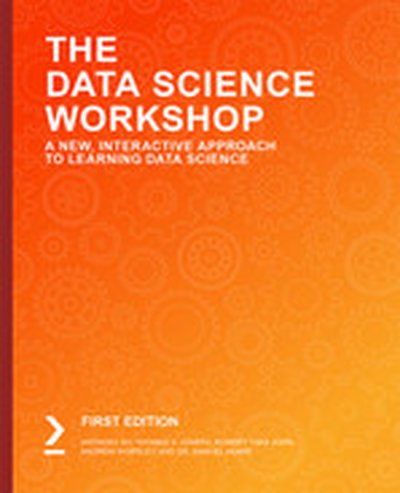
The Data Science Workshop is designed for beginners looking to step into the rigorous yet rewarding world of data science. By leveraging a hands-on approach, this book demystifies key concepts and guides you gently into creating practical machine learning models with Python. What this Book will help me do Understand supervised and unsupervised learning and their applications. Gain hands-on experience with Python libraries like scikit-learn and pandas for data manipulation. Learn practical use cases of machine learning techniques such as regression and clustering. Discover techniques to ensure robustness in machine learning with hyperparameter tuning and ensembling. Develop efficiency in feature engineering with automated tools to accelerate workflows. Author(s) Anthony So None, Thomas Joseph, Robert Thas John, and Andrew Worsley are seasoned experts in data science and Python programming. Along with Dr. Samuel Asare None, they bring decades of experience and practical knowledge to this book, delivering an engaging and approachable learning experience. Who is it for? This book is targeted toward individuals who are beginners in data science and are eager to acquire foundational knowledge and practical skills. It appeals to those who prefer a structured, hands-on approach to learning, possibly having some prior programming experience or interest in Python. Professionals aspiring to pivot into data-oriented roles or students aiming to strengthen their understanding of data science concepts will find this book particularly valuable. If you're looking to gain confidence in implementing data science projects and solving real-world problems, this text is for you.
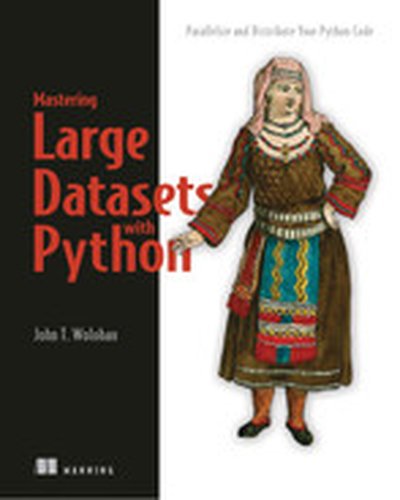
Modern data science solutions need to be clean, easy to read, and scalable. In Mastering Large Datasets with Python, author J.T. Wolohan teaches you how to take a small project and scale it up using a functionally influenced approach to Python coding. You’ll explore methods and built-in Python tools that lend themselves to clarity and scalability, like the high-performing parallelism method, as well as distributed technologies that allow for high data throughput. The abundant hands-on exercises in this practical tutorial will lock in these essential skills for any large-scale data science project. About the Technology Programming techniques that work well on laptop-sized data can slow to a crawl—or fail altogether—when applied to massive files or distributed datasets. By mastering the powerful map and reduce paradigm, along with the Python-based tools that support it, you can write data-centric applications that scale efficiently without requiring codebase rewrites as your requirements change. About the Book Mastering Large Datasets with Python teaches you to write code that can handle datasets of any size. You’ll start with laptop-sized datasets that teach you to parallelize data analysis by breaking large tasks into smaller ones that can run simultaneously. You’ll then scale those same programs to industrial-sized datasets on a cluster of cloud servers. With the map and reduce paradigm firmly in place, you’ll explore tools like Hadoop and PySpark to efficiently process massive distributed datasets, speed up decision-making with machine learning, and simplify your data storage with AWS S3. What's Inside An introduction to the map and reduce paradigm Parallelization with the multiprocessing module and pathos framework Hadoop and Spark for distributed computing Running AWS jobs to process large datasets About the Reader For Python programmers who need to work faster with more data. About the Author J. T. Wolohan is a lead data scientist at Booz Allen Hamilton, and a PhD researcher at Indiana University, Bloomington. Quotes A clear and efficient path to mastery of the map and reduce paradigm for developers of all levels. - Justin Fister, GrammarBot An amazing book for anybody looking to add parallel processing and the map/reduce pattern to their toolkit. - Gary Bake, Radius Payment Solutions Learn fundamentals of MapReduce and other core concepts and save money on expensive hardware! - Al Krinker, USPTO A comprehensive guide to the fundamentals of efficient Python data processing. - Craig Pfeifer, MITRE Corporation
The IBM® TS4500 (TS4500) tape library is a next-generation tape solution that offers higher storage density and integrated management than previous solutions. This IBM Redbooks® publication gives you a close-up view of the new IBM TS4500 tape library. In the TS4500, IBM delivers the density that today's and tomorrow's data growth requires. It has the cost-effectiveness and the manageability to grow with business data needs, while you preserve existing investments in IBM tape library products. Now, you can achieve both a low cost per terabyte (TB) and a high TB density per square foot because the TS4500 can store up to 11 petabytes (PB) of uncompressed data in a single frame library or scale up to 2 PB per square foot to over 350 PB. The TS4500 offers the following benefits: High availability: Dual active accessors with integrated service bays reduce inactive service space by 40%. The Elastic Capacity option can be used to completely eliminate inactive service space. Flexibility to grow: The TS4500 library can grow from the right side and the left side of the first L frame because models can be placed in any active position. Increased capacity: The TS4500 can grow from a single L frame up to another 17 expansion frames with a capacity of over 23,000 cartridges. High-density (HD) generation 1 frames from the TS3500 library can be redeployed in a TS4500. Capacity on demand (CoD): CoD is supported through entry-level, intermediate, and base-capacity configurations. Advanced Library Management System (ALMS): ALMS supports dynamic storage management, which enables users to create and change logical libraries and configure any drive for any logical library. Support for IBM TS1160 while also supporting TS1155, TS1150, and TS1140 tape drive: The TS1160 gives organizations an easy way to deliver fast access to data, improve security, and provide long-term retention, all at a lower cost than disk solutions. The TS1160 offers high-performance, flexible data storage with support for data encryption. Also, this enhanced fifth-generation drive can help protect investments in tape automation by offering compatibility with existing automation. The TS1160 Tape Drive Model 60E delivers a dual 10 Gb or 25 Gb Ethernet host attachment interface that is optimized for cloud-based and hyperscale environments. The TS1160 Tape Drive Model 60F delivers a native data rate of 400 MBps, the same load/ready, locate speeds, and access times as the TS1155, and includes dual-port 16 Gb Fibre Channel support. Support of the IBM Linear Tape-Open (LTO) Ultrium 8 tape drive: The LTO Ultrium 8 offering represents significant improvements in capacity, performance, and reliability over the previous generation, LTO Ultrium 7, while still protecting your investment in the previous technology. Support of LTO 8 Type M cartridge (M8): The LTO Program is introducing a new capability with LTO-8 drives. The ability of the LTO-8 drive to write 9 TB on a brand new LTO-7 cartridge instead of 6 TB as specified by the LTO-7 format. Such a cartridge is called an LTO-7 initialized LTO-8 Type M cartridge. Integrated TS7700 back-end Fibre Channel (FC) switches are available. Up to four library-managed encryption (LME) key paths per logical library are available. This book describes the TS4500 components, feature codes, specifications, supported tape drives, encryption, new integrated management console (IMC), command-line interface (CLI), and REST over SCSI (RoS) to obtain status information about library components. You learn how to accomplish the following specific tasks:: Improve storage density with increased expansion frame capacity up to 2.4 times and support 33% more tape drives per frame
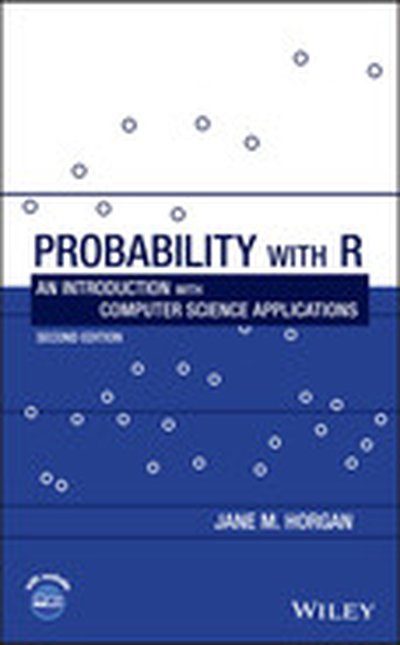
Provides a comprehensive introduction to probability with an emphasis on computing-related applications This self-contained new and extended edition outlines a first course in probability applied to computer-related disciplines. As in the first edition, experimentation and simulation are favoured over mathematical proofs. The freely down-loadable statistical programming language R is used throughout the text, not only as a tool for calculation and data analysis, but also to illustrate concepts of probability and to simulate distributions. The examples in Probability with R: An Introduction with Computer Science Applications, Second Edition cover a wide range of computer science applications, including: testing program performance; measuring response time and CPU time; estimating the reliability of components and systems; evaluating algorithms and queuing systems. Chapters cover: The R language; summarizing statistical data; graphical displays; the fundamentals of probability; reliability; discrete and continuous distributions; and more. This second edition includes: improved R code throughout the text, as well as new procedures, packages and interfaces; updated and additional examples, exercises and projects covering recent developments of computing; an introduction to bivariate discrete distributions together with the R functions used to handle large matrices of conditional probabilities, which are often needed in machine translation; an introduction to linear regression with particular emphasis on its application to machine learning using testing and training data; a new section on spam filtering using Bayes theorem to develop the filters; an extended range of Poisson applications such as network failures, website hits, virus attacks and accessing the cloud; use of new allocation functions in R to deal with hash table collision, server overload and the general allocation problem. The book is supplemented with a Wiley Book Companion Site featuring data and solutions to exercises within the book. Primarily addressed to students of computer science and related areas, Probability with R: An Introduction with Computer Science Applications, Second Edition is also an excellent text for students of engineering and the general sciences. Computing professionals who need to understand the relevance of probability in their areas of practice will find it useful.
IBM Storage for Red Hat OpenShift is a comprehensive container-ready solution that includes all the hardware & software components necessary to setup and/or expand your Red Hat OpenShift environment. This blueprint includes Red Hat OpenShift Container Platform and uses Container Storage Interface (CSI) standards. IBM Storage brings enterprise data services to containers. In this blueprint, learn how to: · Combine the benefits of IBM Systems with the performance of IBM Storage solutions so that you can deliver the right services to your clients today! · Build a 24 by 7 by 365 enterprise class private cloud with Red Hat OpenShift Container Platform utilizing new open source Container Storage interface (CSI) drivers · Leverage enterprise class services such as NVMe based flash performance, high data availability, and advanced container security IBM Storage for Red Hat OpenShift Container Platform is designed for your DevOps environment for on-premises deployment with easy-to-consume components built to perform and scale for your enterprise. Simplify your journey to cloud with pre-tested and validated blueprints engineered to enable rapid deployment and peace of mind as you move to a hybrid multicloud environment. You now have the capabilities.
Provides practical examples of circuit design and analysis using PSpice, MATLAB, and the Smith Chart This book presents the three technologies used to deal with electronic circuits: MATLAB, PSpice, and Smith chart. It gives students, researchers, and practicing engineers the necessary design and modelling tools for validating electronic design concepts involving bipolar junction transistors (BJTs), field-effect transistors (FET), OP Amp circuits, and analog filters. Electronic Circuits with MATLAB®, PSpice®, and Smith Chart presents analytical solutions with the results of MATLAB analysis and PSpice simulation. This gives the reader information about the state of the art and confidence in the legitimacy of the solution, as long as the solutions obtained by using the two software tools agree with each other. For representative examples of impedance matching and filter design, the solution using MATLAB and Smith chart (Smith V4.1) are presented for comparison and crosscheck. This approach is expected to give the reader confidence in, and a deeper understanding of, the solution. In addition, this text: Increases the reader's understanding of the underlying processes and related equations for the design and analysis of circuits Provides a stepping stone to RF (radio frequency) circuit design by demonstrating how MATLAB can be used for the design and implementation of microstrip filters Features two chapters dedicated to the application of Smith charts and two-port network theory Electronic Circuits with MATLAB®, PSpice®, and Smith Chart will be of great benefit to practicing engineers and graduate students interested in circuit theory and RF circuits.
Neural Networks Modelling and Control: Applications for Unknown Nonlinear Delayed Systems in Discrete Time focuses on modeling and control of discrete-time unknown nonlinear delayed systems under uncertainties based on Artificial Neural Networks. First, a Recurrent High Order Neural Network (RHONN) is used to identify discrete-time unknown nonlinear delayed systems under uncertainties, then a RHONN is used to design neural observers for the same class of systems. Therefore, both neural models are used to synthesize controllers for trajectory tracking based on two methodologies: sliding mode control and Inverse Optimal Neural Control. As well as considering the different neural control models and complications that are associated with them, this book also analyzes potential applications, prototypes and future trends. Provide in-depth analysis of neural control models and methodologies Presents a comprehensive review of common problems in real-life neural network systems Includes an analysis of potential applications, prototypes and future trends
Discover best practices for real world data research with SAS code and examples Real world health care data is common and growing in use with sources such as observational studies, patient registries, electronic medical record databases, insurance healthcare claims databases, as well as data from pragmatic trials. This data serves as the basis for the growing use of real world evidence in medical decision-making. However, the data itself is not evidence. Analytical methods must be used to turn real world data into valid and meaningful evidence. Real World Health Care Data Analysis: Causal Methods and Implementation Using SAS brings together best practices for causal comparative effectiveness analyses based on real world data in a single location and provides SAS code and examples to make the analyses relatively easy and efficient. The book focuses on analytic methods adjusted for time-independent confounding, which are useful when comparing the effect of different potential interventions on some outcome of interest when there is no randomization. These methods include: propensity score matching, stratification methods, weighting methods, regression methods, and approaches that combine and average across these methods methods for comparing two interventions as well as comparisons between three or more interventions algorithms for personalized medicine sensitivity analyses for unmeasured confounding