talk-data.com talk-data.com

Topic

Docker

containerization devops virtualization

25

tagged

Activity Trend

14 peak/qtr
2020-Q1 2026-Q1

Activities

Showing filtered results

Filtering by: O'Reilly Data Engineering Books ×
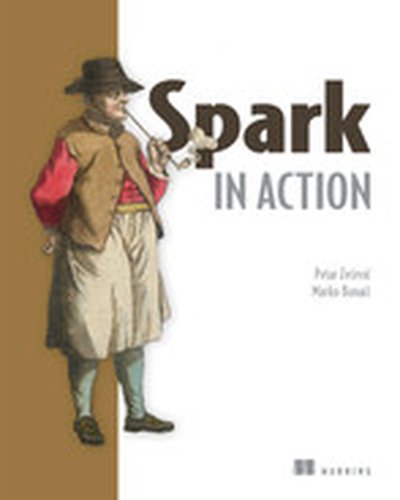
Spark in Action

Spark in Action teaches you the theory and skills you need to effectively handle batch and streaming data using Spark. Fully updated for Spark 2.0. About the Technology Big data systems distribute datasets across clusters of machines, making it a challenge to efficiently query, stream, and interpret them. Spark can help. It is a processing system designed specifically for distributed data. It provides easy-to-use interfaces, along with the performance you need for production-quality analytics and machine learning. Spark 2 also adds improved programming APIs, better performance, and countless other upgrades. About the Book Spark in Action teaches you the theory and skills you need to effectively handle batch and streaming data using Spark. You'll get comfortable with the Spark CLI as you work through a few introductory examples. Then, you'll start programming Spark using its core APIs. Along the way, you'll work with structured data using Spark SQL, process near-real-time streaming data, apply machine learning algorithms, and munge graph data using Spark GraphX. For a zero-effort startup, you can download the preconfigured virtual machine ready for you to try the book's code. What's Inside Updated for Spark 2.0 Real-life case studies Spark DevOps with Docker Examples in Scala, and online in Java and Python About the Reader Written for experienced programmers with some background in big data or machine learning. About the Authors Petar Zečević and Marko Bonaći are seasoned developers heavily involved in the Spark community. Quotes Dig in and get your hands dirty with one of the hottest data processing engines today. A great guide. - Jonathan Sharley, Pandora Media Must-have! Speed up your learning of Spark as a distributed computing framework. - Robert Ormandi, Yahoo! An easy-to-follow, step-by-step guide. - Gaurav Bhardwaj, 3Pillar Global An ambitiously comprehensive overview of Spark and its diverse ecosystem. - Jonathan Miller, Optensity
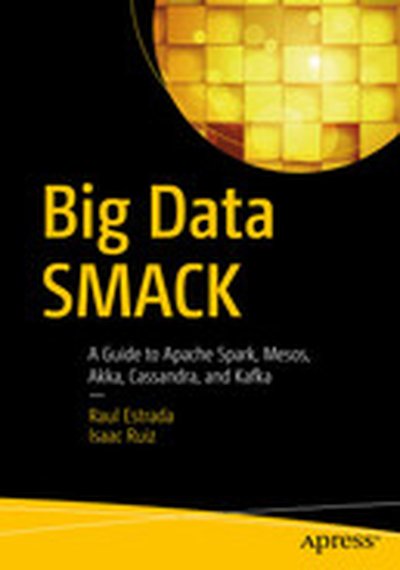
Big Data SMACK: A Guide to Apache Spark, Mesos, Akka, Cassandra, and Kafka

Learn how to integrate full-stack open source big data architecture and to choose the correct technology—Scala/Spark, Mesos, Akka, Cassandra, and Kafka—in every layer. Big data architecture is becoming a requirement for many different enterprises. So far, however, the focus has largely been on collecting, aggregating, and crunching large data sets in a timely manner. In many cases now, organizations need more than one paradigm to perform efficient analyses. Big Data SMACK explains each of the full-stack technologies and, more importantly, how to best integrate them. It provides detailed coverage of the practical benefits of these technologies and incorporates real-world examples in every situation. This book focuses on the problems and scenarios solved by the architecture, as well as the solutions provided by every technology. It covers the six main concepts of big data architecture and how integrate, replace, and reinforce every layer: What You'll Learn The language: Scala The engine: Spark (SQL, MLib, Streaming, GraphX) The container: Mesos, Docker The view: Akka The storage: Cassandra The message broker: Kafka What You Will Learn: Make big data architecture without using complex Greek letter architectures Build a cheap but effective cluster infrastructure Make queries, reports, and graphs that business demands Manage and exploit unstructured and No-SQL data sources Use tools to monitor the performance of your architecture Integrate all technologies and decide which ones replace and which ones reinforce Who This Book Is For Developers, data architects, and data scientists looking to integrate the most successful big data open stack architecture and to choose the correct technology in every layer

Cassandra: The Definitive Guide, 2nd Edition

Imagine what you could do if scalability wasn't a problem. With this hands-on guide, you’ll learn how the Cassandra database management system handles hundreds of terabytes of data while remaining highly available across multiple data centers. This expanded second edition—updated for Cassandra 3.0—provides the technical details and practical examples you need to put this database to work in a production environment. Authors Jeff Carpenter and Eben Hewitt demonstrate the advantages of Cassandra’s non-relational design, with special attention to data modeling. If you’re a developer, DBA, or application architect looking to solve a database scaling issue or future-proof your application, this guide helps you harness Cassandra’s speed and flexibility. Understand Cassandra’s distributed and decentralized structure Use the Cassandra Query Language (CQL) and cqlsh—the CQL shell Create a working data model and compare it with an equivalent relational model Develop sample applications using client drivers for languages including Java, Python, and Node.js Explore cluster topology and learn how nodes exchange data Maintain a high level of performance in your cluster Deploy Cassandra on site, in the Cloud, or with Docker Integrate Cassandra with Spark, Hadoop, Elasticsearch, Solr, and Lucene

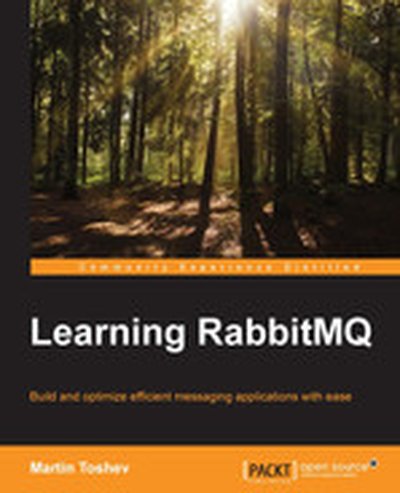
Learning RabbitMQ

Learning RabbitMQ offers developers and system administrators a clear and practical guide to mastering RabbitMQ, the popular message-broker solution. By going through concrete scenarios and examples, this book equips you with the skills to configure, manage, and optimize RabbitMQ instances effectively. What this Book will help me do Understand and apply common messaging patterns using RabbitMQ. Set up and manage RabbitMQ clusters with high availability. Integrate RabbitMQ with popular tools like Spring, MuleESB, and Docker. Optimize RabbitMQ performance and ensure secure messaging. Troubleshoot and extend RabbitMQ for different use cases. Author(s) None Toshev, the author of Learning RabbitMQ, is an expert in middleware and distributed systems, with extensive hands-on experience working with message brokers. Toshev's practical approach and clear explanations make complex topics easy to understand, helping readers effectively apply best practices when using RabbitMQ. Who is it for? This book is for developers and system administrators who aim to incorporate RabbitMQ as part of their applications. Beginners with a basic understanding of messaging will find it foundational, while experienced users will appreciate the advanced insights on integration, performance tuning, and troubleshooting.

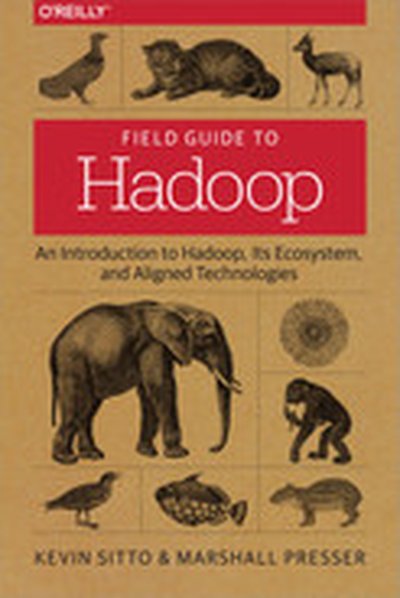
Field Guide to Hadoop

If your organization is about to enter the world of big data, you not only need to decide whether Apache Hadoop is the right platform to use, but also which of its many components are best suited to your task. This field guide makes the exercise manageable by breaking down the Hadoop ecosystem into short, digestible sections. You’ll quickly understand how Hadoop’s projects, subprojects, and related technologies work together. Each chapter introduces a different topic—such as core technologies or data transfer—and explains why certain components may or may not be useful for particular needs. When it comes to data, Hadoop is a whole new ballgame, but with this handy reference, you’ll have a good grasp of the playing field. Topics include: Core technologies—Hadoop Distributed File System (HDFS), MapReduce, YARN, and Spark Database and data management—Cassandra, HBase, MongoDB, and Hive Serialization—Avro, JSON, and Parquet Management and monitoring—Puppet, Chef, Zookeeper, and Oozie Analytic helpers—Pig, Mahout, and MLLib Data transfer—Scoop, Flume, distcp, and Storm Security, access control, auditing—Sentry, Kerberos, and Knox Cloud computing and virtualization—Serengeti, Docker, and Whirr