talk-data.com talk-data.com

Topic

DWH

Data Warehouse

analytics business_intelligence data_storage

34

tagged

Activity Trend

35 peak/qtr
2020-Q1 2026-Q1

Activities

Showing filtered results

Filtering by: O'Reilly Data Science Books ×
Mondrian in Action

Mondrian in Action teaches business users and developers how to use Mondrian and related tools for strategic business analysis. You'll learn how to design and populate a data warehouse and present the data via a multidimensional model. You'll follow examples showing how to create a Mondrian schema and then expand it to add basic security based on the users' roles. About the Technology Mondrian is an open source, lightning-fast data analysis engine designed to help you explore your business data and perform speed-of-thought analysis. Mondrian can be integrated into a wide variety of business analysis applications and learning it requires no specialized technical knowledge. About the Book Mondrian in Action teaches you to use Mondrian for strategic business analysis. In it, you'll learn how to organize and present data in a multidimensional manner. You'll follow apt and thoroughly explained examples showing how to create a Mondrian schema and then expand it to add basic security based on users' roles. Developers will discover how to integrate Mondrian using its olap4j Java API and web service calls via XML for Analysis. What's Inside Mondrian from the ground up -- no experience required A primer on business analytics Using Mondrian with a variety of leading applications Optimizing and restricting business data for fast, secure analysis About the Reader Written for developers building data analysis solutions. Appropriate for tech-savvy business users and DBAs needing to query and report on data. About the Authors William D. Back is an Enterprise Architect and Director of Pentaho Services. Nicholas Goodman is a Business Intelligence pro who has authored training courses on OLAP and Mondrian. Julian Hyde founded Mondrian and is the project's lead developer. Quotes A wonderful introduction to Business Intelligence and Analytics. - Lorenzo De Leon, Authentify, Inc. A great overview of the Mondrian engine that guided me through all the technical details. - Alexander Helf, veenion GmbH A significant complement to the online documentation, and an excellent introduction to how to think about designing a data warehouse. - Mark Newman, Heads Up Analytics Comprehensive ... highly recommended. - Najib Coutya, IMD Group
Managing Data in Motion

Managing Data in Motion describes techniques that have been developed for significantly reducing the complexity of managing system interfaces and enabling scalable architectures. Author April Reeve brings over two decades of experience to present a vendor-neutral approach to moving data between computing environments and systems. Readers will learn the techniques, technologies, and best practices for managing the passage of data between computer systems and integrating disparate data together in an enterprise environment. The average enterprise's computing environment is comprised of hundreds to thousands computer systems that have been built, purchased, and acquired over time. The data from these various systems needs to be integrated for reporting and analysis, shared for business transaction processing, and converted from one format to another when old systems are replaced and new systems are acquired. The management of the "data in motion" in organizations is rapidly becoming one of the biggest concerns for business and IT management. Data warehousing and conversion, real-time data integration, and cloud and "big data" applications are just a few of the challenges facing organizations and businesses today. Managing Data in Motion tackles these and other topics in a style easily understood by business and IT managers as well as programmers and architects. Presents a vendor-neutral overview of the different technologies and techniques for moving data between computer systems including the emerging solutions for unstructured as well as structured data types Explains, in non-technical terms, the architecture and components required to perform data integration Describes how to reduce the complexity of managing system interfaces and enable a scalable data architecture that can handle the dimensions of "Big Data"

Using Open Source Platforms for Business Intelligence

Open Source BI solutions have many advantages over traditional proprietary software, from offering lower initial costs to more flexible support and integration options; but, until now, there has been no comprehensive guide to the complete offerings of the OS BI market. Writing for IT managers and business analysts without bias toward any BI suite, industry insider Lyndsay Wise covers the benefits and challenges of all available open source BI systems and tools, enabling readers to identify the solutions and technologies that best meet their business needs. Wise compares and contrasts types of OS BI and proprietary tools on the market, including Pentaho, Jaspersoft, RapidMiner, SpagoBI, BIRT, and many more. Real-world case studies and project templates clarify the steps involved in implementing open source BI, saving new users the time and trouble of developing their own solutions from scratch. For business managers who are hard pressed to indentify the best BI solutions and software for their companies, this book provides a practical guide to evaluating the ROI of open source versus traditional BI deployments. The only book to provide complete coverage of all open source BI systems and tools specifically for business managers, without bias toward any OS BI suite A practical, step-by-step guide to implementing OS BI solutions that maximize ROI Comprehensive coverage of all open source systems and tools, including architectures, data integration, support, optimization, data mining, data warehousing, and interoperability Case studies and project templates enable readers to evaluate the benefits and tradeoffs of all OS BI options without having to spend time developing their own solutions from scratch

IBM Cognos Dynamic Cubes

IBM® Cognos® Business Intelligence (BI) provides a proven enterprise BI platform with an open data strategy, providing customers with the ability to leverage data from any source, package it into a business model, and make it available to consumers in various interfaces that are tailored to the task. IBM Cognos Dynamic Cubes complements the existing Cognos BI capabilities and continues the tradition of an open data model. It focuses on extending the scalability of the IBM Cognos platform to enable speed-of-thought analytics over terabytes of enterprise data, without having to invest in a new data warehouse appliance. This capability adds a new level of query intelligence so you can unleash the power of your enterprise data warehouse. This IBM Redbooks® publication addresses IBM Cognos Business Intelligence V10.2 and specifically, the IBM Cognos Dynamic Cubes capabilities. This book can help you in the following ways: Understand core features of the Dynamic Cubes capabilities of IBM Cognos BI V10.2 Learn by example with practical scenarios using the IBM Cognos samples

Enterprise Analytics: Optimize Performance, Process, and Decisions Through Big Data

The Definitive Guide to Enterprise-Level Analytics Strategy, Technology, Implementation, and Management Organizations are capturing exponentially larger amounts of data than ever, and now they have to figure out what to do with it. Using analytics, you can harness this data, discover hidden patterns, and use this knowledge to act meaningfully for competitive advantage. Suddenly, you can go beyond understanding “how, when, and where” events have occurred, to understand why – and use this knowledge to reshape the future. Now, analytics pioneer Tom Davenport and the world-renowned experts at the International Institute for Analytics (IIA) have brought together the latest techniques, best practices, and research on analytics in a single primer for maximizing the value of enterprise data. Enterprise Analytics is today’s definitive guide to analytics strategy, planning, organization, implementation, and usage. It covers everything from building better analytics organizations to gathering data; implementing predictive analytics to linking analysis with organizational performance. The authors offer specific insights for optimizing supply chains, online services, marketing, fraud detection, and many other business functions. They support their powerful techniques with many real-world examples, including chapter-length case studies from healthcare, retail, and financial services. Enterprise Analytics will be an invaluable resource for every business and technical professional who wants to make better data-driven decisions: operations, supply chain, and product managers; product, financial, and marketing analysts; CIOs and other IT leaders; data, web, and data warehouse specialists, and many others.

Performance Dashboards: Measuring, Monitoring, and Managing Your Business, 2nd Edition

Tips, techniques, and trends on harnessing dashboard technology to optimize business performance In Performance Dashboards, Second Edition, author Wayne Eckerson explains what dashboards are, where they can be used, and why they are important to measuring and managing performance. As Director of Research for The Data Warehousing Institute, a worldwide association of business intelligence professionals, Eckerson interviewed dozens of organizations that have built various types of performance dashboards in different industries and lines of business. Their practical insights explore how you can effectively turbo-charge performance–management initiatives with dashboard technology. Includes all-new case studies, industry research, news chapters on "Architecting Performance Dashboards" and "Launching and Managing the Project" and updated information on designing KPIs, designing dashboard displays, integrating dashboards, and types of dashboards. Provides a solid foundation for understanding performance dashboards, business intelligence, and performance management Addresses the next generation of performance dashboards, such as Mashboards and Visual Discovery tools, and including new techniques for designing dashboards and developing key performance indicators Offers guidance on how to incorporate predictive analytics, what-if modeling, collaboration, and advanced visualization techniques This updated book, which is 75% rewritten, provides a foundation for understanding performance dashboards, business intelligence, and performance management to optimize performance and accelerate results.

Pentaho® Kettle Solutions: Building Open Source ETL Solutions with Pentaho Data Integration

A complete guide to Pentaho Kettle, the Pentaho Data lntegration toolset for ETL This practical book is a complete guide to installing, configuring, and managing Pentaho Kettle. If you're a database administrator or developer, you'll first get up to speed on Kettle basics and how to apply Kettle to create ETL solutions—before progressing to specialized concepts such as clustering, extensibility, and data vault models. Learn how to design and build every phase of an ETL solution. Shows developers and database administrators how to use the open-source Pentaho Kettle for enterprise-level ETL processes (Extracting, Transforming, and Loading data) Assumes no prior knowledge of Kettle or ETL, and brings beginners thoroughly up to speed at their own pace Explains how to get Kettle solutions up and running, then follows the 34 ETL subsystems model, as created by the Kimball Group, to explore the entire ETL lifecycle, including all aspects of data warehousing with Kettle Goes beyond routine tasks to explore how to extend Kettle and scale Kettle solutions using a distributed "cloud" Get the most out of Pentaho Kettle and your data warehousing with this detailed guide—from simple single table data migration to complex multisystem clustered data integration tasks.

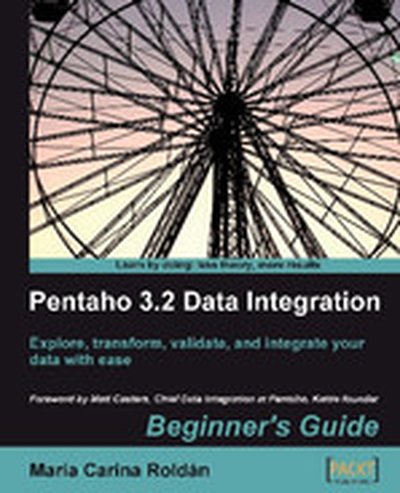
Pentaho 3.2 Data Integration Beginner's Guide

Explore, transform, validate, and integrate your data with ease Get started with Pentaho Data Integration from scratch. Enrich your data transformation operations by embedding Java and JavaScript code in PDI transformations. Create a simple but complete Datamart Project that will cover all key features of PDI. Part of Packt's Beginner's Guide series: Each task gradually develops from the previous task with an organized sequence of instructions accompanied with relevant explanation and a set of challenging tasks that the reader will be able to accomplish. In Detail Pentaho Data Integration (a.k.a. Kettle) is a full-featured open source ETL (Extract, Transform, and Load) solution. Although PDI is a feature-rich tool, effectively capturing, manipulating, cleansing, transferring, and loading data can get complicated. This book is full of practical examples that will help you to take advantage of Pentaho Data Integration's graphical, drag-and-drop design environment. You will quickly get started with Pentaho Data Integration by following the step-by-step guidance in this book. The useful tips in this book will encourage you to exploit powerful features of Pentaho Data Integration and perform ETL operations with ease. Starting with the installation of the PDI software, this book will teach you all the key PDI concepts. Each chapter introduces new features, allowing you to gradually get involved with the tool. First, you will learn to work with plain files, and to do all kinds of data manipulation. Then, the book gives you a primer on databases and teaches you how to work with databases inside PDI. Not only that, you'll be given an introduction to data warehouse concepts and you will learn to load data in a data warehouse. After that, you will learn to implement simple and complex processes. Once you've learned all the basics, you will build a simple datamart that will serve to reinforce all the concepts learned through the book. A practical, easy-to-read guide that gives you full understanding of the Pentaho Data Integration tool and shows you how to use it to your advantage to manipulate data

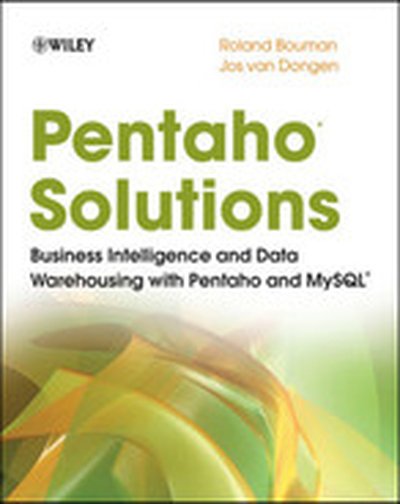
Pentaho® Solutions: Business Intelligence and Data Warehousing with Pentaho and MySQL®

Your all-in-one resource for using Pentaho with MySQL for Business Intelligence and Data Warehousing Open-source Pentaho provides business intelligence (BI) and data warehousing solutions at a fraction of the cost of proprietary solutions. Now you can take advantage of Pentaho for your business needs with this practical guide written by two major participants in the Pentaho community. The book covers all components of the Pentaho BI Suite. You'll learn to install, use, and maintain Pentaho-and find plenty of background discussion that will bring you thoroughly up to speed on BI and Pentaho concepts. Of all available open source BI products, Pentaho offers the most comprehensive toolset and is the fastest growing open source product suite Explains how to build and load a data warehouse with Pentaho Kettle for data integration/ETL, manually create JFree (pentaho reporting services) reports using direct SQL queries, and create Mondrian (Pentaho analysis services) cubes and attach them to a JPivot cube browser Review deploying reports, cubes and metadata to the Pentaho platform in order to distribute BI solutions to end-users Shows how to set up scheduling, subscription and automatic distribution The companion Web site provides complete source code examples, sample data, and links to related resources.

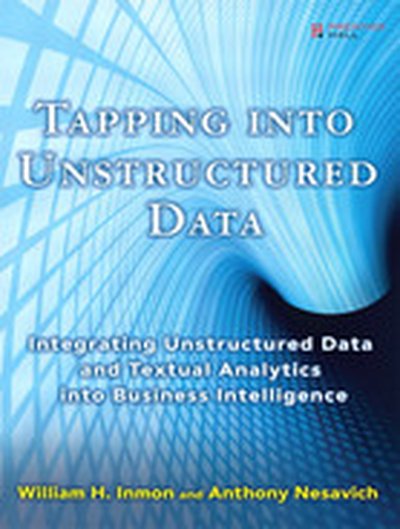
Tapping into Unstructured Data: Integrating Unstructured Data and Textual Analytics into Business Intelligence

“The authors, the best minds on the topic, are breaking new ground. They show how every organization can realize the benefits of a system that can search and present complex ideas or data from what has been a mostly untapped source of raw data.” --Randy Chalfant, CTO, Sun Microsystems The Definitive Guide to Unstructured Data Management and Analysis--From the World’s Leading Information Management Expert A wealth of invaluable information exists in unstructured textual form, but organizations have found it difficult or impossible to access and utilize it. This is changing rapidly: new approaches finally make it possible to glean useful knowledge from virtually any collection of unstructured data. William H. Inmon--the father of data warehousing--and Anthony Nesavich introduce the next data revolution: unstructured data management. Inmon and Nesavich cover all you need to know to make unstructured data work for your organization. You’ll learn how to bring it into your existing structured data environment, leverage existing analytical infrastructure, and implement textual analytic processing technologies to solve new problems and uncover new opportunities. Inmon and Nesavich introduce breakthrough techniques covered in no other book--including the powerful role of textual integration, new ways to integrate textual data into data warehouses, and new SQL techniques for reading and analyzing text. They also present five chapter-length, real-world case studies--demonstrating unstructured data at work in medical research, insurance, chemical manufacturing, contracting, and beyond. This book will be indispensable to every business and technical professional trying to make sense of a large body of unstructured text: managers, database designers, data modelers, DBAs, researchers, and end users alike. Coverage includes What unstructured data is, and how it differs from structured data First generation technology for handling unstructured data, from search engines to ECM--and its limitations Integrating text so it can be analyzed with a common, colloquial vocabulary: integration engines, ontologies, glossaries, and taxonomies Processing semistructured data: uncovering patterns, words, identifiers, and conflicts Novel processing opportunities that arise when text is freed from context Architecture and unstructured data: Data Warehousing 2.0 Building unstructured relational databases and linking them to structured data Visualizations and Self-Organizing Maps (SOMs), including Compudigm and Raptor solutions Capturing knowledge from spreadsheet data and email Implementing and managing metadata: data models, data quality, and more William H. Inmon is founder, president, and CTO of Inmon Data Systems. He is the father of the data warehouse concept, the corporate information factory, and the government information factory. Inmon has written 47 books on data warehouse, database, and information technology management; as well as more than 750 articles for trade journals such as Data Management Review, Byte, Datamation, and ComputerWorld. His b-eye-network.com newsletter currently reaches 55,000 people. Anthony Nesavich worked at Inmon Data Systems, where he developed multiple reports that successfully query unstructured data. Preface xvii 1 Unstructured Textual Data in the Organization 1 2 The Environments of Structured Data and Unstructured Data 15 3 First Generation Textual Analytics 33 4 Integrating Unstructured Text into the Structured Environment 47 5 Semistructured Data 73 6 Architecture and Textual Analytics 83 7 The Unstructured Database 95 8 Analyzing a Combination of Unstructured Data and Structured Data 113 9 Analyzing Text Through Visualization 127 10 Spreadsheets and Email 135 11 Metadata in Unstructured Data 147 12 A Methodology for Textual Analytics 163 13 Merging Unstructured Databases into the Data Warehouse 175 14 Using SQL to Analyze Text 185 15 Case Study--Textual Analytics in Medical Research 195 16 Case Study--A Database for Harmful Chemicals 203 17 Case Study--Managing Contracts Through an Unstructured Database 209 18 Case Study--Creating a Corporate Taxonomy (Glossary) 215 19 Case Study--Insurance Claims 219 Glossary 227 Index 233

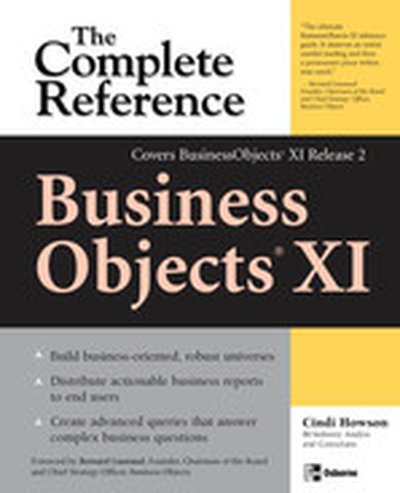
BusinessObjects XI (Release 2): The Complete Reference

This book is a must read for anyone deploying BusinessObjects. It covers everything from planning your upgrade to the latest release, to best practices in universe design, and powerful report creation that maximizes business insight. This book covers the most frequently used features for the full BI suite, in one comprehensive book. There's in depth coverage of Designer, security via the Central Management Console, InfoView, Web Intelligence, and Desktop Intelligence. It goes beyond step-by-step instructions to cover how and why in a business context. Transition notes are interspersed for version 5 and 6 customers to understand the biggest changes in XI Release 2. If you drive BI requirements in your company or are a data warehouse program manager, Business Objects administrator, report author or consumer, this book is for you.

Preparing for DB2 Near-Realtime Business Intelligence

In this IBM Redbooks publication we discuss primary processes and various alternatives that prepare you in implementing a DB2 near-realtime business intelligence environment. We discuss architectural alternatives and include overviews of software products that you can use in an implementation. As a primary focus, we tested the capabilities for supporting continuous update of a DB2 data warehouse while running a continuous concurrent query workload against that data warehouse. We tested several implementation scenarios and the variables that impact them. The results of our testing and the issues we encountered are provided.

Up and Running with DB2 UDB ESE: Partitioning for Performance in an e-Business Intelligence World

Data warehouses in the 1990s were for the privileged few business analysts. Business Intelligence is now being democratized by being shared with the rank and file employee demanding higher levels of RDBMS scalability and ease of use, being delivered through Web portals. To support this emerging e-Business Intelligence world, the challenges that face the enterprises for their centralized data warehouse RDBMS technology are scalability, performance, availability and smart manageability. This IBM Redbooks publication focuses on the innovative technical functionalities of DB2 UDB ESE V8.1 and discusses: This book positions the new functionalities, so you can understand and evaluate their applicability in your own enterprise data warehouse environment, and get started prioritizing and implementing them. Please note that the additional material referenced in the text is not available from IBM.

Essential Guide to Computing: The Story of Information Technology, The

The complete, easy-to-understand guide to IT—now and in the future! Computers, networks, and pervasive computing Hardware, operating systems, and software How networks work: LANs, WANs, and the Internet E-business, the Web, and security The guide for ANYONE who needs to understand the key technologies driving today's economy and high tech industries! You can't afford not to understand the information revolution that's sweeping the world-but who's got time for all the acronyms and hype most technology books give you? The Essential Guide to Computing demystifies the digital society we live in with an intelligent, thorough, and up-to-date explanation of computer, networking, and Internet technologies. It's perfect for smart professionals who want to get up to speed, but don't have computer science or engineering degrees! You'll find up-to-the-minute coverage on all of today's hottest technologies including: The evolution of computing: from the room-sized "monoliths" of the 1950s to today's global Internet Preview of the next revolution: "pervasive computing" Computer hardware: microprocessors, memory, storage, I/O, displays, and architecture Windows, Macintosh, UNIX/Linux, DOS, NetWare, Palm: what operating systems do, and how they compare Programming languages: from machine language to advanced object-oriented technologies Key software applications: databases, spreadsheets, word processing, voice recognition, and beyond Microsoft and the software industry: where they stand, where they're headed How networks work: LANs, WANs, packet switching, hardware, media, and more The Internet, e-commerce, and security Enterprise applications: data warehousing, Web-centered development, and groupware Whether you're a consumer, investor, marketer, or executive, this is your start-to-finish briefing on the information technologies that have changed the world-and the coming technologies that will transform it yet again!