talk-data.com talk-data.com

Topic

GenAI

Generative AI

ai machine_learning llm

1517

tagged

Activity Trend

192 peak/qtr
2020-Q1 2026-Q1

Activities

1517 activities · Newest first

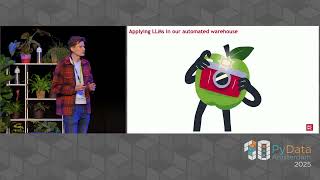
Counting Groceries with Computer Vision: How Picnic Tracks Inventory Automatically

In this talk, we'll share how we're using computer vision to automate stock counting, right on the conveyor belt. We'll discuss the challenges we've faced with the hardware, software, and GenAI components, and we'll also review our own benchmark results for the various state-of-the-art models. Finally, we'll cover the practical aspects of GenAI deployment, including prompt optimization, preventing LLM "yapping," and creating a robust feedback loop for continuous improvement.

Last year, Big Data London’s GenAI theatres were packed. Fast forward 12 months, and AI is everywhere. So, this AI lark is easy now… right?  


Lifting the lid on the AI bubble, reality is starting to bite. AI initiatives are stalling, models are drifting, and demonstrating tangible business value is really hard. Why? Because we’ve all sprinted into the AI future without first packing the essentials: high-quality, trusted data; a shared language for decision-making; solid governance; and the skilled people to make it all work.  


In 2025, the organisations that will see the best returns from their AI programs are those that have gone back to the future by pressing rewind to get their data foundations right before scaling the shiny stuff.  


Join Andy Crossley, CTO at Oakland, alongside Alex Pearce, Chief Microsoft Strategist at Softcat, for a no-holds-barred conversation about the realities of AI in practice.  


Lifting the lid on:  


Why so many AI projects fail to deliver real value  


The critical data foundations every business needs to succeed  


Real-world lessons from organisations discovering that AI is far more complex than the hype suggests  


The good news? You’ll leave with practical, actionable steps to start unlocking value from your AI investments.  


We can’t promise all the answers, but this session will reassure you that you are not alone. We aim to inspire new thinking and provide the guidance you need to navigate the most common pitfalls on the path to making AI work for you. 

As the pioneers of the low-code market since 2001, enterprise software delivery solution OutSystems has evolved rapidly alongside the changing landscape of data. With a global presence and a vast community of over 750,000 members, OutSystems continues to leverage innovative tools, including data observability and generative AI, to help their customers succeed.

In this session, Pedro Sá Martins, Head of Data Engineering, will share the evolution of OutSystems’ data landscape, including how OutSystems has partnered with Snowflake, Fivetran and Monte Carlo to address their modern data challenges. He’ll share best practices for implementing scalable data quality programs to drive innovative technologies, as well as what’s on the data horizon for the OutSystems team.

Face To Face
by Shachar Meir (Shachar Meir) , Guy Fighel (Hetz Ventures) , Rob Hulme , Sarah Levy (Euno) , Harry Gollop (Cognify Search) , Joe Reis (DeepLearning.AI)

Practicing analytics well takes more than just tools and tech. It requires data modeling practices that unify and empower all teams within analytics, from engineers to analysts. This is especially true as AI becomes a part of analytics. Without a governed data model that provides consistent data interpretation, AI tools are left to guess. Join panelists Joe Reis, Sarah Levy, Harry Gollop, Rob Hulme, Shachar Meir, and Guy Fighel, as they share battle-tested advice on overcoming conflicting definitions and accurately mapping business intent to data, reports and dashboards at scale. This panel is for data & analytics engineers seeking a clear framework to capture business logic across layers, and for data leaders focused on building a reliable foundation for Gen AI.

Face To Face
by Maximilien Tirard (Wolfram Research)

While there has been much excitement about the potential of large language models (LLMs) to automate tasks that previously required human intelligence or creativity, many early projects have failed because of LLMs’ innate willingness to lie. This presentation explores these “hallucination” issues and proposes a solution.

By combining generative AI with more traditional symbolic computation, reliability can be maintained, explainability improved, and private knowledge and data injected. This talk will show simple examples of combining language-based thinking with computational thinking to generate solutions that neither could achieve on its own.

An example application of an AI scientific research assistant will be shown that brings together the ideas presented in a most demanding real-world task, where false information is not acceptable. This is a fast-evolving space with enormous potential—and we’re just getting started.

Business challenges that were once sporadic are now persistent and widespread—impacting everyone across the organization, from business users and analysts to data engineers and scientists.

To keep pace, BI platforms have steadily evolved, embracing technologies that empower every user to tackle growing data complexity with confidence.

Now, with sophisticated Gen AI and Agentic AI capabilities built into these platforms, we’re stepping into a new era of analytics—one that redefines what data democratization means for modern businesses.

Join us for an exclusive session where we’ll explore how the latest innovations in Gen AI are reshaping the BI landscape and unlocking powerful, actionable insights for every user.

In this session, you’ll learn:

- What defines a truly Gen AI-powered BI platform

- How businesses can empower every user with cutting-edge Gen AI

- How Agentic AI is shaping BI

- Live demos showcasing Gen AI and Agentic AI capabilities in BI

- Discover how a Gen BI platform can drive smarter decisions, boost productivity, and deliver transformative business outcomes.

This session presents the knowledge graph as a dynamic reasoning engine, not just a static data repository. Learn how to deploy autonomous AI agents that intelligently navigate the relationships within your connected data to discover profound insights. Leveraging GenAI and graph algorithms, this agentic approach moves beyond simple retrieval to create a verifiable foundation for AI systems that can reason and learn.

SAP Business Data Cloud is a fully managed solution that unifies and governs all SAP data while seamlessly integrating with third-party sources. With SAP Business Data Cloud, organisations can accelerate decision-making by empowering business users to make more impactful choices. It also provides a trusted foundation for AI, ensuring that data across applications and operations is reliable, responsible, and relevant—enabling organisations to harness the full potential of generative AI.

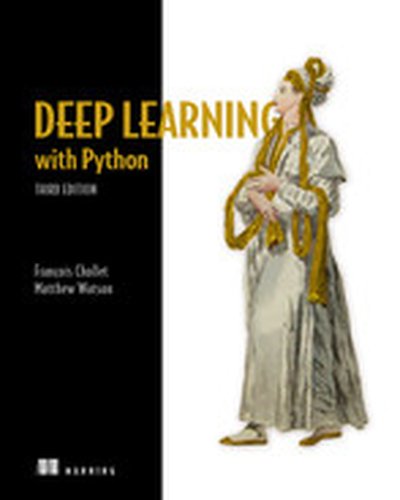
Deep Learning with Python, Third Edition

The bestselling book on Python deep learning, now covering generative AI, Keras 3, PyTorch, and JAX! Deep Learning with Python, Third Edition puts the power of deep learning in your hands. This new edition includes the latest Keras and TensorFlow features, generative AI models, and added coverage of PyTorch and JAX. Learn directly from the creator of Keras and step confidently into the world of deep learning with Python. In Deep Learning with Python, Third Edition you’ll discover: Deep learning from first principles The latest features of Keras 3 A primer on JAX, PyTorch, and TensorFlow Image classification and image segmentation Time series forecasting Large Language models Text classification and machine translation Text and image generation—build your own GPT and diffusion models! Scaling and tuning models With over 100,000 copies sold, Deep Learning with Python makes it possible for developers, data scientists, and machine learning enthusiasts to put deep learning into action. In this expanded and updated third edition, Keras creator François Chollet offers insights for both novice and experienced machine learning practitioners. You'll master state-of-the-art deep learning tools and techniques, from the latest features of Keras 3 to building AI models that can generate text and images. About the Technology In less than a decade, deep learning has changed the world—twice. First, Python-based libraries like Keras, TensorFlow, and PyTorch elevated neural networks from lab experiments to high-performance production systems deployed at scale. And now, through Large Language Models and other generative AI tools, deep learning is again transforming business and society. In this new edition, Keras creator François Chollet invites you into this amazing subject in the fluid, mentoring style of a true insider. About the Book Deep Learning with Python, Third Edition makes the concepts behind deep learning and generative AI understandable and approachable. This complete rewrite of the bestselling original includes fresh chapters on transformers, building your own GPT-like LLM, and generating images with diffusion models. Each chapter introduces practical projects and code examples that build your understanding of deep learning, layer by layer. What's Inside Hands-on, code-first learning Comprehensive, from basics to generative AI Intuitive and easy math explanations Examples in Keras, PyTorch, JAX, and TensorFlow About the Reader For readers with intermediate Python skills. No previous experience with machine learning or linear algebra required. About the Authors François Chollet is the co-founder of Ndea and the creator of Keras. Matthew Watson is a software engineer at Google working on Gemini and a core maintainer of Keras. Quotes Perfect for anyone interested in learning by doing from one of the industry greats. - Anthony Goldbloom, Founder of Kaggle A sharp, deeply practical guide that teaches you how to think from first principles to build models that actually work. - Santiago Valdarrama, Founder of ml.school The most up-to-date and complete guide to deep learning you’ll find today! - Aran Komatsuzaki, EleutherAI Masterfully conveys the true essence of neural networks. A rare case in recent years of outstanding technical writing. - Salvatore Sanfilippo, Creator of Redis

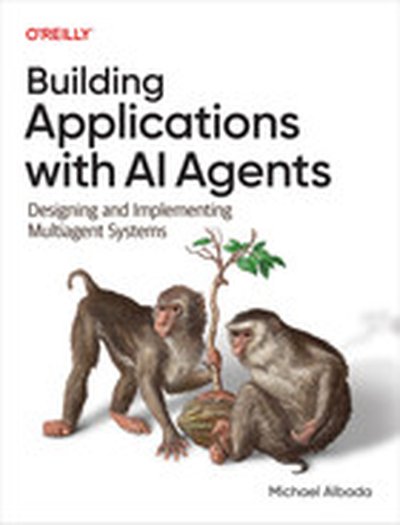
Building Applications with AI Agents

Generative AI has revolutionized how organizations tackle problems, accelerating the journey from concept to prototype to solution. As the models become increasingly capable, we have witnessed a new design pattern emerge: AI agents. By combining tools, knowledge, memory, and learning with advanced foundation models, we can now sequence multiple model inferences together to solve ambiguous and difficult problems. From coding agents to research agents to analyst agents and more, we've already seen agents accelerate teams and organizations. While these agents enhance efficiency, they often require extensive planning, drafting, and revising to complete complex tasks, and deploying them remains a challenge for many organizations, especially as technology and research rapidly develops. This book is your indispensable guide through this intricate and fast-moving landscape. Author Michael Albada provides a practical and research-based approach to designing and implementing single- and multiagent systems. It simplifies the complexities and equips you with the tools to move from concept to solution efficiently. Understand the distinct features of foundation model-enabled AI agents Discover the core components and design principles of AI agents Explore design trade-offs and implement effective multiagent systems Design and deploy tailored AI solutions, enhancing efficiency and innovation in your field

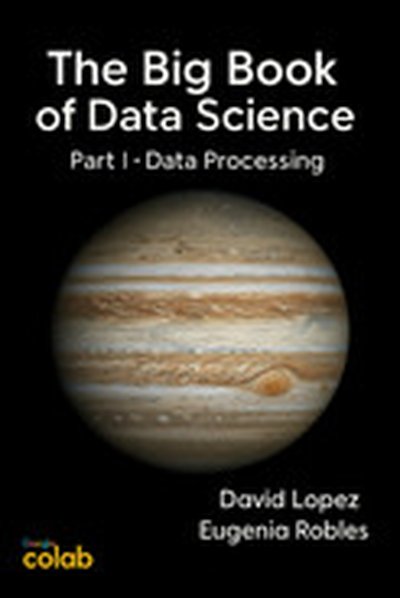
The Big Book of Data Science. Part I: Data Processing

There are already excellent books on software programming for data processing and data transformation for instance: Wes McKinney’s. This book, reflecting on my own industrial and teaching experience, tries to overcome the big learning curve newcomers to the field have to travel before they are ready to tackle real data science and AI challenges. In this regard this book is different to other books in that:

It assumes zero software programming knowledge. This instructional design is intentional given the book’s aim to open the practice of data science to anyone interested in data exploration and analysis irrespective of their previous background.

It follows an incremental approach to facilitate the assimilation of, sometimes, arcane software techniques to manipulate data.

It is practice oriented to ensure readers can apply what they learn in their daily practices.

Illustrates how to use generative AI to help you become a more productive data scientist and AI engineer.

By reading and working on the labs included in this book you will develop software programming skills required to successfully contribute to the data understanding and data preparation stages involved in any data related project. You will become proficient at manipulating and transforming datasets in industrial contexts and produce clean, reliable datasets that can drive accurate analysis and informed decision-making. Moreover you will be prepared to develop and deploy dashboards and visualizations supporting the insights and conclusions in the deployment stage.

Data modelling and evaluation are not covered in this book. We are working on a second installment of the book series illustrating the application of statistical and machine learning techniques to derive data insights.

The rapid growth of generative AI, driven by models like OpenAI's GPT-4.1, GPT-4.5, o3, and DeepSeek’s R1, has captured the attention of consumers, businesses, and executives worldwide. These powerful language models rely heavily on the quality of input prompts, making prompt engineering a vital skill for unlocking their full potential. In this interactive, demo-driven session, participants will explore essential and advanced techniques in prompt design, including: • What is Prompt Engineering? • Advanced Prompting Techniques • Few-shot Prompting (guiding responses with examples) • Chain-of-Thought (CoT) Prompting (step-by-step reasoning) • Instruction Fine-tuning (enforcing specific constraints) • Persona-based Prompting (customizing for roles) • Multi-step Prompting (iterative output refinement) • Debugging & Refining AI Responses • Leveraging reasoning models like o3 • Prompt Engineering Best Practices Attendees will depart with a clear framework and practical suggestions for crafting effective prompts and maximizing the value of AI tools.

Send us a text What if AI could tap into live operational data — without ETL or RAG? In this episode, Deepti Srivastava, founder of Snow Leopard, reveals how her company is transforming enterprise data access with intelligent data retrieval, semantic intelligence, and a governance-first approach. Tune in for a fresh perspective on the future of AI and the startup journey behind it.

We explore how companies are revolutionizing their data access and AI strategies. Deepti Srivastava, founder of Snow Leopard, shares her insights on bridging the gap between live operational data and generative AI — and how it’s changing the game for enterprises worldwide. We dive into Snow Leopard’s innovative approach to data retrieval, semantic intelligence, and governance-first architecture. 04:54 Meeting Deepti Srivastava 14:06 AI with No ETL, no RAG 17:11 Snow Leopard's Intelligent Data Fetching 19:00 Live Query Challenges 21:01 Snow Leopard's Secret Sauce 22:14 Latency 23:48 Schema Changes 25:02 Use Cases 26:06 Snow Leopard's Roadmap 29:16 Getting Started 33:30 The Startup Journey 34:12 A Woman in Technology 36:03 The Contrarian View🔗 LinkedIn: https://www.linkedin.com/in/thedeepti/ 🔗 Website:  https://www.snowleopard.ai/ Want to be featured as a guest on Making Data Simple? Reach out to us at [email protected] and tell us why you should be next. The Making Data Simple Podcast is hosted by Al Martin, WW VP Technical Sales, IBM, where we explore trending technologies, business innovation, and leadership ... while keeping it simple & fun.

Financial institutions are racing to harness the power of AI, but the path to implementation is filled with challenges. From feature engineering to model deployment, the technical complexities of AI adoption in finance require careful navigation of both technological and regulatory landscapes. How do you build AI systems that satisfy strict compliance requirements while still delivering business value? What skills should teams prioritize as AI tools become more accessible through natural language interfaces? With the pressure to reduce model development time from months to days, how can organizations maintain proper governance while still moving at the speed modern business demands? Vijay is a seasoned analytics, product, and technology executive. As EVP of Global Solutions & Analytics at Experian, he runs the department that creates Experian's Ascend financial AI platform. Promoted multiple times in eight years, Vijay now leads a team of more than 70 at Experian. He is one of the youngest execs at Experian, believing strongly in understanding and accepting risk. He has built and run data, engineering, and IT teams, and created market-leading products. In the episode, Richie and Vijay explore the impact of generative AI on the finance industry, the development of Experian's Ascend platform, the challenges of fraud prevention, education and compliance in AI deployment, and much more. Links Mentioned in the Show: ExperianExperian AscendConnect with VijayCourse: Implementing AI Solutions in BusinessRelated Episode: How Generative AI is Transforming Finance with Andrew Reiskind, CDO at MastercardRewatch RADAR AI 

New to DataCamp? Learn on the go using the DataCamp mobile app Empower your business with world-class data and AI skills with DataCamp for business