talk-data.com talk-data.com

Topic

HDFS

Hadoop Distributed File System (HDFS)

distributed_storage big_data hadoop

57

tagged

Activity Trend

1 peak/qtr
2020-Q1 2026-Q1

Activities

57 activities · Newest first

Field Guide to Hadoop

If your organization is about to enter the world of big data, you not only need to decide whether Apache Hadoop is the right platform to use, but also which of its many components are best suited to your task. This field guide makes the exercise manageable by breaking down the Hadoop ecosystem into short, digestible sections. You’ll quickly understand how Hadoop’s projects, subprojects, and related technologies work together. Each chapter introduces a different topic—such as core technologies or data transfer—and explains why certain components may or may not be useful for particular needs. When it comes to data, Hadoop is a whole new ballgame, but with this handy reference, you’ll have a good grasp of the playing field. Topics include: Core technologies—Hadoop Distributed File System (HDFS), MapReduce, YARN, and Spark Database and data management—Cassandra, HBase, MongoDB, and Hive Serialization—Avro, JSON, and Parquet Management and monitoring—Puppet, Chef, Zookeeper, and Oozie Analytic helpers—Pig, Mahout, and MLLib Data transfer—Scoop, Flume, distcp, and Storm Security, access control, auditing—Sentry, Kerberos, and Knox Cloud computing and virtualization—Serengeti, Docker, and Whirr
Apache Flume: Distributed Log Collection for Hadoop - Second Edition

"Apache Flume: Distributed Log Collection for Hadoop - Second Edition" is your hands-on guide to learning how to use Apache Flume to reliably collect and move logs and data streams into your Hadoop ecosystem. Through practical examples and real-world scenarios, this book will help you master the setup, configuration, and optimization of Flume for various data ingestion use cases. What this Book will help me do Understand the key concepts and architecture behind Apache Flume to build reliable and scalable data ingestion systems. Set up Flume agents to collect and transfer data into the Hadoop File System (HDFS) or other storage solutions effectively. Learn stream data processing techniques, such as filtering, transforming, and enriching data during transit to improve data usability. Integrate Flume with other tools like Elasticsearch and Solr to enhance analytics and search capabilities. Implement monitoring and troubleshooting workflows to maintain healthy and optimized Flume data pipelines. Author(s) Steven Hoffman, a seasoned software developer and data engineer, brings years of practical experience working with big data technologies to this book. He has a strong background in distributed systems and big data solutions, having implemented enterprise-scale analytics projects. Through clear and approachable writing, he aims to empower readers to successfully deploy reliable data pipelines using Apache Flume. Who is it for? This book is written for Hadoop developers, data engineers, and IT professionals who seek to build robust pipelines for streaming data into Hadoop environments. It is ideal for readers who have a basic understanding of Hadoop and HDFS but are new to Apache Flume. If you are looking to enhance your analytics capabilities by efficiently ingesting, routing, and processing streaming data, this book is for you. Beginners as well as experienced engineers looking to dive deeper into Flume will find it insightful.

Hadoop MapReduce v2 Cookbook - Second Edition

Explore insights from vast datasets with "Hadoop MapReduce v2 Cookbook - Second Edition." This book serves as a practical guide for developers and system administrators who aim to master big data processing using Hadoop v2. By engaging with its step-by-step recipes, you will learn to harness the Hadoop MapReduce ecosystem for scalable and efficient data solutions. What this Book will help me do Master the configuration and management of Hadoop YARN, MapReduce v2, and HDFS clusters. Integrate big data tools such as Hive, HBase, Pig, Mahout, and Nutch with Hadoop v2. Develop analytics solutions for large-scale datasets using MapReduce-based applications. Address specific challenges like data classification, recommendations, and text analytics leveraging Hadoop MapReduce. Deploy and manage big data clusters effectively, including options for cloud environments. Author(s) The authors behind "Hadoop MapReduce v2 Cookbook - Second Edition" combine their deep expertise in big data technology and years of experience working directly with Hadoop. They have helped numerous organizations implement scalable data processing solutions and are passionate about teaching others. Their approach ensures readers gain both foundational knowledge and practical skills. Who is it for? This book is perfect for developers and system administrators who want to learn Hadoop MapReduce v2, including configuring and managing big data clusters. Beginners with basic Java knowledge can follow along to advance their skills in big data processing. Ideal for those transitioning to Hadoop v2 or requiring practical recipes for immediate application. Great for professionals aiming to deepen their expertise in scalable data technologies.

Mastering Hadoop

Embark on a journey to master Hadoop and its advanced features with this comprehensive book. "Mastering Hadoop" equips you with the knowledge needed to tackle complex data processing challenges and optimize your Hadoop workflows. With clear explanations and practical examples, this book is your guide to becoming proficient in leveraging Hadoop technologies. What this Book will help me do Optimize Hadoop MapReduce jobs, Pig scripts, and Hive queries for better performance. Understand and employ advanced data formats and Hadoop I/O techniques. Learn to integrate low-latency processing with Storm on YARN. Explore the cloud deployment of Hadoop and advanced HDFS alternatives. Enhance Hadoop security and master techniques for analytics using Hadoop. Author(s) None Karanth is an experienced Hadoop professional with years of expertise in data processing and distributed computing. With a practical and methodical approach, None has crafted this book to empower learners with the essentials and advanced features of Hadoop. None's focus on performance optimization and real-world applications helps bridge the gap between theory and practice. Who is it for? This book is ideal for data engineers and software developers familiar with the basics of Hadoop who seek to advance their understanding. If you aim to enhance Hadoop performance or adopt new features like YARN and Storm, this book is for you. Readers interested in Hadoop deployment, optimization, and newer capabilities will also greatly benefit. It's perfect for anyone aiming to become a Hadoop expert, from intermediate learners to advanced practitioners.

Hbase Essentials

Hbase Essentials provides a hands-on introduction to HBase, a distributed database built on top of the Hadoop ecosystem. Through practical examples and clear explanations, you will learn how to set up, use, and administer HBase to manage high-volume, high-velocity data efficiently. What this Book will help me do Understand the importance and use cases of HBase for managing Big Data. Successfully set up and configure an HBase cluster in your environment. Develop data models in HBase and perform CRUD operations effectively. Learn advanced HBase features like counters, coprocessors, and integration with MapReduce. Master cluster management and performance tuning for optimal HBase operations. Author(s) None Garg is a seasoned Big Data engineer with extensive experience in distributed databases and the Hadoop ecosystem. Having worked on complex data systems, None brings practical insights to understanding and implementing HBase. Known for a clear and approachable writing style, None aims to make learning technical subjects accessible. Who is it for? Hbase Essentials is ideal for developers and Big Data engineers keen to build expertise in distributed databases. If you have a basic understanding of HDFS or MapReduce or have experience with NoSQL databases, this book will accelerate your knowledge of HBase. It's tailored for those seeking to leverage HBase for scalable and reliable data solutions. Whether you're starting with HBase or expanding your Big Data skillset, this guide provides the tools to succeed.

Using Flume

How can you get your data from frontend servers to Hadoop in near real time? With this complete reference guide, you’ll learn Flume’s rich set of features for collecting, aggregating, and writing large amounts of streaming data to the Hadoop Distributed File System (HDFS), Apache HBase, SolrCloud, Elastic Search, and other systems. Using Flume shows operations engineers how to configure, deploy, and monitor a Flume cluster, and teaches developers how to write Flume plugins and custom components for their specific use-cases. You’ll learn about Flume’s design and implementation, as well as various features that make it highly scalable, flexible, and reliable. Code examples and exercises are available on GitHub. Learn how Flume provides a steady rate of flow by acting as a buffer between data producers and consumers Dive into key Flume components, including sources that accept data and sinks that write and deliver it Write custom plugins to customize the way Flume receives, modifies, formats, and writes data Explore APIs for sending data to Flume agents from your own applications Plan and deploy Flume in a scalable and flexible way—and monitor your cluster once it’s running

Pro Apache Hadoop, Second Edition

Pro Apache Hadoop, Second Edition brings you up to speed on Hadoop the framework of big data. Revised to cover Hadoop 2.0, the book covers the very latest developments such as YARN (aka MapReduce 2.0), new HDFS high-availability features, and increased scalability in the form of HDFS Federations. All the old content has been revised too, giving the latest on the ins and outs of MapReduce, cluster design, the Hadoop Distributed File System, and more. This book covers everything you need to build your first Hadoop cluster and begin analyzing and deriving value from your business and scientific data. Learn to solve big-data problems the MapReduce way, by breaking a big problem into chunks and creating small-scale solutions that can be flung across thousands upon thousands of nodes to analyze large data volumes in a short amount of wall-clock time. Learn how to let Hadoop take care of distributing and parallelizing your softwareyou just focus on the code; Hadoop takes care of the rest. Covers all that is new in Hadoop 2.0 Written by a professional involved in Hadoop since day one Takes you quickly to the seasoned pro level on the hottest cloud-computing framework

Cloudera Administration Handbook

Discover how to effectively administer large Apache Hadoop clusters with the Cloudera Administration Handbook. This guide offers step-by-step instructions and practical examples, enabling you to confidently set up and manage Hadoop environments using Cloudera Manager and CDH5 tools. Through this book, administrators or aspiring experts can unlock the power of distributed computing and streamline cluster operations. What this Book will help me do Gain in-depth understanding of Apache Hadoop architecture and its operational framework. Master the setup, configuration, and management of Hadoop clusters using Cloudera tools. Implement robust security measures in your cluster including Kerberos authentication. Optimize for reliability with advanced HDFS features like High Availability and Federation. Streamline cluster management and address troubleshooting effectively using best practices. Author(s) None Menon is an experienced technologist specializing in distributed computing and data infrastructure. With a strong background in big data platforms and certifications in Hadoop administration, None has helped enterprises optimize their cluster deployments. Their instructional approach combines clarity, practical insights, and a hands-on focus. Who is it for? This book is ideal for systems administrators, data engineers, and IT professionals keen on mastering Hadoop environments. It serves both beginners getting started with cluster setup and seasoned administrators seeking advanced configurations. If you're aiming to efficiently manage Hadoop clusters using Cloudera solutions, this guide provides the knowledge and tools you need.

Pro Microsoft HDInsight: Hadoop on Windows

Pro Microsoft HDInsight is a complete guide to deploying and using Apache Hadoop on the Microsoft Windows Azure Platforms. The information in this book enables you to process enormous volumes of structured as well as non-structured data easily using HDInsight, which is Microsoft's own distribution of Apache Hadoop. Furthermore, the blend of Infrastructure as a Service (IaaS) and Platform as a Service (PaaS) offerings available through Windows Azure lets you take advantage of Hadoop's processing power without the worry of creating, configuring, maintaining, or managing your own cluster. With the data explosion that is soon to happen, the open source Apache Hadoop Framework is gaining traction, and it benefits from a huge ecosystem that has risen around the core functionalities of the Hadoop distributed file system (HDFS™) and Hadoop Map Reduce. Pro Microsoft HDInsight equips you with the knowledge, confidence, and technique to configure and manage this ecosystem on Windows Azure. The book is an excellent choice for anyone aspiring to be a data scientist or data engineer, putting you a step ahead in the data mining field. Guides you through installation and configuration of an HDInsight cluster on Windows Azure Provides clear examples of configuring and executing Map Reduce jobs Helps you consume data and diagnose errors from the Windows Azure HDInsight Service What you'll learn Create and Manage HDInsight clusters on Windows Azure Understand the different HDInsight services and configuration files Develop and run Map Reduce jobs using .NET and PowerShell Consume data from client applications like Microsoft Excel and Power View Monitor job executions and logs Troubleshoot common problems Who this book is for Pro Microsoft HDInsight: Hadoop on Windows is an excellent choice for developers in the field of business intelligence and predictive analysis who want that extra edge in technology on Microsoft Windows and Windows Azure platforms. The book is for people who love to slice and dice data, and identify trends and patterns through analysis of data to help in creative and intelligent decision making.

IBM InfoSphere Streams: Accelerating Deployments with Analytic Accelerators

This IBM® Redbooks® publication describes visual development, visualization, adapters, analytics, and accelerators for IBM InfoSphere® Streams (V3), a key component of the IBM Big Data platform. Streams was designed to analyze data in motion, and can perform analysis on incredibly high volumes with high velocity, using a wide variety of analytic functions and data types. The Visual Development environment extends Streams Studio with drag-and-drop development, provides round tripping with existing text editors, and is ideal for rapid prototyping. Adapters facilitate getting data in and out of Streams, and V3 supports WebSphere MQ, Apache Hadoop Distributed File System, and IBM InfoSphere DataStage. Significant analytics include the native Streams Processing Language, SPSS Modeler analytics, Complex Event Processing, TimeSeries Toolkit for machine learning and predictive analytics, Geospatial Toolkit for location-based applications, and Annotation Query Language for natural language processing applications. Accelerators for Social Media Analysis and Telecommunications Event Data Analysis sample programs can be modified to build production level applications. Want to learn how to analyze high volumes of streaming data or implement systems requiring high performance across nodes in a cluster? Then this book is for you. Please note that the additional material referenced in the text is not available from IBM.

The Culture of Big Data

Technology does not exist in a vacuum. In the same way that a plant needs water and nourishment to grow, technology needs people and process to thrive and succeed. Culture (i.e., people and process) is integral and critical to the success of any new technology deployment or implementation. Big data is not just a technology phenomenon. It has a cultural dimension. It's vitally important to remember that most people have not considered the immense difference between a world seen through the lens of a traditional relational database system and a world seen through the lens of a Hadoop Distributed File System.This paper broadly describes the cultural challenges that accompany efforts to create and sustain big data initiatives in an evolving world whose data management processes are rooted firmly in traditional data warehouse architectures.

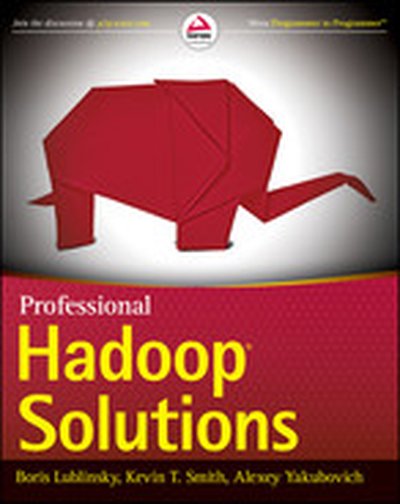
Professional Hadoop Solutions

The go-to guidebook for deploying Big Data solutions with Hadoop Today's enterprise architects need to understand how the Hadoop frameworks and APIs fit together, and how they can be integrated to deliver real-world solutions. This book is a practical, detailed guide to building and implementing those solutions, with code-level instruction in the popular Wrox tradition. It covers storing data with HDFS and Hbase, processing data with MapReduce, and automating data processing with Oozie. Hadoop security, running Hadoop with Amazon Web Services, best practices, and automating Hadoop processes in real time are also covered in depth. With in-depth code examples in Java and XML and the latest on recent additions to the Hadoop ecosystem, this complete resource also covers the use of APIs, exposing their inner workings and allowing architects and developers to better leverage and customize them. The ultimate guide for developers, designers, and architects who need to build and deploy Hadoop applications Covers storing and processing data with various technologies, automating data processing, Hadoop security, and delivering real-time solutions Includes detailed, real-world examples and code-level guidelines Explains when, why, and how to use these tools effectively Written by a team of Hadoop experts in the programmer-to-programmer Wrox style Professional Hadoop Solutions is the reference enterprise architects and developers need to maximize the power of Hadoop.

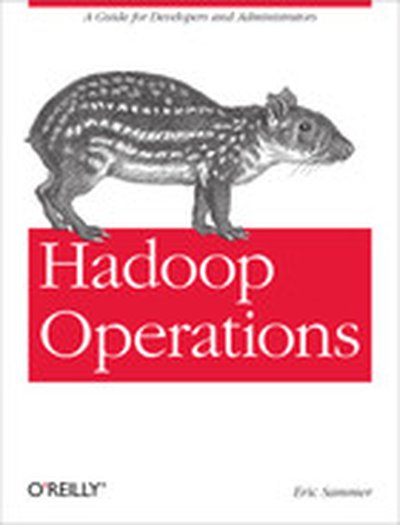
Hadoop Operations

If you’ve been asked to maintain large and complex Hadoop clusters, this book is a must. Demand for operations-specific material has skyrocketed now that Hadoop is becoming the de facto standard for truly large-scale data processing in the data center. Eric Sammer, Principal Solution Architect at Cloudera, shows you the particulars of running Hadoop in production, from planning, installing, and configuring the system to providing ongoing maintenance. Rather than run through all possible scenarios, this pragmatic operations guide calls out what works, as demonstrated in critical deployments. Get a high-level overview of HDFS and MapReduce: why they exist and how they work Plan a Hadoop deployment, from hardware and OS selection to network requirements Learn setup and configuration details with a list of critical properties Manage resources by sharing a cluster across multiple groups Get a runbook of the most common cluster maintenance tasks Monitor Hadoop clusters—and learn troubleshooting with the help of real-world war stories Use basic tools and techniques to handle backup and catastrophic failure

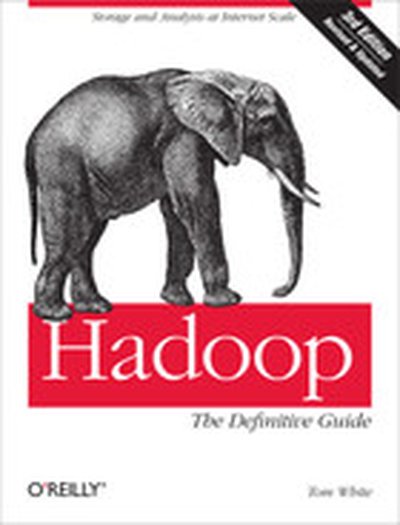
Hadoop: The Definitive Guide, 3rd Edition

Ready to unlock the power of your data? With this comprehensive guide, you’ll learn how to build and maintain reliable, scalable, distributed systems with Apache Hadoop. This book is ideal for programmers looking to analyze datasets of any size, and for administrators who want to set up and run Hadoop clusters. You’ll find illuminating case studies that demonstrate how Hadoop is used to solve specific problems. This third edition covers recent changes to Hadoop, including material on the new MapReduce API, as well as MapReduce 2 and its more flexible execution model (YARN). Store large datasets with the Hadoop Distributed File System (HDFS) Run distributed computations with MapReduce Use Hadoop’s data and I/O building blocks for compression, data integrity, serialization (including Avro), and persistence Discover common pitfalls and advanced features for writing real-world MapReduce programs Design, build, and administer a dedicated Hadoop cluster—or run Hadoop in the cloud Load data from relational databases into HDFS, using Sqoop Perform large-scale data processing with the Pig query language Analyze datasets with Hive, Hadoop’s data warehousing system Take advantage of HBase for structured and semi-structured data, and ZooKeeper for building distributed systems

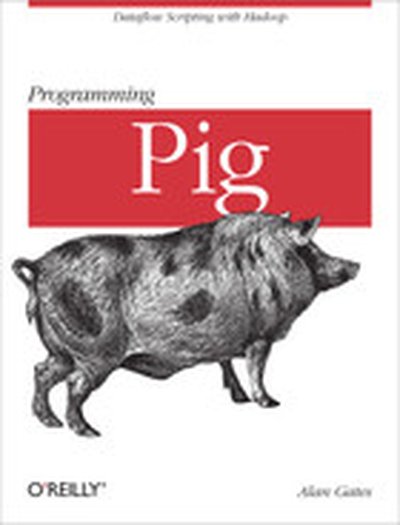
Programming Pig

This guide is an ideal learning tool and reference for Apache Pig, the open source engine for executing parallel data flows on Hadoop. With Pig, you can batch-process data without having to create a full-fledged application—making it easy for you to experiment with new datasets. Programming Pig introduces new users to Pig, and provides experienced users with comprehensive coverage on key features such as the Pig Latin scripting language, the Grunt shell, and User Defined Functions (UDFs) for extending Pig. If you need to analyze terabytes of data, this book shows you how to do it efficiently with Pig. Delve into Pig’s data model, including scalar and complex data types Write Pig Latin scripts to sort, group, join, project, and filter your data Use Grunt to work with the Hadoop Distributed File System (HDFS) Build complex data processing pipelines with Pig’s macros and modularity features Embed Pig Latin in Python for iterative processing and other advanced tasks Create your own load and store functions to handle data formats and storage mechanisms Get performance tips for running scripts on Hadoop clusters in less time

Hadoop: The Definitive Guide, 2nd Edition

Discover how Apache Hadoop can unleash the power of your data. This comprehensive resource shows you how to build and maintain reliable, scalable, distributed systems with the Hadoop framework -- an open source implementation of MapReduce, the algorithm on which Google built its empire. Programmers will find details for analyzing datasets of any size, and administrators will learn how to set up and run Hadoop clusters. This revised edition covers recent changes to Hadoop, including new features such as Hive, Sqoop, and Avro. It also provides illuminating case studies that illustrate how Hadoop is used to solve specific problems. Looking to get the most out of your data? This is your book. Use the Hadoop Distributed File System (HDFS) for storing large datasets, then run distributed computations over those datasets with MapReduce Become familiar with Hadoop’s data and I/O building blocks for compression, data integrity, serialization, and persistence Discover common pitfalls and advanced features for writing real-world MapReduce programs Design, build, and administer a dedicated Hadoop cluster, or run Hadoop in the cloud Use Pig, a high-level query language for large-scale data processing Analyze datasets with Hive, Hadoop’s data warehousing system Take advantage of HBase, Hadoop’s database for structured and semi-structured data Learn ZooKeeper, a toolkit of coordination primitives for building distributed systems "Now you have the opportunity to learn about Hadoop from a master -- not only of the technology, but also of common sense and plain talk." --Doug Cutting, Cloudera

Hadoop: The Definitive Guide

Hadoop: The Definitive Guide helps you harness the power of your data. Ideal for processing large datasets, the Apache Hadoop framework is an open source implementation of the MapReduce algorithm on which Google built its empire. This comprehensive resource demonstrates how to use Hadoop to build reliable, scalable, distributed systems: programmers will find details for analyzing large datasets, and administrators will learn how to set up and run Hadoop clusters. Complete with case studies that illustrate how Hadoop solves specific problems, this book helps you: Use the Hadoop Distributed File System (HDFS) for storing large datasets, and run distributed computations over those datasets using MapReduce Become familiar with Hadoop's data and I/O building blocks for compression, data integrity, serialization, and persistence Discover common pitfalls and advanced features for writing real-world MapReduce programs Design, build, and administer a dedicated Hadoop cluster, or run Hadoop in the cloud Use Pig, a high-level query language for large-scale data processing Take advantage of HBase, Hadoop's database for structured and semi-structured data Learn ZooKeeper, a toolkit of coordination primitives for building distributed systems If you have lots of data -- whether it's gigabytes or petabytes -- Hadoop is the perfect solution. Hadoop: The Definitive Guide is the most thorough book available on the subject. "Now you have the opportunity to learn about Hadoop from a master-not only of the technology, but also of common sense and plain talk."-- Doug Cutting, Hadoop Founder, Yahoo!