talk-data.com talk-data.com

Topic

HDFS

Hadoop Distributed File System (HDFS)

distributed_storage big_data hadoop

57

tagged

Activity Trend

1 peak/qtr
2020-Q1 2026-Q1

Activities

57 activities · Newest first

Big Data Analytics with Hadoop 3

Big Data Analytics with Hadoop 3 is your comprehensive guide to understanding and leveraging the power of Apache Hadoop for large-scale data processing and analytics. Through practical examples, it introduces the tools and techniques necessary to integrate Hadoop with other popular frameworks, enabling efficient data handling, processing, and visualization. What this Book will help me do Understand the foundational components and features of Apache Hadoop 3 such as HDFS, YARN, and MapReduce. Gain the ability to integrate Hadoop with programming languages like Python and R for data analysis. Learn the skills to utilize tools such as Apache Spark and Apache Flink for real-time data analytics within the Hadoop ecosystem. Develop expertise in setting up a Hadoop cluster and performing analytics in cloud environments such as AWS. Master the process of building practical big data analytics pipelines for end-to-end data processing. Author(s) Sridhar Alla is a seasoned big data professional with extensive industry experience in building and deploying scalable big data analytics solutions. Known for his expertise in Hadoop and related ecosystems, Sridhar combines technical depth with clear communication in his writing, providing practical insights and hands-on knowledge. Who is it for? This book is tailored for data professionals, software engineers, and data scientists looking to expand their expertise in big data analytics using Hadoop 3. Whether you're an experienced developer or new to the big data ecosystem, this book provides the step-by-step guidance and practical examples needed to advance your skills and achieve your analytical goals.
IBM Spectrum Scale Best Practices for Genomics Medicine Workloads

Advancing the science of medicine by targeting a disease more precisely with treatment specific to each patient relies on access to that patient's genomics information and the ability to process massive amounts of genomics data quickly. Although genomics data is becoming a critical source for precision medicine, it is expected to create an expanding data ecosystem. Therefore, hospitals, genome centers, medical research centers, and other clinical institutes need to explore new methods of storing, accessing, securing, managing, sharing, and analyzing significant amounts of data. Healthcare and life sciences organizations that are running data-intensive genomics workloads on an IT infrastructure that lacks scalability, flexibility, performance, management, and cognitive capabilities also need to modernize and transform their infrastructure to support current and future requirements. IBM® offers an integrated solution for genomics that is based on composable infrastructure. This solution enables administrators to build an IT environment in a way that disaggregates the underlying compute, storage, and network resources. Such a composable building block based solution for genomics addresses the most complex data management aspect and allows organizations to store, access, manage, and share huge volumes of genome sequencing data. IBM Spectrum™ Scale is software-defined storage that is used to manage storage and provide massive scale, a global namespace, and high-performance data access with many enterprise features. IBM Spectrum Scale™ is used in clustered environments, provides unified access to data via file protocols (POSIX, NFS, and SMB) and object protocols (Swift and S3), and supports analytic workloads via HDFS connectors. Deploying IBM Spectrum Scale and IBM Elastic Storage™ Server (IBM ESS) as a composable storage building block in a Genomics Next Generation Sequencing deployment offers key benefits of performance, scalability, analytics, and collaboration via multiple protocols. This IBM Redpaper™ publication describes a composable solution with detailed architecture definitions for storage, compute, and networking services for genomics next generation sequencing that enable solution architects to benefit from tried-and-tested deployments, to quickly plan and design an end-to-end infrastructure deployment. The preferred practices and fully tested recommendations described in this paper are derived from running GATK Best Practices work flow from the Broad Institute. The scenarios provide all that is required, including ready-to-use configuration and tuning templates for the different building blocks (compute, network, and storage), that can enable simpler deployment and that can enlarge the level of assurance over the performance for genomics workloads. The solution is designed to be elastic in nature, and the disaggregation of the building blocks allows IT administrators to easily and optimally configure the solution with maximum flexibility. The intended audience for this paper is technical decision makers, IT architects, deployment engineers, and administrators who are working in the healthcare domain and who are working on genomics-based workloads.

Hadoop 2.x Administration Cookbook

Gain mastery over managing and maintaining large Apache Hadoop clusters with the Hadoop 2.x Administration Cookbook. This book provides practical step-by-step recipes guiding you to efficiently set up, optimize, and troubleshoot Hadoop clusters, ensuring high availability, security, and optimal performance in your data operations. What this Book will help me do Successfully set up and deploy an operational Hadoop 2.x cluster suitable for large-scale data operations. Effectively monitor and maintain Hadoop's HDFS, YARN, and MapReduce systems for optimized performance. Plan, configure, and enhance cluster availability using Zookeeper and Journal Node strategies. Develop workflows and manage data ingestion processes with tools like Flume and Oozie. Secure, troubleshoot, and optimize Hadoop environments to meet enterprise and operational standards. Author(s) Aman Singh is an experienced Hadoop administrator with years of hands-on experience managing robust and efficient Hadoop clusters. Aman has a deep understanding of the practical challenges faced in this field and a talent for breaking down complex topics into actionable steps. Through clear, problem-oriented language, Aman helps readers achieve fluency in Hadoop administration. Who is it for? This book is ideal for system administrators or IT professionals who have a foundational understanding of Hadoop and aim to strengthen their administrative skills. It is especially beneficial for experienced Hadoop administrators looking for a quick and practical reference guide to master cluster management. Whether you're working in a large enterprise or exploring Hadoop ecosystems for personal development, you'll find this book invaluable.

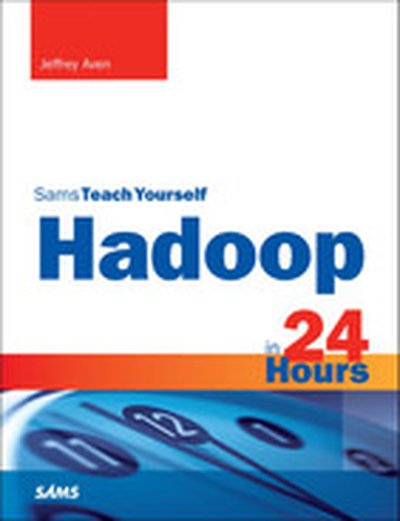
Sams Teach Yourself Hadoop in 24 Hours

Apache Hadoop is the technology at the heart of the Big Data revolution, and Hadoop skills are in enormous demand. Now, in just 24 lessons of one hour or less, you can learn all the skills and techniques you'll need to deploy each key component of a Hadoop platform in your local environment or in the cloud, building a fully functional Hadoop cluster and using it with real programs and datasets. Each short, easy lesson builds on all that's come before, helping you master all of Hadoop's essentials, and extend it to meet your unique challenges. Apache Hadoop in 24 Hours, Sams Teach Yourself covers all this, and much more: Understanding Hadoop and the Hadoop Distributed File System (HDFS) Importing data into Hadoop, and process it there Mastering basic MapReduce Java programming, and using advanced MapReduce API concepts Making the most of Apache Pig and Apache Hive Implementing and administering YARN Taking advantage of the full Hadoop ecosystem Managing Hadoop clusters with Apache Ambari Working with the Hadoop User Environment (HUE) Scaling, securing, and troubleshooting Hadoop environments Integrating Hadoop into the enterprise Deploying Hadoop in the cloud Getting started with Apache Spark Step-by-step instructions walk you through common questions, issues, and tasks; Q-and-As, Quizzes, and Exercises build and test your knowledge; "Did You Know?" tips offer insider advice and shortcuts; and "Watch Out!" alerts help you avoid pitfalls. By the time you're finished, you'll be comfortable using Apache Hadoop to solve a wide spectrum of Big Data problems.

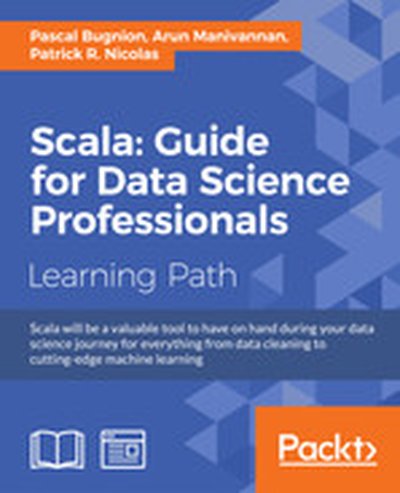
Scala: Guide for Data Science Professionals

Scala will be a valuable tool to have on hand during your data science journey for everything from data cleaning to cutting-edge machine learning About This Book Build data science and data engineering solutions with ease An in-depth look at each stage of the data analysis process — from reading and collecting data to distributed analytics Explore a broad variety of data processing, machine learning, and genetic algorithms through diagrams, mathematical formulations, and source code Who This Book Is For This learning path is perfect for those who are comfortable with Scala programming and now want to enter the field of data science. Some knowledge of statistics is expected. What You Will Learn Transfer and filter tabular data to extract features for machine learning Read, clean, transform, and write data to both SQL and NoSQL databases Create Scala web applications that couple with JavaScript libraries such as D3 to create compelling interactive visualizations Load data from HDFS and HIVE with ease Run streaming and graph analytics in Spark for exploratory analysis Bundle and scale up Spark jobs by deploying them into a variety of cluster managers Build dynamic workflows for scientific computing Leverage open source libraries to extract patterns from time series Master probabilistic models for sequential data In Detail Scala is especially good for analyzing large sets of data as the scale of the task doesn’t have any significant impact on performance. Scala’s powerful functional libraries can interact with databases and build scalable frameworks — resulting in the creation of robust data pipelines. The first module introduces you to Scala libraries to ingest, store, manipulate, process, and visualize data. Using real world examples, you will learn how to design scalable architecture to process and model data — starting from simple concurrency constructs and progressing to actor systems and Apache Spark. After this, you will also learn how to build interactive visualizations with web frameworks. Once you have become familiar with all the tasks involved in data science, you will explore data analytics with Scala in the second module. You’ll see how Scala can be used to make sense of data through easy to follow recipes. You will learn about Bokeh bindings for exploratory data analysis and quintessential machine learning with algorithms with Spark ML library. You’ll get a sufficient understanding of Spark streaming, machine learning for streaming data, and Spark graphX. Armed with a firm understanding of data analysis, you will be ready to explore the most cutting-edge aspect of data science — machine learning. The final module teaches you the A to Z of machine learning with Scala. You’ll explore Scala for dependency injections and implicits, which are used to write machine learning algorithms. You’ll also explore machine learning topics such as clustering, dimentionality reduction, Naïve Bayes, Regression models, SVMs, neural networks, and more. This learning path combines some of the best that Packt has to offer into one complete, curated package. It includes content from the following Packt products: Scala for Data Science, Pascal Bugnion Scala Data Analysis Cookbook, Arun Manivannan Scala for Machine Learning, Patrick R. Nicolas Style and approach A complete package with all the information necessary to start building useful data engineering and data science solutions straight away. It contains a diverse set of recipes that cover the full spectrum of interesting data analysis tasks and will help you revolutionize your data analysis skills using Scala. Downloading the example code for this book. You can download the example code files for all Packt books you have purchased from your account at http://www.PacktPub.com. If you purchased this book elsewhere, you can visit http://www.PacktPub.com/support and register to have the code file.

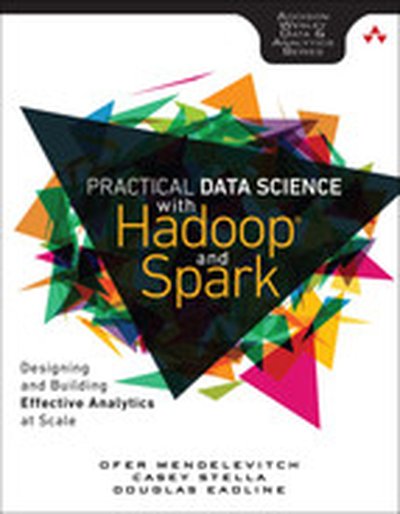
Practical Data Science with Hadoop® and Spark: Designing and Building Effective Analytics at Scale

The Complete Guide to Data Science with Hadoop—For Technical Professionals, Businesspeople, and Students Demand is soaring for professionals who can solve real data science problems with Hadoop and Spark. is your complete guide to doing just that. Drawing on immense experience with Hadoop and big data, three leading experts bring together everything you need: high-level concepts, deep-dive techniques, real-world use cases, practical applications, and hands-on tutorials. Practical Data Science with Hadoop® and Spark The authors introduce the essentials of data science and the modern Hadoop ecosystem, explaining how Hadoop and Spark have evolved into an effective platform for solving data science problems at scale. In addition to comprehensive application coverage, the authors also provide useful guidance on the important steps of data ingestion, data munging, and visualization. Once the groundwork is in place, the authors focus on specific applications, including machine learning, predictive modeling for sentiment analysis, clustering for document analysis, anomaly detection, and natural language processing (NLP). This guide provides a strong technical foundation for those who want to do practical data science, and also presents business-driven guidance on how to apply Hadoop and Spark to optimize ROI of data science initiatives. Learn What data science is, how it has evolved, and how to plan a data science career How data volume, variety, and velocity shape data science use cases Hadoop and its ecosystem, including HDFS, MapReduce, YARN, and Spark Data importation with Hive and Spark Data quality, preprocessing, preparation, and modeling Visualization: surfacing insights from huge data sets Machine learning: classification, regression, clustering, and anomaly detection Algorithms and Hadoop tools for predictive modeling Cluster analysis and similarity functions Large-scale anomaly detection NLP: applying data science to human language

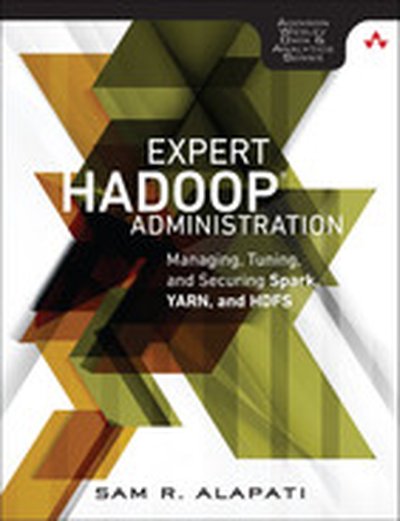
Expert Hadoop® Administration

The Comprehensive, Up-to-Date Apache Hadoop Administration Handbook and Reference “Sam Alapati has worked with production Hadoop clusters for six years. His unique depth of experience has enabled him to write the go-to resource for all administrators looking to spec, size, expand, and secure production Hadoop clusters of any size.” –Paul Dix, Series Editor In leading Hadoop administrator Sam R. Alapati brings together authoritative knowledge for creating, configuring, securing, managing, and optimizing production Hadoop clusters in any environment. Drawing on his experience with large-scale Hadoop administration, Alapati integrates action-oriented advice with carefully researched explanations of both problems and solutions. He covers an unmatched range of topics and offers an unparalleled collection of realistic examples. Expert Hadoop® Administration, Alapati demystifies complex Hadoop environments, helping you understand exactly what happens behind the scenes when you administer your cluster. You’ll gain unprecedented insight as you walk through building clusters from scratch and configuring high availability, performance, security, encryption, and other key attributes. The high-value administration skills you learn here will be indispensable no matter what Hadoop distribution you use or what Hadoop applications you run. Understand Hadoop’s architecture from an administrator’s standpoint Create simple and fully distributed clusters Run MapReduce and Spark applications in a Hadoop cluster Manage and protect Hadoop data and high availability Work with HDFS commands, file permissions, and storage management Move data, and use YARN to allocate resources and schedule jobs Manage job workflows with Oozie and Hue Secure, monitor, log, and optimize Hadoop Benchmark and troubleshoot Hadoop

Programming Pig, 2nd Edition

For many organizations, Hadoop is the first step for dealing with massive amounts of data. The next step? Processing and analyzing datasets with the Apache Pig scripting platform. With Pig, you can batch-process data without having to create a full-fledged application, making it easy to experiment with new datasets. Updated with use cases and programming examples, this second edition is the ideal learning tool for new and experienced users alike. You’ll find comprehensive coverage on key features such as the Pig Latin scripting language and the Grunt shell. When you need to analyze terabytes of data, this book shows you how to do it efficiently with Pig. Delve into Pig’s data model, including scalar and complex data types Write Pig Latin scripts to sort, group, join, project, and filter your data Use Grunt to work with the Hadoop Distributed File System (HDFS) Build complex data processing pipelines with Pig’s macros and modularity features Embed Pig Latin in Python for iterative processing and other advanced tasks Use Pig with Apache Tez to build high-performance batch and interactive data processing applications Create your own load and store functions to handle data formats and storage mechanisms

Practical Hadoop Ecosystem: A Definitive Guide to Hadoop-Related Frameworks and Tools

Learn how to use the Apache Hadoop projects, including MapReduce, HDFS, Apache Hive, Apache HBase, Apache Kafka, Apache Mahout, and Apache Solr. From setting up the environment to running sample applications each chapter in this book is a practical tutorial on using an Apache Hadoop ecosystem project. While several books on Apache Hadoop are available, most are based on the main projects, MapReduce and HDFS, and none discusses the other Apache Hadoop ecosystem projects and how they all work together as a cohesive big data development platform. What You Will Learn: Set up the environment in Linux for Hadoop projects using Cloudera Hadoop Distribution CDH 5 Run a MapReduce job Store data with Apache Hive, and Apache HBase Index data in HDFS with Apache Solr Develop a Kafka messaging system Stream Logs to HDFS with Apache Flume Transfer data from MySQL database to Hive, HDFS, and HBase with Sqoop Create a Hive table over Apache Solr Develop a Mahout User Recommender System Who This Book Is For: Apache Hadoop developers. Pre-requisite knowledge of Linux and some knowledge of Hadoop is required.

Hadoop: Data Processing and Modelling

Unlock the power of your data with Hadoop 2.X ecosystem and its data warehousing techniques across large data sets About This Book Conquer the mountain of data using Hadoop 2.X tools The authors succeed in creating a context for Hadoop and its ecosystem Hands-on examples and recipes giving the bigger picture and helping you to master Hadoop 2.X data processing platforms Overcome the challenging data processing problems using this exhaustive course with Hadoop 2.X Who This Book Is For This course is for Java developers, who know scripting, wanting a career shift to Hadoop - Big Data segment of the IT industry. So if you are a novice in Hadoop or an expert, this book will make you reach the most advanced level in Hadoop 2.X. What You Will Learn Best practices for setup and configuration of Hadoop clusters, tailoring the system to the problem at hand Integration with relational databases, using Hive for SQL queries and Sqoop for data transfer Installing and maintaining Hadoop 2.X cluster and its ecosystem Advanced Data Analysis using the Hive, Pig, and Map Reduce programs Machine learning principles with libraries such as Mahout and Batch and Stream data processing using Apache Spark Understand the changes involved in the process in the move from Hadoop 1.0 to Hadoop 2.0 Dive into YARN and Storm and use YARN to integrate Storm with Hadoop Deploy Hadoop on Amazon Elastic MapReduce and Discover HDFS replacements and learn about HDFS Federation In Detail As Marc Andreessen has said "Data is eating the world," which can be witnessed today being the age of Big Data, businesses are producing data in huge volumes every day and this rise in tide of data need to be organized and analyzed in a more secured way. With proper and effective use of Hadoop, you can build new-improved models, and based on that you will be able to make the right decisions. The first module, Hadoop beginners Guide will walk you through on understanding Hadoop with very detailed instructions and how to go about using it. Commands are explained using sections called "What just happened" for more clarity and understanding. The second module, Hadoop Real World Solutions Cookbook, 2nd edition, is an essential tutorial to effectively implement a big data warehouse in your business, where you get detailed practices on the latest technologies such as YARN and Spark. Big data has become a key basis of competition and the new waves of productivity growth. Hence, once you get familiar with the basics and implement the end-to-end big data use cases, you will start exploring the third module, Mastering Hadoop. So, now the question is if you need to broaden your Hadoop skill set to the next level after you nail the basics and the advance concepts, then this course is indispensable. When you finish this course, you will be able to tackle the real-world scenarios and become a big data expert using the tools and the knowledge based on the various step-by-step tutorials and recipes. Style and approach This course has covered everything right from the basic concepts of Hadoop till you master the advance mechanisms to become a big data expert. The goal here is to help you learn the basic essentials using the step-by-step tutorials and from there moving toward the recipes with various real-world solutions for you. It covers all the important aspects of Hadoop from system designing and configuring Hadoop, machine learning principles with various libraries with chapters illustrated with code fragments and schematic diagrams. This is a compendious course to explore Hadoop from the basics to the most advanced techniques available in Hadoop 2.X.

Practical Hadoop Migration: How to Integrate Your RDBMS with the Hadoop Ecosystem and Re-Architect Relational Applications to NoSQL

Re-architect relational applications to NoSQL, integrate relational database management systems with the Hadoop ecosystem, and transform and migrate relational data to and from Hadoop components. This book covers the best-practice design approaches to re-architecting your relational applications and transforming your relational data to optimize concurrency, security, denormalization, and performance. Winner of IBM's 2012 Gerstner Award for his implementation of big data and data warehouse initiatives and author of Practical Hadoop Security, author Bhushan Lakhe walks you through the entire transition process. First, he lays out the criteria for deciding what blend of re-architecting, migration, and integration between RDBMS and HDFS best meets your transition objectives. Then he demonstrates how to design your transition model. Lakhe proceeds to cover the selection criteria for ETL tools, the implementation steps for migration with SQOOP- and Flume-based data transfers, and transition optimization techniques for tuning partitions, scheduling aggregations, and redesigning ETL. Finally, he assesses the pros and cons of data lakes and Lambda architecture as integrative solutions and illustrates their implementation with real-world case studies. Hadoop/NoSQL solutions do not offer by default certain relational technology features such as role-based access control, locking for concurrent updates, and various tools for measuring and enhancing performance. Practical Hadoop Migration shows how to use open-source tools to emulate such relational functionalities in Hadoop ecosystem components. What You'll Learn Decide whether you should migrate your relational applications to big data technologies or integrate them Transition your relational applications to Hadoop/NoSQL platforms in terms of logical design and physical implementation Discover RDBMS-to-HDFS integration, data transformation, and optimization techniques Consider when to use Lambda architecture and data lake solutions Select and implement Hadoop-based components and applications to speed transition, optimize integrated performance, and emulate relational functionalities Who This Book Is For Database developers, database administrators, enterprise architects, Hadoop/NoSQL developers, and IT leaders. Its secondary readership is project and program managers and advanced students of database and management information systems.

Hadoop: What You Need to Know

Hadoop has revolutionized data processing and enterprise data warehousing, but its explosive growth has come with a large amount of uncertainty, hype, and confusion. With this report, enterprise decision makers will receive a concise crash course on what Hadoop is and why it’s important. Hadoop represents a major shift from traditional enterprise data warehousing and data analytics, and its technology can be daunting at first. Donald Miner, founder of the data science firm Miner & Kasch, covers just enough ground so you can make intelligent decisions about Hadoop in your enterprise. By the end of this report, you’ll know the basics of technologies such as HDFS, MapReduce, and YARN, without becoming mired in the details. Not only will you learn the basics of how Hadoop works and why it’s such an important technology, you’ll get examples of how you should probably be using it.

Fast Data Front Ends for Hadoop

Organizations striving to build applications for streaming data have a new possibility to ponder: the use of ingestion engines at the front end of their Hadoop systems. With this O’Reilly report, you’ll learn how these fast data front ends process data before it reaches the Hadoop Data File System (HDFS), and provide intelligence and context in real time. This helps you reduce response times from hours to minutes, or even minutes to seconds. Author and independent consultant Akmal Chaudhri looks at several popular ingestion engines, including Apache Spark, Apache Storm, and the VoltDB in-memory database. Among them, VoltDB stands out by providing full Atomicity, Consistency, Isolation, and Durability (ACID) support. VoltDB also lets you build a fast data front-end that uses the familiar SQL language and standards. Learn the advantages of ingestion engines as well as the theoretical and practical problems that can come up in an implementation. You’ll discover how this option can handle streaming data, provide state, ensure durability, and support transactions and real-time decisions. Akmal B. Chaudhri is an Independent Consultant, specializing in big data, NoSQL, and NewSQL database technologies. He has previously held roles as a developer, consultant, product strategist, and technical trainer with several blue-chip companies and big data startups. Akmal regularly presents at international conferences and serves on program committees for several major conferences and workshops.

Big Data Analytics with Spark: A Practitioner’s Guide to Using Spark for Large-Scale Data Processing, Machine Learning, and Graph Analytics, and High-Velocity Data Stream Processing

This book is a step-by-step guide for learning how to use Spark for different types of big-data analytics projects, including batch, interactive, graph, and stream data analysis as well as machine learning. It covers Spark core and its add-on libraries, including Spark SQL, Spark Streaming, GraphX, MLlib, and Spark ML. Big Data Analytics with Spark shows you how to use Spark and leverage its easy-to-use features to increase your productivity. You learn to perform fast data analysis using its in-memory caching and advanced execution engine, employ in-memory computing capabilities for building high-performance machine learning and low-latency interactive analytics applications, and much more. Moreover, the book shows you how to use Spark as a single integrated platform for a variety of data processing tasks, including ETL pipelines, BI, live data stream processing, graph analytics, and machine learning. The book also includes a chapter on Scala, the hottest functional programming language, and the language that underlies Spark. You’ll learn the basics of functional programming in Scala, so that you can write Spark applications in it. What's more, Big Data Analytics with Spark provides an introduction to other big data technologies that are commonly used along with Spark, such as HDFS, Avro, Parquet, Kafka, Cassandra, HBase, Mesos, and so on. It also provides an introduction to machine learning and graph concepts. So the book is self-sufficient; all the technologies that you need to know to use Spark are covered. The only thing that you are expected to have is some programming knowledge in any language.

Hadoop 2 Quick-Start Guide: Learn the Essentials of Big Data Computing in the Apache Hadoop 2 Ecosystem

Get Started Fast with Apache Hadoop ® 2, YARN, and Today’s Hadoop Ecosystem With Hadoop 2.x and YARN, Hadoop moves beyond MapReduce to become practical for virtually any type of data processing. Hadoop 2.x and the Data Lake concept represent a radical shift away from conventional approaches to data usage and storage. Hadoop 2.x installations offer unmatched scalability and breakthrough extensibility that supports new and existing Big Data analytics processing methods and models. Hadoop ® 2 Quick-Start Guide is the first easy, accessible guide to Apache Hadoop 2.x, YARN, and the modern Hadoop ecosystem. Building on his unsurpassed experience teaching Hadoop and Big Data, author Douglas Eadline covers all the basics you need to know to install and use Hadoop 2 on personal computers or servers, and to navigate the powerful technologies that complement it. Eadline concisely introduces and explains every key Hadoop 2 concept, tool, and service, illustrating each with a simple “beginning-to-end” example and identifying trustworthy, up-to-date resources for learning more. This guide is ideal if you want to learn about Hadoop 2 without getting mired in technical details. Douglas Eadline will bring you up to speed quickly, whether you’re a user, admin, devops specialist, programmer, architect, analyst, or data scientist. Coverage Includes Understanding what Hadoop 2 and YARN do, and how they improve on Hadoop 1 with MapReduce Understanding Hadoop-based Data Lakes versus RDBMS Data Warehouses Installing Hadoop 2 and core services on Linux machines, virtualized sandboxes, or clusters Exploring the Hadoop Distributed File System (HDFS) Understanding the essentials of MapReduce and YARN application programming Simplifying programming and data movement with Apache Pig, Hive, Sqoop, Flume, Oozie, and HBase Observing application progress, controlling jobs, and managing workflows Managing Hadoop efficiently with Apache Ambari–including recipes for HDFS to NFSv3 gateway, HDFS snapshots, and YARN configuration Learning basic Hadoop 2 troubleshooting, and installing Apache Hue and Apache Spark

Hadoop with Python

Hadoop is mostly written in Java, but that doesn't exclude the use of other programming languages with this distributed storage and processing framework, particularly Python. With this concise book, you’ll learn how to use Python with the Hadoop Distributed File System (HDFS), MapReduce, the Apache Pig platform and Pig Latin script, and the Apache Spark cluster-computing framework. Authors Zachary Radtka and Donald Miner from the data science firm Miner & Kasch take you through the basic concepts behind Hadoop, MapReduce, Pig, and Spark. Then, through multiple examples and use cases, you'll learn how to work with these technologies by applying various Python tools. Use the Python library Snakebite to access HDFS programmatically from within Python applications Write MapReduce jobs in Python with mrjob, the Python MapReduce library Extend Pig Latin with user-defined functions (UDFs) in Python Use the Spark Python API (PySpark) to write Spark programs with Python Learn how to use the Luigi Python workflow scheduler to manage MapReduce jobs and Pig scripts Zachary Radtka, a platform engineer at Miner & Kasch, has extensive experience creating custom analytics that run on petabyte-scale data sets.

Pro Couchbase Development: A NoSQL Platform for the Enterprise

Pro Couchbase Development: A NoSQL Platform for the Enterprise discusses programming for Couchbase using Java and scripting languages, querying and searching, handling migration, and integrating Couchbase with Hadoop, HDFS, and JSON. It also discusses migration from other NoSQL databases like MongoDB. This book is for big data developers who use Couchbase NoSQL database or want to use Couchbase for their web applications as well as for those migrating from other NoSQL databases like MongoDB and Cassandra. For example, a reason to migrate from Cassandra is that it is not based on the JSON document model with support for a flexible schema without having to define columns and supercolumns. The target audience is largely Java developers but the book also supports PHP and Ruby developers who want to learn about Couchbase. The author supplies examples in Java, PHP, Ruby, and JavaScript. After reading and using this hands-on guide for developing with Couchbase, you'll be able to build complex enterprise, database and cloud applications that leverage this powerful platform.

Virtualizing Hadoop: How to Install, Deploy, and Optimize Hadoop in a Virtualized Architecture

Plan and Implement Hadoop Virtualization for Maximum Performance, Scalability, and Business Agility Enterprises running Hadoop must absorb rapid changes in big data ecosystems, frameworks, products, and workloads. Virtualized approaches can offer important advantages in speed, flexibility, and elasticity. Now, a world-class team of enterprise virtualization and big data experts guide you through the choices, considerations, and tradeoffs surrounding Hadoop virtualization. The authors help you decide whether to virtualize Hadoop, deploy Hadoop in the cloud, or integrate conventional and virtualized approaches in a blended solution. First, Virtualizing Hadoop reviews big data and Hadoop from the standpoint of the virtualization specialist. The authors demystify MapReduce, YARN, and HDFS and guide you through each stage of Hadoop data management. Next, they turn the tables, introducing big data experts to modern virtualization concepts and best practices. Finally, they bring Hadoop and virtualization together, guiding you through the decisions you’ll face in planning, deploying, provisioning, and managing virtualized Hadoop. From security to multitenancy to day-to-day management, you’ll find reliable answers for choosing your best Hadoop strategy and executing it. Coverage includes the following: • Reviewing the frameworks, products, distributions, use cases, and roles associated with Hadoop • Understanding YARN resource management, HDFS storage, and I/O • Designing data ingestion, movement, and organization for modern enterprise data platforms • Defining SQL engine strategies to meet strict SLAs • Considering security, data isolation, and scheduling for multitenant environments • Deploying Hadoop as a service in the cloud • Reviewing the essential concepts, capabilities, and terminology of virtualization • Applying current best practices, guidelines, and key metrics for Hadoop virtualization • Managing multiple Hadoop frameworks and products as one unified system • Virtualizing master and worker nodes to maximize availability and performance • Installing and configuring Linux for a Hadoop environment

Hadoop Essentials

In 'Hadoop Essentials,' you'll embark on an engaging journey to master the Hadoop ecosystem. This book covers fundamental to advanced topics, from HDFS and MapReduce to real-time analytics with Spark, empowering you to handle modern data challenges efficiently. What this Book will help me do Understand the core components of Hadoop, including HDFS, YARN, and MapReduce, for foundational knowledge. Learn to optimize Big Data architectures and improve application performance. Utilize tools like Hive and Pig for efficient data querying and processing. Master data ingestion technologies like Sqoop and Flume for seamless data management. Achieve fluency in real-time data analytics using modern tools like Apache Spark and Apache Storm. Author(s) None Achari is a seasoned expert in Big Data and distributed systems with in-depth knowledge of the Hadoop ecosystem. With years of experience in both development and teaching, they craft content that bridges practical know-how with theoretical insights in a highly accessible style. Who is it for? This book is perfect for system and application developers aiming to learn practical applications of Hadoop. It suits professionals seeking solutions to real-world Big Data challenges as well as those familiar with distributed systems basics and looking to deepen their expertise in advanced data analysis.

Hadoop: The Definitive Guide, 4th Edition

Get ready to unlock the power of your data. With the fourth edition of this comprehensive guide, youâ??ll learn how to build and maintain reliable, scalable, distributed systems with Apache Hadoop. This book is ideal for programmers looking to analyze datasets of any size, and for administrators who want to set up and run Hadoop clusters. Using Hadoop 2 exclusively, author Tom White presents new chapters on YARN and several Hadoop-related projects such as Parquet, Flume, Crunch, and Spark. Youâ??ll learn about recent changes to Hadoop, and explore new case studies on Hadoopâ??s role in healthcare systems and genomics data processing. Learn fundamental components such as MapReduce, HDFS, and YARN Explore MapReduce in depth, including steps for developing applications with it Set up and maintain a Hadoop cluster running HDFS and MapReduce on YARN Learn two data formats: Avro for data serialization and Parquet for nested data Use data ingestion tools such as Flume (for streaming data) and Sqoop (for bulk data transfer) Understand how high-level data processing tools like Pig, Hive, Crunch, and Spark work with Hadoop Learn the HBase distributed database and the ZooKeeper distributed configuration service