talk-data.com talk-data.com

Topic

Marketing

advertising branding customer_acquisition

743

tagged

Activity Trend

49 peak/qtr
2020-Q1 2026-Q1

Activities

743 activities · Newest first

Summary One of the biggest challenges for any business trying to grow and reach customers globally is how to scale their data storage. FaunaDB is a cloud native database built by the engineers behind Twitter’s infrastructure and designed to serve the needs of modern systems. Evan Weaver is the co-founder and CEO of Fauna and in this episode he explains the unique capabilities of Fauna, compares the consensus and transaction algorithm to that used in other NewSQL systems, and describes the ways that it allows for new application design patterns. One of the unique aspects of Fauna that is worth drawing attention to is the first class support for temporality that simplifies querying of historical states of the data. It is definitely worth a good look for anyone building a platform that needs a simple to manage data layer that will scale with your business.

Announcements

Hello and welcome to the Data Engineering Podcast, the show about modern data management When you’re ready to build your next pipeline, or want to test out the projects you hear about on the show, you’ll need somewhere to deploy it, so check out our friends at Linode. With 200Gbit private networking, scalable shared block storage, and a 40Gbit public network, you’ve got everything you need to run a fast, reliable, and bullet-proof data platform. If you need global distribution, they’ve got that covered too with world-wide datacenters including new ones in Toronto and Mumbai. And for your machine learning workloads, they just announced dedicated CPU instances. Go to dataengineeringpodcast.com/linode today to get a $20 credit and launch a new server in under a minute. And don’t forget to thank them for their continued support of this show! Alluxio is an open source, distributed data orchestration layer that makes it easier to scale your compute and your storage independently. By transparently pulling data from underlying silos, Alluxio unlocks the value of your data and allows for modern computation-intensive workloads to become truly elastic and flexible for the cloud. With Alluxio, companies like Barclays, JD.com, Tencent, and Two Sigma can manage data efficiently, accelerate business analytics, and ease the adoption of any cloud. Go to dataengineeringpodcast.com/alluxio today to learn more and thank them for their support. Understanding how your customers are using your product is critical for businesses of any size. To make it easier for startups to focus on delivering useful features Segment offers a flexible and reliable data infrastructure for your customer analytics and custom events. You only need to maintain one integration to instrument your code and get a future-proof way to send data to over 250 services with the flip of a switch. Not only does it free up your engineers’ time, it lets your business users decide what data they want where. Go to dataengineeringpodcast.com/segmentio today to sign up for their startup plan and get $25,000 in Segment credits and $1 million in free software from marketing and analytics companies like AWS, Google, and Intercom. On top of that you’ll get access to Analytics Academy for the educational resources you need to become an expert in data analytics for measuring product-market fit. You listen to this show to learn and stay up to date with what’s happening in databases, streaming platforms, big data, and everything else you need to know about modern data management. For even more opportunities to meet, listen, and learn from your peers you don’t want to miss out on this year’s conference season. We have partnered with organizations such as O’Reilly Media, Dataversity, and the Open Data Science Conference. Go to dataengineeringpodcast.com/conferences to learn more and take advantage of our partner discounts when you register. Go to dataengineeringpodcast.com to subscribe to the show, sign up for the mailing list, read the show notes, and get in touch. To help other people find the show please leave a review on iTunes and tell your friends and co-workers Join the community in the new Zulip chat workspace at dataengineeringpodcast.com/chat Your host is Tobias Macey and today I’m interviewing Evan Weaver about FaunaDB, a modern operational data platform built for your cloud

Interview

Introduction How did you get involved in the area of data management? Can you start by explaining what FaunaDB is and how it got started? What are some of the main use cases that FaunaDB is targeting?

How does it compare to some of the other global scale databases that have been built in recent years such as CockroachDB?

Can you describe the architecture of FaunaDB and how it has evolved? The consensus and replication protocol in Fauna is intriguing. Can you talk through how it works?

What are some of the edge cases that users should be aware of? How are conflicts managed in Fauna?

What is the underlying storage layer?

How is the query layer designed to allow for different query patterns and model representations?

How does data modeling in Fauna compare to that of relational or document databases?

Can you describe the query format? What are some of the common difficulties or points of confusion around interacting with data in Fauna?

What are some application design patterns that are enabled by using Fauna as the storage layer? Given the ability to replicate globally, how do you mitigate latency when interacting with the database? What are some of the most interesting or unexpected ways that you have seen Fauna used? When is it the wrong choice? What have been some of the most interesting/unexpected/challenging aspects of building the Fauna database and company? What do you have in store for the future of Fauna?

Contact Info

@evan on Twitter LinkedIn

Parting Question

From your perspective, what is the biggest gap in the tooling or technology for data management today?

Links

Fauna Ruby on Rails CNET GitHub Twitter NoSQL Cassandra InnoDB Redis Memcached Timeseries Spanner Paper DynamoDB Paper Percolator ACID Calvin Protocol Daniel Abadi LINQ LSM Tree (Log-structured Merge-tree) Scala Change Data Capture GraphQL

Podcast.init Interview About Graphene

Fauna Query Language (FQL) CQL == Cassandra Query Language Object-Relational Databases LDAP == Lightweight Directory Access Protocol Auth0 OLAP == Online Analytical Processing Jepsen distributed systems safety research

The intro and outro music is from The Hug by The Freak Fandango Orchestra / CC BY-SA

Support Data Engineering Podcast
HighlightsNSync performs at Coachella w/ Ariana Grande and Michael Jackson’s legacy deals with Leaving Neverland...but does this affect their music data?MissionGood morning, it’s Jason here at Chartmetric with your 3-minute Data Dump where we upload charts, artists and playlists into your brain so you can stay up on the latest in the music data world.DateThis is your Data Dump for Wednesday April 17th 2019.Legacy acts in the spotlightMost of the time, music data is all about the frontline releases, the next emerging artists and global superstars...but what about legacy acts?Loosely defined, legacy acts are any artists that have had a successful career and have since left their glory days, yet still hold sway over the general public.In this sense, late 90s/early 2000s American boy band NSYNC and the late Michael Jackson fit this definition.But sometimes, the work of such acts bubble up again for one reason or another, and sometimes they are good, and sometimes not so much.Exhibit 1: Just this past Sunday, reigning American pop queen Ariana Grande invited NSYNC on stage (minus Justin Timberlake) to perform a few of their hits as part of her headlining set. The various teasers leading up to the event have given way to performance reviews on all the music outlets, and while the effect is diluted on Ms. Grande’s red-hot career, how does this affect the former group that haven’t released original material since 2001?Legacy acts on streaming services are an odd juxtaposition of the old and the new, but for NSYNC, they are enjoying streaming metrics that would otherwise be great for an up and coming act.At 6.1M Spotify monthly listeners and 914K followers, this gives them listener to follower ratio of 6.7, putting them ahead of Charli XCX and even Billie Eilish. This actually makes a lot of sense for the group, because a high ratio is usually the result of a highly loyal but small following with little to no marketing reach…and a now-defunct yet hugely famous 2000s boy band pretty much fits that bill to a T.In terms of immediate effects observed, they’re pretty much nil: no major editorial playlists on either Spotify, Apple, Amazon or Deezer added NSYNC records, and while their Spotify daily follower count jumped roughly 50%, it was only an additional 600 or so followers from their norm.If anything, their Twitter daily followers jumped 10x after Sunday and their Instagram daily followers popped 15x their norm, which makes sense given the very Instagrammable nature of Coachella, but already there seems to be no long-term effects.Now while there was a fun, no strings attached nature to the one-time Coachella performance, Michael Jackson’s legacy has recently taken a turn for the not-so-flattering.At the beginning of March, HBO released a documentary called Finding Neverland directed by British filmmaker Dan Reed, which focuses on the testimonials of two now-grown men that were allegedly sexually abused as children by the former King of Pop.Both traditional and social media were not quiet about the exposé, but  nevertheless, Michael Jackson’s music data profile doesn’t seem to have really experienced much of any difference: his Spotify daily follower patterns show no real changes  since March and his monthly listener count slowed slightly from 22.3M at the beginning of the month to 21.5M currently. This metric is largely buoyed by Drake’s sampling of Jackson in the track “Don’t Matter to Me” on Drake’s juggernaut album Scorpion.After Finding Neverland’s release, Jackson’s YouTube daily channel subscribers only briefly fluctuated to twice his average then cut in half from his average before returning back to normal, and his Wikipedia page views peaked at 6x his daily norm until returning back his average of about 30K views a few weeks after.What may be most interesting is how radio airplay has reacted: among 300 of the most influential US radio stations, they collectively went from spinning Jackson’s music roughly 100-150 times a day during the holiday months of Nov/Dec last year, and now trickling down to just 10 spins a day as of early April.Due to the limited airtime stations have and the more localized connection they have to their listeners, this might create more accountability and the need to insulate themselves from angry listeners revolted by the documentary.All in all, some say that in the show business, “any publicity is good publicity”, but from a music data perspective, at least for these artists, maybe it should be “any publicity doesn’t affect our legacy much.”OutroThat’s it for your Daily Data Dump for Wednesday April 17th 2019. This is Jason from Chartmetric.Free accounts are at chartmetric.io/signupAnd article links and show notes are at a new website: podcast.chartmetric.com.Happy Wednesday, see you tomorrow! 

HighlightsCoachella Weekend 1 and the Game of Thrones Season 8 opener just dropped...so what does this mean for their playlists?MissionGood morning, it’s Jason here at Chartmetric with your 3-minute Data Dump where we upload charts, artists and playlists into your brain so you can stay up on the latest in the music data world.DateThis is your Data Dump for Tuesday April 16th 2019.Coachella & Game of Thrones spotlightWhat should we think of event-based playlists? Are they important components of branding strategy? A fun extra for superfans? Or just a marketing afterthought that captures a few of curious bypassers?Most people involved in Western pop culture were tuned into either one of two things this past weekend: Coachella Week 1 happening in the deserts of California, or the Game of Thrones season 8 opener in the Seven Kingdoms of Westeros.Let’s take a moment to examine both pop culture behemoths in the context of this larger question at hand. (I’ll consider the TV series Game of Thrones an “event” due to its recent season opener.)Both events maintain a curator profile on both Spotify and Apple Music. User “Coachella” is the obvious one for the music festival, while the show’s user profile is named “Game of Thrones” on Spotify, but on Apple Music, it is “Music from Game of Thrones”.Coachella on Spotify currently has six public playlists, with five of them focused on different parts of the day. For example, the “Made in the Shade” playlist is for chilling out in the morning, and “Nights and Lights” is for turning up at night.But most of Coachella’s 214K followers are for their “2019 Lineup” playlist, which is 161 songs long and runs for 10.5 hours. It’s mostly a one song per artist list, and frontline oriented.Childish Gambino currently sits in the #1 position on this playlist with the breezy “Feels Like Summer” track, and as of Sunday, had 38K unique monthly listeners coming from this playlist specifically, which is a pretty neat.Janelle Monae in the #5 spot got 26K monthly listeners from it and Smino, in the last #161 position got about 6.5K listeners. So if we assumed your average user played from beginning to end for a 10.5-hour playlist, still having 25% of your audience is not bad.However, it wouldn’t be surprising if for such a long list, users also shuffled and searched within it to find some sounds they liked...for the artist involved, it’s a decent way to get a few new followers as a side benefit of playing at the highly-coveted event.For Game of Thrones, it’s a different kind of involvement for the fan, though: the main draw is not the music, but the TV show, so playlists are like an extension of the brand.The Game of Thrones presence on Apple Music is rather straightforward: 50 tracks of Ramin Djawadi doing what the Emmy Award-winning score composer does.But for Spotify, the show takes a more creative tack: they have featured 30 different playlists based on characters in the show, featuring a picture of them and simply titled after their name.For example, hardcore warrior Khal Drogo at 3.2K followers features 25 songs of pure metal and the playlist for scheming queen Cersei Lannister starts off with Ariana Grande’s “Dangerous Woman”.The most popular playlist is for the righteous Jon Snow at 21.7K followers, so it’s not like these musical extensions of the characters are pulling major attention for the show or the music artists contained within them, but what does help is when Spotify officially backs you:The official Spotify-curated “Game of Thrones: The End is Coming” playlist sits at 155K followers, and features 3.5 hours of varied music, including Rage Against the Machine’s “Sleep Now in the Fire”.The rap-rock track, sitting in the #1 playlist spot, has drawn 128K unique monthly listeners to the band, for a track that was released back in 1999, which is great for them.So what does it all mean for events or brands? I guess it depends on how creative you are with it, and while it doesn’t draw major listening power, it provides a fun diversion for your true fans. And for artists? Why not get on them? Any attachment to a major cultural force can only be good for audience reach, and it’s virtually no additional work. And if that playlist is officially curated by Spotify, all the better.OutroThat’s it for your Daily Data Dump for Tuesday April 16th 2019. This is Jason from Chartmetric.Free accounts are at chartmetric.io/signupAnd article links and show notes are at a new website: podcast.chartmetric.com.Happy Tuesday, see you tomorrow! 

Summary Database indexes are critical to ensure fast lookups of your data, but they are inherently tied to the database engine. Pilosa is rewriting that equation by providing a flexible, scalable, performant engine for building an index of your data to enable high-speed aggregate analysis. In this episode Seebs explains how Pilosa fits in the broader data landscape, how it is architected, and how you can start using it for your own analysis. This was an interesting exploration of a different way to look at what a database can be.

Announcements

Hello and welcome to the Data Engineering Podcast, the show about modern data management When you’re ready to build your next pipeline, or want to test out the projects you hear about on the show, you’ll need somewhere to deploy it, so check out our friends at Linode. With 200Gbit private networking, scalable shared block storage, and a 40Gbit public network, you’ve got everything you need to run a fast, reliable, and bullet-proof data platform. If you need global distribution, they’ve got that covered too with world-wide datacenters including new ones in Toronto and Mumbai. And for your machine learning workloads, they just announced dedicated CPU instances. Go to dataengineeringpodcast.com/linode today to get a $20 credit and launch a new server in under a minute. And don’t forget to thank them for their continued support of this show! Alluxio is an open source, distributed data orchestration layer that makes it easier to scale your compute and your storage independently. By transparently pulling data from underlying silos, Alluxio unlocks the value of your data and allows for modern computation-intensive workloads to become truly elastic and flexible for the cloud. With Alluxio, companies like Barclays, JD.com, Tencent, and Two Sigma can manage data efficiently, accelerate business analytics, and ease the adoption of any cloud. Go to dataengineeringpodcast.com/alluxio today to learn more and thank them for their support. Understanding how your customers are using your product is critical for businesses of any size. To make it easier for startups to focus on delivering useful features Segment offers a flexible and reliable data infrastructure for your customer analytics and custom events. You only need to maintain one integration to instrument your code and get a future-proof way to send data to over 250 services with the flip of a switch. Not only does it free up your engineers’ time, it lets your business users decide what data they want where. Go to dataengineeringpodcast.com/segmentio today to sign up for their startup plan and get $25,000 in Segment credits and $1 million in free software from marketing and analytics companies like AWS, Google, and Intercom. On top of that you’ll get access to Analytics Academy for the educational resources you need to become an expert in data analytics for measuring product-market fit. You listen to this show to learn and stay up to date with what’s happening in databases, streaming platforms, big data, and everything else you need to know about modern data management. For even more opportunities to meet, listen, and learn from your peers you don’t want to miss out on this year’s conference season. We have partnered with organizations such as O’Reilly Media, Dataversity, and the Open Data Science Conference. Go to dataengineeringpodcast.com/conferences to learn more and take advantage of our partner discounts when you register. Go to dataengineeringpodcast.com to subscribe to the show, sign up for the mailing list, read the show notes, and get in touch. To help other people find the show please leave a review on iTunes and tell your friends and co-workers Join the community in the new Zulip chat workspace at dataengineeringpodcast.com/chat Your host is Tobias Macey and today I’m interviewing Seebs about Pilosa, an open source, distributed bitmap index

Interview

Introduction How did you get involved in the area of data

HighlightsK-pop group BTS features American star Halsey on Spotify’s New Music Friday in the #4 slot for another global smash for both actsMissionGood morning, it’s Jason here at Chartmetric with your 3-minute Data Dump where we upload charts, artists and playlists into your brain so you can stay up on the latest in the music data world.DateThis is your Data Dump for Monday April 15th 2019.New Music Friday MondayLet’s try out a new segment called New Music Friday Monday, where we dip into the data and artists behind a new release that came out over the weekend.On Friday April 12th, Korean boy band BTS continued their long-term strategy for the American market by enlisting the help of Jersey-born, LA-based singer Halsey in the new record “Boy With Luv”, who sings background vocals for the track.“Boy With Luv” is the key of B minor, with a speed of 120 beats per minute, which means that its upbeat tempo turns what’s normally a sad-sounding chord progression into a danceable, driving kind of tension. The Echo Nest score of 80 out of 100 in the Valence scale confirms that the song’s emotional sentiment is mostly positive, with a bit of sadness to it for good measure.The 3-minute and 49-second track is currently on 74 Spotify editorial playlists and 19 Apple Music editorial playlists, including the #6 spot on Today’s Top Hits and the #4 position on the Today’s Hits in US Apple storefront.You might guess that both superstar names have similar playlist footprints on either platform, but they are markedly different: for example on Spotify, about 3% of BTS’ total playlists they’re on are editorial, and Halsey’s portion of editorial playlists is about the same. However, Halsey’s total playlist reach is 208M followers, while BTS’ is 113M at the moment.Also, Halsey’s monthly listeners to follower ratio is at 5.9, which puts her in the viral realm of Billie Eilish and DJ Snake. BTS’s ratio is a somewhat unflattering 0.8, which puts them in the company of Justin Bieber and another K-pop boy band called BIGBANG, who both experienced public opinion issues as of late.One way to interpret these signals is that following an artist is a one-time action, whereas monthly listeners is an ongoing signal measured in a 28-day window. So for Bieber and BIGBANG, despite their popularity earning them high follower counts at their highest peak, their respective PR issues have cost them somewhat in recent listeners.However, why would this put the squeaky clean, up-and-coming BTS in the same ballpark? It’s hard to say, but one reason may actually be the strength of their marketing strategies: they’ve done such a good job at putting BTS in the spotlight via Western late night shows, talk radio, magazine interviews and awards appearances, that it’s earned them a lot of reach, but not enough engagement to keep up.For example, Chartmetric users, who are most strongly represented in Western countries, follow BTS the most on our tool, while superstars Drake and Ariana Grande are the #2 and #3 most followed, but only by a significant gap.Or to put it all of this simply, the curiosity is high, but the follow-through is still catching up.However, BTS also brings something to the table for Halsey, who not only makes an on-camera appearance in the “Boy With Luv” music video, but also dances choreography with them.BTS’ 16.6M Instagram followers are mostly based in Asia while over 40% of Halsey’s 12.4M followers are in the US and Brazil. Despite playing shows across the Pacific, this BTS collaboration brings Halsey front and center to a whole new demographic.And now that the video’s become the most viewed debut in the first 24 hours in YouTube history, Halsey has now cemented her place in the ever-evolving story of BTS, all around the world.OutroThat’s it for your Daily Data Dump for Monday April 15th 2019. This is Jason from Chartmetric.Free accounts are at chartmetric.io/signupAnd article links and show notes are at: chartmetric.transistor.fm/episodes.Happy Monday, see you tomorrow! 

HighlightsToday’s Top Hits at almost 23M followers remains Spotify’s crown jewelBillboard Emerging Artist Kiana Ledé begins to spread her wings MissionGood morning, it’s Jason here at Chartmetric with your 3-minute Data Dump where we upload charts, artists and playlists into your brain so you can stay up on the latest in the music data world.DateThis is your Data Dump for Wednesday April 10th 2019.Playlist Highlight With 9M more followers than the #2 Spotify playlist, Today’s Top Hits remains playlist supreme on the Swedish streaming platform.Growing at 1% (or ~170K) followers in the past month, the list is at 22.9M of them and is due to break the 23M mark within a month.For the past 2.5 years, it’s been disciplined at keeping only 50 tracks, though this week, it’s added a few more to total 53.Leading that list is Lil Nas X and Billy Ray Cyrus with the “Old Town Road - Remix”, and American singer-songwriter Alec Benjamin in the #2 spot with the sad breakup song “Let Me Down Slowly”.The inescapable Billie Eilish holds down the bronze medal at #3 with the kick-drum-driven “bad guy” off her hot new album.55% of Today’s Top Hits this week comes from American artists, while 10% of the list comes from the United Kingdom, including Glasgow’s indietronica CHVURCHES and London-based Rita Ora in a collaboration with Brazil’s Anitta.Puerto Rico contributes to about 5% of the list with tracks from reggaetón kings Daddy Yankee, Ozuna and Farruko.In terms of track adds and removals, most of the frontline playlist gets added on Global Release Friday, but Today’s Top Hits tends to remove tracks more loosely across Thursday, Friday and Saturday.In the past month, 58% of the tracklist got refreshed, and the adds are typically new releases. This week for example, 31 of the 53 tracks are brand new.Despite Today’s Top Hits reputation as a place for new records, it’s good to remember that once a track gets put on, it tends to live there: over 75% of the historical tracks they’ve placed stay on for 1-6 months.For a deeper dive, check out our Today’s Top Hits blog post in the show notes.Artist Highlight“I don't gotta be in love with you to love you”. That is a lyric from Phoenix-born, LA-based artist Kiana Ledé, who is hiding down in the #46 spot of Today’s Top Hits with the sultry and bittersweet breakup track “EX”.The R&B singer who moonlighted as an actor on MTV’s Scream and Netflix’s All About the Washingtons, her music career has been on a major marketing push since last month.With 5.2M Spotify monthly listeners and 213K followers, this puts her at an excellent listener to follower ratio of 25. For context, AWAL superstar Lauv is at 24.1 and young American pop star MAX at 25.3.Ledé’s playlist situation completely blew up in March, adding the 4.9M follower Are & Be Spotify playlist and 1.8M follower Hot Rhythmic playlist, as well as being added to the sexual contextual playlists Love, Sex and Water at 1.6M and Bedroom Jams just under 1M.She’s in the #33 position on the 65-track Today’s Hits Apple playlist in the US, and virtually all of the storefronts for the A-List: R&B playlist, ranging from position #16-33 depending on the country.On Amazon Music, she’s on six editorial playlists, including the genre-focused Introducing: / Fresh / and Chill R&B playlists.Not limited to digital, her radio play in the South is strong with over 430 radio spins in Florida, 374 spins in Lousiana and 343 spins in Texas since the beginning of the year.With her smooth sound, Hollywood connections and her recent publicity push on Billboard, we’re sure to see more of Ms. Ledé in the months to come.OutroThat’s it for your Daily Data Dump for Wednesday April 10th 2019. This is Jason from Chartmetric.Feel free to sign up for a free account at chartmetric.io/signupAnd article links and show notes are at: chartmetric.transistor.fm/episodes.Happy Wednesday, see you tomorrow. 

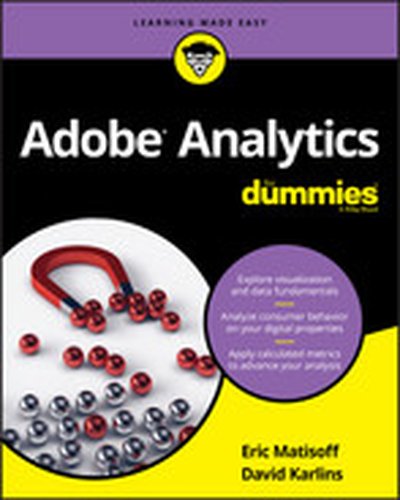
Adobe Analytics For Dummies

Use Adobe Analytics as a marketer —not a programmer! If you're a marketer in need of a non-technical, beginner's reference to using Adobe Analytics, this book is the perfect place to start. Adobe Analytics For Dummies arms you with a basic knowledge of the key features so that you can start using it quickly and effectively. Even if you're a digital marketer who doesn't have their hands in data day in and day out, this easy-to-follow reference makes it simple to utilize Adobe Analytics. With the help of this book, you'll better understand how your marketing efforts are performing, converting, being engaged with, and being shared in the digital space. Evaluate your marketing strategies and campaigns Explore implementation fundamentals and report architecture Apply Adobe Analytics to multiple sources Succeed in the workplace and expand your marketing skillset The marketing world is continually growing and evolving, and Adobe Analytics For Dummies will help you stay ahead of the curve.

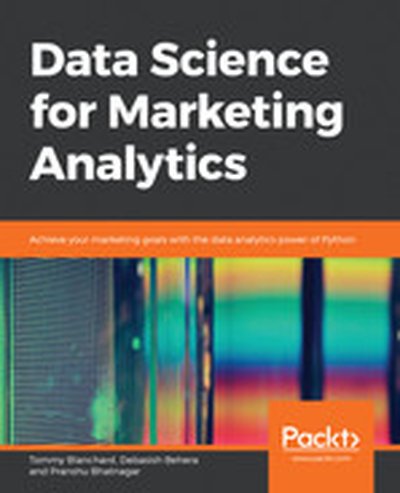
Data Science for Marketing Analytics

Data Science for Marketing Analytics introduces you to leveraging state-of-the-art data science techniques to optimize marketing outcomes. You'll learn how to manipulate and analyze data using Python, create customer segments, and apply machine learning algorithms to predict customer behavior. This book provides a comprehensive, hands-on approach to marketing analytics. What this Book will help me do Learn to use Python libraries like pandas & Matplotlib for data analysis. Understand clustering techniques to create meaningful customer segments. Implement linear regression for predicting customer lifetime value. Explore classification algorithms to model customer preferences. Develop skills to build interactive dashboards for marketing reports. Author(s) None Blanchard, Nona Behera, and Pranshu Bhatnagar are experienced professionals in data science and marketing analytics, with extensive backgrounds in applying machine learning to real-world business applications. They bring a wealth of knowledge and an approachable teaching style to this book, focusing on practical, industry-relevant applications for learners. Who is it for? This book is for developers and marketing professionals looking to advance their analytics skills. It is ideal for individuals with a basic understanding of Python and mathematics who want to explore predictive modeling and segmentation strategies. Readers should have a curiosity for data-driven problem-solving in marketing contexts to benefit most from the content.

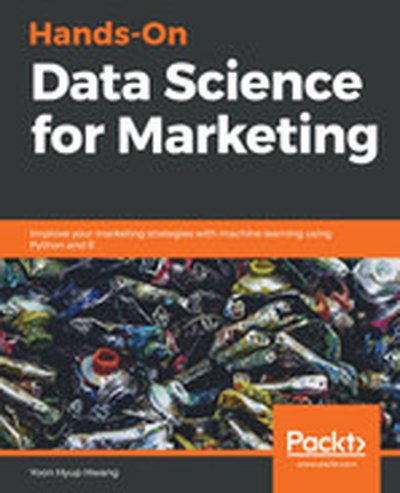
Hands-On Data Science for Marketing

The book "Hands-On Data Science for Marketing" equips readers with the tools and insights to optimize their marketing campaigns using data science and machine learning techniques. Using practical examples in Python and R, you will learn how to analyze data, predict customer behavior, and implement effective strategies for better customer engagement and retention. What this Book will help me do Understand marketing KPIs and learn to compute and visualize them in Python and R. Develop the ability to analyze customer behavior and predict potential high-value customers. Master machine learning concepts for customer segmentation and personalized marketing strategies. Improve your skills to forecast customer engagement and lifetime value for more effective planning. Learn the techniques of A/B testing and their application in refining marketing decisions. Author(s) Yoon Hyup Hwang is a seasoned data scientist with a deep interest in the intersection of marketing and technology. With years of expertise in implementing machine learning algorithms in marketing analytics, Yoon brings a unique perspective by blending technical insights with business strategy. As an educator and practitioner, Yoon's approachable style and clear explanations make complex topics accessible for all learners. Who is it for? This book is tailored for marketing professionals looking to enhance their strategies using data science, data enthusiasts eager to apply their skills in marketing, and students or engineers seeking to expand their knowledge in this domain. A basic understanding of Python or R is beneficial, but the book is structured to welcome beginners by covering foundational to advanced concepts in a practical way.

Send us a text Jayson Gehri directs the marketing team for Hybrid Data Management at IBM, following roles as marketing director for Dell and Quest Software. In this special episode, he lets us know what to watch for as IBM kicks off its annual THINK Conference, happening this year in the heart of downtown San Francisco from February 12th to the 15th.


Shownotes 00:00 - Check us out on YouTube and SoundCloud!  00:05 - Be sure to check out other MDS episodes here!  00:10 - Connect with Producer Steve Moore on LinkedIn & Twitter   00:15 - Connect with Producer Liam Seston on LinkedIn & Twitter   00:20 - Connect with Producer Rachit Sharma on LinkedIn   00:25 - Connect with Host Al Martin on LinkedIn & Twitter   00:40 – Connect with Jayson Gehri on LinkedIn & Twitter   00:55 – Get more info on THINK  01:30 – Pier 39   02:30 – Rob Thomas   02:35 – Arvind Krishna Want to be featured as a guest on Making Data Simple? Reach out to us at [email protected] and tell us why you should be next. The Making Data Simple Podcast is hosted by Al Martin, WW VP Technical Sales, IBM, where we explore trending technologies, business innovation, and leadership ... while keeping it simple & fun.

The Google Analytics Suite of products is now part of the Google Marketing Platform. We will cover how key pieces of the Platform can be used including the Salesforce connectors, Display & Video 360, Google Optimize integration, and Google Cloud integrations. We will review how data can be used actionably for advertising, e-mail, personalization, and surveys.

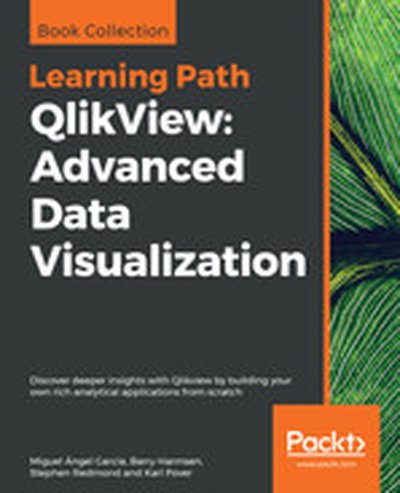
QlikView: Advanced Data Visualization

Build powerful data analytics applications with this business intelligence tool and overcome all your business challenges Key Features Master time-saving techniques and make your QlikView development more efficient Perform geographical analysis and sentiment analysis in your QlikView applications Explore advanced QlikView techniques, tips, and tricks to deliver complex business requirements Book Description QlikView is one of the most flexible and powerful business intelligence platforms around, and if you want to transform data into insights, it is one of the best options you have at hand. Use this Learning Path, to explore the many features of QlikView to realize the potential of your data and present it as impactful and engaging visualizations. Each chapter in this Learning Path starts with an understanding of a business requirement and its associated data model and then helps you create insightful analysis and data visualizations around it. You will look at problems that you might encounter while visualizing complex data insights using QlikView, and learn how to troubleshoot these and other not-so-common errors. This Learning Path contains real-world examples from a variety of business domains, such as sales, finance, marketing, and human resources. With all the knowledge that you gain from this Learning Path, you will have all the experience you need to implement your next QlikView project like a pro. This Learning Path includes content from the following Packt products: QlikView for Developers by Miguel Angel Garcia, Barry Harmsen Mastering QlikView by Stephen Redmond Mastering QlikView Data Visualization by Karl Pover What you will learn Deliver common business requirements using advanced techniques Load data from disparate sources to build associative data models Understand when to apply more advanced data visualization Utilize the built-in aggregation functions for complex calculations Build a data architecture that supports scalable QlikView deployments Troubleshoot common data visualization errors in QlikView Protect your QlikView applications and data Who this book is for This Learning Path is designed for developers who want to go beyond their technical knowledge of QlikView and understand how to create analysis and data visualizations that solve real business needs. To grasp the concepts explained in this Learning Path, you should have a basic understanding of the common QlikView functions and some hands-on experience with the tool. Downloading the example code for this book You can download the example code files for all Packt books you have purchased from your account at http://www.PacktPub.com. If you purchased this book elsewhere, you can visit http://www.PacktPub.com/support and register to have the files e-mailed directly to you.

In this episode, Daniel Graham dissects the capabilities of data lakes and compares it to data warehouses. He talks about the primary use cases of data lakes and how they are vital for big data ecosystems. He then goes on to explain the role of data warehouses which are still responsible for timely and accurate data but don't have a central role anymore. In the end, both Wayne Eckerson and Dan Graham settle on a common definition for modern data architectures.

Daniel Graham has more than 30 years in IT, consulting, research, and product marketing, with almost 30 years at leading database management companies. Dan was a Strategy Director in IBM’s Global BI Solutions division and General Manager of Teradata’s high-end server divisions. During his tenure as a product marketer, Dan has been responsible for MPP data management systems, data warehouses, and data lakes, and most recently, the Internet of Things and streaming systems.

podcast_episode
by Val Kroll , Julie Hoyer , Tim Wilson (Analytics Power Hour - Columbus (OH) , Sherilyn Burris (Cascia Consulting) , Moe Kiss (Canva) , Michael Helbling (Search Discovery)

Perspective is a good thing. We've all agonized about a misreported metric or an unsatisfying entry page analysis and had to remind ourselves that we're not exactly saving lives with our work. On this episode, though, the gang actually meanders into life-and-death territory by chatting about one of the uses of data outside of the world of digital marketing and websites and eCommerce: natural disaster preparation and response. Sherilyn Burris from Cascia Consulting joins Michael, Moe, and Tim to chat about her experiences in a variety of roles in just that area, how she uses data, how the data landscape has evolved over the past 15 years, and what she has learned about communicating data to politicians, to the media, and to the general public (which has some intriguing parallels to the communication of data in digital analytics!). For complete show notes, including links to items mentioned in this episode and a transcript of the show, visit the show page.

IBM Power Systems E870C and E880C Technical Overview and Introduction

This IBM® Redpaper™ publication is a comprehensive guide that covers the IBM Power® System E870C (9080-MME) and IBM Power System E880C (9080-MHE) servers that support IBM AIX®, IBM i, and Linux operating systems. The objective of this paper is to introduce the major innovative Power E870C and Power E880C offerings and their relevant functions. The new Power E870C and Power E880C servers with OpenStack-based cloud management and open source automation enables clients to accelerate the transformation of their IT infrastructure for cloud while providing tremendous flexibility during the transition. In addition, the Power E870C and Power E880C models provide clients increased security, high availability, rapid scalability, simplified maintenance, and management, all while enabling business growth and dramatically reducing costs. The systems management capability of the Power E870C and Power E880C servers speeds up and simplifies cloud deployment by providing fast and automated VM deployments, prebuilt image templates, and self-service capabilities, all with an intuitive interface. Enterprise servers provide the highest levels of reliability, availability, flexibility, and performance to bring you a world-class enterprise private and hybrid cloud infrastructure. Through enterprise-class security, efficient built-in virtualization that drives industry-leading workload density, and dynamic resource allocation and management, the server consistently delivers the highest levels of service across hundreds of virtual workloads on a single system. The Power E870C and Power E880C server includes the cloud management software and services to assist with clients' move to the cloud, both private and hybrid. The following capabilities are included: Private cloud management with IBM Cloud PowerVC Manager, Cloud-based HMC Apps as a service, and open source cloud automation and configuration tooling for AIX Hybrid cloud support Hybrid infrastructure management tools Securely connect system of record workloads and data to cloud native applications IBM Cloud Starter Pack Flexible capacity on demand Power to Cloud Services This paper expands the current set of IBM Power Systems™ documentation by providing a desktop reference that offers a detailed technical description of the Power E870C and Power E880C systems. This paper does not replace the latest marketing materials and configuration tools. It is intended as another source of information that, together with existing sources, can be used to enhance your knowledge of IBM server solutions.

In this podcast, Stephen Wunker spent time discussing the future of organizations via cost innovations and how some enterprises connect a successful pricing strategy with their data strategy. He sheds light on what some successful companies do to stay competitive and keep innovating their cost strategies to find effective customer connections. He shares some challenges that leaders face in adopting a successful cost innovation strategy. The book "Costovation" and this podcast are relevant for anyone seeking to learn about innovative ways to define their cost strategies. It is especially relevant for data science leaders to understand how they could transform sales by connecting cost and innovation.

Timelines: 0:30 Stephen's journey 6:25 Introducing "costovation". 10:10 Cost management in the age of "freemium" and opensource. 12:35 Key points of "Cost-o-vation". 15:40 Resolving issues between cost and innovation. 18:26 Introducing radical ideas of innovation to companies. 21:40 Gauging innovation. 24:20 Role of data in costovation. 26:15 Why adopt cost-ovation? 31:44 Innovation tips and suggestions. 34:45 Example of a company that is practicing cost-o-vation. 37:15 Tenets of good leadership. 39:50 Scalability of cost-o-vation. 43:17 cost-ovation and the customer. 47:47 Stephen's favorite reads. 49:45 Key takeaways.

Stephen's Book: Costovation: Innovation That Gives Your Customers Exactly What They Want--And Nothing More by Stephen Wunker, Jennifer Luo Law amzn.to/2xYyRFs

Stephen's Recommended Read: The Three-Box Solution: A Strategy for Leading Innovation by Vijay Govindarajan amzn.to/2y2Sex6 Made to Stick: Why Some Ideas Survive and Others Die by Chip Heath, Dan Heath amzn.to/2Ct2SRV The Innovator's Solution: Creating and Sustaining Successful Growth by Clayton M. Christensen, Michael E. Raynor amzn.to/2DZ6jRK

Podcast Link: https://futureofdata.org/stephen-wunker-on-future-of-customer-success-through-cost-innovation-and-data/

Stephen's BIO: Stephen Wunker is the founder and managing director of New Markets Advisors, a Boston-based consultancy focused on innovation and growth strategy.

With a long track record of creating successful ventures, Stephen has consulted multinational firms and start-ups across six continents, developing dozens of new growth platforms for clients over the past decade. He also pioneered both mobile commerce and mobile marketing, and he led the team that created one of the world's first smartphones.

In addition to his entrepreneurial and corporate ventures, he was a long-term colleague of the leading innovation authority Harvard Business School Professor Clayton Christensen in establishing his consulting practice, Innosight. His previous experience includes years with the management consultancy Bain & Company, the Rockefeller Brothers Fund, and the Soros Foundations.

Stephen holds an MBA from Harvard Business School, a Master's in Public Administration from Columbia University, and a BA cum laude from Princeton University. Coauthor of “COSTOVATION: Innovation that Gives Your Customers Exactly What They Want—and Nothing More” (HarperCollins Leadership, Aug. 14), his third book, Stephen has contributed to Harvard Business Review, Forbes, and a range of journals, and has appeared on Bloomberg TV, BBC and other broadcasts. He has lived in the United States, United Kingdom, Netherlands, Japan, Ecuador, and Zambia, and is now based in Boston.

About #Podcast:

FutureOfData podcast is a conversation starter to bring leaders, influencers, and lead practitioners to come on the show and discuss their journey in creating the data-driven future.

Wanna Join? If you or any you know wants to join in, Register your interest by emailing us @ [email protected]

Want to sponsor? Email us @ [email protected]

Keywords: FutureOfData,

DataAnalytics,

Leadership,

Futurist,

Podcast,

BigData,

Strategy

In this podcast, John Busby(@johnmbusby), Chief Analytics Officer @CenterfieldUSA, talks about his journey leading the data analytics practice of a digital marketing agency. He sheds light on some methodologies for building a sound data science practice. He sheds light on the future of digital marketing and shared some big opportunities ripe for disruption in the digital space.

Timeline: 0:28 John's journey. 4:26 Introduction to Centerfield. 6:00 John's role. 6:50 Designing a common platform for customers. 9:15 Analytics in Amazon. 11:02 Data science and marketing. 18:02 Importance of understanding the product for marketing. 21:44 AI in the marketing business. 25:26 Making sense of customer behavior. 27:50 End to end consumer behavior. 31:05 Editing and calibrating KPIs. 32:53 Creating an inside driven organization. 35:35 Recipe for a successful chief analytic officer. 37:46 On data bias. 39:12 Hiring the right people. 41:33 Big opportunities in digital marketing. 44:15 Future of digital marketing. 45:27 John's recipe for success. 48:52 John's favorite reads. 50:35 Key takeaways.

John's Recommended Read: Secrets of Professional Tournament Poker (D&B Poker) by Jonathan Little amzn.to/2MNKjN3

Podcast Link: https://futureofdata.org/data-today-shaping-digital-marketing-of-tomorrow-johnmbusby-centerfieldusa/

John's BIO: John Busby serves as Centerfield’s Chief Analytics Officer. A seasoned digital marketing executive, John leads the company’s data science, analytics and insights teams. Before joining Centerfield, John was Head of Analytics for Amazon’s grocery delivery service and responsible for business intelligence, data science and automated reporting. Prior to Amazon, John was Senior Vice President of Analytics and Marketing at Marchex. John began his career in product management for InfoSpace, Go2net and IQ Chart. He holds a Bachelor of Science from Northwestern University. Outside of work, John coaches youth hockey, and enjoys sports, poker and hanging out with his wife and two children.

About #Podcast:

FutureOfData podcast is a conversation starter to bring leaders, influencers and lead practitioners to come on show and discuss their journey in creating the data driven future.

Wanna Join? If you or any you know wants to join in, Register your interest by mailing us @ [email protected]

Want to sponsor? Email us @ [email protected]

Keywords: FutureOfData,

DataAnalytics,

Leadership,

Futurist,

Podcast,

BigData,

Strategy

Data analysts who sit in each business function (i.e., sales, marketing, finance) are critical to the success of a self-service analytics strategy. The problem is that most data analysts don’t receive the training and support they need to be proficient with self-service data and analytics tools. The easiest way to improve the skills and satisfaction of most data analysts is simple: bring them together into a power user network.

Originally published at https://www.eckerson.com/articles/power-user-networks-the-key-to-self-service-analytics

In this podcast, Jim Sterne shares how marketing has evolved through disruptive times. He shares some of the best practices in the marketing and digital analytics space. He sheds light on some opportunities in the marketing and analytics space and how machine learning is changing the face of digital and marketing. This is a great podcast for anyone looking to understand how AI is impacting marketing and what are some big opportunities in marketing and digital.

Timeline: 0:30 Jim's journey. 5:25 The evolution of marketing. 8:45 Breaking down the digital. 11:40 Marketing and analytics. 13:27 Misuse of analytics in marketing. 17:35 Resolving bad data and bias. 22:20 Good digital analyst vs. bad digital analyst. 28:06 Defining a well-oiled marketing machine. 30:33 Marketing industry's adoption of technology. 34:19 Technology adoption strategy. 38:23 Impact of machine learning and digital marketing. 42:19 Decision making, accountability, and AI. 47:08 Advice for start-ups. 48:52 Disruption opportunities in digital marketing. 55:57 Ethics and marketing. 58:52 What's next in digital marketing. 1:02:27 Jim's success mantra. 1:05:36 Jim's reading list. 1:07:30 Key takeaways.

Jim's Books: amzn.to/2KB1QCR

Jim's Current Read List: Shift: 19 Practical, Business-Driven Ideas for an Executive in Charge of Marketing but Not Trained for the Task by Sean Doyle amzn.to/2KG4K9d Data Science for Business: What You Need to Know about Data Mining and Data-Analytic Thinking by Foster Provost and Tom Fawcett amzn.to/2AWR3Dz

Podcast Link: https://futureofdata.org/future-of-data-in-marketing-digital-jimsterne/

Jim's BIO: Jim Sterne focused his thirty-five years in sales and marketing to create and strengthen customer relationships through digital communications. He sold business computers to companies that had never owned one in the 1980s, consulted and keynoted online marketing in the 1990s, and founded a conference and a professional association around digital analytics in the 2000s, following his humorous Devil's Data Dictionary. Sterne has just published his twelfth book Artificial Intelligence for Marketing: Practical Applications. Sterne produced the eMetrics Summit from 2002 - 2017 and now produces the Marketing Evolution Experience. He was co-founder and served for 17 years as the Board Chair of the Digital Analytics Association.

Jim was named one of the 50 most influential people in digital marketing by a top marketing magazine in the United Kingdom and identified as one of the top 25 Hot Speakers by the National Speakers Association.

About #Podcast:

FutureOfData podcast is a conversation starter to bring leaders, influencers and lead practitioners to come on show and discuss their journey in creating the data driven future.

Wanna Join? If you or any you know wants to join in, Register your interest by mailing us @ [email protected]

Want to sponsor? Email us @ [email protected]

Keywords: FutureOfData,

DataAnalytics,

Leadership,

Futurist,

Podcast,

BigData,

Strategy

podcast_episode

Two weeks ago we discussed click through rates or CTRs and their usefulness and limits as a metric. Today, we discuss a related metric known as quality score. While that phrase has probably been used to mean dozens of different things in different contexts, our discussion focuses around the idea of quality score encountered in Search Engine Marketing (SEM). SEM is the practice of purchasing keyword targeted ads shown to customers using a search engine. Most SEM is managed via an auction mechanism - the advertiser states the price they are willing to pay, and in real time, the search engine will serve users advertisements and charge the advertiser. But how to search engines decide who to show and what price to charge? This is a complicated question requiring a multi-part answer to address completely. In this episode, we focus on one part of that equation, which is the quality score the search engine assigns to the ad in context. This quality score is calculated via several factors including crawling the destination page (also called the landing page) and predicting how applicable the content found there is to the ad itself.