talk-data.com talk-data.com

Topic

Parquet

Apache Parquet

columnar_storage big_data compression file_format storage

8

tagged

Activity Trend

5 peak/qtr
2020-Q1 2026-Q1

Activities

Showing filtered results

Filtering by: O'Reilly Data Engineering Books ×
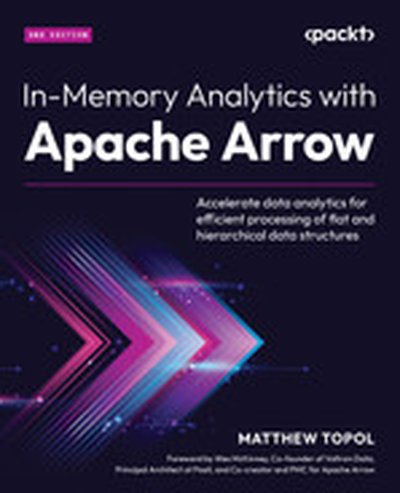
In-Memory Analytics with Apache Arrow - Second Edition

Dive into efficient data handling with 'In-Memory Analytics with Apache Arrow.' This book explores Apache Arrow, a powerful open-source project that revolutionizes how tabular and hierarchical data are processed. You'll learn to streamline data pipelines, accelerate analysis, and utilize high-performance tools for data exchange. What this Book will help me do Understand and utilize the Apache Arrow in-memory data format for your data analysis needs. Implement efficient and high-speed data pipelines using Arrow subprojects like Flight SQL and Acero. Enhance integration and performance in analysis workflows by using tools like Parquet and Snowflake with Arrow. Master chaining and reusing computations across languages and environments with Arrow's cross-language support. Apply in real-world scenarios by integrating Apache Arrow with analytics systems like Dremio and DuckDB. Author(s) Matthew Topol, the author of this book, brings 15 years of technical expertise in the realm of data processing and analysis. Having worked across various environments and languages, Matthew offers insights into optimizing workflows using Apache Arrow. His approachable writing style ensures that complex topics are comprehensible. Who is it for? This book is tailored for developers, data engineers, and data scientists eager to enhance their analytic toolset. Whether you're a beginner or have experience in data analysis, you'll find the concepts actionable and transformative. If you are curious about improving the performance and capabilities of your analytic pipelines or tools, this book is for you.
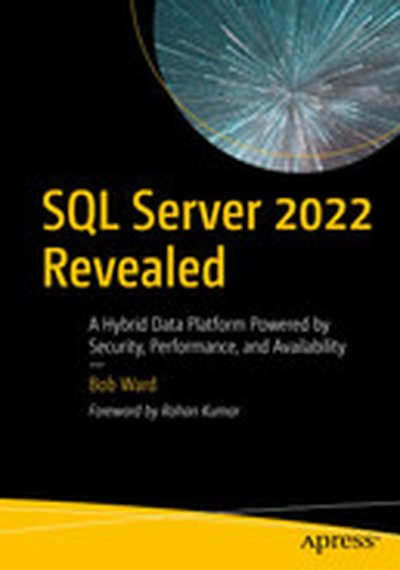
SQL Server 2022 Revealed: A Hybrid Data Platform Powered by Security, Performance, and Availability

Know how to use the new capabilities and cloud integrations in SQL Server 2022. This book covers the many innovative integrations with the Azure Cloud that make SQL Server 2022 the most cloud-connected edition ever. The book covers cutting-edge features such as the blockchain-based Ledger for creating a tamper-evident record of changes to data over time that you can rely on to be correct and reliable. You'll learn about built-in Query Intelligence capabilities to help you to upgrade with confidence that your applications will perform at least as fast after the upgrade than before. In fact, you'll probably see an increase in performance from the upgrade, with no code changes needed. Also covered are innovations such as contained availability groups and data virtualization with S3 object storage. New cloud integrations covered in this book include Microsoft Azure Purview and the use of Azure SQL for high availability and disaster recovery. The bookcovers Azure Synapse Link with its built-in capabilities to take changes and put them into Synapse automatically. Anyone building their career around SQL Server will want this book for the valuable information it provides on building SQL skills from edge to the cloud. ​ What You Will Learn Know how to use all of the new capabilities and cloud integrations in SQL Server 2022 Connect to Azure for disaster recovery, near real-time analytics, and security Leverage the Ledger to create a tamper-evident record of data changes over time Upgrade from prior releases and achieve faster and more consistent performance with no code changes Access data and storage in different and new formats, such as Parquet and S3, without moving the data and using your existing T-SQL skills Explore new application scenarios using innovations with T-SQL in areassuch as JSON and time series Who This Book Is For SQL Server professionals who want to upgrade their skills to the latest edition of SQL Server; those wishing to take advantage of new integrations with Microsoft Azure Purview (governance), Azure Synapse (analytics), and Azure SQL (HA and DR); and those in need of the increased performance and security offered by Query Intelligence and the new Ledger

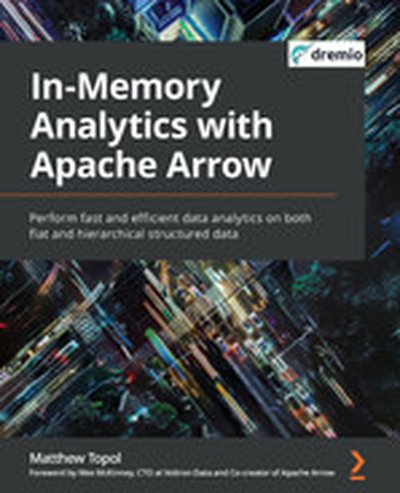
In-Memory Analytics with Apache Arrow

Discover the power of in-memory data analytics with "In-Memory Analytics with Apache Arrow." This book delves into Apache Arrow's unique capabilities, enabling you to handle vast amounts of data efficiently and effectively. Learn how Arrow improves performance, offers seamless integration, and simplifies data analysis in diverse computing environments. What this Book will help me do Gain proficiency with the datastore facilities and data types defined by Apache Arrow. Master the Arrow Flight APIs to efficiently transfer data between systems. Learn to leverage in-memory processing advantages offered by Arrow for state-of-the-art analytics. Understand how Arrow interoperates with popular tools like Pandas, Parquet, and Spark. Develop and deploy high-performance data analysis pipelines with Apache Arrow. Author(s) Matthew Topol, the author of the book, is an experienced practitioner in data analytics and Apache Arrow technology. Having contributed to the development and implementation of Arrow-powered systems, he brings a wealth of knowledge to readers. His ability to delve deep into technical concepts while keeping explanations practical makes this book an excellent guide for learners of the subject. Who is it for? This book is ideal for professionals in the data domain including developers, data analysts, and data scientists aiming to enhance their data manipulation capabilities. Beginners with some familiarity with data analysis concepts will find it beneficial, as well as engineers designing analytics utilities. Programming examples accommodate users of C, Go, and Python, making it broadly accessible.

Learning Spark, 2nd Edition

Data is bigger, arrives faster, and comes in a variety of formatsâ??and it all needs to be processed at scale for analytics or machine learning. But how can you process such varied workloads efficiently? Enter Apache Spark. Updated to include Spark 3.0, this second edition shows data engineers and data scientists why structure and unification in Spark matters. Specifically, this book explains how to perform simple and complex data analytics and employ machine learning algorithms. Through step-by-step walk-throughs, code snippets, and notebooks, youâ??ll be able to: Learn Python, SQL, Scala, or Java high-level Structured APIs Understand Spark operations and SQL Engine Inspect, tune, and debug Spark operations with Spark configurations and Spark UI Connect to data sources: JSON, Parquet, CSV, Avro, ORC, Hive, S3, or Kafka Perform analytics on batch and streaming data using Structured Streaming Build reliable data pipelines with open source Delta Lake and Spark Develop machine learning pipelines with MLlib and productionize models using MLflow

Hadoop Real-World Solutions Cookbook - Second Edition

Master the full potential of big data processing using Hadoop with this comprehensive guide. Featuring over 90 practical recipes, this book helps you streamline data workflows and implement machine learning models with tools like Spark, Hive, and Pig. By the end, you'll confidently handle complex data problems and optimize big data solutions effectively. What this Book will help me do Install and manage a Hadoop 2.x cluster efficiently to suit your data processing needs. Explore and utilize advanced tools like Hive, Pig, and Flume for seamless big data analysis. Master data import/export processes with Sqoop and workflows automation using Oozie. Implement machine learning and analytics tasks using Mahout and Apache Spark. Store and process data flexibly across formats like Parquet, ORC, RC, and more. Author(s) None Deshpande is an expert in big data processing and analytics with years of hands-on experience in implementing Hadoop-based solutions for real-world problems. Known for a clear and pragmatic writing style, None brings actionable wisdom and best practices to the forefront, helping readers excel in managing and utilizing big data systems. Who is it for? Designed for technical enthusiasts and professionals, this book is ideal for those familiar with basic big data concepts. If you are looking to expand your expertise in Hadoop's ecosystem and implement data-driven solutions, this book will guide you through essential skills and advanced techniques to efficiently manage complex big data projects.

Big Data Analytics with Spark: A Practitioner’s Guide to Using Spark for Large-Scale Data Processing, Machine Learning, and Graph Analytics, and High-Velocity Data Stream Processing

This book is a step-by-step guide for learning how to use Spark for different types of big-data analytics projects, including batch, interactive, graph, and stream data analysis as well as machine learning. It covers Spark core and its add-on libraries, including Spark SQL, Spark Streaming, GraphX, MLlib, and Spark ML. Big Data Analytics with Spark shows you how to use Spark and leverage its easy-to-use features to increase your productivity. You learn to perform fast data analysis using its in-memory caching and advanced execution engine, employ in-memory computing capabilities for building high-performance machine learning and low-latency interactive analytics applications, and much more. Moreover, the book shows you how to use Spark as a single integrated platform for a variety of data processing tasks, including ETL pipelines, BI, live data stream processing, graph analytics, and machine learning. The book also includes a chapter on Scala, the hottest functional programming language, and the language that underlies Spark. You’ll learn the basics of functional programming in Scala, so that you can write Spark applications in it. What's more, Big Data Analytics with Spark provides an introduction to other big data technologies that are commonly used along with Spark, such as HDFS, Avro, Parquet, Kafka, Cassandra, HBase, Mesos, and so on. It also provides an introduction to machine learning and graph concepts. So the book is self-sufficient; all the technologies that you need to know to use Spark are covered. The only thing that you are expected to have is some programming knowledge in any language.

Hadoop: The Definitive Guide, 4th Edition

Get ready to unlock the power of your data. With the fourth edition of this comprehensive guide, youâ??ll learn how to build and maintain reliable, scalable, distributed systems with Apache Hadoop. This book is ideal for programmers looking to analyze datasets of any size, and for administrators who want to set up and run Hadoop clusters. Using Hadoop 2 exclusively, author Tom White presents new chapters on YARN and several Hadoop-related projects such as Parquet, Flume, Crunch, and Spark. Youâ??ll learn about recent changes to Hadoop, and explore new case studies on Hadoopâ??s role in healthcare systems and genomics data processing. Learn fundamental components such as MapReduce, HDFS, and YARN Explore MapReduce in depth, including steps for developing applications with it Set up and maintain a Hadoop cluster running HDFS and MapReduce on YARN Learn two data formats: Avro for data serialization and Parquet for nested data Use data ingestion tools such as Flume (for streaming data) and Sqoop (for bulk data transfer) Understand how high-level data processing tools like Pig, Hive, Crunch, and Spark work with Hadoop Learn the HBase distributed database and the ZooKeeper distributed configuration service

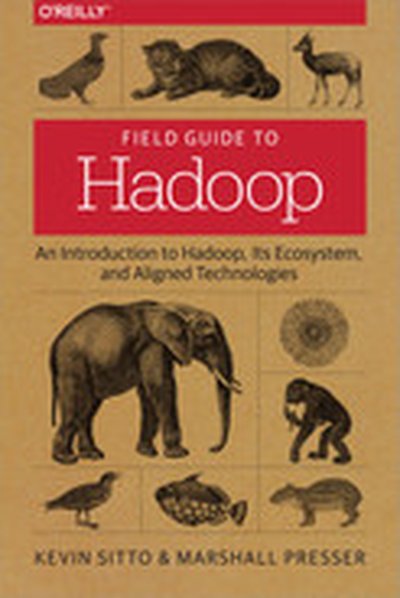
Field Guide to Hadoop

If your organization is about to enter the world of big data, you not only need to decide whether Apache Hadoop is the right platform to use, but also which of its many components are best suited to your task. This field guide makes the exercise manageable by breaking down the Hadoop ecosystem into short, digestible sections. You’ll quickly understand how Hadoop’s projects, subprojects, and related technologies work together. Each chapter introduces a different topic—such as core technologies or data transfer—and explains why certain components may or may not be useful for particular needs. When it comes to data, Hadoop is a whole new ballgame, but with this handy reference, you’ll have a good grasp of the playing field. Topics include: Core technologies—Hadoop Distributed File System (HDFS), MapReduce, YARN, and Spark Database and data management—Cassandra, HBase, MongoDB, and Hive Serialization—Avro, JSON, and Parquet Management and monitoring—Puppet, Chef, Zookeeper, and Oozie Analytic helpers—Pig, Mahout, and MLLib Data transfer—Scoop, Flume, distcp, and Storm Security, access control, auditing—Sentry, Kerberos, and Knox Cloud computing and virtualization—Serengeti, Docker, and Whirr