talk-data.com talk-data.com

Topic

Python

programming_language data_science web_development

1446

tagged

Activity Trend

185 peak/qtr
2020-Q1 2026-Q1

Activities

1446 activities · Newest first

Expanding Programming Language Support in JupyterLite

JupyterLite is a web-based distribution of JupyterLab that runs entirely in the browser, leveraging WebAssembly builds of language kernels and interpreters.

In this talk, we introduce emscripten-forge, a conda-based software distribution tailored for WebAssembly and the web browser. Emscripten-forge empowers several JupyterLite kernels, including:

  • xeus-Python for Python,
  • xeus-R for R,
  • xeus-Octave for GNU Octave.

These kernels cover some of the most popular languages in scientific computing.

Additionally, emscripten-forge includes builds for various terminal applications, utilized by the Cockle shell emulator to enable the JupyterLite terminal.

Unlock the full predictive power of your multi-table data

While most machine learning tutorials and challenges focus on single-table datasets, real-world enterprise data is often distributed across multiple tables, such as customer logs, transaction records, or manufacturing logs. In this talk, we address the often-overlooked challenge of building predictive features directly from raw, multi-table data. You will learn how to automate feature engineering using a scalable, supervised, and overfit-resistant approach, grounded in information theory and available as a Python open-source library. The talk is aimed at data scientists and ML engineers working with structured data; basic machine learning knowledge is sufficient to follow.

A Hitchhiker's Guide to the Array API Standard Ecosystem

The array API standard is unifying the ecosystem of Python array computing, facilitating greater interoperability between code written for different array libraries, including NumPy, CuPy, PyTorch, JAX, and Dask.

But what are all of these "array-api-" libraries for? How can you use these libraries to 'future-proof' your libraries, and provide support for GPU and distributed arrays to your users? Find out in this talk, where I'll guide you through every corner of the array API standard ecosystem, explaining how SciPy and scikit-learn are using all of these tools to adopt the standard. I'll also be sharing progress updates from the past year, to give you a clear picture of where we are now, and what the future holds.

From Jupyter Notebook to Publish-Ready Report: Effortless Sharing with Quarto

See how Quarto can transform your Jupyter notebooks into stakeholder-ready web pages or PDFs, published online with just one command. This session features practical demonstrations of publishing with quarto publish, applying custom styles tailored to your organization thanks to brand.yml, and leveraging new features for reproducible research.

Designed for anyone looking to share their work, this talk requires only basic Python and notebook familiarity. You’ll walk away with the skills to elevate your reporting workflow and share insights professionally.

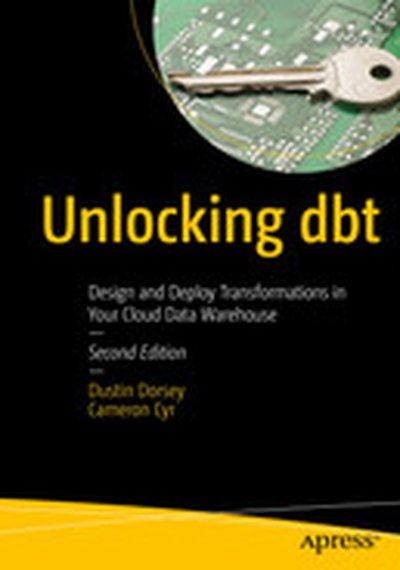
Unlocking dbt: Design and Deploy Transformations in Your Cloud Data Warehouse

Master the art of data transformation with the second edition of this trusted guide to dbt. Building on the foundation of the first edition, this updated volume offers a deeper, more comprehensive exploration of dbt’s capabilities—whether you're new to the tool or looking to sharpen your skills. It dives into the latest features and techniques, equipping you with the tools to create scalable, maintainable, and production-ready data transformation pipelines. Unlocking dbt, Second Edition introduces key advancements, including the semantic layer, which allows you to define and manage metrics at scale, and dbt Mesh, empowering organizations to orchestrate decentralized data workflows with confidence. You’ll also explore more advanced testing capabilities, expanded CI/CD and deployment strategies, and enhancements in documentation—such as the newly introduced dbt Catalog. As in the first edition, you’ll learn how to harness dbt’s power to transform raw data into actionable insights, while incorporating software engineering best practices like code reusability, version control, and automated testing. From configuring projects with the dbt Platform or open source dbt to mastering advanced transformations using SQL and Jinja, this book provides everything you need to tackle real-world challenges effectively. What You Will Learn Understand dbt and its role in the modern data stack Set up projects using both the cloud-hosted dbt Platform and open source project Connect dbt projects to cloud data warehouses Build scalable models in SQL and Python Configure development, testing, and production environments Capture reusable logic with Jinja macros Incorporate version control with your data transformation code Seamlessly connect your projects using dbt Mesh Build and manage a semantic layer using dbt Deploy dbt using CI/CD best practices Who This Book Is For Current and aspiring data professionals, including architects, developers, analysts, engineers, data scientists, and consultants who are beginning the journey of using dbt as part of their data pipeline’s transformation layer. Readers should have a foundational knowledge of writing basic SQL statements, development best practices, and working with data in an analytical context such as a data warehouse.

Discover how to unlock new possibilities by combining two powerful tools in one workflow. Python is an increasingly popular programming language that can be used for many statistical and nonstatistical applications. Stata provides a bidirectional connection with Python using the Stata Function Interface (SFI). This talk will demonstrate how to use Python interactively within Stata, how to execute Python scripts within Stata, how to use Python in Stata do-files, and how to integrate Python into Stata commands and .ado files. No prior experience with Python is necessary.

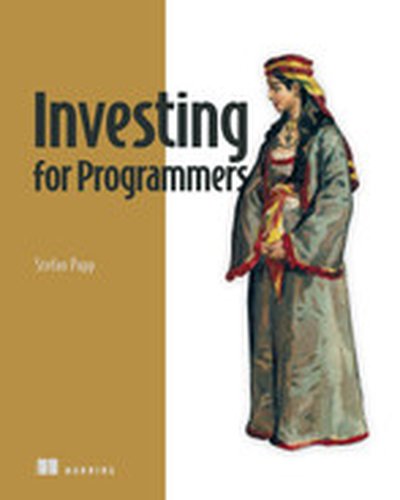
Investing for Programmers

Maximize your portfolio, analyze markets, and make data-driven investment decisions using Python and generative AI. Investing for Programmers shows you how you can turn your existing skills as a programmer into a knack for making sharper investment choices. You’ll learn how to use the Python ecosystem, modern analytic methods, and cutting-edge AI tools to make better decisions and improve the odds of long-term financial success. In Investing for Programmers you’ll learn how to: Build stock analysis tools and predictive models Identify market-beating investment opportunities Design and evaluate algorithmic trading strategies Use AI to automate investment research Analyze market sentiments with media data mining In Investing for Programmers you'll learn the basics of financial investment as you conduct real market analysis, connect with trading APIs to automate buy-sell, and develop a systematic approach to risk management. Don’t worry—there’s no dodgy financial advice or flimsy get-rich-quick schemes. Real-life examples help you build your own intuition about financial markets, and make better decisions for retirement, financial independence, and getting more from your hard-earned money. About the Technology A programmer has a unique edge when it comes to investing. Using open-source Python libraries and AI tools, you can perform sophisticated analysis normally reserved for expensive financial professionals. This book guides you step-by-step through building your own stock analysis tools, forecasting models, and more so you can make smart, data-driven investment decisions. About the Book Investing for Programmers shows you how to analyze investment opportunities using Python and machine learning. In this easy-to-read handbook, experienced algorithmic investor Stefan Papp shows you how to use Pandas, NumPy, and Matplotlib to dissect stock market data, uncover patterns, and build your own trading models. You’ll also discover how to use AI agents and LLMs to enhance your financial research and decision-making process. What's Inside Build stock analysis tools and predictive models Design algorithmic trading strategies Use AI to automate investment research Analyze market sentiment with media data mining About the Reader For professional and hobbyist Python programmers with basic personal finance experience. About the Author Stefan Papp combines 20 years of investment experience in stocks, cryptocurrency, and bonds with decades of work as a data engineer, architect, and software consultant. Quotes Especially valuable for anyone looking to improve their investing. - Armen Kherlopian, Covenant Venture Capital A great breadth of topics—from basic finance concepts to cutting-edge technology. - Ilya Kipnis, Quantstrat Trader A top tip for people who want to leverage development skills to improve their investment possibilities. - Michael Zambiasi, Raiffeisen Digital Bank Brilliantly bridges the worlds of coding and finance. - Thomas Wiecki, PyMC Labs

At PyData Berlin, community members and industry voices highlighted how AI and data tooling are evolving across knowledge graphs, MLOps, small-model fine-tuning, explainability, and developer advocacy.

  • Igor Kvachenok (Leuphana University / ProKube) combined knowledge graphs with LLMs for structured data extraction in the polymer industry, and noted how MLOps is shifting toward LLM-focused workflows.
  • Selim Nowicki (Distill Labs) introduced a platform that uses knowledge distillation to fine-tune smaller models efficiently, making model specialization faster and more accessible.
  • Gülsah Durmaz (Architect & Developer) shared her transition from architecture to coding, creating Python tools for design automation and volunteering with PyData through PyLadies.
  • Yashasvi Misra (Pure Storage) spoke on explainable AI, stressing accountability and compliance, and shared her perspective as both a data engineer and active Python community organizer.
  • Mehdi Ouazza (MotherDuck) reflected on developer advocacy through video, workshops, and branding, showing how creative communication boosts adoption of open-source tools like DuckDB.

Igor Kvachenok Master’s student in Data Science at Leuphana University of Lüneburg, writing a thesis on LLM-enhanced data extraction for the polymer industry. Builds RDF knowledge graphs from semi-structured documents and works at ProKube on MLOps platforms powered by Kubeflow and Kubernetes.

Connect: https://www.linkedin.com/in/igor-kvachenok/

Selim Nowicki Founder of Distill Labs, a startup making small-model fine-tuning simple and fast with knowledge distillation. Previously led data teams at Berlin startups like Delivery Hero, Trade Republic, and Tier Mobility. Sees parallels between today’s ML tooling and dbt’s impact on analytics.

Connect: https://www.linkedin.com/in/selim-nowicki/

Gülsah Durmaz Architect turned developer, creating Python-based tools for architectural design automation with Rhino and Grasshopper. Active in PyLadies and a volunteer at PyData Berlin, she values the community for networking and learning, and aims to bring ML into architecture workflows.

Connect: https://www.linkedin.com/in/gulsah-durmaz/

Yashasvi (Yashi) Misra Data Engineer at Pure Storage, community organizer with PyLadies India, PyCon India, and Women Techmakers. Advocates for inclusive spaces in tech and speaks on explainable AI, bridging her day-to-day in data engineering with her passion for ethical ML.

Connect: https://www.linkedin.com/in/misrayashasvi/

Mehdi Ouazza Developer Advocate at MotherDuck, formerly a data engineer, now focused on building community and education around DuckDB. Runs popular YouTube channels ("mehdio DataTV" and "MotherDuck") and delivered a hands-on workshop at PyData Berlin. Blends technical clarity with creative storytelling.

Connect: https://www.linkedin.com/in/mehd-io/

In this episode, we talk with Daniel, an astrophysicist turned machine learning engineer and AI ambassador. Daniel shares his journey bridging astronomy and data science, how he leveraged live courses and public knowledge sharing to grow his skills, and his experiences working on cutting-edge radio astronomy projects and AI deployments. He also discusses practical advice for beginners in data and astronomy, and insights on career growth through community and continuous learning.TIMECODES00:00 Lunar eclipse story and Daniel’s astronomy career04:12 Electromagnetic spectrum and MEERKAT data explained10:39 Data analysis and positional cross-correlation challenges15:25 Physics behind radio star detection and observation limits16:35 Radio astronomy’s advantage and machine learning potential20:37 Radio astronomy progress and Daniel’s ML journey26:00 Python tools and experience with ZoomCamps31:26 Intel internship and exploring LLMs41:04 Sharing progress and course projects with orchestration tools44:49 Setting up Airflow 3.0 and building data pipelines47:39 AI startups, training resources, and NVIDIA courses50:20 Student access to education, NVIDIA experience, and beginner astronomy programs57:59 Skills, projects, and career advice for beginners59:19 Starting with data science or engineering1:00:07 Course sponsorship, data tools, and learning resourcesConnect with Daniel Linkedin -   / egbodaniel   Connect with DataTalks.Club: Join the community - https://datatalks.club/slack.htmlSubscribe to our Google calendar to have all our events in your calendar - https://calendar.google.com/calendar/...Check other upcoming events - https://lu.ma/dtc-eventsGitHub: https://github.com/DataTalksClubLinkedIn -   / datatalks-club   Twitter -   / datatalksclub   Website - https://datatalks.club/

Real-Time Context Engineering for LLMs

Context engineering has replaced prompt engineering as the main challenge in building agents and LLM applications. Context engineering involves providing LLMs with relevant and timely context data from various data sources, which allows them to make context-aware decisions. The context data provided to the LLM must be produced in real-time to enable it to react intelligently at human perceivable latencies (a second or two at most). If the application takes longer to react, humans would perceive it as laggy and unintelligent. In this talk, we will introduce context engineering and motivate for real-time context engineering for interactive applications. We will also demonstrate how to integrate real-time context data from applications inside Python agents using the Hopsworks feature store and corresponding application IDs. Application IDs are the key to unlock application context data for agents and LLMs. We will walk through an example of an interactive application (TikTok clone) that we make AI-enabled with Hopsworks.

At Vinted, Europe’s largest second-hand marketplace, over 20 decentralized data teams generate, transform, and build products on petabytes of data. Each team utilizes their own tools, workflows, and expertise. Coordinating data pipeline creation across such diverse teams presents significant challenges. These include complex inter-team dependencies, inconsistent scheduling solutions, and rapidly evolving requirements.

This talk is aimed at data engineers, platform engineers, and technical leads with experience in workflow orchestration and will demonstrate how we empower teams at Vinted to define data pipelines quickly and reliably. We will present our user-friendly abstraction layer built on top of Apache Airflow, enhanced by a Python code generator. This abstraction simplifies upgrades and migrations, removes scheduler complexity, and supports Vinted’s rapid growth. Attendees will learn how Python abstractions and code generation can standardize pipeline development across diverse teams, reduce operational complexity, and enable greater flexibility and control in large-scale data organizations. Through practical lessons and real-world examples of our abstraction interface, we will offer insights into designing scheduler-agnostic architectures for successful data pipeline orchestration.

Optimize the Right Thing: Cost-Sensitive Classification in Practice

Not all mistakes in machine learning are equal—a false negative in fraud detection or medical diagnosis can be far costlier than a false positive. Cost-sensitive learning helps navigate these trade-offs by incorporating error costs into the training process, leading to smarter decision-making. This talk introduces Empulse, an open-source Python package that brings cost-sensitive learning into scikit-learn. Attendees will learn why standard models fall short in cost-sensitive scenarios and how to build better classifiers with Scikit-Learn and Empulse.

Untitled13.ipynb

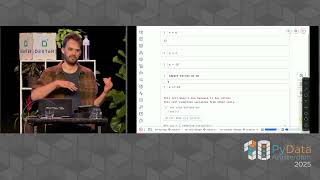
For well over a decade, Python notebooks revolutionized our field. They gave us so much creative freedom and dramatically lowered the entry barrier for newcomers. Yet despite all this ... it has been a decade! And the notebook is still in roughly the same form factor.

So what if we allow ourselves to rethink notebooks ... really rethink it! What features might we come up with? Can we make the notebook understand datasources? What about LLMs? Can we generate widgets on the fly? What if we make changes to Python itself?

This presentation will be a stream of demos that help paint a picture of what the future might hold. I will share my latest work in the anywidget/marimo ecosystem as well as some new hardware integrations.

The main theme that I will work towards: if you want better notebooks, reactive Python might very well be the future.

The Gentle Monorepo: Ship Faster and Collaborate Better

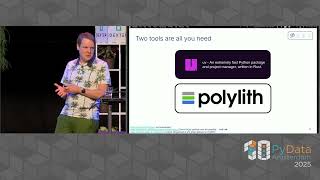
Monorepos promise faster development and smoother cross-team collaboration, but they often seem intimidating, requiring major tooling, buy-in, and process changes. This talk shows how Dexter gradually introduced a Python monorepo by combining a few lightweight tools with a pragmatic, trust-based approach to adoption. The result is that we can effectively reuse components across our various energy forecasting and trade optimization products. We iterate quicker on bringing our research to production, which benefits our customers and supports the renewable energy transition. After this talk, you’ll walk away with a practical blueprint for introducing a monorepo in your context, without requiring heavy up-front work.

Grounding Large Language Models in your specific data is crucial, but notoriously challenging. Retrieval-Augmented Generation (RAG) is the common pattern, yet practical implementations are often brittle, suffering from poor retrieval, ineffective chunking, and context limitations, leading to inaccurate or irrelevant answers. The emergence of massive context windows (1M+ tokens) seems to offer a simpler path – just put all your data in the prompt! But does it truly solve the "needle in a haystack" problem, or introduce new challenges like prohibitive costs and information getting lost in the middle? This talk dives deep into the engineering realities. We'll dissect common RAG failure modes, explore techniques for building robust RAG systems (advanced retrieval, re-ranking, query transformations), and critically evaluate the practical viability, costs, and limitations of leveraging long context windows for complex data tasks in Python. Leave understanding the real trade-offs to make informed architectural decisions for building reliable, data-grounded GenAI applications.