talk-data.com talk-data.com

Topic

Python

programming_language data_science web_development

1446

tagged

Activity Trend

185 peak/qtr
2020-Q1 2026-Q1

Activities

1446 activities · Newest first

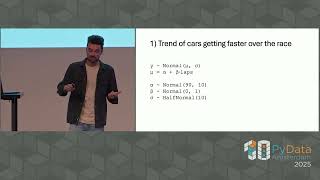
Formula 1 goes Bayesian: Time Series Decomposition with PyMC

Forecasting time series can be messy, data is often missing, noisy, or full of structural changes like holidays, outliers, or evolving patterns. This talk shows how to build interpretable time series decomposition models using PyMC, a modern probabilistic programming library.

We’ll break time series into trend, seasonality, and noise components using engineered time features (e.g., Fourier and Radial Basis Functions). You’ll also learn how to model correlated series using hierarchical priors, letting multiple time series "learn from each other." As a case study, we’ll analyze Formula 1 lap time data to compare drivers and explore performance consistency using Bayesian posteriors.

This is a hands-on, code-first talk for data scientists, ML engineers, and researchers curious about Bayesian modeling (or Formula 1). Familiarity with Python and basic statistics is helpful, but no deep knowledge of Bayes is required.

Ever been burned by a mysterious slowdown in your data pipeline? In this session, we'll reveal how a stealthy performance regression in the Polars DataFrame library was hunted down and squashed. Using git bisect, Bash scripting, and uv, we automated commit compilation and benchmarking across two repos to pinpoint a commit that degraded multi-file Parquet loading. This led to challenging assumptions and rethinking performance monitoring for the Python data science library Polars.

This talk dives into the challenge of measuring the causal impact of app installs on customer loyalty and value, a question at the heart of data-driven marketing. While randomized controlled trials are the gold standard, they’re rarely feasible in this context. Instead, we’ll explore how observational causal inference methods can be thoughtfully applied to estimate incremental value with careful consideration of confounding, selection, and measurement biases. This session is designed for data scientists, marketing analysts, and applied researchers with a working knowledge of statistics and causal inference concepts. We’ll keep the tone practical and informative, focusing on real-world challenges and solutions rather than heavy mathematical derivations.

Attendees will learn: * How to design robust observational studies for business impact * Strategies for covariate selection and bias mitigation * The use of multiple statistical and design-based causal inference approaches * Methods for validating and refuting causal claims in the absence of true randomization We’ll share actionable insights, code snippets, and a GitHub repository with example workflows so you can apply these techniques in your own organization. By the end of the talk, you’ll be equipped to design more transparent and credible causal studies-and make better decisions about where to invest your marketing dollars.

Requirements:
A basic understanding of causal inference and Python is recommended. Materials and relevant links will be shared during the session

The scale-up company Solynta focuses on hybrid potato breeding, which helps achieve improvements in yield, disease resistance, and climate adaptation. Scientific innovation is part of our core business. Plant selections are highly data-driven, involving, for example, drone observations and genetic data. Minimal time-to-production for new ideas is essential, which is facilitated by our custom AWS devops platform. This platform focusses on automation and accessible data storage.

In this talk, we introduce how computer vision (YOLO and SAM modelling) enables monitoring traits of plants in the field, and how we operate these models. This further entails: • Our experience from training and evaluating models on drone images • Trade-offs selecting AWS services, Terraform modules and Python packages for automation and robustness • Our team setup that allows IT specialists and biologists to work together effectively

The talk will provide practical insights for both data scientists and DevOps engineers. The main takeaways are that object detection and segmentation from drone maps, at scale, are achievable for a small team. Furthermore, with the right approach, you can standardise a DevOps platform to let operations and developers work together.

Large-Scale Video Intelligence

The explosion of video data demands search beyond simple metadata. How do we find specific visual moments, actions, or faces within petabytes of footage? This talk dives into architecting a robust, scalable multi-modal video search system. We will explore an architecture combining efficient batch preprocessing for feature extraction (including person detection, face/CLIP-style embeddings) with optimized vector database indexing. Attendees will learn practical strategies for managing massive datasets, optimizing ML inference (e.g., lightweight models, specialized runtimes), and bridging pre-computed indexes with real-time analysis for deeper insights. This session is for data scientists, ML engineers, and architects looking to build sophisticated video understanding capabilities.

Audience: Data Scientists, Machine Learning Engineers, Data Engineers, System Architects.

Takeaway: Attendees will learn architectural patterns and practical techniques for building scalable multi-modal video search systems, including feature extraction, vector database utilization, and ML pipeline optimization.

Background Knowledge: Familiarity with Python, core machine learning concepts (e.g., embeddings, classification), and general data processing pipelines is beneficial. Experience with video processing or computer vision is a plus but not strictly required.

Send us a text In this episode, we're joined by Sam Debruyn and Dorian Van den Heede who reflect on their talks at SQL Bits 2025 and dive into the technical content they presented. Sam walks through how dbt integrates with Microsoft Fabric, explaining how it improves lakehouse and warehouse workflows by adding modularity, testing, and documentation to SQL development. He also touches on Fusion’s SQL optimization features and how it compares to tools like SQLMesh. Dorian shares his MLOps demo, which simulates beating football bookmakers using historical data,nshowing how to build a full pipeline with Azure ML, from feature engineering to model deployment. They discuss the role of Python modeling in dbt, orchestration with Azure ML, and the practical challenges of implementing MLOps in real-world scenarios. Toward the end, they explore how AI tools like Copilot are changing the way engineers learn and debug code, raising questions about explainability, skill development, and the future of junior roles in tech. It’s rich conversation covering dbt, MLOps, Python, Azure ML, and the evolving role of AI in engineering.

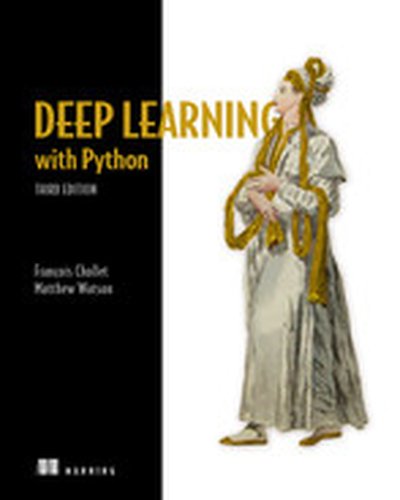
Deep Learning with Python, Third Edition

The bestselling book on Python deep learning, now covering generative AI, Keras 3, PyTorch, and JAX! Deep Learning with Python, Third Edition puts the power of deep learning in your hands. This new edition includes the latest Keras and TensorFlow features, generative AI models, and added coverage of PyTorch and JAX. Learn directly from the creator of Keras and step confidently into the world of deep learning with Python. In Deep Learning with Python, Third Edition you’ll discover: Deep learning from first principles The latest features of Keras 3 A primer on JAX, PyTorch, and TensorFlow Image classification and image segmentation Time series forecasting Large Language models Text classification and machine translation Text and image generation—build your own GPT and diffusion models! Scaling and tuning models With over 100,000 copies sold, Deep Learning with Python makes it possible for developers, data scientists, and machine learning enthusiasts to put deep learning into action. In this expanded and updated third edition, Keras creator François Chollet offers insights for both novice and experienced machine learning practitioners. You'll master state-of-the-art deep learning tools and techniques, from the latest features of Keras 3 to building AI models that can generate text and images. About the Technology In less than a decade, deep learning has changed the world—twice. First, Python-based libraries like Keras, TensorFlow, and PyTorch elevated neural networks from lab experiments to high-performance production systems deployed at scale. And now, through Large Language Models and other generative AI tools, deep learning is again transforming business and society. In this new edition, Keras creator François Chollet invites you into this amazing subject in the fluid, mentoring style of a true insider. About the Book Deep Learning with Python, Third Edition makes the concepts behind deep learning and generative AI understandable and approachable. This complete rewrite of the bestselling original includes fresh chapters on transformers, building your own GPT-like LLM, and generating images with diffusion models. Each chapter introduces practical projects and code examples that build your understanding of deep learning, layer by layer. What's Inside Hands-on, code-first learning Comprehensive, from basics to generative AI Intuitive and easy math explanations Examples in Keras, PyTorch, JAX, and TensorFlow About the Reader For readers with intermediate Python skills. No previous experience with machine learning or linear algebra required. About the Authors François Chollet is the co-founder of Ndea and the creator of Keras. Matthew Watson is a software engineer at Google working on Gemini and a core maintainer of Keras. Quotes Perfect for anyone interested in learning by doing from one of the industry greats. - Anthony Goldbloom, Founder of Kaggle A sharp, deeply practical guide that teaches you how to think from first principles to build models that actually work. - Santiago Valdarrama, Founder of ml.school The most up-to-date and complete guide to deep learning you’ll find today! - Aran Komatsuzaki, EleutherAI Masterfully conveys the true essence of neural networks. A rare case in recent years of outstanding technical writing. - Salvatore Sanfilippo, Creator of Redis

Summary In this episode of the AI Engineering Podcast Mark Brooker, VP and Distinguished Engineer at AWS, talks about how agentic workflows are transforming database usage and infrastructure design. He discusses the evolving role of data in AI systems, from traditional models to more modern approaches like vectors, RAG, and relational databases. Mark explains why agents require serverless, elastic, and operationally simple databases, and how AWS solutions like Aurora and DSQL address these needs with features such as rapid provisioning, automated patching, geodistribution, and spiky usage. The conversation covers topics including tool calling, improved model capabilities, state in agents versus stateless LLM calls, and the role of Lambda and AgentCore for long-running, session-isolated agents. Mark also touches on the shift from local MCP tools to secure, remote endpoints, the rise of object storage as a durable backplane, and the need for better identity and authorization models. The episode highlights real-world patterns like agent-driven SQL fuzzing and plan analysis, while identifying gaps in simplifying data access, hardening ops for autonomous systems, and evolving serverless database ergonomics to keep pace with agentic development.

Announcements Hello and welcome to the Data Engineering Podcast, the show about modern data managementData teams everywhere face the same problem: they're forcing ML models, streaming data, and real-time processing through orchestration tools built for simple ETL. The result? Inflexible infrastructure that can't adapt to different workloads. That's why Cash App and Cisco rely on Prefect. Cash App's fraud detection team got what they needed - flexible compute options, isolated environments for custom packages, and seamless data exchange between workflows. Each model runs on the right infrastructure, whether that's high-memory machines or distributed compute. Orchestration is the foundation that determines whether your data team ships or struggles. ETL, ML model training, AI Engineering, Streaming - Prefect runs it all from ingestion to activation in one platform. Whoop and 1Password also trust Prefect for their data operations. If these industry leaders use Prefect for critical workflows, see what it can do for you at dataengineeringpodcast.com/prefect.Data migrations are brutal. They drag on for months—sometimes years—burning through resources and crushing team morale. Datafold's AI-powered Migration Agent changes all that. Their unique combination of AI code translation and automated data validation has helped companies complete migrations up to 10 times faster than manual approaches. And they're so confident in their solution, they'll actually guarantee your timeline in writing. Ready to turn your year-long migration into weeks? Visit dataengineeringpodcast.com/datafold today for the details.Your host is Tobias Macey and today I'm interviewing Marc Brooker about the impact of agentic workflows on database usage patterns and how they change the architectural requirements for databasesInterview IntroductionHow did you get involved in the area of data management?Can you describe what the role of the database is in agentic workflows?There are numerous types of databases, with relational being the most prevalent. How does the type and purpose of an agent inform the type of database that should be used?Anecdotally I have heard about how agentic workloads have become the predominant "customers" of services like Neon and Fly.io. How would you characterize the different patterns of scale for agentic AI applications? (e.g. proliferation of agents, monolithic agents, multi-agent, etc.)What are some of the most significant impacts on workload and access patterns for data storage and retrieval that agents introduce?What are the categorical differences in that behavior as compared to programmatic/automated systems?You have spent a substantial amount of time on Lambda at AWS. Given that LLMs are effectively stateless, how does the added ephemerality of serverless functions impact design and performance considerations around having to "re-hydrate" context when interacting with agents?What are the most interesting, innovative, or unexpected ways that you have seen serverless and database systems used for agentic workloads?What are the most interesting, unexpected, or challenging lessons that you have learned while working on technologies that are supporting agentic applications?Contact Info BlogLinkedInParting Question From your perspective, what is the biggest gap in the tooling or technology for data management today?Closing Announcements Thank you for listening! Don't forget to check out our other shows. Podcast.init covers the Python language, its community, and the innovative ways it is being used. The AI Engineering Podcast is your guide to the fast-moving world of building AI systems.Visit the site to subscribe to the show, sign up for the mailing list, and read the show notes.If you've learned something or tried out a project from the show then tell us about it! Email [email protected] with your story.Links AWS Aurora DSQLAWS LambdaThree Tier ArchitectureVector DatabaseGraph DatabaseRelational DatabaseVector EmbeddingRAG == Retrieval Augmented GenerationAI Engineering Podcast EpisodeGraphRAGAI Engineering Podcast EpisodeLLM Tool CallingMCP == Model Context ProtocolA2A == Agent 2 Agent ProtocolAWS Bedrock AgentCoreStrandsLangChainKiroThe intro and outro music is from The Hug by The Freak Fandango Orchestra / CC BY-SA

Hands-on Python masterclass for aspiring coders aged 12-18. The Emoji Master Challenge guides students through interactive levels, starting with a Python introduction and ending with a reveal of the superheroes they've created with emojis. Level 3 demonstrates displaying a rose emoji 10 times; Level 5 involves concealing a superhero using emojis. The session covers practical Python skills, game development basics with PyGame, graphics with Turtle, and UI concepts with PyQT.

LaTeX has been the preferred system for writing scientific and mathematical documents for many years, and today it is a key part of a data scientist's tools. This talk provides a brief history of LaTeX, an overview of the concepts, and live demos of some modern tools which have LaTeX integrated - from full document preparation systems, embedding in Python notebooks, to JavaScript libraries for use on the web. The aim of the talk - which requires no expertise - is to give you enough understanding of LaTex concepts that you can more easily use it in future projects if the need arises.

Discover how to unlock new possibilities by combining two powerful tools in one workflow.

Python is an increasingly popular programming language that can be used for many statistical and nonstatistical applications. Stata provides a bidirectional connection with Python using the Stata Function Interface (SFI).

This talk will demonstrate how to use Python interactively within Stata, how to execute Python scripts within Stata, how to use Python in Stata do-files, and how to integrate Python into Stata commands and .ado files.

No prior experience with Python is necessary.

Summary In this episode of the Data Engineering Podcast Hannes Mühleisen and Mark Raasveldt, the creators of DuckDB, share their work on Duck Lake, a new entrant in the open lakehouse ecosystem. They discuss how Duck Lake, is focused on simplicity, flexibility, and offers a unified catalog and table format compared to other lakehouse formats like Iceberg and Delta. Hannes and Mark share insights into how Duck Lake revolutionizes data architecture by enabling local-first data processing, simplifying deployment of lakehouse solutions, and offering benefits such as encryption features, data inlining, and integration with existing ecosystems.

Announcements Hello and welcome to the Data Engineering Podcast, the show about modern data managementData teams everywhere face the same problem: they're forcing ML models, streaming data, and real-time processing through orchestration tools built for simple ETL. The result? Inflexible infrastructure that can't adapt to different workloads. That's why Cash App and Cisco rely on Prefect. Cash App's fraud detection team got what they needed - flexible compute options, isolated environments for custom packages, and seamless data exchange between workflows. Each model runs on the right infrastructure, whether that's high-memory machines or distributed compute. Orchestration is the foundation that determines whether your data team ships or struggles. ETL, ML model training, AI Engineering, Streaming - Prefect runs it all from ingestion to activation in one platform. Whoop and 1Password also trust Prefect for their data operations. If these industry leaders use Prefect for critical workflows, see what it can do for you at dataengineeringpodcast.com/prefect.Data migrations are brutal. They drag on for months—sometimes years—burning through resources and crushing team morale. Datafold's AI-powered Migration Agent changes all that. Their unique combination of AI code translation and automated data validation has helped companies complete migrations up to 10 times faster than manual approaches. And they're so confident in their solution, they'll actually guarantee your timeline in writing. Ready to turn your year-long migration into weeks? Visit dataengineeringpodcast.com/datafold today for the details. Your host is Tobias Macey and today I'm interviewing Hannes Mühleisen and Mark Raasveldt about DuckLake, the latest entrant into the open lakehouse ecosystemInterview IntroductionHow did you get involved in the area of data management?Can you describe what DuckLake is and the story behind it?What are the particular problems that DuckLake is solving for?How does this compare to the capabilities of MotherDuck?Iceberg and Delta already have a well established ecosystem, but so does DuckDB. Who are the primary personas that you are trying to focus on in these early days of DuckLake?One of the major factors driving the adoption of formats like Iceberg is cost efficiency for large volumes of data. That brings with it challenges of large batch processing of data. How does DuckLake account for these axes of scale?There is also a substantial investment in the ecosystem of technologies that support Iceberg. The most notable ecosystem challenge for DuckDB and DuckLake is in the query layer. How are you thinking about the evolution and growth of that capability beyond DuckDB (e.g. support in Trino/Spark/Flink)?What are your opinions on the viability of a future where DuckLake and Iceberg become a unified standard and implementation? (why can't Iceberg REST catalog implementations just use DuckLake under the hood?)Digging into the specifics of the specification and implementation, what are some of the capabilities that it offers above and beyond Iceberg?Is it now possible to enforce PK/FK constraints, indexing on underlying data?Given that DuckDB has a vector type, how do you think about the support for vector storage/indexing?How do the capabilities of DuckLake and the integration with DuckDB change the ways that data teams design their data architecture and access patterns?What are your thoughts on the impact of "data gravity" in today's data ecosystem, with engines like DuckDB, KuzuDB, LanceDB, etc. available for embedded and edge use cases?What are the most interesting, innovative, or unexpected ways that you have seen DuckLake used?What are the most interesting, unexpected, or challenging lessons that you have learned while working on DuckLake?When is DuckLake the wrong choice?What do you have planned for the future of DuckLake?Contact Info HannesWebsiteMarkWebsiteParting Question From your perspective, what is the biggest gap in the tooling or technology for data management today?Closing Announcements Thank you for listening! Don't forget to check out our other shows. Podcast.init covers the Python language, its community, and the innovative ways it is being used. The AI Engineering Podcast is your guide to the fast-moving world of building AI systems.Visit the site to subscribe to the show, sign up for the mailing list, and read the show notes.If you've learned something or tried out a project from the show then tell us about it! Email [email protected] with your story.Links DuckDBPodcast EpisodeDuckLakeDuckDB LabsMySQLCWIMonetDBIcebergIceberg REST CatalogDeltaHudiLanceDuckDB Iceberg ConnectorACID == Atomicity, Consistency, Isolation, DurabilityMotherDuckMotherDuck Managed DuckLakeTrinoSparkPrestoSpark DuckLake DemoDelta KernelArrowdltS3 TablesAttribute Based Access Control (ABAC)ParquetArrow FlightHadoopHDFSDuckLake RoadmapThe intro and outro music is from The Hug by The Freak Fandango Orchestra / CC BY-SA