talk-data.com talk-data.com

Topic

SQL Server

Microsoft SQL Server

relational_database microsoft enterprise

188

tagged

Activity Trend

1 peak/qtr
2020-Q1 2026-Q1

Activities

188 activities · Newest first

MySQL Stored Procedure Programming

The implementation of stored procedures in MySQL 5.0 a hugemilestone -- one that is expected to lead to widespread enterprise adoption ofthe already extremely popular MySQL database. If you are serious aboutbuilding the web-based database applications of the future, you need toget up to speed quickly on how stored procedures work -- and how tobuild them the right way. This book, destined to be the bible of storedprocedure development, is a resource that no real MySQL programmer canafford to do without. In the decade since MySQL burst on the scene, it has become thedominant open source database, with capabilities and performancerivaling those of commercial RDBMS offerings like Oracle and SQLServer. Along with Linux and PHP, MySQL is at the heart of millions ofapplications. And now, with support for stored procedures, functions,and triggers in MySQL 5.0, MySQL offers the programming power neededfor true enterprise use. MySQL's new procedural language has a straightforward syntax, making iteasy to write simple programs. But it's not so easy to write secure,easily maintained, high-performance, and bug-free programs. Few in theMySQL world have substantial experience yet with stored procedures, butGuy Harrison and Steven Feuerstein have decades of combined expertise. In MySQL Stored Procedure Programming, they putthat hard-won experience to good use. Packed with code examples and coveringeverything from language basics to application building to advancedtuning and best practices, this highly readable book is the one-stopguide to MySQL development. It consists of four major sections: MySQL stored programming fundamentals -- tutorial, basicstatements, SQL in stored programs, and error handling Building MySQL stored programs -- transaction handling,built-in functions, stored functions, and triggers MySQL stored programs in applications -- using storedprograms with PHP, Java, Perl, Python, and .NET (C# and VB.NET) Optimizing MySQL stored programs -- security, basic andadvanced SQL tuning, optimizing stored program code, and programmingbest practices A companion web site contains many thousands of lines of code, that youcan put to use immediately. Guy Harrison is Chief Architect of Database Solutions at Quest Softwareand a frequent speaker and writer on MySQL topics. Steven Feuerstein isthe author of Oracle PL/SQL Programming, the classic reference for Oracle stored programming for more than ten years. Both have decades of experience as database developers, and between them they have authored a dozen books.
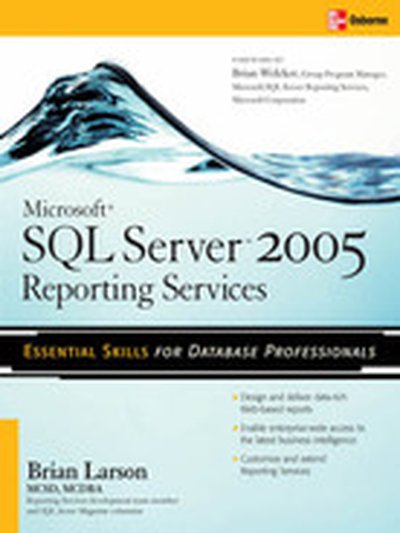
Microsoft® SQL Server 2005 Reporting Services

SQL Server Reporting enables the creation, management, and delivery of both traditional, paper-oriented reports and interactive, Web-based reports. An integrated part of the Microsoft business intelligence framework, Reporting Services combines the data management capabilities of SQL Server and Microsoft Windows Server with familiar and powerful Microsoft Office System applications to deliver real-time information to support daily operations and drive decisions. Microsoft SQL Server 2005 Reporting Services will help you understand Reporting Services from various perspectives: How it fits business scenarios How to install and configure Reporting Services Reporting Services components Developing reports As you progress to advanced user status, you will enjoy the chapter about accessing Reporting Services programmatically and extending Reporting Services, and you will be able to use this book as a convenient reference.

MySQL® Clustering

Clustering is the final component of MySQL that makes it truly enterprise-level and able to compete fully with proprietary databases such as Oracle and Microsoft SQL Server. The increased number of high-demand, high-productivity corporations and institutions choosing MySQL, including MIT, the Department of Homeland Security, NASA, and Nokia, to name a few, need the benefit of clustering databases for high performance and scalability. MySQL AB has stepped up to the plate to offer advanced, high-availability, reliable clustering. As this demand has increased, so has the need for information. MySQL Clustering offers thorough, authoritative instruction on setting up and administering a MySQL Cluster from the developers of the cluster itself. You will learn about everything from installation and configuration to performance and troubleshooting in this authoritative reference guide to MySQL clustering.

SQL Server 2005 Distilled

Need to get your arms around Microsoft SQL Server 2005 fast, without getting buried in the details? Need to make fundamental decisions about deploying, using, or administering Microsoft’s latest enterprise database? Need to understand what’s new in SQL Server 2005, and how it fits with your existing IT and business infrastructure? SQL Server 2005 Distilled delivers the answers you need–quickly, clearly, and objectively. Former SQL Server team member Eric L. Brown offers realistic insight into every significant aspect of SQL Server 2005: its new features, architecture, administrative tools, security model, data management capabilities, development environment, and much more. Brown draws on his extensive experience consulting with enterprise users, outlining realistic usage scenarios that leverage SQL Server 2005’s strengths and minimize its limitations. Coverage includes Architectural overview: how SQL Server 2005’s features work together and what it means to you Security management, policies, and permissions: gaining tighter control over your data SQL Server Management Studio: Microsoft’s new, unified tool suite for authoring, management, and operations Availability enhancements: online restoration, improved replication, shorter maintenance/recovery windows, and more Scalability improvements, including a practical explanation of SQL Server 2005’s complex table partitioning feature Data access enhancements, from ADO.NET 2.0 to XML SQL Server 2005’s built-in .NET CLR: how to use it, when to use it, and when to stay with T-SQL Business Intelligence Development Studio: leveraging major improvements in reporting and analytics Visual Studio integration: improving efficiency throughout the coding and debugging process Simple code examples demonstrating SQL Server 2005’s most significant new features

MDX Solutions: With Microsoft® SQL Server™ Analysis Services 2005 and Hyperion® Essbase, Second Edition

Serving as both a tutorial and a reference guide to the MDX (Multidimensional Expressions) query language, this book shows data warehouse developers what they need to know to build effective multidimensional data warehouses After a brief overview of the MDX language and a look at how it is used to access data in sophisticated, multidimensional databases and data warehousing, the authors move directly to providing practical examples of MDX in use New material covers changes in the MDX language itself as well as major changes in its implementation with the latest software releases of Microsoft SQL Server Analysis Services 2005 and Hyperion Essbase Also covers more advanced techniques, like aggregation, query templates, and MDX optimization, and shows users what they need to know to access and analyze data to make better business decisions Note: CD-ROM/DVD and other supplementary materials are not included as part of eBook file.

Delivering Business Intelligence with Microsoft SQL Server 2005

Transform disparate enterprise data into actionable business intelligence Put timely, mission-critical information in the hands of employees across your organization using Microsoft SQL Server 2005 and the comprehensive information in this unique resource. Delivering Business Intelligence with Microsoft SQL Server 2005 shows you, step-by-step, how to author, customize, and distribute information that will give your company the competitive edge. It's all right here--from data mining, warehousing, and scripting techniques to MDX queries, KPI analysis, and the all-new Unified Dimensional Model. Real-world examples, start-to-finish exercises, and downloadable code throughout illustrate all of the integration, analysis, and reporting capabilities of SQL Server 2005.

Microsoft SQL Server 2005 Notification Services

Microsoft SQL Server 2005 Notification Services covers the basic problems of notification applications, describes the SQL Notification Services platform and describes how to use it to build rich, scalable notification applications. Written by Shyam Pather, the Technical Lead for the SQL Notification Services Team, this book is based on his three years of experience teaching SQL Notification Services to new customers. This book is your complete resource for learning SQL Notification Services application development and the underlying architectural concepts.

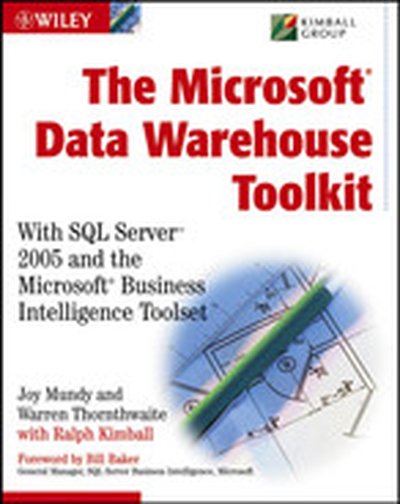
The Microsoft® Data Warehouse Toolkit: With SQL Server™ 2005 and the Microsoft® Business Intelligence Toolset

This groundbreaking book is the first in the Kimball Toolkit series to be product-specific. Microsoft’s BI toolset has undergone significant changes in the SQL Server 2005 development cycle. SQL Server 2005 is the first viable, full-functioned data warehouse and business intelligence platform to be offered at a price that will make data warehousing and business intelligence available to a broad set of organizations. This book is meant to offer practical techniques to guide those organizations through the myriad of challenges to true success as measured by contribution to business value. Building a data warehousing and business intelligence system is a complex business and engineering effort. While there are significant technical challenges to overcome in successfully deploying a data warehouse, the authors find that the most common reason for data warehouse project failure is insufficient focus on the business users and business problems. In an effort to help people gain success, this book takes the proven Business Dimensional Lifecycle approach first described in best selling The Data Warehouse Lifecycle Toolkit and applies it to the Microsoft SQL Server 2005 tool set. Beginning with a thorough description of how to gather business requirements, the book then works through the details of creating the target dimensional model, setting up the data warehouse infrastructure, creating the relational atomic database, creating the analysis services databases, designing and building the standard report set, implementing security, dealing with metadata, managing ongoing maintenance and growing the DW/BI system. All of these steps tie back to the business requirements. Each chapter describes the practical steps in the context of the SQL Server 2005 platform. Intended Audience The target audience for this book is the IT department or service provider (consultant) who is: Planning a small to mid-range data warehouse project; Evaluating or planning to use Microsoft technologies as the primary or exclusive data warehouse server technology; Familiar with the general concepts of data warehousing and business intelligence. The book will be directed primarily at the project leader and the warehouse developers, although everyone involved with a data warehouse project will find the book useful. Some of the book’s content will be more technical than the typical project leader will need; other chapters and sections will focus on business issues that are interesting to a database administrator or programmer as guiding information. The book is focused on the mass market, where the volume of data in a single application or data mart is less than 500 GB of raw data. While the book does discuss issues around handling larger warehouses in the Microsoft environment, it is not exclusively, or even primarily, concerned with the unusual challenges of extremely large datasets. About the Authors JOY MUNDY has focused on data warehousing and business intelligence since the early 1990s, specializing in business requirements analysis, dimensional modeling, and business intelligence systems architecture. Joy co-founded InfoDynamics LLC, a data warehouse consulting firm, then joined Microsoft WebTV to develop closed-loop analytic applications and a packaged data warehouse. Before returning to consulting with the Kimball Group in 2004, Joy worked in Microsoft SQL Server product development, managing a team that developed the best practices for building business intelligence systems on the Microsoft platform. Joy began her career as a business analyst in banking and finance. She graduated from Tufts University with a BA in Economics, and from Stanford with an MS in Engineering Economic Systems. WARREN THORNTHWAITE has been building data warehousing and business intelligence systems since 1980. Warren worked at Metaphor for eight years, where he managed the consulting organization and implemented many major data warehouse systems. After Metaphor, Warren managed the enterprise-wide data warehouse development at Stanford University. He then co-founded InfoDynamics LLC, a data warehouse consulting firm, with his co-author, Joy Mundy. Warren joined up with WebTV to help build a world class, multi-terabyte customer focused data warehouse before returning to consulting with the Kimball Group. In addition to designing data warehouses for a range of industries, Warren speaks at major industry conferences and for leading vendors, and is a long-time instructor for Kimball University. Warren holds an MBA in Decision Sciences from the University of Pennsylvania's Wharton School, and a BA in Communications Studies from the University of Michigan. RALPH KIMBALL, PH.D., has been a leading visionary in the data warehouse industry since 1982 and is one of today's most internationally well-known authors, speakers, consultants, and teachers on data warehousing. He writes the "Data Warehouse Architect" column for Intelligent Enterprise (formerly DBMS) magazine.

Microsoft SQL Server 2005 Reporting Services, 2nd Edition

Microsoft's Reporting Services product is a vital part of the SQL Server 2005 business intelligence platform, but it works with virtually any data source. This hands-on guide explains how to transform data into insightful and interactive Web-based reports using Microsoft SQL Server 2005 Reporting Services. With coverage of everything from installation to administration, the book demonstrates how to use this powerful server-based reporting solution to improve business decision-making and facilitate company-wide -- even worldwide -- communication.

Microsoft® SQL Server™ 2005 Administrator's Pocket Consultant

Here’s the utterly practical, pocket-sized reference for IT professionals who need to administer, optimize, and maintain Microsoft SQL Server 2005 in their organization. This unique guide provides essential details for using Microsoft SQL Server 2005 to help protect and manage your company’s data—whether automating tasks; creating indexes and views; performing backups and recovery; replicating transactions; tuning performance; managing server activity; importing and exporting data; or performing other key tasks. Featuring quick-reference tables, lists, and step-by-step instructions, this handy, one-stop guide provides fast, accurate answers on the spot—whether you’re at your desk or in the field!

Microsoft® SQL Server 2005: Changing the Paradigm (SQL Server 2005 Public Beta Edition)

Microsoft SQL Server 2005: Changing the Paradigm (SQL Server 2005 Public Beta Edition) will prepare database administrators for upcoming changes in SQL Server 2005. Obtain the skills necessary to run SQL Server 2005 from the experts at Microsoft Gold Partner. Get a head-start to understanding the new concepts and features of SQL Server 2005 from the database administrator's perspective, including: SQL Server 2005 Architecture Tool Sets Scalability, Reliability and High Availability Chapter Performance Tuning Replication .NET CLR Integration DTS and Business Intelligence Minimize the surprises in SQL Server 2005 with the help of Microsoft SQL Server 2005: Changing the Paradigm (SQL Server 2005 Public Beta Edition).

Learning SQL

SQL (Structured Query Language) is a standard programming language for generating, manipulating, and retrieving information from a relational database. If you're working with a relational database--whether you're writing applications, performing administrative tasks, or generating reports--you need to know how to interact with your data. Even if you are using a tool that generates SQL for you, such as a reporting tool, there may still be cases where you need to bypass the automatic generation feature and write your own SQL statements. To help you attain this fundamental SQL knowledge, look to Learning SQL, an introductory guide to SQL, designed primarily for developers just cutting their teeth on the language. Learning SQL moves you quickly through the basics and then on to some of the more commonly used advanced features. Among the topics discussed: The history of the computerized database SQL Data Statements--those used to create, manipulate, and retrieve data stored in your database; example statements include select, update, insert, and delete SQL Schema Statements--those used to create database objects, such as tables, indexes, and constraints How data sets can interact with queries The importance of subqueries Data conversion and manipulation via SQL's built-in functions How conditional logic can be used in Data StatementsBest of all, Learning SQL talks to you in a real-world manner, discussing various platform differences that you're likely to encounter and offering a series of chapter exercises that walk you through the learning process. Whenever possible, the book sticks to the features included in the ANSI SQL standards. This means you'll be able to apply what you learn to any of several different databases; the book covers MySQL, Microsoft SQL Server, and Oracle Database, but the features and syntax should apply just as well (perhaps with some tweaking) to IBM DB2, Sybase Adaptive Server, and PostgreSQL. Put the power and flexibility of SQL to work. With Learning SQL you can master this important skill and know that the SQL statements you write are indeed correct.

SQL: Visual Quickstart Guide, Second Edition

As dynamic, database-driven Web sites become the standard, more and more nonprogrammers just like yourself are being forced to work with database information and create and edit database objects. With SQL and this task-based guide to it, you can do it too-- no programming experience required! After going over the relational database model and SQL syntax in the first few chapters, veteran author Chris Fehily launches into the tasks that will get you comfortable with SQL fast. In addition to explaining SQL basics, this updated reference covers the ANSI SQL:2003 standard and contains a wealth of brand-new information, including a new chapter on set operations and common tasks, well-placed optimization tips to make your queries run fast, sidebars on advanced topics, and added IBM DB2 coverage. Best of all, the book's examples were tested on the latest versions of Microsoft Access, Microsoft SQL Server, Oracle, IBM DB2, MySQL, and PostgreSQL. On the companion Web site, you can download the SQL scripts and sample database for all these systems and put your knowledge to work immediately on a real database..

SQL in a Nutshell, 2nd Edition

SQL in a Nutshell applies the eminently useful "Nutshell" format to Structured Query Language (SQL), the elegant--but complex--descriptive language that is used to create and manipulate large stores of data. For SQL programmers, analysts, and database administrators, the new second edition of SQL in a Nutshell is the essential date language reference for the world's top SQL database products. SQL in a Nutshell is a lean, focused, and thoroughly comprehensive reference for those who live in a deadline-driven world.This invaluable desktop quick reference drills down and documents every SQL command and how to use it in both commercial (Oracle, DB2, and Microsoft SQL Server) and open source implementations (PostgreSQL, and MySQL). It describes every command and reference and includes the command syntax (by vendor, if the syntax differs across implementations), a clear description, and practical examples that illustrate important concepts and uses. And it also explains how the leading commercial and open sources database product implement SQL. This wealth of information is packed into a succinct, comprehensive, and extraordinarily easy-to-use format that covers the SQL syntax of no less than 4 different databases.When you need fast, accurate, detailed, and up-to-date SQL information, SQL in a Nutshell, Second Edition will be the quick reference you'll reach for every time. SQL in a Nutshell is small enough to keep by your keyboard, and concise (as well as clearly organized) enough that you can look up the syntax you need quickly without having to wade through a lot of useless fluff. You won't want to work on a project involving SQL without it.

Microsoft® SQL Server™ 2005 Reporting Services Step by Step

Your hands-on guide to learning Microsoft SQL Server Reporting Services, Microsoft’s customizable reporting solution for business data analysis. Reporting Services is a powerful tool for business intelligence, so an understanding of the essentials—how to architect a report, as well as how to install and program Reporting Services—is key to harnessing the full benefits of SQL Server. This step-by-step tutorial shows you how to get started, how to use the report project wizard, how to think about and access data, and how to build queries. It also walks you through the creation of charts and visual layouts to enable maximum visual understanding of the data analysis. Interactivity features (enhanced in SQL Server 2005) and security are also covered in detail. With STEP BY STEP, you work at your own pace through hands-on, learn-by-doing exercises. Whether you’re a beginning programmer or new to this version of the technology, you’ll understand the fundamental techniques for using Reporting Services. A companion CD includes data sets and sample code.

Transact-SQL Desk Reference

This is the SQL reference you'll reach for first, every time! If you're an SQL programmer, you can easily picture how useful a comprehensive, single-volume Transact-SQL command reference manual would be in streamlining your work. And if that book was rich in examples, was written with users of all levels of expertise in mind, and was even designed to fit comfortably on your desktop, you'd probably buy it right away, wouldn't you? Well, look no further— Transact-SQL Desk Reference, by noted programming instructor Deac Lancaster, is exactly the book you need. As it turns out, Transact-SQL Desk Reference is just the book Deac himself was looking for. The problem was, no such book existed, so he saved programmers everywhere a lot of trouble and he wrote it himself! The book answers the question, "How exactly do I write a statement to do a particular job?" by providing the full syntax of each command along with examples showing each command in action. Then, to assist you in making your code more portable, Transact-SQL Desk Reference shows where Transact-SQL diverges from the ANSI SQL standard. The commands are arranged by functional area and are well indexed and cross-referenced, making it as easy as possible to find what you're looking for-even if you don't know the command's name. Inside, you'll find: SQL commands grouped logically by purpose and function, plus an index so you can jump right to the command Definitions that give the full syntax of each command, along with examples of each command in use plus tips on maximizing portability Additional chapters covering RDBMS concepts, details of Transact-SQL, and advanced SELECT queries! This book is intended for programmers of all levels working with Microsoft SQL Server.

Guru's Guide to SQL Server Architecture and Internals, The

"I can pretty much guarantee that anyone who uses SQL Server on a regular basis (even those located in Redmond working on SQL Server) can learn something new from reading this book." --David Campbell, Product Unit Manager, Relational Server Team, Microsoft Corporation The latest book from the highly regarded and best-selling author Ken Henderson, is the consummate reference to Microsoft SQL Server. Picking up where documentation and white papers leave off, this book takes an all-inclusive approach to provide the most depth and breadth of coverage of any book on SQL Server architecture, internals, and tuning. The Guru's Guide to SQL Server Architecture and Internals Blending in-depth discussion with practical application, the guide begins with several chapters on the fundamental Windows technologies behind SQL Server, including processes and threads, memory management, Windows I/O, and networking. The focus then moves on to the architectural details of SQL Server and how to practically apply them. The entire SQL Server product is covered--not just the functionality that resides within the core executable or product features that have been in place for years. SQL Server has matured and broadened substantially with each release, and the author explores the "fringe" technologies that have yet to be covered elsewhere, including Notification Services, Full Text Search, SQLXML, replication, DTS, and a host of others. Throughout the book, the author uses WinDbg, Microsoft's free downloadable symbolic debugger, to look under the hood of SQL Server. Armed with new debugging and coding skills, readers will be ready to master SQL Server on their own. The accompanying CD-ROM is packed with additional material, including full source code for the book's 900+ examples, as well as three invaluable tools: DTSDIAG, the VBODSOLE Library, and DTS Package Guru. DTSDIAG allows developers and administrators to simultaneously collect Profiler traces, perform logs, blocking script output, system event logs, and SQLDIAG reports from a specified SQL Server. The VBODSOLE Library features more than twenty new COM-based functions for Transact-SQL, including T-SQL enhancements such as array-manipulation routines, financial functions, string-manipulation functions, and system functions. DTS Package Guru is a .NET-based package editor for SQL Server's Data Transformation Services that allows editing of any modifiable package and supports the automation of mass package changes. is the essential guide for database developers and admin- istrators alike, regardless of skill level. The Guru's Guide to SQL Server Architecture and Internals 0201700476B10012003

Microsoft® SQL Server™ 2000 High Availability

Ensuring 24/7 database availability is crucial to your company’s success. Discover the best ways to help keep your critical, Microsoft SQL Server 2000–based systems up and running—and secure—with this in-depth guide, straight from the source.

XML Data Management: Native XML and XML-Enabled Database Systems

"This is an excellent book that combines a practical and analytical look at the subject." —Leo Korman, Principal Software Engineer, KANA Software As organizations begin to employ XML within their information-management and exchange strategies, data management issues pertaining to storage, retrieval, querying, indexing, and manipulation increasingly arise. Moreover, new information-modeling challenges also appear. —with its contributions from experts at the forefront of the XML field—addresses these key issues and challenges, offering insights into the advantages and drawbacks of various XML solutions, best practices for modeling information with XML, and developing custom, in-house solutions. XML Data Management In this book, you will find discussions on the newest native XML databases, along with information on working with XML-enabled relational database systems. In addition, thoroughly examines benchmarks and analysis techniques for performance of XML databases. XML Data Management Topics covered include: The power of good grammar and style in modeling information to alleviate the need for redundant domain knowledge Tamino's XML storage, indexing, querying, and data access features The features and APIs of open source eXist Berkeley DB XML's ability to store XML documents natively IBM's DB2 Universal Database and its support for XML applications Xperanto's method of addressing information integration requirements Oracle's XMLType for managing document centric XML documents Microsoft SQL Server 2000's support for exporting and importing XML data A generic architecture for storing XML documents in a relational database X007, XMach-1, XMark, and other benchmarks for evaluating XML database performance Numerous case studies demonstrate real-world problems, industry-tested solutions, and creative applications of XML data management solutions. Written for both XML and relational database professionals, provides a promising new approach to data management, one that is sure to positively impact the way organizations manage and exchange information. XML Data Management 0201844524B01302003

Microsoft® SQL Server™ 2000 Unleashed, Second Edition

Microsoft SQL Server 2000 Unleashed, 2E offers a variety of topics for system and database administrators to help them learn new features of the product and to solve problems they face on a daily basis. It shows them how to build upon their working knowledge of the product and take their experience and knowledge to a higher level. This new edition of Microsoft SQL Server 2000 Unleashed covers the latest updates and service packs to SQL Server 2000, including full support for XML, notification services, and SQL Server CE.