talk-data.com talk-data.com

Topic

SQL Server

Microsoft SQL Server

relational_database microsoft enterprise

174

tagged

Activity Trend

1 peak/qtr
2020-Q1 2026-Q1

Activities

174 activities · Newest first

Expert Scripting and Automation for SQL Server DBAs: Amplifying Productivity Through Automation

The market is trending toward a much smaller ratio of DBAs to SQL Server instances, but this book will help you meet this new reality by harnessing automation to continue building and maintaining reliable database platform services for your SQL Server enterprise. The book will help you automate your workload and manage more databases and instances with greater ease and efficiency by combining metadata-driven automation with the power of PowerShell. You'll soon be able to automate your new instance-builds and centralize your maintenance. This book walks you through automating the SQL Server build processes and maintenance of multiple instances from a single location, as well as how to use database metadata to drive your automation. With a heavier focus on PowerShell, this 2nd edition highlights modern techniques, such as configuration management. Also new in this edition, you will learn how to use PowerShell modules such as SqlServer and DBATools, which is a popular community module that you can rely on to keep your database estate running smoothly. You will understand the benefits of centralizing maintenance to better keep your enterprise responding with reliable performance to the loads placed upon it by your business. The book helps you become faster and better at what you do for a living, and thus will boost your value within the job market. What You Will Learn Automate SQL Server installation and configuration Apply techniques such as Desired State Configuration to prevent drift on your servers and instances Increase your value to your organization by automating low-value tasks and focusing your time on the higher-value ones Take advantage of database metadata to drive automation, allowing you to build intelligent automated routines Promote and demonstrate how to modernize database maintenance across your enterprise Apply tools such as PowerShell with modern techniques to increase your value in the job market Who This Book Is For SQL Server DBAs who want to increase their productivity by embracing automation
Learn T-SQL Querying - Second Edition

Troubleshoot query performance issues, identify anti-patterns in your code, and write efficient T-SQL queries with this guide for T-SQL developers Key Features A definitive guide to mastering the techniques of writing efficient T-SQL code Learn query optimization fundamentals, query analysis, and how query structure impacts performance Discover insightful solutions to detect, analyze, and tune query performance issues Purchase of the print or Kindle book includes a free PDF eBook Book Description Data professionals seeking to excel in Transact-SQL for Microsoft SQL Server and Azure SQL Database often lack comprehensive resources. Learn T-SQL Querying second edition focuses on indexing queries and crafting elegant T-SQL code enabling data professionals gain mastery in modern SQL Server versions (2022) and Azure SQL Database. The book covers new topics like logical statement processing flow, data access using indexes, and best practices for tuning T-SQL queries. Starting with query processing fundamentals, the book lays a foundation for writing performant T-SQL queries. You’ll explore the mechanics of the Query Optimizer and Query Execution Plans, learning to analyze execution plans for insights into current performance and scalability. Using dynamic management views (DMVs) and dynamic management functions (DMFs), you’ll build diagnostic queries. The book covers indexing and delves into SQL Server’s built-in tools to expedite resolution of T-SQL query performance and scalability issues. Hands-on examples will guide you to avoid UDF pitfalls and understand features like predicate SARGability, Query Store, and Query Tuning Assistant. By the end of this book, you‘ll have developed the ability to identify query performance bottlenecks, recognize anti-patterns, and avoid pitfalls What you will learn Identify opportunities to write well-formed T-SQL statements Familiarize yourself with the Cardinality Estimator for query optimization Create efficient indexes for your existing workloads Implement best practices for T-SQL querying Explore Query Execution Dynamic Management Views Utilize the latest performance optimization features in SQL Server 2017, 2019, and 2022 Safeguard query performance during upgrades to newer versions of SQL Server Who this book is for This book is for database administrators, database developers, data analysts, data scientists and T-SQL practitioners who want to master the art of writing efficient T-SQL code and troubleshooting query performance issues through practical examples. A basic understanding of T-SQL syntax, writing queries in SQL Server, and using the SQL Server Management Studio tool will be helpful to get started.

Getting Started with SQL and Databases: Managing and Manipulating Data with SQL

Learn the basics of writing SQL scripts. Using Standard SQL as the starting point, this book teaches writing SQL in various popular dialects, including PostgreSQL, MySQL/MariaDB, Microsoft SQL Server, Oracle, and SQLite. The book starts with a general introduction to writing SQL and covers the basic concepts. Author Mark Simon then covers database principles, and how database tables are designed. He teaches you how to filter data using the WHERE clause, and you will work with NULL, numbers, dates, and strings. You will also understand sorting results using the ORDER BY clause, sorting by calculated columns, and limiting the number of results. By the end of the book, you will know how to insert and update data, and summarize data with aggregate functions and groups. Three appendices cover differences between SQL dialects, working with tables, and a crash course in PDO. What You Will Learn Filter, sort, andcalculate data Summarize data with aggregate functions Modify data with insert, update, and delete statements Study design principles in developing a database Who This Book Is For Developers and analysts working with SQL, as well as web developers who want a stronger understanding of working with databases

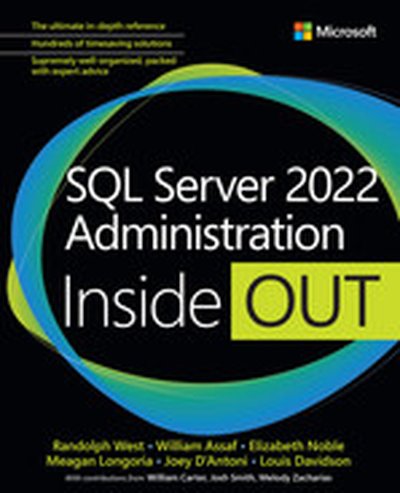
SQL Server 2022 Administration Inside Out

Conquer SQL Server 2022 and Azure SQL administration from the inside out! Dive into SQL Server 2022 administration and grow your Microsoft SQL Server data platform skillset. This well-organized reference packs in timesaving solutions, tips, and workarounds, all you need to plan, implement, deploy, provision, manage, and secure SQL Server 2022 in any environment: on-premises, cloud, or hybrid, including detailed, dedicated chapters on Azure SQL Database and Azure SQL Managed Instance. Nine experts thoroughly tour DBA capabilities available in the SQL Server 2022 Database Engine, SQL Server Data Tools, SQL Server Management Studio, PowerShell, and much more. Youll find extensive new coverage of Azure SQL Database and Azure SQL Managed Instance, both as a cloud platform of SQL Server and in their new integrations with SQL Server 2022, information available in no other book. Discover how experts tackle todays essential tasks and challenge yourself to new levels of mastery. Identify low-hanging fruit and practical, easy wins for improving SQL Server administration Get started with modern SQL Server tools, including SQL Server Management Studio, and Azure Data Studio Upgrade your SQL Server administration skillset to new features of SQL Server 2022, Azure SQL Database, Azure SQL Managed Instance, and SQL Server on Linux Design and implement modern on-premises database infrastructure, including Kubernetes Leverage data virtualization of third-party or non-relational data sources Monitor SQL instances for corruption, index activity, fragmentation, and extended events Automate maintenance plans, database mail, jobs, alerts, proxies, and event forwarding Protect data through encryption, privacy, and auditing Provision, manage, scale and secure, and bidirectionally synchronize Microsofts powerful Azure SQL Managed Instance Understand and enable new Intelligent Query Processing features to increase query concurrency Prepare a best-practice runbook for disaster recovery Use SQL Server 2022 features to span infrastructure across hybrid environments ...

Cyber Resiliency with Splunk Enterprise and IBM FlashSystem Storage Safeguarded Copy with IBM Copy Services Manager

The focus of this document is to highlight early threat detection by using Splunk Enterprise and proactively start a cyber resilience workflow in response to a cyberattack or malicious user action. The workflow uses IBM® Copy Services Manager (CSM) as orchestration software to invoke the IBM FlashSystem® storage Safeguarded Copy function, which creates an immutable copy of the data in an air-gapped form on the same IBM FlashSystem Storage for isolation and eventual quick recovery. This document explains the steps that are required to enable and forward IBM FlashSystem audit logs and set a Splunk forwarder configuration to forward local event logs to Splunk Enterprise. This document also describes how to create various alerts in Splunk Enterprise to determine a threat, and configure and invoke an appropriate response to the detected threat in Splunk Enterprise. This document explains the lab setup configuration steps that are involved in configuring various components like Splunk Enterprise, Splunk Enterprise config files for custom apps, IBM CSM, and IBM FlashSystem Storage. The last steps in the lab setup section demonstrate the automated Safeguarded Copy creation and validation steps. This document also describes brief steps for configuring various components and integrating them. This document demonstrates a use case for protecting a Microsoft SQL database (DB) volume that is created on IBM FlashSystem Storage. When a threat is detected on the Microsoft SQL DB volume, Safeguarded Copy starts on an IBM FlashSystem Storage volume. The Safeguarded Copy creates an immutable copy of the data, and the same data volume can be recovered or restored by using IBM CSM. This publication does not describe the installation procedures for Splunk Enterprise, Splunk Forwarder for IBM CSM, th Microsoft SQL server, or the IBM FlashSystem Storage setup. It is assumed that the reader of the book has a basic understanding of system, Windows, and DB administration; storage administration; and has access to the required software and documentation that is used in this document.

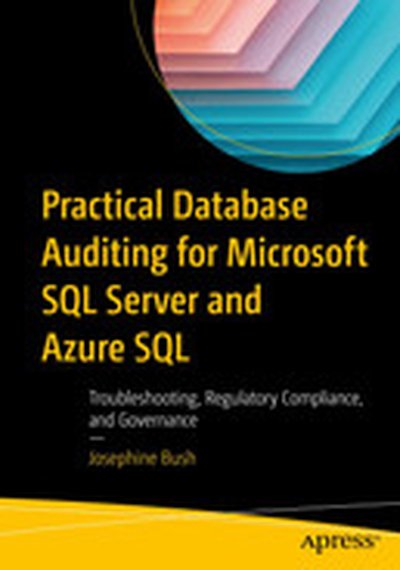
Practical Database Auditing for Microsoft SQL Server and Azure SQL: Troubleshooting, Regulatory Compliance, and Governance

Know how to track changes and key events in your SQL Server databases in support of application troubleshooting, regulatory compliance, and governance. This book shows how to use key features in SQL Server ,such as SQL Server Audit and Extended Events, to track schema changes, permission changes, and changes to your data. You’ll even learn how to track queries run against specific tables in a database. Not all changes and events can be captured and tracked using SQL Server Audit and Extended Events, and the book goes beyond those features to also show what can be captured using common criteria compliance, change data capture, temporal tables, or querying the SQL Server log. You will learn how to audit just what you need to audit, and how to audit pretty much anything that happens on a SQL Server instance. This book will also help you set up cloud auditing with an emphasis on Azure SQL Database, Azure SQL Managed Instance, and AWS RDS SQL Server. You don’t need expensive, third-party auditing tools to make auditing work for you, and to demonstrate and provide value back to your business. This book will help you set up an auditing solution that works for you and your needs. It shows how to collect the audit data that you need, centralize that data for easy reporting, and generate audit reports using built-in SQL Server functionality for use by your own team, developers, and organization’s auditors. What You Will Learn Understand why auditing is important for troubleshooting, compliance, and governance Track changes and key events using SQL Server Audit and Extended Events Track SQL Server configuration changes for governance and troubleshooting Utilize change data capture and temporal tables to track data changes in SQL Server tables Centralize auditing data from all yourdatabases for easy querying and reporting Configure auditing on Azure SQL, Azure SQL Managed Instance, and AWS RDS SQL Server Who This Book Is For Database administrators who need to know what’s changing on their database servers, and those who are making the changes; database-savvy DevOps engineers and developers who are charged with troubleshooting processes and applications; developers and administrators who are responsible for generating reports in support of regulatory compliance reporting and auditing

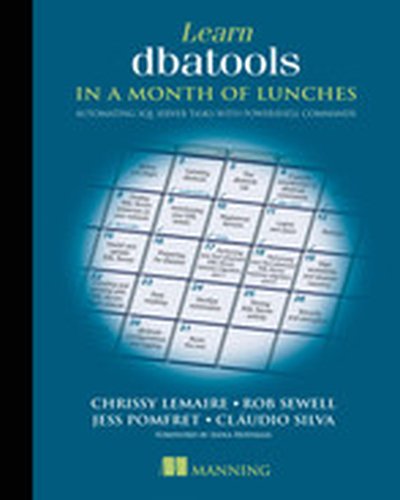
Learn dbatools in a Month of Lunches

If you work with SQL Server, dbatools is a lifesaver. This book will show you how to use this free and open source PowerShell module to automate just about every SQL server task you can imagine—all in just one month! In Learn dbatools in a Month of Lunches you will learn how to: Perform instance-to-instance and customized migrations Automate security audits, tempdb configuration, alerting, and reporting Schedule and monitor PowerShell tasks in SQL Server Agent Bulk-import any type of data into SQL Server Install dbatools in secure environments Written by a group of expert authors including dbatools creator Chrissy LeMaire, Learn dbatools in a Month of Lunches teaches you techniques that will make you more effective—and efficient—than you ever thought possible. In twenty-eight lunchbreak lessons, you’ll learn the most important use cases of dbatools and the favorite functions of its core developers. Stabilize and standardize your SQL server environment, and simplify your tasks by building automation, alerting, and reporting with this powerful tool. About the Technology For SQL Server DBAs, automation is the key to efficiency. Using the open-source dbatools PowerShell module, you can easily execute tasks on thousands of database servers at once—all from the command line. dbatools gives you over 500 pre-built commands, with countless new options for managing SQL Server at scale. There’s nothing else like it. About the Book Learn dbatools in a Month of Lunches teaches you how to automate SQL Server using the dbatools PowerShell module. Each 30-minute lesson introduces a new automation that will make your daily duties easier. Following the expert advice of dbatools creator Chrissy LeMaire and other top community contributors, you’ll learn to script everything from backups to disaster recovery. What's Inside Performing instance-to-instance and customized migrations Automating security audits, best practices, and standardized configurations Administering SQL Server Agent including running PowerShell scripts effectively Bulk-importing many types of data into SQL Server Executing advanced tasks and increasing efficiency for everyday administration About the Reader For DBAs, accidental DBAs, and systems engineers who manage SQL Server. About the Authors Chrissy LeMaire is a GitHub Star and the creator of dbatools. Rob Sewell is a data engineer and a passionate automator. Jess Pomfret and Cláudio Silva are data platform architects. All are Microsoft MVPs. Quotes All SQL Server professionals should learn dbatools. With its combination of knowledge transfer, anecdotes, and hands-on labs, this book is the perfect way. - From the Foreword by Anna Hoffman, Databases Product Management, Microsoft Excellent guide for dbatools with lots of practical tips! Required reading for anyone interested in dbatools. - Ruben Vandeginste, PeopleWare A must-have for any SQL server developer. - Raushan Kumar Jha, Microsoft If you want to automate all vital aspects of SQL Server, wait no more! Learn dbatools in a month, with guidance from the best minds in the business. - Ranjit Sahai, RAM Consulting

SQL in a Nutshell, 4th Edition

For programmers, analysts, and database administrators, this Nutshell guide is the essential reference for the SQL language used in today's most popular database products. This new fourth edition clearly documents SQL commands according to the latest ANSI/ISO standard and details how those commands are implemented in Microsoft SQL Server 2019 and Oracle 19c, as well as in the MySQL 8, MariaDB 10.5, and PostgreSQL 14 open source database products. You'll also get a concise overview of the relational database management system (RDBMS) model and a clear-cut explanation of foundational RDBMS concepts--all packed into a succinct, comprehensive, and easy-to-use format. Sections include: Background on the relational database model, including current and previous SQL standards Fundamental concepts necessary for understanding relational databases and SQL commands An alphabetical command reference to SQL statements, according to the SQL:2016 ANSI standard The implementation of each command by MySQL, Oracle, PostgreSQL, and SQL Server An alphabetical reference of the ANSI SQL:2016 functions and constructs as well as the vendor implementations Platform-specific functions unique to each implementation

SQL Server Advanced Troubleshooting and Performance Tuning

This practical book provides a comprehensive overview of troubleshooting and performance tuning best practices for Microsoft SQL Server. Database engineers, including database developers and administrators, will learn how to identify performance issues, troubleshoot the system in a holistic fashion, and properly prioritize tuning efforts to attain the best system performance possible. Author Dmitri Korotkevitch, Microsoft Data Platform MVP and Microsoft Certified Master (MCM), explains the interdependencies between SQL Server database components. You'll learn how to quickly diagnose your system and discover the root cause of any issue. Techniques in this book are compatible with all versions of SQL Server and cover both on-premises and cloud-based SQL Server installations. Discover how performance issues present themselves in SQL Server Learn about SQL Server diagnostic tools, methods, and technologies Perform health checks on SQL Server installations Learn the dependencies between SQL Server components Tune SQL Server to improve performance and reduce bottlenecks Detect poorly optimized queries and inefficiencies in query execution plans Find inefficient indexes and common database design issues Use these techniques with Microsoft Azure SQL databases, Azure SQL Managed Instances, and Amazon RDS for SQL Server

Practical SQL, 2nd Edition

Practical SQL is an approachable and fast-paced guide to SQL (Structured Query Language), the standard programming language for defining, organizing, and exploring data in relational databases. Anthony DeBarros, a journalist and data analyst, focuses on using SQL to find the story within your data. The examples and code use the open-source database PostgreSQL and its companion pgAdmin interface, and the concepts you learn will apply to most database management systems, including MySQL, Oracle, SQLite, and others.* You’ll first cover the fundamentals of databases and the SQL language, then build skills by analyzing data from real-world datasets such as US Census demographics, New York City taxi rides, and earthquakes from US Geological Survey. Each chapter includes exercises and examples that teach even those who have never programmed before all the tools necessary to build powerful databases and access information quickly and efficiently. You’ll learn how to: •Create databases and related tables using your own data •Aggregate, sort, and filter data to find patterns •Use functions for basic math and advanced statistical operations •Identify errors in data and clean them up •Analyze spatial data with a geographic information system (PostGIS) •Create advanced queries and automate tasks This updated second edition has been thoroughly revised to reflect the latest in SQL features, including additional advanced query techniques for wrangling data. This edition also has two new chapters: an expanded set of instructions on for setting up your system plus a chapter on using PostgreSQL with the popular JSON data interchange format. Learning SQL doesn’t have to be dry and complicated. Practical SQL delivers clear examples with an easy-to-follow approach to teach you the tools you need to build and manage your own databases. * Microsoft SQL Server employs a variant of the language called T-SQL, which is not covered by Practical SQL.

Analytics Optimization with Columnstore Indexes in Microsoft SQL Server: Optimizing OLAP Workloads

Meet the challenge of storing and accessing analytic data in SQL Server in a fast and performant manner. This book illustrates how columnstore indexes can provide an ideal solution for storing analytic data that leads to faster performing analytic queries and the ability to ask and answer business intelligence questions with alacrity. The book provides a complete walk through of columnstore indexing that encompasses an introduction, best practices, hands-on demonstrations, explanations of common mistakes, and presents a detailed architecture that is suitable for professionals of all skill levels. With little or no knowledge of columnstore indexing you can become proficient with columnstore indexes as used in SQL Server, and apply that knowledge in development, test, and production environments. This book serves as a comprehensive guide to the use of columnstore indexes and provides definitive guidelines. You will learn when columnstore indexes shouldbe used, and the performance gains that you can expect. You will also become familiar with best practices around architecture, implementation, and maintenance. Finally, you will know the limitations and common pitfalls to be aware of and avoid. As analytic data can become quite large, the expense to manage it or migrate it can be high. This book shows that columnstore indexing represents an effective storage solution that saves time, money, and improves performance for any applications that use it. You will see that columnstore indexes are an effective performance solution that is included in all versions of SQL Server, with no additional costs or licensing required. What You Will Learn Implement columnstore indexes in SQL Server Know best practices for the use and maintenance of analytic data in SQL Server Use metadata to fully understand the size and shape of data stored in columnstore indexes Employ optimal ways to load, maintain, and delete data from large analytic tables Know how columnstore compression saves storage, memory, and time Understand when a columnstore index should be used instead of a rowstore index Be familiar with advanced features and analytics Who This Book Is For Database developers, administrators, and architects who are responsible for analytic data, especially for those working with very large data sets who are looking for new ways to achieve high performance in their queries, and those with immediate or future challenges to analytic data and query performance who want a methodical and effective solution

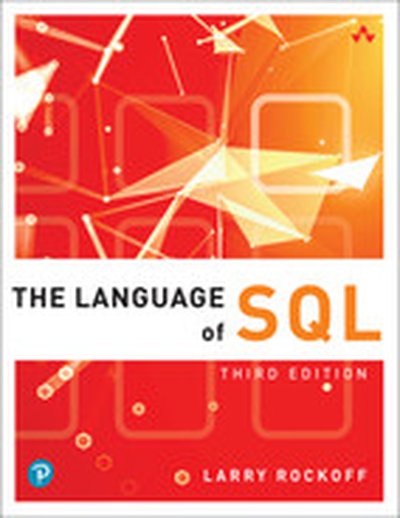
The Language of SQL, 3rd Edition

Get Started Fast with SQL! The only book you need to gain a quick working knowledge of SQL and relational databases. Many SQL texts attempt to serve as an encyclopedic reference on SQL syntaxan approach that is often counterproductive because that information is readily available in online references published by the major database vendors. For SQL beginners, its more important for a book to focus on general concepts and to offer clear explanations and examples of what various SQL statements can accomplish. This is that book. Several features make The Language of SQL unique among introductory SQL books. First, you will not be required to download software or sit with a computer as you read the text. The intent of this book is to provide examples of SQL usage that can be understood simply by reading. Second, topics are organized in an intuitive and logical sequence. SQL keywords are introduced one at a time, allowing you to grow your understanding as you encounter new terms and concepts. Finally, this book covers the syntax of the latest releases of three widely used databases: Microsoft SQL Server 2019, MySQL 8.0, and Oracle 18c. Special Database Differences sidebars clearly show you any differences in syntax among these three databases, and instructions are included on how to obtain and install free versions of the databases. Use SQL to retrieve data from relational databases Apply functions and calculations to data Group and summarize data in a variety of useful ways Use complex logic to retrieve only the data you need Design relational databases so that data retrieval is easy and intuitive Update data and create new tables Use spreadsheets to transform your data into meaningful displays Retrieve data from multiple tables via joins, subqueries, views, and set logic Create, modify, and execute stored procedures Install Microsoft SQL Server, MySQL, or Oracle

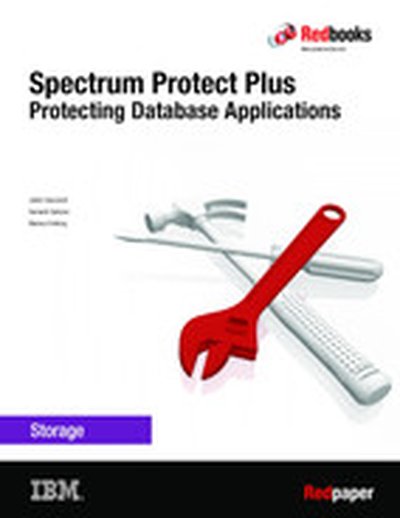
IBM Spectrum Protect Plus Protecting Database Applications

IBM® Spectrum Protect Plus is a data protection solution that provides near-instant recovery, replication, retention management, and reuse for virtual machines, databases, and application backups in hybrid multicloud environments. This IBM Redpaper publication focuses on protecting database applications. IBM Spectrum® Protect Plus supports backup, restore, and data reuse for multiple databases, such as Oracle, IBM Db2®, MongoDB, Microsoft Exchange, and Microsoft SQL Server. Although other IBM Spectrum Protect Plus features focus on virtual environments, the database and application support of IBM Spectrum Protect Plus includes databases on virtual physical servers.

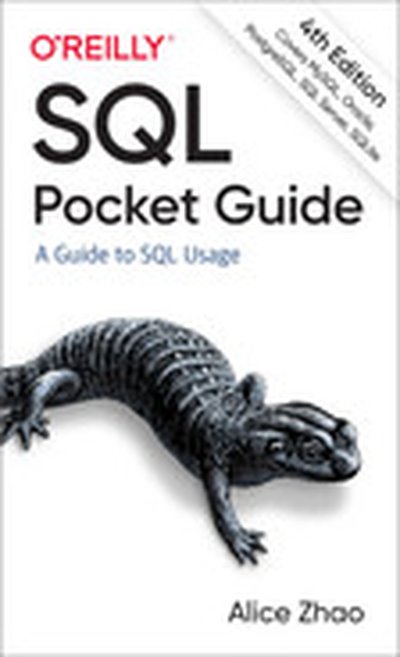
SQL Pocket Guide, 4th Edition

If you use SQL in your day-to-day work as a data analyst, data scientist, or data engineer, this popular pocket guide is your ideal on-the-job reference. You'll find many examples that address the language's complexities, along with key aspects of SQL used in Microsoft SQL Server, MySQL, Oracle Database, PostgreSQL, and SQLite. In this updated edition, author Alice Zhao describes how these database management systems implement SQL syntax for both querying and making changes to a database. You'll find details on data types and conversions, regular expression syntax, window functions, pivoting and unpivoting, and more. Quickly look up how to perform specific tasks using SQL Apply the book's syntax examples to your own queries Update SQL queries to work in five different database management systems NEW: Connect Python and R to a relational database NEW: Look up frequently asked SQL questions in the "How Do I?" chapter

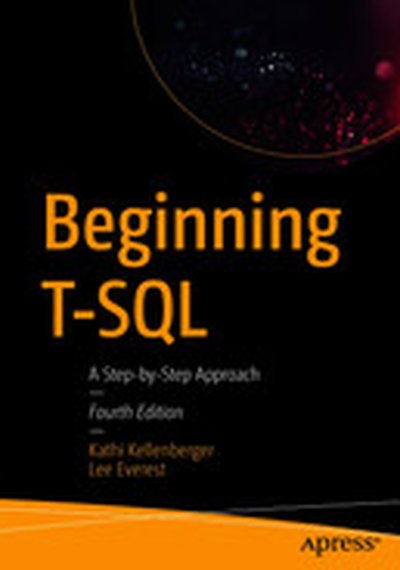
Beginning T-SQL: A Step-by-Step Approach

Get a performance-oriented introduction to the T-SQL language underlying the Microsoft SQL Server and Azure SQL database engines. This fourth edition is updated to include SQL Notebooks as well as up-to-date syntax and features for T-SQL on-premises and in the Azure cloud. Exercises and examples now include the WideWorldImporters database, the newest sample database from Microsoft for SQL Server. Also new in this edition is coverage of JSON from T-SQL, news about performance enhancements called Intelligent Query Processing, and an appendix on running SQL Server in a container on macOS or Linux. Beginning T-SQL starts you on the path to mastering T-SQL with an emphasis on best practices. Using the sound coding techniques taught in this book will lead to excellent performance in the queries that you write in your daily work. Important techniques such as windowing functions are covered to help you write fast-executing queries that solve real business problems.The book begins with an introduction to databases, normalization, and to setting up your learning environment. You will learn about the tools you need to use such as SQL Server Management Studio, Azure Data Studio, and SQL Notebooks. Each subsequent chapter teaches an aspect of T-SQL, building on the skills learned in previous chapters. Exercises in most chapters provide an opportunity for the hands-on practice that leads to true learning and distinguishes the competent professional. A stand-out feature in this book is that most chapters end with a Thinking About Performance section. These sections cover aspects of query performance relative to the content just presented, including the new Intelligent Query Processing features that make queries faster without changing code. They will help you avoid beginner mistakes by knowing about and thinking about performance from day 1. What You Will Learn Install a sandboxed SQL Server instance for learning Understand how relational databases are designed Create objects such as tables and stored procedures Query a SQL Server table Filter and order the results of a query Query and work with specialized data types such as XML and JSON Apply modern features such as window functions Choose correct techniques so that your queries perform well Who This Book Is For Anyone who wants to learn T-SQL from the beginning or improve their T-SQL skills; those who need T-SQL as an additional skill; and those who write queries such as application developers, database administrators, business intelligence developers, and data scientists. The book is also helpful for anyone who must retrieve data from a SQL Server database.

SQL Server 2019 AlwaysOn: Supporting 24x7 Applications with Continuous Uptime

Get a fast start to using AlwaysOn, the SQL Server solution to high-availability and disaster recovery. This third edition is newly-updated to cover the 2019 editions of both SQL Server and Windows Server and includes strong coverage of implementing AlwaysOn Availability Groups on both Windows and Linux operating systems. The book provides a solid and accurate understanding of how to implement systems requiring consistent and continuous uptime, as well as how to troubleshoot those systems in order to keep them running and reliable. This edition is updated to account for all new major functionality and also includes coverage of implementing atypical configurations, such as clusterless and domain-independent Availability Groups, distributed Availability Groups, and implementing Availability Groups on Azure. The book begins with an introduction to high-availability and disaster recovery concepts such as Recovery Point Objectives (RPOs), Recovery Time Objectives (RTOs), availability levels, and the cost of downtime. You’ll then move into detailed coverage of implementing and configuring the AlwaysOn feature set in order to meet the business objectives set by your organization. Content includes coverage on implementing clusters, building AlwaysOn failover clustered instances, and configuring AlwaysOn Availability Groups. SQL Server 2019 AlwaysOn is chock full of real-world advice on how to build and configure the most appropriate topology to meet the high-availability and disaster recovery requirements you are faced with, as well as how to use AlwaysOn Availability Groups to scale-out read-only workloads. This is a practical and hands-on book to get you started quickly in using one of the most talked-about SQL Server feature sets. What You Will Learn Understand high availability and disaster recovery in SQL Server 2019 Build and configure a Windows Cluster in Windows Server 2019 Create and configure an AlwaysOn failover clustered instance Implement AlwaysOn Availability Groups and appropriately configure them Implement AlwaysOn Availability Groups on Linux servers Configure Availability Groups on Azure IaaS Administer AlwaysOn technologies post implementation Understand typical configurations, such as clusterless and distributed Availability Groups Who This Book Is For For Microsoft SQL Server database administrators who interested in growing their knowledge and skills in SQL Server’s high-availability and disaster recovery feature set.

Introducing Microsoft SQL Server 2019

Introducing Microsoft SQL Server 2019 is the must-have guide for database professionals eager to leverage the latest advancements in SQL Server 2019. This book covers the features and capabilities that make SQL Server 2019 a powerful tool for managing and analyzing data both on-premises and in the cloud. What this Book will help me do Understand the new features introduced in SQL Server 2019 and their practical applications. Confidently manage and analyze relational, NoSQL, and big data within SQL Server 2019. Implement containerization for SQL Server using Docker and Kubernetes. Migrate and integrate your databases effectively to use Power BI Report Server. Query data from Hadoop Distributed File System with Azure Data Studio. Author(s) The authors of 'Introducing Microsoft SQL Server 2019' are subject matter experts including Kellyn Gorman, Allan Hirt, and others. With years of professional experience in database management and SQL Server, they bring a wealth of practical insight and knowledge to the book. Their experience spans roles as administrators, architects, and educators in the field. Who is it for? This book is aimed at database professionals such as DBAs, architects, and big data engineers who are currently using earlier versions of SQL Server or other database platforms. It is particularly well-suited for professionals aiming to understand and implement SQL Server 2019's new features. Readers should have basic familiarity with SQL Server and RDBMS concepts. If you're looking to explore SQL Server 2019 to improve data management and analytics in your organization, this book is for you.

Implementing a VersaStack Solution by Cisco and IBM with IBM FlashSystem 5030, Cisco UCS Mini, Hyper-V, and SQL Server

VersaStack, an IBM® and Cisco integrated infrastructure solution, combines computing, networking, and storage into a single integrated system. It combines the Cisco Unified Computing System (Cisco UCS) Integrated Infrastructure with IBM Spectrum Virtualize™, which includes IBM FlashSystem® storage offerings, for quick deployment and rapid time to value for the implementation of modern infrastructures. This IBM Redbooks® publication covers the preferred practices for implementing a VersaStack Solution with IBM FlashSystem 5030, Cisco UCS Mini, Hyper-V 2016, and Microsoft SQL Server. Cisco UCS Mini is optimized for branch and remote offices, point-of-sale locations, and smaller IT environments. It is the ideal solution for customers who need fewer servers but still want the comprehensive management capabilities provided by Cisco UCS Manager. The IBM FlashSystem 5030 delivers efficient, entry-level configurations that are designed to meet the needs of small and midsize businesses. Designed to provide organizations with the ability to consolidate and share data at an affordable price, the IBM FlashSystem 5030 offers advanced software capabilities such as clustering, IBM Easy Tier®, replication and snapshots that are found in more expensive systems. This book is intended for pre-sales and post-sales technical support professionals and storage administrators who are tasked with deploying a VersaStack solution with Hyper-V 2016 and Microsoft SQL Server.

Sams Teach Yourself SQL in 10 Minutes a Day, 5th Edition

Sams Teach Yourself SQL in 10 Minutes offers straightforward, practical answers when you need fast results. By working through the book’s 22 lessons of 10 minutes or less, you’ll learn what you need to know to take advantage of the SQL language. Lessons cover IBM DB2, Microsoft SQL Server and SQL Server Express, MariaDB, MySQL, Oracle and Oracle express, PostgreSQL, and SQLite. Full-color code examples help you understand how SQL statements are structured Tips point out shortcuts and solutions Cautions help you avoid common pitfalls Notes explain additional concepts, and provide additional information 10 minutes is all you need to learn how to… Use the major SQL statements Construct complex SQL statements using multiple clauses and operators Retrieve, sort, and format database contents Pinpoint the data you need using a variety of filtering techniques Use aggregate functions to summarize data Join two or more related tables Insert, update, and delete data Create and alter database tables Work with views, stored procedures, and more

Microsoft SQL Server 2019: A Beginner's Guide, Seventh Edition, 7th Edition

Publisher's Note: Products purchased from Third Party sellers are not guaranteed by the publisher for quality, authenticity, or access to any online entitlements included with the product. Get Up to Speed on Microsoft® SQL Server® 2019 Quickly and Easily Start working with Microsoft SQL Server 2019 in no time with help from this thoroughly revised, practical resource. Filled with real-world examples and hands-on exercises, Microsoft SQL Server 2019: A Beginner’s Guide, Seventh Edition starts by explaining fundamental relational database system concepts. From there, you’ll learn how to write Transact-SQL statements, execute simple and complex database queries, handle system administration and security, and use powerful analysis and reporting tools. New topics such as SQL and JSON support, graph databases, and support for machine learning with R and Python are also covered in this step-by-step tutorial. • Install, configure, and customize Microsoft SQL Server 2019 • Create and modify database objects with Transact-SQL statements • Write stored procedures and user-defined functions • Handle backup and recovery, and automate administrative tasks • Tune your database system for optimal availability and reliability • Secure your system using authentication, encryption, and authorization • Work with SQL Server Analysis Services, Reporting Services, and other BI tools • Gain knowledge of relational storage, presentation, and retrieval of data stored in the JSON format • Manage graphs using SQL Server Graph Databases • Learn about machine learning support for R and Python