talk-data.com talk-data.com

Event

O'Reilly Data Science Books

2013-08-09 – 2026-02-25 Oreilly Visit website ↗

Activities tracked

2118

Collection of O'Reilly books on Data Science.

Sessions & talks

Showing 976–1000 of 2118 · Newest first

Search within this event →
Beginning Data Science in R: Data Analysis, Visualization, and Modelling for the Data Scientist

Discover best practices for data analysis and software development in R and start on the path to becoming a fully-fledged data scientist. This book teaches you techniques for both data manipulation and visualization and shows you the best way for developing new software packages for R. Beginning Data Science in R details how data science is a combination of statistics, computational science, and machine learning. You'll see how to efficiently structure and mine data to extract useful patterns and build mathematical models. This requires computational methods and programming, and R is an ideal programming language for this. This book is based on a number of lecture notes for classes the author has taught on data science and statistical programming using the R programming language. Modern data analysis requires computational skills and usually a minimum of programming. What You Will Learn Perform data science and analytics using statistics and the R programming language Visualize and explore data, including working with large data sets found in big data Build an R package Test and check your code Practice version control Profile and optimize your code Who This Book Is For Those with some data science or analytics background, but not necessarily experience with the R programming language.

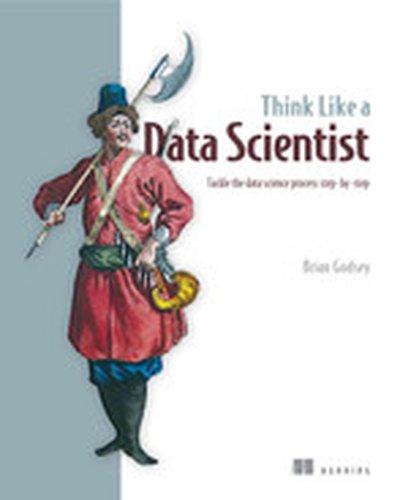
Think Like a Data Scientist

Think Like a Data Scientist presents a step-by-step approach to data science, combining analytic, programming, and business perspectives into easy-to-digest techniques and thought processes for solving real world data-centric problems. About the Technology Data collected from customers, scientific measurements, IoT sensors, and so on is valuable only if you understand it. Data scientists revel in the interesting and rewarding challenge of observing, exploring, analyzing, and interpreting this data. Getting started with data science means more than mastering analytic tools and techniques, however; the real magic happens when you begin to think like a data scientist. This book will get you there. About the Book Think Like a Data Scientist teaches you a step-by-step approach to solving real-world data-centric problems. By breaking down carefully crafted examples, you'll learn to combine analytic, programming, and business perspectives into a repeatable process for extracting real knowledge from data. As you read, you'll discover (or remember) valuable statistical techniques and explore powerful data science software. More importantly, you'll put this knowledge together using a structured process for data science. When you've finished, you'll have a strong foundation for a lifetime of data science learning and practice. What's Inside The data science process, step-by-step How to anticipate problems Dealing with uncertainty Best practices in software and scientific thinking About the Reader Readers need beginner programming skills and knowledge of basic statistics. About the Author Brian Godsey has worked in software, academia, finance, and defense and has launched several data-centric start-ups. Quotes Explains difficult concepts and techniques concisely and approachably. - Jenice Tom, CVS Health Goes beyond simple tools and techniques and helps you to conceptualize and solve challenging, real-world data science problems. - Casimir Saternos, Synchronoss Technologies A successful attempt to put the mind of a data scientist on paper. - David Krief, Altansia The book that changed my career path! - Nicolas Boulet-Lavoie, DL Innov

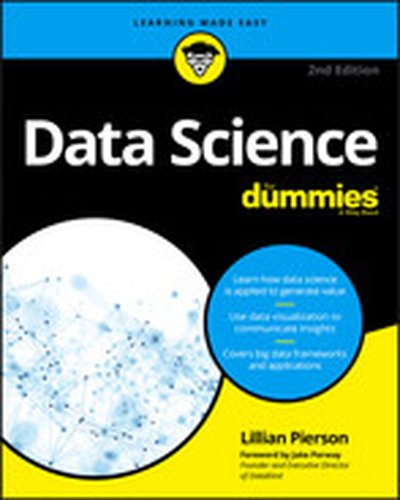
Data Science For Dummies, 2nd Edition

Your ticket to breaking into the field of data science! Jobs in data science are projected to outpace the number of people with data science skills—making those with the knowledge to fill a data science position a hot commodity in the coming years. Data Science For Dummies is the perfect starting point for IT professionals and students interested in making sense of an organization's massive data sets and applying their findings to real-world business scenarios. From uncovering rich data sources to managing large amounts of data within hardware and software limitations, ensuring consistency in reporting, merging various data sources, and beyond, you'll develop the know-how you need to effectively interpret data and tell a story that can be understood by anyone in your organization. Provides a background in data science fundamentals and preparing your data for analysis Details different data visualization techniques that can be used to showcase and summarize your data Explains both supervised and unsupervised machine learning, including regression, model validation, and clustering techniques Includes coverage of big data processing tools like MapReduce, Hadoop, Dremel, Storm, and Spark It's a big, big data world out there—let Data Science For Dummies help you harness its power and gain a competitive edge for your organization.

Illuminating Statistical Analysis Using Scenarios and Simulations

Features an integrated approach of statistical scenarios and simulations to aid readers in developing key intuitions needed to understand the wide ranging concepts and methods of statistics and inference Illuminating Statistical Analysis Using Scenarios and Simulations presents the basic concepts of statistics and statistical inference using the dual mechanisms of scenarios and simulations. This approach helps readers develop key intuitions and deep understandings of statistical analysis. Scenario-specific sampling simulations depict the results that would be obtained by a very large number of individuals investigating the same scenario, each with their own evidence, while graphical depictions of the simulation results present clear and direct pathways to intuitive methods for statistical inference. These intuitive methods can then be easily linked to traditional formulaic methods, and the author does not simply explain the linkages, but rather provides demonstrations throughout for a broad range of statistical phenomena. In addition, induction and deduction are repeatedly interwoven, which fosters a natural "need to know basis" for ordering the topic coverage. Examining computer simulation results is central to the discussion and provides an illustrative way to (re)discover the properties of sample statistics, the role of chance, and to (re)invent corresponding principles of statistical inference. In addition, the simulation results foreshadow the various mathematical formulas that underlie statistical analysis. In addition, this book: • Features both an intuitive and analytical perspective and includes a broad introduction to the use of Monte Carlo simulation and formulaic methods for statistical analysis • Presents straight-forward coverage of the essentials of basic statistics and ensures proper understanding of key concepts such as sampling distributions, the effects of sample size and variance on uncertainty, analysis of proportion, mean and rank differences, covariance, correlation, and regression • Introduces advanced topics such as Bayesian statistics, data mining, model cross-validation, robust regression, and resampling • Contains numerous example problems in each chapter with detailed solutions as well as an appendix that serves as a manual for constructing simulations quickly and easily using Microsoft® Office Excel® Illuminating Statistical Analysis Using Scenarios and Simulations is an ideal textbook for courses, seminars, and workshops in statistics and statistical inference and is appropriate for self-study as well. The book also serves as a thought-provoking treatise for researchers, scientists, managers, technicians, and others with a keen interest in statistical analysis. Jeffrey E. Kottemann, Ph.D., is Professor in the Perdue School at Salisbury University. Dr. Kottemann has published articles in a wide variety of academic research journals in the fields of business administration, computer science, decision sciences, economics, engineering, information systems, psychology, and public administration. He received his Ph.D. in Systems and Quantitative Methods from the University of Arizona.

Statistical Techniques for Transportation Engineering

Statistical Techniques for Transportation Engineering is written with a systematic approach in mind and covers a full range of data analysis topics, from the introductory level (basic probability, measures of dispersion, random variable, discrete and continuous distributions) through more generally used techniques (common statistical distributions, hypothesis testing), to advanced analysis and statistical modeling techniques (regression, AnoVa, and time series). The book also provides worked out examples and solved problems for a wide variety of transportation engineering challenges. Demonstrates how to effectively interpret, summarize, and report transportation data using appropriate statistical descriptors Teaches how to identify and apply appropriate analysis methods for transportation data Explains how to evaluate transportation proposals and schemes with statistical rigor

Beginning Power BI: A Practical Guide to Self-Service Data Analytics with Excel 2016 and Power BI Desktop, Second Edition

Analyze your company's data quickly and easily using Microsoft's latest tools. You will learn to build scalable and robust data models to work from, clean and combine different data sources effectively, and create compelling visualizations and share them with your colleagues. Author Dan Clark takes you through each topic using step-by-step activities and plenty of screen shots to help familiarize you with the tools. This second edition includes new material on advanced uses of Power Query, along with the latest user guidance on the evolving Power BI platform. Beginning Power BI is your hands-on guide to quick, reliable, and valuable data insight. What You'll Learn Simplify data discovery, association, and cleansing Build solid analytical data models Create robust interactive data presentations Combine analytical and geographic data in map-based visualizations Publish and share dashboards and reports Who This Book Is For Business analysts, database administrators, developers, and other professionals looking to better understand and communicate with data

The Data Science Handbook

A comprehensive overview of data science covering the analytics, programming, and business skills necessary to master the discipline Finding a good data scientist has been likened to hunting for a unicorn: the required combination of technical skills is simply very hard to find in one person. In addition, good data science is not just rote application of trainable skill sets; it requires the ability to think flexibly about all these areas and understand the connections between them. This book provides a crash course in data science, combining all the necessary skills into a unified discipline. Unlike many analytics books, computer science and software engineering are given extensive coverage since they play such a central role in the daily work of a data scientist. The author also describes classic machine learning algorithms, from their mathematical foundations to real-world applications. Visualization tools are reviewed, and their central importance in data science is highlighted. Classical statistics is addressed to help readers think critically about the interpretation of data and its common pitfalls. The clear communication of technical results, which is perhaps the most undertrained of data science skills, is given its own chapter, and all topics are explained in the context of solving real-world data problems. The book also features: • Extensive sample code and tutorials using Python™ along with its technical libraries • Core technologies of “Big Data,” including their strengths and limitations and how they can be used to solve real-world problems • Coverage of the practical realities of the tools, keeping theory to a minimum; however, when theory is presented, it is done in an intuitive way to encourage critical thinking and creativity • A wide variety of case studies from industry • Practical advice on the realities of being a data scientist today, including the overall workflow, where time is spent, the types of datasets worked on, and the skill sets needed The Data Science Handbook is an ideal resource for data analysis methodology and big data software tools. The book is appropriate for people who want to practice data science, but lack the required skill sets. This includes software professionals who need to better understand analytics and statisticians who need to understand software. Modern data science is a unified discipline, and it is presented as such. This book is also an appropriate reference for researchers and entry-level graduate students who need to learn real-world analytics and expand their skill set. FIELD CADY is the data scientist at the Allen Institute for Artificial Intelligence, where he develops tools that use machine learning to mine scientific literature. He has also worked at Google and several Big Data startups. He has a BS in physics and math from Stanford University, and an MS in computer science from Carnegie Mellon.

Scala: Guide for Data Science Professionals

Scala will be a valuable tool to have on hand during your data science journey for everything from data cleaning to cutting-edge machine learning About This Book Build data science and data engineering solutions with ease An in-depth look at each stage of the data analysis process — from reading and collecting data to distributed analytics Explore a broad variety of data processing, machine learning, and genetic algorithms through diagrams, mathematical formulations, and source code Who This Book Is For This learning path is perfect for those who are comfortable with Scala programming and now want to enter the field of data science. Some knowledge of statistics is expected. What You Will Learn Transfer and filter tabular data to extract features for machine learning Read, clean, transform, and write data to both SQL and NoSQL databases Create Scala web applications that couple with JavaScript libraries such as D3 to create compelling interactive visualizations Load data from HDFS and HIVE with ease Run streaming and graph analytics in Spark for exploratory analysis Bundle and scale up Spark jobs by deploying them into a variety of cluster managers Build dynamic workflows for scientific computing Leverage open source libraries to extract patterns from time series Master probabilistic models for sequential data In Detail Scala is especially good for analyzing large sets of data as the scale of the task doesn’t have any significant impact on performance. Scala’s powerful functional libraries can interact with databases and build scalable frameworks — resulting in the creation of robust data pipelines. The first module introduces you to Scala libraries to ingest, store, manipulate, process, and visualize data. Using real world examples, you will learn how to design scalable architecture to process and model data — starting from simple concurrency constructs and progressing to actor systems and Apache Spark. After this, you will also learn how to build interactive visualizations with web frameworks. Once you have become familiar with all the tasks involved in data science, you will explore data analytics with Scala in the second module. You’ll see how Scala can be used to make sense of data through easy to follow recipes. You will learn about Bokeh bindings for exploratory data analysis and quintessential machine learning with algorithms with Spark ML library. You’ll get a sufficient understanding of Spark streaming, machine learning for streaming data, and Spark graphX. Armed with a firm understanding of data analysis, you will be ready to explore the most cutting-edge aspect of data science — machine learning. The final module teaches you the A to Z of machine learning with Scala. You’ll explore Scala for dependency injections and implicits, which are used to write machine learning algorithms. You’ll also explore machine learning topics such as clustering, dimentionality reduction, Naïve Bayes, Regression models, SVMs, neural networks, and more. This learning path combines some of the best that Packt has to offer into one complete, curated package. It includes content from the following Packt products: Scala for Data Science, Pascal Bugnion Scala Data Analysis Cookbook, Arun Manivannan Scala for Machine Learning, Patrick R. Nicolas Style and approach A complete package with all the information necessary to start building useful data engineering and data science solutions straight away. It contains a diverse set of recipes that cover the full spectrum of interesting data analysis tasks and will help you revolutionize your data analysis skills using Scala. Downloading the example code for this book. You can download the example code files for all Packt books you have purchased from your account at http://www.PacktPub.com. If you purchased this book elsewhere, you can visit http://www.PacktPub.com/support and register to have the code file.

JMP 13 Consumer Research, Second Edition, 2nd Edition

JMP 13 Consumer Research focuses on analyses that help users observe and predict subject's behavior, particularly those in the market research field. The Uplift platform predicts consumer behavior based on shifts in marketing efforts. Learn how to tabulate and summarize categorical responses with the Categorical platform. Factor Analysis rotates principal components to help identify which directions have the most variation among the variables. The book also covers Item Analysis, a method for identifying latent traits that might affect an individual's choices. And read about the Choice platform, which market researchers use to estimate probability in consumer spending.

JMP 13 Design of Experiments Guide, Second Edition, 2nd Edition

The JMP 13 Design of Experiments Guide covers classic DOE designs (for example, full factorial, response surface, and mixture designs). Read about more flexible custom designs, which you generate to fit your particular experimental situation. And discover JMP’s definitive screening designs, an efficient way to identify important factor interactions using fewer runs than required by traditional designs. The book also provides guidance on determining an appropriate sample size for your study.

JMP 13 Multivariate Methods, Second Edition, 2nd Edition

JMP 13 Multivariate Methods describes techniques for analyzing several variables simultaneously. The book covers descriptive measures, such as correlations. It also describes methods that give insight into the structure of the multivariate data, such as clustering, latent class analysis, principal components, discriminant analysis, and partial least squares.

JMP 13 Predictive and Specialized Modeling, Second Edition, 2nd Edition

JMP 13 Predictive and Specialized Modeling provides details about modeling techniques such as partitioning, neural networks, nonlinear regression, and time series analysis. Topics include the Gaussian platform, which is useful in analyzing computer simulation experiments. The book also covers the Response Screening platform, which is useful in testing the effect of a predictor when you have many responses.

JMP Start Statistics, 6th Edition

This book provides hands-on tutorials with just the right amount of conceptual and motivational material to illustrate how to use the intuitive interface for data analysis in JMP. Each chapter features concept-specific tutorials,

examples, brief reviews of concepts, step-by-step illustrations, and exercises.

Updated for JMP 13, JMP Start Statistics, Sixth Edition includes many new features, including:

The redesigned Formula Editor.

New and improved ways to create formulas in JMP directly from the data table or dialogs.

Interface updates, including improved menu layout.

Updates and enhancements in many analysis platforms.

New ways to get data into JMP and to save and share JMP results.

Many new features that make it easier to use JMP.

Total Survey Error in Practice

Featuring a timely presentation of total survey error (TSE), this edited volume introduces valuable tools for understanding and improving survey data quality in the context of evolving large-scale data sets This book provides an overview of the TSE framework and current TSE research as related to survey design, data collection, estimation, and analysis. It recognizes that survey data affects many public policy and business decisions and thus focuses on the framework for understanding and improving survey data quality. The book also addresses issues with data quality in official statistics and in social, opinion, and market research as these fields continue to evolve, leading to larger and messier data sets. This perspective challenges survey organizations to find ways to collect and process data more efficiently without sacrificing quality. The volume consists of the most up-to-date research and reporting from over 70 contributors representing the best academics and researchers from a range of fields. The chapters are broken out into five main sections: The Concept of TSE and the TSE Paradigm, Implications for Survey Design, Data Collection and Data Processing Applications, Evaluation and Improvement, and Estimation and Analysis. Each chapter introduces and examines multiple error sources, such as sampling error, measurement error, and nonresponse error, which often offer the greatest risks to data quality, while also encouraging readers not to lose sight of the less commonly studied error sources, such as coverage error, processing error, and specification error. The book also notes the relationships between errors and the ways in which efforts to reduce one type can increase another, resulting in an estimate with larger total error. This book: • Features various error sources, and the complex relationships between them, in 25 high-quality chapters on the most up-to-date research in the field of TSE • Provides comprehensive reviews of the literature on error sources as well as data collection approaches and estimation methods to reduce their effects • Presents examples of recent international events that demonstrate the effects of data error, the importance of survey data quality, and the real-world issues that arise from these errors • Spans the four pillars of the total survey error paradigm (design, data collection, evaluation and analysis) to address key data quality issues in official statistics and survey research Total Survey Error in Practice is a reference for survey researchers and data scientists in research areas that include social science, public opinion, public policy, and business. It can also be used as a textbook or supplementary material for a graduate-level course in survey research methods. Paul P. Biemer, PhD, is distinguished fellow at RTI International and associate director of Survey Research and Development at the Odum Institute, University of North Carolina, USA. Edith de Leeuw, PhD, is professor of survey methodology in the Department of Methodology and Statistics at Utrecht University, the Netherlands. Stephanie Eckman, PhD, is fellow at RTI International, USA. Brad Edwards is vice president, director of Field Services, and deputy area director at Westat, USA. Frauke Kreuter, PhD, is professor and director of the Joint Program in Survey Methodology, University of Maryland, USA; professor of statistics and methodology at the University of Mannheim, Germany; and head of the Statistical Methods Research Department at the Institute for Employment Research, Germany. Lars E. Lyberg, PhD, is senior advisor at Inizio, Sweden. N. Clyde Tucker, PhD, is principal survey methodologist at the American Institutes for Research, USA. Brady T. West, PhD, is research associate professor in the Survey Resea

2017 European Data Science Salary Survey

How do data science salaries for people in Europe compare to their counterparts in the rest of the world? Among the more than 1000 people who responded to O’Reilly’s 2016 Data Science Salary Survey, 359 live and work in various European countries as data scientists, analysts, engineers, and related professions. This report takes a deep dive into the survey results from respondents in various regions of Europe, including the tools they use, the compensation they receive, and the roles they play in their respective organizations. Even if you didn’t take part in the survey, you can still plug your own information into the survey’s simple linear model to see where you fit. With this report, you’ll learn: How salaries vary by country and specific regions in Europe Average size of companies by region How salary is affected by a country’s GDP Top industries for data scientists, including software, banking, finance, retail, and ecommerce Most commonly used tools vs tools used by respondents with above-average salaries Primary and secondary job tasks performed by survey respondents To stay up-to-date on this research, your participation is crucial. The survey is now open for the 2017 report; please take just 5 to 10 minutes to participate in the survey here.

Learning Kibana 5.0

Learning Kibana 5.0 is your gateway to mastering the art of data visualization using the powerful features of the Kibana platform. This book guides you through the process of creating stunning interactive dashboards and making data-driven insights accessible with real-time visualizations. Whether you're new to the Elastic stack or seeking to refine your expertise, this book equips you to harness Kibana's full potential. What this Book will help me do Build robust, real-time dashboards in Kibana to visualize complex datasets efficiently. Leverage Timelion to perform time-series data analysis and create metrics-based dashboards. Explore advanced analytics using the Graph plugin to uncover relationships and correlations in data. Learn how to create and deploy custom plugins to tailor Kibana to specific project needs. Understand how to use the Elastic stack to monitor, analyze, and optimize various types of data flows. Author(s) Bahaaldine Azarmi is a seasoned expert in the Elastic stack, known for his dedication to making complex technical topics approachable and practical. With years of experience in data analytics and software development, Bahaaldine shares not only his technical expertise but also his passion for helping professionals achieve their goals through clear, actionable guidance. His writing emphasizes hands-on learning and practical application. Who is it for? This book is perfect for developers, data visualization engineers, and data scientists who aim to hone their skills in data visualization and interactive dashboard development. It assumes a basic understanding of Elasticsearch and Logstash to maximize its practicality. If you aim to advance your career by learning how to optimize data architecture and solve real-world problems using the Elastic stack, this book is ideal for you.

Evolutionary Computation with Biogeography-based Optimization

Evolutionary computation algorithms are employed to minimize functions with large number of variables. Biogeography-based optimization (BBO) is an optimization algorithm that is based on the science of biogeography, which researches the migration patterns of species. These migration paradigms provide the main logic behind BBO. Due to the cross-disciplinary nature of the optimization problems, there is a need to develop multiple approaches to tackle them and to study the theoretical reasoning behind their performance. This manuscript intends to explain the mathematical model of BBO algorithm and its variants created to cope with continuous domain problems (with and without constraints) and combinatorial problems. Due to the cross-disciplinary nature of the optimization problems, there is a need to develop multiple approaches to tackle them and to study the theoretical reasoning behind their performance. This manuscript intends to explain the mathematical model of BBO algorithm and its variants created to cope with continuous domain problems (with and without constraints) and combinatorial problems.

A Panorama of Statistics

A Panorama of Statistics: Perspectives, Puzzles and Paradoxes in Statistics Eric Sowey, School of Economics, The University of New South Wales, Sydney, Australia Peter Petocz, Department of Statistics, Macquarie University, Sydney, Australia This book is a stimulating panoramic tour – quite different from a textbook journey – of the world of statistics in both its theory and practice, for teachers, students and practitioners.At each stop on the tour, the authors investigate unusual and quirky aspects of statistics, highlighting historical, biographical and philosophical dimensions of this field of knowledge. Each chapter opens with perspectives on its theme, often from several points of view. Five original and thought-provoking questions follow. These aim at widening readers’ knowledge and deepening their insight. Scattered among the questions are entertaining puzzles to solve and tantalising paradoxes to explain. Readers can compare their own statistical discoveries with the authors’ detailed answers to all the questions. The writing is lively and inviting, the ideas are rewarding, and the material is extensively cross-referenced. A Panorama of Statistics: Leads readers to discover the fascinations of statistics. Is an enjoyable companion to an undergraduate statistics textbook. Is an enriching source of knowledge for statistics teachers and practitioners. Is unique among statistics books today for its memorable content and engaging style. Lending itself equally to reading through and to dipping into, A Panorama of Statistics will surprise teachers, students and practitioners by the variety of ways in which statistics can capture and hold their interest.

Researching UX: Analytics

Good UX is based on evidence. Qualitative evidence, such as user testing and field research, can only get you so far. To get the full picture of how users are engaging with your website or app, you'll need to use quantitative evidence in the form of analytics. This book will show you, step by step, how you can use website and app analytics data to inform design choices and definitively improve user experience. Offering practical guidelines, with plenty of detailed examples, this book covers: why you need to gather analytics data for your UX projects getting set up with analytics tools analyzing data how to find problems in your analytics using analytics to aid user research, measure and report on outcomes By the end of this book, you'll have a strong understanding of the important role analytics plays in the UX process. It will inspire you to take an "analytics first" approach to your UX projects.

Strategies in Biomedical Data Science

An essential guide to healthcare data problems, sources, and solutions Strategies in Biomedical Data Science provides medical professionals with much-needed guidance toward managing the increasing deluge of healthcare data. Beginning with a look at our current top-down methodologies, this book demonstrates the ways in which both technological development and more effective use of current resources can better serve both patient and payer. The discussion explores the aggregation of disparate data sources, current analytics and toolsets, the growing necessity of smart bioinformatics, and more as data science and biomedical science grow increasingly intertwined. You'll dig into the unknown challenges that come along with every advance, and explore the ways in which healthcare data management and technology will inform medicine, politics, and research in the not-so-distant future. Real-world use cases and clear examples are featured throughout, and coverage of data sources, problems, and potential mitigations provides necessary insight for forward-looking healthcare professionals. Big Data has been a topic of discussion for some time, with much attention focused on problems and management issues surrounding truly staggering amounts of data. This book offers a lifeline through the tsunami of healthcare data, to help the medical community turn their data management problem into a solution. Consider the data challenges personalized medicine entails Explore the available advanced analytic resources and tools Learn how bioinformatics as a service is quickly becoming reality Examine the future of IOT and the deluge of personal device data The sheer amount of healthcare data being generated will only increase as both biomedical research and clinical practice trend toward individualized, patient-specific care. Strategies in Biomedical Data Science provides expert insight into the kind of robust data management that is becoming increasingly critical as healthcare evolves.

SAS 9.4 SQL Procedure User's Guide, Fourth Edition, 4th Edition

Describes the basics of using the SQL procedure and provides comprehensive reference information. The usage information includes retrieving data from single and multiple tables; selecting specific data from tables; subsetting, ordering, and summarizing data; updating tables; combining tables to create new tables and useful reports; performing queries on database management system (DBMS) tables; using PROC SQL with the SAS macro facility; and debugging and optimizing PROC SQL code. The reference information includes statements, dictionary components, and system options.

Statistics for Business: Decision Making and Analysis, 3rd Edition

For one- and two-semester courses in introductory business statistics. Understand Business. Understand Data. The 3rd Edition of Statistics for Business: Decision Making and Analysis emphasizes an application-based approach, in which readers learn how to work with data to make decisions. In this contemporary presentation of business statistics, readers learn how to approach business decisions through a 4M Analytics decision making strategy—motivation, method, mechanics and message—to better understand how a business context motivates the statistical process and how the results inform a course of action. Each chapter includes hints on using Excel, Minitab Express, and JMP for calculations, pointing the reader in the right direction to get started with analysis of data. Also available with MyLab Statistics MyLab™ Statistics from Pearson is the world’s leading online resource for teaching and learning statistics; it integrates interactive homework, assessment, and media in a flexible, easy-to-use format. MyLab Statistics is a course management system that helps individual students succeed. It provides engaging experiences that personalize, stimulate, and measure learning for each student. Tools are embedded to make it easy to integrate statistical software into the course. Note: You are purchasing a standalone product; MyLab™does not come packaged with this content. Students, if interested in purchasing this title with MyLab, ask your instructor for the correct package ISBN and Course ID. Instructors, contact your Pearson representative for more information. If you would like to purchase both the physical text and MyLab, search for: 0134763734 / 9780134763736 Statistics for Business: Decision Making and Analysis, Student Value Edition Plus MyLab Statistics with Pearson eText - Access Card Package, 3/e Package consists of: 0134497260 / 9780134497266 Statistics for Business: Decision Making and Analysis, Student Value Edition 0134748646 / 9780134748641 MyLab Statistics for Business Stats with Pearson eText - Standalone Access Card - for Statistics for Business: Decision Making and Analysis