talk-data.com talk-data.com

Topic

AWS

Amazon Web Services (AWS)

cloud cloud provider infrastructure services

54

tagged

Activity Trend

190 peak/qtr
2020-Q1 2026-Q1

Activities

Showing filtered results

Filtering by: O'Reilly Data Engineering Books ×
Offloading storage volumes from Safeguarded Copy to AWS S3 Object Storage with IBM FlashSystem Transparent Cloud Tiering

The focus of this IBM® Blueprint is to showcase a method to store volumes that are created by using Safeguarded Copy off-premise to Amazon S3 object storage that uses the IBM FlashSystem Transparent cloud tiering (TCT) feature. TCT enables volume data to be copied and transferred to object storage. The TCT feature supports creating connections to cloud service providers to store copies of volume data in private or public clouds. This feature is useful for organizations of all sizes when planning for disaster recovery operations or storing a copy of data as extra backup. TCT provides seamless integration between the storage system and public or private clouds for Safeguarded Copy volumes and non-Safeguarded Copy volumes.

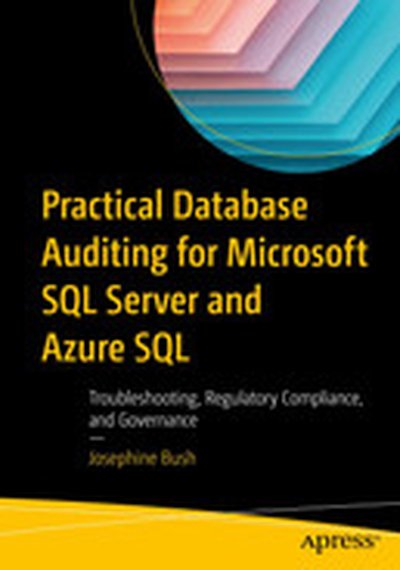
Practical Database Auditing for Microsoft SQL Server and Azure SQL: Troubleshooting, Regulatory Compliance, and Governance

Know how to track changes and key events in your SQL Server databases in support of application troubleshooting, regulatory compliance, and governance. This book shows how to use key features in SQL Server ,such as SQL Server Audit and Extended Events, to track schema changes, permission changes, and changes to your data. You’ll even learn how to track queries run against specific tables in a database. Not all changes and events can be captured and tracked using SQL Server Audit and Extended Events, and the book goes beyond those features to also show what can be captured using common criteria compliance, change data capture, temporal tables, or querying the SQL Server log. You will learn how to audit just what you need to audit, and how to audit pretty much anything that happens on a SQL Server instance. This book will also help you set up cloud auditing with an emphasis on Azure SQL Database, Azure SQL Managed Instance, and AWS RDS SQL Server. You don’t need expensive, third-party auditing tools to make auditing work for you, and to demonstrate and provide value back to your business. This book will help you set up an auditing solution that works for you and your needs. It shows how to collect the audit data that you need, centralize that data for easy reporting, and generate audit reports using built-in SQL Server functionality for use by your own team, developers, and organization’s auditors. What You Will Learn Understand why auditing is important for troubleshooting, compliance, and governance Track changes and key events using SQL Server Audit and Extended Events Track SQL Server configuration changes for governance and troubleshooting Utilize change data capture and temporal tables to track data changes in SQL Server tables Centralize auditing data from all yourdatabases for easy querying and reporting Configure auditing on Azure SQL, Azure SQL Managed Instance, and AWS RDS SQL Server Who This Book Is For Database administrators who need to know what’s changing on their database servers, and those who are making the changes; database-savvy DevOps engineers and developers who are charged with troubleshooting processes and applications; developers and administrators who are responsible for generating reports in support of regulatory compliance reporting and auditing

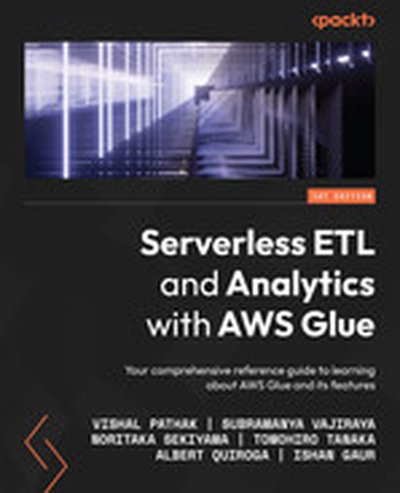
Serverless ETL and Analytics with AWS Glue

Discover how to harness AWS Glue for your ETL and data analysis workflows with "Serverless ETL and Analytics with AWS Glue." This comprehensive guide introduces readers to the capabilities of AWS Glue, from building data lakes to performing advanced ETL tasks, allowing you to create efficient, secure, and scalable data pipelines with serverless technology. What this Book will help me do Understand and utilize various AWS Glue features for data lake and ETL pipeline creation. Leverage AWS Glue Studio and DataBrew for intuitive data preparation workflows. Implement effective storage optimization techniques for enhanced data analytics. Apply robust data security measures, including encryption and access control, to protect data. Integrate AWS Glue with machine learning tools like SageMaker to build intelligent models. Author(s) The authors of this book include experts across the fields of data engineering and AWS technologies. With backgrounds in data analytics, software development, and cloud architecture, they bring a depth of practical experience. Their approach combines hands-on tutorials with conceptual clarity, ensuring a blend of foundational knowledge and actionable insights. Who is it for? This book is designed for ETL developers, data engineers, and data analysts who are familiar with data management concepts and want to extend their skills into serverless cloud solutions. If you're looking to master AWS Glue for building scalable and efficient ETL pipelines or are transitioning existing systems to the cloud, this book is ideal for you.

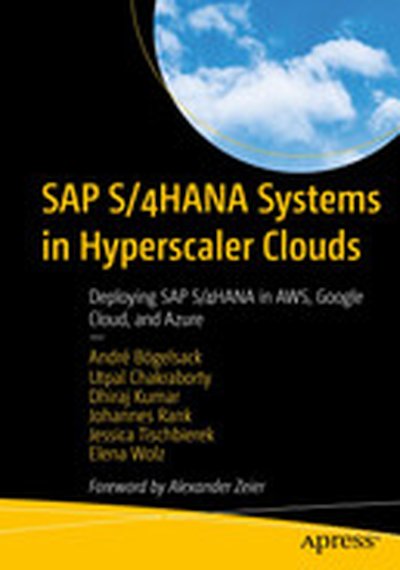
SAP S/4HANA Systems in Hyperscaler Clouds: Deploying SAP S/4HANA in AWS, Google Cloud, and Azure

This book helps SAP architects and SAP Basis administrators deploy and operate SAP S/4HANA systems on the most common public cloud platforms. Market-leading cloud offerings are covered, including Amazon Web Services, Microsoft Azure, and Google Cloud. You will gain an end-to-end understanding of the initial implementation of SAP S/4HANA systems on those platforms. You will learn how to move away from the big monolithic SAP ERP systems and arrive at an environment with a central SAP S/4HANA system as the digital core surrounded by cloud-native services. The book begins by introducing the core concepts of Hyperscaler cloud platforms that are relevant to SAP. You will learn about the architecture of SAP S/4HANA systems on public cloud platforms, with specific content provided for each of the major platforms. The book simplifies the deployment of SAP S/4HANA systems in public clouds by providing step-by-step instructions and helping you deal with thecomplexity of such a deployment. Content in the book is based on best practices, industry lessons learned, and architectural blueprints, helping you develop deep insights into the operations of SAP S/4HANA systems on public cloud platforms. Reading this book enables you to build and operate your own SAP S/4HANA system in the public cloud with a minimum of effort. What You Will Learn Choose the right Hyperscaler platform for your future SAP S/4HANA workloads Start deploying your first SAP S/4HANA system in the public cloud Avoid typical pitfalls during your implementation Apply and leverage cloud-native services for your SAP S/4HANA system Save costs by choosing the right architecture and build a robust architecture for your most critical SAP systems Meet your business’ criteria for availability and performance by having the right sizing in place Identify further use cases whenoperating SAP S/4HANA in the public cloud Who This Book Is For SAP architects looking for an answer on how to move SAP S/4HANA systems from on-premises into the cloud; those planning to deploy to one of the three major platforms from Amazon Web Services, Microsoft Azure, and Google Cloud Platform; and SAP Basis administrators seeking a detailed and realistic description of how to get started on a migration to the cloud and how to drive that cloud implementation to completion

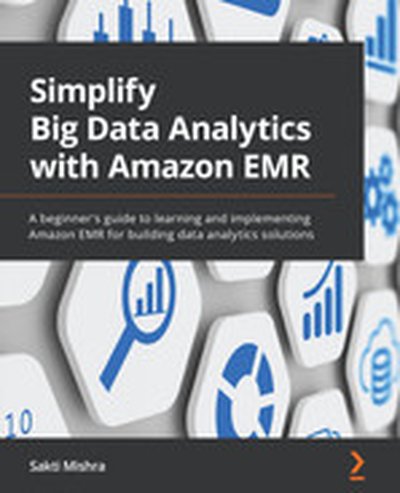
Simplify Big Data Analytics with Amazon EMR

Simplify Big Data Analytics with Amazon EMR is a thorough guide to harnessing Amazon's EMR service for big data processing and analytics. From distributed computation pipelines to real-time streaming analytics, this book provides hands-on knowledge and actionable steps for implementing data solutions efficiently. What this Book will help me do Understand the architecture and key components of Amazon EMR and how to deploy it effectively. Learn to configure and manage distributed data processing pipelines using Amazon EMR. Implement security and data governance best practices within the Amazon EMR ecosystem. Master batch ETL and real-time analytics techniques using technologies like Apache Spark. Apply optimization and cost-saving strategies to scalable data solutions. Author(s) Sakti Mishra is a seasoned data professional with extensive expertise in deploying scalable analytics solutions on cloud platforms like AWS. With a background in big data technologies and a passion for teaching, Sakti ensures practical insights accompany every concept. Readers will find his approach thorough, hands-on, and highly informative. Who is it for? This book is perfect for data engineers, data scientists, and other professionals looking to leverage Amazon EMR for scalable analytics. If you are familiar with Python, Scala, or Java and have some exposure to Hadoop or AWS ecosystems, this book will empower you to design and implement robust data pipelines efficiently.

Data Engineering with AWS

Discover how to effectively build and manage data engineering pipelines using AWS with "Data Engineering with AWS". In this hands-on book, you'll explore the foundational principles of data engineering, learn to architect data pipelines, and work with essential AWS services to process, transform, and analyze data. What this Book will help me do Understand and implement modern data engineering pipelines with AWS services. Gain proficiency in automating data ingestion and transformation using Amazon tools. Perform efficient data queries and analysis leveraging Amazon Athena and Redshift. Create insightful data visualizations using Amazon QuickSight. Apply machine learning techniques to enhance data engineering processes. Author(s) None Eagar, a Senior Data Architect with over twenty-five years of experience, specializes in modern data architectures and cloud solutions. With a rich background in applying data engineering to real-world problems, None Eagar shares expertise in a clear and approachable way for readers. Who is it for? This book is perfect for data engineers and data architects aiming to grow their expertise in AWS-based solutions. It's also geared towards beginners in data engineering wanting to adopt the best practices. Those with a basic understanding of big data and cloud platforms will find it particularly valuable, but prior AWS experience is not required.

Cloud-Native Microservices with Apache Pulsar: Build Distributed Messaging Microservices

Apply different enterprise integration and processing strategies available with Pulsar, Apache's multi-tenant, high-performance, cloud-native messaging and streaming platform. This book is a comprehensive guide that examines using Pulsar Java libraries to build distributed applications with message-driven architecture. You'll begin with an introduction to Apache Pulsar architecture. The first few chapters build a foundation of message-driven architecture. Next, you'll perform a setup of all the required Pulsar components. The book also covers work with Apache Pulsar client library to build producers and consumers for the discussed patterns. You'll then explore the transformation, filter, resiliency, and tracing capabilities available with Pulsar. Moving forward, the book will discuss best practices when building message schemas and demonstrate integration patterns using microservices. Security is an important aspect of any application;the book will cover authentication and authorization in Apache Pulsar such as Transport Layer Security (TLS), OAuth 2.0, and JSON Web Token (JWT). The final chapters will cover Apache Pulsar deployment in Kubernetes. You'll build microservices and serverless components such as AWS Lambda integrated with Apache Pulsar on Kubernetes. After completing the book, you'll be able to comfortably work with the large set of out-of-the-box integration options offered by Apache Pulsar. What You'll Learn Examine the important Apache Pulsar components Build applications using Apache Pulsar client libraries Use Apache Pulsar effectively with microservices Deploy Apache Pulsar to the cloud Who This Book Is For Cloud architects and software developers who build systems in the cloud-native technologies.

Storage Systems

Storage Systems: Organization, Performance, Coding, Reliability and Their Data Processing was motivated by the 1988 Redundant Array of Inexpensive/Independent Disks proposal to replace large form factor mainframe disks with an array of commodity disks. Disk loads are balanced by striping data into strips—with one strip per disk— and storage reliability is enhanced via replication or erasure coding, which at best dedicates k strips per stripe to tolerate k disk failures. Flash memories have resulted in a paradigm shift with Solid State Drives (SSDs) replacing Hard Disk Drives (HDDs) for high performance applications. RAID and Flash have resulted in the emergence of new storage companies, namely EMC, NetApp, SanDisk, and Purestorage, and a multibillion-dollar storage market. Key new conferences and publications are reviewed in this book.The goal of the book is to expose students, researchers, and IT professionals to the more important developments in storage systems, while covering the evolution of storage technologies, traditional and novel databases, and novel sources of data. We describe several prototypes: FAWN at CMU, RAMCloud at Stanford, and Lightstore at MIT; Oracle's Exadata, AWS' Aurora, Alibaba's PolarDB, Fungible Data Center; and author's paper designs for cloud storage, namely heterogeneous disk arrays and hierarchical RAID. Surveys storage technologies and lists sources of data: measurements, text, audio, images, and video Familiarizes with paradigms to improve performance: caching, prefetching, log-structured file systems, and merge-trees (LSMs) Describes RAID organizations and analyzes their performance and reliability Conserves storage via data compression, deduplication, compaction, and secures data via encryption Specifies implications of storage technologies on performance and power consumption Exemplifies database parallelism for big data, analytics, deep learning via multicore CPUs, GPUs, FPGAs, and ASICs, e.g., Google's Tensor Processing Units

High Performant File System Workloads for AI and HPC on AWS using IBM Spectrum Scale

This IBM® Redpaper® publication is intended to facilitate the deployment and configuration of the IBM Spectrum® Scale based high-performance storage solutions for the scalable data and AI solutions on Amazon Web Services (AWS). Configuration, testing results, and tuning guidelines for running the IBM Spectrum Scale based high-performance storage solutions for the data and AI workloads on AWS are the focus areas of the paper. The LAB Validation was conducted with the Red Hat Linux nodes to IBM Spectrum Scale by using the various Amazon Elastic Compute Cloud (EC2) instances. Simultaneous workloads are simulated across multiple Amazon EC2 nodes running with Red Hat Linux to determine scalability against the IBM Spectrum Scale clustered file system. Solution architecture, configuration details, and performance tuning demonstrate how to maximize data and AI application performance with IBM Spectrum Scale on AWS.

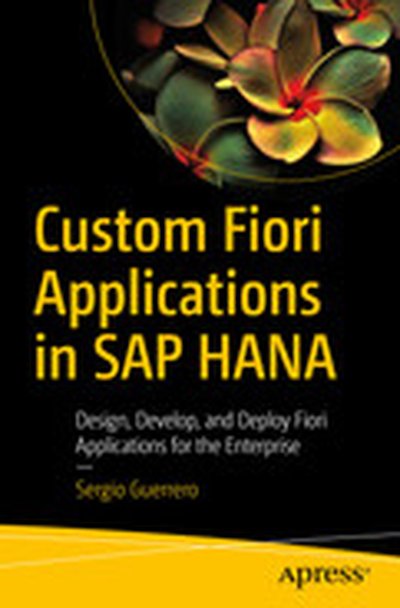
Custom Fiori Applications in SAP HANA: Design, Develop, and Deploy Fiori Applications for the Enterprise

Get started building custom Fiori applications for your enterprise. This book teaches you how to design, build, and deploy enterprise-ready, custom Fiori applications in SAP HANA. Tips and tricks collected from projects using Fiori applications (built consuming OData models and REST APIs) and integrating third-party JS libraries are presented. Also included are examples using Fiori templates from different tools such as the SAP Web IDE and the new Visual Studio Code extensions. This book explains the 5 design principles that all Fiori applications are built upon: Role-based, Responsive, Coherent, Simple, and Delightful. The book expands on consuming OData services and REST APIs internal and external to SAP HANA. The Fiori application exercise demonstrates the use of the MVC pattern, JavaScript modularization, reuse of SAP UI5 controls, debugging, and the tools required for a complete scenario. The book closes with an exercise showcasing a finished single page application with multiple views and layouts, navigation between the views, and deployment of the application to AWS. This book is simple enough for entry-level developers getting started in web frameworks but also highlights integration points from the data models being consumed from the application, and shows how the application communicates with back-end services, resulting in a complete front-end custom Fiori application. What You Will Learn Know the 5 Fiori design principles Understand how to consume OData and REST API models Apply the MVC pattern using XML views and the SAP UI5 controls along with controller behavior in JavaScript Debug and deploy the application Who This Book is For Web developers and application leads who have some experience in JavaScript frameworks and web development and understand web protocol communication

What Is a Data Lake?

A revolution is occurring in data management regarding how data is collected, stored, processed, governed, managed, and provided to decision makers. The data lake is a popular approach that harnesses the power of big data and marries it with the agility of self-service. With this report, IT executives and data architects will focus on the technical aspects of building a data lake for your organization. Alex Gorelik from Facebook explains the requirements for building a successful data lake that business users can easily access whenever they have a need. You'll learn the phases of data lake maturity, common mistakes that lead to data swamps, and the importance of aligning data with your company's business strategy and gaining executive sponsorship. You'll explore: The ingredients of modern data lakes, such as the use of different ingestion methods for different data formats, and the importance of the three Vs: volume, variety, and velocity Building blocks of successful data lakes, including data ingestion, integration, persistence, data governance, and business intelligence and self-service analytics State-of-the-art data lake architectures offered by Amazon Web Services, Microsoft Azure, and Google Cloud

Hybrid Multicloud Business Continuity for OpenShift Workloads with IBM Spectrum Virtualize in AWS

This publication is intended to facilitate the deployment of the hybrid cloud business continuity solution with Red Hat OpenShift Container Platform and IBM® block CSI (Container Storage Interface) driver plug-in for IBM Spectrum® Virtualize on Public Cloud AWS (Amazon Web Services). This solution is designed to protect the data by using IBM Storage-based Global Mirror replication. For demonstration purposes, MySQL containerized database is installed on the on-premises IBM FlashSystem® that is connected to the Red Hat OpenShift Container Platform (OCP) cluster in the vSphere environment through the IBM block CSI driver. The volume (LUN) on IBM FlashSystem storage system is replicated by using global mirror on IBM Spectrum Virtualize for Public Cloud on AWS. Red Hat OpenShift cluster (OCP cluster) and the IBM block CSI driver plug-in are installed on AWS by using Installer-Provisioned Infrastructure (IPI) methodology. The information in this document is distributed on an as-is basis without any warranty that is either expressed or implied. Support assistance for the use of this material is limited to situations where IBM Spectrum Virtualize for Public Cloud is supported and entitled, and where the issues are specific to this Blueprint implementation.

Red Hat OpenShift on Public Cloud with IBM Block Storage

The purpose of this document is to show how to install RedHat OpenShift Container Platform (OCP) on Amazon web services (AWS) public cloud with OpenShift installer, a method that is known as Installer-provisioned infrastructure (IPI). We also describe how to validate the installation of IBM container storage interface (CSI) driver on OCP 4.2 that is installed on AWS. This document also describes the installation of OCP 4.x on AWS with customization and OCP 4.x installation on IBM cloud. This document discusses how to provision internet small computer system interface (iSCSI) storage that is made available by IBM Spectrum® Virtualize for Public Cloud (SVPC) that is deployed on AWS. Finally, the document discusses the use of Red Hat OpenShift command line interface (CLI), OCP web console graphical user interface (GUI), and AWS console.

Beginning Apache Spark Using Azure Databricks: Unleashing Large Cluster Analytics in the Cloud

Analyze vast amounts of data in record time using Apache Spark with Databricks in the Cloud. Learn the fundamentals, and more, of running analytics on large clusters in Azure and AWS, using Apache Spark with Databricks on top. Discover how to squeeze the most value out of your data at a mere fraction of what classical analytics solutions cost, while at the same time getting the results you need, incrementally faster. This book explains how the confluence of these pivotal technologies gives you enormous power, and cheaply, when it comes to huge datasets. You will begin by learning how cloud infrastructure makes it possible to scale your code to large amounts of processing units, without having to pay for the machinery in advance. From there you will learn how Apache Spark, an open source framework, can enable all those CPUs for data analytics use. Finally, you will see how services such as Databricks provide the power of Apache Spark, without you having to know anything aboutconfiguring hardware or software. By removing the need for expensive experts and hardware, your resources can instead be allocated to actually finding business value in the data. This book guides you through some advanced topics such as analytics in the cloud, data lakes, data ingestion, architecture, machine learning, and tools, including Apache Spark, Apache Hadoop, Apache Hive, Python, and SQL. Valuable exercises help reinforce what you have learned. What You Will Learn Discover the value of big data analytics that leverage the power of the cloud Get started with Databricks using SQL and Python in either Microsoft Azure or AWS Understand the underlying technology, and how the cloud and Apache Spark fit into the bigger picture See how these tools are used in the real world Run basic analytics, including machine learning, on billions of rows at a fraction of a cost or free Who This Book Is For Data engineers, data scientists, and cloud architects who want or need to run advanced analytics in the cloud. It is assumed that the reader has data experience, but perhaps minimal exposure to Apache Spark and Azure Databricks. The book is also recommended for people who want to get started in the analytics field, as it provides a strong foundation.

Implementing IBM Spectrum Virtualize for Public Cloud Version 8.3

IBM® Spectrum Virtualize is a key member of the IBM Spectrum™ Storage portfolio. It is a highly flexible storage solution that enables rapid deployment of block storage services for new and traditional workloads, on-premises, off-premises and in a combination of both. IBM Spectrum Virtualize™ for Public Cloud provides the IBM Spectrum Virtualize functionality in IBM Cloud™. This new capability provides a monthly license to deploy and use Spectrum Virtualize in IBM Cloud to enable hybrid cloud solutions, offering the ability to transfer data between on-premises private clouds or data centers and the public cloud. This IBM Redpaper™ publication gives a broad understanding of IBM Spectrum Virtualize for Public Cloud architecture and provides planning and implementation details of the common use cases for this product. This publication helps storage and networking administrators plan and implement install, tailor, and configure IBM Spectrum Virtualize for Public Cloud offering. It also provides a detailed description of troubleshooting tips. IBM Spectrum Virtualize is also available on AWS. For more information, see Implementation guide for IBM Spectrum Virtualize for Public Cloud on AWS, REDP-5534.

Multicloud Storage as a Service using VRealize Automation and IBM Spectrum Storage

This document is intended to facilitate the deployment of the Multicloud Solution for Business Continuity and Storage as service by using IBM Spectrum Virtualize for Public Cloud on Amazon Web Services (AWS). To complete the tasks it describes, you must understand IBM FlashSystem 9100, IBM Spectrum Virtualize for Public Cloud, IBM Spectrum Connect, VMware vRealize Orchestrator, and vRealize Automation and AWS Cloud. The information in this document is distributed on an "as is" basis without any warranty that is either expressed or implied. Support assistance for the use of this material is limited to situations where IBM Storwize or IBM FlashSystem storage devices are supported and entitled and where the issues are specific to a blueprint implementation.

Mastering Large Datasets with Python

Modern data science solutions need to be clean, easy to read, and scalable. In Mastering Large Datasets with Python, author J.T. Wolohan teaches you how to take a small project and scale it up using a functionally influenced approach to Python coding. You’ll explore methods and built-in Python tools that lend themselves to clarity and scalability, like the high-performing parallelism method, as well as distributed technologies that allow for high data throughput. The abundant hands-on exercises in this practical tutorial will lock in these essential skills for any large-scale data science project. About the Technology Programming techniques that work well on laptop-sized data can slow to a crawl—or fail altogether—when applied to massive files or distributed datasets. By mastering the powerful map and reduce paradigm, along with the Python-based tools that support it, you can write data-centric applications that scale efficiently without requiring codebase rewrites as your requirements change. About the Book Mastering Large Datasets with Python teaches you to write code that can handle datasets of any size. You’ll start with laptop-sized datasets that teach you to parallelize data analysis by breaking large tasks into smaller ones that can run simultaneously. You’ll then scale those same programs to industrial-sized datasets on a cluster of cloud servers. With the map and reduce paradigm firmly in place, you’ll explore tools like Hadoop and PySpark to efficiently process massive distributed datasets, speed up decision-making with machine learning, and simplify your data storage with AWS S3. What's Inside An introduction to the map and reduce paradigm Parallelization with the multiprocessing module and pathos framework Hadoop and Spark for distributed computing Running AWS jobs to process large datasets About the Reader For Python programmers who need to work faster with more data. About the Author J. T. Wolohan is a lead data scientist at Booz Allen Hamilton, and a PhD researcher at Indiana University, Bloomington. Quotes A clear and efficient path to mastery of the map and reduce paradigm for developers of all levels. - Justin Fister, GrammarBot An amazing book for anybody looking to add parallel processing and the map/reduce pattern to their toolkit. - Gary Bake, Radius Payment Solutions Learn fundamentals of MapReduce and other core concepts and save money on expensive hardware! - Al Krinker, USPTO A comprehensive guide to the fundamentals of efficient Python data processing. - Craig Pfeifer, MITRE Corporation

Jumpstart Snowflake: A Step-by-Step Guide to Modern Cloud Analytics

Explore the modern market of data analytics platforms and the benefits of using Snowflake computing, the data warehouse built for the cloud. With the rise of cloud technologies, organizations prefer to deploy their analytics using cloud providers such as Amazon Web Services (AWS), Microsoft Azure, or Google Cloud Platform. Cloud vendors are offering modern data platforms for building cloud analytics solutions to collect data and consolidate into single storage solutions that provide insights for business users. The core of any analytics framework is the data warehouse, and previously customers did not have many choices of platform to use. Snowflake was built specifically for the cloud and it is a true game changer for the analytics market. This book will help onboard you to Snowflake, present best practices to deploy, and use the Snowflake data warehouse. In addition, it covers modern analytics architecture and use cases. It provides use cases of integration with leading analytics software such as Matillion ETL, Tableau, and Databricks. Finally, it covers migration scenarios for on-premise legacy data warehouses. What You Will Learn Know the key functionalities of Snowflake Set up security and access with cluster Bulk load data into Snowflake using the COPY command Migrate from a legacy data warehouse to Snowflake integrate the Snowflake data platform with modern business intelligence (BI) and data integration tools Who This Book Is For Those working with data warehouse and business intelligence (BI) technologies, and existing and potential Snowflake users

Multicloud Storage as a Service using vRealize Automation and IBM Spectrum Storage

This document is intended to facilitate the deployment of the Multicloud Solution for Business Continuity and Storage as service by using IBM Spectrum Virtualize for Public Cloud on Amazon Web Services (AWS). To complete the tasks it describes, you must understand IBM FlashSystem 9100, IBM Spectrum Virtualize for Public Cloud, IBM Spectrum Connect, VMware vRealize Orchestrator, and vRealize Automation and AWS Cloud. The information in this document is distributed on an "as is" basis without any warranty that is either expressed or implied. Support assistance for the use of this material is limited to situations where IBM Storwize or IBM FlashSystem storage devices are supported and entitled and where the issues are specific to a blueprint implementation.

Big Data Analytics with Hadoop 3

Big Data Analytics with Hadoop 3 is your comprehensive guide to understanding and leveraging the power of Apache Hadoop for large-scale data processing and analytics. Through practical examples, it introduces the tools and techniques necessary to integrate Hadoop with other popular frameworks, enabling efficient data handling, processing, and visualization. What this Book will help me do Understand the foundational components and features of Apache Hadoop 3 such as HDFS, YARN, and MapReduce. Gain the ability to integrate Hadoop with programming languages like Python and R for data analysis. Learn the skills to utilize tools such as Apache Spark and Apache Flink for real-time data analytics within the Hadoop ecosystem. Develop expertise in setting up a Hadoop cluster and performing analytics in cloud environments such as AWS. Master the process of building practical big data analytics pipelines for end-to-end data processing. Author(s) Sridhar Alla is a seasoned big data professional with extensive industry experience in building and deploying scalable big data analytics solutions. Known for his expertise in Hadoop and related ecosystems, Sridhar combines technical depth with clear communication in his writing, providing practical insights and hands-on knowledge. Who is it for? This book is tailored for data professionals, software engineers, and data scientists looking to expand their expertise in big data analytics using Hadoop 3. Whether you're an experienced developer or new to the big data ecosystem, this book provides the step-by-step guidance and practical examples needed to advance your skills and achieve your analytical goals.