talk-data.com talk-data.com

Topic

Cloud Computing

infrastructure saas iaas

499

tagged

Activity Trend

471 peak/qtr
2020-Q1 2026-Q1

Activities

Showing filtered results

Filtering by: O'Reilly Data Engineering Books ×
SAP UI Frameworks for Enterprise Developers: A Practical Guide

Dive into the world of SAP UIs and begin your journey to becoming a development expert. In this book, you will learn the latest cutting-edge web technologies and gain a comprehensive understanding of the user experience concept that undergirds the SAP Fiori design system. SAP UI Frameworks for Enterprise Developers is filled with hands-on tutorials that will guide you through every step of the development journey, from setting up your coding editor to building your first application using UI5, SAP Fiori Elements, UI5 Web Components, or Fundamental Library Styles. Authors Marius Obert and Volker Buzek understand that staying ahead in the rapidly evolving UI technology landscape can be challenging, so they’ve included insights into upcoming industry-wide trends and future innovations. This book will provide you with the knowledge and skills needed to build intuitive applications with an eye-catching, SAP Fiori-conforming user interface.Don’t miss this opportunity to take your UI development skills to the next level! What You Will Learn Gain an overview of the technologies that can be used to implement enterprise-ready SAP Fiori UIs ready to be deployed in the cloud as well as on-premises Discover resources for connecting with domain experts to stay on top your game and learn about innovations in the SAP ecosystem Survey industry-wide technologies trends, like micro frontends and PWA, and relate these trends to both enterprise software and new projects led by SAP Who This Book Is For This book is intended for anyone interested in building intuitive enterprise user interfaces with modern web technologies in the greater SAP universe.
Building a Next-Gen SOC with IBM QRadar

In "Building a Next-Gen SOC with IBM QRadar", you'll learn how to utilize IBM QRadar to create an efficient Security Operations Center (SOC). The book covers deploying QRadar in various environments, understanding its architecture, and leveraging its powerful features to detect and respond to real-time threats with confidence, ultimately enabling advanced security practices. What this Book will help me do Understand and deploy IBM QRadar in different environments, including on-premises and cloud. Leverage QRadar's features to analyze network traffic, detect threats, and enhance security monitoring. Effectively use QRadar rules and searches to identify, correlate, and respond to security events. Integrate AI technologies with QRadar to automate and improve threat management processes. Maintain, troubleshoot, and scale the QRadar environment to meet evolving security needs. Author(s) Ashish Kothekar is an experienced cybersecurity specialist with a deep understanding of IBM QRadar and SOC operations. He has dedicated his career to helping organizations implement effective security practices. Through his accessible writing and detailed examples, he aims to empower security professionals to maximize their use of QRadar. Who is it for? This book is perfect for SOC analysts, security engineers, and cybersecurity enthusiasts who want to enhance their security skills. Readers should have a basic knowledge of networking and cybersecurity principles. If you're looking to deepen your understanding of IBM QRadar and build a next-gen SOC, this book is for you.

Data Modeling with Snowflake

This comprehensive guide, "Data Modeling with Snowflake", is your go-to resource for mastering the art of efficient data modeling tailored to the capabilities of the Snowflake Data Cloud. In this book, you will learn how to design agile and scalable data solutions by effectively leveraging Snowflake's unique architecture and advanced features. What this Book will help me do Understand the core principles of data modeling and how they apply to Snowflake's cloud-native environment. Learn to use Snowflake's features, such as time travel and zero-copy cloning, to create efficient data solutions. Gain hands-on experience with SQL recipes that outline practical approaches to transforming and managing Snowflake data. Discover techniques for modeling structured and semi-structured data for real-world business needs. Learn to integrate universal modeling frameworks like Star Schema and Data Vault into Snowflake implementations for scalability and maintainability. Author(s) The author, Serge Gershkovich, is a seasoned expert in database design and Snowflake architecture. With years of experience in the data management field, Serge has dedicated himself to making complex technical subjects approachable to professionals at all levels. His insights in this book are informed by practical applications and real-world experience. Who is it for? This book is targeted at data professionals, ranging from newcomers to database design to seasoned SQL developers seeking to specialize in Snowflake. If you are looking to understand and apply data modeling practices effectively within Snowflake's architecture, this book is for you. Whether you're refining your modeling skills or getting started with Snowflake, it provides the practical knowledge you need to succeed.

Maturing the Snowflake Data Cloud: A Templated Approach to Delivering and Governing Snowflake in Large Enterprises

This project-oriented book gives you a hands-on approach to designing, developing, and templating your Snowflake platform delivery. Written by seasoned Snowflake practitioners, the book is full of practical guidance and advice to accelerate and mature your Snowflake journey. Working through the examples helps you develop the skill, knowledge, and expertise to expand your organization’s core Snowflake capability and prepare for later incorporation of additional Snowflake features as they become available. Your Snowflake platform will be resilient, fit for purpose, extensible, and guarantee rapid, consistent, and repeatable, pattern-based deployments ready for application delivery. When a Snowflake account is delivered there are no controls, guard rails, external monitoring, nor governance mechanisms baked in. From a large organization perspective, this book explains how to deliver your core Snowflake platform in the form of a Landing Zone, a consistent, templated approach that assumes familiarity with Snowflake core concepts and principles. The book also covers Snowflake from a governance perspective and addresses the “who can see what?” question, satisfying requirements to know for certain that your Snowflake accounts properly adhere to your organization’s data usage policies. The book provides a proven pathway to success by equipping you with skill, knowledge, and expertise to accelerate Snowflake adoption within your organization. The patterns delivered within this book are used for production deployment, and are proven in real-world use. Examples in the book help you succeed in an environment in which governance policies, processes, and procedures oversee and control every aspect of your Snowflake platform development and delivery life cycle. Your environment may not be so exacting, but you’ll still benefit from the rigorous and demanding perspective this book’s authors bring to the table. The book showsyou how to leverage what you already know and adds what you don’t know, all applied to deliver your Snowflake accounts. You will know how to position your organization to deliver consistent Snowflake accounts that are prepared and ready for immediate application development. What You Will Learn Create a common, consistent deployment framework for Snowflake in your organization Enable rapid up-skill and adoption of Snowflake, leveraging the benefits of cloud platforms Develop a deep understanding of Snowflake administration and configuration Implement consistent, approved design patterns that reduce account provisioning times Manage data consumption by monitoring and controlling access to datasets Who This Book Is For Systems administrators charged with delivering a common implementationpattern for all Snowflake accounts within an organization; senior managers looking to simplify the delivery of complex technology into their existing infrastructure; developers seeking to understand guard rails, monitoring, and controls to ensure that Snowflake meets their organization's requirements; sales executives needing to understand how their data usage can be monitored and gain insights into how their data is being consumed; governance colleagues wanting to know who can see each data set, and wanting to identify toxic role combinations, and have confidence that their Snowflake accounts are properly provisioned

Resilient Oracle PL/SQL

As legacy and other critical systems continue to migrate online, the need for continuous operation is imperative. Code has to handle data issues as well as hard external problems today, including outages of networks, storage systems, power, and ancillary systems. This practical guide provides system administrators, DevSecOps engineers, and cloud architects with a concise yet comprehensive overview on how to use PL/SQL to develop resilient database solutions. Integration specialist Stephen B Morris helps you understand the language, build a PL/SQL toolkit, and collect a suite of reusable components and patterns. You'll dive into the benefits of synthesizing the toolkit with a requirements-driven, feature-oriented approach and learn how to produce resilient solutions by synthesizing the PL/SQL toolkit in conjunction with a scale of resilience. Build solid PL/SQL solutions while avoiding common PL/SQL antipatterns Learn why embedding complex business logic in SQL is often a brittle proposition Learn how to recognize and improve weak PL/SQL code Verify PL/SQL code by running data-driven, in-database tests Understand the safe operation, maintenance, and modification of complex PL/SQL systems Learn the benefits of thinking about features rather than just use cases Define good requirements for PL/SQL and hybrid solutions involving PL/SQL and high level languages

Automating Data Transformations

The modern data stack has evolved rapidly in the past decade. Yet, as enterprises migrate vast amounts of data from on-premises platforms to the cloud, data teams continue to face limitations executing data transformation at scale. Data transformation is an integral part of the analytics workflow--but it's also the most time-consuming, expensive, and error-prone part of the process. In this report, Satish Jayanthi and Armon Petrossian examine key concepts that will enable you to automate data transformation at scale. IT decision makers, CTOs, and data team leaders will explore ways to democratize data transformation by shifting from activity-oriented to outcome-oriented teams--from manufacturing-line assembly to an approach that lets even junior analysts implement data with only a brief code review. With this insightful report, you will: Learn how successful data systems rely on simplicity, flexibility, user-friendliness, and a metadata-first approach Adopt a product-first mindset (data as a product, or DaaP) for developing data resources that focus on discoverability, understanding, trust, and exploration Build a transformation platform that delivers the most value, using a column-first approach Use data architecture as a service (DAaaS) to help teams build and maintain their own data infrastructure as they work collaboratively About the authors: Armon Petrossian is CEO and cofounder of Coalesce. Previously, he was part of the founding team at WhereScape in North America, where he served as national sales manager for almost a decade. Satish Jayanthi is CTO and cofounder of Coalesce. Prior to that, he was senior solutions architect at WhereScape, where he met his cofounder Armon.

IBM FlashSystem 7300 Product Guide

This IBM® Redpaper Product Guide describes the IBM FlashSystem® 7300 solution, which is a next-generation IBM FlashSystem control enclosure. It combines the performance of flash and a Non-Volatile Memory Express (NVMe)-optimized architecture with the reliability and innovation of IBM FlashCore® technology and the rich feature set and high availability (HA) of IBM Spectrum® Virtualize. To take advantage of artificial intelligence (AI)-enhanced applications, real-time big data analytics, and cloud architectures that require higher levels of system performance and storage capacity, enterprises around the globe are rapidly moving to modernize established IT infrastructures. However, for many organizations, staff resources, and expertise are limited, and cost-efficiency is a top priority. These organizations have important investments in existing infrastructure that they want to maximize. They need enterprise-grade solutions that optimize cost-efficiency while simplifying the pathway to modernization. IBM FlashSystem 7300 is designed specifically for these requirements and use cases. It also delivers a cyber resilience without compromising application performance. IBM FlashSystem 7300 provides a rich set of software-defined storage (SDS) features that are delivered by IBM Spectrum Virtualize, including the following examples: Data reduction and deduplication Dynamic tiering Thin-provisioning Snapshots Cloning Replication and data copy services Cyber resilience Transparent Cloud Tiering (TCT) IBM HyperSwap® including 3-site replication for high availability Scale-out and scale-up configurations further enhance capacity and throughput for better availability With the release of IBM Spectrum Virtualize V8.5, extra functions and features are available, including support for new third-generation IBM FlashCore Modules Non-Volatile Memory Express (NVMe) type drives within the control enclosure, and 100 Gbps Ethernet adapters that provide NVMe Remote Direct Memory Access (RDMA) options. New software features include GUI enhancements, security enhancements including multifactor authentication and single sign-on, and Fibre Channel (FC) portsets.

Beginning Database Design Solutions, 2nd Edition

A concise introduction to database design concepts, methods, and techniques in and out of the cloud In the newly revised second edition of Beginning Database Design Solutions: Understanding and Implementing Database Design Concepts for the Cloud and Beyond, Second Edition, award-winning programming instructor and mathematician Rod Stephens delivers an easy-to-understand guide to designing and implementing databases both in and out of the cloud. Without assuming any prior database design knowledge, the author walks you through the steps you’ll need to take to understand, analyze, design, and build databases. In the book, you’ll find clear coverage of foundational database concepts along with hands-on examples that help you practice important techniques so you can apply them to your own database designs, as well as: Downloadable source code that illustrates the concepts discussed in the book Best practices for reliable, platform-agnostic database design Strategies for digital transformation driven by universally accessible database design An essential resource for database administrators, data management specialists, and database developers seeking expertise in relational, NoSQL, and hybrid database design both in and out of the cloud, Beginning Database Design Solutions is a hands-on guide ideal for students and practicing professionals alike.

Data Fabric and Data Mesh Approaches with AI: A Guide to AI-based Data Cataloging, Governance, Integration, Orchestration, and Consumption

Understand modern data fabric and data mesh concepts using AI-based self-service data discovery and delivery capabilities, a range of intelligent data integration styles, and automated unified data governance—all designed to deliver "data as a product" within hybrid cloud landscapes. This book teaches you how to successfully deploy state-of-the-art data mesh solutions and gain a comprehensive overview on how a data fabric architecture uses artificial intelligence (AI) and machine learning (ML) for automated metadata management and self-service data discovery and consumption. You will learn how data fabric and data mesh relate to other concepts such as data DataOps, MLOps, AIDevOps, and more. Many examples are included to demonstrate how to modernize the consumption of data to enable a shopping-for-data (data as a product) experience. By the end of this book, you will understand the data fabric concept and architecture as it relates to themes such as automated unifieddata governance and compliance, enterprise information architecture, AI and hybrid cloud landscapes, and intelligent cataloging and metadata management. What You Will Learn Discover best practices and methods to successfully implement a data fabric architecture and data mesh solution Understand key data fabric capabilities, e.g., self-service data discovery, intelligent data integration techniques, intelligent cataloging and metadata management, and trustworthy AI Recognize the importance of data fabric to accelerate digital transformation and democratize data access Dive into important data fabric topics, addressing current data fabric challenges Conceive data fabric and data mesh concepts holistically within an enterprise context Become acquainted with the business benefits of data fabric and data mesh Who This Book Is For Anyone who is interested in deploying modern data fabric architectures and data mesh solutions within an enterprise, including IT and business leaders, data governance and data office professionals, data stewards and engineers, data scientists, and information and data architects. Readers should have a basic understanding of enterprise information architecture.

Azure SQL Hyperscale Revealed: High-performance Scalable Solutions for Critical Data Workloads

Take a deep dive into the Azure SQL Database Hyperscale Service Tier and discover a new form of cloud architecture from Microsoft that supports massive databases. The new horizontally scalable architecture, formerly code-named Socrates, allows you to decouple compute nodes from storage layers. This radically different approach dramatically increases the scalability of the service. This book shows you how to leverage Hyperscale to provide next-level scalability, high throughput, and fast performance from large databases in your environment. The book begins by showing how Hyperscale helps you eliminate many of the problems of traditional high-availability and disaster recovery architecture. You’ll learn how Hyperscale overcomes storage capacity limitations and issues with scale-up times and costs. With Hyperscale, your costs do not increase linearly with database size and you can manage more data than ever at a lower cost. The book teaches you how todeploy, configure, and monitor an Azure SQL Hyperscale database in a production environment. The book also covers migrating your current workloads from traditional architecture to Azure SQL Hyperscale. What You Will Learn Understand the advantages of Hyperscale over traditional architecture Deploy a Hyperscale database on the Azure cloud (interactively and with code) Configure the advanced features of the Hyperscale database tier Monitor and scale database performance to suit your needs Back up and restore your Azure SQL Hyperscale databases Implement disaster recovery and failover capability Compare performance of Hyperscale vs traditional architecture Migrate existing databases to the Hyperscale service tier Who This Book Is For SQL architects, data engineers, and DBAs who want the most efficient and cost-effective cloud technologies to run their critical data workloads, and those seeking rapid scalability and high performance and throughput while utilizing large databases

SnowPro™ Core Certification Companion: Hands-on Preparation and Practice

This study companion helps you prepare for the SnowPro Core Certification exam. The author guides your studies so you will not have to tackle the exam by yourself. To help you track your progress, chapters in this book correspond to the exam domains as described on Snowflake’s website. Upon studying the material in this book, you will have solid knowledge that should give you the best shot possible at taking and passing the exam and earning the certification you deserve. Each chapter provides explanations, instructions, guidance, tips, and other information with the level of detail that you need to prepare for the exam. You will not waste your time with unneeded detail and advanced content which is out of scope of the exam. Focus is kept on reviewing the materials and helping you become familiar with the content of the exam that is recommended by Snowflake. This Book Helps You Review the domainsthat Snowflake specifically recommends you study in preparation for Exam COF-C02 Identify gaps in your knowledge that you can study and fill in to increase your chances of passing Exam COF-C02 Level up your knowledge even if not taking the exam, so you know the same material as someone who has taken the exam Learn how to set up a Snowflake account and configure access according to recommended security best practices Be capable of loading structured and unstructured data into Snowflake as well as unloading data from Snowflake Understand how to apply Snowflake data protection features such as cloning, time travel, and fail safe Review Snowflake’s data sharing capabilities, including data marketplace and data exchange Who This Book Is For Those who are planning to take the SnowPro Core Certification COF-C02 exam, and anyone who wishes to gain core expertise in implementing and migrating tothe Snowflake Data Cloud

Expert Performance Indexing in Azure SQL and SQL Server 2022: Toward Faster Results and Lower Maintenance Both on Premises and in the Cloud

Take a deep dive into perhaps the single most important facet of query performance—indexes—and how to best use them. Newly updated for SQL Server 2022 and Azure SQL, this fourth edition includes new guidance and features related to columnstore indexes, improved and consolidated content on Query Store, deeper content around Intelligent Query Processing, and other updates to help you optimize query execution and make performance improvements to even the most challenging workloads. The book begins with explanations of the types of indexes and how they are stored in a database. Moving further into the book, you will learn how statistics are critical for optimal index usage and how the Index Advisor can assist in reviewing and optimizing index health. This book helps you build a clear understanding of how indexes work, how to implement and use them, and the many options available to tame even the most large and complex workloads. What You Will Learn Properly index row store, columnstore, and memory-optimized tables Make use of Intelligent Query Processing for faster query results Review statistics to understand indexing choices made by the optimizer Apply indexing strategies such as covering indexes, included columns, and index intersections Recognize and remove unnecessary indexes Design effective indexes for full-text, spatial, and XML data types Who This Book Is For Azure SQL and SQL Server administrators and developers who are ready to improve the performance of their database environment by thoughtfully building indexes to speed up queries that matter the most and make a difference to the business

RISE with SAP towards a Sustainable Enterprise

Kickstart your journey towards becoming a sustainable and value-driven enterprise with "RISE with SAP" as your guide. This book explains how to optimize your business processes and implement S/4HANA effectively using RISE with SAP, preparing decision-makers and architects with actionable insights and strategic guidance. What this Book will help me do Understand the challenges organizations face when adopting market trends and how to address them effectively. Learn to build a robust business case for transitioning to SAP S/4HANA using RISE with SAP as the foundational framework. Gain insights into process discovery, data migration, and the best practices for the fit-to-standard approach. Develop skills to design optimized enterprise landscapes effectively on the RISE with SAP platform. Master strategies to leverage SAP tools, services, and cloud ecosystems for industry-specific transformation. Author(s) Adil Zafar, Dharma Alturi, Sanket Taur, and Mihir R. Gor bring together years of combined expertise in enterprise architecture and SAP ecosystems. They leverage their hands-on experience to provide readers with practical advice and cutting-edge insights. Their collaborative work aims to demystify complexities and guide professionals toward sustainable practices. Who is it for? This book is ideal for CXOs, enterprise architects, and solution architects operating in SAP ecosystems who seek practical guidance for transitioning to SAP S/4HANA via RISE with SAP. It caters to readers who wish to build business cases effectively and ensure sustainable and optimized implementation. Prior experience with SAP or ERP systems will enhance the learning experience.

IBM FlashSystem 9500 Product Guide

This IBM® Redpaper® Product Guide describes the IBM FlashSystem® 9500 solution, which is a next-generation IBM FlashSystem control enclosure. It combines the performance of flash and a Non-Volatile Memory Express (NVMe)-optimized architecture with the reliability and innovation of IBM FlashCore® technology and the rich feature set and high availability (HA) of IBM Spectrum® Virtualize. Often, applications exist that are foundational to the operations and success of an enterprise. These applications might function as prime revenue generators, guide or control important tasks, or provide crucial business intelligence, among many other jobs. Whatever their purpose, they are mission critical to the organization. They demand the highest levels of performance, functionality, security, and availability. They also must be protected against the modern scourge, cyberattacks. To support such mission-critical applications, enterprises of all types and sizes turn to the IBM FlashSystem 9500. IBM FlashSystem 9500 provides a rich set of software-defined storage (SDS) features that are delivered by IBM Spectrum Virtualize, including the following examples: Data reduction and deduplication Dynamic tiering Thin-provisioning Snapshots Cloning Replication and data copy services Cyber resilience Transparent Cloud Tiering IBM HyperSwap® including 3-site replication for HA Scale-out and scale-up configurations that further enhance capacity and throughput for better availability With the release of IBM Spectrum Virtualize V8.5, extra functions and features are available, including support for new third-generation IBM FlashCore Modules NVMe-type drives within the control enclosure, and 100 Gbps Ethernet adapters that provide NVMe Remote Direct Memory Access (RDMA) options. New software features include GUI enhancements and security enhancements, including multifactor authentication (MFA) and single sign-on (SSO), and Fibre Channel (FC) portsets.

Data Modeling with Tableau

"Data Modeling with Tableau" provides a comprehensive guide to effectively utilizing Tableau Prep and Tableau Desktop for building elegant data models that drive organizational insights. You'll explore robust data modeling strategies and governance practices tailored to Tableau's diverse toolset, empowering you to make faster and more informed decisions based on data. What this Book will help me do Understand the fundamentals of data modeling in Tableau using Prep Builder and Desktop. Learn to optimize data sources for performance and better query capabilities. Implement secure and scalable governance strategies with Tableau Server and Cloud. Use advanced Tableau features like Ask Data and Explain Data to enable powerful analytics. Apply best practices for sharing and extending data models within your organization. Author(s) Kirk Munroe is an experienced data professional with a deep understanding of Tableau-driven analytics. With years of in-field expertise, Kirk now dedicates his career to helping businesses unlock their data's potential through effective Tableau solutions. His hands-on approach ensures this book is practical and approachable. Who is it for? This book is ideal for data analysts and business analysts aiming to enhance their skills in data modeling. It is also valuable for professionals such as data stewards, looking to implement secure and performant data strategies. If you seek to make enterprise data more accessible and actionable, this book is for you.

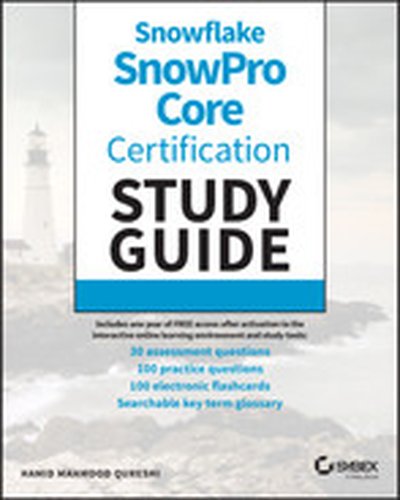
Snowflake SnowPro Core Certification Study Guide

Prepare smarter, faster, and better with the premier study guide for Snowflake SnowPro Core certification Snowflake, a cloud-based data warehousing platform, has steadily gained popularity since its 2014 launch. Snowflake offers several certification exams, of which the SnowPro Core certification is the foundational exam. The SnowPro Core Certification validates an individual's grasp of Snowflake as a cloud data warehouse, its architectural fundamentals, and the ability to design, implement, and maintain secure, scalable Snowflake systems. The Snowflake SnowPro Core Certification Study Guide delivers comprehensive coverage of every relevant exam topic on the Snowflake SnowPro Core Certification test. Prepare efficiently and effectively for the exam with online practice tests and flashcards, a digital glossary, and concise and easy-to-follow instruction from the subject-matter experts at Sybex. You'll gain the necessary knowledge to help you succeed in the exam and will be able to apply the acquired practical skills to real-world Snowflake solutions. This Study Guide includes: Comprehensive understanding of Snowflake's unique shared data, multi-cluster architecture Guidance on loading structured and semi-structured data into Snowflake Utilizing data sharing, cloning, and time travel features Managing performance through clustering keys, scaling compute up, down & across Steps to account management and security configuration including RBAC & MFA All the info you need to obtain a highly valued credential for a rapidly growing new database software solution Access to the Sybex online learning center, with chapter review questions, full-length practice exams, hundreds of electronic flashcards, and a glossary of key terms Perfect for anyone considering a new career in cloud-based data warehouse solutions and related fields, Snowflake SnowPro Core Certification Study Guide is also a must-read for veteran database professionals seeking an understanding of one of the newest and fastest-growing niches in data.

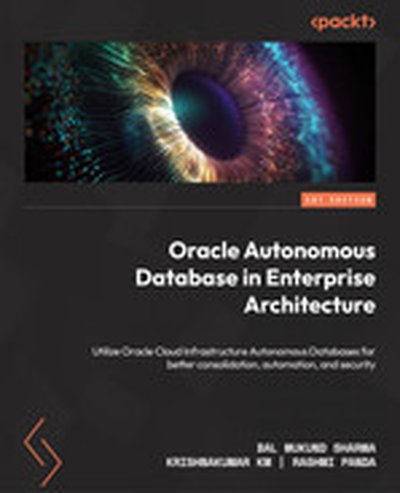
Oracle Autonomous Database in Enterprise Architecture

Explore the capabilities of Oracle Autonomous Database (ADB) to improve enterprise-level data management. Through this book, you will dive deep into deploying, managing, and securing ADBs using Oracle Cloud Infrastructure (OCI). Gain hands-on experience with high-availability setups, data migration methods, and advanced security measures to elevate your enterprise architecture. What this Book will help me do Understand the key considerations for planning, migrating, and maintaining Oracle Autonomous Databases. Learn to implement high availability solutions using Autonomous Data Guard in ADB environments. Master the configuration of backup, restore, and disaster recovery strategies within OCI. Implement advanced security practices including encryption and IAM policy management. Gain proficiency in leveraging ADB features like APEX, SQL Developer Web, and REST APIs for rapid application development. Author(s) The authors None Sharma, Krishnakumar KM, and None Panda are experts in database systems, particularly in Oracle technologies. With years of hands-on experience implementing enterprise solutions and training professionals, they have pooled their knowledge to craft a resource-rich guide filled with practical advice. Who is it for? This book is ideal for cloud architects, database administrators, and implementation consultants seeking to leverage Oracle's Autonomous Database for enhanced automation, security, and scalability. It is well-suited for professionals with foundational knowledge of Linux, OCI, and databases. Aspiring cloud engineers and students aiming to understand modern database management will also benefit greatly.

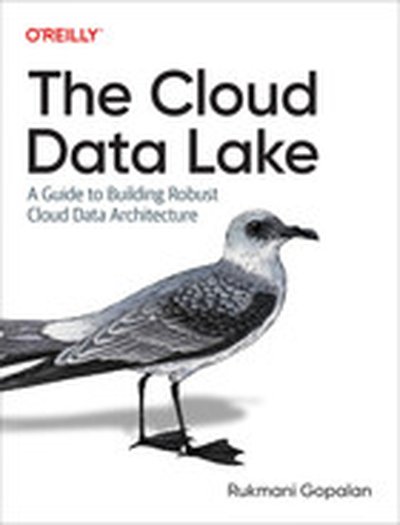
The Cloud Data Lake

More organizations than ever understand the importance of data lake architectures for deriving value from their data. Building a robust, scalable, and performant data lake remains a complex proposition, however, with a buffet of tools and options that need to work together to provide a seamless end-to-end pipeline from data to insights. This book provides a concise yet comprehensive overview on the setup, management, and governance of a cloud data lake. Author Rukmani Gopalan, a product management leader and data enthusiast, guides data architects and engineers through the major aspects of working with a cloud data lake, from design considerations and best practices to data format optimizations, performance optimization, cost management, and governance. Learn the benefits of a cloud-based big data strategy for your organization Get guidance and best practices for designing performant and scalable data lakes Examine architecture and design choices, and data governance principles and strategies Build a data strategy that scales as your organizational and business needs increase Implement a scalable data lake in the cloud Use cloud-based advanced analytics to gain more value from your data

Optimized Inferencing and Integration with AI on IBM zSystems: Introduction, Methodology, and Use Cases

In today's fast-paced, ever-growing digital world, you face various new and complex business problems. To help resolve these problems, enterprises are embedding artificial intelligence (AI) into their mission-critical business processes and applications to help improve operations, optimize performance, personalize the user experience, and differentiate themselves from the competition. Furthermore, the use of AI on the IBM® zSystems platform, where your mission-critical transactions, data, and applications are installed, is a key aspect of modernizing business-critical applications while maintaining strict service-level agreements (SLAs) and security requirements. This colocation of data and AI empowers your enterprise to optimally and easily deploy and infuse AI capabilities into your enterprise workloads with the most recent and relevant data available in real time, which enables a more transparent, accurate, and dependable AI experience. This IBM Redpaper publication introduces and explains AI technologies and hardware optimizations, such as IBM zSystems Integrated Accelerator for AI, and demonstrates how to leverage certain capabilities and components to enable solutions in business-critical use cases, such as fraud detection and credit risk scoring on the platform. Real-time inferencing with AI models, a capability that is critical to certain industries and use cases such as fraud detection, now can be implemented with optimized performance thanks to innovations like IBM zSystems Integrated Accelerator for AI embedded in the Telum chip within IBM z16™. This publication also describes and demonstrates the implementation and integration of the two end-to-end solutions (fraud detection and credit risk), from developing and training the AI models to deploying the models in an IBM z/OS® V2R5 environment on IBM z16 hardware, and to integrating AI functions into an application, for example an IBM z/OS Customer Information Control System (IBM CICS®) application. We describe performance optimization recommendations and considerations when leveraging AI technology on the IBM zSystems platform, including optimizations for micro-batching in IBM Watson® Machine Learning for z/OS (WMLz). The benefits that are derived from the solutions also are described in detail, which includes how the open-source AI framework portability of the IBM zSystems platform enables model development and training to be done anywhere, including on IBM zSystems, and the ability to easily integrate to deploy on IBM zSystems for optimal inferencing. You can uncover insights at the transaction level while taking advantage of the speed, depth, and securability of the platform. This publication is intended for technical specialists, site reliability engineers, architects, system programmers, and systems engineers. Technologies that are covered include TensorFlow Serving, WMLz, IBM Cloud Pak® for Data (CP4D), IBM z/OS Container Extensions (zCX), IBM Customer Information Control System (IBM CICS), Open Neural Network Exchange (ONNX), and IBM Deep Learning Compiler (zDLC).

Pro SQL Server 2022 Administration: A Guide for the Modern DBA

Get your daily work done efficiently using this comprehensive guide for SQL Server DBAs that covers all that a practicing database administrator needs to know. Updated for SQL Server 2022, this edition includes coverage of new features, such as Ledger, which provides an immutable record of table history to protect you against malicious data tampering, and integration with cloud providers to support hybrid cloud scenarios. You’ll also find new content on performance optimizations, such as query pan feedback, and security controls, such as new database roles, which are restructured for modern ways of working. Coverage also includes Query Store, installation on Linux, and the use of containerized SQL. Pro SQL Server 2022 Administration takes DBAs on a journey that begins with planning their SQL Server deployment and runs through installing and configuring the instance, administering and optimizing database objects, and ensuring that data issecure and highly available. Readers will learn how to perform advanced maintenance and tuning techniques, and discover SQL Server's hybrid cloud functionality. This book teaches you how to make the most of new SQL Server 2022 functionality, including integration for hybrid cloud scenarios. The book promotes best-practice installation, shows how to configure for scalability and high availability, and demonstrates the gamut of database-level maintenance tasks, such as index maintenance, database consistency checks, and table optimizations. What You Will Learn Integrate SQL Server with Azure for hybrid cloud scenarios Audit changes and prevent malicious data changes with SQL Server’s Ledger Secure and encrypt data to protect against embarrassing data breaches Ensure 24 x 7 x 365 access through high availability and disaster recovery features in today’s hybrid world Use Azure tooling, including Arc, to gain insight into and manage your SQL Server enterprise Install and configure SQL Server on Windows, Linux, and in containers Perform routine maintenance tasks, such as backups and database consistency checks Optimize performance and undertake troubleshooting in the Database Engine Who This Book Is For SQL Server DBAs who manage on-premise installations of SQL Server. This book is also useful for DBAs who wish to learn advanced features, such as integration with Azure, Query Store, Extended Events, and Policy-Based Management, or those who need to install SQL Server in a variety of environments.