talk-data.com talk-data.com

Topic

data-science-tasks

849

tagged

Activity Trend

1 peak/qtr
2020-Q1 2026-Q1

Activities

849 activities · Newest first

Bayesian Methods for Management and Business: Pragmatic Solutions for Real Problems

HIGHLIGHTS THE USE OF BAYESIAN STATISTICS TO GAIN INSIGHTS FROM EMPIRICAL DATA Featuring an accessible approach, Bayesian Methods for Management and Business: Pragmatic Solutions for Real Problems demonstrates how Bayesian statistics can help to provide insights into important issues facing business and management. The book draws on multidisciplinary applications and examples and utilizes the freely available software WinBUGS and R to illustrate the integration of Bayesian statistics within data-rich environments. Computational issues are discussed and integrated with coverage of linear models, sensitivity analysis, Markov Chain Monte Carlo (MCMC), and model comparison. In addition, more advanced models including hierarchal models, generalized linear models, and latent variable models are presented to further bridge the theory and application in real-world usage. Bayesian Methods for Management and Business: Pragmatic Solutions for Real Problems also features: Numerous real-world examples drawn from multiple management disciplines such as strategy, international business, accounting, and information systems An incremental skill-building presentation based on analyzing data sets with widely applicable models of increasing complexity An accessible treatment of Bayesian statistics that is integrated with a broad range of business and management issues and problems A practical problem-solving approach to illustrate how Bayesian statistics can help to provide insight into important issues facing business and management Bayesian Methods for Management and Business: Pragmatic Solutions for Real Problems is an important textbook for Bayesian statistics courses at the advanced MBA-level and also for business and management PhD candidates as a first course in methodology. In addition, the book is a useful resource for management scholars and practitioners as well as business academics and practitioners who seek to broaden their methodological skill sets.
Data Visualization, 2nd Edition

This book explores the study of processing and visually representing data sets. Data visualization is closely related to information graphics, information visualization, scientific visualization, and statistical graphics. This second edition presents a better treatment of the relationship between traditional scientific visualization and information visualization, a description of the emerging field of visual analytics, and updated techniques using the GPU and new generations of software tools and packages. This edition is also enhanced with exercises and downloadable code and data sets.

Statistical Inference for Models with Multivariate t-Distributed Errors

This book summarizes the results of various models under normal theory with a brief review of the literature. Statistical Inference for Models with Multivariate t-Distributed Errors: Includes a wide array of applications for the analysis of multivariate observations Emphasizes the development of linear statistical models with applications to engineering, the physical sciences, and mathematics Contains an up-to-date bibliography featuring the latest trends and advances in the field to provide a collective source for research on the topic Addresses linear regression models with non-normal errors with practical real-world examples Uniquely addresses regression models in Student's t-distributed errors and t-models Supplemented with an Instructor's Solutions Manual, which is available via written request by the Publisher

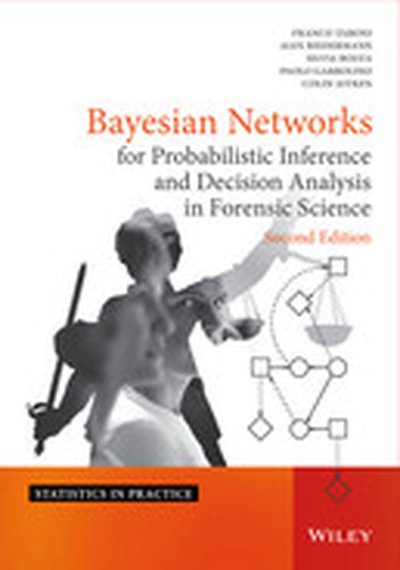
Bayesian Networks for Probabilistic Inference and Decision Analysis in Forensic Science, 2nd Edition

"This book should have a place on the bookshelf of every forensic scientist who cares about the science of evidence interpretation" Dr. Ian Evett, Principal Forensic Services Ltd, London, UK Continuing developments in science and technology mean that the amounts of information forensic scientists are able to provide for criminal investigations is ever increasing. The commensurate increase in complexity creates difficulties for scientists and lawyers with regard to evaluation and interpretation, notably with respect to issues of inference and decision. Probability theory, implemented through graphical methods, and specifically Bayesian networks, provides powerful methods to deal with this complexity. Extensions of these methods to elements of decision theory provide further support and assistance to the judicial system. Bayesian Networks for Probabilistic Inference and Decision Analysis in Forensic Science provides a unique and comprehensive introduction to the use of Bayesian decision networks for the evaluation and interpretation of scientific findings in forensic science, and for the support of decision-makers in their scientific and legal tasks. Includes self-contained introductions to probability and decision theory. Develops the characteristics of Bayesian networks, object-oriented Bayesian networks and their extension to decision models. Features implementation of the methodology with reference to commercial and academically available software. Presents standard networks and their extensions that can be easily implemented and that can assist in the reader's own analysis of real cases. Provides a technique for structuring problems and organizing data based on methods and principles of scientific reasoning. Contains a method for the construction of coherent and defensible arguments for the analysis and evaluation of scientific findings and for decisions based on them. Is written in a lucid style, suitable for forensic scientists and lawyers with minimal mathematical background. Includes a foreword by Ian Evett. The clear and accessible style of this second edition makes this book ideal for all forensic scientists, applied statisticians and graduate students wishing to evaluate forensic findings from the perspective of probability and decision analysis. It will also appeal to lawyers and other scientists and professionals interested in the evaluation and interpretation of forensic findings, including decision making based on scientific information.

Designing and Conducting Survey Research: A Comprehensive Guide, 4th Edition

The industry standard guide, updated with new ideas and SPSS analysis techniques Designing and Conducting Survey Research: A Comprehensive Guide Fourth Edition is the industry standard resource that covers all major components of the survey process, updated to include new data analysis techniques and SPSS procedures with sample data sets online. The book offers practical, actionable guidance on constructing the instrument, administrating the process, and analyzing and reporting the results, providing extensive examples and worksheets that demonstrate the appropriate use of survey and data techniques. By clarifying complex statistical concepts and modern analysis methods, this guide enables readers to conduct a survey research project from initial focus concept to the final report. Public and nonprofit managers with survey research responsibilities need to stay up-to-date on the latest methods, techniques, and best practices for optimal data collection, analysis, and reporting. Designing and Conducting Survey Research is a complete resource, answering the "what", "why", and "how" every step of the way, and providing the latest information about technological advancements in data analysis. The updated fourth edition contains step-by-step SPSS data entry and analysis procedures, as well as SPSS examples throughout the text, using real data sets from real-world studies. Other new information includes topics like: Nonresponse error/bias Ethical concerns and special populations Cell phone samples in telephone surveys Subsample screening and complex skip patterns The fourth edition also contains new information on the growing importance of focus groups, and places a special emphasis on data quality including size and variability. Those who employ survey research methods will find that Designing and Conducting Survey Research contains all the information needed to better design, conduct, and analyze a more effective survey.

Cognitive Interviewing Methodology

AN INTERDISCIPLINARY PERSPECTIVE TO THE EVOLUTION OF THEORY AND METHODOLOGY WITHIN COGNITIVE INTERVIEW PROCESSES Providing a comprehensive approach to cognitive interviewing in the field of survey methodology, Cognitive Interviewing Methodology delivers a clear guide that draws upon modern, cutting-edge research from a variety of fields. Each chapter begins by summarizing the prevailing paradigms that currently dominate the field of cognitive interviewing. Then underlying theoretical foundations are presented, which supplies readers with the necessary background to understand newly-evolving techniques in the field. The theories lead into developed and practiced methods by leading practitioners, researchers, and/or academics. Finally, the edited guide lays out the limitations of cognitive interviewing studies and explores the benefits of cognitive interviewing with other methodological approaches. With a primary focus on question evaluation, Cognitive Interviewing Methodology also includes: Step-by-step procedures for conducting cognitive interviewing studies, which includes the various aspects of data collection, questionnaire design, and data interpretation Newly developed tools to benefit cognitive interviewing studies as well as the field of question evaluation, such as Q-Notes, a data entry and analysis software application, and Q-Bank, an online resource that houses question evaluation studies A unique method for questionnaire designers, survey managers, and data users to analyze, present, and document survey data results from a cognitive interviewing study An excellent reference for survey researchers and practitioners in the social sciences who utilize cognitive interviewing techniques in their everyday work, Cognitive Interviewing Methodology is also a useful supplement for courses on survey methods at the upper-undergraduate and graduate-level.

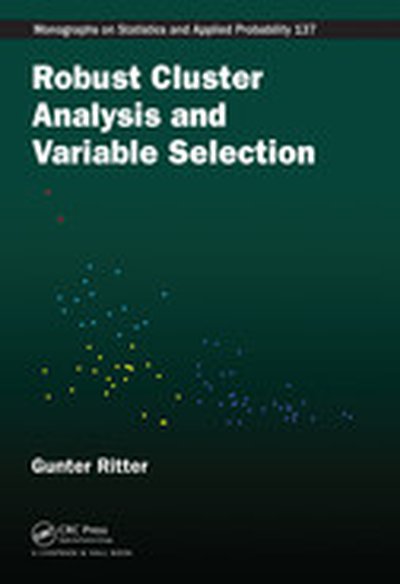
Robust Cluster Analysis and Variable Selection

Clustering remains a vibrant area of research in statistics. Although there are many books on this topic, there are relatively few that are well founded in the theoretical aspects. In Robust Cluster Analysis and Variable Selection, Gunter Ritter presents an overview of the theory and applications of probabilistic clustering and variable selection, synthesizing the key research results of the last 50 years. The author focuses on the robust clustering methods he found to be the most useful on simulated data and real-time applications. The book provides clear guidance for the varying needs of both applications, describing scenarios in which accuracy and speed are the primary goals. Robust Cluster Analysis and Variable Selection includes all of the important theoretical details, and covers the key probabilistic models, robustness issues, optimization algorithms, validation techniques, and variable selection methods. The book illustrates the different methods with simulated data and applies them to real-world data sets that can be easily downloaded from the web. This provides you with guidance in how to use clustering methods as well as applicable procedures and algorithms without having to understand their probabilistic fundamentals.

Statistical Process Control for Managers

If you have been frustrated by very technical statistical process control (SPC) training materials, then this is the book for you. This book focuses on how SPC works and why managers should consider using it in their operations. It provides you with a conceptual understanding of SPC so that appropriate decisions can be made about the benefits of incorporating SPC into the process management and quality improvement processes. Today, there is little need to make the necessary calculations by hand, so the author utilizes Minitab and NWA Quality Analyst—two of the most popular statistical analysis software packages on the market. Links are provided to the home pages of these software packages where trial versions may be downloaded for evaluation and trial use. The book also addresses the question of why SPC should be considered for use, the process of implementing SPC, how to incorporate SPC into problem identification, problem solving, and the management and improvement of processes, products, and services.

Visual Storytelling with D3: An Introduction to Data Visualization in JavaScript™

Master D3, Today’s Most Powerful Tool for Visualizing Data on the Web Data-driven graphics are everywhere these days, from websites and mobile apps to interactive journalism and high-end presentations. Using D3, you can create graphics that are visually stunning and powerfully effective. is a hands-on, full-color tutorial that teaches you to design charts and data visualizations to tell your story quickly and intuitively, and that shows you how to wield the powerful D3 JavaScript library. Visual Storytelling with D3 Drawing on his extensive experience as a professional graphic artist, writer, and programmer, Ritchie S. King walks you through a complete sample project—from conception through data selection and design. Step by step, you’ll build your skills, mastering increasingly sophisticated graphical forms and techniques. If you know a little HTML and CSS, you have all the technical background you’ll need to master D3. This tutorial is for web designers creating graphics-driven sites, services, tools, or dashboards; online journalists who want to visualize their content; researchers seeking to communicate their results more intuitively; marketers aiming to deepen their connections with customers; and for any data visualization enthusiast. Coverage includes Identifying a data-driven story and telling it visually Creating and manipulating beautiful graphical elements with SVG Shaping web pages with D3 Structuring data so D3 can easily visualize it Using D3’s data joins to connect your data to the graphical elements on a web page Sizing and scaling charts, and adding axes to them Loading and filtering data from external standalone datasets Animating your charts with D3’s transitions Adding interactivity to visualizations, including a play button that cycles through different views of your data Finding D3 resources and getting involved in the thriving online D3 community About the Website All of this book’s examples are available at ritchiesking.com/book, along with video tutorials, updates, supporting material, and even more examples, as they become available.

Nonparametric Hypothesis Testing: Rank and Permutation Methods with Applications in R

A novel presentation of rank and permutation tests, with accessible guidance to applications in R Nonparametric testing problems are frequently encountered in many scientific disciplines, such as engineering, medicine and the social sciences. This book summarizes traditional rank techniques and more recent developments in permutation testing as robust tools for dealing with complex data with low sample size. Key Features: Examines the most widely used methodologies of nonparametric testing. Includes extensive software codes in R featuring worked examples, and uses real case studies from both experimental and observational studies. Presents and discusses solutions to the most important and frequently encountered real problems in different fields. Features a supporting website ( www.wiley.com/go/hypothesis_testing) containing all of the data sets examined in the book along with ready to use R software codes. Nonparametric Hypothesis Testing combines an up to date overview with useful practical guidance to applications in R, and will be a valuable resource for practitioners and researchers working in a wide range of scientific fields including engineering, biostatistics, psychology and medicine.

Making Sense of Data I: A Practical Guide to Exploratory Data Analysis and Data Mining, 2nd Edition

Praise for the First Edition "...a well-written book on data analysis and data mining that provides an excellent foundation..." —CHOICE "This is a must-read book for learning practical statistics and data analysis..." —Computing Reviews.com A proven go-to guide for data analysis, Making Sense of Data I: A Practical Guide to Exploratory Data Analysis and Data Mining, Second Edition focuses on basic data analysis approaches that are necessary to make timely and accurate decisions in a diverse range of projects. Based on the authors' practical experience in implementing data analysis and data mining, the new edition provides clear explanations that guide readers from almost every field of study. In order to facilitate the needed steps when handling a data analysis or data mining project, a step-by-step approach aids professionals in carefully analyzing data and implementing results, leading to the development of smarter business decisions. The tools to summarize and interpret data in order to master data analysis are integrated throughout, and the Second Edition also features: Updated exercises for both manual and computer-aided implementation with accompanying worked examples New appendices with coverage on the freely available Traceis" software, including tutorials using data from a variety of disciplines such as the social sciences, engineering, and finance New topical coverage on multiple linear regression and logistic regression to provide a range of widely used and transparent approaches Additional real-world examples of data preparation to establish a practical background for making decisions from data Making Sense of Data I: A Practical Guide to Exploratory Data Analysis and Data Mining, Second Edition is an excellent reference for researchers and professionals who need to achieve effective decision making from data. The Second Edition is also an ideal textbook for undergraduate and graduate-level courses in data analysis and data mining and is appropriate for cross-disciplinary courses found within computer science and engineering departments.

The Boundary Element Method for Plate Analysis

Boundary Element Method for Plate Analysis offers one of the first systematic and detailed treatments of the application of BEM to plate analysis and design. Aiming to fill in the knowledge gaps left by contributed volumes on the topic and increase the accessibility of the extensive journal literature covering BEM applied to plates, author John T. Katsikadelis draws heavily on his pioneering work in the field to provide a complete introduction to theory and application. Beginning with a chapter of preliminary mathematical background to make the book a self-contained resource, Katsikadelis moves on to cover the application of BEM to basic thin plate problems and more advanced problems. Each chapter contains several examples described in detail and closes with problems to solve. Presenting the BEM as an efficient computational method for practical plate analysis and design, Boundary Element Method for Plate Analysis is a valuable reference for researchers, students and engineers working with BEM and plate challenges within mechanical, civil, aerospace and marine engineering. One of the first resources dedicated to boundary element analysis of plates, offering a systematic and accessible introductory to theory and application Authored by a leading figure in the field whose pioneering work has led to the development of BEM as an efficient computational method for practical plate analysis and design Includes mathematical background, examples and problems in one self-contained resource

Applied Bayesian Modelling, 2nd Edition

This book provides an accessible approach to Bayesian computing and data analysis, with an emphasis on the interpretation of real data sets. Following in the tradition of the successful first edition, this book aims to make a wide range of statistical modeling applications accessible using tested code that can be readily adapted to the reader's own applications. The second edition has been thoroughly reworked and updated to take account of advances in the field. A new set of worked examples is included. The novel aspect of the first edition was the coverage of statistical modeling using WinBUGS and OPENBUGS. This feature continues in the new edition along with examples using R to broaden appeal and for completeness of coverage.

Basic Data Analysis for Time Series with R

Written at a readily accessible level, Basic Data Analysis for Time Series with R emphasizes the mathematical importance of collaborative analysis of data used to collect increments of time or space. Balancing a theoretical and practical approach to analyzing data within the context of serial correlation, the book presents a coherent and systematic regression-based approach to model selection. The book illustrates these principles of model selection and model building through the use of information criteria, cross validation, hypothesis tests, and confidence intervals. Focusing on frequency- and time-domain and trigonometric regression as the primary themes, the book also includes modern topical coverage on Fourier series and Akaike's Information Criterion (AIC). In addition, Basic Data Analysis for Time Series with R also features: Real-world examples to provide readers with practical hands-on experience Multiple R software subroutines employed with graphical displays Numerous exercise sets intended to support readers understanding of the core concepts Specific chapters devoted to the analysis of the Wolf sunspot number data and the Vostok ice core data sets

Discovering Knowledge in Data: An Introduction to Data Mining, 2nd Edition

The field of data mining lies at the confluence of predictive analytics, statistical analysis, and business intelligence. Due to the ever-increasing complexity and size of data sets and the wide range of applications in computer science, business, and health care, the process of discovering knowledge in data is more relevant than ever before. This book provides the tools needed to thrive in today's big data world. The author demonstrates how to leverage a company's existing databases to increase profits and market share, and carefully explains the most current data science methods and techniques. The reader will "learn data mining by doing data mining". By adding chapters on data modelling preparation, imputation of missing data, and multivariate statistical analysis, Discovering Knowledge in Data, Second Edition remains the eminent reference on data mining. The second edition of a highly praised, successful reference on data mining, with thorough coverage of big data applications, predictive analytics, and statistical analysis. Includes new chapters on Multivariate Statistics, Preparing to Model the Data, and Imputation of Missing Data, and an Appendix on Data Summarization and Visualization Offers extensive coverage of the R statistical programming language Contains 280 end-of-chapter exercises Includes a companion website with further resources for all readers, and Powerpoint slides, a solutions manual, and suggested projects for instructors who adopt the book

Better Business Decisions from Data

" Everyone encounters statistics on a daily basis. They are used in proposals, reports, requests, and advertisements, among others, to support assertions, opinions, and theories. Unless you're a trained statistician, it can be bewildering. What are the numbers really saying or not saying? Better Business Decisions from Data: Statistical Analysis for Professional Success provides the answers to these questions and more. It will show you how to use statistical data to improve small, every-day management judgments as well as major business decisions with potentially serious consequences. Author Peter Kenny-with deep experience in industry-believes that "while the methods of statistics can be complicated, the meaning of statistics is not." He first outlines the ways in which we are frequently misled by statistical results, either because of our lack of understanding or because we are being misled intentionally. Then he offers sound approaches for understanding and assessing statistical data to make excellent decisions. Kenny assumes no prior knowledge of statistical techniques; he explains concepts simply and shows how the tools are used in various business situations. With the arrival of Big Data, statistical processing has taken on a new level of importance. Kenny lays a foundation for understanding the importance and value of Big Data, and then he shows how mined data can help you see your business in a new light and uncover opportunity. Among other things, this book covers: How statistics can help you assess the probability of a successful outcome How data is collected, sampled, and best interpreted How to make effective forecasts based on the data at hand How to spot the misuse or abuse of statistical evidence in advertisements, reports, and proposals How to commission a statistical analysis Arranged in seven parts-Uncertainties, Data, Samples, Comparisons, Relationships, Forecasts, and Big Data-" Better Business Decisions from Data is a guide for busy people in general management, finance, marketing, operations, and other business disciplines who run across statistics on a daily or weekly basis. You'll return to it again and again as new challenges emerge, making better decisions each time that boost your organization's fortunes—as well as your own.

Theory and Application of Statistical Energy Analysis, 2nd Edition

This up-to-date second edition provides a comprehensive examination of the theory and application of Statistical Energy Analysis (SEA) in acoustics and vibration. Complete with examples and data taken from real problems this unique book also exploresthe influence of computers on SEA and emphasizes computer based SEA calculations. In addition to a discussion of the relationship between SEA and other procedures used in response estimation, Theory and Application of Statistical Energy Anlaysis, SecondEdition, explores the basic relationships between model and wave descriptions of systems.

Discrete and Continuous Simulation

When it comes to discovering glitches inherent in complex systems—be it a railway or banking, chemical production, medical, manufacturing, or inventory control system—developing a simulation of a system can identify problems with less time, effort, and disruption than it would take to employ the original. Advantageous to both academic and industrial practitioners, Discrete and Continuous Simulation: Theory and Practice offers a detailed view of simulation that is useful in several fields of study. This text concentrates on the simulation of complex systems, covering the basics in detail and exploring the diverse aspects, including continuous event simulation and optimization with simulation. It explores the connections between discrete and continuous simulation, and applies a specific focus to simulation in the supply chain and manufacturing field. It discusses the Monte Carlo simulation, which is the basic and traditional form of simulation. It addresses future trends and technologies for simulation, with particular emphasis given to .NET technologies and cloud computing, and proposes various simulation optimization algorithms from existing literature. Includes chapters on input modeling and hybrid simulation Introduces general probability theory Contains a chapter on Microsoft ® Excel ™ and MATLAB ®/Simulink ® Discusses various probability distributions required for simulation Describes essential random number generators Discrete and Continuous Simulation: Theory and Practice defines the simulation of complex systems. This text benefits academic researchers in industrial/manufacturing/systems engineering, computer sciences, operations research, and researchers in transportation, operations management, healthcare systems, and human–machine systems.

Advanced Backend Optimization

This book is a summary of more than a decade of research in the area of backend optimization. It contains the latest fundamental research results in this field. While existing books are often more oriented toward Masters students, this book is aimed more towards professors and researchers as it contains more advanced subjects. It is unique in the sense that it contains information that has not previously been covered by other books in the field, with chapters on phase ordering in optimizing compilation; register saturation in instruction level parallelism; code size reduction for software pipelining; memory hierarchy effects and instruction level parallelism. Other chapters provide the latest research results in well-known topics such as register need, and software pipelining and periodic register allocation.