talk-data.com talk-data.com

Topic

data-science

2091

tagged

Activity Trend

1 peak/qtr
2020-Q1 2026-Q1

Activities

Showing filtered results

Filtering by: O'Reilly Data Science Books ×
Data Smart, 2nd Edition
book
by Jordan Goldmeier (Booz Allen Hamilton; The Perduco Group; EY; Excel TV; Wake Forest University; Anarchy Data)

Want to jump into data science but don't know where to start? Let's be real, data science is presented as something mystical and unattainable without the most powerful software, hardware, and data expertise. Real data science isn't about technology. It's about how you approach the problem. In this updated edition of Data Smart: Using Data Science to Transform Information into Insight, award-winning data scientist and bestselling author Jordan Goldmeier shows you how to implement data science problems using Excel while exposing how things work behind the scenes. Data Smart is your field guide to building statistics, machine learning, and powerful artificial intelligence concepts right inside your spreadsheet. Inside you'll find: Four-color data visualizations that highlight and illustrate the concepts discussed in the book Tutorials explaining complicated data science using just Microsoft Excel How to take what you’ve learned and apply it to everyday problems at work and life Advice for using formulas, Power Query, and some of Excel's latest features to solve tough data problems Smart data science solutions for common business challenges Explanations of what algorithms do, how they work, and what you can tweak to take your Excel skills to the next level Data Smart is a must-read for students, analysts, and managers ready to become data science savvy and share their findings with the world.
Leading in Analytics

A step-by-step guide for business leaders who need to manage successful big data projects Leading in Analytics: The Critical Tasks for Executives to Master in the Age of Big Data takes you through the entire process of guiding an analytics initiative from inception to execution. You’ll learn which aspects of the project to pay attention to, the right questions to ask, and how to keep the project team focused on its mission to produce relevant and valuable project. As an executive, you can’t control every aspect of the process. But if you focus on high-impact factors that you can control, you can ensure an effective outcome. This book describes those factors and offers practical insight on how to get them right. Drawn from best-practice research in the field of analytics, the Manageable Tasks described in this book are specific to the goal of implementing big data tools at an enterprise level. A dream team of analytics and business experts have contributed their knowledge to show you how to choose the right business problem to address, put together the right team, gather the right data, select the right tools, and execute your strategic plan to produce an actionable result. Become an analytics-savvy executive with this valuable book. Ensure the success of analytics initiatives, maximize ROI, and draw value from big data Learn to define success and failure in analytics and big data projects Set your organization up for analytics success by identifying problems that have big data solutions Bring together the people, the tools, and the strategies that are right for the job By learning to pay attention to critical tasks in every analytics project, non-technical executives and strategic planners can guide their organizations to measurable results.

Data Science: The Hard Parts

This practical guide provides a collection of techniques and best practices that are generally overlooked in most data engineering and data science pedagogy. A common misconception is that great data scientists are experts in the "big themes" of the discipline—machine learning and programming. But most of the time, these tools can only take us so far. In practice, the smaller tools and skills really separate a great data scientist from a not-so-great one. Taken as a whole, the lessons in this book make the difference between an average data scientist candidate and a qualified data scientist working in the field. Author Daniel Vaughan has collected, extended, and used these skills to create value and train data scientists from different companies and industries. With this book, you will: Understand how data science creates value Deliver compelling narratives to sell your data science project Build a business case using unit economics principles Create new features for a ML model using storytelling Learn how to decompose KPIs Perform growth decompositions to find root causes for changes in a metric Daniel Vaughan is head of data at Clip, the leading paytech company in Mexico. He's the author of Analytical Skills for AI and Data Science (O'Reilly).

Alteryx Designer Cookbook

This book, Alteryx Designer Cookbook, provides over 60 practical and detailed recipes that guide you in conquering data accessibility, preparation, and insights generation through Alteryx Designer. You will learn how to manipulate, blend, and analyze data sources effectively, improving your analytical productivity. What this Book will help me do Master efficient methods for cleaning, preparing, and shaping data accurately. Combine multiple data sources seamlessly using Alteryx Designer's blending tools. Implement essential data transformations such as pivoting and restructuring for analyses. Create reusable, automated solutions for repeated tasks using Alteryx macros. Generate rich, data-driven reports to enhance business intelligence efficiently. Author(s) None Guisande is an experienced data analytics professional with years of hands-on expertise in implementing data workflows using Alteryx Designer. Passionate about simplifying complex operations, None brings a practical approach to teaching, ensuring that readers can apply their skills immediately. Who is it for? This book is ideal for data analysts, professionals in business intelligence, and anyone proficient in Alteryx Designer's basics looking to deepen their understanding. If you aim to enhance your productivity and manual data tasks into efficient automated workflows, this book is a perfect fit.

Automate Testing for Power Apps

Are you looking to step up your Power Apps development game? "Automate Testing for Power Apps" is your comprehensive guide to leveraging low-code automation testing tools and techniques. Learn practical steps to integrate these methods into your workflow, ensuring your Power Apps are efficient, effective, and top-notch in quality. What this Book will help me do Master automation testing principles tailored specifically for Power Apps applications. Leverage tools like Test Studio and Test Engine to efficiently test Canvas apps. Learn advanced automation testing techniques for PCF components and model-driven apps. Incorporate robust testing procedures into software deployment for improved workflows. Enhance Power Apps quality and efficiency, reducing emergency fixes and improving user satisfaction. Author(s) César Calvo and Carlos de Huerta have deep expertise in Power Apps development and testing. With years of industry experience, they have honed their skills in creating robust apps and ensure quality through advanced testing techniques. Their approachable teaching style ensures learners grasp complex concepts effectively. Who is it for? This book is for Power Apps developers and IT professionals aiming to enhance their testing knowledge. Whether you're a beginner looking to grasp the basics or an advanced user exploring new automation possibilities, you'll find this guide invaluable. A basic understanding of Power Apps and Power Platform concepts will be beneficial.

Beginning Power BI for Business Users

Discover the utility of your organization’s data with Microsoft Power BI In Beginning Power BI for Business Users: Learning to Turn Data into Insights, accomplished data professional and business intelligence expert Paul Fuller delivers an intuitive and accessible handbook for professionals seeking to use Microsoft’s Power BI to access, analyze, understand, report, and act on the data available to their organizations. In the book, you’ll discover Power BI’s robust feature set, learn to ingest and model data, visualize and report on that data, and even use the DAX scripting language to unlock still more utility from Microsoft’s popular program. Beginning with general principles geared to readers with no or little experience with reporting or data analytics tools, the author walks you through how to manipulate common, publicly available data sources—including Excel files and relational databases. You’ll also learn to: Use the included and tested sample code to work through the helpful examples included by the author Conduct data orchestration and visualization to better understand and gain insights from your data An essential resource for business analysts and Excel power users reaching the limits of that program’s capabilities, Beginning Power BI for Business Users will also benefit data analysts who seek to prepare reports for their organizations using Microsoft’s flexible and intuitive software.

R Bioinformatics Cookbook - Second Edition

R Bioinformatics Cookbook is your guide to leveraging the power of R for advanced bioinformatics tasks. This updated second edition uses a recipe-based method to teach data analysis, visualization, and machine learning tailored for biological datasets. You'll gain hands-on experience with popular tools like Bioconductor, ggplot2, and tidyverse to solve real-world genomics problems. What this Book will help me do Set up a reproducible bioinformatics analysis environment using R. Clean, analyze, and visualize biological data with R's powerful packages. Apply RNA-seq and ChIP-seq workflows to study genetic information effectively. Incorporate machine learning techniques into bioinformatics pipelines using R. Automate tasks and create professional-grade reports using functional programming and reporting tools. Author(s) The author, None MacLean, brings years of expertise in bioinformatics and computational biology. Known for clear explanations and practical approaches, they ensure the material is accessible yet challenging. With a strong focus on real-world applications, this book reflects their commitment to bridging bioinformatics and modern data science. Who is it for? This book is perfect for bioinformaticians, researchers, and data scientists with prior R experience. It's tailored for those looking to delve deeper into genomics, data visualization, and bioinformatics techniques. Intermediate knowledge of bioinformatics concepts and familiarity with R programming are assumed for readers to fully benefit from the content.

Machine Learning with Qlik Sense

Machine Learning with Qlik Sense introduces practical applications of machine learning within the Qlik platform. Through this book, you will gain a thorough understanding of fundamental ML concepts, learn to apply these within Qlik Sense, and see how to use predictive analytics to solve real-world problems. The hands-on examples ensure you can translate learnings into actionable insights. What this Book will help me do Understand the key principles of machine learning and how to apply them using the Qlik platform. Develop skills in data preprocessing and analysis to prepare datasets for machine learning models. Learn to validate and interpret machine learning models and evaluate their performance. Master advanced visualization techniques for presenting insights derived from data. Apply newfound knowledge to practical business problems through real-world use-case examples. Author(s) Hannu Ranta is an expert in data analytics and has extensive experience utilizing the Qlik platform to derive actionable insights from data. With years of practical exposure and a focus on teaching, Hannu brings a clear and structured approach to using machine learning for analytics. His writing seeks to empower readers to achieve practical solutions using Qlik's powerful tools. Who is it for? This book is perfect for data analysts, data scientists, or anyone working in data analytics who wants to incorporate machine learning into their skill set. It is especially suited to those with a basic familiarity with Qlik tools or data analysis concepts. Beginners in machine learning can also benefit because the book starts from foundational concepts and builds step-by-step.

The Statistics and Machine Learning with R Workshop

This book guides readers through the essentials of applied statistics and machine learning using the R programming language. By delving into robust data processing techniques, visualization, and statistical modeling with R, you will develop skills to effectively analyze data and design predictive models. Each chapter includes hands-on exercises to reinforce the concepts in a practical, intuitive way. What this Book will help me do Understand and apply key statistical concepts such as probability distributions and hypothesis testing to analyze data. Master foundational mathematical principles like linear algebra and calculus relevant to data science and machine learning. Develop proficiency in data manipulation and visualization using robust R libraries such as dplyr and ggplot2. Build predictive models through practical exercises and learn advanced concepts like Bayesian statistics and linear regression. Gain the practical knowledge needed to apply statistical and machine learning methodologies in real-world scenarios. Author(s) Liu Peng is an accomplished author with a strong academic and practical background in statistics and data science. Armed with extensive experience in applying R to real-world problems, he brings a blend of technical mastery and teaching expertise. His commitment is to transform complex concepts into accessible, enriching learning experiences for readers. Who is it for? This book is ideal for data scientists and analysts ranging from beginners to those at an intermediate level. It caters especially to those interested in practicing statistical modeling and learning R in depth. If you have basic familiarity with statistics and are looking to expand your data science capabilities using R, this book is well-suited for you.

Machine and Deep Learning Using MATLAB

MACHINE AND DEEP LEARNING In-depth resource covering machine and deep learning methods using MATLAB tools and algorithms, providing insights and algorithmic decision-making processes Machine and Deep Learning Using MATLAB introduces early career professionals to the power of MATLAB to explore machine and deep learning applications by explaining the relevant MATLAB tool or app and how it is used for a given method or a collection of methods. Its properties, in terms of input and output arguments, are explained, the limitations or applicability is indicated via an accompanied text or a table, and a complete running example is shown with all needed MATLAB command prompt code. The text also presents the results, in the form of figures or tables, in parallel with the given MATLAB code, and the MATLAB written code can be later used as a template for trying to solve new cases or datasets. Throughout, the text features worked examples in each chapter for self-study with an accompanying website providing solutions and coding samples. Highlighted notes draw the attention of the user to critical points or issues. Readers will also find information on: Numeric data acquisition and analysis in the form of applying computational algorithms to predict the numeric data patterns (clustering or unsupervised learning) Relationships between predictors and response variable (supervised), categorically sub-divided into classification (discrete response) and regression (continuous response) Image acquisition and analysis in the form of applying one of neural networks, and estimating net accuracy, net loss, and/or RMSE for the successive training, validation, and testing steps Retraining and creation for image labeling, object identification, regression classification, and text recognition Machine and Deep Learning Using MATLAB is a useful and highly comprehensive resource on the subject for professionals, advanced students, and researchers who have some familiarity with MATLAB and are situated in engineering and scientific fields, who wish to gain mastery over the software and its numerous applications.

Hands-On Web Scraping with Python - Second Edition

In "Hands-On Web Scraping with Python," you'll learn how to harness the power of Python libraries to extract, process, and analyze data from the web. This book provides a practical, step-by-step guide for beginners and data enthusiasts alike. What this Book will help me do Master the use of Python libraries like requests, lxml, Scrapy, and Beautiful Soup for web scraping. Develop advanced techniques for secure browsing and data extraction using APIs and Selenium. Understand the principles behind regex and PDF data parsing for comprehensive scraping. Analyze and visualize data using data science tools such as Pandas and Plotly. Build a portfolio of real-world scraping projects to demonstrate your capabilities. Author(s) Anish Chapagain, the author of "Hands-On Web Scraping with Python," is an experienced programmer and instructor who specializes in Python and data-related technologies. With his vast experience in teaching individuals from diverse backgrounds, Anish approaches complex concepts with clarity and a hands-on methodology. Who is it for? This book is perfect for aspiring data scientists, Python beginners, and anyone who wants to delve into web scraping. Readers should have a basic understanding of how websites work but no prior coding experience is required. If you aim to develop scraping skills and understand data analysis, this book is the ideal starting point.

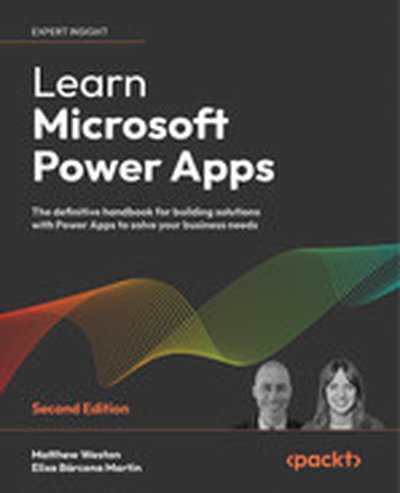
Learn Microsoft Power Apps - Second Edition

Learn Microsoft Power Apps is your complete guide to building personalized business applications using Microsoft's low-code platform. You'll discover how to create interactive, secure apps tailored to your needs, with the help of detailed examples, best practices, and progressive tutorials. Unleash the power of tools like AI Builder and Dataverse to add cutting-edge functionality to your applications. What this Book will help me do Understand the Power Apps ecosystem and its licensing to make informed decisions. Create canvas applications to address specific business challenges effectively. Incorporate integration with SharePoint, Power Automate, and other Microsoft tools for enhanced app capabilities. Use Dataverse for data storage and employ model-driven approaches for robust applications. Leverage artificial intelligence features like AI Builder and Copilot to accelerate and improve development. Author(s) Matthew Weston and Elisa Bárcena Martín are seasoned professionals in the Microsoft and business solutions field. Their combined experience includes decades of expertise in developing applications, consulting, and teaching others how to harness Power Platform technologies. They excel in breaking down complex topics into understandable, actionable content, and their supportive tone makes learning enjoyable and productive. Who is it for? This book is ideal for business analysts, IT professionals, and solution developers seeking to streamline business processes through custom applications. Whether you're a seasoned developer looking to expand into low-code platforms or a beginner eager to tackle real-world problems, this book guides you step by step. A basic understanding of Microsoft 365 is all that's needed to get started, giving non-developers and tech enthusiasts alike the confidence to create impactful applications.

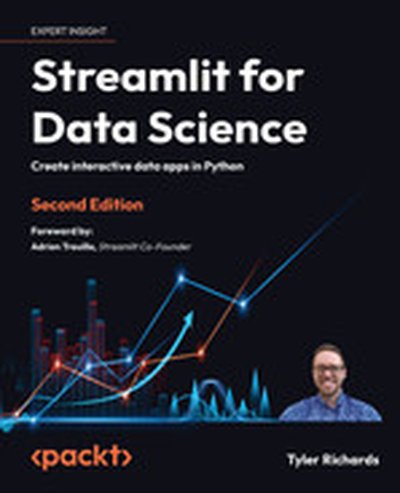
Streamlit for Data Science - Second Edition

Streamlit for Data Science is your complete guide to mastering the creation of powerful, interactive data-driven applications using Python and Streamlit. With this comprehensive resource, you'll learn everything from foundational Streamlit skills to advanced techniques like integrating machine learning models and deploying apps to cloud platforms, enabling you to significantly enhance your data science toolkit. What this Book will help me do Master building interactive applications using Streamlit, including techniques for user interfaces and integrations. Develop visually appealing and functional data visualizations using Python libraries in Streamlit. Learn to integrate Streamlit applications with machine learning frameworks and tools like Hugging Face and OpenAI. Understand and apply best practices to deploy Streamlit apps to cloud platforms such as Streamlit Community Cloud and Heroku. Improve practical Python skills through implementing end-to-end data applications and prototyping data workflows. Author(s) Tyler Richards, the author of Streamlit for Data Science, is a senior data scientist with in-depth practical experience in building data-driven applications. With a passion for Python and data visualization, Tyler leverages his knowledge to help data professionals craft effective and compelling tools. His teaching approach combines clarity, hands-on exercises, and practical relevance. Who is it for? This book is written for data scientists, engineers, and enthusiasts who use Python and want to create dynamic data-driven applications. With a focus on those who have some familiarity with Python and libraries like Pandas or NumPy, it assists readers in building on their knowledge by offering tailored guidance. Perfect for those looking to prototype data projects or enhance their programming toolkit.

Learning Microsoft Power Automate

Processing information efficiently is critical to the successful operation of modern organizations. One particularly helpful tool is Microsoft Power Automate, a low-code/no-code development platform designed to help tech-savvy users create and implement workflows. This practical book explains how small-business and enterprise users can replace manual work that takes days with an automated process you can set up in a few hours using Power Automate. Paul Papanek Stork, principal architect at Don't Pa..Panic Consulting, provides a concise yet comprehensive overview of the foundational skills required to understand and work with Power Automate. You'll learn how to use these workflows, or flows, to automate repetitive tasks or complete business processes without manual intervention. Whether you're transferring form responses to a list, managing document approvals, sending automatic reminders for overdue tasks, or archiving emails and attachments, these skills will help you: Design and build flows with templates or from scratch Select triggers and actions to automate a process Add actions to a flow to retrieve and process information Use functions to transform information Control the logic of a process using conditional actions, loops, or parallel branches Implement error checking to avoid potential problems

Learning Data Science

As an aspiring data scientist, you appreciate why organizations rely on data for important decisions—whether it's for companies designing websites, cities deciding how to improve services, or scientists discovering how to stop the spread of disease. And you want the skills required to distill a messy pile of data into actionable insights. We call this the data science lifecycle: the process of collecting, wrangling, analyzing, and drawing conclusions from data. Learning Data Science is the first book to cover foundational skills in both programming and statistics that encompass this entire lifecycle. It's aimed at those who wish to become data scientists or who already work with data scientists, and at data analysts who wish to cross the "technical/nontechnical" divide. If you have a basic knowledge of Python programming, you'll learn how to work with data using industry-standard tools like pandas. Refine a question of interest to one that can be studied with data Pursue data collection that may involve text processing, web scraping, etc. Glean valuable insights about data through data cleaning, exploration, and visualization Learn how to use modeling to describe the data Generalize findings beyond the data

Python Data Analytics: With Pandas, NumPy, and Matplotlib

Explore the latest Python tools and techniques to help you tackle the world of data acquisition and analysis. You'll review scientific computing with NumPy, visualization with matplotlib, and machine learning with scikit-learn. This third edition is fully updated for the latest version of Python and its related libraries, and includes coverage of social media data analysis, image analysis with OpenCV, and deep learning libraries. Each chapter includes multiple examples demonstrating how to work with each library. At its heart lies the coverage of pandas, for high-performance, easy-to-use data structures and tools for data manipulation Author Fabio Nelli expertly demonstrates using Python for data processing, management, and information retrieval. Later chapters apply what you've learned to handwriting recognition and extending graphical capabilities with the JavaScript D3 library. Whether you are dealing with sales data, investment data, medical data, web page usage, or other data sets, Python Data Analytics, Third Edition is an invaluable reference with its examples of storing, accessing, and analyzing data. What You'll Learn Understand the core concepts of data analysis and the Python ecosystem Go in depth with pandas for reading, writing, and processing data Use tools and techniques for data visualization and image analysis Examine popular deep learning libraries Keras, Theano,TensorFlow, and PyTorch Who This Book Is For Experienced Python developers who need to learn about Pythonic tools for data analysis

Building Statistical Models in Python

Building Statistical Models in Python is your go-to guide for mastering statistical modeling techniques using Python. By reading this book, you will explore how to use Python libraries like stats models and others to tackle tasks such as regression, classification, and time series analysis. What this Book will help me do Develop a deep practical knowledge of statistical concepts and their implementation in Python. Create regression and classification models to solve real-world problems. Gain expertise analyzing time series data and generating valuable forecasts. Learn to perform hypothesis verification to interpret data correctly. Understand survival analysis and apply it in various industry scenarios. Author(s) Huy Hoang Nguyen, Paul N Adams, and Stuart J Miller bring their extensive expertise in data science and Python programming to the table. With years of professional experience in both industry and academia, they aim to make statistical modeling approachable and applicable. Combining technical depth with hands-on coding, their goal is to ensure readers not only understand the theory but also gain confidence in its application. Who is it for? This book is tailored for beginners and intermediate programmers seeking to learn statistical modeling without a prerequisite in mathematics. It's ideal for data analysts, data scientists, and Python enthusiasts who want to leverage statistical models to gain insights from data. With this book, you will journey from the basics to advanced applications, making it perfect for those who aim to master statistical analysis.

Good Charts, Updated and Expanded

The ultimate guide to data visualization and information design for business. Making good charts is a must-have skill for managers today. The vast amount of data that drives business isn't useful if you can't communicate the valuable ideas contained in that data—the threats, the opportunities, the hidden trends, the future possibilities. But many think that data visualization is too difficult—a specialist skill that's either the province of data scientists and complex software packages or the domain of professional designers and their visual creativity. Not so. Anyone can learn to produce quality "dataviz" and, more broadly, clear and effective information design. Good Charts will show you how to do it. In this updated and expanded edition, dataviz expert Scott Berinato provides all you need for turning those ordinary charts kicked out of a spreadsheet program into extraordinary visuals that captivate and persuade your audience and for transforming presentations that seem like a mishmash of charts and bullet points into clear, effective, persuasive storytelling experiences. Good Charts shows how anyone who invests a little time getting better at visual communication can create an outsized impact—both in their career and in their organization. You will learn: A framework for getting to better charts in just a few minutes Design techniques that immediately make your visuals clearer and more persuasive The building blocks of storytelling with your data How to build teams to bring visual communication skills into your organization and culture This new edition of Good Charts not only provides new visuals and updated concepts but adds an entirely new chapter on building teams around the visualization part of a data science operation and creating workflows to integrate visualization into everything you do. Graphics that merely present information won't cut it anymore. Make Good Charts your go-to resource for turning plain, uninspiring charts and presentations into smart, effective visualizations and stories that powerfully convey ideas.

Mastering Tableau 2023 - Fourth Edition

This comprehensive book on Tableau 2023 is your practical guide to mastering data visualization and business intelligence techniques. You will explore the latest features of Tableau, learn how to create insightful dashboards, and gain proficiency in integrating analytics and machine learning workflows. By the end, you'll have the skills to address a variety of analytics challenges using Tableau. What this Book will help me do Master the latest Tableau 2023 features and use cases to tackle analytics challenges. Develop and implement ETL workflows using Tableau Prep Builder for optimized data preparation. Integrate Tableau with programming languages such as Python and R to enhance analytics. Create engaging, visually impactful dashboards for effective data storytelling. Understand and apply data governance to ensure data quality and compliance. Author(s) Marleen Meier is an experienced data visualization expert and Tableau consultant with over a decade of experience helping organizations transform data into actionable insights. Her approach integrates her technical expertise and a keen eye for design to make analytics accessible rather than overwhelming. Her passion for teaching others to use visualization tools effectively shines through in her writing. Who is it for? This book is ideal for business analysts, BI professionals, or data analysts looking to enhance their Tableau expertise. It caters to both newcomers seeking to understand the foundations of Tableau and experienced users aiming to refine their skills in advanced analytics and data visualization. If your goal is to leverage Tableau as a strategic tool in your organization's BI projects, this book is for you.

Extending Microsoft Business Central with Power Platform

Unlock the full potential of Microsoft Business Central by integrating it with the Power Platform through this practical and hands-on guide. With step-by-step tutorials, you'll learn how to combine the capabilities of tools like Power Apps, Power Automate, and Dataverse to build scalable and efficient business solutions. By the end of the book, you'll be equipped to streamline business processes and add significant value. What this Book will help me do Effectively deploy Power Platform functionalities for Microsoft Business Central projects. Seamlessly connect Business Central with cloud and on-premises services. Leverage Dataverse and virtual tables to enhance data modeling and accessibility. Build custom applications using Power Apps and automate workflows with Power Automate. Generate advanced visual reports with Power BI directly integrated with Business Central. Author(s) Kim Congleton and Shawn Sissenwein are industry professionals with extensive experience in ERP systems and Microsoft technologies. With a deep knowledge of Business Central and the Power Platform, they bring practical insights into maximizing business value through technological advancements. Their teaching approach focuses on hands-on learning, real-world application, and empowering readers with actionable skills. Who is it for? This book is ideal for Business Central users, consultants, and solution architects aiming to enhance Business Central's capabilities through the Power Platform. If you're familiar with Business Central's basics and seek to optimize and extend its functionality without requiring extensive programming knowledge, then this guide is tailored for you.