talk-data.com talk-data.com

Topic

data-science

2091

tagged

Activity Trend

1 peak/qtr
2020-Q1 2026-Q1

Activities

Showing filtered results

Filtering by: O'Reilly Data Science Books ×
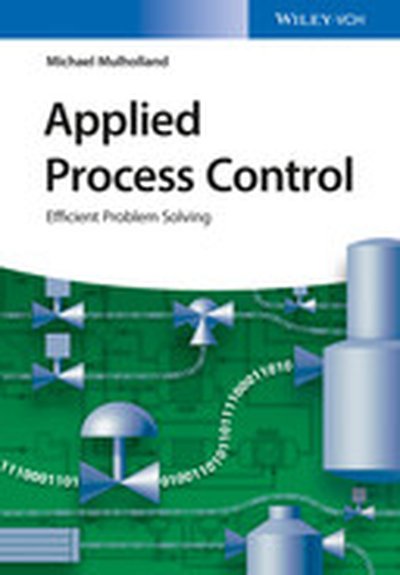
Applied Process Control

Bridging theory and practice, this book contains over 200 practical exercises and their solutions, to develop the problem-solving abilities of process engineers. The problems were developed by the author during his many years of teaching at university and are kept brief, taken from the fields of instrumentation, modelling, plant control, control strategy design and stability of control. The algorithm flows and codes, which are mostly based on MATLAB®, are given in many cases and allow for easy translation into applications. Since the text is structured according to "Applied Process Control: Essential Methods", all of the necessary background information on the underlying methods can be easily and quickly found in this accompanying book.

Principles of Data Science

If you've ever wondered how to bridge the gap between mathematics, programming, and actionable data insights, 'Principles of Data Science' is the guide for you. This book explores the full data science pipeline, providing you with tools and knowledge to transform raw data into impactful decisions. With practical lessons and hands-on tutorials, you'll master the essential skills of a data scientist. What this Book will help me do Understand and apply the five core steps of the data science process. Gain insight into data cleaning, visualization, and effective communication of results. Learn and implement foundational machine learning models using Python or R. Bridge gaps between mathematics, statistics, and programming to solve data-driven problems. Evaluate machine learning models using key metrics for better predictive capabilities. Author(s) The author, a seasoned data scientist with years of professional experience in analytics and software development, brings a rich perspective to the topic. Combining a strong foundation in mathematics with expertise in Python and R, they have worked on diverse real-world data projects. Their teaching philosophy emphasizes clarity and practical application, ensuring you not only gain knowledge but also know how to apply it effectively. Who is it for? This book is intended for individuals with a basic understanding of algebra and some programming experience in Python or R. It is perfect for programmers who wish to dive into the world of data science or for those with math skills looking to apply them practically. If you seek to turn raw data into valuable insights and predictions, this book is tailored for you.

Efficient data processing with R

What you’ll learn—and how you can apply it You’ll learn to perform efficient data carpentry—the process of taking rough, raw, and to some extent randomly arranged input data and creating neatly organized and tidy data. Working with clean data will be beneficial for every subsequent stage of your R project. In this Lesson, readers will learn how to create user-friendly data frames with tibble, reshape data with tidyr operations such as gather and separate, process data efficiently with dplyr’s functions, and connect R to a range of database types. This lesson is for you because You are working on a project in R and have reached the data processing stage. You want to clean, manipulate, and tidy your dataset to get it ready for the next stage (typically modeling and visualization). Prerequisites Some knowledge of R Materials or downloads needed in advance Installed RStudio This Lesson relies on a number of packages for data cleaning and processing. Check that they are installed on your computer and load them with: library("tibble") library("tidyr") library("stringr") library("readr") library("dplyr") library("data.table") RSQLite and ggmap are also used in a couple of examples, though they are not central to the Lesson’s content.

Efficient R optimization

What you’ll learn—and how you can apply it You’ll learn how to optimize your tried and tested code. In this Lesson, learners will understand how to profile code to identify and prevent key bottlenecks in R performance, as well as tricks that may improve performance on row and column operations and matrices. This Lesson also presents an example of specific improvements that can be made to enhance performance of the movie_square() function. This lesson is for you because You already have well-developed code that is mature conceptually and has been tried and tested. Now, you want to optimize this code. Prerequisites: Some knowledge of R and have well-developed R code Materials or downloads needed: Installed RStudio Some examples in this Lesson require a working C++ compiler

Efficient R Programming

There are many excellent R resources for visualization, data science, and package development. Hundreds of scattered vignettes, web pages, and forums explain how to use R in particular domains. But little has been written on how to simply make R work effectively—until now. This hands-on book teaches novices and experienced R users how to write efficient R code. Drawing on years of experience teaching R courses, authors Colin Gillespie and Robin Lovelace provide practical advice on a range of topics—from optimizing the set-up of RStudio to leveraging C++—that make this book a useful addition to any R user’s bookshelf.

Improve the outcome of your data experiments with A-B testing

Data scientists are faced with the need to conduct continual experiments, particularly regarding user interface and product marketing. Designing experiments is a cornerstone of the practice of statistics, with clear application to data science. In this lesson, you’ll learn about A-B testing and hypothesis, or significance tests—critical aspects of experimental design for data science. What you’ll learn—and how you can apply it You will learn the central concepts of A-B testing, understand its role in designing and conducting data science experiments, and the characteristics of a proper A-B test. Through a series of sample tests, you’ll learn how to interpret results, and apply that insight to your analysis of the data. Since A-B tests are typically constructed with a hypothesis in mind, you’ll also learn how to conduct various hypothesis, or significance tests, enabling you to avoid misinterpreting randomness. This lesson is for you because You are a data scientist or analyst working with data, and want to gain beginner-level knowledge of key statistical concepts to improve the design, and outcome of your experimental tests with data. Prerequisites: Basic familiarity with coding in R Materials or downloads needed: n/a

SAS ODS Graphics Designer by Example

You just got the results from your study, and need to get some quick graphical views of your data before you begin the analysis. Do you need a crash course in the SG procedures (also known as ODS Graphics procedures) just to get a simple histogram? What should you do? The ODS Graphics Designer is the answer. With this application, you can use the interactive drag-and-drop feature to create many graphs, including histograms, box plots, scatter plot matrices, classification panels, and more. You can render your graph in batch with new data and output the results to any open ODS destination, or view the generated Graph Template Language (GTL) code as a leg-up to GTL programming. You can do all this with ease!

SAS(R) ODS Graphics Designer by Example: A Visual Guide to Creating Graphs Interactively describes in detail the features of the ODS Graphics Designer. The designer application lets you, the analyst, create graphs interactively so that you can focus on the analysis, and not on learning graph syntax. This book will take you step-by-step through the features of the designer, providing you with examples of graphs that are commonly used for the analysis of data in the health care, life sciences, and finance industries. The examples in this book will help you create just the right graph with ease!

Dynamics of Structures with MATLAB® Applications by Pearsom

This book is designed for undergraduate and graduate students taking a first course in Dynamics of Structures, Structural Dynamics or Earthquake Engineering. It includes several topics on the theory of structural dynamics and the applications of this theory to the analysis of buildings, bridges, towers and other structures subjected to dynamic and earthquake forces. This comprehensive text demonstrates the applications of numerical solution techniques to a large variety of practical, real-world problems under dynamic loads.

About The Authors –

Dr Ashok K. Jain is Professor of Civil Engineering at the Indian Institute of Technology Roorkee (formerly University of Roorkee), obtained his B.E. and M.E. degrees with honours from the University of Roorkee in 1972 and 1974, and a doctorate degree from the University of Michigan, Ann Arbor, in 1978. His main areas of interest include multistoreyed buildings, concrete and steel bridges, and nonlinear seismic response of structures. Besides teaching and research, he has been a structural consultant to various state and central government agencies as well as many private companies. A recipient of several awards, he has been a research fellow at the University of Michigan; a visiting Professor at the McGill University, Montreal; Director, Malaviya National Institute of Technology, Jaipur; and Head of Civil Engineering Department, I.I.T. Roorkee.

Book Contents –

Part 1 Single degree of Freedom Systems Part 2 Multi-degree of Freedom Systems Part 3 Application to Earthquake Engineering Part 4 Wind Load Appendix 1 Measuring Earthquakes: Magnitude and Intensity Appendix 2 MATLAB Basics Answers to Selected Problems Index

R for Data Science

Learn how to use R to turn raw data into insight, knowledge, and understanding. This book introduces you to R, RStudio, and the tidyverse, a collection of R packages designed to work together to make data science fast, fluent, and fun. Suitable for readers with no previous programming experience, R for Data Science is designed to get you doing data science as quickly as possible. Authors Hadley Wickham and Garrett Grolemund guide you through the steps of importing, wrangling, exploring, and modeling your data and communicating the results. You’ll get a complete, big-picture understanding of the data science cycle, along with basic tools you need to manage the details. Each section of the book is paired with exercises to help you practice what you’ve learned along the way. You’ll learn how to: Wrangle—transform your datasets into a form convenient for analysis Program—learn powerful R tools for solving data problems with greater clarity and ease Explore—examine your data, generate hypotheses, and quickly test them Model—provide a low-dimensional summary that captures true "signals" in your dataset Communicate—learn R Markdown for integrating prose, code, and results

Trade-off Analytics

Presents information to create a trade-off analysis framework for use in government and commercial acquisition environments This book presents a decision management process based on decision theory and cost analysis best practices aligned with the ISO/IEC 15288, the Systems Engineering Handbook, and the Systems Engineering Body of Knowledge. It provides a sound trade-off analysis framework to generate the tradespace and evaluate value and risk to support system decision-making throughout the life cycle. Trade-off analysis and risk analysis techniques are examined. The authors present an integrated value trade-off and risk analysis framework based on decision theory. These trade-off analysis concepts are illustrated in the different life cycle stages using multiple examples from defense and commercial domains. Provides techniques to identify and structure stakeholder objectives and creative, doable alternatives Presents the advantages and disadvantages of tradespace creation and exploration techniques for trade-off analysis of concepts, architectures, design, operations, and retirement Covers the sources of uncertainty in the system life cycle and examines how to identify, assess, and model uncertainty using probability Illustrates how to perform a trade-off analysis using the INCOSE Decision Management Process using both deterministic and probabilistic techniques Trade-off Analytics: Creating and Exploring the System Tradespace is written for upper undergraduate students and graduate students studying systems design, systems engineering, industrial engineering and engineering management. This book also serves as a resource for practicing systems designers, systems engineers, project managers, and engineering managers. is a Research Professor in the Department of Industrial Engineering at the University of Arkansas. He is also a senior principal with Innovative Decisions, Inc., a decision and risk analysis firm and has served as Chairman of the Board. Dr. Parnell has published more than 100 papers and book chapters and was lead editor of Gregory S. Parnell, PhD, Decision Making for Systems Engineering and Management, Wiley Series in Systems Engineering (2nd Ed, Wiley 2011) and lead author of the Handbook of Decision Analysis (Wiley 2013). He is a fellow of INFORMS, the INCOSE, MORS, and the Society for Decision Professionals.

Mastering Tableau

Mastering Tableau is your comprehensive guide to becoming highly skilled in Tableau, focusing on advanced data visualization and practical applications. You will learn how to create complex dashboards, integrate R, and make the most of Tableau's features to deliver compelling insights. By the end of the book, you'll be ready to tackle real-world business intelligence challenges. What this Book will help me do Master advanced Tableau calculations such as row-level and aggregate-level calculations. Create engaging and efficient dashboards for professional data presentations. Integrate R functionalities with Tableau for predictive and advanced analytics. Design and implement custom geographic visualizations, including polygon maps. Optimize performance and best practices in Tableau for innovative BI solutions. Author(s) Jen Stirrup and None Baldwin are experienced data analysts and Tableau experts with years of practical experience in consulting and teaching. Jen has contributed significantly to the Tableau community through workshops and talks. Together, they provide structured guidance that helps readers master Tableau while emphasizing hands-on learning. Who is it for? This book is for business analysts aiming to enhance their data visualization skills using Tableau. Whether you are an intermediate Tableau user looking to tackle advanced techniques or someone wanting to streamline your BI workflows, this book focuses on practical problem-solving. It equips you to use Tableau effectively to create impactful visualizations and insights.

Style and Statistics

A non-technical guide to leveraging retail analytics for personal and competitive advantage Style & Statistics is a real-world guide to analytics in retail. Written specifically for the non-IT crowd, this book explains analytics in an approachable, understandable way, and provides examples of direct application to retail merchandise management, marketing, and operations. The discussion covers current industry trends and emerging-standard processes, and illustrates how analytics is providing new solutions to perennial retail problems. You'll learn how to leverage the benefits of analytics to boost your personal career, and how to interpret data in a way that's useful to the average end business user or shopper. Key concepts are detailed in easy-to-understand language, and numerous examples highlight the growing importance of understanding analytics in the retail environment. The power of analytics has become apparent across industries, but it's left an especially indelible mark on retail. It's a complex topic, but you don't need to be a data scientist to take advantage of the opportunities it brings. This book shows you what you need to know, and how to put analytics to work with retail-specific applications. Learn how analytics can help you be better at your job Dig deeper into the customer's needs, wants, and dreams Streamline merchandise management, pricing, marketing, and more Find solutions for inefficiencies and inaccuracies As the retail customer evolves, so must the retail industry. The retail landscape not only includes in-store but also website, mobile site, mobile apps, and social media . With more and more competition emerging on all sides, retailers need to use every tool at their disposal to create value and gain a competitive advantage. Analytics offers a number of ways to make your company stand out, whether it's through improved operations, customer experience, or any of the other myriad factors that build a great place to shop. Style & Statistics provides an analytics primer with a practical bent, specifically for the retail industry.

Implementing CDISC Using SAS

For decades researchers and programmers have used SAS to analyze, summarize, and report clinical trial data. Now Chris Holland and Jack Shostak have updated their popular Implementing CDISC Using SAS, the first comprehensive book on applying clinical research data and metadata to the Clinical Data Interchange Standards Consortium (CDISC) standards.

Implementing CDISC Using SAS: An End-to-End Guide, Second Edition, is an all-inclusive guide on how to implement and analyze the Study Data Tabulation Model (SDTM) and the Analysis Data Model (ADaM) data and prepare clinical trial data for regulatory submission. Updated to reflect the 2017 FDA mandate for adherence to CDISC standards, this new edition covers creating and using metadata, developing conversion specifications, implementing and validating SDTM and ADaM data, determining solutions for legacy data conversions, and preparing data for regulatory submission. The book covers products such as Base SAS, SAS Clinical Data Integration, and the SAS Clinical Standards Toolkit, as well as JMP Clinical. Topics included in this new edition include an implementation of the Define-XML 2.0 standard, new SDTM domains, validation with Pinnacle 21 software, event narratives in JMP Clinical, and of course new versions of SAS and JMP software.

Any manager or user of clinical trial data in this day and age is likely to benefit from knowing how to either put data into a CDISC standard or analyzing and finding data once it is in a CDISC format. If you are one such person--a data manager, clinical and/or statistical programmer, biostatistician, or even a clinician--then this book is for you.

R Data Structures and Algorithms

"R Data Structures and Algorithms" serves as a comprehensive guide to understanding data structures and algorithms for R developers. You will explore key data structures like stacks, queues, and trees, learn sorting and searching techniques, and apply these concepts to enhance the speed and efficiency of your R programs. What this Book will help me do Analyze algorithm efficiency using Big-O notation. Implement key data structures such as arrays, linked lists, and trees in R. Explore advanced techniques like dynamic programming and graph algorithms. Master sorting and searching algorithms for optimizing data processes. Utilize R-specific structures like vectors and data frames effectively. Author(s) The authors, PKS Prakash and Sri Krishna Rao, bring extensive experience in software development and data analysis, and a passion for making computer science concepts accessible. Their combined expertise ensures readers gain practical knowledge along with a deep theoretical understanding. Who is it for? This book is perfect for R developers aiming to deepen their understanding of data structures and algorithms. Whether you're a beginner with basic R proficiency or an advanced user seeking to boost application performance, this book provides the knowledge you need to succeed.

Advanced R: Data Programming and the Cloud

Program for data analysis using R and learn practical skills to make your work more efficient. This book covers how to automate running code and the creation of reports to share your results, as well as writing functions and packages. Advanced R is not designed to teach advanced R programming nor to teach the theory behind statistical procedures. Rather, it is designed to be a practical guide moving beyond merely using R to programming in R to automate tasks. This book will show you how to manipulate data in modern R structures and includes connecting R to data bases such as SQLite, PostgeSQL, and MongoDB. The book closes with a hands-on section to get R running in the cloud. Each chapter also includes a detailed bibliography with references to research articles and other resources that cover relevant conceptual and theoretical topics. What You Will Learn Write and document R functions Make an R package and share it via GitHub or privately Add tests to R code to insure it works as intended Build packages automatically with GitHub Use R to talk directly to databases and do complex data management Run R in the Amazon cloud Generate presentation-ready tables and reports using R Who This Book Is For Working professionals, researchers, or students who are familiar with R and basic statistical techniques such as linear regression and who want to learn how to take their R coding and programming to the next level.

How to design with data

Data is a key part of analyzing your designs and the way your users use your designs. Analytics can seem intimidating if you are not familiar with them, but the basics are pretty simple once you know what the numbers and graphs mean. What you’ll learn&8212;and how you can apply it You will learn basic tips about how to interpret a graph of user behavior to find the problems in your designs (so you can fix them!), and what the fundamental numbers mean. You will also start to have an intuition about how to compare those numbers to understand the “health” of your site/app and see insights that no one else can see. This lesson is for you because You can start using the information from these lessons today, and you will feel more comfortable learning more about user data and analytics after reading them. Prerequisites: No experience with data is necessary General familiarity with the idea of designing digital things is helpful Materials or downloads needed: None This Lesson in taken from by Joel Marsh. UX for Beginners

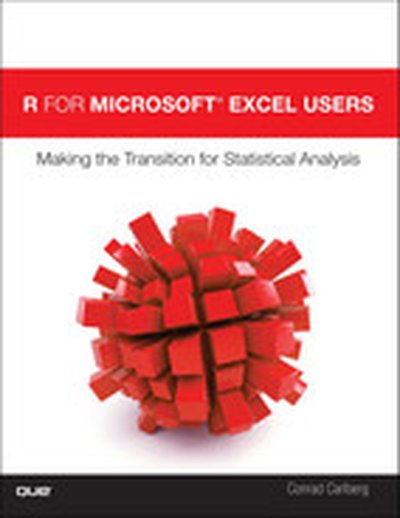
R for Microsoft® Excel Users: Making the Transition for Statistical Analysis

Microsoft Excel can perform many statistical analyses, but thousands of business users and analysts are now reaching its limits. R, in contrast, can perform virtually any imaginable analysis—if you can get over its learning curve. In R for Microsoft® Excel Users, Conrad Carlberg shows exactly how to get the most from both programs. Drawing on his immense experience helping organizations apply statistical methods, Carlberg reviews how to perform key tasks in Excel, and then guides you through reaching the same outcome in R—including which packages to install and how to access them. Carlberg offers expert advice on when and how to use Excel, when and how to use R instead, and the strengths and weaknesses of each tool. Writing in clear, understandable English, Carlberg combines essential statistical theory with hands-on examples reflecting real-world challenges. By the time you’ve finished, you’ll be comfortable using R to solve a wide spectrum of problems—including many you just couldn’t handle with Excel. • Smoothly transition to R and its radically different user interface • Leverage the R community’s immense library of packages • Efficiently move data between Excel and R • Use R’s DescTools for descriptive statistics, including bivariate analyses • Perform regression analysis and statistical inference in R and Excel • Analyze variance and covariance, including single-factor and factorial ANOVA • Use R’s mlogit package and glm function for Solver-style logistic regression • Analyze time series and principal components with R and Excel

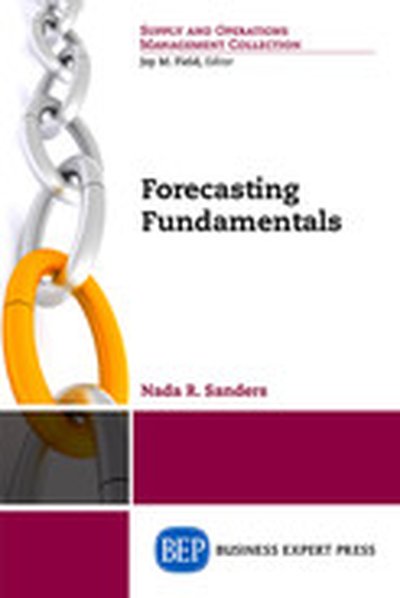
Forecasting Fundamentals

This book is for everyone who wants to make better forecasts. It is not about mathematics and statistics. It is about following a well-established forecasting process to create and implement good forecasts. This is true whether you are forecasting global markets, sales of SKUs, competitive strategy, or market disruptions. Today, most forecasts are generated using software. However, no amount of technology and statistics can compensate for a poor forecasting process. Forecasting is not just about generating a number. Forecasters need to understand the problems they are trying to solve. They also need to follow a process that is justifiable to other parties and be implemented in practice. This is what the book is about. Accurate forecasts are essential for predicting demand, identifying new market opportunities, forecasting risks, disruptions, innovation, competition, market growth and trends. Companies can navigate this daunting landscape and improve their forecasts by following some well-established principles. This book is written to provide the fundamentals business leaders need in order to make good forecasts. These fundamentals hold true regardless of what is being forecast and what technology is being used. It provides the basic foundational principles all companies need to achieve competitive forecast accuracy.

Pro Power BI Desktop

This book shows how to deliver eye-catching Business Intelligence with Microsoft Power BI Desktop. You can now take data from virtually any source and use it to produce stunning dashboards and compelling reports that will seize your audience's attention. Slice and dice the data with remarkable ease then add metrics and KPIs to project the insights that create your competitive advantage. Make raw data into clear, accurate, and interactive information with Microsoft's free self-service business intelligence tool. will help you to push your BI delivery to the next level. You'll learn to create great-looking visualizations and let your audience have fun by interacting with the elegant and visually arresting output that you can now deliver. You can choose from a wide range of built-in and third-party visualization types so that your message is always enhanced. You'll be able to deliver those results on the PC, on tablets, on smartphones, as well as share results via the cloud. Finally, this book helps you save time by preparing the underlying data correctly without needing an IT department to prepare it for you. Power BI Desktop will let your analyses speak for themselves. Pro Power BI Desktop Simple techniques to make data into insight. Polished interactive dashboards to deliver attention-grabbing information. Visually arresting output on multiple devices grab the reader's attention. What You Will Learn Produce designer output to astound your bosses and peers. Share business intelligence in the cloud Deliver visually stunning charts, maps, and tables. Make them interactive too! Find new insights as you chop and tweak your data as never before. Adapt delivery to mobile devices such as phones and tablets. Audience is written for any user who is comfortable in Microsoft Office. Everyone from CEOs and Business Intelligence developers through to power users and IT managers can use this book to outshine the competition by producing 21st Century business intelligence visualizations and reporting on a variety of devices from a variety of data sources. All of this is possible through leveraging your existing skill set with the same, common Microsoft tools you already use in your daily work. Pro Power BI Desktop