talk-data.com talk-data.com

Topic

data-science

2091

tagged

Activity Trend

1 peak/qtr
2020-Q1 2026-Q1

Activities

Showing filtered results

Filtering by: O'Reilly Data Science Books ×
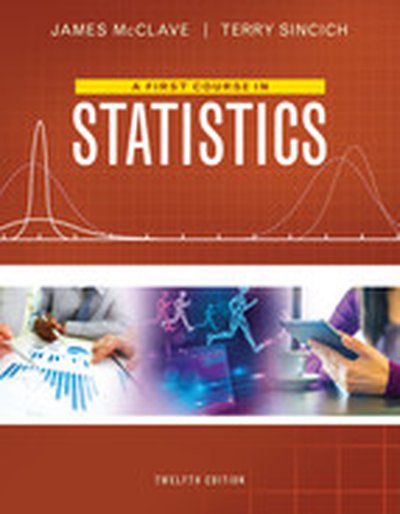
A First Course in Statistics, 12th Edition

For courses in introductory statistics. A Contemporary Classic Classic, yet contemporary; theoretical, yet applied—McClave & Sincich’s A First Course in Statistics gives you the best of both worlds. This text offers a trusted, comprehensive introduction to statistics that emphasizes inference and integrates real data throughout. The authors stress the development of statistical thinking, the assessment of credibility, and value of the inferences made from data. This new edition is extensively revised with an eye on clearer, more concise language throughout the text and in the exercises. Ideal for one- or two-semester courses in introductory statistics, this text assumes a mathematical background of basic algebra. Flexibility is built in for instructors who teach a more advanced course, with optional footnotes about calculus and the underlying theory. Also available with MyStatLab MyStatLab™ is an online homework, tutorial, and assessment program designed to work with this text to engage students and improve results. Within its structured environment, students practice what they learn, test their understanding, and pursue a personalized study plan that helps them absorb course material and understand difficult concepts. For this edition, MyStatLab offers 30% new and updated exercises. Note: You are purchasing a standalone product; MyLab™ & Mastering™ does not come packaged with this content. Students, if interested in purchasing this title with MyLab & Mastering, ask your instructor for the correct package ISBN and Course ID. Instructors, contact your Pearson representative for more information. If you would like to purchase both the physical text and MyLab & Mastering, search for: 0134090438 / 9780134090436 * Statistics Plus New MyStatLab with Pearson eText -- Access Card Package Package consists of: 0134080211 / 9780134080215 * Statistics 0321847997 / 9780321847997 * My StatLab Glue-in Access Card 032184839X / 9780321848390 * MyStatLab Inside Sticker for Glue-In Packages
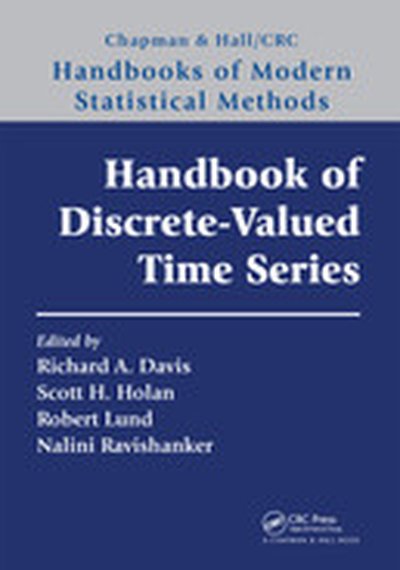
Handbook of Discrete-Valued Time Series

This handbook presents state-of-the-art methods for modeling time series of counts and incorporates frequentist and Bayesian approaches for discrete-valued spatio-temporal data and multivariate data. The book examines the advantages and limitations of the various modeling techniques and keeps probabilistic, technical details to a minimum. While the book focuses on time series of counts, some of the methods discussed can be applied to other types of discrete-valued time series, such as binary-valued or categorical time series.

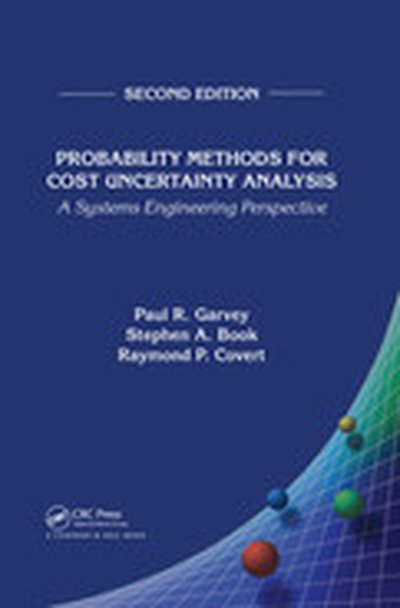
Probability Methods for Cost Uncertainty Analysis, 2nd Edition

This book presents analytical methods for modeling and measuring uncertainty in the cost of engineering systems. This includes the treatment of correlation between the cost of system elements, how to present the analysis to decision-makers, and the use of bivariate probability distributions to capture joint interactions between a system's cost and schedule. Analytical techniques from probability theory are stressed, along with the Monte Carlo simulation method. Numerous examples and case discussions illustrate the practical application of theoretical concepts.

R for Programmers

Unlike other books about R, written from the perspective of statistics, this book is written from the perspective of programmers, providing a channel for programmers with expertise in other programming languages to quickly understand R. The contents are divided into four parts: the basics of R, the server of R, databases and big data, and the appendices, which introduce the installation of Java, various databases, and Hadoop. Because this is a reference book, there is no special sequence for reading all the chapters. Anyone new to the subject who wishes to master R comprehensively can simply follow the chapters in sequence.

Big Data For Small Business For Dummies

Capitalise on big data to add value to your small business Written by bestselling author and big data expert Bernard Marr, Big Data For Small Business For Dummies helps you understand what big data actually is—and how you can analyse and use it to improve your business. Free of confusing jargon and complemented with lots of step-by-step guidance and helpful advice, it quickly and painlessly helps you get the most from using big data in a small business. Business data has been around for a long time. Unfortunately, it was trapped away in overcrowded filing cabinets and on archaic floppy disks. Now, thanks to technology and new tools that display complex databases in a much simpler manner, small businesses can benefit from the big data that's been hiding right under their noses. With the help of this friendly guide, you'll discover how to get your hands on big data to develop new offerings, products and services; understand technological change; create an infrastructure; develop strategies; and make smarter business decisions. Shows you how to use big data to make sense of user activity on social networks and customer transactions Demonstrates how to capture, store, search, share, analyse and visualise analytics Helps you turn your data into actionable insights Explains how to use big data to your advantage in order to transform your small business If you're a small business owner or employee, Big Data For Small Business For Dummies helps you harness the hottest commodity on the market today in order to take your company to new heights.

Business Forecasting

A comprehensive collection of the field's most provocative, influential new work Business Forecasting compiles some of the field's important and influential literature into a single, comprehensive reference for forecast modeling and process improvement. It is packed with provocative ideas from forecasting researchers and practitioners, on topics including accuracy metrics, benchmarking, modeling of problem data, and overcoming dysfunctional behaviors. Its coverage includes often-overlooked issues at the forefront of research, such as uncertainty, randomness, and forecastability, as well as emerging areas like data mining for forecasting. The articles present critical analysis of current practices and consideration of new ideas. With a mix of formal, rigorous pieces and brief introductory chapters, the book provides practitioners with a comprehensive examination of the current state of the business forecasting field. Forecasting performance is ultimately limited by the 'forecastability' of the data. Yet failing to recognize this, many organizations continue to squander resources pursuing unachievable levels of accuracy. This book provides a wealth of ideas for improving all aspects of the process, including the avoidance of wasted efforts that fail to improve (or even harm) forecast accuracy. Analyzes the most prominent issues in business forecasting Investigates emerging approaches and new methods of analysis Combines forecasts to improve accuracy Utilizes Forecast Value Added to identify process inefficiency The business environment is evolving, and forecasting methods must evolve alongside it. This compilation delivers an array of new tools and research that can enable more efficient processes and more accurate results. Business Forecasting provides an expert's-eye view of the field's latest developments to help you achieve your desired business outcomes.

Multi-Carrier Communication Systems with Examples in MATLAB

This book covers multi-carrier communication and discusses its advantages and limitations with solutions for these limitations. It addresses the two primary drawbacks of OFDM communication systems: the high sensitivity to carrier frequency offsets and phase noise, and the high peak-to-average power ratio (PAPR) of the transmitted signals. Presenting a new interleaving scheme for multicarrier communication, it discusses the application of continuous phase modulation to multi-carrier communication systems such as OFDM and SC-FDMA systems. It also discusses image transmission with Discrete Cosine Transform (DCT)-based SC-FDMA systems using continuous phase modulation.

Statistics for Economics, Second Edition

Statistics is the branch of mathematics that deals with real life problems. As such, it is an essential tool for economists. Unfortunately, the way the concept is introduced to students is not compatible with the way economists think and learn. The problem is worsened by the use of mathematical jargon and complex derivations. However, as this book demonstrates, neither is necessary. The book is written in simple English with minimal use of symbols, mostly for the sake of brevity and to make reading literature more meaningful. The second edition also incorporates Stata software for use by more technically oriented readers who have access to sophisticated software. The objective of this book is to address the fundamentals of statistical analysis in a simple and easy-to-comprehend way. Instead of covering numerous topics, the book covers interrelated subjects that are necessary for the comprehension of the presented topics. The second edition has augmented the explanations in the first to clarify the subjects even more. The examples are based on economic theory utilizing actual data. The hope is that the use of theory will prove useful in relating the subject to actual empirical applications and help with research.

Microsoft Visio 2016 Step By Step

The quick way to learn Microsoft Visio 2016!This is learning made easy. Get more done quickly with Visio 2016. Jump in wherever you need answers--brisk lessons and colorful screenshots show you exactly what to do, step by step. Get results faster with starter diagrams Diagram processes, organizations, networks, and datacenters Add styles, colors, and themes Enhance diagrams with data-driven visualizations Link to external data sources, websites, and documents Add structure to diagrams with containers, lists, and callouts Validate flowchart, swimlane, and BPMN diagrams Collaborate and publish with Visio Services and Microsoft SharePoint 2016 Look up just the tasks and lessons you need

The Patient Revolution

In The Patient Revolution, author Krisa Tailor—a noted expert in health care innovation and management—explores, through the lens of design thinking, how information technology will take health care into the experience economy. In the experience economy, patients will shift to being empowered consumers who are active participants in their own care. Tailor explores this shift by creating a vision for a newly designed health care system that's focused on both sickness and wellness, and is driven by data and analytics. The new system seamlessly integrates health into our daily lives, and delivers care so uniquely personalized that no two people are provided identical treatments. Connected through data, everyone across the health care ecosystem, including clinicians, insurers, and researchers, will be able to meet individuals wherever they are in their health journey to reach the ultimate goal of keeping people healthy. The patient revolution has just begun and an exciting journey awaits us. Praise for the patient revolution "A full 50% of the US population has at least one chronic disease that requires ongoing monitoring and treatment. Our current health care system is woefully inadequate in providing these individuals with the treatment and support they need. This disparity can only be addressed through empowering patients to better care for themselves and giving providers better tools to care for their patients. Both of those solutions will require the development and application of novel technologies. In Krisa Tailor's book The Patient Revolution, a blueprint is articulated for how this could be achieved, culminating in a vision for a learning health system within 10 years." —Ricky Bloomfield, MD, Director, Mobile Technology Strategy; Assistant Professor, Duke Medicine "In The Patient Revolution, Krisa Tailor astutely points out that 80% of health is impacted by factors outside of the health care system. Amazon unfortunately knows more about our patients than we do. The prescriptive analytics she describes will allow health care providers to use big data to optimize interventions at the level of the individual patient. The use of analytics will allow providers to improve quality, shape care coordination, and contain costs. Advanced analytics will lead to personalized care and ultimately empowered patients!" —Linda Butler, MD, Vice President of Medical Affairs/Chief Medical Officer/Chief Medical Information Officer, Rex Healthcare " The Patient Revolution provides a practical roadmap on how the industry can capture value by making health and care more personalized, anticipatory, and intuitive to patient needs." —Ash Damle, CEO, Lumiata "Excellent read. For me, health care represents a unique economy—one focused on technology, but requiring a deep understanding of humanity. Ms. Tailor begins the exploration of how we provide care via the concepts of design thinking, asking how we might redesign care with an eye toward changing the experience. She does an excellent job deconstructing this from the patient experience. I look forward to a hopeful follow-up directed at changing the provider culture." —Alan Pitt, MD, Chief Medical Officer, Avizia "Whether you're a health care provider looking to gain an understanding of the health care landscape, a health data scientist, or a seasoned business pro, you'll come away with a deeper, nuanced understanding of today's evolving health care system with this book. Krisa Tailor ties together—in a comprehensive, unique way—the worlds of health care administration, clinical practice, design thinking, and business strategy and innovation." —Steven Chan, MD, MBA, University of California, Davis

Learning Qlik Sense®: The Official Guide - Second Edition

This comprehensive guide to Qlik Sense provides you with everything you need to harness its data visualization capabilities effectively in your business or organization. Covering essential techniques and insights, this book focuses on understanding, implementing, and optimizing Qlik Sense for various data discovery applications. What this Book will help me do Understand the purpose and vision behind Qlik Sense and how it revolutionizes data discovery. Gain practical knowledge to manage, load, and visualize your data effectively using Qlik Sense. Learn how to administer Qlik Sense systems, ensuring secure and efficient usage. Explore extending Qlik Sense capabilities through its Dev Hub and other advanced features. Apply Qlik Sense in practical contexts, such as sales analytics, HR insights, and demographic studies. Author(s) Henric Cronström and co-authors, with vast experience directly from QlikTech International AB, bring authoritative insights into this book. Their expertise in business analytics and direct involvement with the development of Qlik Sense make this book a reliable and insightful resource for learners. Who is it for? This book is ideal for business intelligence professionals, data analysts, and decision-makers looking to maximize the potential of Qlik Sense. Whether you're new to Qlik Sense or have a general understanding of BI concepts, this guide will help you elevate your data discovery skills and apply actionable insights to real-world scenarios.

Getting Started with Data Science: Making Sense of Data with Analytics

Master Data Analytics Hands-On by Solving Fascinating Problems You’ll Actually Enjoy! Harvard Business Review recently called data science “The Sexiest Job of the 21st Century.” It’s not just sexy: For millions of managers, analysts, and students who need to solve real business problems, it’s indispensable. Unfortunately, there’s been nothing easy about learning data science–until now. Getting Started with Data Science takes its inspiration from worldwide best-sellers like Freakonomics and Malcolm Gladwell’s Outliers: It teaches through a powerful narrative packed with unforgettable stories. Murtaza Haider offers informative, jargon-free coverage of basic theory and technique, backed with plenty of vivid examples and hands-on practice opportunities. Everything’s software and platform agnostic, so you can learn data science whether you work with R, Stata, SPSS, or SAS. Best of all, Haider teaches a crucial skillset most data science books ignore: how to tell powerful stories using graphics and tables. Every chapter is built around real research challenges, so you’ll always know why you’re doing what you’re doing. You’ll master data science by answering fascinating questions, such as: • Are religious individuals more or less likely to have extramarital affairs? • Do attractive professors get better teaching evaluations? • Does the higher price of cigarettes deter smoking? • What determines housing prices more: lot size or the number of bedrooms? • How do teenagers and older people differ in the way they use social media? • Who is more likely to use online dating services? • Why do some purchase iPhones and others Blackberry devices? • Does the presence of children influence a family’s spending on alcohol? For each problem, you’ll walk through defining your question and the answers you’ll need; exploring how others have approached similar challenges; selecting your data and methods; generating your statistics; organizing your report; and telling your story. Throughout, the focus is squarely on what matters most: transforming data into insights that are clear, accurate, and can be acted upon.

Sams Teach Yourself R in 24 Hours

In just 24 lessons of one hour or less, Sams Teach Yourself R in 24 Hours helps you learn all the R skills you need to solve a wide spectrum of real-world data analysis problems. You’ll master the entire data analysis workflow, learning to build code that’s efficient, reproducible, and suitable for sharing with others. This book’s straightforward, step-by-step approach teaches you how to import, manipulate, summarize, model, and plot data with R; formalize your analytical code; and build powerful R packages using current best practices. Practical, hands-on examples show you how to apply what you learn. Quizzes and exercises help you test your knowledge and stretch your skills. Learn How To Install, configure, and explore the R environment, including RStudio Use basic R syntax, objects, and packages Create and manage data structures, including vectors, matrices, and arrays Understand lists and data frames Work with dates, times, and factors Use common R functions, and learn to write your own Import and export data and connect to databases and spreadsheets Use the popular tidyr, dplyr and data.table packages Write more efficient R code with profiling, vectorization, and initialization Plot data and extend your graphical capabilities with ggplot2 and Lattice graphics Develop common types of models Construct high-quality packages, both simple and complex Write R classes: S3, S4, and Reference Classes Use R to generate dynamic reports Build web applications with Shiny Register your book at informit.com/register for convenient access to updates and corrections as they become available. This book’s source code can be found at http://www.mango-solutions.com/wp/teach-yourself-r-in-24-hours-book/.

Big Data MBA

Integrate big data into business to drive competitive advantage and sustainable success Big Data MBA brings insight and expertise to leveraging big data in business so you can harness the power of analytics and gain a true business advantage. Based on a practical framework with supporting methodology and hands-on exercises, this book helps identify where and how big data can help you transform your business. You'll learn how to exploit new sources of customer, product, and operational data, coupled with advanced analytics and data science, to optimize key processes, uncover monetization opportunities, and create new sources of competitive differentiation. The discussion includes guidelines for operationalizing analytics, optimal organizational structure, and using analytic insights throughout your organization's user experience to customers and front-end employees alike. You'll learn to “think like a data scientist” as you build upon the decisions your business is trying to make, the hypotheses you need to test, and the predictions you need to produce. Business stakeholders no longer need to relinquish control of data and analytics to IT. In fact, they must champion the organization's data collection and analysis efforts. This book is a primer on the business approach to analytics, providing the practical understanding you need to convert data into opportunity. Understand where and how to leverage big data Integrate analytics into everyday operations Structure your organization to drive analytic insights Optimize processes, uncover opportunities, and stand out from the rest Help business stakeholders to “think like a data scientist” Understand appropriate business application of different analytic techniques If you want data to transform your business, you need to know how to put it to use. Big Data MBA shows you how to implement big data and analytics to make better decisions.

SAS 9.4 SQL Procedure User's Guide, Third Edition, 3rd Edition

Describes the basics of using the SQL procedure and provides comprehensive reference information. The usage information includes retrieving data from single and multiple tables; selecting specific data from tables; subsetting, ordering, and summarizing data; updating tables; combining tables to create new tables and useful reports; performing queries on database management system (DBMS) tables; using PROC SQL with the SAS macro facility; and debugging and optimizing PROC SQL code. The reference information includes statements, dictionary components, and system options.

Stochastic Volatility Modeling

Written by a leading contributor to volatility modeling and Risk's 2009 Quant of the Year, this book explains how stochastic volatility is used to tackle practical issues arising in the modeling of derivatives. With many unpublished results and insights, the book addresses the practicalities of modeling local volatility, local-stochastic volatility, and multi-asset stochastic volatility. It covers forward-start options, variance swaps, options on realized variance, timer options, VIX futures and options, and daily cliquets.

Using Statistics for Better Business Decisions

More and more organizations around the globe are expecting that professionals will make data-driven decisions. Employees, team leaders, managers, and executives that can think quantitatively should be in high demand. The goal of this book is to increase ability to identify a problem, collect data, organize, and analyze data that will help aid in making more effective decisions. This book will provide you with a solid foundation for thinking quantitatively within your company. To help facilitate this objective, this book follows two fictitious companies that encounter a series of business problems, while demonstrating how managers would use the concepts in the book to solve these problems and determine the next course of action. This book is for beginners and does not require prior statistical training. All computations will be completed using Microsoft Excel.

Regression Analysis

The technique of regression analysis is used so often in business and economics today that an understanding of its use is necessary for almost everyone engaged in the field. This book covers essential elements of building and understanding regression models in a business/economic context in an intuitive manner. The book provides a non-theoretical treatment that is accessible to readers with even a limited statistical background. This book describes exactly how regression models are developed and evaluated. The data used in the book are the kind of data managers are faced with in the real world. The book provides instructions and screen shots for using Microsoft Excel to build business/economic regression models. Upon completion, the reader will be able to interpret the output of the regression models and evaluate the models for accuracy and shortcomings.

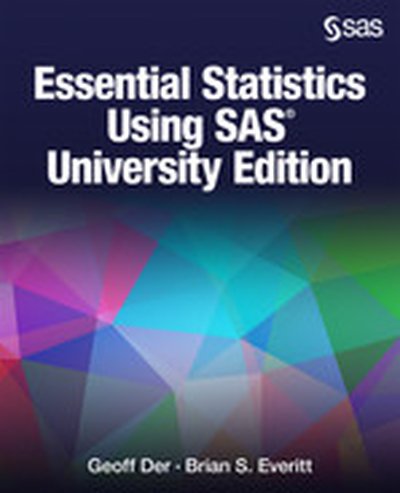
Essential Statistics Using SAS University Edition

Students and instructors of statistics courses using SAS University Edition will welcome this book. Learning fundamental statistics is essential to solving problems with SAS. Essential Statistics Using SAS University Edition demonstrates how to use SAS University Edition to apply a variety of statistical methodologies, from the simple to the not-so-simple, to a range of data sets. Learn how to apply the appropriate statistical method to answer a particular question about a data set, and correctly interpret the numerical results that you obtain. SAS University Edition users who are new to SAS or who need a refresher course will benefit from the statistics overview and topics, such as multiple linear regression, logistic regression, and Poisson regression.