talk-data.com talk-data.com

Topic

data-science

2252

tagged

Activity Trend

1 peak/qtr
2020-Q1 2026-Q1

Activities

2252 activities · Newest first

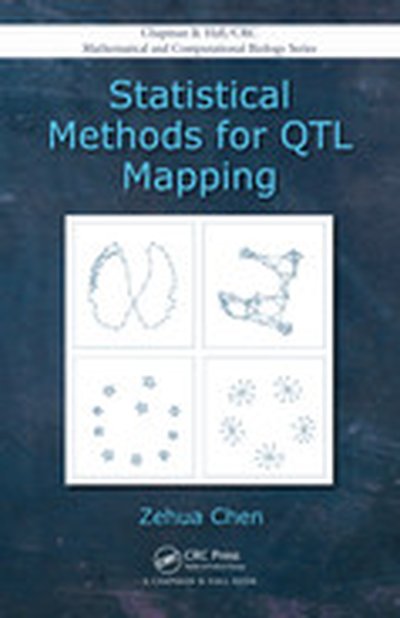
Statistical Methods for QTL Mapping

While numerous advanced statistical approaches have recently been developed for quantitative trait loci (QTL) mapping, the methods are scattered throughout the literature. This book brings together many recent statistical techniques that address the data complexity of QTL mapping. It emphasizes the modern statistical methodology for QTL mapping as well as the statistical issues that arise during this process. The book gives the necessary biological background for statisticians without training in genetics and, likewise, covers statistical thinking and principles for geneticists.

Statistics and Data Analysis for Microarrays Using R and Bioconductor, 2nd Edition

Richly illustrated in color, this bestselling text provides a clear and rigorous description of powerful analysis techniques and algorithms for mining and interpreting biological information. Omitting tedious details, heavy formalisms, and cryptic notations, the text takes a hands-on, example-based approach that explains the basics of R and micr

Stochastic Financial Models

Developed from the esteemed author's advanced undergraduate and graduate courses at the University of Cambridge, this text provides a hands-on, sound introduction to mathematical finance. Assuming no prior knowledge of stochastic calculus or measure-theoretic probability, the author includes the relevant mathematical background as well as many exercises with solutions. He first presents the classical topics of utility and the mean-variance approach to portfolio choice. Focusing on derivative pricing, the text then covers the binomial model, the general discrete-time model, Brownian motion, the Black-Scholes model, and various interest-rate models.

Transportation Statistics and Microsimulation

By discussing statistical concepts in the context of transportation planning and operations, this text provides the necessary background for making informed transportation-related decisions. It explains the why behind standard methods and uses real-world transportation examples and problems to illustrate key concepts. The book covers the statistical techniques most frequently employed by transportation and pavement professionals. To familiarize readers with the underlying theory and equations, it contains problems that can be solved using SAS's JMP package, which enables users to interactively explore and visualize data.

Getting Analytics Right

Ask vital questions before you dive into data Are your big data and analytics capabilities up to par? Nearly half of the global company executives in a recent Forbes Insight/Teradata survey certainly don’t think theirs are. This new book from O’Reilly examines how things typically go wrong in the data analytics process, and introduces a question-first, data-second strategy that can help your company close the gap between being analytics-invested and truly data-driven. Authors from Tamr, Inc. share insights into why analytics projects often fail, and offer solutions based on their combined experience in engineering, architecture, product strategizing, and marketing. You’ll learn how projects often start from the wrong place, take too long, and don’t go far enough—missteps that lead to incomplete, late, or useless answers to critical business questions. Find out how their question-first, data-second approach—fueled by vastly improved data preparation platforms and cataloging software—can help you create human-machine analytics solutions designed specifically to produce better answers, faster. Getting Analytics Right was written and presented by people at Tamr, Inc., including Nidhi Aggarwal, Product and Strategy Lead; Byron Berk, Customer Success Lead; Gideon Goldin, Senior UX Architect; Matt Holzapfel, Product Marketing; and Eliot Knudsen, Field Engineer. Tamr, a Cambridge, Massachusetts-based startup, helps companies understand and unify their disparate databases.

Informatics for Health Professionals

Provides healthcare students and professionals with the foundational knowledge to integrate informatics principles into clinical practice. Key content focuses on current informatics research and practice including but not limited to: technology trends, information security advances, health information exchanges, care coordination, transition technologies, ethical and legislative aspects, social media use, mobile health, bioinformatics, knowledge management, data mining, and more. Helpful learning tools include case studies, provoking questions to prompt discussion and application of the material learned, research briefs to encourage the reader to access current research, and call-outs which focus on cutting-edge innovations, meaningful use, and patient safety.

Business Intelligence Strategy and Big Data Analytics

Business Intelligence Strategy and Big Data Analytics is written for business leaders, managers, and analysts - people who are involved with advancing the use of BI at their companies or who need to better understand what BI is and how it can be used to improve profitability. It is written from a general management perspective, and it draws on observations at 12 companies whose annual revenues range between $500 million and $20 billion. Over the past 15 years, my company has formulated vendor-neutral business-focused BI strategies and program execution plans in collaboration with manufacturers, distributors, retailers, logistics companies, insurers, investment companies, credit unions, and utilities, among others. It is through these experiences that we have validated business-driven BI strategy formulation methods and identified common enterprise BI program execution challenges. In recent years, terms like “big data” and “big data analytics” have been introduced into the business and technical lexicon. Upon close examination, the newer terminology is about the same thing that BI has always been about: analyzing the vast amounts of data that companies generate and/or purchase in the course of business as a means of improving profitability and competitiveness. Accordingly, we will use the terms BI and business intelligence throughout the book, and we will discuss the newer concepts like big data as appropriate. More broadly, the goal of this book is to share methods and observations that will help companies achieve BI success and thereby increase revenues, reduce costs, or both. Provides ideas for improving the business performance of one’s company or business functions Emphasizes proven, practical, step-by-step methods that readers can readily apply in their companies Includes exercises and case studies with road-tested advice about formulating BI strategies and program plans

Global Business Analytics Models: Concepts and Applications in Predictive, Healthcare, Supply Chain, and Finance Analytics

THE COMPLETE GUIDE TO USING ANALYTICS TO MANAGE RISK AND UNCERTAINTY IN COMPLEX GLOBAL BUSINESS ENVIRONMENTS Practical techniques for developing reliable, actionable intelligence–and using it to craft strategy Analytical opportunities to solve key managerial problems in global enterprises Written for working managers: packed with realistic, useful examples This guide helps global managers use modern analytics to gain reliable, actionable, and timely business intelligence–and use it to manage risk, build winning strategies, and solve urgent problems. Dr. Hokey Min offers a practical, easy-to-understand overview of business analytics in a global context, focusing especially on managerial and strategic implications. After demystifying today’s core quantitative tools, he demonstrates them at work in a wide spectrum of global applications. You’ll build models to help segment global markets, forecast demand, assess risk, plan financing, optimize supply chains, and more. Along the way, you’ll find practical guidance for developing analytic thinking, operationalizing Big Data in global environments, and preparing for future analytical innovations. Whether you’re a global executive, strategist, analyst, marketer, supply chain professional, student or researcher, this book will help you drive real value from analytics–in smarter decisions, improved strategy, and better management. In today’s global business environments characterized by growing complexity, volatility, and uncertainty, business analytics has become an indispensable tool for managing these challenges. Specifically, global managers need analytics expertise to solve problems, identify opportunities, shape strategy, mitigate risk, and improve their day-to-day operational efficiency. Now, for the first time, there’s an analytics guide designed specifically for decision-makers in global organizations. Leveraging his experience teaching a number of students and training hundreds of managers and executives, Dr. Hokey Min demystifies the principles and tools of modern business analytics, and demonstrates their real-world use in global business. First, Dr. Min identifies key success factors and mindsets, helping you establish the preconditions for effective analysis. Next, he walks you through the practicalities of collecting, organizing, and analyzing Big Data, and developing models to transform them into actionable insight. Building on these foundations, he illustrates core analytical applications in finance, healthcare, and global supply chains. He concludes by previewing emerging trends in analytics, including the newest tools for automated decision-making. Compare today’s key quantitative tools Stats, data mining, OR, and simulation: how they work, when to use them Get the right data… …and get the data right Predict the future… …and sense its arrival sooner than others can Implement high-value analytics applications… …in finance, supply chains, healthcare, and beyond

Ecommerce Analytics: Analyze and Improve the Impact of Your Digital Strategy

Today's Complete, Focused, Up-to-Date Guide to Analytics for Ecommerce Profit from analytics throughout the entire customer experience and lifecycle Make the most of all the fast-changing data sources now available to you For all ecommerce executives, strategists, entrepreneurs, marketers, analysts, and data scientists Ecommerce Analytics is the only complete single-source guide to analytics for your ecommerce business. It brings together all the knowledge and skills you need to solve your unique problems, and transform your data into better decisions and customer experiences. Judah Phillips shows how to use analysis to improve ecommerce marketing and advertising, understand customer behavior, increase conversion rates, strengthen loyalty, optimize merchandising and product mix, streamline transactions, optimize product mix, and accurately attribute sales. Drawing on extensive experience leading large-scale analytics programs, he also offers expert guidance on building successful analytical teams; surfacing high-value insights via dashboards and visualization; and managing data governance, security, and privacy. Here are the answers you need to make the most of analytics in ecommerce: throughout your organization, across your entire customer lifecycle.

Excel Power Pivot and Power Query For Dummies

A guide to PowerPivot and Power Query no data cruncher should be without! Want to familiarize yourself with the rich set of Microsoft Excel tools and reporting capabilities available from PowerPivot and Power Query? Look no further! Excel PowerPivot & Power Query For Dummies shows you how this powerful new set of tools can be leveraged to more effectively source and incorporate 'big data' Business Intelligence and Dashboard reports. You'll discover how PowerPivot and Power Query not only allow you to save time and simplify your processes, but also enable you to substantially enhance your data analysis and reporting capabilities. Gone are the days of relatively small amounts of data—today's data environment demands more from business analysts than ever before. Now, with the help of this friendly, hands-on guide, you'll learn to use PowerPivot and Power Query to expand your skill-set from the one-dimensional spreadsheet to new territories, like relational databases, data integration, and multi-dimensional reporting. Demonstrates how Power Query is used to discover, connect to, and import your data Shows you how to use PowerPivot to model data once it's been imported Offers guidance on using these tools to make analyzing data easier Written by a Microsoft MVP in the lighthearted, fun style you've come to expect from the For Dummies brand If you spend your days analyzing data, Excel PowerPivot & Power Query For Dummies will get you up and running with the rich set of Excel tools and reporting capabilities that will make your life—and work—easier.

R Machine Learning By Example

This book, 'R Machine Learning by Example,' offers a hands-on approach to learning about machine learning using R. You will not only understand the theoretical aspects but also learn to apply machine learning algorithms to solve real-world problems. Through guided examples, you'll explore predictive modeling, data analysis, and other machine learning techniques implemented in R. What this Book will help me do Master the use of R for advanced data handling and exploration. Visualize multidimensional data effectively to derive insights. Understand and implement key machine learning algorithms in R. Solve practical, industry-relevant problems across multiple domains using R. Learn to optimize and fine-tune machine learning models for better results. Author(s) Raghav Bali, the author, is a seasoned data scientist with expertise in machine learning. With years of experience using R in data science, he has taught both professionals and enthusiasts how to use machine learning effectively. His approachable and clear writing style ensures that learners of various skill levels can benefit from his insights and guidance. Who is it for? This book is perfect for analysts, data scientists, or enthusiasts who want to leverage R for machine learning. It is suitable for beginners familiar with basic R concepts and intermediate learners looking to deepen their understanding of machine learning applications. If you are aiming to solve practical problems using data, this book will serve as a comprehensive guide.

Exploratory Factor Analysis with SAS

Explore the mysteries of Exploratory Factor Analysis (EFA) with SAS with an applied and user-friendly approach.

Exploratory Factor Analysis with SAS focuses solely on EFA, presenting a thorough and modern treatise on the different options, in accessible language targeted to the practicing statistician or researcher. This book provides real-world examples using real data, guidance for implementing best practices in the context of SAS, interpretation of results for end users, and it provides resources on the book's author page. Faculty teaching with this book can utilize these resources for their classes, and individual users can learn at their own pace, reinforcing their comprehension as they go.

Exploratory Factor Analysis with SAS reviews each of the major steps in EFA: data cleaning, extraction, rotation, interpretation, and replication. The last step, replication, is discussed less frequently in the context of EFA but, as we show, the results are of considerable use. Finally, two other practices that are commonly applied in EFA, estimation of factor scores and higher-order factors, are reviewed. Best practices are highlighted throughout the chapters.

A rudimentary working knowledge of SAS is required but no familiarity with EFA or with the SAS routines that are related to EFA is assumed.

Using SAS University Edition? You can use the code and data sets provided with this book. This helpful link will get you started: http://support.sas.com/publishing/import_ue.data.html

Emerging Trends in Applications and Infrastructures for Computational Biology, Bioinformatics, and Systems Biology

Emerging Trends in Applications and Infrastructures for Computational Biology, Bioinformatics, and Systems Biology: Systems and Applications covers the latest trends in the field with special emphasis on their applications. The first part covers the major areas of computational biology, development and application of data-analytical and theoretical methods, mathematical modeling, and computational simulation techniques for the study of biological and behavioral systems. The second part covers bioinformatics, an interdisciplinary field concerned with methods for storing, retrieving, organizing, and analyzing biological data. The book also explores the software tools used to generate useful biological knowledge. The third part, on systems biology, explores how to obtain, integrate, and analyze complex datasets from multiple experimental sources using interdisciplinary tools and techniques, with the final section focusing on big data and the collection of datasets so large and complex that it becomes difficult to process using conventional database management systems or traditional data processing applications. Explores all the latest advances in this fast-developing field from an applied perspective Provides the only coherent and comprehensive treatment of the subject available Covers the algorithm development, software design, and database applications that have been developed to foster research

Systems Analysis and Synthesis

Systems Analysis and Synthesis: Bridging Computer Science and Information Technology presents several new graph-theoretical methods that relate system design to core computer science concepts, and enable correct systems to be synthesized from specifications. Based on material refined in the author’s university courses, the book has immediate applicability for working system engineers or recent graduates who understand computer technology, but have the unfamiliar task of applying their knowledge to a real business problem. Starting with a comparison of synthesis and analysis, the book explains the fundamental building blocks of systems-atoms and events-and takes a graph-theoretical approach to database design to encourage a well-designed schema. The author explains how database systems work-useful both when working with a commercial database management system and when hand-crafting data structures-and how events control the way data flows through a system. Later chapters deal with system dynamics and modelling, rule-based systems, user psychology, and project management, to round out readers’ ability to understand and solve business problems. Bridges computer science theory with practical business problems to lead readers from requirements to a working system without error or backtracking Explains use-definition analysis to derive process graphs and avoid large-scale designs that don’t quite work Demonstrates functional dependency graphs to allow databases to be designed without painful iteration Includes chapters on system dynamics and modeling, rule-based systems, user psychology, and project management

The SAS Programmer's PROC REPORT Handbook: Basic to Advanced Reporting Techniques

The SAS Programmer's PROC REPORT Handbook: Basic to Advanced Reporting Techniques is intended for programmers of all skill levels. Learn how to link multiple reports, add graphics and logos, and manipulate table of contents values to help refine your programs, macrotize where possible, troubleshoot easily, and get great-looking reports every time. From beginner to advanced, the examples in this book will help you harness all the power and capability of PROC REPORT.

With dozens of useful examples, this book is completely unique in three ways. First, this book describes the default behavior of table of contents nodes and labels, and how to change the nodes inside of PROC REPORT. The chapter also explains how to use PROC DOCUMENT in conjunction with PROC REPORT. Secondly, an entire chapter is dedicated to the troubleshooting of errors, warnings, and notes that are produced by PROC REPORT, including explanations of what generated the log message and how to avoid it. Third, the book explains how to preprocess your data in order to get the best output from PROC REPORT, and it explores reports that require multiple steps to create. Whether you work in banking/finance, pharmaceuticals, the health and life sciences, or government, this handbook is sure to be your new favorite reporting reference.

Clinical Graphs Using SAS

SAS users in the Health and Life Sciences industry need to create complex graphs to analyze biostatistics data and clinical data, and they need to submit drugs for approval to the FDA. Graphs used in the HLS industry are complex in nature and require innovative usage of the graphics features. Clinical Graphs Using SAS® provides the knowledge, the code, and real-world examples that enable you to create common clinical graphs using SAS graphics tools, such as the Statistical Graphics procedures and the Graph Template Language.

This book describes detailed processes to create many commonly used graphs in the Health and Life Sciences industry. For SAS® 9.3 and SAS® 9.4 it covers many improvements in the graphics features that are supported by the Statistical Graphics procedures and the Graph Template Language, many of which are a direct result of the needs of the Health and Life Sciences community. With the addition of new features in SAS® 9.4, these graphs become positively easy to create.

Topics covered include the usage of SGPLOT procedure, the SGPANEL procedure and the Graph Template Language for the creation of graphs like forest plots, swimmer plots, and survival plots.

The DS2 Procedure: SAS Programming Methods at Work

The issue facing most SAS programmers today is not that data space has become bigger ("Big Data"), but that our programming problem space has become bigger. Through the power of DS2, this book shows programmers how easily they can manage complex problems using modular coding techniques.

The DS2 Procedure: SAS Programming Methods at Work outlines the basic structure of a DS2 program and teaches you how each component can help you address problems. The DS2 programming language in SAS 9.4 simplifies and speeds data preparation with user-defined methods, storing methods and attributes in shareable packages, and threaded execution on multicore symmetric multiprocessing (SMP) and massively parallel processing (MPP) machines. This book is intended for all BASE SAS programmers looking to learn about DS2; readers need only an introductory level of SAS to get started. Topics covered include introductions to Object Oriented Programming methods, DATA step programs, user-defined methods, predefined packages, and threaded processing.

Data and Electric Power

Traditional engineering is built upon a world of knowledge and scientific laws, with components and systems that operate predictably. But what happens when a large number of these devices are interconnected? You get a complex system that’s no longer deterministic, but probabilistic. That’s happening today in many industries, including manufacturing, petroleum, transportation, and energy. In this O’Reilly report, Sean Patrick Murphy, Chief Data Scientist at PingThings, describes how data science is helping electric utilities make sense of a stochastic world filled with increasing uncertainty—including fundamental changes to the energy market and random phenomena such as weather and solar activity. Murphy also reviews several cutting-edge tools for storing and processing big data that he’s used in his work with electric utilities—tools that can help traditional engineers pursue a data-driven approach in many industries. Topics in this report include: Key drivers that have changed the electric grid from a deterministic machine into probabilistic system Fundamental differences that put traditional engineering and data science at odds with one another Why the time is right for engineering organizations to adopt a complete data-driven approach Contemporary tools that traditional engineers can use to store and process big data A PingThings case study for dealing with random geomagnetic disturbances to the energy grid

Going Pro in Data Science

Digging for answers to your pressing business questions probably won’t resemble those tidy case studies that lead you step-by-step from data collection to cool insights. Data science is not so clear-cut in the real world. Instead of high-quality data with the right velocity, variety, and volume, many data scientists have to work with missing or sketchy information extracted from people in the organization. In this O’Reilly report, Jerry Overton—Distinguished Engineer at global IT leader DXC—introduces practices for making good decisions in a messy and complicated world. What he simply calls “data science that works” is a trial-and-error process of creating and testing hypotheses, gathering evidence, and drawing conclusions. These skills are far more useful for practicing data scientists than, say, mastering the details of a machine-learning algorithm. Adapted and expanded from a series of articles Overton published on O’Reilly Radar and on the CSC Blog, each chapter is ideal for current and aspiring data scientists who want to go pro, as well as IT execs and managers looking to hire in this field. The report covers: Using the scientific method to gain a competitive advantage The skill set you need to look for when choosing a data scientist Why practical induction is a key part of thinking like a data scientist Best practices for writing solid code in your data science gig How agile experimentation lets you find answers (or dead ends) much faster Advice for surviving (and even thriving) as a data scientist in your organization

Ten Signs of Data Science Maturity

How well prepared is your organization to innovate, using data science? In this report, two leading data scientists at the consulting firm Booz Allen Hamilton describe ten characteristics of a mature data science capability. After spending years helping clients such as the US government and commercial organizations worldwide build innovative data science capabilities, Peter Guerra and Dr. Kirk Borne identified these characteristics to help you measure your company’s competence in this area. This report provides a detailed discussion of each of the 10 signs of data science maturity, which—among many other things—encourage you to: Give members of your organization access to all your available data Use Agile and leverage "DataOps"—DevOps for data product development Help your data science team sharpen its skills through open or internal competitions Personify data science as a way of doing things, and not a thing to do