talk-data.com talk-data.com

Topic

data-science

2252

tagged

Activity Trend

1 peak/qtr
2020-Q1 2026-Q1

Activities

2252 activities · Newest first

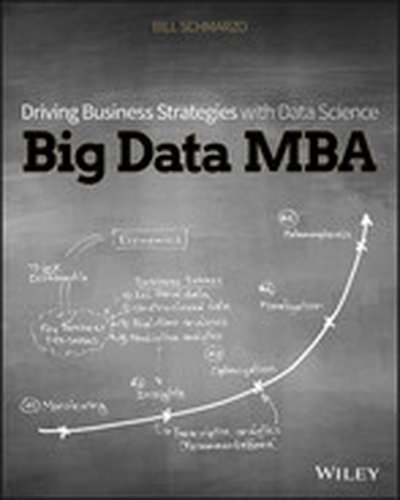
Big Data MBA

Integrate big data into business to drive competitive advantage and sustainable success Big Data MBA brings insight and expertise to leveraging big data in business so you can harness the power of analytics and gain a true business advantage. Based on a practical framework with supporting methodology and hands-on exercises, this book helps identify where and how big data can help you transform your business. You'll learn how to exploit new sources of customer, product, and operational data, coupled with advanced analytics and data science, to optimize key processes, uncover monetization opportunities, and create new sources of competitive differentiation. The discussion includes guidelines for operationalizing analytics, optimal organizational structure, and using analytic insights throughout your organization's user experience to customers and front-end employees alike. You'll learn to “think like a data scientist” as you build upon the decisions your business is trying to make, the hypotheses you need to test, and the predictions you need to produce. Business stakeholders no longer need to relinquish control of data and analytics to IT. In fact, they must champion the organization's data collection and analysis efforts. This book is a primer on the business approach to analytics, providing the practical understanding you need to convert data into opportunity. Understand where and how to leverage big data Integrate analytics into everyday operations Structure your organization to drive analytic insights Optimize processes, uncover opportunities, and stand out from the rest Help business stakeholders to “think like a data scientist” Understand appropriate business application of different analytic techniques If you want data to transform your business, you need to know how to put it to use. Big Data MBA shows you how to implement big data and analytics to make better decisions.
SAS 9.4 SQL Procedure User's Guide, Third Edition, 3rd Edition

Describes the basics of using the SQL procedure and provides comprehensive reference information. The usage information includes retrieving data from single and multiple tables; selecting specific data from tables; subsetting, ordering, and summarizing data; updating tables; combining tables to create new tables and useful reports; performing queries on database management system (DBMS) tables; using PROC SQL with the SAS macro facility; and debugging and optimizing PROC SQL code. The reference information includes statements, dictionary components, and system options.

Stochastic Volatility Modeling

Written by a leading contributor to volatility modeling and Risk's 2009 Quant of the Year, this book explains how stochastic volatility is used to tackle practical issues arising in the modeling of derivatives. With many unpublished results and insights, the book addresses the practicalities of modeling local volatility, local-stochastic volatility, and multi-asset stochastic volatility. It covers forward-start options, variance swaps, options on realized variance, timer options, VIX futures and options, and daily cliquets.

Using Statistics for Better Business Decisions

More and more organizations around the globe are expecting that professionals will make data-driven decisions. Employees, team leaders, managers, and executives that can think quantitatively should be in high demand. The goal of this book is to increase ability to identify a problem, collect data, organize, and analyze data that will help aid in making more effective decisions. This book will provide you with a solid foundation for thinking quantitatively within your company. To help facilitate this objective, this book follows two fictitious companies that encounter a series of business problems, while demonstrating how managers would use the concepts in the book to solve these problems and determine the next course of action. This book is for beginners and does not require prior statistical training. All computations will be completed using Microsoft Excel.

Regression Analysis

The technique of regression analysis is used so often in business and economics today that an understanding of its use is necessary for almost everyone engaged in the field. This book covers essential elements of building and understanding regression models in a business/economic context in an intuitive manner. The book provides a non-theoretical treatment that is accessible to readers with even a limited statistical background. This book describes exactly how regression models are developed and evaluated. The data used in the book are the kind of data managers are faced with in the real world. The book provides instructions and screen shots for using Microsoft Excel to build business/economic regression models. Upon completion, the reader will be able to interpret the output of the regression models and evaluate the models for accuracy and shortcomings.

Essential Statistics Using SAS University Edition

Students and instructors of statistics courses using SAS University Edition will welcome this book. Learning fundamental statistics is essential to solving problems with SAS. Essential Statistics Using SAS University Edition demonstrates how to use SAS University Edition to apply a variety of statistical methodologies, from the simple to the not-so-simple, to a range of data sets. Learn how to apply the appropriate statistical method to answer a particular question about a data set, and correctly interpret the numerical results that you obtain. SAS University Edition users who are new to SAS or who need a refresher course will benefit from the statistics overview and topics, such as multiple linear regression, logistic regression, and Poisson regression.

Measuring the Digital World: Using Digital Analytics to Drive Better Digital Experiences

THE DEFINITIVE GUIDE TO NEXTGENERATION DIGITAL MEASUREMENT: INDISPENSABLE INSIGHT FOR BUILDING HIGH-VALUE DIGITAL EXPERIENCES! Helps you capture the knowledge you need to deliver deep personalization at scale Reflects today’s latest insights into digital behavior and consumer psychology For every digital marketer, analyst, and executive who wants to improve performance To win at digital, you must capture the right data, quickly transform it into the right knowledge,and use them both to deliver deep personalization at scale. Conventional digital metrics simply aren’t up to the task. Now, Gary Angel shows how to reinvent digital measurement so it delivers all you need to create richer, more compelling digital experiences. For more than a decade, Angel has helped leading global enterprises succeed at digital. This book reflects all he’s learned. You’ll find valuable guidance on understanding visitor intent… creating customer taxonomies… digital segmentation… integrating VoC research… and using behavioral analysis and controlled experiments to investigate what drives customer choice. Angel will help you measure the value of every digital interaction more accurately, identify specific digital behaviors that predict success, and create a comprehensive measurement paradigm that integrates all your digital spaces. With flawed tools and siloed analytics, you’re blind to what’s really happening online. But you don’t have to be. Gary Angel will help you make the invisible visible… actionable… profitable. Most common digital metrics are virtually useless. They measure the wrong things in the wrong ways. They don’t link digital activity to customer attitudes and behaviors. They don’t work well with today’s powerful analytics tools. Above all, they don’t help you improve your performance. Angel shows how to transform “raw facts” about digital behavior into meaningful knowledge about your visitors… what they were trying to accomplish…how well you helped them… how you can personalize and optimize their digital experiences from now on… how you can use measurement to provide deep personalization at scale. More rigorous, integrated, and usable than any competitive book, Measuring the Digital World will help you create, deliver, and consume digital information with unprecedented sophistication. Whether you’re a digital analyst, marketer, user experience designer, or executive, you’ll find it indispensable. Why conventional digital metrics are arbitrary and misguided Refocus on what you need to know, not what you don’t Capture the “why” Integrate VoC research and behavioral data to build better, richer, more accurate segments Go beyond snapshots: understand your customer’s entire digital experience Understand how your customers’ views and behaviors evolve over time Segment in three dimensions for a multichannel world Treat each channel as part of a larger, integrated, sequential journey

Modern Approaches to Clinical Trials Using SAS: Classical, Adaptive, and Bayesian Methods

Get the tools you need to use SAS® in clinical trial design!

Unique and multifaceted, Modern Approaches to Clinical Trials Using SAS: Classical, Adaptive, and Bayesian Methods, edited by Sandeep M. Menon and Richard C. Zink, thoroughly covers several domains of modern clinical trial design: classical, group sequential, adaptive, and Bayesian methods that are applicable to and widely used in various phases of pharmaceutical development. Written for biostatisticians, pharmacometricians, clinical developers, and statistical programmers involved in the design, analysis, and interpretation of clinical trials, as well as students in graduate and postgraduate programs in statistics or biostatistics, the book touches on a wide variety of topics, including dose-response and dose-escalation designs; sequential methods to stop trials early for overwhelming efficacy, safety, or futility; Bayesian designs that incorporate historical data; adaptive sample size re-estimation; adaptive randomization to allocate subjects to more effective treatments; and population enrichment designs. Methods are illustrated using clinical trials from diverse therapeutic areas, including dermatology, endocrinology, infectious disease, neurology, oncology, and rheumatology. Individual chapters are authored by renowned contributors, experts, and key opinion leaders from the pharmaceutical/medical device industry or academia. Numerous real-world examples and sample SAS code enable users to readily apply novel clinical trial design and analysis methodologies in practice.

Mastering RStudio: Develop, Communicate, and Collaborate with R

"Mastering RStudio: Develop, Communicate, and Collaborate with R" is your guide to unlocking the potential of RStudio. You'll learn to use RStudio effectively in your data science projects, covering everything from creating R packages to interactive web apps with Shiny. By the end, you'll fully understand how to use RStudio tools to manage projects and share results effectively. What this Book will help me do Gain a comprehensive understanding of the RStudio interface and workflow optimizations. Effectively communicate data insights with R Markdown, including static and interactive documents. Create impactful data visualizations using R's diverse graphical systems and tools. Develop Shiny web applications to showcase and share analytical results. Learn to collaborate on projects using Git and GitHub, and understand R package development workflows. Author(s) Julian Hillebrand and None Nierhoff are experienced R developers with years of practical expertise in data science and software development. They have a passion for teaching how to utilize RStudio effectively. Their approach to writing combines practical examples with thorough explanations, ensuring readers can readily apply concepts to real-world scenarios. Who is it for? This book is ideal for R programmers and analysts seeking to enhance their workflows using RStudio. Whether you're looking to create professional data visualizations, develop R packages, or implement Shiny web applications, this book provides the tools you need. Suitable for those already familiar with basic R programming and fundamental concepts.

Adaptive Stochastic Optimization Techniques with Applications

This book describes state-of-the-art optimization techniques used to solve problems with adaptive, dynamic, and stochastic features. It presents modern advances in static and dynamic optimization, decision analysis, intelligent systems, evolutionary programming, heuristic optimization, stochastic and adaptive dynamic programming, and adaptive critics. It evaluates optimization methods for handling operational planning, Voltage/VAr, control coordination, vulnerability, reliability, resilience, and reconfiguration issues, providing mathematical formulations, algorithms for implementation, examples, and case studies. It also discusses the limitations of current optimization techniques in meeting the challenges of smart electric grids.

DOE Simplified, 3rd Edition

Offering a planned approach for determining cause and effect, DOE Simplified: Practical Tools for Effective Experimentation, Third Edition integrates the authors’ decades of combined experience in providing training, consulting, and computational tools to industrial experimenters. Supplying readers with the statistical means to analyze how numerous variables interact, it is ideal for those seeking breakthroughs in product quality and process efficiency via systematic experimentation. Following in the footsteps of its bestselling predecessors, this edition incorporates a lively approach to learning the fundamentals of the design of experiments (DOE). It lightens up the inherently dry complexities with interesting sidebars and amusing anecdotes. The book explains simple methods for collecting and displaying data and presents comparative experiments for testing hypotheses. Discussing how to block the sources of variation from your analysis, it looks at two-level factorial designs and covers analysis of variance. It also details a four-step planning process for designing and executing experiments that takes statistical power into consideration. This edition includes a major revision of the software that accompanies the book (via download) and sets the stage for introducing experiment designs where the randomization of one or more hard-to-change factors can be restricted. Along these lines, it includes a new chapter on split plots and adds coverage of a number of recent developments in the design and analysis of experiments. Readers have access to case studies, problems, practice experiments, a glossary of terms, and a glossary of statistical symbols, as well as a series of dynamic online lectures that cover the first several chapters of the book.

Python Data Visualization Cookbook (Second Edition)

In 'Python Data Visualization Cookbook (Second Edition)', you'll learn how to create stunning and meaningful visual representations of data using Python's powerful libraries. Through step-by-step, recipe-based guidance, this book equips you to transform raw data into comprehensible and compelling visual stories. What this Book will help me do Master setting up Python and its libraries for data visualization. Learn how to import, clean, and organize data effectively. Create a variety of plots and charts tailored to your data's needs. Explore 3D visualizations and animations for more complex data insights. Incorporate visualization into environments like LaTeX and web frameworks. Author(s) The authors Igor Milovanovic, None Foures, and Giuseppe Vettigli bring extensive experience in Python programming and data analysis. With a passion for teaching and a clear instructional style, they make complex topics approachable and engaging. Their expertise ensures you gain practical knowledge you can apply immediately. Who is it for? This book is perfect for Python programmers who want to deepen their understanding of data and learn how to visualize it effectively. It's suitable for readers with basic Python knowledge, looking to elevate their skills in data visualization. Whether you aim to improve at data-driven storytelling or analyze data in clarity, this book has you covered.

Creating Data Stories with Tableau Public

Creating Data Stories with Tableau Public is a comprehensive guide to building impactful and interactive data visualizations using Tableau Public. Whether you are an investigative journalist, blogger, or data enthusiast, this book takes you through all the essential concepts, from connecting to data sources to publishing your visualizations online. You will learn how to effectively communicate data-driven stories with engaging visuals. What this Book will help me do Understand how to connect and prepare data for Tableau Public visualizations, including tips on cleaning and joining data. Learn about various chart types and their applications to visualize data effectively according to context and message. Discover methods for creating geographic maps and adding meaningful calculations to enhance your visualizations. Master the art of designing dashboards and storytelling with interactive elements like filters and actions. Gain insights on how to publish and embed your Tableau Public visualizations to share your data stories with wider audiences. Author(s) None Ohmann is an accomplished author and educator with rich expertise in data visualization and storytelling. Leveraging a passion for effective communication, None has written extensively on using tools like Tableau Public to bring data to life. As an advocate for accessible and interactive visualizations, None's work bridges technical proficiency and creative expression. Who is it for? This book is perfect for investigative journalists, bloggers, and media professionals eager to incorporate data visualizations into their work. Whether you're a beginner or have some experience with Tableau Public, you'll find practical advice to enhance your abilities. Organizations and teams that deal with data storytelling will also benefit from the clear and actionable strategies outlined in this guide.

Databases for Small Business: Essentials of Database Management, Data Analysis,and Staff Training for Entrepreneurs and Professionals

This book covers the practical aspects of database design, data cleansing, data analysis, and data protection , among others. The focus is on what you really need to know to create the right database for your small business and to leverage it most effectively to spur growth and revenue. Databases for Small Business is a practical handbook for entrepreneurs, managers, staff, and professionals in small organizations who are not IT specialists but who recognize the need to ramp up their small organizations’ use of data and to round out their own business expertise and office skills with basic database proficiency. Anna Manning—a data scientist who has worked on database design and data analysis in a computer science university research lab, her own small business, and a nonprofit—walks you through the progression of steps that will enable you to extract actionable intelligence and maximum value from your business data in terms of marketing, sales, customer relations, decision making, and business strategy. Dr. Manning illustrates the steps in the book with four running case studies of a small online business, an engineering startup, a small legal firm, and a nonprofit organization.

MATLAB Recipes: A Problem-Solution Approach

Learn from state-of-the-art examples in robotics, motors, detection filters, chemical processes, aircraft, and spacecraft. This is a practical reference for industry engineers using MATLAB to solve everyday problems. With MATLAB Recipes: A Problem-Solution Approach you will review contemporary MATLAB coding including the latest language features and use MATLAB as a software development environment including code organization, GUI development, and algorithm design and testing. This book provides practical guidance for using MATLAB to build a body of code you can turn to time and again for solving technical problems in your line of work. Develop algorithms, test them, visualize the results, and pass the code along to others to create a functional code base for your firm.

Sports Analytics and Data Science: Winning the Game with Methods and Models

TO BUILD WINNING TEAMS AND SUCCESSFUL SPORTS BUSINESSES, GUIDE YOUR DECISIONS WITH DATA This up-to-the-minute reference will help you master all three facets of sports analytics – and use it to win! Sports Analytics and Data Science is the most accessible and practical guide to sports analytics for everyone who cares about winning and everyone who is interested in data science. You’ll discover how successful sports analytics blends business and sports savvy, modern information technology, and sophisticated modeling techniques. You’ll master the discipline through realistic sports vignettes and intuitive data visualizations—not complex math. Thomas W. Miller, leader of Northwestern University’s pioneering program in predictive analytics, guides you through defining problems, identifying data, crafting and optimizing models, writing effective R and Python code, interpreting your results, and more. Every chapter focuses on one key sports analytics application. Miller guides you through assessing players and teams, predicting scores and making game-day decisions, crafting brands and marketing messages, increasing revenue and profitability, and much more. Step by step, you’ll learn how analysts transform raw data and analytical models into wins: both on the field and in any sports business. Whether you’re a team executive, coach, fan, fantasy player, or data scientist, this guide will be a powerful source of competitive advantage… in any sport, by any measure. All data sets, extensive R and Python code, and additional examples available for download at http://www.ftpress.com/miller/ This exceptionally complete and practical guide to sports data science and modeling teaches through realistic examples from sports industry economics, marketing, management, performance measurement, and competitive analysis. Thomas W. Miller, faculty director of Northwestern University’s pioneering Predictive Analytics program, shows how to use advanced measures of individual and team performance to judge the competitive position of both individual athletes and teams, and to make more accurate predictions about their future performance. Miller’s modeling techniques draw on methods from economics, accounting, finance, classical and Bayesian statistics, machine learning, simulation, and mathematical programming. Miller illustrates them through realistic case studies, with fully worked examples in both R and Python. Sports Analytics and Data Science will be an invaluable resource for everyone who wants to seriously investigate and more accurately predict player, team, and sports business performance, including students, teachers, sports analysts, sports fans, trainers, coaches, and team and sports business managers. It will also be valuable to all students of analytics and data science who want to build their skills through familiar and accessible sports applications Gain powerful, actionable insights for: Understanding sports markets Assessing players Ranking teams Predicting scores Making game day decisions Crafting marketing messages Promoting brands and products Growing revenues Managing finances Playing what-if games And much more

Design & Analysis of Clinical Trials for Economic Evaluation & Reimbursement

This guide explains how to apply health economic evaluation techniques to both clinical trial and non-clinical trial data. Through a simple, applied approach using examples and SAS software, the book helps statisticians and researchers in health economics assess cost-effectiveness. It covers trial design, case report form design, quality of life measures, sample sizes, submissions to regulatory authorities for reimbursement, Markov models, cohort models, and decision trees. Examples and case studies are provided at the end of each chapter.

Spatial Point Patterns

This book shows scientific researchers and applied statisticians from a wide range of fields how to analyze their spatial point pattern data. Making the techniques accessible to non-mathematicians, the authors draw on their 25 years of software development experiences, methodological research, and broad scientific collaborations to deliver a book that clearly and succinctly explains concepts and addresses real scientific questions. The book uses the authors' R package spatstat throughout to process and analyze spatial point pattern data.

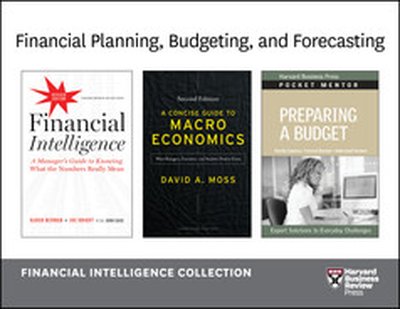
Financial Planning, Budgeting, and Forecasting: Financial Intelligence Collection (7 Books)

Don’t let your fear of finance get in the way of your success. This digital collection, curated by Harvard Business Review, brings together everything a manager needs to know about financial intelligence. It includes Financial Intelligence, called a “must-read” for decision makers without expertise in finance; A Concise Guide to Macroeconomics, which covers the essentials of macroeconomics and examines the core ideas of output, money, and expectations; Essentials of Finance and Budgeting, which explains everything HR professionals need to know to make wise financial decisions; Ahead of the Curve, Joseph H. Ellis’s forecasting method to help managers and investors understand and predict the economic cycles that control their businesses and financial fates; Beyond Budgeting; which offers a coherent management model that overcomes the limitations of traditional budgeting; Preparing a Budget, packed with handy tools, self-tests, and real life examples to help you hone critical skills; and HBR Guide to Finance Basics for Managers, which will give you the tools and confidence you need to master the fundamentals of finance.