talk-data.com talk-data.com

Topic

data-visualization

212

tagged

Activity Trend

1 peak/qtr
2020-Q1 2026-Q1

Activities

212 activities · Newest first

Getting Started with Tableau 2018.x

Dive into the world of data visualization with "Getting Started with Tableau 2018.x." This comprehensive guide introduces you to both the fundamental and advanced functionalities of Tableau 2018.x, making it easier to create impactful data visualizations. Learn to unlock Tableau's full potential through practical examples and clear explanations. What this Book will help me do Understand the new Tableau 2018.x features like density, extensions, and transparency and how to leverage them. Learn how to connect to data sources, perform transformations, and build efficient data models to support your analysis. Master visualization techniques to design effective and insightful dashboards tailored to business needs. Explore advanced concepts such as calculations, cross-database joins, and data blending to handle complex scenarios. Develop the confidence to publish and interact with content on Tableau Server and share your insights effectively. Author(s) None Guillevin and None Pires are data visualization experts with extensive experience using Tableau. They aim to make data analysis accessible through hands-on examples and easy-to-follow explanations. Their writing balances clear instruction with practical application, making advanced concepts understandable for all readers. Who is it for? This book is ideal for beginners or experienced BI professionals who wish to gain expertise in Tableau 2018.x. It caters to aspiring analysts and business professionals looking to answer complex business-specific questions through data visualization. Regardless of prior experience in Tableau or other BI tools, this book provides value through a structured learning approach.
D3.js Quick Start Guide

D3.js Quick Start Guide is your go-to resource for mastering D3.js, a powerful JavaScript library for creating interactive visualizations in the browser. This book walks you through core concepts, from building scatter plots to creating force-directed graphs, helping you go from beginner to creating stunning visual data representations. What this Book will help me do Create interactive scatter plots showcasing data relationships. Implement bar graphs that dynamically update from API data. Design animated pie charts for visually appealing representations. Develop force-directed graphs to represent networked data. Leverage GeoJSON data for building informative interactive maps. Author(s) None Huntington is an experienced web developer with a clear knack for turning complex topics into understandable concepts. With expertise in data visualization and web technologies, Huntington explains technical subject matter in a friendly and approachable manner, ensuring learners grasp both theoretical and practical aspects effectively. Who is it for? This book is ideal for web developers and data enthusiasts eager to learn how to represent data via interactive visualizations using D3.js. If you have a basic understanding of JavaScript and are looking to enhance your web development skillset with dynamic visualization techniques, this guide is perfect for you. Through easy-to-follow examples, you'll get up to speed quickly and start building professional-looking visualizations right away. Whether you're a data scientist, interactive news developer, or just interested in bringing data to life, this book is your key to mastering D3.js.

Web Application Development with R Using Shiny - Third Edition

Transform your R programming into interactive web applications with "Web Application Development with R Using Shiny." This book takes you step-by-step through creating dynamic user interfaces and web solutions with the R Shiny package, empowering you to build impactful tools that showcase your data. What this Book will help me do Create interactive web applications using R Shiny. Apply JavaScript for added functionality and customization in Shiny apps. Effortlessly deploy Shiny apps online for accessibility. Understand Shiny UI functions to design effective user interfaces. Leverage data visualization techniques for insightful analytics in apps. Author(s) Chris Beeley and Shitalkumar R. Sukhdeve bring their profound expertise in R programming and Shiny development to this book. Chris is an experienced data scientist passionate about interactive data solutions, while Shitalkumar, with a strong computing background, shares his hands-on insights. Their collaborative and tutorial approach ensures learners grasp each concept smoothly. Who is it for? This book is ideal for R programmers eager to transition from static data evaluation to engaging, interactive web applications. It caters to professionals and enthusiasts seeking practical, hands-on coding guidance. Readers should have foundational R programming knowledge, ensuring a smooth transition into Shiny concepts.

Hands-On Dashboard Development with Shiny

"Hands-On Dashboard Development with Shiny" provides a focused and practical guide for developing polished and professional dashboards using R and the Shiny framework. Through applied examples, you'll explore techniques in HTML, CSS, and Bootstrap to elevate your Shiny apps' interface and functionality. The book ensures a comprehensive learning experience by focusing on creating custom interfaces and layouts. What this Book will help me do Create Shiny interfaces using pure HTML to achieve full customization Enhance your R Shiny dashboards with powerful layout functions for professional designs Utilize Bootstrap themes in Shiny for consistent and aesthetically pleasing interfaces Generate interactive dashboards complete with icons and notification elements Develop and distribute R Markdown reports directly from Shiny applications Author(s) Chris Beeley is an experienced data scientist and a frequent R Shiny practitioner. With years of experience building Shiny applications and working on data visualization in professional settings, Chris brings practical and precise teaching to this book. He is passionate about making knowledge accessible and guiding learners through hands-on and engaging content. Who is it for? This book is ideally suited for developers and data analysts who have prior experience with Shiny and wish to delve deeper into customizing their applications' design. If you want to extend your Shiny apps using HTML, CSS, and layouts via Bootstrap, this book is perfect for you. It equips you with the skills to build advanced dashboards efficiently. Whether you're looking to create more visually appealing apps or enhance your UI skills, this resource caters to your needs.

Mastering Kibana 6.x

Mastering Kibana 6.x is your guide to leveraging Kibana for creating impactful data visualizations and insightful dashboards. From setting up basic visualizations to exploring advanced analytics and machine learning integrations, this book equips you with the necessary skills to dive deep into your data and gain actionable insights at scale. You'll also learn to effectively manage and monitor data with powerful tools such as X-Pack and Beats. What this Book will help me do Build sophisticated dashboards to visualize elastic stack data effectively. Understand and utilize Timelion expressions for analyzing time series data. Incorporate X-Pack capabilities to enhance security and monitoring in Kibana. Extract, analyze, and visualize data from Elasticsearch for advanced analytics. Set up monitoring and alerting using Beats components for reliable data operations. Author(s) With extensive experience in big data technologies, the author brings a practical approach to teaching advanced Kibana topics. Having worked on real-world data analytics projects, their aim is to make complex concepts accessible while showing how to tackle analytics challenges using Kibana. Who is it for? This book is ideal for data engineers, DevOps professionals, and data scientists who want to optimize large-scale data visualizations. If you're looking to manage Elasticsearch data through insightful dashboards and visual analytics, or enhance your data operations with features like machine learning, then this book is perfect for you. A basic understanding of the Elastic Stack is helpful, though not required.

Python Graphics: A Reference for Creating 2D and 3D Images

This book will show you how to use Python to create graphic objects for technical illustrations and data visualization. Often, the function you need to produce the image you want cannot be found in a standard Python library. Knowing how to create your own graphics will free you from the chore of looking for a function that may not exist or be difficult to use. This book will give you the tools to eliminate that process and create and customize your own graphics to satisfy your own unique requirements. Using basic geometry and trigonometry, you will learn how to create math models of 2D and 3D shapes. Using Python, you will then learn how to project these objects onto the screen of your monitor, translate and rotate them in 2D and 3D, remove hidden lines, add shading, view in perspective, view intersections between surfaces, and display shadows cast from one object onto another. You will also learn how to visualize and analyze 2D and 3D data sets, fit lines, splines and functions. The final chapter includes demonstrations from quantum mechanics, astronomy and climate science. Includes Python programs written in a clear and open style with detailed explanation of the code. What You Will Learn How to create math and Python models of 2D and 3D shapes. How to rotate, view in perspective, shade, remove hidden lines, display projected shadows, and more. How to analyze and display data sets as curves and surfaces, fit lines and functions. Who This Book Is For Python developers, scientists, engineers, and students using Python to produce technical illustrations, display and analyze data sets. Assumes familiarity with vectors, matrices, geometry and trigonometry.

Hands-On Data Visualization with Bokeh

Dive into the world of interactive data visualization with the Python library Bokeh. In this book, you will learn to create dynamic, engaging visualizations that communicate your data insights effectively. Starting with the basics of installation and setup, you will be guided through progressively advanced techniques to build visually appealing and interactive plots, concluding with hosting your Bokeh applications. What this Book will help me do Install and configure the Bokeh Python library for interactive data visualization projects. Create visually appealing and informative plots using Bokeh's glyph model. Leverage data structures like Pandas and NumPy to efficiently visualize data. Enhance the interactivity and functionality of plots using widgets and layouts in Bokeh. Build and deploy professional-grade data visualization applications using the Bokeh Server. Author(s) None Jolly is an experienced data visualization expert and Python programmer specializing in creating interactive and insightful visualizations. With a passion for teaching and a knack for simplifying complex concepts, they bring a practical and hands-on approach to technical education. Their work empowers professionals to effectively communicate complex data through visually intuitive designs. Who is it for? This book is intended for data professionals like analysts and scientists who seek to add interactivity to their visualizations using Python. Ideal readers will have basic Python knowledge but are new to Bokeh. It's also for anyone curious about building data visualization web applications, moving beyond static charts to impactful interactive tools, and extending their data storytelling skills.

Visual Data Storytelling with Tableau, First edition

Tell Insightful, Actionable Business Stories with Tableau, the World’s Leading Data Visualization Tool! Visual Data Storytelling with Tableau brings together knowledge, context, and hands-on skills for telling powerful, actionable data stories with Tableau. This full-color guide shows how to organize data and structure analysis with storytelling in mind, embrace exploration and visual discovery, and articulate findings with rich data, carefully curated visualizations, and skillfully crafted narrative. You don’t need any visualization experience. Each chapter illuminates key aspects of design practice and data visualization, and guides you step-by-step through applying them in Tableau. Through realistic examples and classroom-tested exercises, Professor Lindy Ryan helps you use Tableau to analyze data, visualize it, and help people connect more intuitively and emotionally with it. Whether you’re an analyst, executive, student, instructor, or journalist, you won’t just master the tools: you’ll learn to craft data stories that make an immediate impact--and inspire action. Learn how to: Craft more powerful stories by blending data science, genre, and visual design Ask the right questions upfront to plan data collection and analysis Build storyboards and choose charts based on your message and audience Direct audience attention to the points that matter most Showcase your data stories in high-impact presentations Integrate Tableau storytelling throughout your business communication Explore case studies that show what to do--and what not to do Discover visualization best practices, tricks, and hacks you can use with any tool Includes coverage up through Tableau 10

Matplotlib for Python Developers - Second Edition

"Matplotlib for Python Developers" is your comprehensive guide to creating interactive and informative data visualizations using the Matplotlib library in Python. This book covers all the essentials-from building static plots to integrating dynamic graphics with web applications. What this Book will help me do Design and customize stunning data visualizations including heatmaps and scatter plots. Integrate Matplotlib visualization seamlessly into GUI applications using GTK3 or Qt. Utilize advanced plotting libraries like Seaborn and GeoPandas for enhanced visual representation. Develop web-based dashboards and plots that dynamically update using Django. Master techniques to prepare your Matplotlib projects for deployment in a cloud-based environment. Author(s) Authors Aldrin Yim, Claire Chung, and Allen Yu are seasoned developers and data scientists with extensive experience in Python and data visualization. They bring a practical touch to technical concepts, aiming to bridge theory with hands-on applications. With such a skilled team behind this book, you'll gain both foundational knowledge and advanced insights into Matplotlib. Who is it for? This book is the ideal resource for Python developers and data analysts looking to enhance their data visualization skills. If you're familiar with Python and want to create engaging, clear, and dynamic visualizations, this book will give you the tools to achieve that. Designed for a range of expertise, from beginners understanding the basics to experienced users diving into complex integrations, this book has something for everyone. You'll be guided through every step, ensuring you build the confidence and skills needed to thrive in this area.

Practical Tableau

Whether you have some experience with Tableau software or are just getting started, this manual goes beyond the basics to help you build compelling, interactive data visualization applications. Author Ryan Sleeper, one of the worldâ??s most qualified Tableau consultants, complements his web posts and instructional videos with this guide to give you a firm understanding of how to use Tableau to find valuable insights in data. Over five sections, Sleeperâ??recognized as a Tableau Zen Master, Tableau Public Visualization of the Year author, and Tableau Iron Viz Championâ??provides visualization tips, tutorials, and strategies to help you avoid the pitfalls and take your Tableau knowledge to the next level. Practical Tableau sections include: Fundamentals: get started with Tableau from the beginning Chart types: use step-by-step tutorials to build a variety of charts in Tableau Tips and tricks: learn innovative uses of parameters, color theory, how to make your Tableau workbooks run efficiently, and more Framework: explore the INSIGHT framework, a proprietary process for building Tableau dashboards Storytelling: learn tangible tactics for storytelling with data, including specific and actionable tips you can implement immediately

Advanced Audio Visualization Using ThMAD: Creating Amazing Graphics with Open Source Software

Learn advanced techniques and improve your audio visualization skills with Thinking Machine Audio Dreams (ThMAD). With this book, you can concentrate on advanced examples and usage patterns, including using shaders in a more profound way, and how to incorporate ThMAD into a tool chain using the professional sound server JACK. Advanced Audio Visualization Using ThMAD provides advanced techniques for generating graphics, improving performance, and providing readers with the skills needed to create more interesting visualizations. You will also learn professional setups with highly developed visual and aural art tool chains. What You'll Learn Use the ThMAD software for advanced setups in their personal and professional projects Gain a pragmatic introduction to using shaders Use JACK sound servers with ThMAD Control the timing ThMAD Work withadvanced configurations Who This Book Is For Artists and developers already familiar with ThMAD and looking to enhance their projects. In addition, readers primarily interested in using shaders or the Jack audio server for graphics generation can benefit from the book as well.

Complex Network Analysis in Python

Construct, analyze, and visualize networks with networkx, a Python language module. Network analysis is a powerful tool you can apply to a multitude of datasets and situations. Discover how to work with all kinds of networks, including social, product, temporal, spatial, and semantic networks. Convert almost any real-world data into a complex network--such as recommendations on co-using cosmetic products, muddy hedge fund connections, and online friendships. Analyze and visualize the network, and make business decisions based on your analysis. If you're a curious Python programmer, a data scientist, or a CNA specialist interested in mechanizing mundane tasks, you'll increase your productivity exponentially. Complex network analysis used to be done by hand or with non-programmable network analysis tools, but not anymore! You can now automate and program these tasks in Python. Complex networks are collections of connected items, words, concepts, or people. By exploring their structure and individual elements, we can learn about their meaning, evolution, and resilience. Starting with simple networks, convert real-life and synthetic network graphs into networkx data structures. Look at more sophisticated networks and learn more powerful machinery to handle centrality calculation, blockmodeling, and clique and community detection. Get familiar with presentation-quality network visualization tools, both programmable and interactive--such as Gephi, a CNA explorer. Adapt the patterns from the case studies to your problems. Explore big networks with NetworKit, a high-performance networkx substitute. Each part in the book gives you an overview of a class of networks, includes a practical study of networkx functions and techniques, and concludes with case studies from various fields, including social networking, anthropology, marketing, and sports analytics. Combine your CNA and Python programming skills to become a better network analyst, a more accomplished data scientist, and a more versatile programmer. What You Need: You will need a Python 3.x installation with the following additional modules: Pandas (>=0.18), NumPy (>=1.10), matplotlib (>=1.5), networkx (>=1.11), python-louvain (>=0.5), NetworKit (>=3.6), and generalizesimilarity. We recommend using the Anaconda distribution that comes with all these modules, except for python-louvain, NetworKit, and generalizedsimilarity, and works on all major modern operating systems.

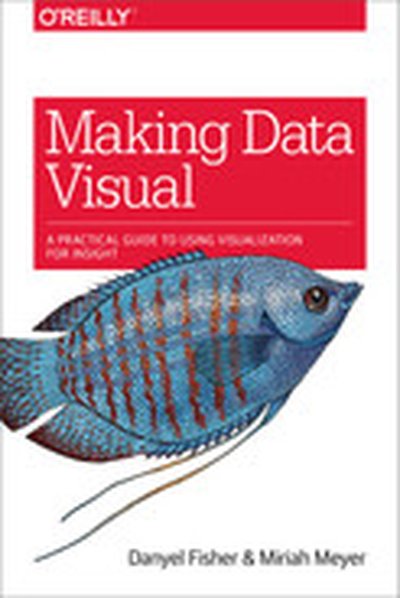
Making Data Visual

You have a mound of data front of you and a suite of computation tools at your disposal. Which parts of the data actually matter? Where is the insight hiding? If you’re a data scientist trying to navigate the murky space between data and insight, this practical book shows you how to make sense of your data through high-level questions, well-defined data analysis tasks, and visualizations to clarify understanding and gain insights along the way. When incorporated into the process early and often, iterative visualization can help you refine the questions you ask of your data. Authors Danyel Fisher and Miriah Meyer provide detailed case studies that demonstrate how this process can evolve in the real world. You’ll learn: The data counseling process for moving from general to more precise questions about your data, and arriving at a working visualization The role that visual representations play in data discovery Common visualization types by the tasks they fulfill and the data they use Visualization techniques that use multiple views and interaction to support analysis of large, complex data sets

D3.js in Action, Second Edition

D3.js in Action, Second Edition is completely revised and updated for D3 v4 and ES6. It's a practical tutorial for creating interactive graphics and data-driven applications using D3. About the Technology Visualizing complex data is hard. Visualizing complex data on the web is darn near impossible without D3.js. D3 is a JavaScript library that provides a simple but powerful data visualization API over HTML, CSS, and SVG. Start with a structure, dataset, or algorithm; mix in D3; and you can programmatically generate static, animated, or interactive images that scale to any screen or browser. It's easy, and after a little practice, you'll be blown away by how beautiful your results can be! About the Book D3.js in Action, Second Edition is a completely updated revision of Manning's bestselling guide to data visualization with D3. You'll explore dozens of real-world examples in full-color, including force and network diagrams, workflow illustrations, geospatial constructions, and more! Along the way, you'll pick up best practices for building interactive graphics, animations, and live data representations. You'll also step through a fully interactive application created with D3 and React. What's Inside Rich full-color diagrams and illustrations Updated for D3 v4 and ES6 Reusable layouts and components Geospatial data visualizations Mixed-mode rendering About the Reader Suitable for web developers with HTML, CSS, and JavaScript skills. No specialized data science skills required. About the Author Elijah Meeks is a senior data visualization engineer at Netflix. Quotes From basic to complex, this book gives you the tools to create beautiful data visualizations. - Claudio Rodriguez, Cox Media Group The best reference for one of the most useful DataViz tools. - Jonathan Rioux, TD Insurance From toy examples to techniques for real projects. Shows how all the pieces fit together. - Scott McKissock, USAID A clever way to immerse yourself in the D3.js world. - Felipe Vildoso Castillo, University of Chile

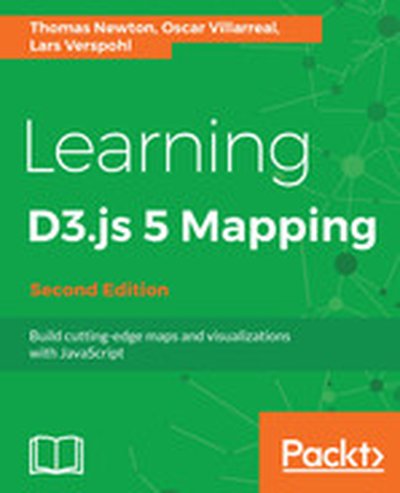
Learning D3.js 5 Mapping - Second Edition

This book, "Learning D3.js 5 Mapping", guides developers through the process of creating dynamic and interactive data visualizations. With a focus on D3.js, you'll learn to harness the power of JavaScript to create maps and graphical objects that inform and engage. What this Book will help me do Gain expertise in working with SVG geometric shapes to design compelling graphics. Learn techniques to manage, process, and use geographic data effectively. Master adding interactivity to visual maps to provide an immersive user experience. Understand how to optimize and manipulate geoJSON files using topoJSON. Learn to create varied map types, such as hexbins and globes, using D3.js and Canvas. Author(s) None Newton and Oscar Villarreal, among others, collaborated to author this guide. They are experienced in front-end development and data visualization, bringing a practical and hands-on approach to learning through this book. Their backgrounds ensure the book addresses common challenges faced during implementation, offering thoughtful solutions. Who is it for? "Learning D3.js 5 Mapping" is perfect for web developers familiar with HTML, CSS, and JavaScript who want to expand their expertise in data visualization and mapping. If you're looking to incorporate interactive charts or maps into your web applications, this book will provide practical guidance and solid fundamentals. No prior experience with D3.js is necessary.

The State of Data Analytics and Visualization Adoption

Businesses regardless of industry or company size increasingly rely on data analytics and visualization to gain competitive advantage. That’s why organizations today are racing to gather, store, and analyze data from many sources in a wide range of formats. In the spring of 2017, Zoomdata commissioned an O’Reilly survey to assess the state of data analytics and visualization technology adoption across several industries, including manufacturing, financial services, and healthcare. Roughly 875 respondents answered questions online about their industry, job role, company size, and reasons for using analytics, as well as technologies they use in analytics programs, the perceived value of analytics programs, and many other topics. This report reveals: The industries furthest along in adopting big data analytics and visualization technologies The most commonly analyzed sources of big data The most commonly used technologies for analyzing streaming data Which analytics skills are in most demand The most valued characteristic of big data across all industries The types of users big data analytics and visualization projects typically target If you’re a technology decision maker, a product manager looking to embed analytics, a business user relying on analytics, or a developer pursuing the most marketable skills, this report provides valuable details on today’s data analytics trends.

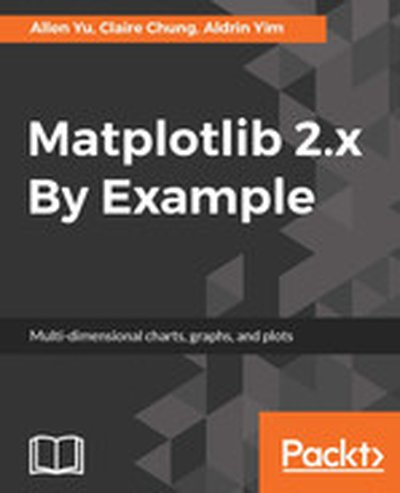
Matplotlib 2.x By Example

"Matplotlib 2.x By Example" is your comprehensive guide to mastering data visualization in Python using the Matplotlib library. Through detailed explanations and hands-on examples, this book will teach you how to create stunning, insightful, and professional-looking visual representations of your data. You'll learn valuable skills tailored towards practical applications in science, marketing, and data analysis. What this Book will help me do Understand the core features of Matplotlib and how to use them effectively. Create professional 2D and 3D visualizations, such as scatter plots, line graphs, and more. Develop skills to transform raw data into meaningful insights through visualization. Enhance your data visualizations with interactive elements and animations. Leverage additional libraries such as Seaborn and Pandas to expand functionality. Author(s) Allen Yu, Claire Chung, and Aldrin Yim are seasoned data scientists and technical authors with extensive experience in Python and data visualization. Allen and his coauthors are dedicated to helping readers bridge the gap between their raw data and meaningful insights through visualization. With practical applications and real-world examples, their approachable writing makes complex libraries like Matplotlib accessible and production-ready. Who is it for? This book is perfect for data enthusiasts, analysts, and Python programmers looking to enhance their data visualization skills. Whether you're a professional aiming to create high-quality visual reports or a student eager to understand and present data effectively, this book provides practical and actionable insights. Basic Python knowledge is expected, while all Matplotlib-related aspects are thoroughly explained.

Interactive Data Visualization for the Web, 2nd Edition

Create and publish your own interactive data visualization projects on the webâ??even if you have little or no experience with data visualization or web development. Itâ??s inspiring and fun with this friendly, accessible, and practical hands-on introduction. This fully updated and expanded second edition takes you through the fundamental concepts and methods of D3, the most powerful JavaScript library for expressing data visually in a web browser. Ideal for designers with no coding experience, reporters exploring data journalism, and anyone who wants to visualize and share data, this step-by-step guide will also help you expand your web programming skills by teaching you the basics of HTML, CSS, JavaScript, and SVG. Learn D3 4.xâ??the latest D3 versionâ??with downloadable code and over 140 examples Create bar charts, scatter plots, pie charts, stacked bar charts, and force-directed graphs Use smooth, animated transitions to show changes in your data Introduce interactivity to help users explore your data Create custom geographic maps with panning, zooming, labels, and tooltips Walk through the creation of a complete visualization project, from start to finish Explore inspiring case studies with nine accomplished designers talking about their D3-based projects

D3.js 4.x Data Visualization - Third Edition

Learn to build beautiful and interactive data visualizations with D3.js 4.x in this approachable and practical guide. From setting up the basics to mastering advanced techniques, this book empowers you to create engaging, sophisticated graphics and charts to communicate information effectively. What this Book will help me do Effectively map data sets to visual representations using D3.js scales. Generate dynamic and interactive SVG elements with D3's shape generators. Develop reusable D3 components for extensible and testing-friendly charts. Leverage advanced D3 layout patterns for large-scale data visualization. Write modern, efficient JavaScript for web-based data visualization systems. Author(s) Aendrew Rininsland, an experienced data visualization developer, and co-author bring a wealth of expertise to this book, drawing from years of implementing interactive solutions in professional contexts. Their engaging way of explaining concepts and demonstrating techniques with practical examples makes learning straightforward and impactful. Who is it for? This book is ideal for web developers, data analysts, and designers who are interested in enhancing their web-based data visualization skills with D3.js. Some familiarity with JavaScript is beneficial but not strictly required, as the book provides clear guidance to bring readers up to speed. If you aspire to effectively present data through captivating visuals and improve your technical proficiency, this book is a great fit for you.