talk-data.com talk-data.com

Topic

data

2093

tagged

Activity Trend

3 peak/qtr
2020-Q1 2026-Q1

Activities

Showing filtered results

Filtering by: O'Reilly Data Science Books ×
THE POWER OF THE PURSE: HOW SMART BUSINESSES ARE ADAPTING TO THE WORLD'S MOST IMPORTANT CONSUMERS—WOMEN

Women now drive some 80% of all buying decisions. By 2010, they'll account for half of America's private wealth: $13 trillion dollars. A few remarkable companies have learned how to refocus on women -- and, in so doing, have achieved truly stunning results. In The Power of the Purse, top journalist Fara Warner takes you behind the scenes at those companies, revealing how they did it -- and how you can, too. Unlike previous books on marketing to women, this one doesn't settle for generalities: it offers in-depth, start-to-finish case studies. Discover how McDonald's turned around its business by recognizing women as full-fledged consumers, not just 'Moms.' Learn how Kodak's digital camera business soared from fourth to first by recognizing women's importance as family 'memory makers'. See how P G built Swiffer into a cultural revolution, and how the diamond industry did the same for right-hand rings. Watch Bratz topple Barbie, Torrid create its enormously successful plus-size stores for teenagers, and Avon connect with a radically new generation of women. From Nike to Home Depot, each story is unique -- but in every case, these companies put women at the center of their strategies, and listened intently to what real women consumers were telling them. It's not about 'painting your products pink': it's about transforming the way you think about women. Do that, and you'll create products that sell better to everyone.
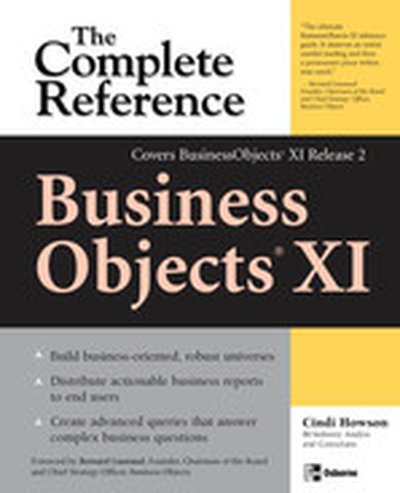
BusinessObjects XI (Release 2): The Complete Reference

This book is a must read for anyone deploying BusinessObjects. It covers everything from planning your upgrade to the latest release, to best practices in universe design, and powerful report creation that maximizes business insight. This book covers the most frequently used features for the full BI suite, in one comprehensive book. There's in depth coverage of Designer, security via the Central Management Console, InfoView, Web Intelligence, and Desktop Intelligence. It goes beyond step-by-step instructions to cover how and why in a business context. Transition notes are interspersed for version 5 and 6 customers to understand the biggest changes in XI Release 2. If you drive BI requirements in your company or are a data warehouse program manager, Business Objects administrator, report author or consumer, this book is for you.

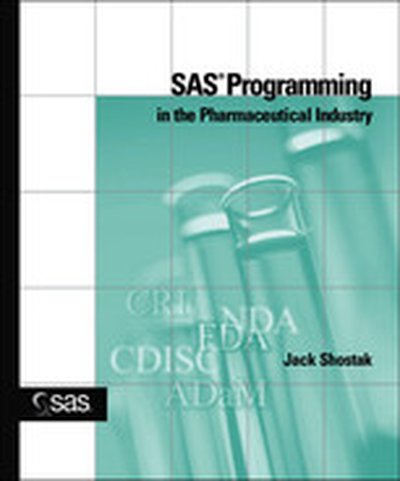
SAS® Programming in the Pharmaceutical Industry

At last! A real-world reference guide for clinical trial SAS programming, packed with solutions that programmers can apply to their day-to-day problems. Discover key techniques and tools available within Base SAS (including the macro language and PROC SQL), SAS/GRAPH, and SAS/STAT that can be used to resolve many common issues in working with clinical trial data. Organized to reflect the statistical programmer's work flow, this user-friendly text begins with an introduction to the working environment, then presents chapters on importing and massaging data into analysis data sets, producing clinical trial output, and exporting data. Valuable plug-and-play programming examples are provided throughout. Whether you're a novice seeking an introduction to SAS programming for the pharmaceutical industry or a junior-level programmer exploring new approaches to problem solving, you'll find a wealth of practical suggestions to help you sharpen your skills.

SAS® Guide to Report Writing: Examples, Second Edition

Jump-start your report-writing skills! Report writing has never been easier. Learn how you can easily avoid common report-writing pitfalls with SAS Guide to Report Writing: Examples, Second Edition. Updated for SAS®9, this task-oriented book guides you through the steps that you need to produce professional reports. Using a wealth of easy-to-follow examples, this time-saving book demonstrates the many different styles of reports that are available and the SAS tools used to generate them. The examples enable more experienced programmers to quickly grasp new techniques, while margin notes and additional discussions provide novice users with the details that they need for effective learning. You can save programming hours by using the SAS programs as they are or as models for developing your own reports. Whether you are a beginner or an expert, this must-have guide will strengthen your report-writing expertise and give you the tools that you need to enhance the power of your reports!

Pivot Table Data Crunching

Become a savvy Microsoft Excel user. Pivot tables are a great feature in Excel that help you organize and analyze data, but not many Excel users know how to use pivot tables. Pivot Table Data Crunching offers a comprehensive review of all the functionalities of Pivot Tables from author Bill Jelen, otherwise known as Mr. Excel from www.mrexcel.com, and Michael Alexander, a Microsoft Certified Application Developer. The authors' practical scenarios and real-world advice demonstrate the benefits of Pivot Tables and how to avoid the common pitfalls of every day data crunching. Each solution presented in the book can be accomplished with resources available in the Excel interface, making Pivot Table Data Crunching a beneficial resource for all levels of Excel users.

A Step-by-Step Approach to Using SAS® for Univariate & Multivariate Statistics, Second Edition

Updated for SA®9, this second edition is an easy-to-understand introduction to SAS as well as to univariate and multivariate statistics. Clear explanations and simple language guide you through the research terminology, data input, data manipulation, and types of statistical analysis that are most commonly used in the social and behavioral sciences. Providing practice data inspired by actual studies, this book teaches you how to choose the right statistic, understand the assumptions underlying the procedure, prepare the SAS program for the analysis, interpret the output, and summarize the analysis and results according to the format prescribed in the Publication Manual of the American Psychological Association. Step by step you will learn how to perform the following types of analysis: simple descriptive statistics, measures of bivariate association, t tests: independent samples and paired samples, NOVA and MANOVA, multiple regression, principal component analysis, and assessing scale reliability with coefficient alpha. This text is ideally suited to students who are beginning their study of data analysis, and to professors and researchers who want a handy reference on their bookshelf.

Fuzzy Modeling and Genetic Algorithms for Data Mining and Exploration

Fuzzy Modeling and Genetic Algorithms for Data Mining and Exploration is a handbook for analysts, engineers, and managers involved in developing data mining models in business and government. As you’ll discover, fuzzy systems are extraordinarily valuable tools for representing and manipulating all kinds of data, and genetic algorithms and evolutionary programming techniques drawn from biology provide the most effective means for designing and tuning these systems. You don’t need a background in fuzzy modeling or genetic algorithms to benefit, for this book provides it, along with detailed instruction in methods that you can immediately put to work in your own projects. The author provides many diverse examples and also an extended example in which evolutionary strategies are used to create a complex scheduling system. Written to provide analysts, engineers, and managers with the background and specific instruction needed to develop and implement more effective data mining systems Helps you to understand the trade-offs implicit in various models and model architectures Provides extensive coverage of fuzzy SQL querying, fuzzy clustering, and fuzzy rule induction Lays out a roadmap for exploring data, selecting model system measures, organizing adaptive feedback loops, selecting a model configuration, implementing a working model, and validating the final model In an extended example, applies evolutionary programming techniques to solve a complicated scheduling problem Presents examples in C, C++, Java, and easy-to-understand pseudo-code Extensive online component, including sample code and a complete data mining workbench

Analysis of Clinical Trials Using SAS

In Analysis of Clinical Trials Using SAS: A Practical Guide, Alex Dmitrienko, Geert Molenberghs, Christy Chuang-Stein, and Walter Offen bridge the gap between modern statistical methodology and real-world clinical trial applications. Step-by-step instructions illustrated with examples from actual trials and case studies serve to define a statistical method and its relevance in a clinical trials setting and to illustrate how to implement the method rapidly and efficiently using the power of SAS software. Topics reflect the International Conference on Harmonization (ICH) guidelines for the pharmaceutical industry and address important statistical problems encountered in clinical trials, including analysis of stratified data, incomplete data, multiple inferences, issues arising in safety and efficacy monitoring, and reference intervals for extreme safety and diagnostic measurements. Clinical statisticians, research scientists, and graduate students in biostatistics will greatly benefit from the decades of clinical research experience compiled in this book. Numerous ready-to-use SAS macros and example code are included.

This book is part of the SAS Press program.

Visualization Handbook

The Visualization Handbook provides an overview of the field of visualization by presenting the basic concepts, providing a snapshot of current visualization software systems, and examining research topics that are advancing the field. This text is intended for a broad audience, including not only the visualization expert seeking advanced methods to solve a particular problem, but also the novice looking for general background information on visualization topics. The largest collection of state-of-the-art visualization research yet gathered in a single volume, this book includes articles by a “who’s who? of international scientific visualization researchers covering every aspect of the discipline, including: · Virtual environments for visualization · Basic visualization algorithms · Large-scale data visualization · Scalar data isosurface methods · Visualization software and frameworks · Scalar data volume rendering · Perceptual issues in visualization · Various application topics, including information visualization. * Edited by two of the best known people in the world on the subject; chapter authors are authoritative experts in their own fields; * Covers a wide range of topics, in 47 chapters, representing the state-of-the-art of scientific visualization.

Classification, Parameter Estimation and State Estimation: An Engineering Approach Using MATLAB

Classification, Parameter Estimation and State Estimation is a practical guide for data analysts and designers of measurement systems and postgraduates students that are interested in advanced measurement systems using MATLAB. 'Prtools' is a powerful MATLAB toolbox for pattern recognition and is written and owned by one of the co-authors, B. Duin of the Delft University of Technology. After an introductory chapter, the book provides the theoretical construction for classification, estimation and state estimation. The book also deals with the skills required to bring the theoretical concepts to practical systems, and how to evaluate these systems. Together with the many examples in the chapters, the book is accompanied by a MATLAB toolbox for pattern recognition and classification. The appendix provides the necessary documentation for this toolbox as well as an overview of the most useful functions from these toolboxes. With its integrated and unified approach to classification, parameter estimation and state estimation, this book is a suitable practical supplement in existing university courses in pattern classification, optimal estimation and data analysis. Covers all contemporary main methods for classification and estimation. Integrated approach to classification, parameter estimation and state estimation Highlights the practical deployment of theoretical issues. Provides a concise and practical approach supported by MATLAB toolbox. Offers exercises at the end of each chapter and numerous worked out examples. PRtools toolbox (MATLAB) and code of worked out examples available from the internet Many examples showing implementations in MATLAB Enables students to practice their skills using a MATLAB environment

Even You Can Learn Statistics A Guide for Everyone Who Has Ever Been Afraid of Statistics

Even You Can Learn Statistics A Guide for Everyone Who Has Ever Been Afraid Of Statistics One easy step at a time, this book will teach you the key statistical techniques you'll need for finance, quality, marketing, the social sciences, or just about any other field. Each technique is introduced with a simple, jargon-free explanation, practical examples, and hands-on guidance for solving real problems with Excel or a TI-83/84 series calculator, including Plus models. Hate math? No sweat. You'll be amazed how little you need! For those who do have an interest in mathematics, optional "Equation Blackboard" sections review the equations that provide the foundations for important concepts. David M. Levine is a much-honored innovator in statistics education. He is Professor Emeritus of Statistics and Computer Information Systems at Bernard M. Baruch College (CUNY), and co-author of several best-selling books, including Statistics for Managers using Microsoft Excel, Basic Business Statistics, Quality Management, and Six Sigma for Green Belts and Champions. Instructional designer David F. Stephan pioneered the classroom use of personal computers, and is a leader in making Excel more accessible to statistics students. He has co-authored several textbooks with David M. Levine. Here's just some of what you'll learn how to do... Use statistics in your everyday work or study Perform common statistical tasks using a Texas Instruments statistical calculator or Microsoft Excel Build and interpret statistical charts and tables "Test Yourself" at the end of each chapter to review the concepts and methods that you learned in the chapter Work with mean, median, mode, standard deviation, Z scores, skewness, and other descriptive statistics Use probability and probability distributions Work with sampling distributions and confidence intervals Test hypotheses and decision-making risks with Z, t, Chi-Square, ANOVA, and other techniques Perform regression analysis and modeling The easy, practical introduction to statistics–for everyone! Thought you couldn't learn statistics? Think again. You can–and you will! Complementary Web site Downloadable practice files at http://www.ftpress.com/youcanlearnstatistics

PROC SQL: Beyond the Basics Using SAS®

Master the language of PROC SQL! Get faster and better results when you use the SQL procedure with this step-by-step, example-driven guide in your hands. You will find information about implementing both American National Standards Institute (ANSI) guidelines and non-ANSI features. A broad range of SAS users, including applications programmers, database designers and administrators, statisticians, and systems analysts, will find techniques in Kirk Lafler's PROC SQL: Beyond the Basics Using SAS to enhance their data access, manipulation, and presentation prowess. Topics examined include database design; an introduction to SQL, dictionary tables, and tables; coding PROC SQL logic as well as complex queries; working with views; troubleshooting and debugging SQL code; and tuning for performance. With the growing popularity of databases, PROC SQL is becoming the language of choice for SAS users around the world. Intermediate and advanced users will appreciate the straightforward explanations and numerous examples.

Say It With Charts Workbook

Hands-on tips for powerful presentations in this all-new companion to the bestselling Say It with Charts Through four editions, Gene Zelazny's classic how-to Say It with Charts has generated more than $1.5 million in revenues. Now, in the companion Say It with Charts Workbook, Zelazny shows you how to make even more of your visual communication skills, working "one-on-one" with you on how to masterfully use the latest techniques and tools to enliven every presentation. More than just a rote listing of techniques, Say It with Charts Workbook features performance-improving strategies and suggestions that will help keep both you--and, even more important, the audience--comfortable and at ease. Part refresher course, part workbook, part self-test, it arms you with: • Step-by-step instructions and guidelines • Performance-improving strategies and suggestions • Tactics for customizing graphics to specific audiences

Elasticity

Although there are several books in print dealing with elasticity, many focus on specialized topics such as mathematical foundations, anisotropic materials, two-dimensional problems, thermoelasticity, non-linear theory, etc. As such they are not appropriate candidates for a general textbook. This book provides a concise and organized presentation and development of general theory of elasticity. Complemented by a Solutions Manual and including MatLab codes and coding, this text is an excellent book teaching guide. - Contains exercises for student engagement as well as the integration and use of MATLAB Software - Provides development of common solution methodologies and a systematic review of analytical solutions useful in applications of engineering interest - Presents applications of contemporary interest

Preparing for DB2 Near-Realtime Business Intelligence

In this IBM Redbooks publication we discuss primary processes and various alternatives that prepare you in implementing a DB2 near-realtime business intelligence environment. We discuss architectural alternatives and include overviews of software products that you can use in an implementation. As a primary focus, we tested the capabilities for supporting continuous update of a DB2 data warehouse while running a continuous concurrent query workload against that data warehouse. We tested several implementation scenarios and the variables that impact them. The results of our testing and the issues we encountered are provided.

Algorithmic Graph Theory and Perfect Graphs, 2nd Edition

Algorithmic Graph Theory and Perfect Graphs, first published in 1980, has become the classic introduction to the field. This new Annals edition continues to convey the message that intersection graph models are a necessary and important tool for solving real-world problems. It remains a stepping stone from which the reader may embark on one of many fascinating research trails. The past twenty years have been an amazingly fruitful period of research in algorithmic graph theory and structured families of graphs. Especially important have been the theory and applications of new intersection graph models such as generalizations of permutation graphs and interval graphs. These have lead to new families of perfect graphs and many algorithmic results. These are surveyed in the new Epilogue chapter in this second edition. New edition of the "Classic" book on the topic Wonderful introduction to a rich research area Leading author in the field of algorithmic graph theory Beautifully written for the new mathematician or computer scientist Comprehensive treatment

Spidering Hacks

The Internet, with its profusion of information, has made us hungry for ever more, ever better data. Out of necessity, many of us have become pretty adept with search engine queries, but there are times when even the most powerful search engines aren't enough. If you've ever wanted your data in a different form than it's presented, or wanted to collect data from several sites and see it side-by-side without the constraints of a browser, then Spidering Hacks is for you. Spidering Hacks takes you to the next level in Internet data retrieval--beyond search engines--by showing you how to create spiders and bots to retrieve information from your favorite sites and data sources. You'll no longer feel constrained by the way host sites think you want to see their data presented--you'll learn how to scrape and repurpose raw data so you can view in a way that's meaningful to you.Written for developers, researchers, technical assistants, librarians, and power users, Spidering Hacks provides expert tips on spidering and scraping methodologies. You'll begin with a crash course in spidering concepts, tools (Perl, LWP, out-of-the-box utilities), and ethics (how to know when you've gone too far: what's acceptable and unacceptable). Next, you'll collect media files and data from databases. Then you'll learn how to interpret and understand the data, repurpose it for use in other applications, and even build authorized interfaces to integrate the data into your own content. By the time you finish Spidering Hacks, you'll be able to: Aggregate and associate data from disparate locations, then store and manipulate the data as you like Gain a competitive edge in business by knowing when competitors' products are on sale, and comparing sales ranks and product placement on e-commerce sites Integrate third-party data into your own applications or web sites Make your own site easier to scrape and more usable to others Keep up-to-date with your favorite comics strips, news stories, stock tips, and more without visiting the site every dayLike the other books in O'Reilly's popular Hacks series, Spidering Hacks brings you 100 industrial-strength tips and tools from the experts to help you master this technology. If you're interested in data retrieval of any type, this book provides a wealth of data for finding a wealth of data.

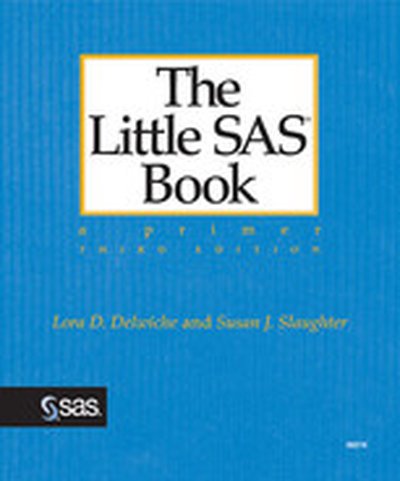
The Little SAS® Book: A Primer, Third Edition

Getting started with SAS is easy with The Little SAS Book. This friendly, easy-to-read guide gently introduces you to the most commonly used features of SAS software plus a whole lot more! The book has been revised to include concepts of the Output Delivery System; the STYLE= option in the PRINT, REPORT, and TABULATE procedures; ODS HTML, RTF, PRINTER, and OUTPUT destinations; PROC REPORT; more on PROC TABULATE; exporting data; and the colon modifier for informats. You'll find clear and concise explanations of basic SAS concepts (such as DATA and PROC steps), inputting data, modifying and combining data sets, summarizing and presenting data, basic statistical procedures, and debugging SAS programs. Each topic is presented in a self-contained, two-page layout complete with examples and graphics. This format enables new users to get up and running quickly, while the examples allow you to type in the program and see it work!